
The Six Five Summit: AI Unleashed 2026 — The Moments That Broke Through
Three days. Free access. A single, unmistakable through-line: enterprise AI has left the pilot phase and entered production — and the economics, infrastructure, and organizational muscle required to run it there are what defined the conversation onstage.
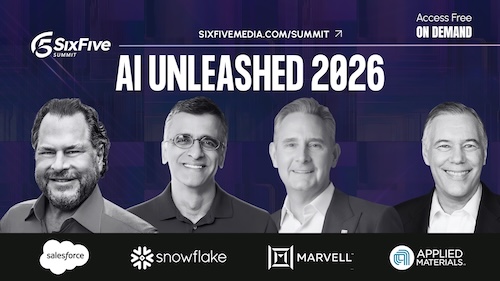
The Six Five Summit: AI Unleashed 2026 ran August 25–27 as a fully virtual event, opening with Salesforce Chair and CEO Marc Benioff and closing three days later with Applied Materials CEO Gary Dickerson. Between them, the CEOs of Snowflake, Marvell, NVIDIA leaders, and operators from Dell, Intel, Oracle, HP, Veeam, Lenovo, Google Cloud, T-Mobile, Samsung Semiconductor, Qualtrics, Tanium, and more all made the case that 2026 is the year enterprise AI stops being a science project (Six Five Media, TechTimes).
Here are the moments that traveled — the quotes, numbers, and announcements that lit up the feeds and coverage in the days that followed.
The stat that framed the entire event
Before a single keynote aired, the framing was already viral: average enterprise AI budgets have jumped from $1.2 million per year in 2024 to $7 million in 2026, with some Fortune 500 companies reporting monthly inference bills in the tens of millions of dollars (TechTimes). Meanwhile, 78% of organizations have AI agent pilots running — but fewer than 15% have scaled one to production, and Gartner projects more than 40% of enterprise agentic AI projects will be cancelled before the end of 2027 (TechTimes). Every session that followed was, in one way or another, a response to that gap.
Marc Benioff: "A tale of two cities"
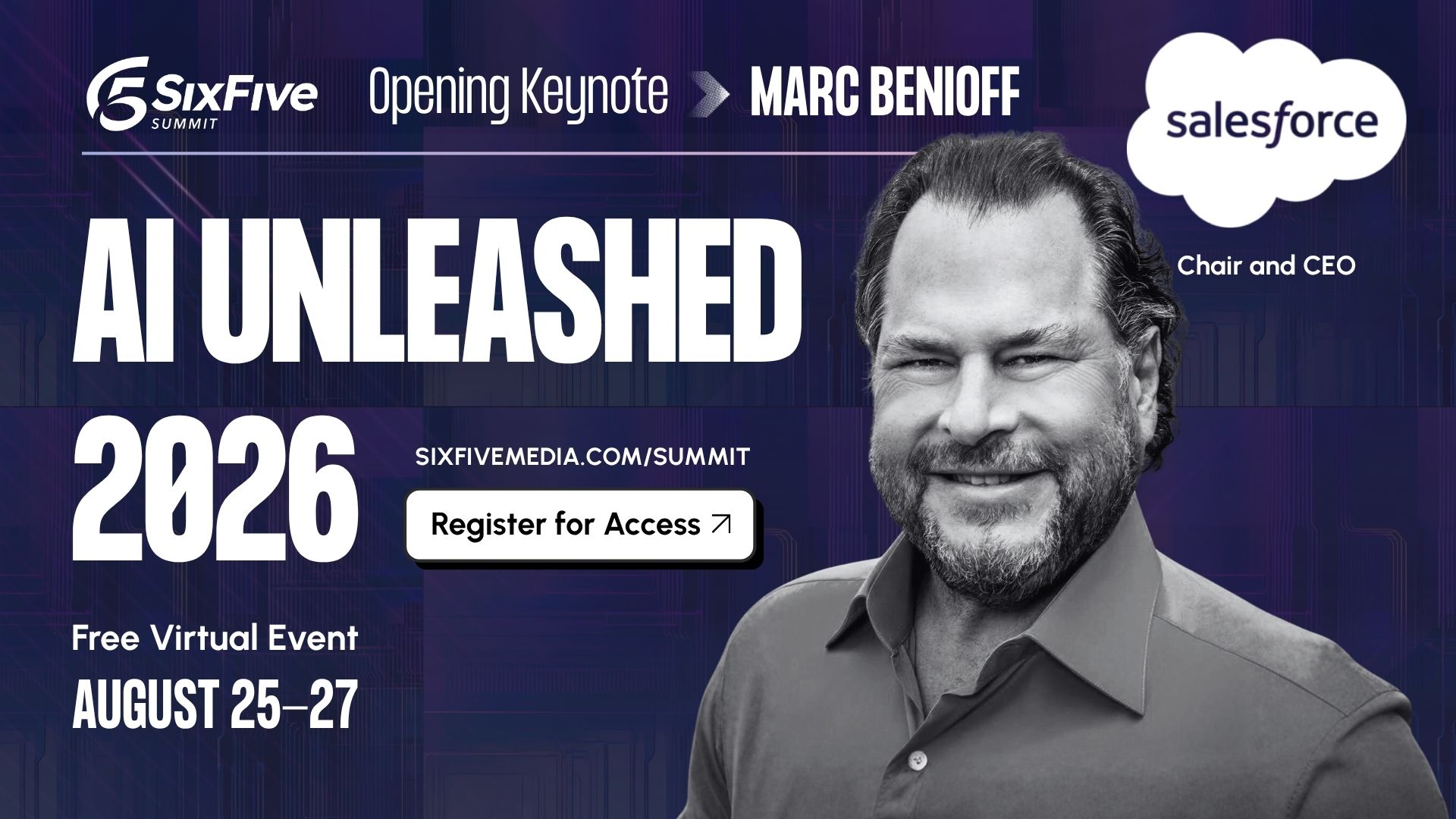
Salesforce's Chair and CEO opened the Summit with Patrick Moorhead and Daniel Newman and immediately gave the event its most-quoted framing: enterprise AI is "a tale of two cities" — consumer excitement racing ahead while most large companies are only beginning their transformations (Investing.com).
The newsworthy specifics traveled fast:
- Benioff said Salesforce will build its own AI interface within 12 months, and predicted roughly 100 AI interfaces will emerge alongside the 100+ models and agent platforms already on the market (Investing.com).
- He unveiled a portfolio of named agents already in production, including Casey, which has resolved 5 million customer-service issues on help.salesforce.com, and Dell Regrello, which reaches out to 20,000 Dell suppliers every day with red/yellow/green status updates (Investing.com).
- Salesforce's "fully headless" positioning — Lightning apps plus new APIs, Model Context Protocol support, and connections into Claude, Slack, and Microsoft Teams — anchored the "digital labor" story that ran across the week (Investing.com).
Sridhar Ramaswamy: "Data, not models, is the moat"
Snowflake's CEO followed Benioff with the Day 1 opener — and delivered the headline that dominated Day 1 recaps: "data, not models, is the moat" (Investing.com).
The numbers behind the argument:
- 46% of Snowflake customers plan to increase spending, and Cortex has reached 30% penetration across the customer base (Investing.com).
- Snowflake's own 4,000-person sales force now uses internal AI agents daily — at a lower per-user cost than the dashboarding software they replaced, a savings Ramaswamy called "pretty stunning" (Investing.com).
- Data modernization efforts that used to take three to four years can now be completed in weeks or months with Cortex (Investing.com).
The most-clipped line: "What used to be a precious item is now more industrialized, more of a commodity. What has not gotten cheaper is what matters to your business" (Investing.com).
Matt Murphy: Connectivity is the wall AI is about to hit
Marvell's Chairman and CEO opened Day 2 with a physics lesson that reframed the AI infrastructure conversation. At modern AI cluster signaling speeds of 224 gigabits per second per connection, copper electrical cables can reliably carry a signal for less than one meter — meaning the industry's next wave of scale depends on the transition to optical (TechTimes, Investing.com).
Murphy's core argument — that AI infrastructure is still in an early stage and that the next growth wave will come from solving connectivity, memory, and custom-silicon bottlenecks — traveled internationally, picked up in coverage across Germany, Italy, Brazil, and Indonesia within 24 hours of the session (Investing.com DE).
Gary Dickerson: "The biggest inflection of our lifetimes"
Applied Materials' CEO opened Day 3 with the Summit's most-quoted single line: "I think AI is the biggest inflection of our lifetimes" (Investing.com).
The specifics behind the headline:
- Around 80% of wafer-fab-equipment growth this year is being driven by AI, and Applied Materials is "number one in every one of those different segments" (Investing.com).
- An advanced package next year will hold over 300 chips, more than 500 billion transistors, and over 2,000 miles of wiring (Investing.com).
- Applied's $5 billion EPIC Center investment is now framed as the industry's densest concentration of materials innovation (Investing.com).
Dickerson's closer — "I have never been more excited at any time in my career" — became one of the week's most-shared soundbites (Investing.com).
NVIDIA's open-source pivot
One of the most-discussed sessions came from NVIDIA's Nader Khalil, who forecast that open-source models will surpass closed-source models in absolute token consumption within about one year, while frontier model usage continues to grow (Investing.com).
NVIDIA used the Summit stage to announce that Nemotron 3.5 Lightning is fully open — weights, architecture, and complete training data — and framed NeMo Switchyard as the model router that lets enterprises route across open, customized, and frontier models with PII redaction, security, and location policies built in (Investing.com).
The most-clipped Shaikh line: "The weights were ephemeral, but data was this truly durable asset" (Investing.com).
Intel's ROI reset
Intel's Anil Nanduri delivered one of the sharpest reframings of the week: "Not all tokens are the same." His argument — that enterprises should stop leading with hardware and start leading with ROI — landed as the operational counterweight to the week's CEO-level vision (Investing.com).
Uber's cited experience — annual token budgets consumed early, then costs falling as observability and model selection improved — became one of the week's most-shared cautionary tales (Investing.com).
The through-line
Across three days, twenty-five sponsors, and dozens of sessions, one message came through with unusual clarity: the winners in enterprise AI won't be the companies with the flashiest models. They'll be the ones who solve for data, connectivity, materials, cost per token, and the hard organizational work of scaling agents past pilot 15 to production 100.
Missed it? Watch every session on demand
If you couldn't join live — or want to rewatch a session — all 30+ Summit sessions, every day opener, and every track opener are available on demand, free, at sixfivemedia.com/summit.
Front-row access to the CEOs making the calls on enterprise AI. No travel. No paywall. Just the conversations that mattered.
AUTHOR

SHARE


Related Content
Further Reading
Get insider access to Six Five Media's analyst coverage, major tech events, and executive interviews
