
Beyond AI Models: The Services That Make AI Work in the Real World
SHARE


Linda Yao of Lenovo joins Patrick Moorhead and Daniel Newman to discuss why AI inferencing depends on services, operations, and architectural choices, not just models or hardware.
AI inferencing only creates true business value when it is operationalized, secured, and sustained at scale.
On this episode of Six Five On The Road, recorded live at Lenovo Tech World in Las Vegas, the conversation focuses on why so many AI initiatives stall after pilots and what it actually takes to turn inferencing into a repeatable, enterprise-grade capability.
Hosts Patrick Moorhead and Daniel Newman are joined by Linda Yao, Vice President of Hybrid Cloud and AI for Lenovo’s SSG organization, to examine the operational realities of deploying AI inferencing across edge, datacenter, and cloud environments.
Rather than framing AI success around models or hardware alone, the discussion centers on the critical role of services in workload assessment, deployment, integration, security, and ongoing performance optimization.
Key Takeaways Include:
🔹 Pilots Are Not the Hard Part: Most AI initiatives stall, not because models fail, but because operational foundations are not in place.
🔹 Services Enable Scalable Inferencing: Assessment, integration, security, and performance tuning are essential to moving beyond experimentation.
🔹 Inferencing Spans Multiple Environments: Real-world AI deployments must function consistently across edge, datacenter, and cloud.
🔹 Operations Drive Long-Term Value: Ongoing management and optimization are required to sustain performance, reliability, and cost control.
🔹 Architecture Shapes Outcomes: Early decisions around services and operating models determine whether AI becomes repeatable or remains fragmented.
Learn more at Lenovo.
Watch the full video at sixfivemedia.com, and be sure to subscribe to our YouTube channel so you never miss an episode.
Listen to the audio here:
Disclaimer: Six Five On The Road is for information and entertainment purposes only. Over the course of this webcast, we may talk about companies that are publicly traded, and we may even reference that fact and their equity share price, but please do not take anything that we say as a recommendation about what you should do with your investment dollars. We are not investment advisors, and we ask that you do not treat us as such.
Patrick Moorhead:
The Six Five is On The Road here at Lenovo Tech World here in Las Vegas. It's been an incredible event, kicked off by Lenovo CEO YY and a host of luminaries, a bunch of product announcements, a lot of vision, a lot of products. It's pretty awesome, Daniel.
Daniel Newman:
Yeah, and I promise you I will not talk about the great experience again after that. But I had to say it twice. Because, you know, every so often I come up with one really great clip.
Patrick Moorhead:
You do, and that's your one for the day.
Daniel Newman:
That's it. But if I say it on every one of these videos, the people are going to get tired. Because you know people watch us over and over.
Patrick Moorhead: They do. We have a very big fan base.
Daniel Newman: Thank you for that, by the way. We appreciate that.
Linda Yao: We always love a good dad pun.
Daniel Newman:
I'm very punny. All right, well, yeah, but I mean, look, it was a big moment, Pat, and what's great is they really did focus from pocket to cloud. It went across, and we've seen how CES has evolved. It used to be, you know, just drones and phones and laptops, and of course, Lenovo has those, but it's also become a big enterprise show, because right now, all the energy around AI is, well, energy is a pun, by the way, too, all the energy that really goes into delivering enterprise value, and it was great to see that on display.
Patrick Moorhead:
Yeah, if in every new instantiation of enterprise IT, whether it's, you know, minis, social, local, mobile, client server, there's complexity, right? The cloud, the web, e-commerce. and enterprises are really having challenges figuring out even what to do first, how to implement it, how to make that happen. The great news is there's companies that have services organizations that can help them figure this out. So I'd like to introduce Linda with Lenovo. Linda, it's great to have you on the show and it's been great to get to know you better.
Linda Yao:
No, it's awesome to be here. Thank you for the invite. Sure.
Daniel Newman:
So something that Gosh, we've spent some time working with you. And it has been great to get to know you. And we talk a lot about this idea of, how do we take pilots, proof of concepts, to market? It's something that we love to do on our end. And we spend a lot of time in the lab. But you spend a lot of time with the customers. And you've been witnessing this transformation of, hey, 22, 23, it was, let's try something. Yeah. You know, 24, it's like, let's try something and let's expand on it. 25 was like, can we get this to full scale? And it's like, we're not quite there. And 26, is this the year? I mean, is this the year? What is going on and what are enterprises facing to try to move these POCs to full production?
Linda Yao:
It's absolutely the year that trends are all in the right direction. We had a lot of FOMO. We had a lot of fear. We had a lot of trepidation. But now the overall enterprise literacy around AI, whether it's AI adoption, end user experience, understanding agentic possibilities, and now even physical AI and robotics, all of that has really been elevated from an enterprise literacy perspective, from the board all the way down to the worker on the floor. And when we talk to our customers, whether it's in our hundreds of internal customers or thousands of external customers, the ones that are the most successful in actually deploying these POCs in the real world and scaling them are the customers who start with the end objective in mind. It sounds very simple, but just because we have an awesome AI hammer doesn't mean that everything is a nail. The hammer might also not work for every single nail. But those who understand the objective, am I trying to go for cost savings? Am I trying to elevate my top line? Am I trying to enhance the user experience? And being realistic about what type of AI works for what kind of use case, for what level of sophistication in the end user adopters, and how much of a human you want in the loop, Those things that are defined up front, that are baked into your POC, that brings the recipe for success when it comes to testing, deploying, and scaling.
Patrick Moorhead:
You know, as an industry, we always love to have a year of this and a year of that. And for 2026, I mean, it is about scaling AI, but I've also heard that it's the year of enterprise inference, okay? And, you know, we can talk about what that means, but essentially, you know, the ability to actually run the application, derive the benefit at the edge, at the industrial edge, on a PC, on a phone, in a hyperscaler data center. So a question for you is, How do your services, how are you helping guide people through this year of inference? Let's say architecturally, planning, and even for getting them ready for implementation.
Linda Yao:
So when you look at our framework, the Lenovo Hybrid AI Advantage, This is a framework that is all about bringing together the services, the infrastructure, the methodology, the library of solutions into a total package that makes it much easier for an enterprise, large or small, to deploy something to achieve real results. And ultimately, we measure things not by the size of the model, the number of parameters, or the speed of the compute. We measure it by the results. So I'll give you a great example. We have built a supply chain super agent. At Lenovo, you know that we're deploying and shipping one device, more than one device, every single second. Right. Over 180 markets, right? So you can imagine the number of route configurations, the number of components and suppliers that we have to manage across this global logistics supply chain. Our supply chain super agent, which we call iChain, is essentially a digital twin of our supply chain that also includes all the data up and down our supplier network that can then run modeling, simulation, resource allocation, and do dynamic adjustments for things like a surprise tariff regime, right? A surprise tornado in the Pacific. and we're seeing the real results, right? 40% reduction in logistics time, 60% reduction in quality defect costs, 85% reduction in manufacturing lead time, right? These are real results that we have seen over the past two, three years, so we know they're sustainable.
Daniel Newman:
I love that she's calling out the numbers. No, I know. I know. That's what it's all about, right? Yeah. There's no doubt that you've got those baked in now at this point. You know those numbers. But it's also the great customer zero story. I think we've talked about this a lot on the show. But companies that are like, we want to sell you this. It's like, well, how are you doing it? So I think it's great that you can actually say, we've got a real issue that, by the way, many of your big enterprise clients share. Maybe not the exact same. They're not the same scale as you. Maybe they're not the same product. But they all have supply chains. They all have these workflows that can be so easily thrown off that AI could be such a better detection partner than having humans. I guess you say not instead of humans, but with humans is a lot of what this is. So this stuff scales really quickly. It's creating you know, a lot of pressure. And so, of course, part of your business is about providing that infrastructure. But part of your business is about, like, really staying with that customer. Like, how do you, you know, provide those services to help the customer see this through?
Linda Yao:
Yeah, it's a great question. So in our hybrid AI Advantage framework, we essentially have three sets of modular offerings. The first set of offerings is all around the AI factories. We are able to design, manufacture, deploy, and manage the most powerful, most sustainable, most fit-for-purpose AI factories on the planet. whether that is a mega cloud giga factory, as was announced yesterday by YY and Jensen Huang, or it's an enterprise level turnkey factory, a factory on the edge, a POC-sized workstation factory, or even what I call miscellaneous, a factory brain inside of a robot or on an AI PC on an edge device. So we provide a whole set of services in order to build up those factories and bring them up as quickly as possible so that customers can achieve time to first token, speed to market, and quick results. The second component of this AI advantage is what we call an AI library of solutions. This is where we have hundreds of pre-built templates, run books, things that we know work, have been proven to work across multiple deployments. We can take these templates off the shelf, quickly customize them and tailor them for that last mile for the customer, and get to a real outcome, real result quickly. The supply chain super agent is a great example. Lenovo deploys all aspects of this super agent. The brains, all the arms, all the legs, all the limbs. You're right. Some companies, they might only want a fraction of those agents. They might want a subset, a different team of agents, or tailored to retail CPG environment versus discrete manufacturing. That's all good. We have that template and that body of knowledge. And that brings to the third module that you asked about, and that is the AI services. The AI services is what ties together the AI factory infrastructure and the AI library of solutions and applications to create a total full stack that works across public cloud, private cloud, enterprise, personal AI, to bring the AI to the data wherever that data and inferencing is needed. I like to say services is what makes the factories light up into real outcomes and provide the platform to deploy those solutions.
Patrick Moorhead:
And that's great. I want to double click on something that you talked about. And through some of our conversations, we've really been servicing. Most in the industry believe that hybrid AI is a reality, and we can look at history, we can look at economics, that AI will go from pocket to cloud. And also, I saw Luca bring out some new devices. Yes, and our six-legged dog. Yes, that too. And what has always been true is anytime that you're doing compute or IT in a different place, it needs to be managed. And you don't want to create new silos of management. How are you helping customers to navigate, whether it's AI on a PC, whether it's on Industrial Edge, just pretty much anywhere, so they're not creating even more complexity? Or is just complexity is just live with it?
Linda Yao:
Well, it's a little bit of both, right? In times when you want to be an early adopter, get the best technology, and bring in emerging technologies without having to wait for all of your IT debt to be cleared, you're going to have some level of complexity. But I think the beauty of having these advisory services, of having these design services, these discovery services, is that we can help meet the customer wherever they are. Whether they are on an infrastructure modernization journey, simply to upgrade legacy tech into AI infrastructure so that they're ready for these workloads, we're there for you. For customers who already might have a very powerful AI factory, but now they want to make sure it's also sustainable to meet those ESG KPIs, we're there for you. For customers who have made investments in our very public cloud native, but now have concerns about privacy or sovereignty or latency or cost, We're there for you to create a hybrid environment. So we're all about meeting the customer where they are so that they can deploy the solutions most effectively in the form factor and with the data with which they are the most comfortable.
Daniel Newman:
Makes sense. And no question, you are in the right place at the right time because every enterprise on the planet is trying to solve this hybrid thing. It was a hybrid cloud thing, now it's a hybrid AI thing. And so even if they're, you know, hey, we're 90% happy to run in the cloud, that 10% has just as much complexity as the one that says, I want to do it 50-50. It really does become an opportunity for Lenovo and I think that speaks a lot to why the SSG business has grown so consistently and I think there's a lot of even new opportunity for growth for you in the future so we'll be watching that very closely.
Linda Yao:
Thank you. Absolutely. Look, we have a very, very strong manufacturing and OEM legacy, right? A very strong foundation. But we're also partners with the hyperscalers, right? The hyperscalers out of China, the hyperscalers out of the US, the neoclouds out of Europe. So we have that entire toolkit at our disposal to bring customers the best environment for whatever they need.
Daniel Newman:
We're going to have to do this again. We're going to have to talk more about it. I want to hear more as these POCs come to life. And I have a feeling we're going to be talking about that. Thank you.
Linda Yao:
Maybe we'll deploy one for you.
Daniel Newman:
There we go. I just might need it. Linda, thanks so much for joining us.
Linda Yao:
Thank you.
Daniel Newman:
And thank you, everybody, for being part of The Six Five. We are on the road here at Lenovo Tech World 2026. Subscribe, follow, stay with us for all of our great content here from the Sphere on the first day, and of course, all of our other interviews on The Six Five. But for this episode, for Patrick Morrow and myself, it's time to say goodbye. We'll see you all later.
MORE VIDEOS
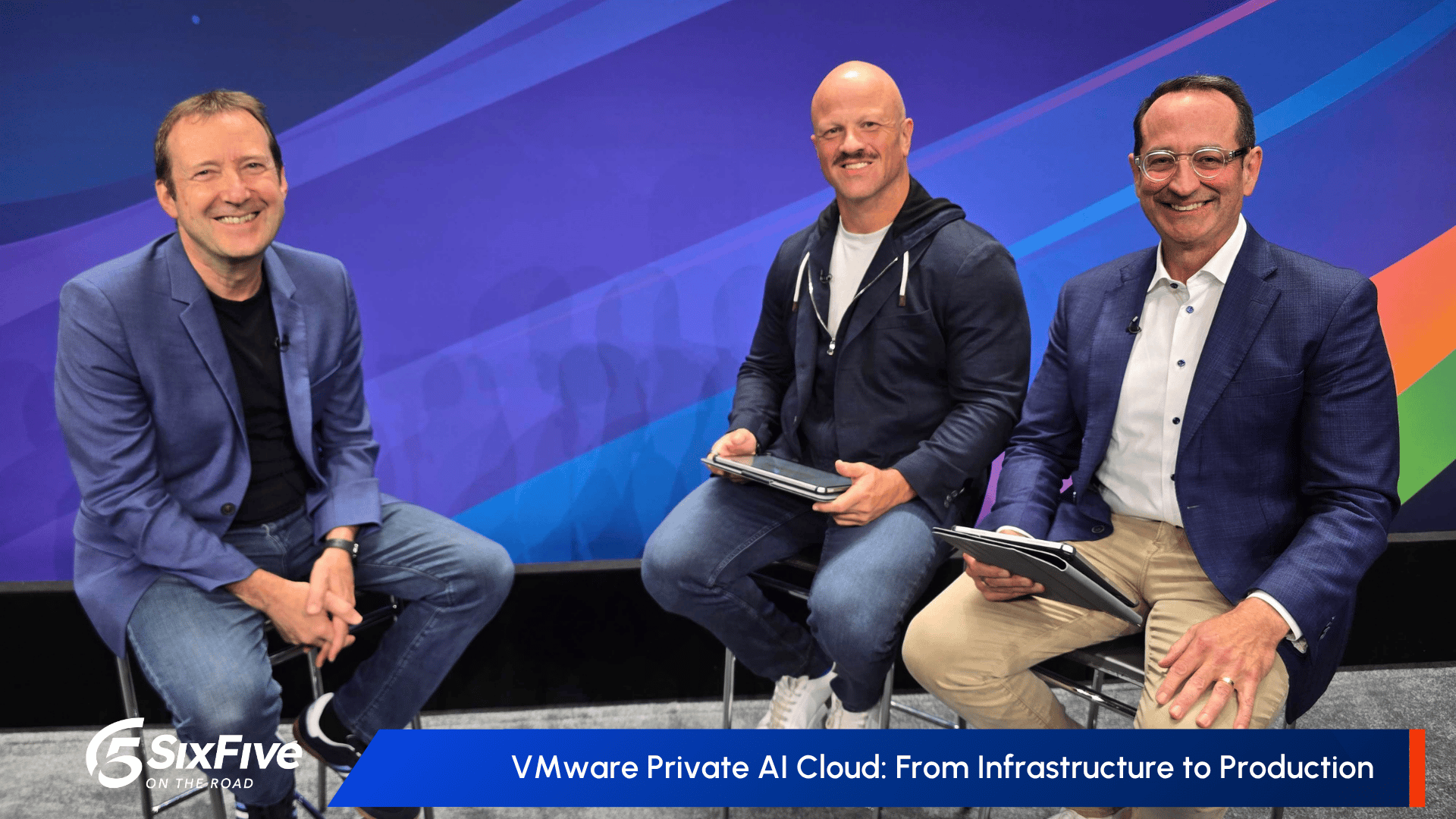
The 15-Cent AI Query: Broadcom's Paul Turner on Rebuilding Enterprise AI Economics
A Six Five study found an eight-to-one cost gap between running an AI agent through a leading frontier model and running it on modest on-prem hardware. Paul Turner, Chief Product Officer of the VMware Cloud Foundation Division at Broadcom, joins Daniel Newman and Patrick Moorhead at VMware Explore 2026 to explain how VMware's AI Factory turns GPU provisioning, model management, and security into a repeatable path from infrastructure to production AI.


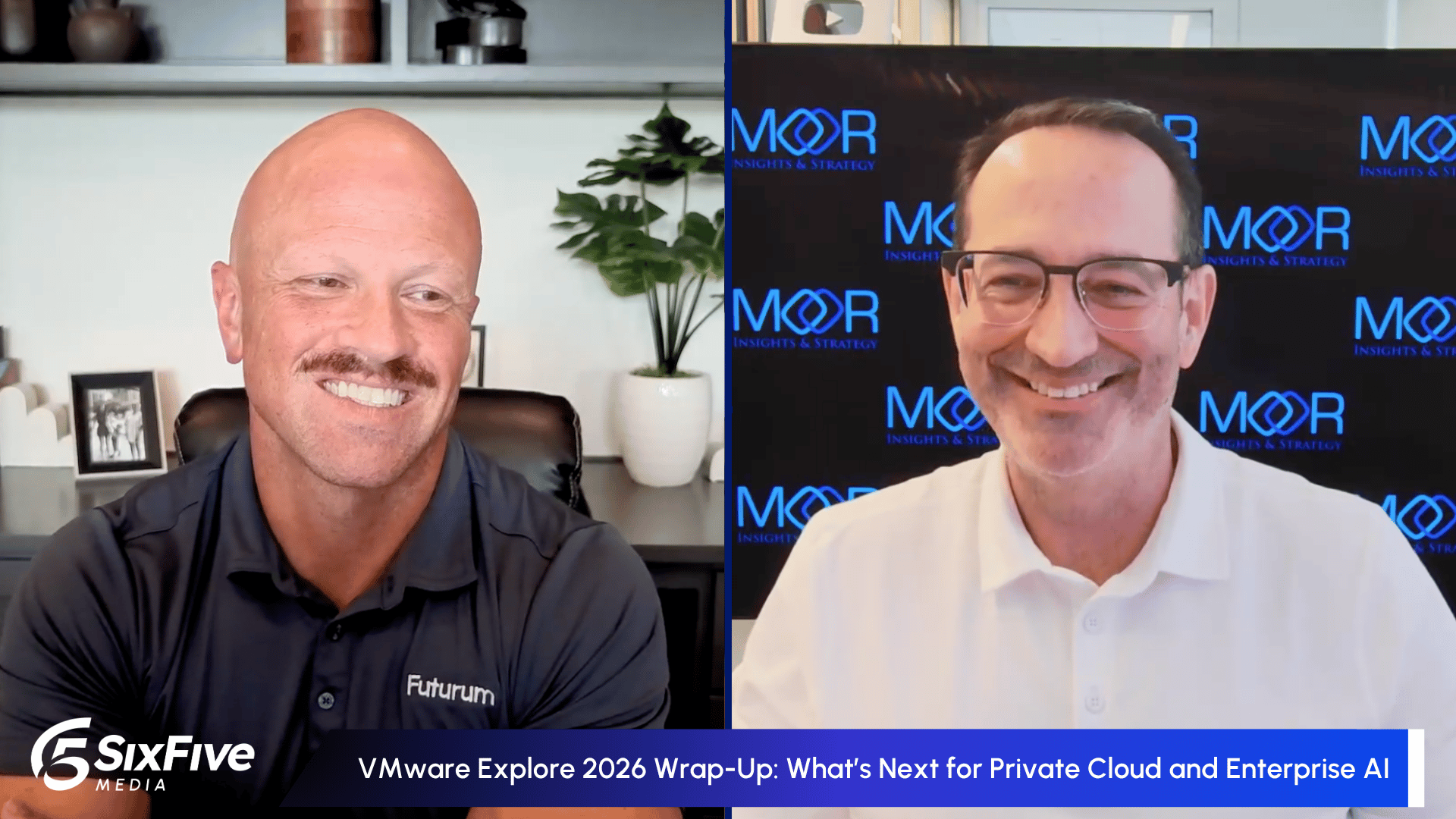
VMware Explore 2026 Wrap-Up: What’s Next for Private Cloud and Enterprise AI
What infrastructure model makes the most sense when AI workloads move from experimentation into production?
In this analyst recap of VMware Explore 2026, Patrick Moorhead and Daniel Newman examine this central question facing enterprise technology leaders and how Broadcom and VMware are positioning private cloud as a critical foundation for bringing enterprise AI into production.
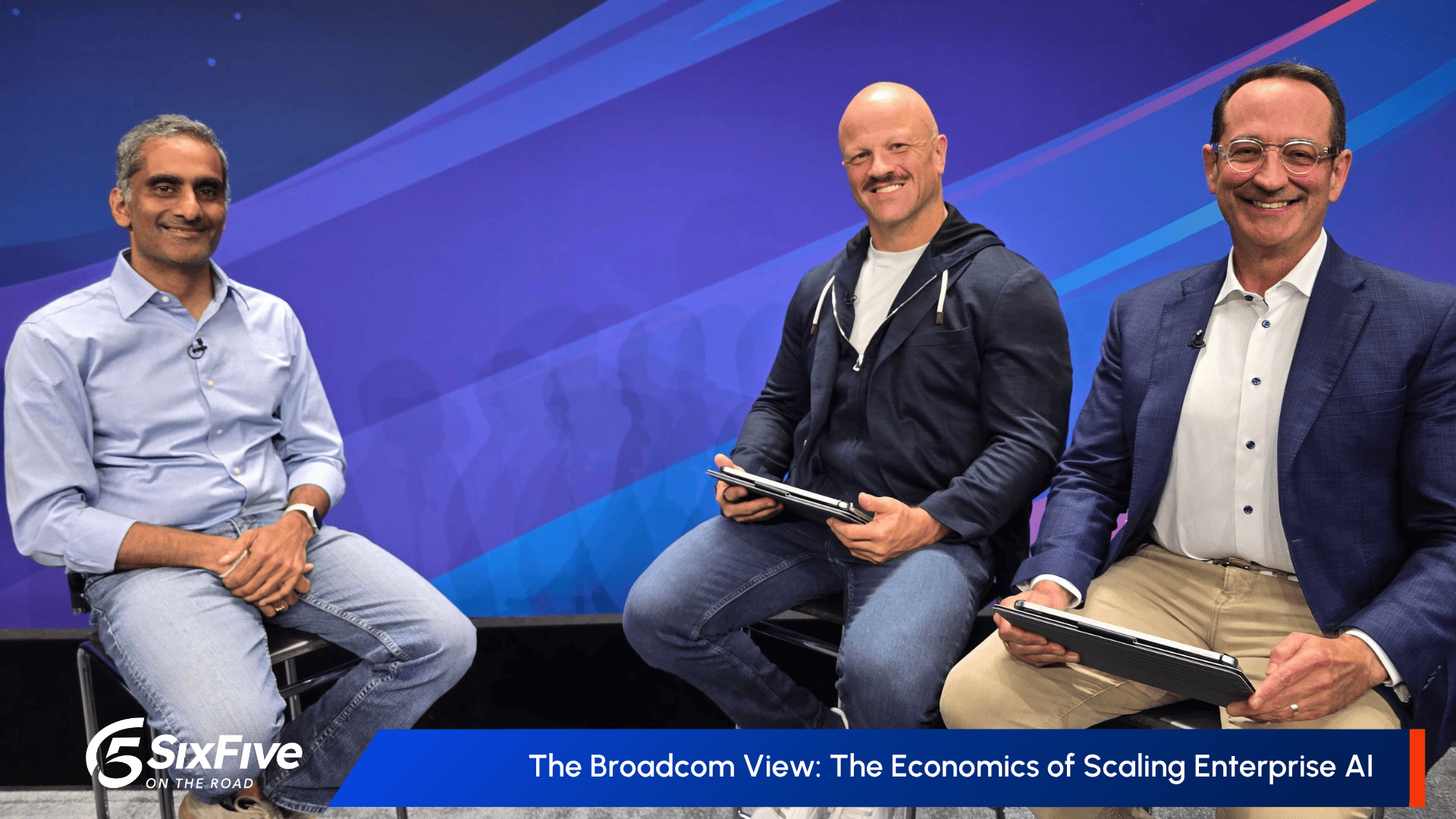
Broadcom's Ram Velaga on the AI Economics Pulling Enterprise Workloads Back On-Prem
Enterprise AI economics are pulling workloads back toward on-premises infrastructure, with control over data as the primary driver. Ram Velaga, President of Broadcom's Infrastructure Software Group, joins Patrick Moorhead and Daniel Newman at VMware Explore 2026 to detail how Broadcom is helping customers route AI workloads, govern agents, and rebuild VMware's role underneath the AI buildout.
Other Categories
CYBERSECURITY
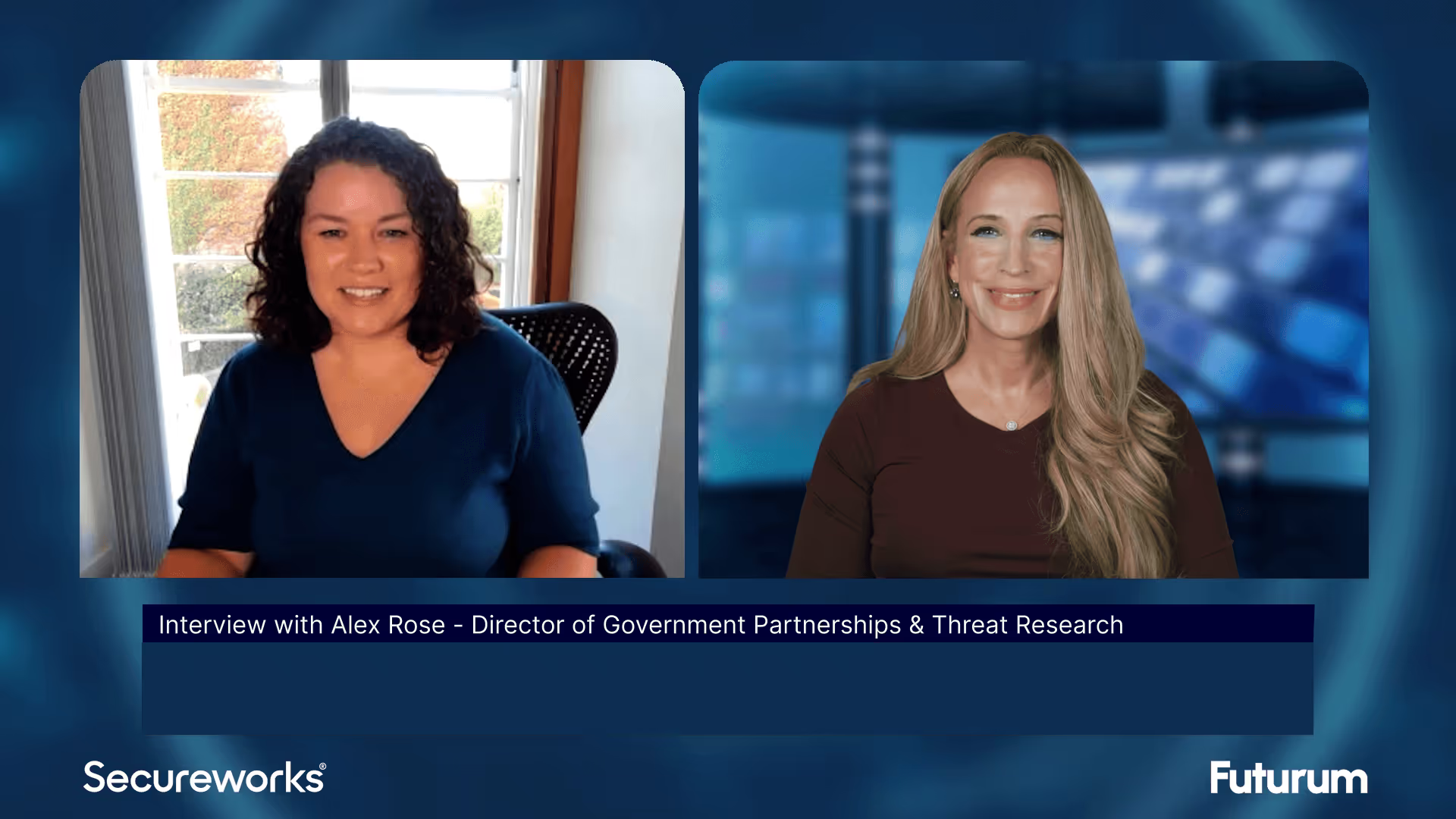
Threat Intelligence: Insights on Cybersecurity from Secureworks
Alex Rose from Secureworks joins Shira Rubinoff on the Cybersphere to share his insights on the critical role of threat intelligence in modern cybersecurity efforts, underscoring the importance of proactive, intelligence-driven defense mechanisms.

HP Launches World’s First Business PCs to Protect Against Quantum Hacks - The Six Five On the Road
On this episode of the Six Five - On the Road, hosts Patrick Moorhead and Daniel Newman are joined by HP's Ian Pratt, Global Head of Security for Personal Systems.
What is Autonomous Endpoint Management?
Autonomous Endpoint Management is a framework designed to unify IT operations and security teams on a single platform through real-time control and visibility.
QUANTUM
Quantum in Action: Insights and Applications with Matt Kinsella
Quantum is no longer a technology of the future; the quantum opportunity is here now. During this keynote conversation, Infleqtion CEO, Matt Kinsella will explore the latest quantum developments and how organizations can best leverage quantum to their advantage.
Accelerating Breakthrough Quantum Applications with Neutral Atoms
Our planet needs major breakthroughs for a more sustainable future and quantum computing promises to provide a path to new solutions in a variety of industry segments. This talk will explore what it takes for quantum computers to be able to solve these significant computational challenges, and will show that the timeline to addressing valuable applications may be sooner than previously thought.