
Broadcom's Purnima Padmanabhan on Building the Trust Layer Agentic AI Actually Needs
SHARE


Broadcom is running its own software development lifecycle on a swarm of 21 AI agents, citing 2x feature velocity and a 60 percent drop in time to resolve issues. Purnima Padmanabhan, Vice President and General Manager of the Tanzu Division at Broadcom, joins Daniel Newman and Patrick Moorhead at VMware Explore 2026 to explain how agent sandboxing, governed data, and identity policy combine to build trust for agentic AI in production.
Open source vulnerability findings inside Broadcom's own software climbed 2,000 percent once the company started scanning with frontier models, a wake-up call that reshaped how Broadcom secures everything built on Spring.
At VMware Explore 2026 in Las Vegas, Patrick Moorhead and Daniel Newman welcomed Purnima Padmanabhan, Vice President and General Manager of the Tanzu Division at Broadcom, for a conversation about what it takes to build trust for the agentic era.
Padmanabhan frames the core tension plainly. Agents deliver a productivity multiplier because they carry agency: the ability to make their own decisions using the data available to them. That same agency creates risk. Agents can access data they shouldn't, make decisions nobody approved, and burn tokens on work nobody asked for. Padmanabhan's answer unifies three layers on a single platform. Agents run in sandboxes that connect only to what they're explicitly allowed to reach. Data gets curated, governed, and tracked for lineage before an agent ever touches it, so a claims-processing agent, for example, works from a clean data set on every run instead of parsing raw records each time. AgentMinder then layers identity and policy controls on top, extending the kind of access management enterprises already apply to human employees to autonomous agents. Padmanabhan ties that framework directly to the business processes it unlocks, arguing that once private AI, governed data, and continuous agent control are combined, enterprises can confidently hand agents higher-value, higher-risk work they wouldn't have trusted to automation before.
Key Takeaways:
🔹 Broadcom launched TrueSource, a single secured source for open source libraries. After finding open-source vulnerability reports had climbed sharply, Broadcom expanded its Spring Enterprise security work into Trusted Artifacts for Java, Python, and Node.js, plus governed data services for PostgreSQL, MySQL, RabbitMQ, and Valkey.
🔹 Clean, curated data lowers both token cost and error rate for agents. Padmanabhan says an agent working from raw, unprocessed data burns significantly more tokens per run than one working from a governed data set, on top of producing less reliable outcomes.
🔹 AgentMinder evaluates each agent's identity, intent, and context at runtime. The layer extends access-policy controls built for human users to autonomous agents making their own decisions.
🔹 Broadcom tested frontier models against its own commercial and open-source software through Anthropic's Project Glasswing. The testing found real, exploitable vulnerabilities and pushed Broadcom to fast-track patching across its Spring-based open source portfolio.
Padmanabhan ties that framework directly to what Broadcom itself is willing to automate, pointing to its own software development process as the proof point.
For more Six Five coverage from VMware Explore 2026, visit sixfivemedia.com.
Watch the full video at sixfivemedia.com, and subscribe to our YouTube channel so you never miss an episode.
Disclaimer: Six Five Media is for information and entertainment purposes only. Over the course of this video, we may discuss companies that are publicly traded, and we may reference their equity share prices. Nothing discussed during this webcast should be considered investment advice or a recommendation to buy or sell any security. We are not investment advisors, and you should not rely on this content as financial advice. Six Five Media collaborates with technology companies and industry leaders to produce research-driven interviews and multimedia programming for enterprise technology audiences.
Purnima Padmanabhan:
Let us give you data and agent runtime on the same platform, so that you have agents running in tight sandboxes, doing only what they should be doing, but also getting the data context curated, revised one time so that you're not using a burning token again and again, so that decision making can happen.
Patrick Moorhead:
The Six Five is on the road here in Las Vegas for VMware Explorer 2026. Daniel, it's been a great show, and it's all about what our listeners want, our viewers want, and that's, if you're an enterprise, how do you accelerate what you're doing in what seems like this crazy time of rising costs, you want control, and recently, even though it's always what enterprises want, It's about trust. It's about governance. How do I keep my intellectual property inside the house?
Daniel Newman:
Yeah, that's where your alpha lies. It's how do we deliver value with AI, measure the outcomes, do it in a governed environment, secure it, and of course, make the CFO happy and do it at a price that meets the expectation, highest amount of output for the right cost. I'm not going to say the least cost. You got to get the cost right.
Patrick Moorhead:
But yeah, I mean, this is exactly what this event has been all about. That's right. Joining us this conversation and back to the 6.5, Pranima, great to see you.
Purnima Padmanabhan:
Great to see you both.
Daniel Newman:
Yeah, it is good to be here and I wanted to start with something. Maybe even up level from just VMware. Yeah, Broadcom. Is now something called true source and it feels to me and I heard you in your keynote here just just a few minutes ago. Actually, I hope you were there. Talking about everything that's going on in this AI world, but I think TrueSource almost sets up the rest of the VMware conversation or what's going on here. So just give us a little background on what that is and why did Broadcom in particular decide to up-level that and it's not just a VMware thing. Yeah, it's a brand of its own.
Purnima Padmanabhan:
Yeah. Well, let us start with the problem statement first. When Frontier Models burst on the screens, a scene specifically for finding vulnerabilities, which was with Anthropx Mythos. And when the Glasswing was announced, Broadcom was one of the first partners. And so we have been testing with Frontier Models for the last five months or more. And what we have found is these are real. These frontier models can find vulnerabilities. And we have been, as you heard, fixing our commercial software, patching it, making it easy to patch. But something that many probably don't know is Broadcom is also the primary maintainer and the sole committer of many software projects that are open source. Primary among them is Spring. Most of the enterprise mission-critical apps are built on Spring, and Spring is on top of Java framework. And so we started scanning open source. And when we started scanning open source, guess what we found?
Daniel Newman:
We found some problems.
Purnima Padmanabhan:
We found, first of all, the community-related findings itself had gone up by 2,000% before we started. And then we started scanning, and we found a lot more. And if you think about it, you can have the best security in the world. You can secure your infrastructure. You can secure your VMs. If your core application libraries have a flaw, it doesn't matter. You're still going to get attacked.
Daniel Newman:
You're inviting it in.
Purnima Padmanabhan:
Inviting it in. So what we did is we said, first of all, we have to stay committed to open source. So we scanned all this open source and we're putting the fixes out. But then all the enterprises, the top banks, the top government organizations came and said, we need more enterprise class open source from you. And that is where we took our flagship solution, which is Spring, made it Spring Enterprise, and said we are scanning it, securing it with patches, and we'll give you early releases of patches so that you can be patched before the exploit is out. Number two, we are scanning all the spring and all the dependencies and giving you clean room builds so that the ingredients you use to make your application is safe, right? And not only did we do that, CV-only patches so that developers can adopt it without downtime. And so we took Spring Enterprise and took that same capability set, and now we have expanded it to Java and Python and Node.js, rest of Java. And that's what we call trusted artifacts. And then we said that's not enough. Apps need open source databases. So we took Postgres, MySQL, RabbitMQ, and Malky and extended it to that as data services. And we put all of this under one umbrella called TrueSource by Broadcom. And the idea is… If you want to build applications and you're using open source libraries almost always, we are that one single authorized source that gives you secure libraries that are completely patched and up to date. So at least you know what you're putting into your recipe is clean. It starts with the top of the stack.
Patrick Moorhead:
Exactly, that is a huge announcement and I'm glad we started off with that. One brand that we're all familiar with is Tanzu and you've really worked hard overnight to not only turn that into an application environment but also into a data platform. And today you also announced AI-ready data and agent foundations for VMware Tanzu. Can you talk a little about the problem you're trying to solve, or maybe just to be specifically here, how are you, how does this help customers turn their data and agents and keeping all of it governed and under control? Because the benefit of agents is all out and all throughout the environment, but how do you also maintain control and governance?
Purnima Padmanabhan:
I mean that is the key problem. You stated it absolutely. Look agents deliver incredible amount of power. And why do agents deliver that far. Because agents have agency. Unlike just applications they don't do just what is prescribed but they have the decision making capabilities. They use data to make that decisions. And that is why you get this multiplier effect of productivity boost from agents. But that same agency that gives you productivity boost. can also cause problems, unintended consequences, right? The agents might access data that you didn't want to access, make decisions that you didn't want it to make, make burn up tokens doing things that you didn't want to do, right? And so the problem statement for us was very simple. How do we give you a simple layer that sits on top of VCF? That gives you the ability to run agents in a very secure way so that the agents run in literally a sandbox and only connect to things that they can connect to, that you allow them to connect to and nothing else, that's one. And number two, how do you make sure that the agents are only as good at decision-making as the data that is provided to them? the intelligence of how do you make sure that you curate, govern, and simplify the truth that you're delivering to this agent. And that problem, as we found out, is not that easy. And that's why we've been innovating really rapidly to bring that together on the same platform. Often the reason it's not easy is in customers, they are in two separate silos. There's a big data team that is building data lake house, data warehouse, five-year project, or five-month project. And here, the agent is waiting, starving for data. So what do developers do? Either they just give the agent access, and now it has suddenly got the API keys to your Oracle database, to your Google Drive, and can do anything damage. Or alternatively, you don't do anything, and you're waiting for this warehouse. And we said, let us give you speed. Let us give you data and agent runtime on the same platform. So that is where we extend the Tanzu platform with AI-ready foundations so that you have agents running in tight sandboxes doing only what they should be doing, but also getting the data context curated revised one time so that you're not using a burning token again and again, so that decision making can happen. That is what we have done with our benchmark.
Patrick Moorhead:
Yeah, we talked a little bit in the green room about we had just launched an energetic benchmark that clearly showed you had to even choose the right model depending on how clean your data is. Yes. And as an enterprise, you might have standardized on certain models, but might not be contemplating sure the data is or kind of how, maybe how ugly the data is. Or how much context the data has.
Purnima Padmanabhan:
Yeah. Right? I mean, that's a great point. And by the way, this is not just a, see a quality point is also a cost point. And that is because, imagine you are, an agent is supposed to solve many problems, right? So if I've decided an agent that is solving claims for me, like we showed in the demo, Multiple claims should be coming in and it should be giving you answers whether the claim is covered or not, for example. Now, in order to do that, it needs a clean data set. If you give it raw data set, it is going to burn a ton of tokens for every run that agent does. On the other hand, if you give it a clean data set, first of all, you get better outcomes, but more importantly, you get fewer tokens because you're using it more efficiently. Yeah.
Daniel Newman:
It still makes me think back to the last two decades of us talking about getting your data in order before you could really, but I'm saying like before generative and then agentic and all these things happen, don't you remember like the, we had like a two decade long process of like enterprises, get your data estate in order. And it was like, Now they're finally coming, and it's like a reckoning now.
Purnima Padmanabhan:
It's a reckoning because the cost of not having it right is astronomical. And worse, it is wrong. It might take you down a bad path. And this interesting thing, exponential problem that we're seeing with data is, first of all, with data we are also solving multiple problems. One is, access. You don't want agent to have access to all data. So by curating these data sets and rapidly on the fly, we're giving access to the agent to data and for the developer to build it fast. I have got, let us say, data sitting in unstructured data sitting in some drives. I've got data sitting in a database. And instead of giving agent access to all of them directly, you're picking and choosing the pieces. You're parsing them. You're running models to clean them, vectorize them, and then you're giving an agent a package set, and you're giving an access only to data that it should have access to, nothing else. Second thing it does is you are also trying to make sure that the lineage of the data is maintained. So when the models make decision, you often need to know What did you use for the decision? Where did it come from? Oh, you decided this policy is not covered. Where did that clause come from? What was the policy document? So being able to maintain that lineage, we are building all of that into our data. And so when you have access and you have control and you have lineage, now you have a data set that the agents can use very easily. Now, when I fast forward this, what does an agent platform need to have? This layer that I was talking about, which is Tanzu platform. You have a sandbox for agents. You have these data that are curated. And then you have access to models, tools, skills, and data services. And all of these are connected with policies on top of Tanzu platform. And so you have a full agentic platform that allows you to run everything. Now, If you want to add one more layer of defense on top of it and you want to say I'm going to also put access policies on agents as if they were humans. on what roles they can play, what can they access. Now on top of Tanzu platform, you can also layer AgentMinder that then mines, if you may, the access and the security and the rules and the policies.
Patrick Moorhead:
That's going to become more important. For sure. Hey, I want to pull this all together. So we've had a conversation, a lot of different conversations today, but if I pull together private AI, if I pull together governed enterprise data, and then continuous control over the agents, which is agent minder. I put that in a combination. What does that unlock that we haven't had so far related to business processes? Does this just means that you can do higher risk and higher value business processes? I can put these three together?
Purnima Padmanabhan:
I think that's a great question and I'll maybe start with my own case. I'm a business. My business process is software development. And software development lifecycle is my business process. An insurance company might have an insurance policy as a business process. And so I have put agents to test in my own software development lifecycle. So my entire software development lifecycle is run with a swarm of 21 agents that talk to each other, that run on platform, that automatically get context from Jira, from Slack, from the requirements management system, from customer inputs, and goes from requirements to validation, to coding, to testing. And it has just been transformational for me as a business. 2x more feature velocity. 60% reduction in the time to resolve issues. Down from 12 weeks to 3 weeks in terms of requirements planning because I can prototype so fast. The power of agents is not in a model sitting locked somewhere. It is really bringing all those pieces together. You have to take the model, give it to a user who reads to automate the business flow so that they can write an application or an agent on top of a platform like Tanzu. give it the data that it needs so that it make decision, and then make sure that all of it is policy and controlled. If you don't have that, what you lose is not just cost or not just, it is the opportunity. I don't believe I'll be competitive if I'm not using AI, and that is true for every business.
Daniel Newman:
That makes sense. It's a nice way to wrap it up, too. I feel that way every day now. I genuinely do. You feel like superhuman all day. And those that use, I call it the haves and have-nots, those people that use it and what you can get done in a period of time. And then, of course, when you can deploy that at scale across your business. It just it does bewilder me and I understand you know it's tough for some people to fully appreciate. But like this is technology to embrace. But I think you brought up a lot of great points. It's also technology needs to be governed. It needs to be secured. It needs to be managed because it's incredibly powerful. It's so powerful. Purnima I want to thank you so much for joining. Absolutely. It's been great to have you. We should do it again.
Purnima Padmanabhan:
Absolutely, it was great.
Daniel Newman: Thank you. And thank you everybody for being part of this Six Five On The Road. We're here at VMware Explorer 2026 in Las Vegas. Great set of conversations here. Subscribe, be part of our community. Check out all of our coverage here at VMware Explorer. But we got to go for now. We'll see you all later.
-decade-
MORE VIDEOS
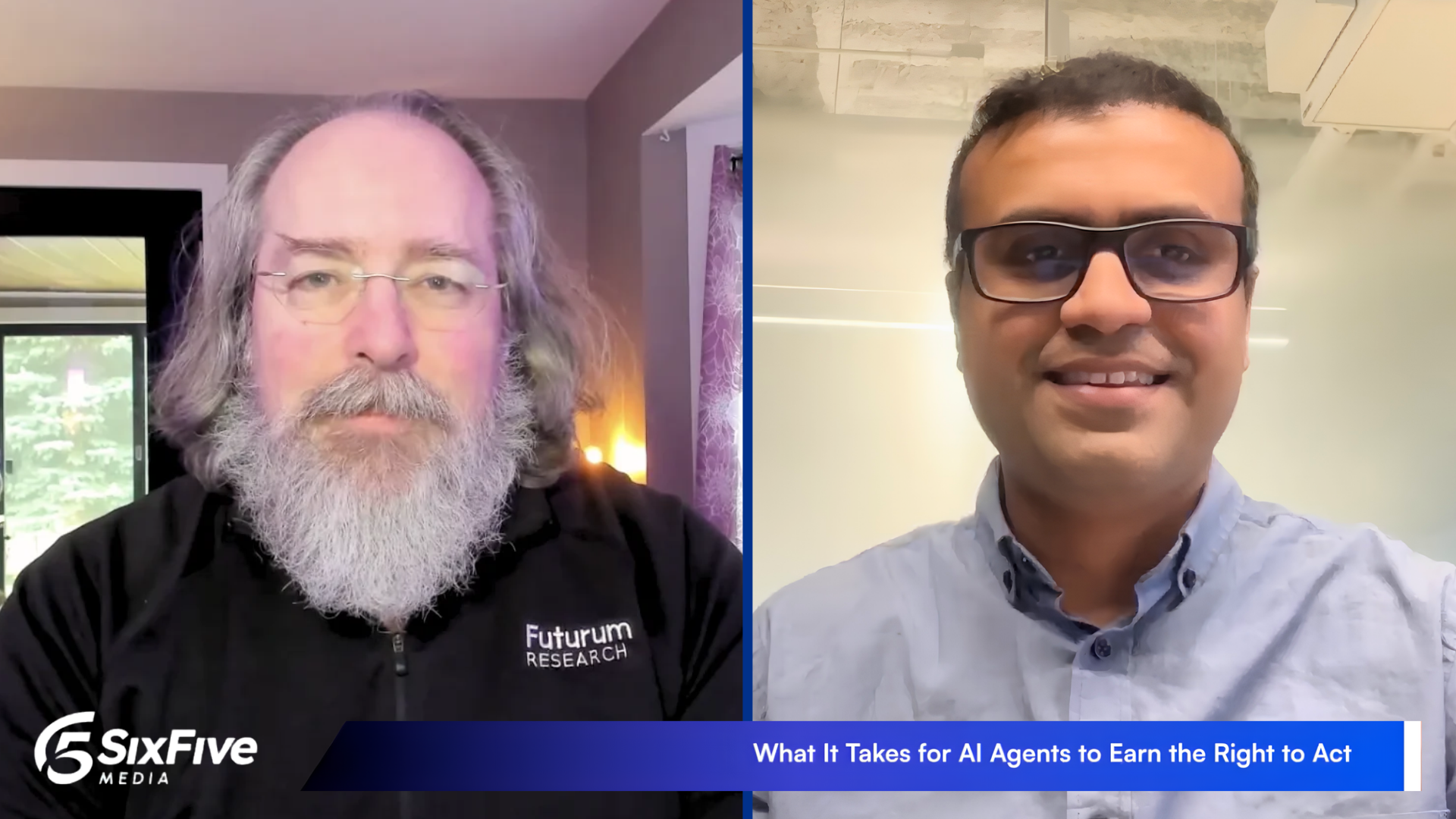
What It Takes for AI Agents to Earn the Right to Act
Snowflake’s Pavan Pothukuchi explains why enterprise AI agents still struggle to act on systems of record, and how governed data platforms, semantic layers, and scoped agent identity close the gap. For enterprise leaders, agent autonomy has become a data architecture decision.


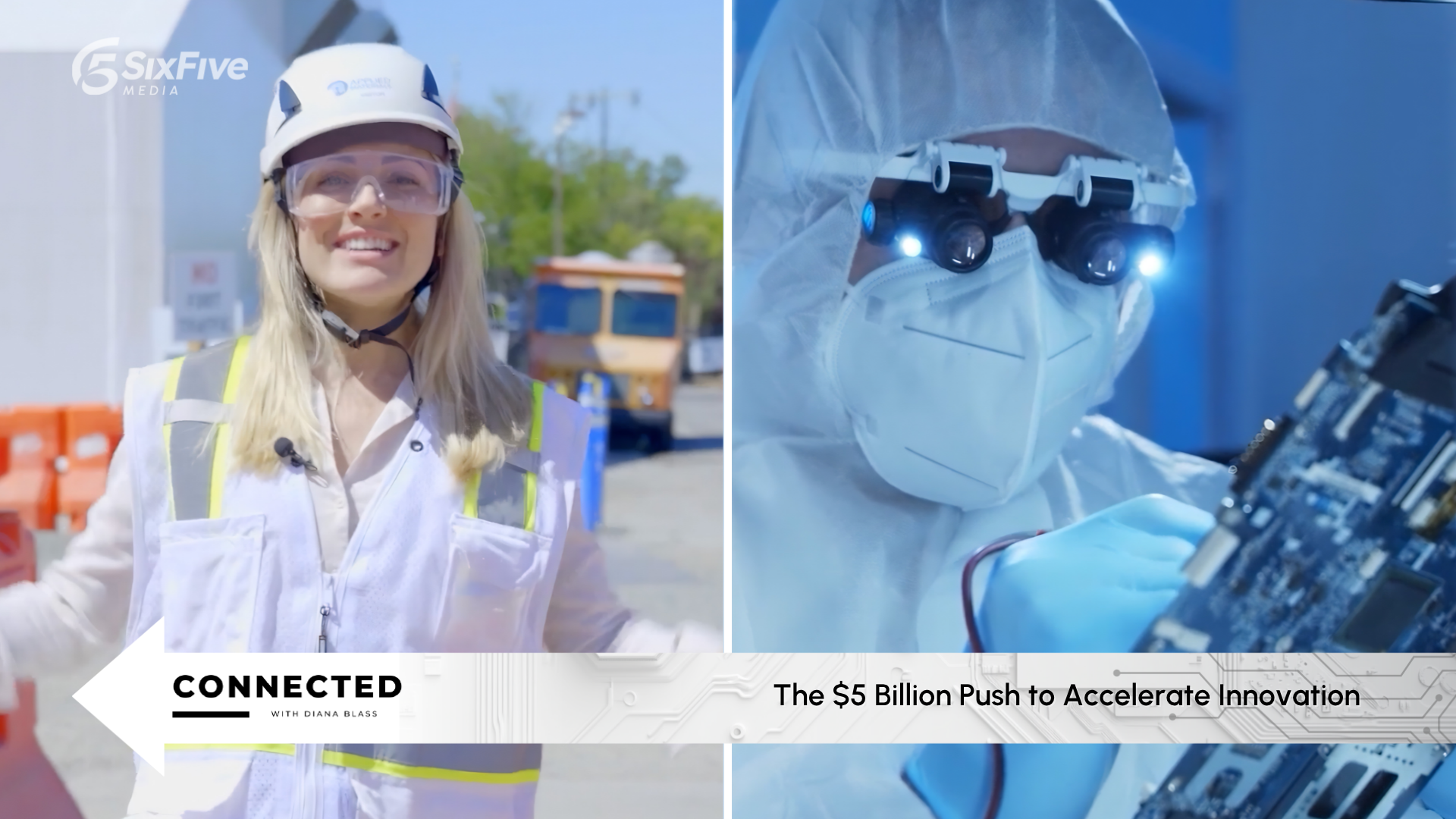
The $5 Billion Push to Accelerate Innovation - Six Five Connected with Diana Blass
On Connected, Diana Blass tours Applied Materials' $5 billion EPIC Center, where chipmakers, equipment developers, and researchers will work in parallel to move AI chip breakthroughs from lab to market faster. Earlier collaboration could cut years from development cycles as AI demand outpaces manufacturing capacity.
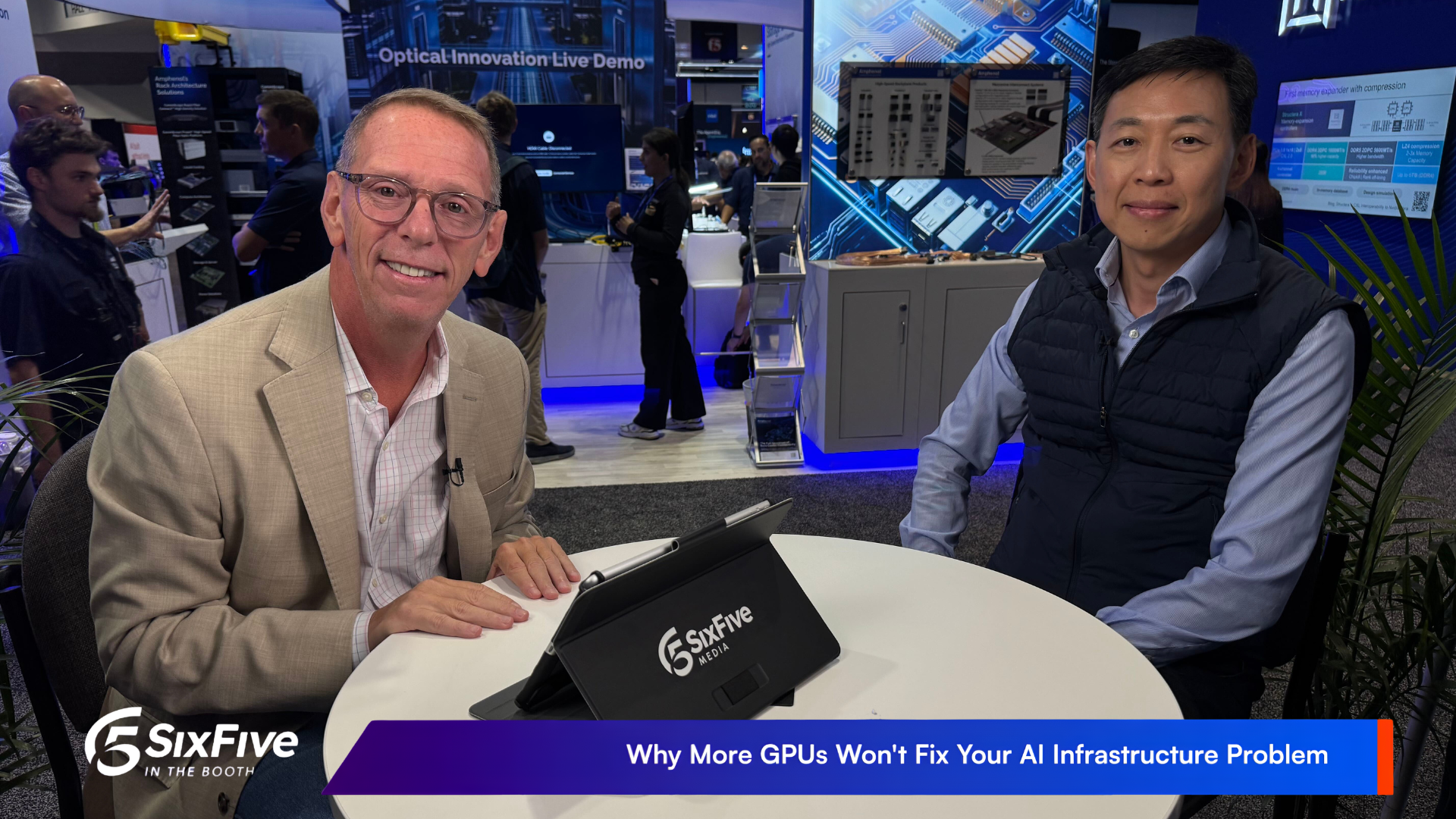
Why More GPUs Won't Fix Your AI Infrastructure Problem
At OCP Global Summit 2026, MiTAC Computing's Raymond Huang explains why AI infrastructure has become a full-stack integration problem spanning compute density, cooling, firmware, and deployment speed. For data center operators, advanced cooling and open management are now as decisive to scaling AI as GPU selection.
Other Categories
CYBERSECURITY
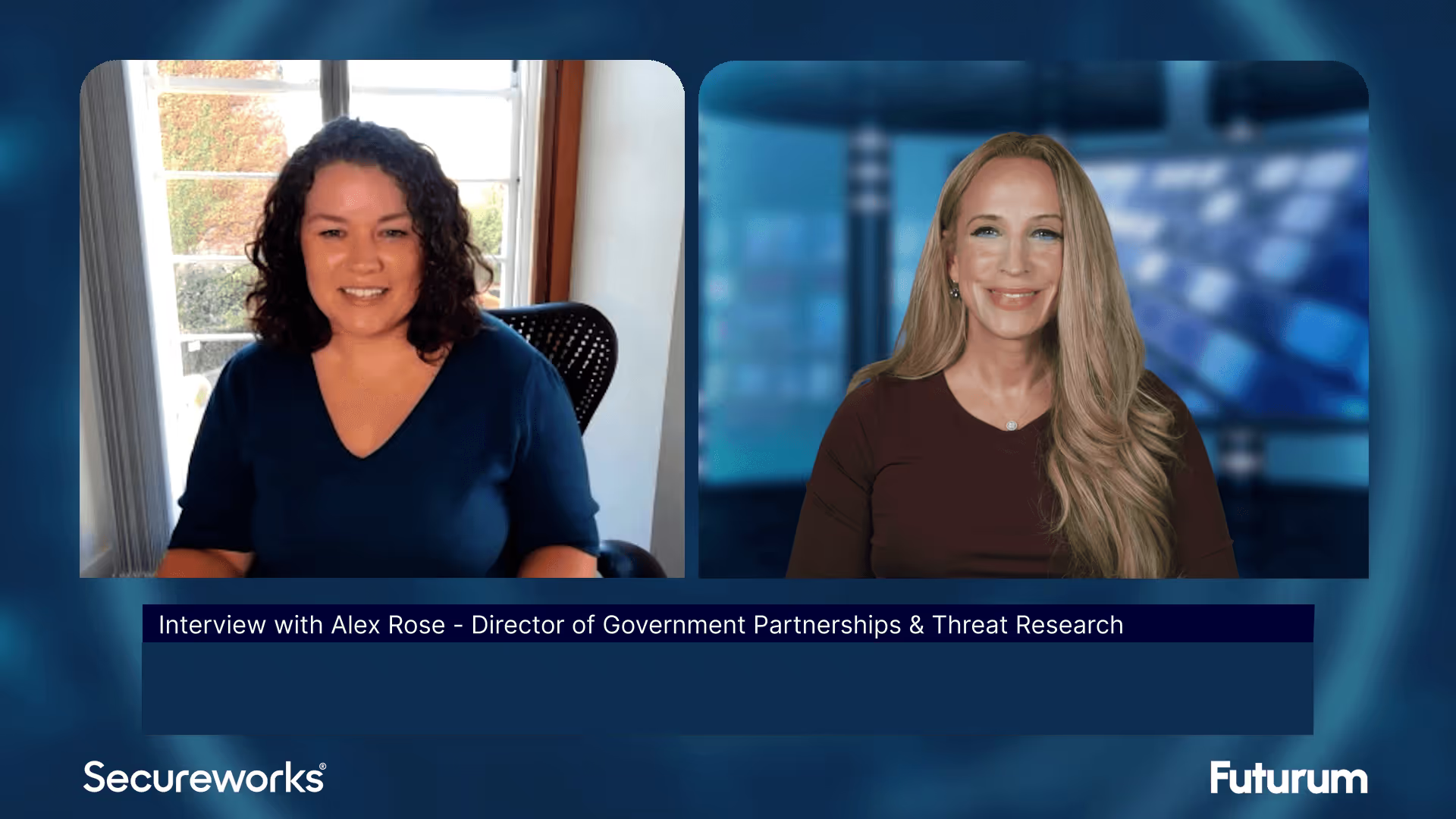
Threat Intelligence: Insights on Cybersecurity from Secureworks
Alex Rose from Secureworks joins Shira Rubinoff on the Cybersphere to share his insights on the critical role of threat intelligence in modern cybersecurity efforts, underscoring the importance of proactive, intelligence-driven defense mechanisms.

HP Launches World’s First Business PCs to Protect Against Quantum Hacks - The Six Five On the Road
On this episode of the Six Five - On the Road, hosts Patrick Moorhead and Daniel Newman are joined by HP's Ian Pratt, Global Head of Security for Personal Systems.
What is Autonomous Endpoint Management?
Autonomous Endpoint Management is a framework designed to unify IT operations and security teams on a single platform through real-time control and visibility.
QUANTUM
Quantum in Action: Insights and Applications with Matt Kinsella
Quantum is no longer a technology of the future; the quantum opportunity is here now. During this keynote conversation, Infleqtion CEO, Matt Kinsella will explore the latest quantum developments and how organizations can best leverage quantum to their advantage.
Accelerating Breakthrough Quantum Applications with Neutral Atoms
Our planet needs major breakthroughs for a more sustainable future and quantum computing promises to provide a path to new solutions in a variety of industry segments. This talk will explore what it takes for quantum computers to be able to solve these significant computational challenges, and will show that the timeline to addressing valuable applications may be sooner than previously thought.