
From Infrastructure to Intelligence: How Google Cloud Is Architecting the Agentic Enterprise
SHARE


At Google Cloud Next 2026, Patrick Moorhead and Muninder Sambi, VP of Google Distributed Cloud, examine the five infrastructure shifts enterprises must execute to support AI agents at production scale. From Fluid Compute and Agent Gateway to sovereign AI deployment via Google Distributed Cloud, the conversation maps the architectural decisions that determine how far agentic execution can scale.
Agent-driven workloads aren’t something infrastructure teams can plan for later. They’re showing up now, and the compute, networking, security, and data architecture built for traditional applications aren’t designed to handle them.
At Google Cloud Next 2026 in Las Vegas, Patrick Moorhead sat down with Muninder Sambi, VP of Google Distributed Cloud at Google Cloud, to break down what needs to change as AI agents move from small tests to real-world use across distributed environments.
They walk through five key shifts: how to manage unpredictable demand from agents without disrupting core systems, how to enforce identity and policy across massive numbers of autonomous processes, what partnerships like CME Group reveal about the need for consistent low-latency networks, why moving from systems that store data to systems that act on it requires a more unified data foundation, and how Google Distributed Cloud gives regulated industries a way to use advanced AI while keeping control over where data lives and how it’s handled.
Highlights include:
- Fluid Compute: Unifies Google Compute Engine and GKE under a single policy layer, allowing teams to handle unpredictable agent workloads without disrupting core applications.
- Agent Gateway: Centralizes policy enforcement for all agent traffic, managing identity, access, and inspection to reduce risk at scale.
- CME Group deployment: Shows that ultra-low-latency cloud infrastructure can support mission-critical financial workloads, with patterns that extend to other real-time industries.
- Knowledge Catalog + Smart Storage: Remove the need for custom pipelines by letting agents work directly with data where it already lives across systems.
- Google Distributed Cloud: Provides a tiered approach to data control, giving regulated organizations a way to run advanced AI locally while maintaining security and oversight.
Enterprises that treat agentic infrastructure as a software-only problem will hit compute, governance, and data ceilings faster than they expect. The architectural decisions made now determine the ceiling for AI execution at scale.
Watch now and subscribe to Six Five Media for analyst-led coverage from Google Cloud Next 2026.
Disclaimer: Six Five Media is a media and analyst firm. All statements, views, and opinions expressed in this program are those of the hosts and guests and do not represent the views of any companies discussed. This content is for informational purposes only and should not be construed as investment advice.
MUNINDER SAMBI:
Fundamentally, from an agentic era perspective, we believe data needs to turn into knowledge so that you can provide semantic search and semantic context across all your data sources.
PATRICK MOORHEAD:
The Six Five is on the road here at Google Cloud Next 2026 in Las Vegas. Been an exciting show here. Google has been talking a lot about the full stack all the way from agent makers at the top and applications all the way to infrastructure and pretty much everything in between, but also having open portals to make sure that customers don't feel locked in. So a lot of discussion about infrastructure. And what I wanted to talk about here is how to turn legacy infrastructure into more of an agentic infrastructure to be able to get things done. It is not the same. Your current infrastructure is not ready for agents, whether you look at the software, the hardware, and pretty much everything. I can't imagine a better person to have this conversation than Muninder from Google. Muninder, great to see you. Thank you for having me here. Yeah, great discussion in the green room. We had met in previous lives, but it's so wonderful to see you here. I want to just dive right in here. From a CIO perspective, regardless of the infrastructure, they want core applications they can rely on. They want to have it consistent. across even cloud on-premises if they can, and even whatever the environment, they need consistency. It's also good for security. But in the end, you have to deliver applications that work for the enterprise. You talked a lot at the show about fluid compute. How does fluid compute help with agentic applications inside of the enterprise? How is it different?
MUNINDER SAMBI:
Yeah, first of all, I mean, you and I have been in infrastructure for a very long time.
Patrick Moorhead:
Yes.
MUNINDER SAMBI:
It's really exciting times to be back in AI infrastructure.
PATRICK MOORHEAD:
No, seriously. I mean, it used to be, you know, you're an infrastructure guy and you're like, oh, look at all the kudos that the software guys are getting, right? But it's like, yeah, I did infrastructure for 20 years. This is great.
MUNINDER SAMBI:
Super exciting.
PATRICK MOORHEAD:
Thanks for bringing that up.
MUNINDER SAMBI:
Yeah. So to answer your question, I think here at Google, obviously, foundationally, infrastructure has to be highly resilient, scalable, and performance. It needs to cater towards what the application needs. And yes, the application today has been the core application, whether you deploy it on our Google Cloud Engine or our Kubernetes stack with GKE. And customers had to make a choice on which one would be the best. We are now offering consistent set of policies and capabilities across both the platforms. And that is what we believe is needed for the agentic AI. And that's what Fluid Compute is about. Now, you can't talk about just fluid compute if you don't talk about TPUs.
PATRICK MOORHEAD;
Yes.
MUNINDER SAMBI:
You need the best hardware accelerators in the world. And we just launched a new series of our TPU 8x series that are highly optimized, not just for training, because we know many of the CIOs you're talking about are actually the inferencing, reinforcement, relearning use cases. Now, for developing and offering this, the TPU infrastructure, the models that we have, you need to have the A-series, which is our A4 and A4 Ultra. They're optimized for inferencing, for the use cases that AI will leverage. But not all of them are needed for the agentic AI. Think of agents as digital personas of humans or applications. And for that, we also introduced the N4 series, CF4N, that is very well optimized for the network type upload where you have high network throughput that is needed. We also introduced the M4 series, which is very much around massive memory, high IOPS storage type of use cases. Databases could be one. And then the Z series as well. consistently across GCE as well as our GKE platforms. It's exciting times to see the number of compute families across the entire infrastructure that we are offering.
PATRICK MOORHEAD:
Well, it is. I've been tracking what we'll call on-premises cloud solutions forever. I was always wondering, when are people actually going to get serious about this? I think your customers and enterprises do appreciate you leaning in on this. In a way, if you combine what you're doing in in your public cloud, with what you're doing in GDC, I think it really is a good blend of them. Agent sprawl is real. It's real because there's value. Even in my tiny company, we have 50 agents per application, and that's probably light. But once they start showing value, you want more. I'm curious, how does Agent Gateway reduce some of that sprawl, limit the attack surface for security, and improve governance? And also, if you're at it, maybe talk about Cloud Insights and how that blends in.
MUNINDER SAMBI:
Yes, absolutely. So, you are not the only one with agents problems. Almost every enterprise we talk to…
PATRICK MOORHEAD:
By the way, it's a good thing, but it's a challenging thing. But it's crazy.
MUNINDER SAMBI:
Yes. Every developer, every organization that's developing apps or a function is looking into agents. Enterprises that we talk to, They talk about this agent sprawl from tens and hundreds of thousands. And some even have given me examples of 500,000 agents that their developers have already created running in the cloud. What happens is these are developed on distinct platforms. And you and I both know when you develop different distinct platforms, you miss out on governance and security. Sure. The second part of the challenge of agents is their non-deterministic traffic patterns. Yes. They can talk to anything, anywhere, if the policies are not set right. And we've done this in the past. You can take OSS-based infrastructure, you can deploy it, but it's not really enterprise-grade. And I think what you saw Thomas talk about, the Gemini Enterprise Agent Platform, Agent Gateway, is the single policy enforcement that brings the enterprise-grade capabilities to ensure it's governed and it's secure. It works with agent identity, agent registry, as well as model armor, and seamlessly integrates becoming the single point of policy enforcement to ensure secure access of agents to models, to tools, or other agents in a consistent manner complying to the enterprise policy.
PATRICK MOORHEAD:
And just for all the viewers out there, how much of the estate does the agent gateway cover? Like is it everywhere inside of Google platform?
MUNINDER SAMBI:
As soon as you load up our agent platform, agent gateway is automatically instantiated. It's a full cloud native service that helps protect not just your agents and your lifecycle of the agents once they have registered and have an identity. It provides in your data path. policy to ensure what those agents can actually do. Many customers that we talk to, especially the CIOs and security advisors, they're scared. What if someone put up a malicious agent that was not registered properly or impersonated a different identity and had access to data that it should not and could do a command and control data exfiltration? You need to have and think about security almost as soon as you start deploying agents so that you can govern what they can access, who they can access, and the communication patterns.
PATRICK MOORHEAD:
So, good discussion, security, and governance of agents, but performance is important too. ultra low latency, nanosecond clock speeds. I think you talked a little here at the show about work you've done with CME. And I'm curious how, beyond financial services, where do you see these capabilities having the biggest impact, low latency and performance? I always love the financial folks, always start early because they make money off the lowest latency.
MUNINDER SAMBI:
You're absolutely right. So, Chicago Mercantile Exchange, we've been working with them. As you know, one of the biggest mission critical requirements driven by latency, high performance, and resiliency has been the financial sector. Market data, as well as the derivatives market. We've all lived it. Chicago Mercantile Exchange was working with us to develop an ultra low latency cloud infrastructure. It's not just about ultra low latency. It's about deterministic ultra low latency so that either CME or any of their clients get the same latency when they access the world's largest derivative market. We're super excited of having this in preview, and I think this is one of the first industries taking a critical financial application and moving it into the cloud. We're going to start with CME and its clients, but we do believe this technology will evolve. Obviously, the financials care about the ultra-low latency. We do have other markets that could be cryptographic, could be crypto itself. Interesting. Where we see some opportunities, even gaming, is seminal for a low latency model, not ultra low latency, not the nanosecond latency. So we leverage the technology we built across network and compute, and we'll extend that to those market segments.
PATRICK MOORHEAD:
You're hitting on industries that typically are the leaders in this. The outcome helps them make more money, which is always a good thing.
MUNINDER SAMBI:
Yes.
PATRICK MOORHEAD:
The major theme of the keynote was this idea of going from a system of record to a system of action. and there's been a lot of industry discussion in how agents play into this, but there are also elements of smart storage, your catalog, and also cross-cloud lake houses where the rubber has to meet the road. I'm curious, what are the biggest architectural shifts that enterprises have to make so AI can reason over across compute environments that are in different places because that's been the hardest part. You can get it to do what you want in one place, but across multiple environments at the right speed, it's been really tough.
MUNINDER SAMBI:
It's been extremely hard. As you know, data is so important for an enterprise. Data today is in different silos. You have it in Google Cloud Storage. You might have it in our databases. You might have it in our data warehousing like BigQuery, Spanner, and other parts. It's stored in multiple places, and it's isolated. Fundamentally, from an agentic era perspective, we believe data needs to turn into knowledge so that you can provide semantic search and semantic context across all your data sources. with no custom pipelines, no porting of data. Your data stays where it is, but you get the context as and when needed. And that's where Knowledge Catalog comes into play. The second element that you talked about, which is about smart storage. Now, storage knows about whether it's an object file, but it doesn't really know what that object file is actually capable of. So how do you auto-annotate this actual storage and have the object tell what it's capable of and what type of information it has? And that's where smart storage comes into play. You need to have a lake house. So, and having it across cross-cloud is super important, because you are going to have data not just in one cloud provider, many cloud providers, and even on-prem. So how do you unify this entire data lake function and offer it as a simple, easy to use, fully orchestrated data lake house? These three fundamental moves allow our customers to now go from just data to knowledge. That's very powerful because that's what agents will understand.
PATRICK MOORHEAD:
Well, it is. It's funny. Three years ago, when we first started talking about LLMs and we saw examples of people doing recipes, I said, How are we going to make this into the enterprise? It's going to be all about data, and that's going to be the most difficult thing to get over. Here we are three and a half years later. Sure, the people question has been a challenge as it relates to agents, but it's getting your data in order. In the age of agentic AI, your data has to be cleaner than it needed to be before. And having deterministic outcomes with low precision operations is that challenge. So I like what you're doing, and particularly this cross-environment data, pulling in, because that is nirvana, right? And how do I do this regardless of where my data is? of getting the embeddings done on the fly. I don't know if MCP plays into this at all, but the ability to make accurate data and adding outcomes that essentially do what your customers want to do. The final thing I want to hit on is sovereignty, right? We've been covering Sovereign Cloud and the multiple variations of it, who needs it and why. And there's been a ton of action over the last 18 months, whether it's countries worried that they might get unplugged at a moment. But what I saw a lot in my last two trips to Davos were a lot of conversations about having sovereign AI clouds, right? For obvious reasons, national security, the ability to create that. But I'm curious, how are you balancing the need for control with the need for ultimate innovation. Can you really have your cake and eat it too?
MUNINDER SAMBI:
That's been a challenge. And by the way, the definition of sovereignty, depending on who you ask, is very different.
PATRICK MOORHEAD:
Yes, probably three different definitions. Yes.
MUNINDER SAMBI:
So let me give at least a very high level what those levels, at least we see from a Google perspective. The first, my data lives in an environment, in a country, that it cannot leave. In Google Cloud, with Google Cloud Boundary, the assured workloads that we have, we can absolutely offer that. Data resides in the country, doesn't have to leave. It's supported by custom key management, so customers can now bring their own keys, manage the keys on verifiable, tested hardware infestation. Super, super important. And we've been really successful with many of the enterprises there. The second, it's not about data. It isn't about data where it resides. It's about the operator. They want the operator of the cloud to be an independent local entity. And that's exactly what we've done with Google Cloud Dedicated. As you've seen, in France, we launched the partnership with SANS. That's right. Which operates a fully managed Google Cloud Dedicated with AI capabilities and GPU capabilities that we bring in. Last, it's about not just the operator to be an independent entity, it's about the data being completely isolated from the public internet. Not just public internet, from any connectivity outside. And that's where the Google Distributed Cloud comes. And what customers have struggled with, they either choose the path of sovereignty, or they had to choose the path of AI. And they were being left behind. But I think as you saw, one of the big things that we did is these sovereign customers today no longer have to compromise on the AI capabilities that they need. We can start with Google Cloud Boundary, where you are in GCP. You get the best, and the best, latest, and the greatest that we launched today. You can see it in our Google Cloud Dedicated, where we are offering AI capabilities through GPU infrastructure. And then we launched the GDC, which is the Google Distributed Cloud AI Engine that's powered by NVIDIA and partnership with Dell on the latest, greatest hardware accelerators. But we also built this AI governance to make our AI stack sovereign. A few examples, we also introduced confidential inferencing, we introduced capabilities of safety and security, and we provided data logging and telemetry so you can audit what the model is doing. all the flexibility that our customers need to choose. I've seen enterprises who need all three. I've seen governments, depending on the classification level, they can go with IL-5 in the cloud, IL-6, and top secret with Google Distributed Cloud. I do think we have covered the entire spectrum of sovereignty with our portfolio.
PATRICK MOORHEAD:
No, I agree. I have spent a lot of time in the UAE and over in Europe and the conversations in Davos, and it aligns completely. I'm glad we talked about the three definitions and the three levels. Muninder, I need to always be careful as an analyst when I say things like this, but I have seen more acceleration in GDC and these types of solutions than I've seen anywhere else. Hats off to you. Keep up the innovation with the team and want to thank you for your time. Thank you, Brad. Very happy to be here. Thank you. This is Patrick Moorhead with The Six Five here at Google Cloud Next 2026. Check out all of our content for Google Cloud Next and also on local cloud operating models that span local to the public cloud. Take care. Hit that subscribe button.
MORE VIDEOS
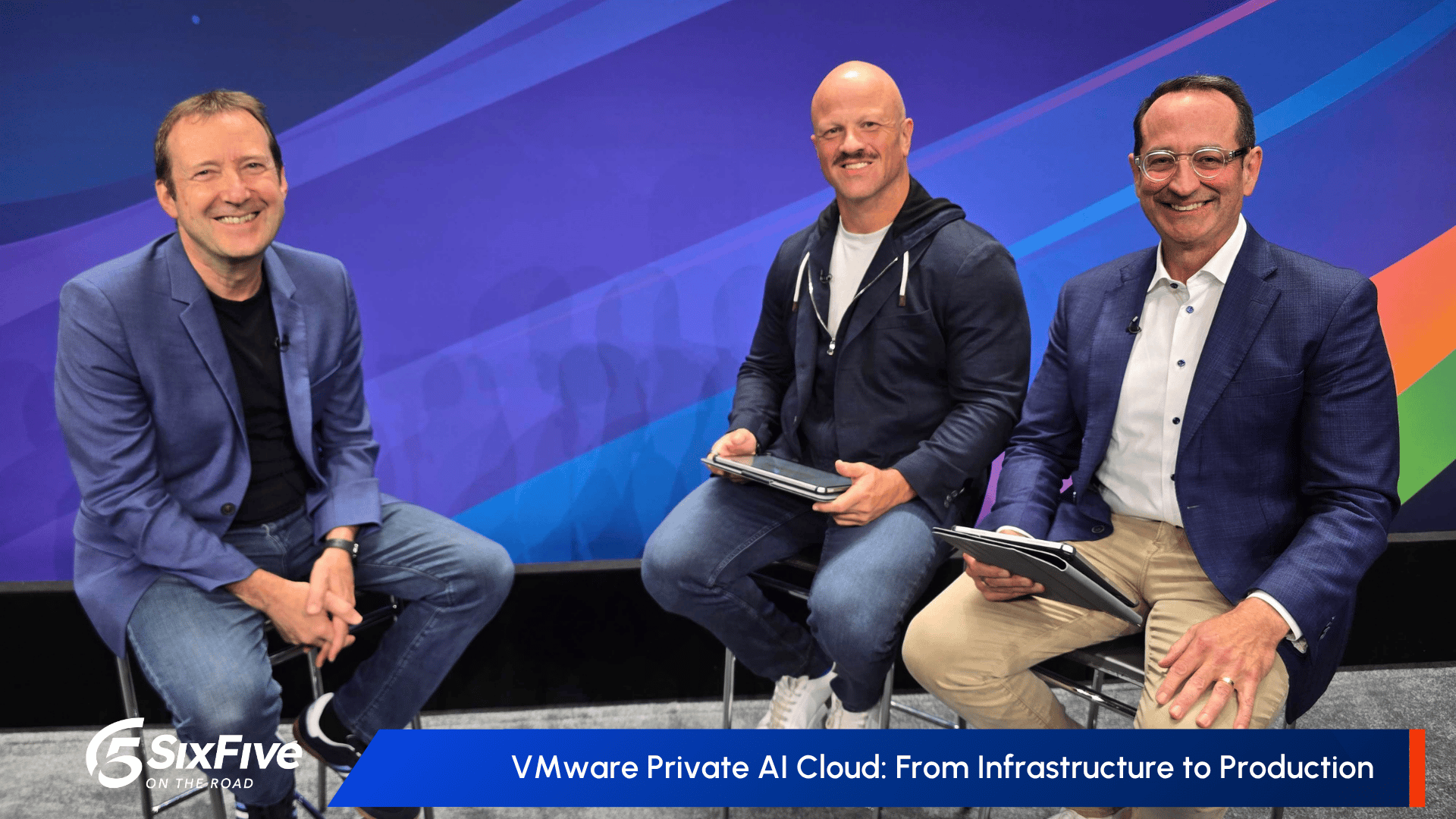
The 15-Cent AI Query: Broadcom's Paul Turner on Rebuilding Enterprise AI Economics
A Six Five study found an eight-to-one cost gap between running an AI agent through a leading frontier model and running it on modest on-prem hardware. Paul Turner, Chief Product Officer of the VMware Cloud Foundation Division at Broadcom, joins Daniel Newman and Patrick Moorhead at VMware Explore 2026 to explain how VMware's AI Factory turns GPU provisioning, model management, and security into a repeatable path from infrastructure to production AI.


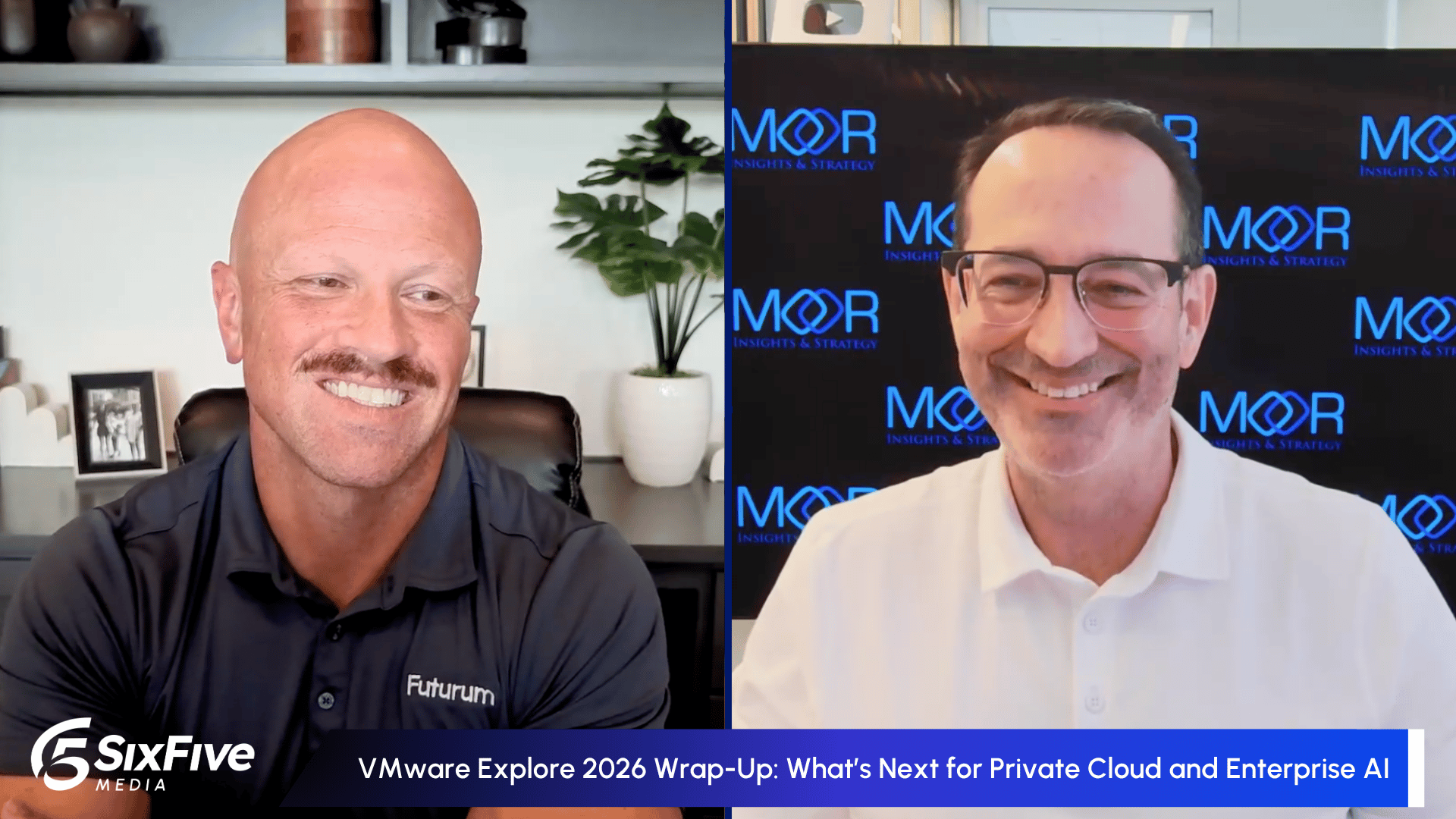
VMware Explore 2026 Wrap-Up: What’s Next for Private Cloud and Enterprise AI
What infrastructure model makes the most sense when AI workloads move from experimentation into production?
In this analyst recap of VMware Explore 2026, Patrick Moorhead and Daniel Newman examine this central question facing enterprise technology leaders and how Broadcom and VMware are positioning private cloud as a critical foundation for bringing enterprise AI into production.
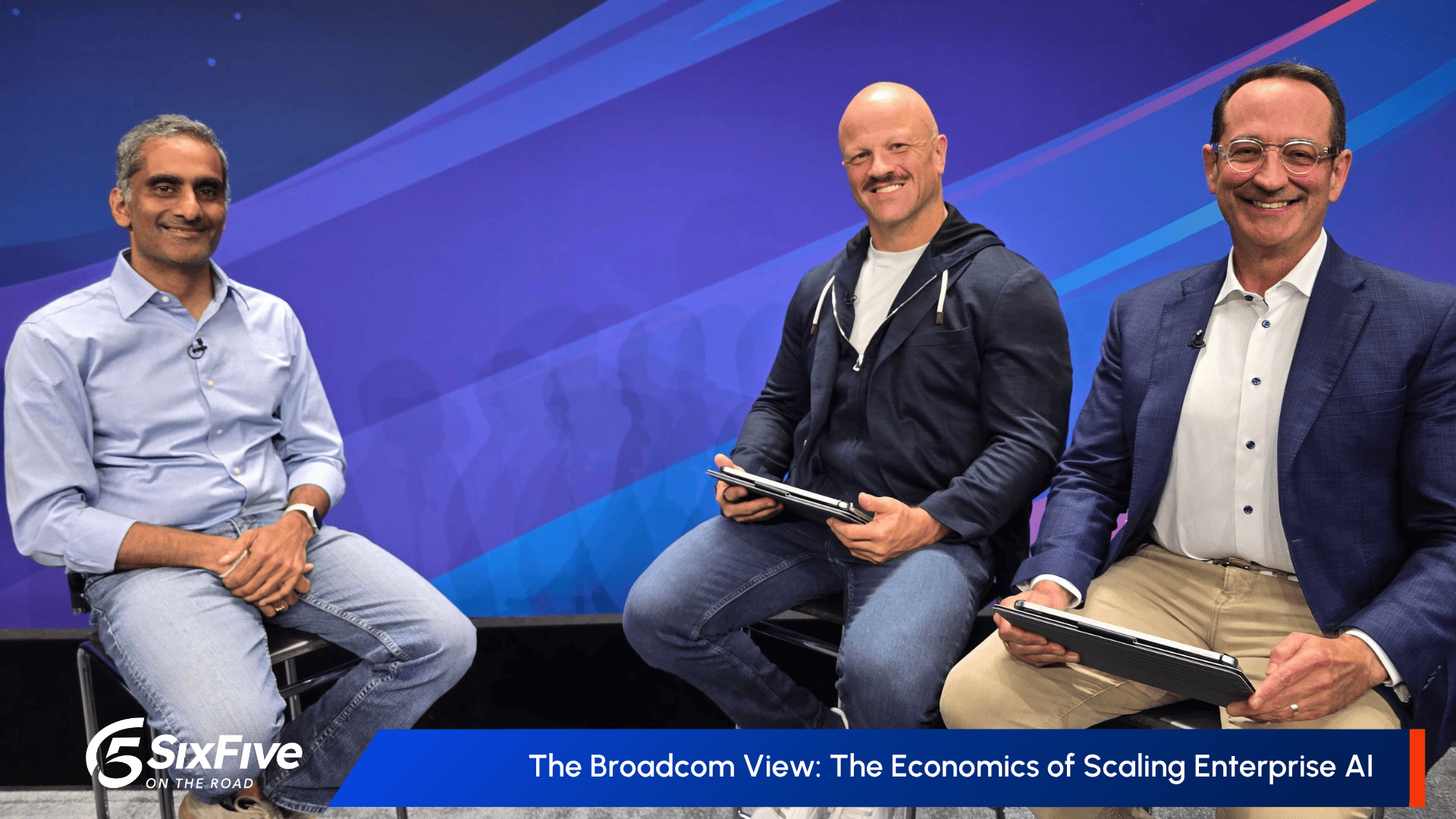
Broadcom's Ram Velaga on the AI Economics Pulling Enterprise Workloads Back On-Prem
Enterprise AI economics are pulling workloads back toward on-premises infrastructure, with control over data as the primary driver. Ram Velaga, President of Broadcom's Infrastructure Software Group, joins Patrick Moorhead and Daniel Newman at VMware Explore 2026 to detail how Broadcom is helping customers route AI workloads, govern agents, and rebuild VMware's role underneath the AI buildout.
Other Categories
CYBERSECURITY
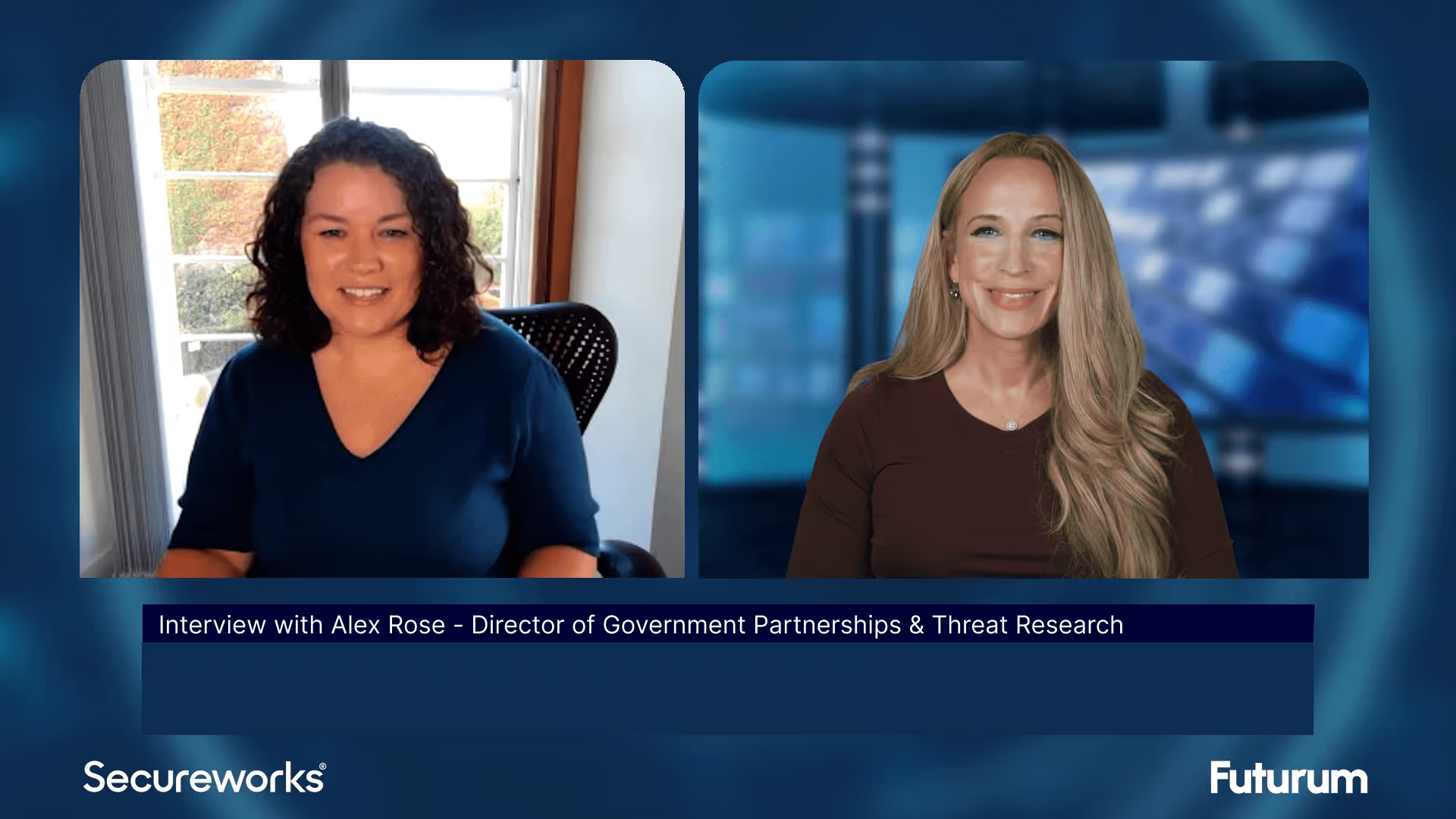
Threat Intelligence: Insights on Cybersecurity from Secureworks
Alex Rose from Secureworks joins Shira Rubinoff on the Cybersphere to share his insights on the critical role of threat intelligence in modern cybersecurity efforts, underscoring the importance of proactive, intelligence-driven defense mechanisms.

HP Launches World’s First Business PCs to Protect Against Quantum Hacks - The Six Five On the Road
On this episode of the Six Five - On the Road, hosts Patrick Moorhead and Daniel Newman are joined by HP's Ian Pratt, Global Head of Security for Personal Systems.
What is Autonomous Endpoint Management?
Autonomous Endpoint Management is a framework designed to unify IT operations and security teams on a single platform through real-time control and visibility.
QUANTUM
Quantum in Action: Insights and Applications with Matt Kinsella
Quantum is no longer a technology of the future; the quantum opportunity is here now. During this keynote conversation, Infleqtion CEO, Matt Kinsella will explore the latest quantum developments and how organizations can best leverage quantum to their advantage.
Accelerating Breakthrough Quantum Applications with Neutral Atoms
Our planet needs major breakthroughs for a more sustainable future and quantum computing promises to provide a path to new solutions in a variety of industry segments. This talk will explore what it takes for quantum computers to be able to solve these significant computational challenges, and will show that the timeline to addressing valuable applications may be sooner than previously thought.