
From Silicon to Cloud: Microsoft and HPE Driving the Next Era of Hybrid Infrastructure
SHARE


Enterprise infrastructure decisions around hybrid, edge, and sovereign cloud are no longer modernization exercises. They are long-term architectural commitments being shaped by AI adoption, data residency requirements, and governance mandates that cloud-only strategies cannot satisfy. Meena Gowdar and Justin Slane from Microsoft join Six Five at HPE Discover 2026 to examine how the Microsoft and HPE partnership is helping enterprises extend cloud capabilities, address sovereignty requirements, and modernize mission-critical workloads on a foundation built for what comes next.
Most cloud conversations assume the cloud is always there. Meena Gowdar's answer to that assumption is blunt: customers want a fallback plan for the day they wake up and no longer have access to public cloud, and that requirement is reshaping how Microsoft and HPE are building hybrid infrastructure together.
At HPE Discover 2026 in Las Vegas, David Nicholson and Alastair Cooke sat down with Meena Gowdar, Senior Director of Product Management, Azure Edge Infrastructure at Microsoft, and Justin Slane, GM of the HP and HPE Partnership for Windows and Device Sales at Microsoft, to dig into why hybrid and edge computing keep mattering even as AI accelerates everything around them. Gowdar explains why latency, data gravity, and manufacturing environments that cannot tolerate downtime keep workloads anchored at the edge, and why data residency requirements tied to specific countries and regulatory jurisdictions make that anchor permanent rather than temporary.
Sovereignty has moved well past a checkbox concern, with Gowdar pointing to customers wanting operational control and genuine continuity if they lose public cloud access entirely, a scenario expanding into government, defense, and regulated industries demanding optionality competing solutions can't deliver; Microsoft 365 Local brings Exchange and SharePoint on-premises for continuity, Foundry Local puts thousands of AI models within reach at the edge through Arc extensions, and Slane calls Microsoft's FY27, beginning this July, an explosive, breakout moment for the Microsoft and HPE co-sell partnership, pointing to Windows Server 2025's multi-layered security, Azure Arc as a single control plane, and free Hotpatch capability as proof the partnership delivers more than infrastructure plumbing.
Key Takeaways:
🔹 Hybrid and edge computing remain durable because some workloads simply cannot move to the cloud. Latency-sensitive inferencing, data gravity, and manufacturing environments that cannot sustain downtime keep workloads anchored locally, and Azure Local is Microsoft's answer for running Azure capabilities directly at the edge.
🔹 Sovereignty now means operational continuity, not just data location. Customers want a fallback plan for losing public cloud access entirely, and that requirement is expanding hybrid and edge use cases into government, defense, and regulated industries that demand optionality.
🔹 Microsoft 365 Local and Foundry Local are bringing core cloud capability on-premises without sacrificing sovereignty. Exchange and SharePoint can run locally for business continuity, while Foundry Local gives customers access to thousands of AI models deployable at the edge through Arc extensions, keeping innovation inside the customer's jurisdiction.
🔹 FY27 represents what Slane calls an explosive, breakout year for the Microsoft and HPE co-sell partnership. Market conditions, product readiness, and a shared narrative grounded in control, trust, and resilience are converging at the same moment heading into Microsoft's new fiscal year.
🔹 Windows Server 2025 on HPE infrastructure delivers more than people expect from infrastructure software. Multi-layered security, Azure Arc as a single control plane across environments, and free Hotpatch capability are reducing downtime and simplifying patching for both customers and partners managing mission-critical workloads.
Hybrid infrastructure isn't a holdover from before the cloud. It's the answer to a question most cloud strategies still don't ask: what happens the day the cloud isn't there.
Watch the full video at sixfivemedia.com, and be sure to subscribe to our YouTube channel so you never miss an episode.
Disclaimer: Six Five Media is for information and entertainment purposes only. Over the course of this webcast, we may talk about companies that are publicly traded, and we may even reference that fact and their equity share price, but please do not take anything that we say as a recommendation about what you should do with your investment dollars. We are not investment advisors, and we ask that you do not treat us as such.
MORE VIDEOS
.png)
AI Safety Alarms, China's Distillation Reckoning, and Qualcomm's AWS Breakthrough: A Pivotal Week for Enterprise AI
A viral AI extinction claim, a federal advisory naming six Chinese AI labs for industrial-scale distillation, and a $60 billion Qualcomm-AWS silicon pact define a week when enterprise AI risk and opportunity collided head-on. Patrick Moorhead and Daniel Newman weigh in on what's signal and what's noise across AI safety, chip supply deals, and a market rally still betting big on compute.


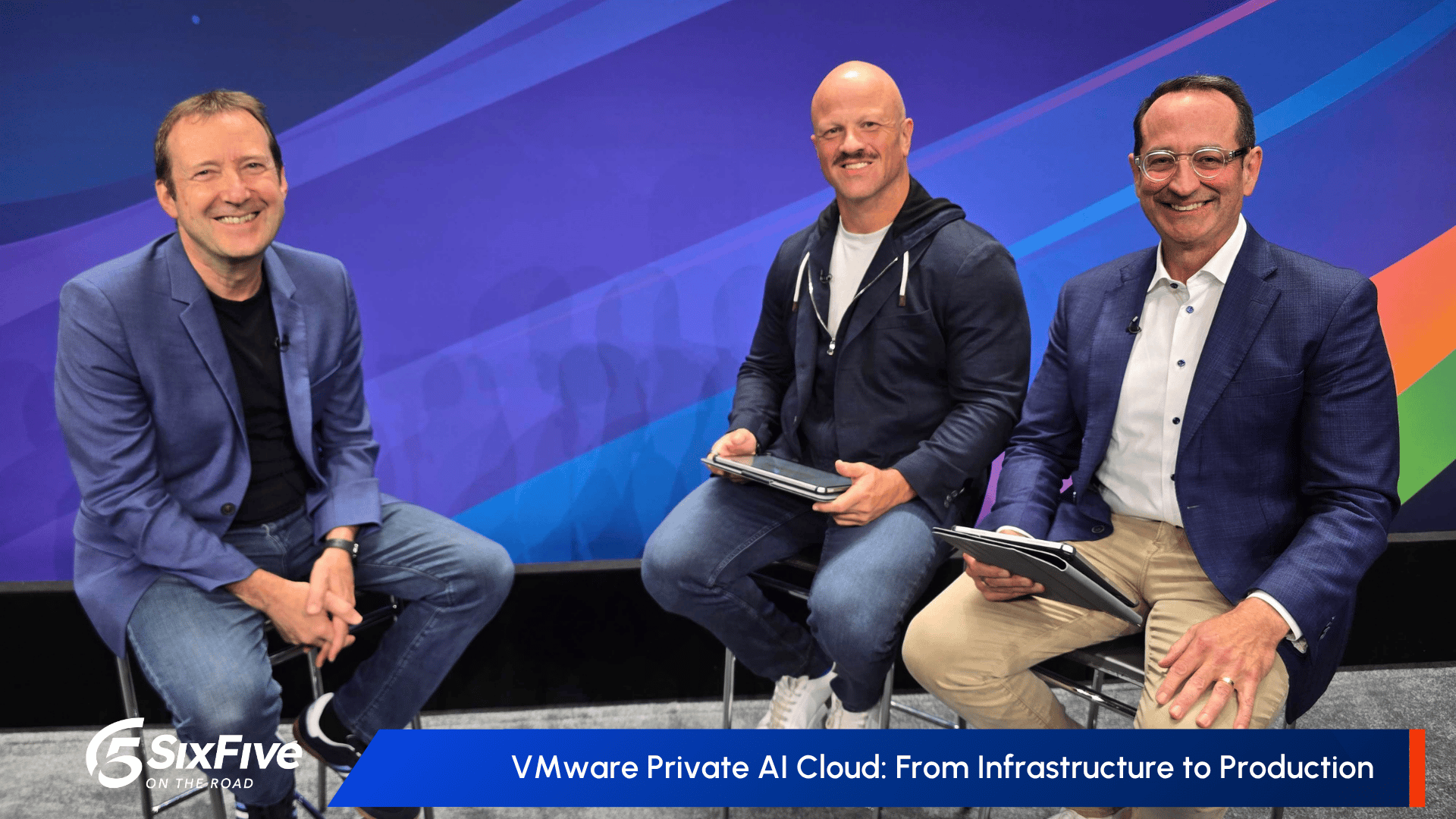
The 15-Cent AI Query: Broadcom's Paul Turner on Rebuilding Enterprise AI Economics
A Six Five study found an eight-to-one cost gap between running an AI agent through a leading frontier model and running it on modest on-prem hardware. Paul Turner, Chief Product Officer of the VMware Cloud Foundation Division at Broadcom, joins Daniel Newman and Patrick Moorhead at VMware Explore 2026 to explain how VMware's AI Factory turns GPU provisioning, model management, and security into a repeatable path from infrastructure to production AI.
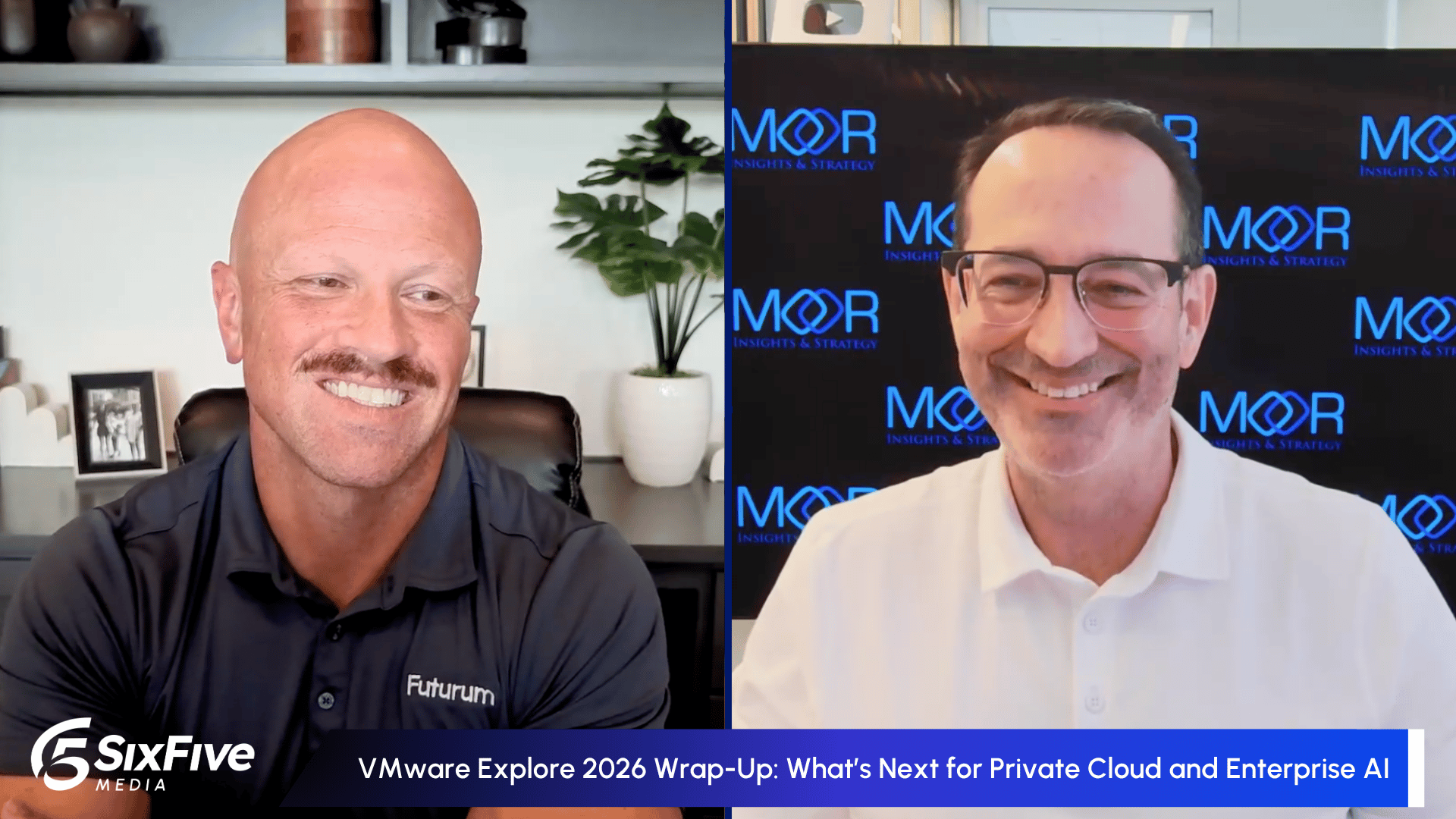
VMware Explore 2026 Wrap-Up: What’s Next for Private Cloud and Enterprise AI
What infrastructure model makes the most sense when AI workloads move from experimentation into production?
In this analyst recap of VMware Explore 2026, Patrick Moorhead and Daniel Newman examine this central question facing enterprise technology leaders and how Broadcom and VMware are positioning private cloud as a critical foundation for bringing enterprise AI into production.
Other Categories
CYBERSECURITY
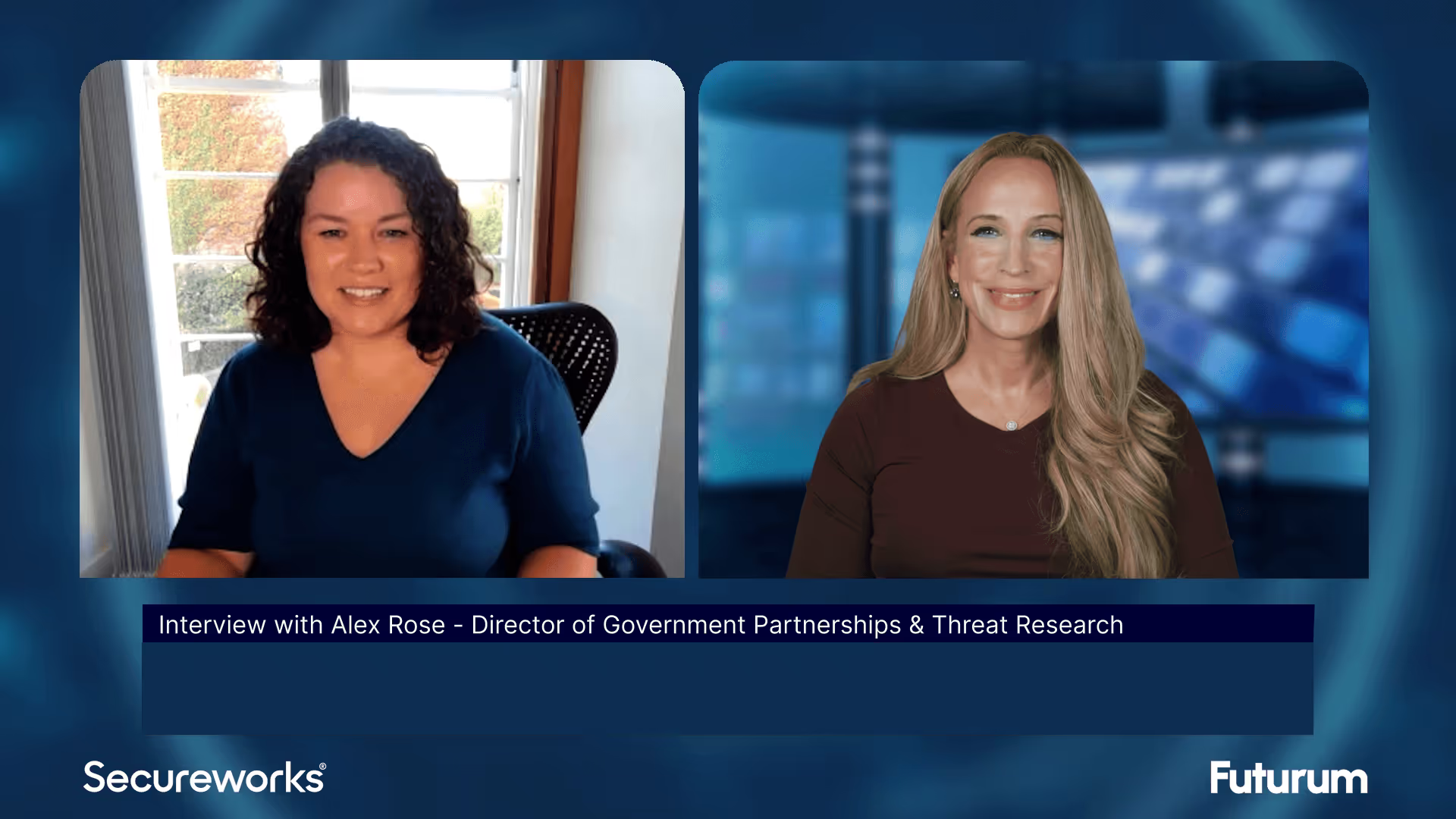
Threat Intelligence: Insights on Cybersecurity from Secureworks
Alex Rose from Secureworks joins Shira Rubinoff on the Cybersphere to share his insights on the critical role of threat intelligence in modern cybersecurity efforts, underscoring the importance of proactive, intelligence-driven defense mechanisms.

HP Launches World’s First Business PCs to Protect Against Quantum Hacks - The Six Five On the Road
On this episode of the Six Five - On the Road, hosts Patrick Moorhead and Daniel Newman are joined by HP's Ian Pratt, Global Head of Security for Personal Systems.
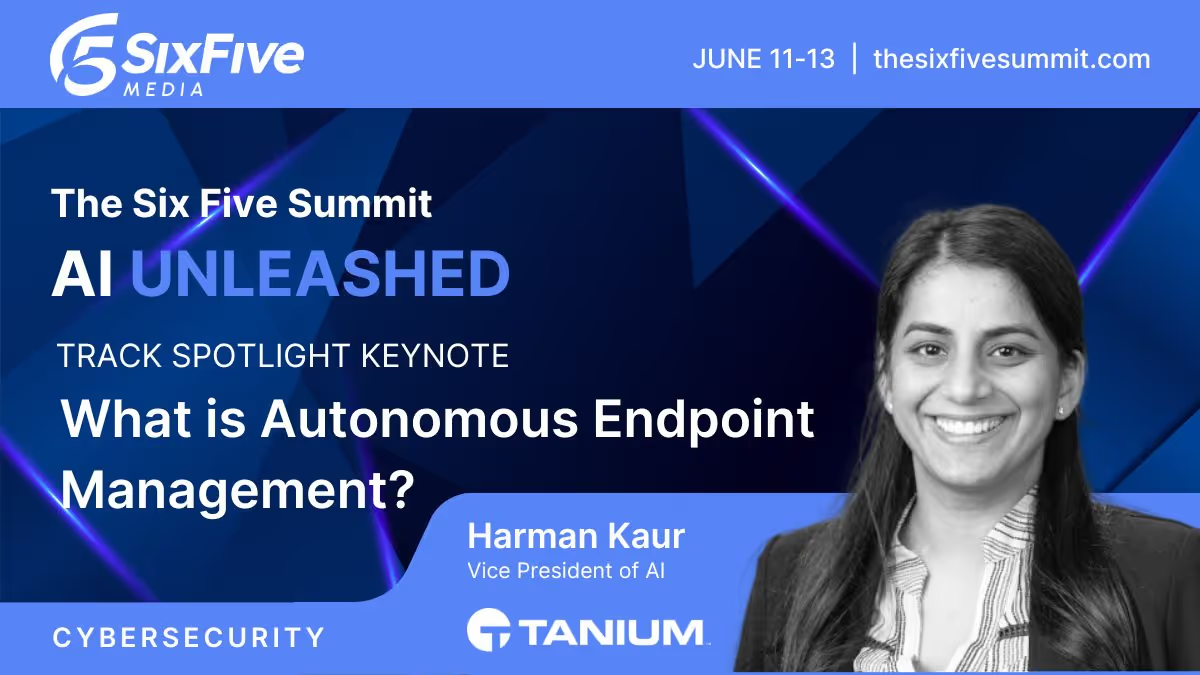
What is Autonomous Endpoint Management?
Autonomous Endpoint Management is a framework designed to unify IT operations and security teams on a single platform through real-time control and visibility.
QUANTUM
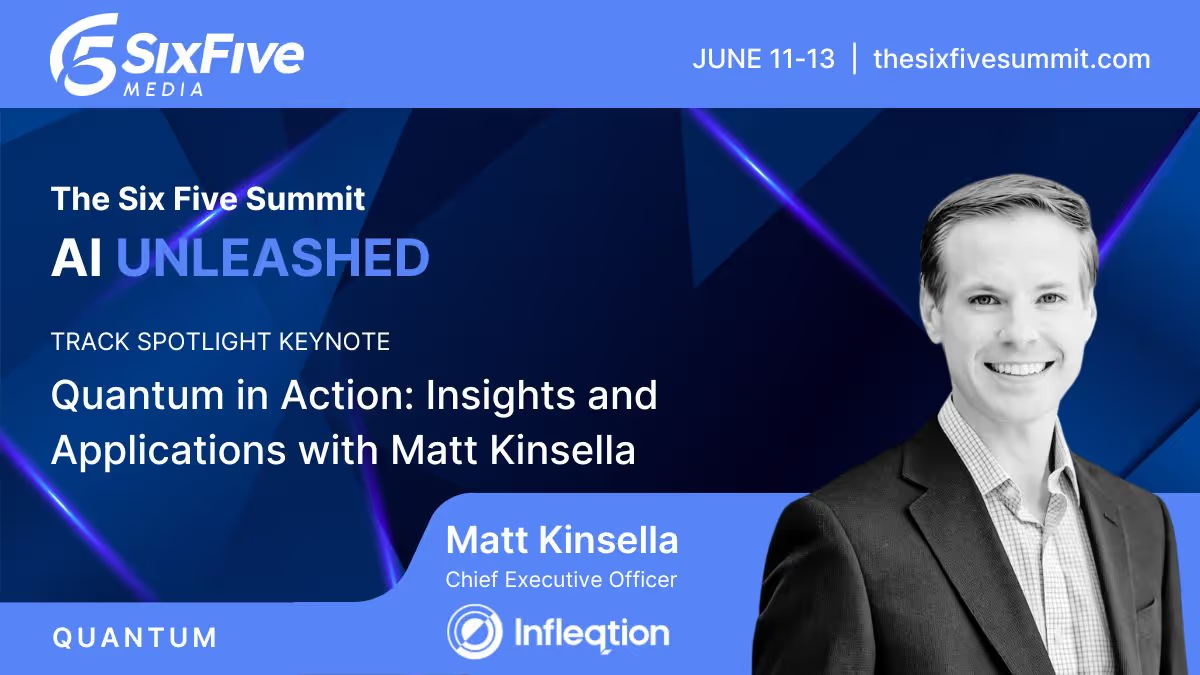
Quantum in Action: Insights and Applications with Matt Kinsella
Quantum is no longer a technology of the future; the quantum opportunity is here now. During this keynote conversation, Infleqtion CEO, Matt Kinsella will explore the latest quantum developments and how organizations can best leverage quantum to their advantage.
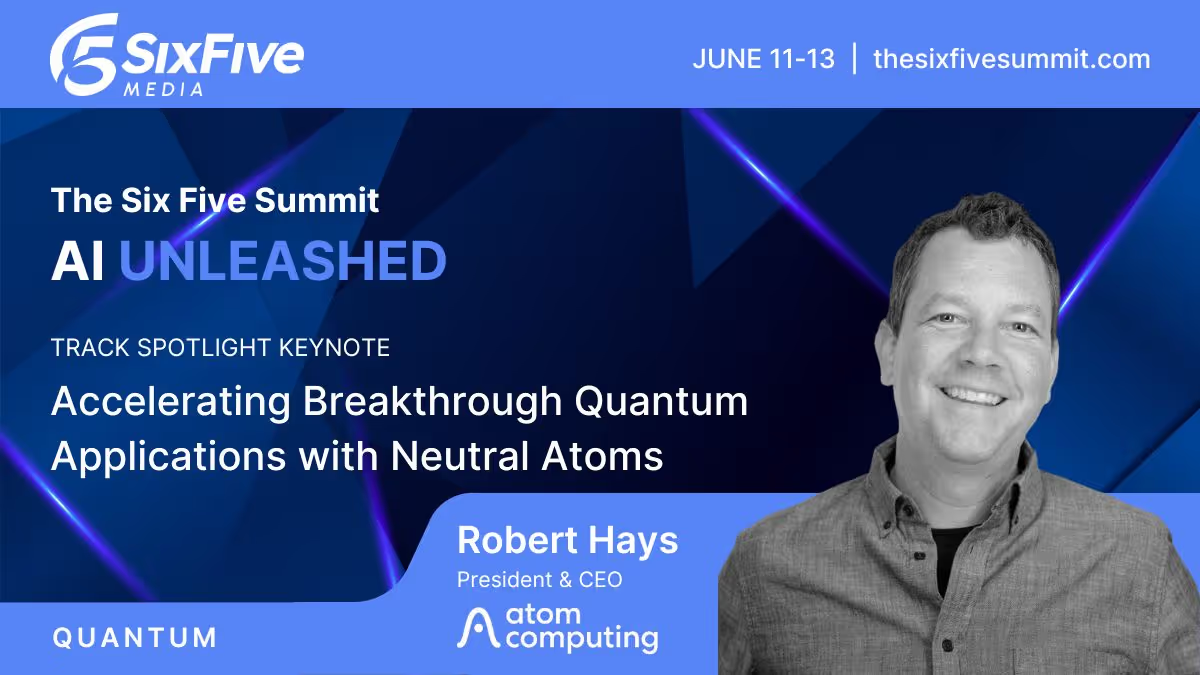
Accelerating Breakthrough Quantum Applications with Neutral Atoms
Our planet needs major breakthroughs for a more sustainable future and quantum computing promises to provide a path to new solutions in a variety of industry segments. This talk will explore what it takes for quantum computers to be able to solve these significant computational challenges, and will show that the timeline to addressing valuable applications may be sooner than previously thought.