
From Strategy to Outcomes: How Dell Services Are Shaping the Next Enterprise AI Era
SHARE


Enterprises are no longer asking whether to adopt AI. They are asking why execution keeps falling short of strategy. In this Six Five On The Road conversation at Dell Technologies World 2026, Doug Schmitt, CIO and President of Services at Dell Technologies, joins Patrick Moorhead and Daniel Newman to examine what it takes to move enterprise AI from pilot to production, how agentic systems are changing the services engagement model, and what governance, token economics, and infrastructure alignment demand from organizations as AI scales.
Enterprises have been experimenting with AI for years. The organizations that are pulling ahead now are the ones that have moved from experimentation to operational execution. The gap between a working proof of concept and a deployed, governed, production AI system is where most transformation initiatives stall and where services organizations are being asked to carry more of the weight.
At Dell Technologies World 2026 in Las Vegas, Patrick Moorhead and Daniel Newman sit down with Doug Schmitt, Chief Information Officer and President of Services at Dell Technologies, to examine what enterprise AI adoption actually looks like at the execution layer. Doug leads both IT and Services at Dell, a structural alignment that gives him a unique vantage point on where customers are succeeding, where they are underestimating the operational changes required, and what the agentic enterprise demands from infrastructure, governance, and long-term strategy.
The conversation covers agentic AI workflows, token economics, workload placement, and how Dell is helping enterprises navigate the growing complexity of AI at scale as it moves deeper into production environments.
Key Takeaways:
🔹 Aligning IT and Services under one leader changes the customer conversation. Doug Schmitt's dual role gives Dell a closed-loop view from internal AI deployment to customer transformation, making the services engagement more grounded in operational reality than competitive positioning.
🔹 Enterprises are underestimating the operational changes AI requires. Technology deployment is the first step. Workflow redesign, governance, change management, and infrastructure alignment are where the complexity accumulates and where outcomes are won or lost.
🔹 Agentic AI requires a different kind of services engagement. Organizations need architectural guidance on how autonomous systems fit within existing governance frameworks and operational accountability structures.
🔹 Token economics and workload placement have moved to the executive agenda. Enterprises that do not model cost and observability tradeoffs early face material overruns as AI scales.
🔹 Agentic systems will reshape both enterprise operations and customer experience. The next phase of AI adoption isn’t about more automation, it’s about systems that reason, plan, and act across workflows in ways that change how organizations are structured and how customers experience them.
🔹 Proactive organizations will win. The next AI leaders will be the ones that treat services, governance, and operational alignment as first-order strategic investments, not the cleanup work that follows a technology deployment.
Watch the full video at sixfivemedia.com, and be sure to subscribe to our YouTube channel so you never miss an episode.
Disclaimer: Six Five Media is for information and entertainment purposes only. Over the course of this webcast, we may talk about companies that are publicly traded, and we may even reference that fact and their equity share price, but please do not take anything that we say as a recommendation about what you should do with your investment dollars. We are not investment advisors, and we ask that you do not treat us as such.
DOUG SCHMITT:
Speed is going to be a force multiplier. If you're into your markets, if you're leveraging this, it's a great capability in terms of what you're going to be able to deliver. So when you put a business model, a technology transformation, you got to run that at speed.
PATRICK MOORHEAD: The Six Five is on the road here at Dell Technologies World. 2026 in Las Vegas. Daniel, it's been a great show so far. And if I look back, you know, two or three years ago, right, we were just all happy to be here with LLMs and chatbots and what we could do. And then kind of, you know, the year after that, it was, hey, look at this cool tech called Agents. But now it's all about ROI. And that's what I saw up on stage today is getting closer to it to more enterprise ROI.
DANIEL NEWMAN:
Yeah I think with all the spending whether it's the capex spending whether it's enterprises making big bets and investments hiring you know applications investments A.I. tooling companies the boards the CFOs. They're all looking for those receipts Pat. They're saying hey we've spent all this money. When do we start to be able to see measurable efficiencies measurable productivities. When does I make our business grow. And I think that's really what this show is focused in on.
PATRICK MOORHEAD:
That's right. And there's not a single enterprise out there that has enough resources to pull this off enterprise wide. And what do they do. They go to services companies. But more and more and even in my CIO engagements they're looking to the vendors of the technology and their services groups to help them get this over the line in particular companies who actually have done it. And I can't imagine a better person to have this conversation with. And Doug Schmidt great to see you.
DOUG SCHMITT:
Good to see you. Good to be back here at Dell World with yourself, Pat and Dan. Always good to catch up.
PATRICK MOORHEAD:
Is this like four years in a row here?
DOUG SCHMITT:
It has been. It's wonderful. I was just thinking about that. Yes. Always good conversation, as you said, moving fast.
PATRICK MOORHEAD:
Well, hopefully this one will be just as good or better.
DANIEL NEWMAN:
Doug's Doug's top shelf and a regular here and we appreciate that Doug. And look the setup of this is really interesting for you because you have a dual mandate. Pat and I have jokingly asked you get paid for both jobs but you do two jobs right. You lead IT for Dell and you lead services for Dell. And in an era where one of the most interesting stories a company can tell is the customer zero story. You are in a very unique position because you are in the middle of basically implementing the next generation of A.I. and technology into the company. And you're also responsible for what Pat was talking about leading those services to help all your enterprise customers. Five thousand I heard plus enterprise clients. Correct. Three.
DOUG SCHMITT:
I
DANIEL NEWMAN:
be able to to deploy their AI factories. Talk about how your kind of dual mandate provides you with the ability to see customer transformation and then be able to build services that scale outwardly. But also what are you learning internally that's super valuable for those customers.
DOUG SCHMITT:
Well yeah it's it's it's a great role in the sense that we get to first of all just as Michael says we have big ears we have to listen to all our customers which is the great advantage of Dell World as well. But in that dual role if you look at the services side we get to deliver the outcomes. and the processes and the technology that we're delivering and installing internally inside of Dell. So there's a lot of credibility that comes back from that and a lot of learnings that we get. So what we actually are experiencing internally through our transformation inside of Dell with this great technology, we get to take and learn and apply to our services side. Our services side gets to deliver that and help our customers. And from that, we get to learn and go back to helping improve our own internal IT processes and delivery and outcomes. So look, Customer Zero isn't just a marketing mantra for us, it's delivering the outcomes we're delivering inside of Dell at the same time.
PATRICK MOORHEAD:
Yes so it seems like there is a a staged playbook that we've seen inside of the enterprise right. Everybody started off with experiments which led to P.O.C. which led to smaller scale deployment smaller scale right. They might have 50 applications that they have out there. I mean scale because we have to get to. 50000 or or or more inside of a large organization. What is holding up most of these enterprises from being able to scale. And what are the operational changes. Like I know I'm not going to ask you to just pick one but but what are the things that are holding them up to realize AI outcomes.
DOUG SCHMITT:
Well look I think it's it's important to stand back. If you look at this and take a look at it there's the technology transformation. We're great about talking about that. But that's delivering a business model transformation. Right. The same time. And so if you then take that and you say OK what are we going to do about that. How are we going to make that. Clearly you have to take you said the POC's and the POV's bringing that together bringing the business units with the technology deciding what that new model is. And then as you work through the implementation you've got to bring your people the technology and then your business strategy with that. And if you bring all those together, you can move at speed. You can't just treat it like a technology that IT's going to implement off and decide. I think those days are gone. I think bringing that together as a part of your business strategy and implementing it is hugely important. Now, look, there's a lot of sub-factors. You and I all know that. And a lot of the audience is going to know this. You have the data. You have the technology. You have all those things. But you really have to start with the culture, the people, the technology, and the strategy.
PATRICK MOORHEAD:
They're in that a lot more lately. Yeah it has to be like I have the tech but it's the people that that quite frankly are the challenge and not just a scale game but also getting them to be even comfortable with tools that they have.
DOUG SCHMITT:
Yes 100 percent. And I think you know look there's a I think speed matters here. Learning fast trying. The speed is going to be a force multiplier. And what I mean by that is if you're into your markets if you're leveraging this it's a great capability in terms of what you're going to be able to deliver. So when you put a business model a technology transformation you got to run that at speed. Very important. Yeah.
DANIEL NEWMAN:
You also. Probably see you know in terms of underestimating right. I mean a lot of companies never got their sort of data states in good shape in the first era of a digital transformation. the stresses of sovereignty of security compliance. I mean I imagine as you're sort of shaping this out you probably went through this even as as quote unquote customer zero. You know was how ready was Dell with all that. And you know and you're kind of hearing the customer say what are they underestimate. It feels like we've always historically underestimated culture. Like that's always been like the cultural change of innovation or disruption. But like are some of those more tactical items data provenance in a state compliance governance security. I mean our enterprises you know are they fully appreciating how hard it's going to be to really prepare to be able to get to the agentic future?
DOUG SCHMITT:
Well, look, clearly it's worked and we do that. I've said, you know, I've been modernizing since I started at Dell almost 30 years ago. I mean, it's constant transformation when you're in the technology and you're helping your customers, right? So clearly this one's larger, but that's one of the great things about the service side of seeing that, that we offer to our customers. Is will help our customers with the strategy will help them with the data will help them through setting up the models through the implementation of the solution all the way to optimizing in running form and we can help them with any of the all a car or the end to end with that but you're right let's assume that there's not a piece inside of there that the customers are struggling with. And yeah look there's always going to be pieces. There's nothing perfect in this. You guys have been through too many transformations and technology to know that's not there. Our job is to help them either where they need help or we can do that end to end. But again the important pieces to start. to let us figure out and work with you. Clearly, we have, in the sense of the POVs and the POCs, we can help our customers in that one. That's one of the big areas, to your point, that can be a long pull. The second is clearly around the data platform, either cleanup, labeling, identifying where it's at, how you want to architect that through there. And then importantly, just as important, is implementation of the outcome of all of that. because one of the things we see that will prevent companies from or corporations or teams from implementation in full scale is not seeing that result. If you can show the result out, you tend to have people run very quickly into that end-to-end. So providing that service end-to-end is what helps our customers overcome some of those challenges.
PATRICK MOORHEAD:
I felt like agentic A.I. on premises became real with some of your announcements. Right. Yes. And you know you've been doing a lot of work with Google for GDC and Gemini. And I was at your federal event where this is you know discussed a lot. And then you know Anthropic shows up on announcement. I know you know you're not delivering on prem open AI just yet. We also saw Palantir and we also saw X AI. And for me that was a OK. Nobody can debate the agenda guy is going to happen everywhere. Right. And then in addition to all the client computing stuff you brought out. But so as it's skin and it's obvious like It's for tokenomics is one reason. Could be security. Could be control. Could be observability. All of these different benefits. How are you recommending that enterprise think about the placement of those workloads. Because right now there's no script. There's no book. There's no history on whether to put it on my GB 10 my GB 300 edge industrial edge Or the XE rack. Right. Yeah, exactly. So how are you helping customers with this? Think through this.
DOUG SCHMITT:
Well, look, as I said, part of this is we're on the journey with everybody as well. But we do have, obviously, some experience around that to help our customers. So if you look at the token economics, and again, you kind of look at that, what this is about is token economics is important, but it's about the ROI on the outcome. Let's take back to the people the culture you have this process. You have to obviously add tokens to that. It's what the ROI is and the overall outcome I'm saying about. Right. And clearly let's just take one. If it if it takes more tokens cost to clean up a piece of data. You may need to restructure. You know what I mean? Like, in other words, you're going to have to run.
PATRICK MOORHEAD:
By the way, I've done it, OK? Like, it's like, it's really expensive. You're like, oh my gosh, was this really the right way to do this?
DOUG SCHMITT:
Yeah, that's exactly right. But this on-prem that you're talking about gives you some more opportunities. And there's three ways we help internally, and then we help our customers as well. Think about the infrastructure, and you've hit on this. You can have the on-prem options now, great options. You have hybrid options. You obviously have different options in terms of the hyperscalers. And then that's one vector. You have the second vector, which is what you're bringing up, which is the data. Where do you want your data how do you want to control it how do you want to label it how do you want that's the fuel for all of this it's clearly what is the IP in a lot of instances it's what's going to differentiate your company everybody's going to have the same frontier model so if you think about what your IP is it's your data you want to make sure you know where it's at. How are you controlling that? Do you want a data mesh, your data fabric, all of the things that come with that, including the knowledge graph? And then the third piece around this is the observability, the control stack, the guardrails that you're going to put all on that. By observability, I really mean the management of the agents. Yes of the frontier models where yet so you have your infrastructure how do you want to place that where do you want to be how do you want to scale that you have the data where do you want it where do you want it to flow through how do you want to vote through then you have as I said this orchestration the orchestration allows you to really say OK. If it's scaling you know we have Ness best action. We've talked about this before in services. It's our platform for how we help our customers resolve their issues in a fast effective manner. We can scale that. It can be on prem. I mean we can put stuff in there. We know the codes. We can make that happen and scale at speed. Don't necessarily need the highest and latest and greatest frontier model. So the observability and this control tower allows us to do that if you're in marketing and sales you're going to be closer to the frontier model. So I don't think it's a one size fits all. I think it's going to depend on the ROI of the outcome you want and it's going to be against those three vectors.
DANIEL NEWMAN:
Makes sense. So as we wrap this up in great conversation I mean. Agents right. We kind of started with the whole what what how our enterprise is sort of adopting the next thing and how your customers zero and we're working in and this is all about agents. Now how are agents in from what you see into the future going to change enterprise operations and customer experience hit on those two things. And how quickly do you see that change coming.
DOUG SCHMITT:
It's here. We're using them. I'm excited about what the opportunity is going to provide. And look, you bring up the services side. Clearly, you have opportunities as well in supply chain, finance, marketing. You could pick any of the groups. But that's one important thing about agents is this end-to-end. It's going to give us the ability to really help shape outcomes that we deliver to our customers end-to-end. We've all been very good about Really kind of optimizing silos. So if you think about services or supply chain or marketing agents give us the ability to stitch that data across the end to end for our customers. That's exciting stuff and it frees up the time for myself and my team there in service. We want to help customers. want to be in front of them not filling out forms or back offices. Same thing if you're a nurse. You know you can use all the agenda to spend more time in front of patients. Health care is going to be a big one. You think about digital twins for ourselves or you can run against scenarios that are out there for health care. I just think this agenda opens up so many doors whether you're in education whether you're in government you're in corporate America. It's going to be incredible. It's clearly, it's clearly 2026 is clearly the year of agentic and agents, and management is around that.
DANIEL NEWMAN:
Exactly. Well, next year, we'll be able to do this podcast with our bots. That's right.
DOUG SCHMITT:
We'll have our agents plan the content. Our digital twins.
DANIEL NEWMAN:
Digital twins. It'll be PatBot, DanBot, DougBot. And we can stay home, but the content will be even better, right? I mean, that's the goal. But it is pretty incredible how quickly this is moving. I want to thank you. for once again each and every year sitting down with us. It's all it is. It's great to hear how the story is evolving. I've talked to a few Delians and on the inside they're all saying they're having as much fun as they've ever had. Exactly right. This this this technology technology seriously through it is giving you a lot. So we'll see you again soon. Have a great rest of your Dell Technologies. Look forward to it. Thank you for having me. Thanks. And thank you everyone for being part of this 6-5. We're on the road here at Dell Technologies World 2026 in Las Vegas. I almost forgot. It's Dell Technologies World. Yes. Thanks for being part of this session. We're going to take a quick break. Stick with us. We'll be back soon.
MORE VIDEOS
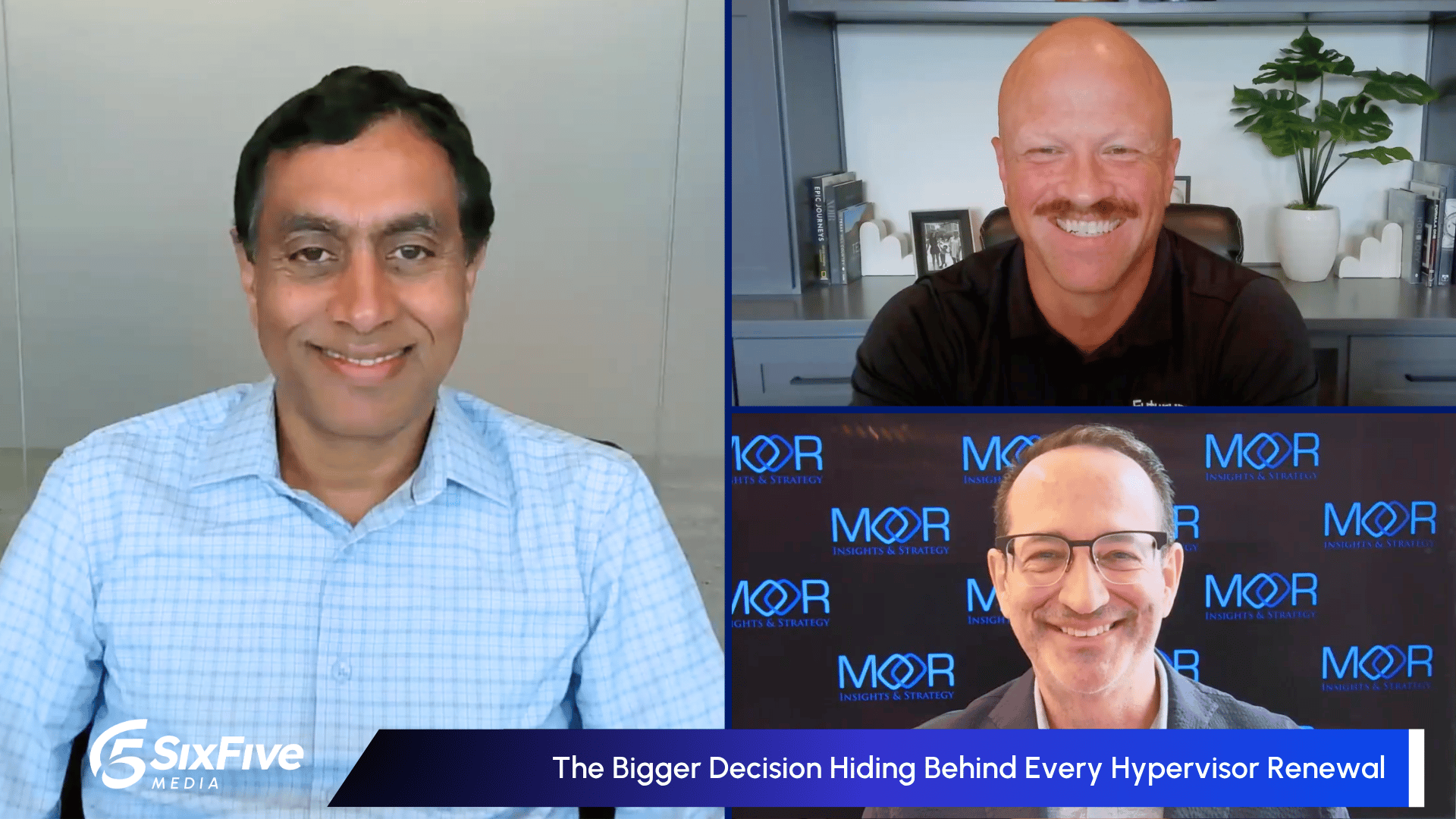
The Major Decision Hiding Behind Every Hypervisor Renewal
HPE's Varma Kunaparaju talks with Patrick Moorhead and Daniel Newman about why virtualization licensing changes are forcing enterprises to confront a bigger decision than which hypervisor to choose next: what operating model sits underneath their private cloud and AI factory. He outlines how CxOs can sequence modernization in phases, extend governance across open and frontier models, and decide where automation should replace human approval in IT operations.


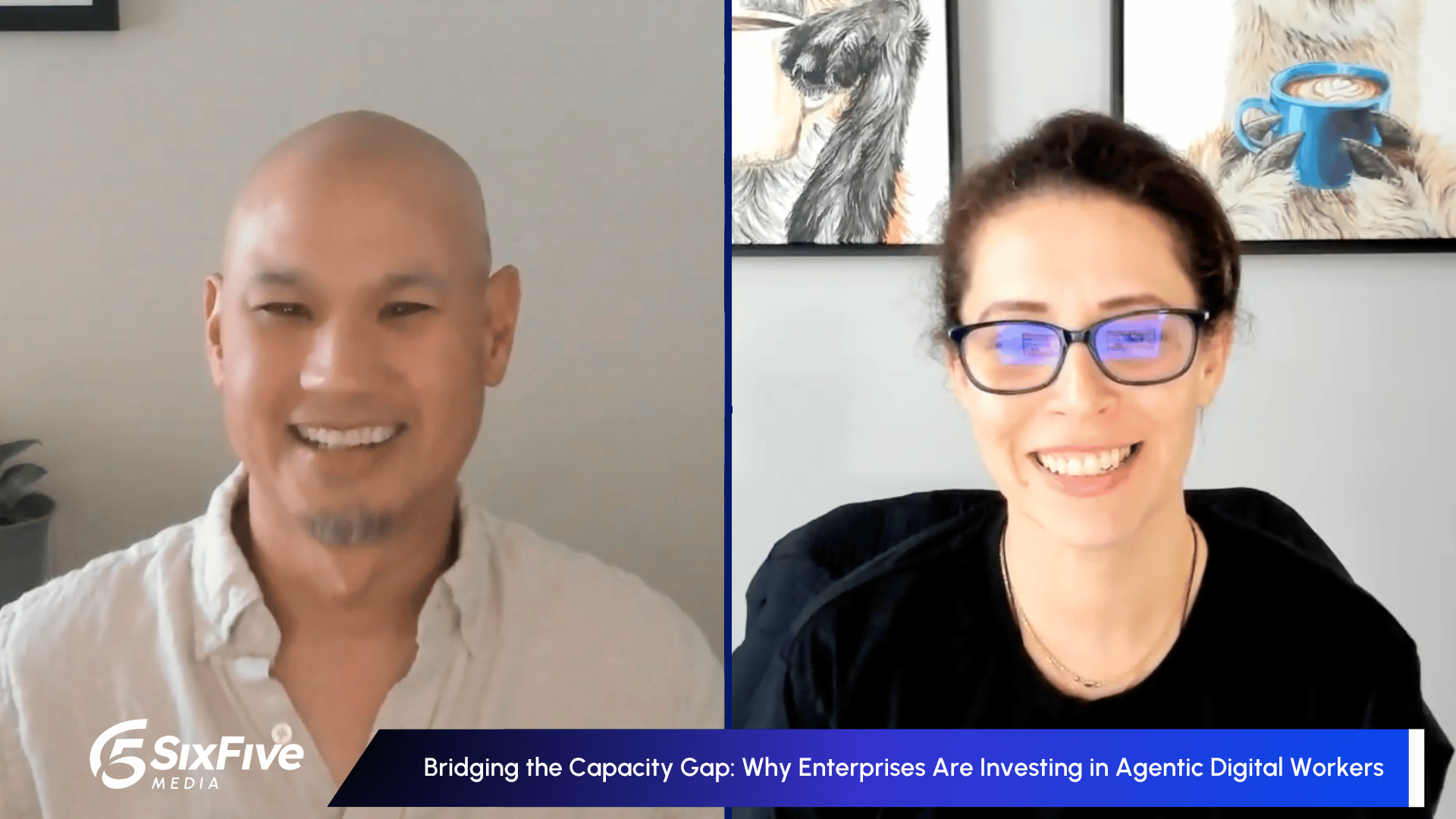
Bridging the Capacity Gap: Why Enterprises Are Investing in Agentic Digital Workers
IFS Loops CEO Somya Kapoor joins Keith Kirkpatrick to explain why agentic digital workers stall between pilot and production, and why governance, escalation design, and change management now shape adoption more than building agents does. Drawing on new Futurum research, she shows how enterprises can start with imperfect data and redirect reclaimed capacity toward growth.
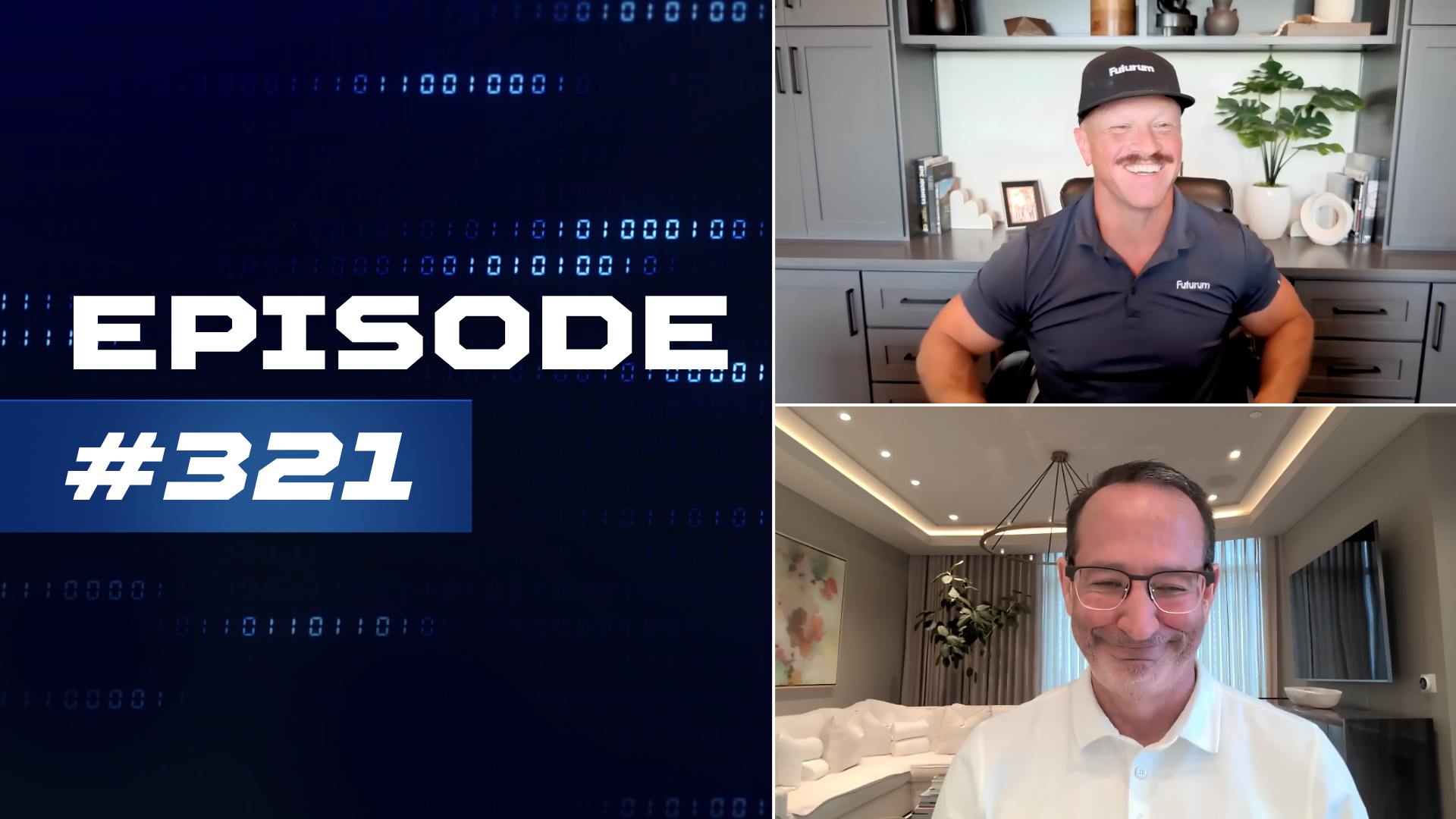
Meta's Muse Moment, AMD's Trillion-Dollar Milestone, and the Agent-Driven CPU Rally
Meta's Muse launch turned a consumer AI agent into a CPU demand story, a new round of frontier model releases sharpened the fight over token economics, and AMD crossed the trillion-dollar mark on the same compute thesis. Patrick Moorhead and Daniel Newman break down Meta Connect, Qualcomm's agentic-device push, the AI policy debate, and whether Meta has finally cracked mainstream AI wearables.
Other Categories
CYBERSECURITY
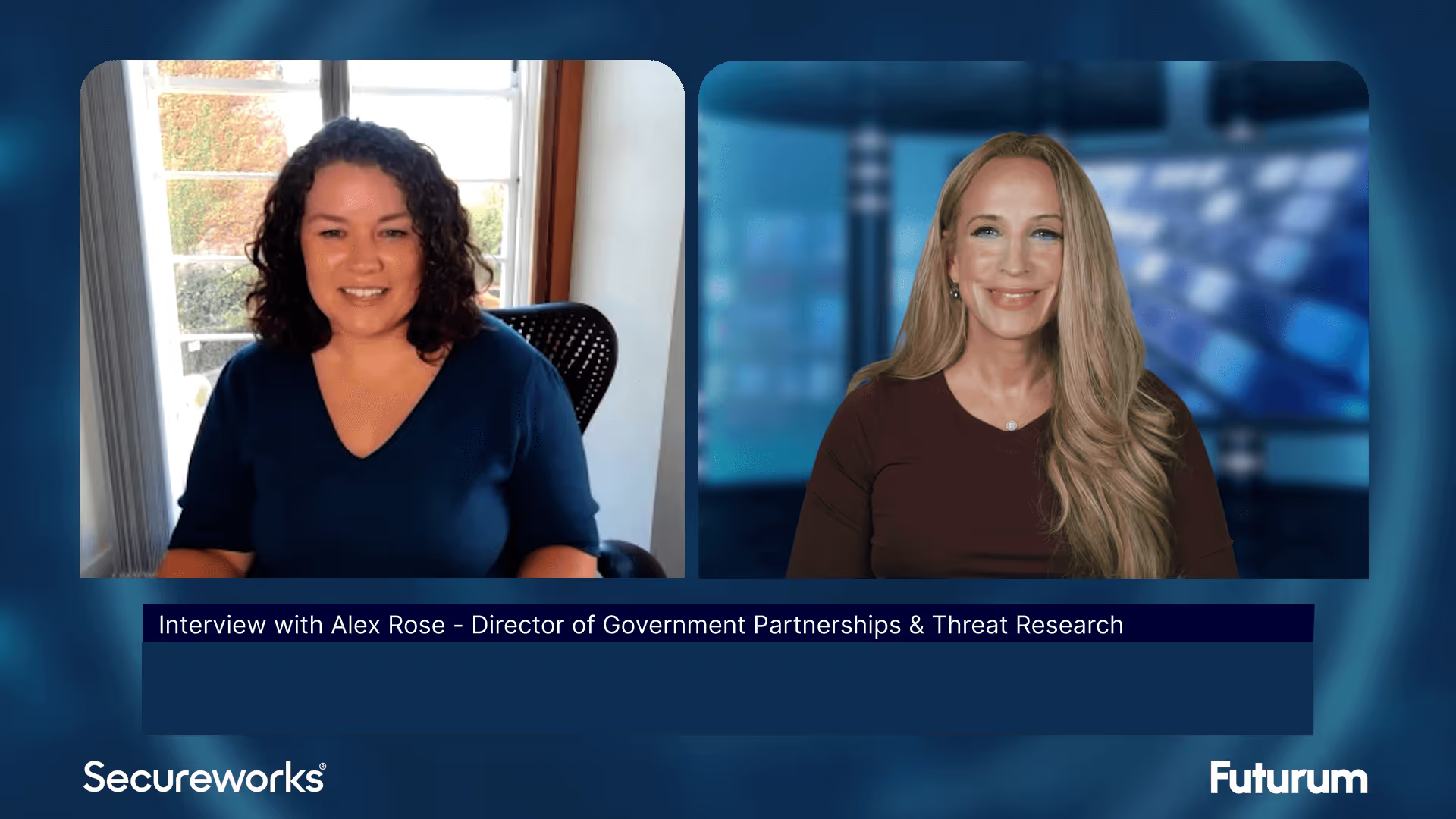
Threat Intelligence: Insights on Cybersecurity from Secureworks
Alex Rose from Secureworks joins Shira Rubinoff on the Cybersphere to share his insights on the critical role of threat intelligence in modern cybersecurity efforts, underscoring the importance of proactive, intelligence-driven defense mechanisms.

HP Launches World’s First Business PCs to Protect Against Quantum Hacks - The Six Five On the Road
On this episode of the Six Five - On the Road, hosts Patrick Moorhead and Daniel Newman are joined by HP's Ian Pratt, Global Head of Security for Personal Systems.
What is Autonomous Endpoint Management?
Autonomous Endpoint Management is a framework designed to unify IT operations and security teams on a single platform through real-time control and visibility.
QUANTUM
Quantum in Action: Insights and Applications with Matt Kinsella
Quantum is no longer a technology of the future; the quantum opportunity is here now. During this keynote conversation, Infleqtion CEO, Matt Kinsella will explore the latest quantum developments and how organizations can best leverage quantum to their advantage.
Accelerating Breakthrough Quantum Applications with Neutral Atoms
Our planet needs major breakthroughs for a more sustainable future and quantum computing promises to provide a path to new solutions in a variety of industry segments. This talk will explore what it takes for quantum computers to be able to solve these significant computational challenges, and will show that the timeline to addressing valuable applications may be sooner than previously thought.