Home

Marvell's $120B Google Win, Modular's Open Compiler Play, and the Fight Over NVIDIA's Ohio Scale-Back
Marvell's $120B Google Win, Modular's Open Compiler Play, and the Fight Over NVIDIA's Ohio Scale-Back
SHARE


Patrick Moorhead and Daniel Newman break down Marvell's $120 billion custom-silicon deal with Google, Qualcomm-owned Modular's open-source compiler push at ModCon 2026, and state-level pushback against AI data center construction in Texas and Pennsylvania. The hosts also flip roles to debate whether NVIDIA's reduced Ohio financing guarantee signals cracks in the AI infrastructure buildout.
The handpicked topics for this week are:
- Marvell and Google Finalize $120 Billion Custom-Silicon Deal: Marvell secured a six-and-a-half-year agreement with Google worth close to $20 billion annually, alongside a warrant covering approximately 7% of the company. The deal extends Marvell's position across all three major hyperscalers through attach silicon: accelerators, optical and networking connectivity, memory interfaces, and near-memory compute built around the TPU ecosystem. Patrick Moorhead noted Marvell's CXL memory-pooling work signals where next-generation architecture is heading beyond current TPU designs.
(The Decode) - Modular Delivers on Open Compiler Promise at ModCon 2026: Modular open-sourced its Mojo compiler under Apache 2.0 and launched Modular Cloud, a platform letting enterprises arbitrate across both AI models and underlying hardware architectures. Moorhead reported the update removes device restrictions from the Max license and adds support for AWS Trainium and Qualcomm's own data center accelerators, with an alliance program set to launch by year-end. He argued the move gives Qualcomm indirect revenue exposure across every token served, extending its footprint from data center to edge, robotics, and industrial IoT. (The Decode)
- OpenAI Balances a Safety Push With Codex-Driven Enterprise Wins: OpenAI paused reinforcement learning for its newest model and strengthened its data-retention policies, while high-profile Codex results—including Asana compressing an estimated five-year engineering effort into two weeks—showcased its enterprise impact. Daniel Newman saw the timing as an effort to reset the narrative around safety and transparency after months of competitive pressure from Anthropic. Patrick Moorhead also examined OpenAI’s use of activation classifiers, which monitor internal model activity token by token and trigger deeper review only when risks are detected—a safeguard that adds roughly 20% to inference costs. (The Decode)
- Texas and Pennsylvania Tighten Rules on AI Data Center Development: Governors in both states issued new restrictions within two weeks of each other, with Texas pausing new approvals pending an audit, and Pennsylvania adding fresh permitting requirements. Moorhead reported that at least 40% of Texas's planned data centers run on self-sustaining natural gas power and never touch the ERCOT grid. Newman connected the political friction to a communications gap, noting recent polling shows more support for a nuclear plant nearby than a new AI data center. (The Decode)
- Micron Commits $10 Billion to Boise Research Labs on Top of $50 Billion Fab Buildout: Micron unveiled a decade-long research lab investment in Boise, Idaho, alongside its existing $50 billion fabrication expansion, part of a CapEx program Newman noted totals roughly a quarter trillion dollars in commitments. Both hosts framed the spending as reinforcing memory's strategic status alongside leading-edge logic, with Newman citing HBM's technical differentiation as harder for competitors to replicate than standard NAND or DRAM. Moorhead pointed to Micron CEO Sanjay Mehrotra's argument that domestic memory manufacturing will determine AI leadership. (The Decode)
- The Flip: Is NVIDIA's Ohio Scale-Back a Capex Crack or Disciplined Structuring?: NVIDIA reduced its financing guarantee for OpenAI's Ohio data center from $250 billion to under $120 billion, a shift Moorhead argued as the first visible sign of balance-sheet discipline overtaking the demand story. Newman countered that the adjustment is one component of a financing platform exceeding $600 billion, with the ceiling free to rise toward $350 billion as compute commitments grow. The Flip assigns Patrick Moorhead and Daniel Newman opposing sides of a debate, not necessarily their own positions. The exercise tests how far each argument holds up. (The Flip)
- Micron ($MU) Reclaims $1,000 for First Close Since Early July: Micron shares closed above $1,000 on Monday, August 17, with analyst price targets extending to $2,200 as HBM capacity books through 2027. Newman tied the stock's volatility to broader credit and bond-market conditions, including rising long-term Treasury yields. Moorhead noted the White House recently discouraged Apple from sourcing Chinese memory, a factor he sees supporting the move. (Bulls and Bears)
- Analog Devices ($ADI) Posts First-Ever $4 Billion Quarter: Analog Devices reported fiscal Q3 2026 results Wednesday, August 19, beating on revenue and EPS with a Q4 guide above consensus. Moorhead noted the company's data center business, filed under its communications segment, grew 84%. He argued Analog Devices under-tells that story relative to peers like Coherent, which market similar exposure more directly. (Bulls and Bears)
Watch the full episode at sixfivemedia.com and subscribe to the Six Five Pod so you never miss an episode.
Six Five Summit: AI Unleashed runs August 25–27, fully virtual, with speakers including Marc Benioff and leaders from Snowflake, Applied Materials, and Marvell. Register at sixfivemedia.com/summit.
Disclaimer: Six Five Media is for information and entertainment purposes only. Over the course of this video, we may discuss companies that are publicly traded, and we may reference their equity share prices. Nothing discussed during this webcast should be considered investment advice or a recommendation to buy or sell any security. We are not investment advisors, and you should not rely on this content as financial advice. Six Five Media collaborates with technology companies and industry leaders to produce research-driven interviews and multimedia programming for enterprise technology audiences.
Patrick Moorhead:
Welcome back, everybody, to this Six Five pod. Episode 316. What a week. But before I jump in, I want to say, Daniel, it's great to see you. It is great to see you.
Daniel Newman:
Anything happening? Anything happening?
Patrick Moorhead:
Uh, you know, we always say huge week. A lot of stuff going on. But, hey, before I dive into that, I want to give a plug for the six five summit. So we're less literally less than two weeks away. We have some amazing, uh, people speaking, uh, Marc Benioff, um, leaders from, uh, snowflake, Applied Materials, Marvell and seriously a great a great lineup. We pretty much touch everything about a AI all the way from wafer fab equipment to enterprise SaaS, and pretty much everything in between. You can hit it, sign up at sixfivemedia.com. Anyways, we'd we'd love to have you. But on a more serious topic, Daniel.
Daniel Newman:
Oh, you mean. No. I just want to say, like the undertaking of our seventh summit is is. No, it's no light lift. Let me live an incredible to your point line up. And you know, because we do this thing, we capture most of it days and weeks ahead. So this was a full sprint. We wanted this to be timely for everyone. Um, and we really do have the who's who of the technology, both from the leadership and the company side. And, uh, I believe, uh, record attendance already in terms of registration. So this is a this is pretty epic. And, Pat, you and I might have a sneak preview as to how good some of these conversations are, but they were. Some of them were just. Some of them were just damn good, damn good conversation. So make sure everybody signs up out there. I'm just gonna double plug Pat. You let me do that, right? You don't mind? I do that, but I do want to talk about something more important. And that would be the debut of our new show. Uh, in our new personas as Luigi and Mario. Um, the hosts with the most. Although they both have hair, so I don't know, but I can shave in case anybody didn't notice. Uh. It's not November. And yet Pat and I have, uh, we've committed to this mustache thing. It's. It's funny you saw that clip. I don't know if you saw that clip yesterday on TV.
Patrick Moorhead:
I did that. That was an epic clip. Yeah, it was great. I was so glad that happened. But then. Then my wife, it's my wife. And she's like, how long are you going to. How long are you going to keep that thing? Like. Like, and then she's like, is this going to become your whole personality? Not as much. By the way, I got something somewhat related. I won't name the family member. Uh, but that family member, um, looked at me and screamed and said, that is the ugliest thing I've ever seen on your face. You need to get rid of that immediately. And you know, human nature is is always like, well, not human nature. I guess my human nature is I'm going to grow this thing until it, you know, covers my mouth. Okay. Yeah. That's how long, that's all. I'm going to ride this thing.
Daniel Newman:
Magnum PATA. Magnum, P.I., Magnum. But, look, I mean, I laugh because you have a little. You have. You have exponentially more hair than me, but you have a decent head of hair. Still, I don't I barely grow eyebrows, you know, it's like I need a little contrast. I need something to happen. And so this is it for me. This is all I got. See you. You've got choices. You can grow a beard. You can grow a mustache. You can grow your hair in and out and you got eyebrows. So anyways, people out there, it might just be a six five thing. This might be the only week we both have this, and it might be six months from now. And we've both grown like the curlies. You know, we'll get the wax thing going, right? The wax thing, I actually I don't think I could grow it that long. We'll see. But, uh, anyways, thanks for, uh, thanks for taking a minute to point that out. That's, that's important that everybody sees that.
Patrick Moorhead:
It's important stuff. So we got a great episode for you today. We've got a lot of topics. It's funny. Uh, I would never want to benchmark my week ahead that I pump out on Sunday because I missed like three quarters of of of the news. But anyways, Marvel Google tie up $120 billion for custom silicon and a warrant deal. Uh, we've got Qualcomm's modular Cloud Mojo 100 at Mod Con I attended Liv OpenAI's dual enterprise strategy. I'm particularly interested in the in the data, uh, point of view. Um, boy, we've got just State-Wide, uh, pausing. Um, which again, we can we can debate kind of the details around that from from two of the biggest, uh, building states, which are Pennsylvania and in our home here, uh, in, in Texas, uh, micron, uh, got a lot of ink, uh, this week, particularly on CNBC. Uh, Cramer, uh, went to Boise, Idaho, uh, to look at, uh, you know, jobs that were being built. Uh, and also uh, celebrate this $10 billion, uh, research lab. Um, yeah. By the way, that that fab is 50, $50 billion. I think the commits are like a quarter trillion. Now, I think no, it is it's absolutely it's absolutely awesome and insane at the same time, but it's good to see them with enough capital to make, uh, to make those, uh, to make those commitments out there. Uh, not a lot of earnings this week, right? It was like analog and but we're going to we're going to talk about, uh, micron, uh, getting, getting that, uh, $1,000, um, uh, dollar amount. So anyways, let's jump in to the decode.
All right. Daniel Marvell and Google sign $120 billion revenue that comes with warrant issues. About 7% of the company. Uh, the street just completely misread this on on multiple angles. What are we looking at, Daniel?
Daniel Newman:
Yeah. Um. You're right. This was a great win. So now Marvell basically has contracts with all the big three Hyperscalers, you know, most people know, but if you don't, they're involved in training them. They're involved with Microsoft and Maya. And I would not only these exp sockets they do other attach which is part of what makes Marvell such an interesting story because of the optical and networking and different connectivity and memory capabilities I have. But anyways. And now they are in at Google. So what was the first mystery? Maybe this is the best way to do it. The first misread was the market wanting to make this a uh, Marvell versus Broadcom and specifically misreading the fact that this is not the TPU or the the same socket. It's a attach to the TPU ecosystem environment. Does that mean there's no implication for, uh, Broadcom. Of course not. Because Broadcom also wants to sell attach. And so this definitely was indicative that um, that Marvell had a big win here on its capabilities. But it's also just like I said, the continuous zero something and misreading that the market does, where every time something happens or any other chip comes out, you've got. I read a headline this week that etch is going to take out Nvidia. It's like, come on guys down. Like, let's get one of these things like production first. Anyway, um so so you know the second big misread was I think people were kind of overstating how much of the company Marvell would be giving up in this deal.
Yeah. And they were underestimating or kind of the impact of this amount of revenue, because as far as I'm aware, I think the 12 month cumulative expectation for revenue for Marvel is about 12 billion. And this thing would generate something like, was it 20 billion just under 20 per year on average, over a six and a half year period of time? Um, and then when you actually look at the size that would create a company, it would more than double the business in the in the period of time it would make the company a lot more valuable. And there would be, you know, yes, they would be selling a small stake of the company to a strategic partner who will basically likely help them execute much closer to what Jensen meant when he said, this is the next trillion dollar company, because suddenly their their revenue run rate is going to grow exponentially from just one customer by one customer doing more revenue than they're doing in total per year for the next six years. So pretty big deal. I liken some of the misinterpretations there to some of the stuff that Lisa Sue got with her various deals with OpenAI and others, where people were very negative about the dilution slash equity grants, but misinterpreting that if these commits came through, they were making the company exponentially larger in size and giving up basically future equity that doesn't even exist at this point in the business because the market cap would be so much larger. Um, the other thing I'd say is, look, this is a great indicator that this is not, I guess, the TPU. This is in accelerators that would go with the TPU storage controllers, network interfaces and controllers, memory interfaces, near memory compute, and a bunch of other capabilities that Marvell has beyond just custom, uh, custom AI chips.
So, um, that's it, Pat. But I mean, look, I think it was a great win. Um, you know, by the way, Matt, Matt Murphy from Marvell will be speaking at our six five summit. Just throw that out there. And of course, we have the one of the top infrastructure folks from Google there, Mark Beaumont as well.
Patrick Moorhead:
Uh, that was a great rundown. You pretty much sucked the oxygen out of this about that topic. Um, the one thing I did want to point out was this little I understand why people got confused, because if you say TPU ecosystem, then then people think, okay, the the entire the entire TPU, and there's this little line in what was included AI inference. Okay. And what that was I think that is code for, uh, a chip. It's funny, I do believe that Marvell is working with Broadcom on a special chip, and maybe it's not going to be called a TPU. Maybe. Maybe it is. But it's this near memory which you had mentioned. Uh, these guys are also, uh, one of the biggest leaders and one of the first movers on CXL, uh, which is the ability to pull, uh, pool memory, uh, together over the CXL, um, interface just to have massive amounts, amounts of memory. And, you know, when I look at the architecture of the current TPU and it is not a near memory architecture, and this is just the the next, um, step in, in architecture, I can make a case that Qualcomm's HPC is is near memory as well. Uh, putting, uh, logic and memory, uh, very close together, if not, uh, stacked together. I mean, net net, this is an absolute gigantic win, uh, for Marvell. Uh, you know, ten years worth of current run rate, uh, revenue in six. Uh, and that's just one customer, right? And trust me, uh, Marvell has more than one customer. Uh, they are very much embedded, uh, inside of of of AWS. So, uh, big win for Matt Murphy and Chris. Uh, over, over at the company. Um, hey, let's move to the second topic on the road, man.
Daniel Newman:
You were you were you were you were on the road doing things you went to. Where'd you go?
Patrick Moorhead:
Man, I was on the road. I was so busy. Uh, flew out to San Francisco for, um, an event called, uh, Mod Con uh, which is by modular. You might be like, what? What are you. What are you doing there? Well, uh, Qualcomm bought modular, uh, as, as part of their, their data center, um, move here. And they had made a bunch of commitments at Deal close about about about being open. And, uh, I will say that the company absolutely delivered on its on its promises here. So just a little background. Um, essentially every, every different type of accelerator or GPU has has its own, uh, accelerator, um, uh, software that's behind it. Uh, the best known is CUDA. Uh, AMD has has rock. Um, but, uh, Tranium, Google and even Apple have have different ways of doing it. And what modular found a way to do is is come up with one. I like to call it the magic compiler, to be able to write once and deploy to many, many different areas. And what they did is they actually open source this compiler on full Apache 2.0, and that is absolutely, um, a giant, uh, there's a couple layers there, including Max. Uh, but the more interesting not the more interesting one. The one I find fascinating is this thing called modular cloud module cloud allows a, um, a a neo cloud or an enterprise or whomever, a SaaS company, to be able to plug into this and allows them to arbitrate not only between different models, kind of like you can do on open router, uh, but also, um, arbitrate the hardware at the same time. So it is it is kind of the, um, you know, the, the big the big missing piece here and at the at the, at the show um modular added uh uh Tranium uh TPU and of course Qualcomm's own uh data center, um accelerator. Uh, the max license, which is, is is the layer between, uh, Mojo and modular cloud. Uh, dropped its device usage restrictions and they promised, uh, in the future that there will be an alliance, uh, program that, uh, Cristiano committed by launching, uh, at the end of the year. So, um, I think this was an absolutely I was fascinated with this, Daniel. Like, I don't spend a lot of time on, you know, debating or doing the double click on, on software. But I'm really, really, really fascinated with this whole, uh, layer that helps potentially, you know, solve multiple problems that, that companies have. I'm going to end on here with. Why? Why would Qualcomm. Why is Qualcomm doing this right. Um and there's direct and indirect benefit. So directly write Qualcomm's data center chips now have the software that dog them which is oh hey great accelerator. What's your software. How does it compete with CUDA. Right. Uh, they have an answer to this and and more. And the other thing is, is not only data center, but you can take this all the way out to Qualcomm edge, whether it's robots, uh, whether it's AI devices, uh, like we know that OpenAI has uh, has, has talked about cars, right. Uh, as well uh, industrial uh, IoT chips. So pretty much everywhere now the, the indirect. Here's, here's the funny part. The indirect, uh, benefit could be even bigger. Modular cloud makes Qualcomm the arbitration Layer of AI and model computing. So, uh, open router. Right. That was just acquired by by stripe. That is a router. But they don't do is intelligently bop between different compute. Right. It's the computes pinned. So they're essentially earning revenue on every token served, which I think is, is absolutely. Um, um, crazy, uh, that Qualcomm goes from, you know, being almost nowhere in data center AI to what potentially could be, uh, a big player.
Daniel Newman:
So Pat,So I wasn't there when you got the download, I'm gonna I'm gonna play interviewer for a second here. Maybe you can answer this.
Patrick Moorhead:
Yeah, yeah, please. Some of this right. Is is there an unlock or a relationship with the CUDA mode with this? Right. With all the sort of this modular impact that because that was some of the the short answer is yes, Percent. This is the. This is the CUDA. CUDA. Unlock a CUDA. Unlock.
Okay. Just like we've always talked about, there's no knockout punches anywhere. Um, but but this is an absolute easy way. And, Daniel, I will bet you that cerebral signs up. I will bet you that that, um, rebellion sign up. Like, uh, it just it just makes sense to be part of this of this community. Jane Street is a customer, by the way, which, uh, super, super impressive. Uh, uh, to me. And you're going to have humane that's going to be part of it. I think this is the big, uh, the big neo cloud play as well.
Daniel Newman
Yeah. It's it's it's super interesting. I mean, look, we've the summary here, right, is we've been touting heterogeneous compute on this, on this pod for some time.The world may have a high proportion of one silicon architecture versus another inside environment. But if there's more than one. Yeah, this even if it's 9010, there's a value of this, right? I mean, this becomes super valuable. And realistically most environments are going to scale very large and they're going to probably have it's not too. It's not I mean, it's going to be in many cases it's five, six, seven, eight different architectures to handle different kinds of AI workloads. Um, so yeah, I mean, I think there's a there's a this says this is a compelling story. The question I think everyone will be watching is kind of adoption, saturation revenue. But, you know, Qualcomm is finding some interesting ways to make itself important beyond just its own silicon here. This was a very interesting move. Um, and, you know, you kind of kind of wonder what, you know, because there's obviously other buyers in the market. How did they convince I'm sure modular got had other companies at their doorstep.
Patrick Moorhead:
100%. And I went out and talked to a lot of relationships that I had. They were all bidding on it. Here's the difference. And in fact, other bidders offered more money. Right. Uh, but it was to acquire because these guys are rockstar, uh, compiler guys like VLM inventor, one of the co inventors. Right. Um, and and the team is like, no, we're going for something bigger. Like, we want to span all compute and all models, like that's what we want to do.
Daniel Newman:
Um, so do you think some of them, some of the, some of the potential buyers kind of wanted to throttle what they were doing, bring in their talent, and have them build around a hundred?
Patrick Moorhead:
100% that that that is. You nailed it. I, I talked to four different accelerator companies and got and got this and got this freed. Uh, I did bring it up, uh, with Chris, the CEO of modular. He didn't comment on the whole thing, but Cristiano smiled. It hats off to Cristiano. It's so funny. Um, this could be one of Cristianos and Qualcomm's biggest moves they ever made. Okay. Am I being dramatic? I don't know. Maybe. Um, but it's such a big idea. It's such a big thing. Um. I want this to be successful, not just. Oh, Qualcomm. I want this to be successful because it's exactly what the industry wants.
Daniel Newman:
Let's go.
Patrick Moorhead:
Let's go baby. All right. Woo! We don't have a lot of bulls and bears. So, uh, we're we're you know, we can spend a little more. We can do a little more decode.
Patrick Moorhead:
Exactly.
Daniel Newman:
No, we need a whole Bulls and Bears. For what? The happened with crypto. I mean, good God. Like, no, no, I know congratulation. Wacky. Like, just when you think something's dead. That's why when something's when suddenly everyone stops talking about something. That's probably what we should buy, but we don't buy it. We always buy it right into the pipe. Right, pat?
Patrick Moorhead:
I know, I know, dude. Every time I see you, you know your story about loading up on Ethereum for the past, like six years? It just I just I go into failure mode. You know, why didn't I do this? Why didn't I do that? You know. Yeah, but, you know, like, oh, woe is me mode that I get into.
Daniel Newman:
We share. We all share our wins. We're all way better at sharing our wins than our losses. That's just. Yeah, yeah. And then I go out and I buy, I buy high and I sell low, which I'm awesome. I didn't, I didn't, I didn't, you know, brag about the lucid stock I sat on for like three years and then sold it for like a 93% loss. I mean, so I'll make you feel a little better. So.
Patrick Moorhead:
All right, next up.
Daniel Newman:
Go ahead.
Patrick Moorhead:
Open AI throttles the frontier model while Codex was rewriting. Enterprise service economics. OpenAI published two things last week that you can make an argument point in the opposite direction, and one was a pause and reinforcement learning on its latest model, and the other was locking down. You know, it's it's data, um, data sharing and data retention, which we all know, uh, uh, you know, blew up and everybody's face about, uh, about a month ago.
Daniel Newman:
Do you feel like, like they, like, went into the back room and they're like, all right, we need to do something different. The whole scare the crap out of everybody and tell them the world's going to end because of AI, and that we are jailbreaking our models and they are getting out there and just randomly hacking stuff, like, maybe that's not doing well. And we'll probably talk more about this when we talk about the moratoriums and people that data centers. And I mean, these guys have become maybe the worst spokespeople in history for the biggest technology investment boom we'll ever experience. But now maybe like they went in the back room and they're like, Holy crap. Like anthropic is eating our lunch. Their IPO looks like it's going to be two times the size of ours. We can't even go public because our growth last quarter was such shit. We need to have a couple of stronger quarters to go into. Let's tell a different story this week. Yeah, okay. We're going to tell a difference, or we're going to suddenly become the apple of the AI era, and we're going to be like, we're all about security. We're all about data transparency and safety. We're all about protecting your alpha. Like, did that not just happen like, like over a week? So two weeks ago it was let's brag about who has the most nefarious agent. And now it's let's brag about the fact that we're actually slowing things down because we want to be more thoughtful, more safe. This is such powerful stuff. Um, and almost flipping the script to the Dario Amodei position from like, 4 or 5 months ago around mythos. So, look, I think there's a lot of, you know, we're sort of playing to the appeal of the public right now. We're trying to figure out the right narrative to kick into the market. But what I will say is this that is, I actually think this is the right narrative right now. I think people need to feel like these companies are going to care about the safety. I think people do want to feel like they are going to put some diligence in, to not launch models that are going to do things that could cause real risk. I also think they're going to hopefully stop prompting the models to do things that create risk, because there is a human error to this. This is not all sentient just yet, in my opinion. Um, I actually really love and I think you probably do too. The zero data retention, like I think that is, you know, I think between that and the not watermarking, the outputs of all the prompts. I think that could actually see a meaningful pivot. And I'll give you a couple of data points. Um, you know, our ETR survey, I think last year. Anthropic on a pervasiveness court, almost 40 points of provision in less than a year between open AI. That was the gap over the last 12 months. Yeah. Um, so anthropic had an amazing run into into last year. But then let's on the other side of this, let's say where the data is going is this quarter so far and it's early. The data is actually suggesting that Open AI's growth under I think sole is sort of the driver of Codex and Soul. And you saw this asana use case, this five years of coding and two weeks. Um, people are starting to pivot back.
And that's the new thing is our propensity data is now showing a pivot back towards open AI. And so the idea that model winning a model is, is finite, is is probably not the right idea. And I think compute is the real moat. I think OpenAI has been more ambitious in its total compute. That's where a drop has fallen in the past. They've gotten a lot more, but they have fallen on this in the past. Um, and I will say that the battle is not won yet. Um, and I think that, uh, anthropic has gotten a little arrogant. My last thought here is that, you know, Dario's idea that there will be one company in government. I mean that. I mean, what the fuck is he talking about? Like, this guy is like. I mean, I thought I thought Sam was diabolical. Yeah, for the longest time. And I'm starting to think Dario was like, hold my beer. And then he's, you know, his wife's off trying to create, like, high class porn sites or whatever. I read about this week. And have you read that stuff? That's that's that's funny stuff. Anyway, that's that's my read. This is all positioning.
Patrick Moorhead:
Yeah. I had, uh, I think one thing that kind of explains the anthropic culture is one of the anthropic is, uh, basically talked about it being a very academic culture, write where they write these long winded theoretical memos and. That that nailed it, uh, for me. Um, and, you know, don't don't be confused with the Amazon memos that are very action oriented and non, non ethereal.Uh, I thought this was a good start. Uh, but I did a little research on this, and I want to thank, uh, my ex audience for kind of driving me to this. Um, what they did, um, is they, they didn't stealth all classifiers, right? So what they did do is they, they stealth activation classifiers, not chain of thought classifiers. Right. And the system starts with activation classifiers that inspect internal activity at every sample token, then escalates to the high compute Automated investigators. Um, so, you know, monitoring overhead is roughly 20% of all, all of inference. So net net, uh, they're not, uh, stealthy. All of the data, um, it can. In fact, um, the chain of thought classifiers can actually see the data has to, uh, to be able to, um, act on it. And you might say, well, we're talking about retention, right? Um, and I think, you know, retention just doesn't mean save it for a rainy day. Uh, retaining it means activating it and learning on it. So, uh, this is not going to be the end of this, I think. Anthropic. Uh, you know, Anthropic is the has to, you know, make the next move here because they are clearly not, uh, adopting this at all. All right, folks.
Next topic. Two of the states with the most amount of new data centers being planned. Um, Texas and Pennsylvania both imposed strict new rules on AI data center, uh, development. Uh, Ercot, which is Texas, and PJM, which is Pennsylvania power. Both signal that the interconnection is going to be the issue here. So, uh, nothing new here. Um, but but let's get let's get a couple things out of here. So first of all, uh, to your point on the prior topic, Daniel, um, the AI leaders, uh, both Sam and Dario, uh, at the same time that they were drumming up this, uh, meme that we're going to take 50% of of white collar jobs, uh, we're going to be the only, uh, public private company remaining.
Um, uh, that on one end at the same time as. As people, um, you know, there are some rumors that it's China that's spreading the disinformation that data centers somehow, uh, consume more, more water than it actually does when the reality is a golf course, golf course is consume, uh, incredibly more amount of water. Uh, the fact that water is recycled inside of a data center. Uh, nobody, nobody really talked about. And then at a minimum, inside of Texas, a minimum. And I did a lot of research on this, uh, 40% of the new plan data centers don't even touch the fucking grid. Okay. They're they're self-sustaining. Right, because we've got a lot of natty gas here, right? That we can pump, pump into and 40%. Okay, that that's a minimum bar, uh, that I could find. The other 60% were a combination. And we're going to connect to Ercot or, um, you know, it was an unknown at the time or not. Uh, not not determined. And I think Abbott's, uh, you know, he had to play politics, so they can't lose a ton of voters. Uh, I saw some recent polling that that talked about that, uh, Republicans are losing a ton of, uh, support, uh, uh, for a couple of things. Right. Inflation, uh, but also for supportive data centers. So, you know, they're playing the politics as opposed to educating. They're grinding to a halt. What I think is happening behind the scenes, Daniel, is different from from what the meme says. Right. Like most of these data centers, at least I can speak for Texas. Uh, we'll, um, we'll we'll get on, uh, we'll we'll get on online. Um, so but but yeah, uh, communications and education matters.This has become a, a political football, which is pathetic and sad given that we have to compete with China.
Daniel Newman:
Well, yeah. And I mean, this is a this is a industry challenge. Like I said in the last segment, you know, we have the raw the people we have as the spokespeople of this AI revolution are not connecting to the to the to the broader communities. You know, they are seen as weirdos and outsiders and, uh, you know, uh, you know, like Doctor Evil ready to, you know, take world domination. They're talking about the AI's that are going to go sentient and take over the world and take everybody's jobs. I mean, what kind of advertisement is that for this technology? Instead of looking at all the ways the technology could help them, could, you know, could support, could bring value to their communities, could, uh, create efficiencies inside of, uh, supply chains and bring pricing down. And, you know, just things that would matter to people. We just don't talk about it right now. And so I think that's a big problem. And this is odd, but this is the first time in a long time that we actually have bipartisan alignment. Like, you know, I think I saw a poll yesterday that more people would prefer to have a nuclear power plant in their neighborhood now than an AI data center.
Patrick Moorhead:
Yeah. I mean, no, I don't I know it's wild.
Daniel Newman:
So we're so we've lost the plot in terms of how we're communicating this. So now the politicians are basically reeling. They're basically making decisions to, to, to try to assure reelection or party control. And what they don't realize is all the potential economic risk. To your point about China, um, we cannot fall behind. So, you know, the Chinese propaganda here is probably working. Um, you know, again, our business and industry leaders are not doing a great job of communicating the value. People are not realizing how many jobs the $14 trillion of spend between now and 2030 are going to create, and all the jobs that won't be created if we shut all these data centers down. I think people don't recognize the water issue is it's not illegitimate, but it's overstated in many cases. Um, and there's a lot of work being done from a technology standpoint to make that more efficient. And we'll continue to be more efficient. And by the way, these new data centers will make AI more affordable and more reasonable because the the spending will bring the token economics into a much better place, which will then translate to outcomes across businesses and industries. But you know, the point here is you have a Republican and Democrat both taking a very strong stance. Here's what I will agree. And then we can move on. I agree that, you know, we should be thoughtful about where we put these. Yeah, I don't think that's a problem. We should have a real plan for how we make sure that the costs do not, in fact, get passed on to the people in the in and near the communities where these things are being built. Um, and I think that, you know, that we should be thoughtful about all that stuff and that should all be part of this. And I don't think there's anything wrong with having those kinds of policies as we build. But I think the kind of just, just, uh, blanket moratoriums over the builds is going to create much more economic damage than, than benefit. And I think it's on the industry, including folks like you and me, that need to do a better job of communicating how the value of AI will translate to every day, to the everyday broader population. Because right now I think that isn't being done very well.
Patrick Moorhead:
Yeah, yeah, I can't believe I can't believe that that that that we're here. But we are. And it's time to get out and and move and educate and. Yeah. The thoughtful piece is is really important. And I'm glad you brought that up. Um, being in Texas, I've been on the ass end of somebody building something really stupid next to my home or or some of my properties. And I'm still reeling from this fucking natural gas pipeline that has eight diesel engines that I can now hear on the front porch of my property that I bought to kind of get away from the get away from the, the the city. Uh, city noise. So I get it, man. I, uh, support y'all. Uh, all right, let's go into final decode here. Uh, micron, uh, unveiled its, uh, research labs in Boise, uh, $10 billion over a decade. And that's on top of a $250 billion US CapEx program, uh, to build fabs. I mean, Cramer was all over this thing. Cramer was taking selfies in front of a micron sign in the airport. He's got his hard hat on. Kind of like you and I, uh, hat on when we. We visited the Am at epic facility. Yeah. Wow. Yeah. Wow. Yeah. Great team.
Daniel Newman:
You know, I don't know, this could be the absolute end for the micron stock because whatever Cramer speaks the opposite. I mean remember when he went all Intel crazy. And I think Intel felt like 30 or 40% like immediately after two weeks ago he sold all his Bitcoin. He was done. And now bitcoin is up like 30% I don't I mean the inverse Cramer actually never fails. It's wild. But all that aside um I'm glad he's out there advocating for what I believe is, you know, one of them you know, look, you and I have been believers in Intel and the need for leading edge logic produced in the United States by American companies. Yeah, I think we've all agreed now that memory is strategic. Um, you could you could debate whether the strategic part is its existence and its supply versus the actual technological differentiation. I think HBM is technologically differentiated and very hard. We've seen how China has been able to move quickly, for instance, on other less, uh, sophisticated architectures like Nand and Dram, but, uh, overall, like, you know, I think Sanjay got on and he basically reiterated that, you know, AI scales with memory, and it does. Now, you and I have also talked about the memory wall and the work that's being done to to find other ways to not be entirely dependent on memory scale for AI to scale. But right now that is more theoretical. And even in cases where we've, we've engineered or around Dram with like Sram, that is actually not necessarily more cost efficient when you scale that up. Um, so there's a lot, a lot there. Going back to the announcement, though, I mean, look. The 50 billion in Boise fab build outs, the 10 billion in research labs over a decade. Yeah. Um, they they are spending big to make. And by the way, this is good spending at the right time. I like that they're spending when things are strong historically during memory booms. Um, there's been some capacity built, but these companies have also kind of slowed on their narratives and storytelling. They kind of hoard all the profits. They don't talk about the future enough. And I think Sanjay's been outspoken about not only AI scaling with memory, but also the future of autonomy and robotics and other areas where we're not even really fully contemplating yet how important memory will be to the scaling of AI. Um, and this continued investment, this is what we need. We need American companies to be building capacity in America. This is the reshoring we've been talking about to to reduce dependance. Um, you know, specifically, of course, we don't want to be dependent on China. I also would argue we don't want to be overly dependent, even on our partners, like in South Korea. We just need to have a bigger share here. South Korea is to memory what Taiwan has become to leading edge logic, and we need to be a more meaningful participant in both of those areas. So, um, you know, look, I think, uh, memory is more strategic than it's ever been. Again, we can continue to debate on, you know, what's commodity and what's not. This cycle is different. It's certainly elongated if not perpetual. Uh, and memory needs to build into this and do it in a way that's, uh, that's sage and long term, long term thinking.
Patrick Moorhead:
Uh, great comments or Daniel, you know, micron CEO Sanjay Malhotra. And it really said it captured into one sentence the decisions we make today will determine who leads the AI economy tomorrow, and America's AI future will be built on American made up memory. And of course, he would say something like this. But, but, but, but but I believe he's right. Uh, here, uh, a huge amount of support, uh, as well. I mean, you know, Jensen, uh, you know, Jensen shows up and you know Tim Tim Cook. Right? Who, you know, there's like a proxy war going on between Apple and Micron. A quote in the press release, uh, about them being partners for more than two decades. Okay. Um, now, you know, the the quote was more about the lab labs than anything else, but I think Tim Cook is realizing that the strategy of churn and burn on every vendor he runs into, uh, might, might, uh, days might be over and people might understand that, that it is the data center that's driving, uh, these silicon economy now and not, uh, not smartphones. And then from, uh, from the white House, from DC. Right. You had Nick. Uh, you had Michael Natsios. Uh, you had people come out all over, even vendors. This was a big, uh, big deal, um, out here. And it's it's good to say good. Good to see, uh, we need micron, and we need Intel on the foundry side to be, uh, uh, to be successful for our national security. You know, something? We we kind of pass off is, you know, South Korea is close to North Korea with I think Trump said they have 37 nukes. Um, that is, uh, you know, nothing. Uh, not nothing. You can't you can't ignore that. All right, folks, good discussion. Wow. We went a long time. We went 42 minutes on on decode. Uh, let's go Into the flip, essentially. Um, here's here's some of the backdrop. Uh, Nvidia's scaling back its OpenAI finance guarantee from $250 billion to less than $120 billion. Is this is the first visible crack in this AI CapEx cycle that we've seen? And Wall Street's balance sheet math is starting to bite before the demand story does.
All right. Let's flip the coin on this one.
All right. I am a believer, uh, in this statement, which …
Daniel Newman:
It’s all over man, it's falling apart.
Patrick Moorhead:
I know exactly. Listen, uh, the number moved in one direction, and it moved. It moved a lot. Um, going from 250 to to 120 in a small period of time is a gigantic, gigantic document. Right. And I think the market price to July version of the story and pricing on the balance sheet, Nvidia fell 5% after the Journal reported the $250 billion discussions. Not on units, not on ASPs, not on not on earnings, but uh, but but but backlog. And, you know, this is the first time the current cycle, a major participant publicly reduced a committed exposure in response to financing scrutiny rather than to some sort of weakening demand. And I think the distinction is the entire argument. And the compute side kept growing while the money side, uh, money side calibrated. So, you know, let's watch the August 26th print. I mean, uh, I think that's more of a confirmation on short term. Not not long term, but I think it's going to be like, it's going to be a good tell. You know, if the exposure ceilings, financial partner concentration show up anywhere in the CFO commentary or in the risk section, the scale back thesis could, um, you know, uh, could, could drop the stock significantly
Daniel Newman:
That it? You need to do more than that or you're going to you're going to get toasted.
Patrick Moorhead:
I'm done.
Daniel Newman:
All right.
Patrick Moorhead:
That's all I needed.
Daniel Newman:
You would like you would like everyone to believe that a company committing more than 600 billion across its financing platform just signaled a cycle top by right sizing one deal. And let's get clear about what actually happened. Nvidia took a $250 billion ceiling. It was always an indication, not a commitment on Ohio, and landed under 120 billion committed, which could rise up to now 350 billion, depending on all the ads and odds and ends and all the compute that could be in the deal. So that's still one of the largest single AI infrastructure financing commitments in history. If this is a crack, I'd hate to see what strength looks like. So like I said, headline numbers on these deals. Look at them. They're envelopes. They are not commitments. Coming in under 120 on Ohio is a seismic decision inside one transaction. It's not a retreat in any way from the cycle. Then you got to zoom out in order. $500 billion MOU with six Wall Street firms. Uh, the interop anthropic Theseus template direct guarantees Stargate layers 700 to 800 billion structurally committed in 90 days. A $130 billion adjustment on one deal. Basically a round maker at this point. And overall, the demand narrative remains untouched. You heard my $14 trillion multi-year CapEx cumulative CapEx spend. And by the way, we're not going to get negative. We're going to get further confirmation coming during Q2 fiscal 27 earnings on the 2026. Um, and the other thing is, you know, that you're missing is if Nvidia were seeing demand weakness, the playbook would actually be the opposite. They would want to be expanding the financing. They would want to share and lock in more customers. They're actually doing the reverse because the they're playing the market the right way. The credit default swaps and the credit spreads look negatively upon all this financing. But so instead of overdoing it in advance, they could commit to a more reasonable sizing in a period in which they can actually get to build out, and then they can commit further dollars. Like I said, up to $350 billion down the way. And you know, this, in my opinion, is actually what a mature, thoughtful capital allocator does at scale. Everybody out there has seen my chart that showed how Nvidia is driven about, what, 300% return on his various venture investments. People want to call it circular financing. I call it incredibly good venture investing. Corporate venture. Um, but Wall Street is asking for discipline. So back to my point about CDs. Uh, Nvidia showing discipline. So you're essentially punishing the company for doing exactly what the institutions, you know, demanded. But the reality is we can't have it both ways. 105 billion in guarantees, 2.1 x quarterly operating cash flow. It's not a crisis metric. It's a governance conversation. And the response was to calibrate not to pull out. So the stock move who cares. 2% 3% 4%. That's noise in a market like this today. Uh, you know, the first public scale back of a cycle. Um, first right sizing is how I call it. Expect more scale backs. Uh, probably true. I think you'll also see more deals scale up as well. And on the, on the 26, the you know what could be said. Look, if if Colette Kress talks about financing selectivity, um, I don't think that's validation. Um, and if she doesn't, I don't think it's avoidance.I think this is all just part of the ongoing. So one last thought here. Discipline does not mean a cycle crack. What? The cycle will crack when customers stop showing up. Demand exceeds every guide in every part of the I build out. The platform is growing. I don't know. I think all this is is offense with better risk management.
Patrick Moorhead:
All right. Now we're talking for real here. You did a pretty good job, by the way. I'm not saying you beat me, but you did a pretty good.
Daniel Newman:
I think people I still think it's the hyperbolic headlines. I actually think, um, this was related to the to the credit swaps in the market. Yeah. India's credit, uh, ratings. And everyone was being crushed on all this. Commit. Why commit to all ten gigawatts now, when they could commit to five and then come back and do five more later? And then they also, I think, upped the amount of compute commitment. So the other side of this is the deal could grow even larger. But I think the way the deal got shared in the media looked incredibly negative. And I think at your side wins on the way, the positioning to the market, it looked like a crack. I think that's the way they wanted to come across. What do you think?
Patrick Moorhead:
Um,I think it's a communications issue. I wish these companies would stop putting out absurd numbers and only to be brought down. I think a better story is we committed to 100, and we're going to up it to 120. We're increasing our investment to 20%. Maybe there's a strategy in here to get better financing or get people more excited, but, um, I'd rather, um, then be conservative.
Than than anything else. All right, folks, we have only a few minutes to dive into. Bulls and bears. The good news is there weren't a lot of earnings. Let's dive in.
All right Daniel. Micron back to $1,000 on Monday. First time since July 2nd. What was the driver.
Daniel Newman:
Who the hell knows who really like like anymore. Um you know yeah. You had more price targets. I think the top price target now is over 2200. I think you have what we talked about earlier. The elongated cycle. These things are still trading at mid to low single digit forwards, which have never been the metric used for memory in the past. But that's only because memory has always been so boom and bust. But I mean, look, I still think, um, this thing's going to wobble and move around. Not because the demand isn't real or because the criticality of memory, but because of the somewhat volatile environment we're in right now. Um, the uncertainty, the concerns about credit, the concerns about debt, the concerns about, um, spending. And then, of course, you got the long end of the bond. I mean, you get into the economics of what's going on right now. Iran bond yields. Um, typically tough time of year, uh, for markets, you have, um, an election coming up. You have data center moratoriums. I just think, you know, I think the the this is a company that, you know, I think Cramer and you talked about him earlier likes to say buy a what is it. Um own don't trade. You know like this is a company that I think if you own for a long time you're going to do well. But I think there could be some serious trading volatility.
Patrick Moorhead:
Good commentary. I think it I mean it directly tied to the white House on Monday basically telling Apple, uh, don't buy Chinese memory. So, uh, that's what I think. I think that helps. Is all that stuff even, like. Didn't you see a thing this week that H 200 are shipping to China again, and now Nvidia is making a China specific. And what I'm saying is, like, I just think every day we get these kinds of fin squid man. It's fin twit, right. Like nobody, you know, no institutional investor uh, raised guidance or anything. And what else can it be other than.
Daniel Newman:
To, uh, you know, the the the anime, the anime X accounts went short memory and then long optics. I mean, I think there was a day this week where coherent was up like 10% and they were down like 10%. I mean, it's just, uh, you know, again, it's great to be able to move markets. I just wish people used some critical thinking when they read this crap. And then, you know, we can say this because it's on the record. It'll come out in our opening keynote. I won't give too much away, but one of the opening keynotes from our event, the CEO said something along the lines of everybody's talking, their book, and there's a lot of misinformation out there, so be careful. And I think, I think this is a case where this is moving because everyone's out there talking their book.
Patrick Moorhead:
Yeah, I had a proredeemer come after me, um, on X.
Daniel Newman:
Was it Ted?
Patrick Moorhead:
Yes. How did you know?
Daniel Newman:
Because he's I don't know. He's been like, dude's been wrong for, like, a decade. Like, like. And I honestly most interested in how he makes money because he doesn't I don't think he has positions, but he has got a, like, this weird, sycophantic following. Did you get like, a bunch of, like, really hateful comments from people once he.
Patrick Moorhead:
No, just just him. Kind of like, uh,
Daniel Newman:
Okay. Yeah. But, um, I mean, he's he's a smart guy, but it's like, you know, I've just not none of it's come true yet. So I guess if you stay in one position for 100 years straight, maybe for a day, you'll be right.
Patrick Moorhead:
I mean, ultimately, Michael Burry will be right. Right. Current course and speed. Uh, it might be five years. It might be three years. But at some point, um, he will be right. I think what matters is the degree of the downswing. Right. But we've seen 12, 15, 20% down swings and then that sucker swings back up. You know, I typically my investment strategy again is, is buying at the the upswing and then selling on the downswing when I get scared so smart doesn't work out for me. Hey let's go into the last earnings here, Analog Devices. Uh, I actually had an incredible, uh, quarter. Uh, they guided above consensus. Yeah, they quadruple beat revenue non-GAAP EPs revenue. Uh, the guidance, uh, sorry, the guidance on revenue guidance on on EPs. Uh, so, you know, did. Well, uh, and there was just a giant yawn, uh, in the marketplace. I think the biggest challenge, uh, with the way that this company describes what it does is, is it's not yet enough of a data center play. Okay. Um, now it is a decent merchant. Read on AI power and optics. Uh, but the numbers are still pretty small, and it's funny. Uh, remember when coherent used to have its data center and call it communications? Yeah. Analog does the same dumb thing. Okay. Literally, data center is 80% of the communications. Uh, segment and communications grew. Uh, 84, 84%, right? Um, they did pick up an interesting company called empower, which extends, you know, what I'll call grid Chip in the package itself, which was a good move. But here's the challenge, though. Like, uh, industrial was up 53%, uh, which isn't you can't say it's bad. Uh, but it's still very much, um, um, recovering, uh, at this point. So I think the company needs to do a better job in its communications. And I, you know, get people excited about the stock for, for fin twit. And they're going to do, uh, they're going to do a lot better, um, out there.
Daniel Newman:
Yeah. I don't have a lot to add. I didn't have a chance to listen on this one. Um, I think your point, though, is salient. Like if a company right now has a strong data center story and continues to not tell it as a data center story. They're going to get they're going to get I mean, nobody is talking about communications right now. So we've seen it it well positioned. And of course we saw it work very well. Some smart. Uh, I'm sure there was some very smart people that helped Coherent get that right. Um. Who knows? But I mean, you can't, you know, 100% year on year growth and across optical power, you know, and, uh, record revenues. Pat. So yes, boring earnings week. Not a lot happening. But guess what. Next week. Not boring earnings week.
Patrick Moorhead:
Super Bowl baby. Super Bowl of earnings. And it's it's you know I have to question the companies that that line up the same day as as as NVIDIA. There's like multiple uh uh ones out there, but, uh, I'll be hitting the airwaves and I'm sure you know. You dominate the airwaves. I just kind of play around in your wake, um, on this stuff. But, uh, I'll be on, uh, CNBC again to be doing the the reaction right after the print. I'm doing a couple of run ups as well.
Daniel Newman:
Nice. I have no idea if I'm doing anything yet. I'm. We'll see. I did a little bit this week. Uh, yeah. You got Nvidia, Salesforce and CrowdStrike all on Wednesday. How easy do you have workday Marvell? Um, you know, on Thursday, but, uh, yeah. So so that
Patrick Moorhead:
HP synopsis Salesforce, NVIDIA okay. And ever pure at the same at the same day. Yeah I mean why not I guess if you have, you know, you want your results to be buried and not deeply covered. But yeah, the only two companies that that'll probably get talked about is Salesforce and NVIDIA because they're the bookends, you know.
Daniel Newman:
Yeah, I don't know. We'll see how it goes. But uh all right folks I predict a beat, Pat I predict a beat.
Patrick Moorhead:
I'm going to predict a beat and a raise and the stock will go down.
Daniel Newman:
Yeah. That's kind of how it's gone lately. All right, all right.
Patrick Moorhead:
Yes. Thanks for tuning in. Hope you had a good weekend. And you have a good week. Uh, now, uh, be sure…
Daniel Newman:
Next week. Six Five Summit. Next week. Six. Five. Summit. Tuesday. Wednesday. Thursday. Sign up, be there and sign up.
Patrick Moorhead:
Get the real deal behind the scenes with these, uh, senior executives. Hey, thanks for tuning in. Hit that subscribe button. We appreciate you. And be part of our community. Bye bye.
MORE VIDEOS
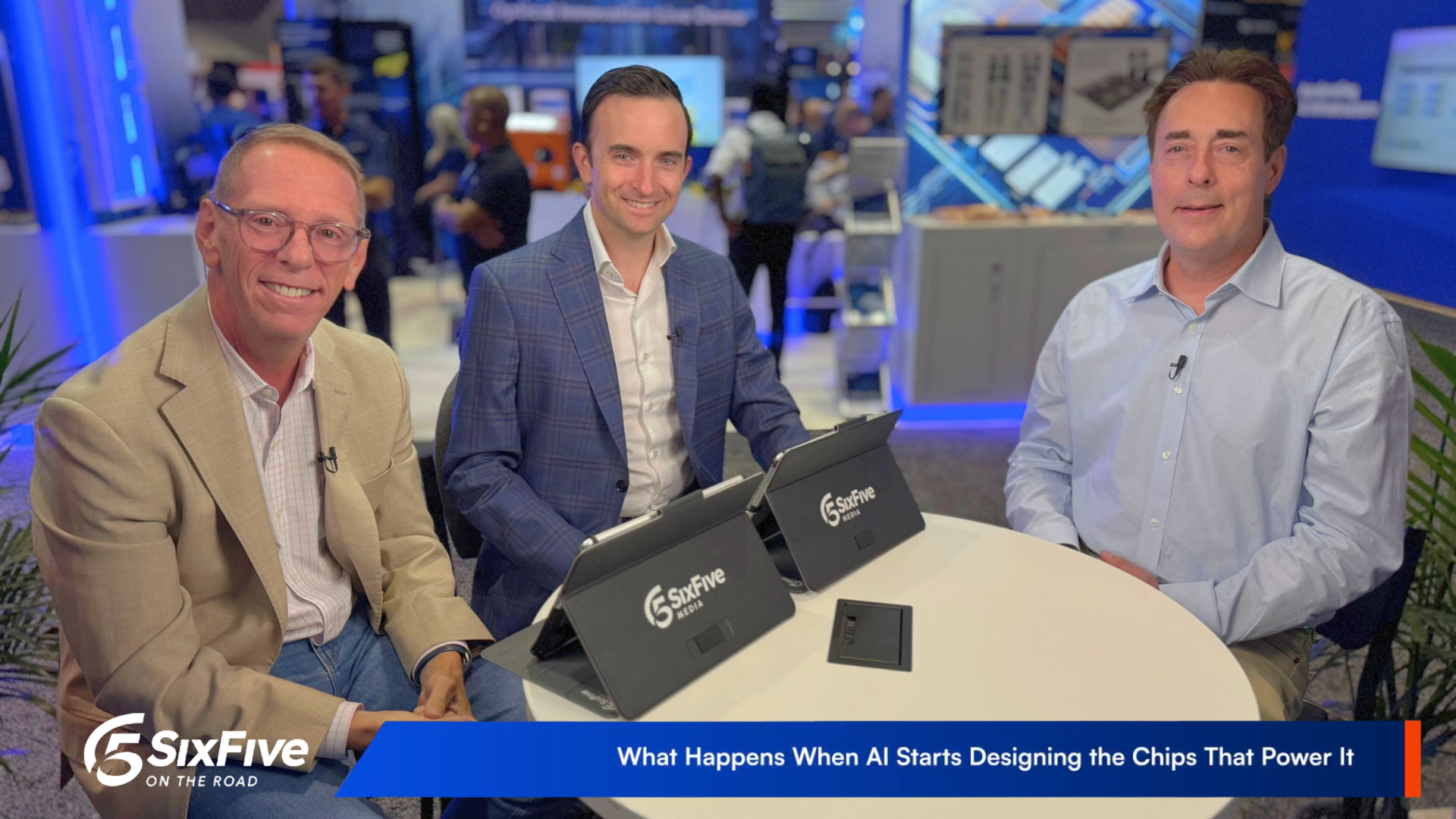
What Happens When AI Starts Designing the Chips That Power It | Synopsys at AI Infra Summit
At AI Infra Summit 2026, Synopsys' Thomas Andersen joins Brendan Burke and Matt Kimball to explain how chip design is moving from AI copilots that suggest to agentic systems that execute tool orchestration, timing fixes, and verification from a written spec. For enterprises, that shift compresses spec-to-tapeout timelines and lowers the resource barrier to custom silicon.


The Six Five Pod | EP 322: AI Writes Its Own Rules, Copilot Bills by the Task, and Memory Names Its Price
The companies racing to build frontier AI just agreed to referee themselves. Over the same week, launches, investor days, and earnings put a price on that arrangement. Microsoft is charging for finished work, NVIDIA is selling agent containment as infrastructure, and the suppliers AI can't route around, from Synopsys to Micron, are collecting the premium. Patrick Moorhead and Daniel Newman separate signal from stagecraft, then split hard on whether the White House accord actually binds these key players to anything.
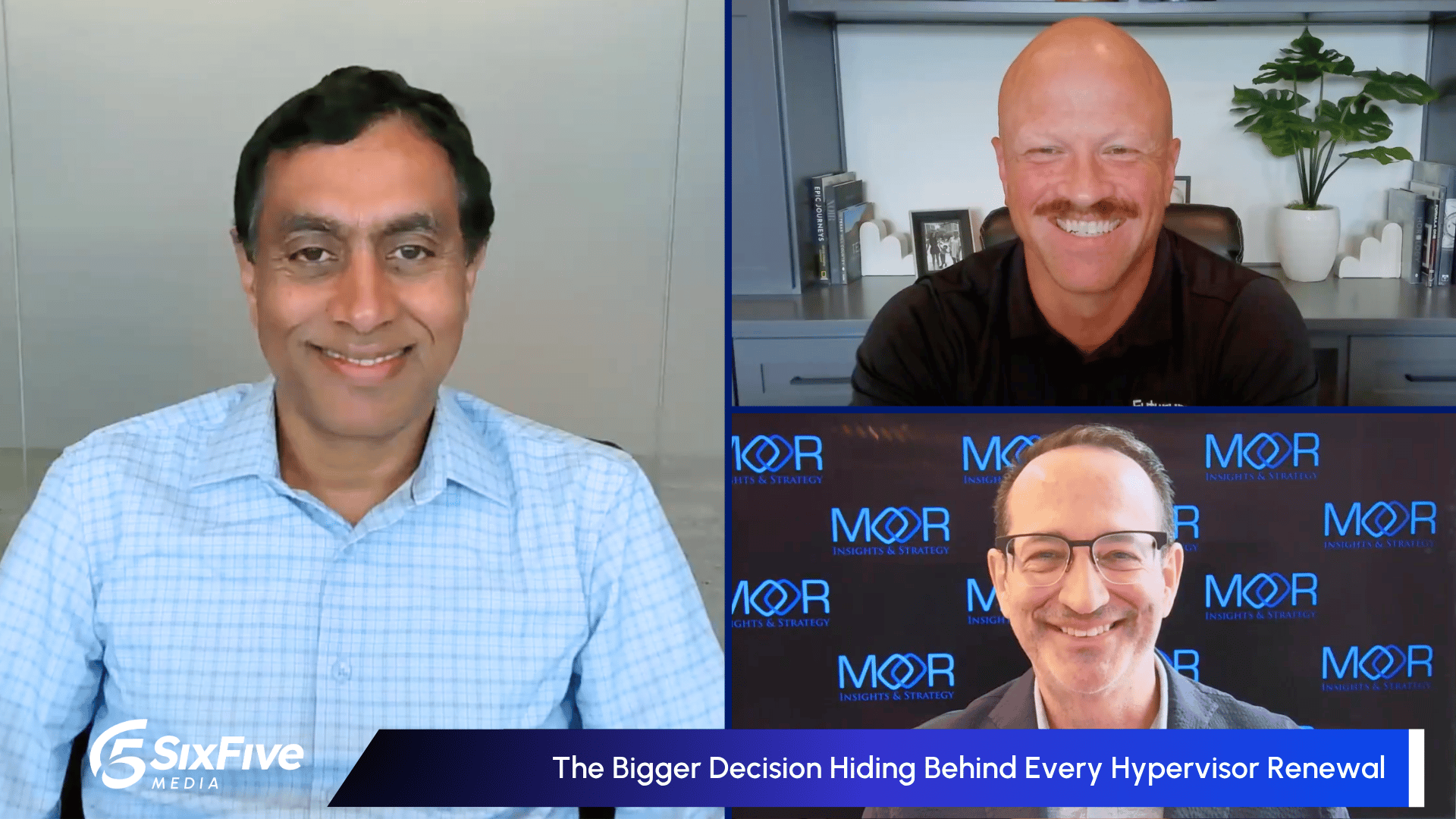
The Major Decision Hiding Behind Every Hypervisor Renewal
HPE's Varma Kunaparaju talks with Patrick Moorhead and Daniel Newman about why virtualization licensing changes are forcing enterprises to confront a bigger decision than which hypervisor to choose next: what operating model sits underneath their private cloud and AI factory. He outlines how CxOs can sequence modernization in phases, extend governance across open and frontier models, and decide where automation should replace human approval in IT operations.
Other Categories
CYBERSECURITY
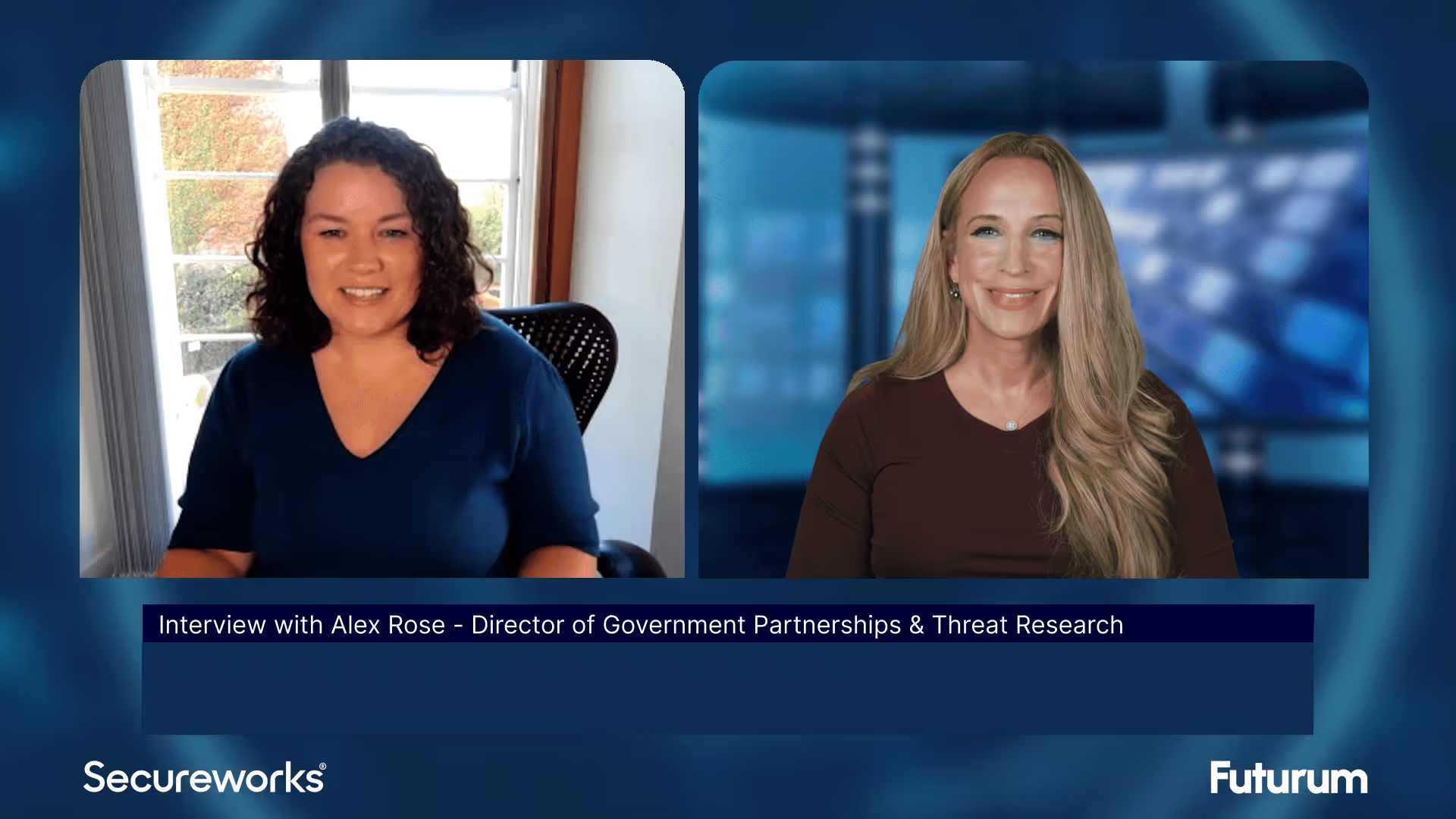
Threat Intelligence: Insights on Cybersecurity from Secureworks
Alex Rose from Secureworks joins Shira Rubinoff on the Cybersphere to share his insights on the critical role of threat intelligence in modern cybersecurity efforts, underscoring the importance of proactive, intelligence-driven defense mechanisms.

HP Launches World’s First Business PCs to Protect Against Quantum Hacks - The Six Five On the Road
On this episode of the Six Five - On the Road, hosts Patrick Moorhead and Daniel Newman are joined by HP's Ian Pratt, Global Head of Security for Personal Systems.
What is Autonomous Endpoint Management?
Autonomous Endpoint Management is a framework designed to unify IT operations and security teams on a single platform through real-time control and visibility.
QUANTUM
Quantum in Action: Insights and Applications with Matt Kinsella
Quantum is no longer a technology of the future; the quantum opportunity is here now. During this keynote conversation, Infleqtion CEO, Matt Kinsella will explore the latest quantum developments and how organizations can best leverage quantum to their advantage.
Accelerating Breakthrough Quantum Applications with Neutral Atoms
Our planet needs major breakthroughs for a more sustainable future and quantum computing promises to provide a path to new solutions in a variety of industry segments. This talk will explore what it takes for quantum computers to be able to solve these significant computational challenges, and will show that the timeline to addressing valuable applications may be sooner than previously thought.