Home

Meta and Google Rejoin the Frontier, Microsoft’s Maia 300, and the AI Credit Scare | The Six Five Pod Ep. 324
Meta and Google Rejoin the Frontier, Microsoft’s Maia 300, and the AI Credit Scare | The Six Five Pod Ep. 324
SHARE


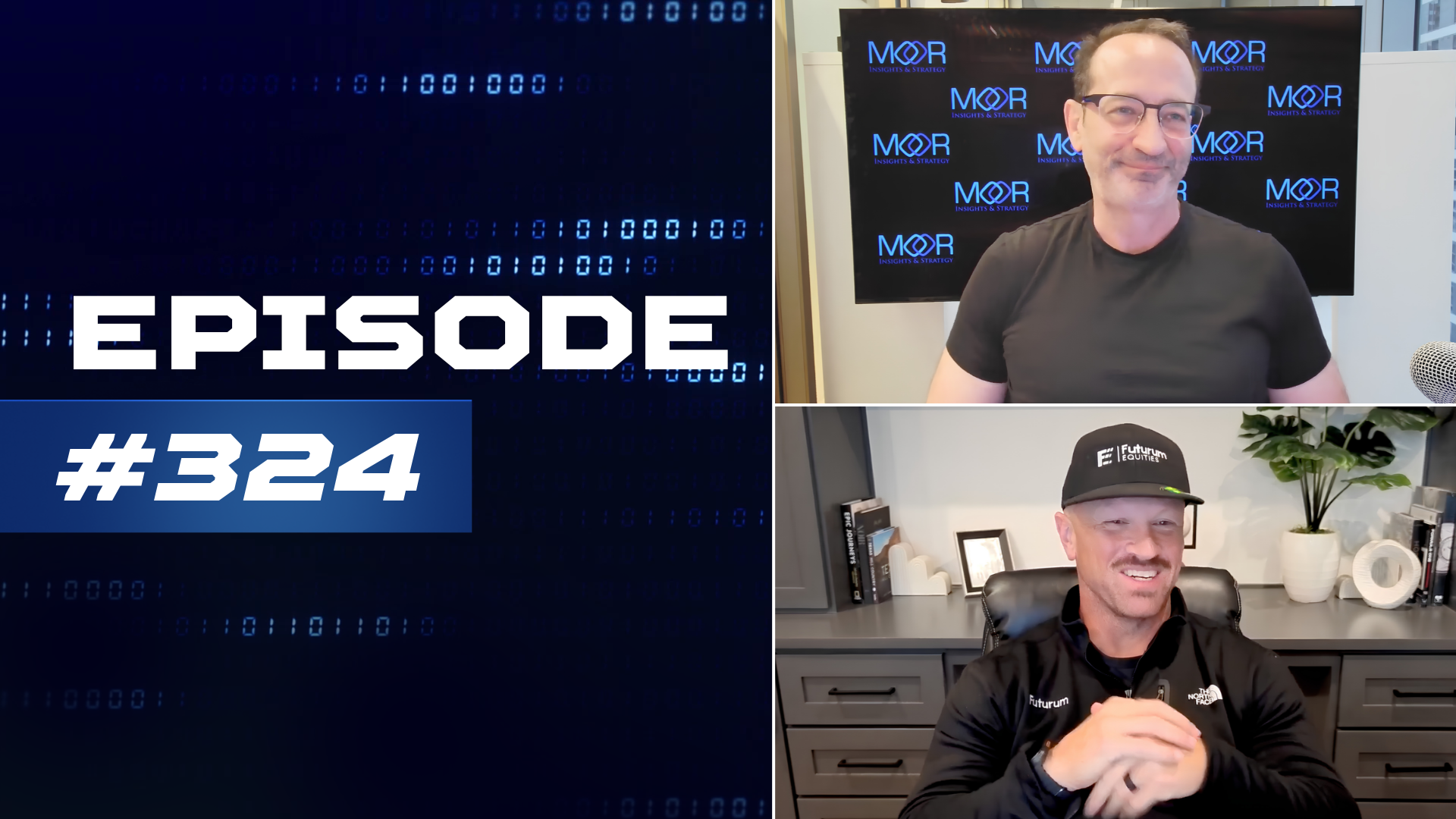
On Episode 324 of The Six Five Pod, Patrick Moorhead and Daniel Newman unpack the biggest stories from the week, including new agent models from Meta, Google, and NVIDIA, Microsoft's Maia 300, Applied Materials' EPIC Center, AMD, NVIDIA, and Cisco at OCP Global Summit 2026, and the Apple-Meta Muse Spark Open partnership, plus a Flip debate on whether AI leaderboards serve vendors more than enterprise buyers. Plus, Bulls & Bears covers the CPI and PPI shock that rattled the AI trade, Anthropic's investor event, ASML's record quarter, and TSMC's earnings results.
The handpicked topics for this week are:
- Meta, Google and NVIDIA Advance Agent Models, With Reliability Still Uneven: Meta launched Muse Wonder on October 12, a closed frontier model available through its API and Muse Code at $4 per million input tokens and $20 per million output tokens. Dan says it performs well on coding but is expensive out of the gate. Google opened Gemini 4 Argon broadly on October 13, and Dan notes it took the top spot on the Signal65 Pinnacle composite leaderboard, ahead of GPT and Claude models. NVIDIA followed with Nemotron 3.5 Super VL, a 120-billion-parameter open model, and Nemotron 3.5 Bolt, which fits in 24GB of memory. Pat points out how far models have come: Llama 3 scores 269 on Pinnacle against roughly 24,000 for Argon. He adds that Nemotron earns a perfect openness score from Artificial Analysis and that Bolt runs on DGX Spark and RTX Spark laptops. Both agree Meta and Google, written off earlier this year, are back in the frontier race. (The Decode)
- Microsoft's Maia 300 Makes Custom Silicon Central to Its Inference Strategy: Microsoft announced the Maia 300 on October 12, its third-generation inference accelerator, and said Maia will become the primary inference system for its own products as deployments scale to multi-gigawatt levels from 2027. Microsoft expects 40% more tokens per megawatt than leading GPU-based systems, which Pat reads as a Vera Rubin comparison and rejects the "end of NVIDIA" narrative, arguing Maia is about Microsoft's margins on its own SaaS and PaaS workloads rather than raw chip performance. He also credits Microsoft with reaching this point in three to four years, a timeline that took Google and AWS closer to a decade. Dan notes the system's memory capacity and calls the third generation the moment custom silicon typically lands. He adds that Microsoft is funding its buildout from operations, without equity raises or heavy debt, which positions its margins to improve as custom chips scale. (The Decode)
- Applied Materials' EPIC Brings Chip R&D Teams Together to Shorten Development: Dan served as master of ceremonies for the October 12 unveiling of Applied Materials' EPIC Center in Sunnyvale, where founding partners TSMC, Intel, Samsung, Micron, and SK hynix will place engineers alongside Applied Materials' teams. Dan explains that the center targets parallel development across transistors, interconnects, memory, and advanced packaging, including backside power and hybrid bonding, while each partner protects its own IP. Pat says EPIC's value will ultimately be measured in time to qualified production and yield. He frames it as a bet on removing the sequential handoffs that have historically slowed equipment and process co-development. (The Decode)
- OCP Global Summit 2026: AMD, NVIDIA and Cisco Shift the AI Race to Rack-Scale: Pat frames the rack as the smallest unit of AI compute and the data center as the largest. At the OCP Global Summit 2026, AMD introduced Helion, an agentic AI rack offered as a CPU-only configuration with up to 32,768 cores or an enterprise configuration pairing EPYC CPUs with Instinct MI350P GPUs, in air- and liquid-cooled versions. Lisa Su also showed Verano, the first EPYC with an LPDDR memory interface. NVIDIA expanded its MGX rack contributions and 800 VDC facility designs, and NVIDIA and Cisco proposed a denser, field-replaceable pluggable optics standard. Pat notes interface standards that once lasted five to seven years now turn over in about a year. Dan highlights the gap between market fears about AI and the pace of industry collaboration on display. (The Decode)
- Apple and Meta Bring Large Open-Weight Agents to the Mac Desktop: Meta released Muse Spark Open on October 15, an 816-billion-parameter open-weight model with 42 billion active parameters, tuned with Apple to run locally on clustered M5 Ultra Mac Studios. Mark Zuckerberg credited Apple CEO John Ternus for the collaboration. Dan sees Meta gaining access to Apple developers while Apple gains frontier models it failed to build itself, and he questions whether Apple is settling into the device layer. Pat calls it a competitive response to NVIDIA's RTX Spark laptops and DGX Spark, landing a $40,000 to $50,000 price point that NVIDIA doesn't cleanly cover. (The Decode)
- The Flip — Are AI leaderboard rankings becoming more useful to vendors than to enterprise buyers? Patrick takes the FOR side: suggesting leaderboards built on throughput, intelligence, and cost per token serve hyperscalers and neoclouds. Daniel takes the AGAINST side: arguing that vendors grading themselves is marketing, but independent rankings force vendors to publish charts where they lose. Leaderboards cut 50 models down to five, and scoped testing on real jobs, like Signal65's, tells a CIO which one survives before signing a PO. Off the flip, both agree cost per token alone has lost its meaning. (The Flip)
- CPI/PPI Revive Rate-Hike Fears and Pressure the AI Trade: Dan traces the midweek capitulation to energy-driven inflation pushing CPI, PPI, and bond yields higher, raising the cost of debt for capital-intensive growth companies. CoreWeave became the canary in the coal mine with more than $40 billion in debt and bond yields, Dan says, spiked toward 16%. The pressure spread to neoclouds like Nebius and IREN, then to chipmakers and semiconductor equipment names, with some stocks falling 10% to 20% in a day. Dan calls the move overblown, pointing to CoreWeave's roughly $105 billion backlog and its anchor customers Microsoft and Meta. He also notes the selloff reversed sharply a day and a half later. (Bulls & Bears)
- Anthropic's Investor Event Puts Growth and Adjusted Profitability Under Scrutiny: At its October 14 investor day, Anthropic reported third-quarter revenue of $16.8 billion, up 45% sequentially after more than doubling the prior quarter, and said it was profitable on an adjusted basis. Some investors have since discussed a valuation near $1.5 trillion rather than the roughly $2 trillion previously expected. Pat compares the math to Arm at about 49x trailing sales and Palantir above 40x, but notes Anthropic carries more variability. Dan hopes the book runners price conservatively so the IPO trades up, and warns that "adjusted" is doing a lot of the lifting. He adds that Fortune 100 CFOs he spoke with this week see enough token demand for the frontier labs and open models to keep growing. (Bulls & Bears)
- ASML's Record Quarter Puts Capacity Execution Back in Focus: ASML beat and raised, signaling it needs to expand output to meet demand tied to a $10 trillion+ AI infrastructure forecast. Dan calls the result written in the stars and finds the market's muted reaction odd for a company with a monopoly on EUV lithography. Pat explains that ASML's pricing is locked into contracts far in advance, so its guide and machine capacity are more useful metrics than a beat. He also notes that about 10% of ASML's GAAP EPS came from the roughly half-billion-dollar increase in the value of its Mistral stake. (Bulls & Bears)
- TSMC's Results Show Strong AI Demand, With Capacity Still the Constraint: TSMC beat on revenue and net income, with demand strong enough to raise its outlook, while capacity allocation, packaging, and ramp costs determine how quickly that demand converts to earnings. Pat flags that TSMC did not raise its capital spending for the year, and deferred questions about Elon Musk's TerraFab to its next investor conference. Dan notes TSMC's costs are less exposed than hyperscalers' to the runaway memory prices driving much of their CapEx growth. Pat highlights TSMC's message that it won't leave table scraps for competitors. (Bulls & Bears)
Watch the full video at sixfivemedia.com, and subscribe to our YouTube channel so you never miss an episode.
IMPORTANT: Note to Uploader: Libsyn AUDIO EMBED – added by uploader.
Disclaimer: Six Five Media is for information and entertainment purposes only. Over the course of this video, we may discuss companies that are publicly traded, and we may reference their equity share prices. Nothing discussed during this webcast should be considered investment advice or a recommendation to buy or sell any security. We are not investment advisors, and you should not rely on this content as financial advice. Six Five Media collaborates with technology companies and industry leaders to produce research-driven interviews and multimedia programming for enterprise technology
Patrick Moorhead:
Welcome back to The Six Five Pod. It's episode 324. Neither of us are broadcasting from a bunker, but we are broadcasting from cloudy and
Daniel Newman:
60 degree Austin weather outside. I thought it was a good day to bring out the tea. Not that tea, but the t-shirt. Well, that is tea inspired, right?
Patrick Moorhead:
Yes, it is. There's a little tea in that underpinning. It is. I didn't like that.
Daniel Newman:
That's good. Yeah, I am not natty, so I'm not claiming to be.
Patrick Moorhead:
But I am, I am, I'm not natty. I am, I am peptide enhanced. You know, true, true enhanced athletes would probably laugh at me, but like the ones that are truly natty also would not allow me to say I'm natty. By the way, it's freezing. And in Texas, when it goes from 95 to 60 overnight, I went to the gym this morning, I was wearing this zip up with a hoodie over it. And I had the heat all the way up in my car, I was freezing, absolutely freezing. Like, this is not cool. We don't do 60s here in October, that's a January thing. But you know, like, I don't know, Pat, are you in the camp of, hot or cold? Maybe if you had to have extremes would you rather just be hot all the time or do you actually like when the weather breaks a bit? Probably cold.
Daniel Newman:
People want to look ugly in summer clothes too.
Patrick Moorhead:
You say you look ugly in summer clothes?
Daniel Newman:
Yeah I like to bundle it up. I'm a much better 12 layer. I look a lot better in 12 layers.
Patrick Moorhead:
We do have a lot of cool pieces like that coat you're wearing when we started the call. You can layer up. I definitely like that look.
Daniel Newman:
Yeah, I agree.
Patrick Moorhead:
Then you're just sweating like a fat pig underneath it though, right? You get the under boob sweat. Like that time that I gave you the, the pre-workout right before we did a video and you look more like you're like, we're sweating through your shirt. By the end of the video, you had like pit stains and boob stains.
Daniel Newman:
That was, that was so good. I think I even popped tilafidil before that, just to like, you know, not only sweat more, but, but get the blood flowing big time, a big time as well. But Hey, man, what, what, what a week, Daniel. You know, I mean, we've got, you know, interest rates and PPI going crazy. We had about, you know, seven different reasons people could make excuses to, to sell the tech trade. And, of course, New models like it used to be a new model like every, I don't know, six months and then three months and every month. Now it's literally every week and not just one, but three or four competitions good. And we're going to be discussing that. Microsoft brought out a new chip, big announcement. You actually were at Applied's epic opener. And essentially, you were the master, the mister of ceremonies. So very, very impressive. You would have been with me had you not been on a trip that you didn't end up taking. I know. And I did think about, hey, you know, bullying my way in, but I know you did so much prep on it because you're a prepper.
Patrick Moorhead:
I did like tons of prep. But actually it was the first time in a long time that I did like an event where it was like full on rehearsing. Like not like a, hey, we walk on stage, walk off stage, like going line by line, conversation by conversation, reading all the material, teleprompting. And like, I had not done that in a while. It's funny, because like you and I, I mean, we do so many sit downs with execs, but it's like, we have a kind of theme that we're going to and that's for everyone out there that watches our six five interviews like these are not scripted. Like we have some kind of things we plan to go into, but like we never know what the people are going to say back to us. Like we're, we're going with the flow. So, but yeah, I mean this, you know, first of all, had tons of kind of non-native English speakers because this was very heavy to Taiwan and Korea. Um, and, uh, the audience was very diverse and it was a very big moment. So had to sort of make sure we nailed all these things.
Daniel Newman:
Yeah. Hey, somehow you turn the intro and all about you. I appreciate that. Um, that's, that's good.
Patrick Moorhead:
That was about six, five, dude. Like you actually, that's what you heard.
Daniel Newman:
No, but we got, I mean, we're not just stopping at Epic. We're talking at OCP, Apple and Meta are hugging each other after years of trying to destroy each other. and a lot of bulls and bears, right? We had a major implosion, we're gonna cut that apart, so.
Patrick Moorhead:
Yeah, AI was over on Wednesday, it was back on Thursday, we're recording Friday, and it kinda looks like it might be over again, I don't know, it's. Okay. It might be over, but there was a flying car this week. True. I mean, I know it's not like really, we don't do a lot of cars, but like. Yes. Do a quick shout out to like, Elon just, you know, like imagine like that's the kind of like event you're setting up. Like, yeah, we're going to go ahead and have this car drive upside down. It's going to fall. You know, gravity is going to take it. And then it's going to flip over when I'm going to turn some rocket boosters underneath it over. Yeah. And then I'm going to have a jump backwards, do a backflip, like. you know, why is what we do so boring?
Daniel Newman:
I don't know, man, at least accomplished more. At least we get to cover it, cover it, you know, and be part of everybody's announcement. So anyways, let's dive into the decode here. All right. Meta. Google, NVIDIA, all bring out new agentic models with kind of uneven on the reliability and the performance. Daniel, give us the highlights here.
Patrick Moorhead:
Another week and more models, right? So, you know, let's just kind of high level this thing. You had NVIDIA, it's launched its next Nemotron. We had Meta drop its next wonder model. Sorry, I'm pulling up my notes here. Give me a sec. Hold on a second, guys. Sorry. I'm in like the wrong, like I'm in six, five notes, but none of my notes are showing up here. Let me do a different one. I must be like in the wrong link or the fuck. Here. Here we go. All right. Sorry. All right. Yeah. So, you know, another big week for models. Another big week for Pinnacle, which is the Signal 65 benchmark, which I can't tout enough because it's the only benchmark I would trust if I were an enterprise. We can talk more about that later. But Meta launched Muse Wonder October 12th. Google, it's Gemini 4 Argon, which seems to have Google's back in the game. And then NVIDIA released its next generation Nemotron variants, which to be clear, What we're comparing there is very different than what we're comparing with the other two, right? We're talking about a, you know, NVIDIA open source model. You know, one, the Muse Wonder's an interesting one. It's a frontier, it's closed, it's an API access, it's not, you know, I had a lot of people ask me when I went out and talked about this one, if it's an open model, it's not. It's very limited right now. It's for Muse code, and it seems to do very well in that particular code space. Not so well in others, and it also is very expensive, at least out the gate. It's a very expensive model, but Meta continues to really move forward. Argonne is expanding its access, and again, Google had sort of had this It was left in the dust. It's over for Google. This model, top ranking, showing up very highly on our benchmarks. NVIDIA was more of a bettering against previous versions of NVIDIA. It still sits much lower down in terms of where it stands, but, you know, you know, they opened to what, $120 billion, SuperVL, $74 billion, and then a couple of smaller variants of it too. I'm not gonna talk about pricing. That's just a little too much in the weeds for me. But let's say that, I believe, Pat, didn't Argonne rank top for signal? Didn't it come out? It did.
Daniel Newman:
Yeah, it's top of the leaderboard on the composite.
Patrick Moorhead:
Yeah, so this was a big inflection, you know, sitting above a number of the different GPT models as well as the different Clawed models, which is really, really big. And then on the Nemotron side, you know, what we saw was, you know, it's a big upgrade from Nemotron 3. So 3.5 to 3 is really what we're comparing. This is not sitting up there with Opus or Muse Wonder, but it was about 43% better in terms of making errors. And it was much better at completing tasks. So the open sources are moving in a better direction, but Amidia has got a long way to go before these models are going to be competing with anything at the frontier. I don't think that's the point right now, but I think the point is for them to continuously show some progress. But overall, Pat, like the big thing here is maybe that meta Google have been written off, but written off no longer. They are definitely back in the game, especially when it comes to these agentic models they're building.
Daniel Newman:
Yeah, I think if nothing else, this just reinforces the constant innovation and competition that's going on. I mean, how many different memes do we have to go for you? Chad GPT was going to win it all. And then Claude was going to win it all. And then I mean, it just goes back. I mean, in the very beginning, it was llama. from Meta, right? And what's funny is the models and their capabilities are so much better. I mean, literally, and I can look at this, Lama 3 on the Signal 65 Pinnacle is 269. Gemini for Argon is 24,000 in the pinnacle model score. So that that is absolutely amazing. And then a good good points on on Nvidia's models. And here's the thing everybody needs to understand. Nvidia Nemotron models are not distilled. They're open weights, they're open architecture, they're open, you can't just say open source, right? They score a hundred out of a hundred on the artificial analysis openness score. So I think you need to really look at that.
Patrick Moorhead:
I'm most excited- Truly open is your point.
Daniel Newman:
Exactly. What I'm really interested in is Bolt, which fits into 24 gigabytes of memory on a freaking DGX Spark and a Spark laptop. So that's the model that I'm super interested in looking at. And by the way, good points on meta, right? Wonderful is developer only. And I'm still very skeptical. of it, just given all the rug pull with llama. And, and, you know, it scores, it scores pretty high up there now, but nobody can get their hands test the wonderful, except I think, maybe artificial analysis did something with it to take it through the different types of workloads. So yeah, good, good competition. I still wish that people would test kind of known good output, but like Signal does, but until that point, we can keep that very differentiated. All right, let's move to the next topic. And that is Microsoft's Maya 300. They announced their latest and greatest XPU.
Patrick Moorhead:
Can you go ahead and just tell everybody why NVIDIA is over because of this new launch?
Daniel Newman:
Of course, in fact, I even went out of my way to have a complete section in my article about why that's not. It's the end of GPUs? Exactly, yeah. Like other XPUs we've seen out there and Doomer's calling this the end of NVIDIA, it's very much not. And Microsoft was even very clear with that on what this means. Maya for right now is architected towards Microsoft SaaS, SaaS and PaaS properties. But the most meaningful thing was not, I mean, the chip launch was amazing. But the most meaningful thing to me is that Microsoft said it will be its primary method of inference. And I think that's pretty amazing, right? And that does show the reality of the belief of what this is gonna do. And the other thing is, maybe even in the spirit of the NVIDIA comment, this is more about margins for Microsoft than it is on performance. This isn't going to be the performance, well, first of all, a very similar approach that Google took, which is it's not going to be the most powerful chip, but it's system. When you put in bandwidth, when you put in networking into the full stack, and not just a rack full stack, and not just a fleet, but across the entire data center. So The only open loop on this are specifics on dates, right? When will Maya 300 be running production workloads at Microsoft? When will Microsoft hit that point where it does become the primary AI accelerator inside? And I think, yeah, I mean, they put a 40% 40% number on efficiency over Vera Rubin. So yeah, it is on. And I also think, gotta give Microsoft credit. It took Google and AWS probably 10 years to get to the capability where they could field something that was super competitive. And I think that Microsoft did it in three to four years. So anyways, congrats, Microsoft.
Patrick Moorhead:
Yeah, I think I saw a lot of it that people were impressed with the amount of memory on that particular system. You know, definitely inference led, you know, you got to congratulate the team on progress. You know, the words I used were third generation is where you expect something to happen. You know, it took Google what about six to seven to really make it fly. But they were first. Amazon seems to be really inflecting heavily on Trainium 3, and that seems to be their big moment. And Maya, obviously, bit of a tough start if we're being, you know, truly, but I think they're learning quickly. And I've been giving Microsoft a lot of kudos lately, but with all the volatility in the market, this is kind of a sidebar, but like all the volatility market, the one company that raised no equity, no dilution, has raised no considerable debt, and is basically funding all of this growth through their operations. What that means is, as this build-out happens, and things like custom chips begin to be implemented in scale for certain use cases, like Copilot, their margins are going to get a lot better. And of course, they don't have the downside of some of these companies that have had to just use so much leverage to get to where they're going. So, you know, kudos on the next chip and kudos to Satya and the team for being in a good position to weather any sort of macro or micro storms that come its way.
Daniel Newman:
Yeah, good breakdown on that.
Patrick Moorhead:
Sorry, I'm trying to trade some more options on this volatility today. So I'm going to make money while people are being stupid. Daniel, you do so well in the market. I just want to follow Daniel. I've got some bad calls. We should do a whole episode on that because I've absolutely, you know. I never deny my failures, but I don't talk about them nearly as often. But by the way, I'm a firm believer. If I haven't sold it, I haven't lost anything yet.
Daniel Newman:
We all need coping mechanisms, Daniel.
Patrick Moorhead: Well, I mean, technically, it's true. Value of your company changes day to day, but you don't think about it that way, do you? No, I don't.
Daniel Newman:
All right. I mean, when you're going up into the right like like more, I mean. Yeah. You start to provide less insights. Exactly. Something like that. All right. Hey, let's move to the next topic. Daniel, you did a day trip, moderated the entire event, basically at Applied Materials Epic. You and I had taken a trip out there a couple of months beforehand when it was under construction. What's new? What changed? And why does any of this matter?
Patrick Moorhead:
By the way, the unveiling was not the opening to be clear. There's still a lot of construction to be done there. But this is a massive, you know, 5 plus billion dollar program. And what it really is for those that need a quick reminders. This is bringing together basically all of the. semiconductor industry, and especially the foundries of the industry to work on accelerating the development of next generation, you know, wafer fabrication equipment. And they delivered. I mean, look, this is a company that, you know, and if you looked at ASML, we'll talk about their earnings this week, like the long tail of demand for this technology is massive. And that's because the chip demand is so significant. So they brought together a key group of founding partners, SK Hynix, Samsung, Micron, all the memory, big memory. And then, of course, they brought Intel and they brought TSMC to the party to basically say, we're going to put our engineers and their engineers side by side in this facility. And we are going to work on building and engineering and designing the equipment and the technologies and the pathways to accelerating the outcomes of chip design. And right now with so much you know, disaggregation, you got, you know, 3D and stacking and all, like, there's so much more innovation to be done now to develop and to speed. So, you know, they're trying to accelerate, you know, working across transistors, working across interconnects, working across memory, working across advanced packaging, and then lots of more nerdy details, right? 3D integration, process changes, the implementation and application of AI, backside power, hybrid bonding. So these things are all happening in parallel. But like, you know, the overall consensus is like, look, everybody's got some high value IP, and they're not necessarily wanting to give away the secrets of their business, but at the same time that the industry firmly believes by building some standards, collaborating together, putting the engineering resources into this thing, the whole industry can move forward and that there's enough opportunity for all to win while still having some level of protection to the unique IP that each builder develops. I'll keep my focus there because I know there were some other events and stuff going on, but this epic launch was a big one. And by the way, to their credit, the world record largest Kabuki drop. They literally put a sheet on the building. Now, this building is the size of an Amazon warehouse, if you think of it that way. And they dropped a sheet on the side of the building, which is pretty cool. Maybe our producers can even insert a video of the Kabuki drop here, because it's more interesting than looking at us in all black like a funeral.
Daniel Newman:
I don't know. Looking at me in this tight black t-shirt, I'm sure inspires one person. Me. One of our viewers. Me. Yep. Falling in love. Yeah. So I know Epic is pretty awesome. And in the end, its value will be measured in time to qualified production and yield. And obviously, not the size of the building, but the size of the building is absolutely impressive. And if you think about it, the bet is really on removing the handoffs between engineers, partner engineers next to applied material, their equipment, their process teams, and bring work that traditionally precedes sequentially into parallel development. There's been a lot of talk about co-development and co-design, and this is a version of it that has literally been the slowest, not because people aren't amazing and the companies who do it, but this stuff is very, very hard. And the roster of people up here, I mean, you had the foundries with TSMC, Intel, Samsung, Micron, and SK Hynix. And then you had design companies like Broadcom go in there as well, who are trying to get the extra added jump there. So in a world that keeps speeding up with the application of AI, We still need humans in the same time zone working more closely and in parallel together to make things happen. So congrats to Gary and the whole crew there at Applied Materials. And Daniel, I'm waiting for the replay so I can watch you on stage and score you. Yeah, you do wonder sometimes, you know, you've really never seen me. I might suck. I doubt that because people keep inviting you back.
Patrick Moorhead:
Or it's out of just because I'm like really good looking. I mean, you saw me in a suit, man. You see like I feel those arms out in that suit like you did.
Daniel Newman:
I don't quite understand what what the point was with the suit. Didn't that look awesome? I mean, it did look good, but it was different.
Patrick Moorhead:
I might start doing a suit everywhere. I'm thinking maybe just going with that.
Daniel Newman:
I used to see you in a hoodie.
Patrick Moorhead:
Yeah, well, a hoodie suit. A hoodie coat. A hoodie suit. But like, so here was my read on it is, you know, We're crossing a lot of cultures. Right. And, you know, I was trying to be respectful of California chic and Korean formal. And, you know, you had kind of the whole thing. Right. So I wore the suit, but no tie. And of course, I, you know, a little unbuttoned and relaxed. And then I also wore a nice pair of black, you know, sneakers with the white soles. So I also didn't kind of go all the way to the wingtip. So I was like, you know, I was meeting it in the middle, you know? And so, plus I get kind of bored. I feel like I wear the same shit all the time.
Daniel Newman:
You look good.
Patrick Moorhead:
Thanks.
Daniel Newman:
All right. Hey, let's move on to the next topic. OCP, or the Open Compute Project. This was initially formed over a decade ago by the company that used to be called Facebook. And the reason why Facebook did this was because they were not that large compared to Google. and they needed to increase the, essentially the supplier base and have other people contributing to rack designs that people could take advantage of. And now it's just, it's turned into really the hyperscaler or neocloud intersection of racks. And as we've seen, racks are truly the, I would say, the smallest unit now of AI compute because it It puts in power, cooling, and even where the fricking cables are planted or the optics are planted in there. So AMD brought out some magentic racks and a new CPU variant. NVIDIA expanded rack and facility design contributions and facilities, meaning basically overall power. 800 VDC and Cisco and NVIDIA proposed denser, pluggable opt-ins together, and it covered shipping infrastructure, partner systems, and proposed specs. So first of all, I think the biggest news out of here was AMD bringing out a new rack called Helion. So Helios is a triple-wide, sorry, double-wide rack configuration that's really only targeted at the hyperscalers and maybe some neoclouds. And what this does is it's single wide. The fabric is different inside because when you have, let's say, a box like that, its fabric internally and externally doesn't need to be as exotic. But also there's an air-cooled option. And so the way that I looked at this was, this is the first MI-400 series solution that is truly targeted at the rack, sorry, correction, MI-350P. that's also air cooled as well. And the second thing is, in the spirit of CPUs being nearly as big or bigger than agents out there, they brought out a new processor called Verano. Okay, of the epic line. And no, that is not Vera. No, the head of that business specifically responded to BMX that says no, it's not about it's not up. This is not about Vera. It was just happenstance that we ended up calling it.
Patrick Moorhead:
Can I completely call bullshit there?
Daniel Newman:
I mean, it sounds interesting.
Patrick Moorhead:
But if you're going to go Paul, listen, that's the official statement. I'm going with it. But like, come on, like, in the back room. That was like I said, if I ever put a ticker out, if I ever went public, I'd be F-U-I-T, McFutron IT, like F-U, but Gartner is the IT ticker. I mean, I'm just saying like, okay, I don't know. Very timely, very suspicious to me, Pat, very suspicious.
Daniel Newman: Yeah, so the other- Good boy, good boy, no comment, good boy. No, I mean if a corporate vice president is going to respond with that vigor.
Patrick Moorhead:
What's the odds? Like of the you know take the odds of like the entire vernacular and vocabulary that exists across all words that could have been configured. Do the math man like the probability is like. is like one in, you know, like it's in the quadrillions. So anyways, we'll have fun with this guys. We know you didn't do it on purpose, total accident. We get it.
Daniel Newman:
So the other thing about Helion is there's a CPU only rack, which, you know, is great for gigantic sandboxes. Yeah, exactly, exactly. So not to be outdone, NVIDIA brought out a new standard about its processors, MGX 1.2, which covers rack interfaces, power, liquid cooling. And then my final comment is about OCP actually has a data center specification. I know I said the rack is the smallest unit to compute, but the data center is the largest. It covered layout, power, cooling, grid specifications, 800 VDC for future Vera Rubin. Again, this is getting the supply chain on the same page from everything from sockets to the entire data center.
Patrick Moorhead:
Yeah, I have not had the chance yet to fully read through. So I think you did a pretty good job of hitting what got announced. It's been an interesting week, though. you know, clearly the disconnect between what's going on and sort of the concerns and cracks in the AI market and the trade versus the kind of conversations going on within the tech community is pretty wild right now. You know, what I was reading across X and stuff is that like, you know, innovation is moving extraordinarily fast. It's being, you know, problems are being solved across, you know, layers of the stack, you know, heat and thermals, uh, connectivity, memory. Um, and then of course, new architectures, things that you mentioned. And like, um, I just think it's kind of wild because like, we've got this side of the world that's really fighting hard against, uh, against the AIs like cracking, and then you have like the actual industry coming together. You go back to our Epic topic, you go back to these announcements, like everything's just accelerating. And so it seems like there's a lot of optimism here. And like you mentioned all this stuff that got announced, I mean, just lots and lots of new stuff.
Daniel Newman:
Yeah, and the whole idea of standards, you know, lasting like a year, right? I mean, typically interface standards are five, six, seven years that they can last because people build them for expansion, not here. Hey, final note, USFP, which is an NVIDIA and Cisco de facto standard here, keeps optics field replaceable, but it supports a tremendous amount of capacity at 4.6 terabits, 1.3x the power efficiency through a 400 gig SerDes. So, This could be, if successful, be a huge lift for Cisco on this. So we're going to have to see what actually happens with that. Hey, let's move to the next topic here. So it's just a coincidence that Apple did an announcement with Meta that brought out Meta's optimized for Apple model, MuseSpark Open with four Mac desktops, and they put up some pretty good numbers.
Patrick Moorhead:
Yeah, and I mean, I think backing out, like these are two companies that have kind of hated each other, like have not wanted to work together, have not been collaborative. And so it does bring some bigger questions up. about where does this head and what does this mean? I mean, you saw CEO John Turner showed up and talked about it on X. Zuck showed up, talked about it. You know, just at the high level, like, you know, Meta's gonna gain, you know, access to Apple developers. Apple is gaining what it's really shit the bed on, which is access to leading edge models. It does sort of make me wonder, like, you know, I think I came out on TV a few weeks ago and I said, Apple really screwed up not nailing the agenda. You know, they should have had views. They should have been first up. It should have been like, this is what Siri should have been evolving into. And this even makes me wonder more, like they're leaning harder into meta. Like, so now they've got Google for models and search. They've got meta. Like, is Apple really just going to sit this one out and just be the, the, you know, the user layer, like the device layer. But I don't know, like, Pat, this is something, and by the way, this is something you're doing a lot personally, because you're kind of a dork. Or is it a nerd? Which one is it, dork or nerd that builds stuff? It's all the same to me. Okay, you're both dork and a nerd.
Daniel Newman:
People take less offense to nerd.
Patrick Moorhead:
Okay, nerd. But like, you know, You're talking multi-Mac, you're talking about specialty setup. This kind of fits in that realm with a model plus a powerful desktop device that can offer on-device AI. And then it can be optimized to do a whole lot of different things. And I think we've, you and I both lean to like, this is going to happen. The economics of it are like really, really interesting and appealing. But like what I'm not quite sure of is like, you know, besides making high-end Macs like a more credible local agent platform, maybe, you know, moving away from the open-claw era and moving to something that's more standardized like Muse with, you know, built-in harness on the platform. Who are they going for here? Is this small business? Is this enthusiasts? I don't think it's enterprises. It feels like, I'm not quite sure exactly what they're running after, but it's interesting to see the two of them working together.
Daniel Newman:
So this is a competitive response to the Windows RTX laptops. And you'd be like, boy, Pat, these are Macs, not notebooks. Why are you saying this? So with these new RTX laptops, and if you look at the DGX Sparks, the world, and DGX Box from Nvidia, they had to put together something that was in a price range that none of those solutions were in. And I've seen a heck of a lot of benchmarks that shows when it comes to open models like Quen, an RTX laptop and a DGX Spark is a better solution than a Mac laptop. And then you're like, OK, well, what if I put four sparks together, eight sparks together, or something like that? And then the bandwidth is questioned a bit. But here's the funny part. It still beats multi-spark still will beat on models like Quen that have some optimizations. And we can't forget that this is a heavily optimized model according to meta. to run on Apple hardware. So yeah, they found a price point around 40 to 50 grand that the NVIDIA didn't have a cleaner kill. You can go to DGX box, which is 75,000, it will literally obliterate this, but you're paying $75,000, not $40,000 to $50,000. So aside from all the competitive bantering back and forth, this is great for the industry, right? And we've been struggling to find a use case for clients and phones that people are going to radically use and either make their lives better or make money off of. And it just took larger footprints, a boatload of memory, and a lot of AI capability to get us here. And I love the competing platforms. I love Linux versus Apple versus Windows. It's great. And then you've got, on the chip side, you've got Apple, NVIDIA, and AMD, and Intel just banging heads.
Patrick Moorhead:
So is this like a step function though from like, data center driven AI to like really where edge and on device can work. Is it really, it's not really like just buy a laptop and use it. It's kind of the point here is like there is this intermediary step with, you know, and you've seen it with the spark boxes, you're seeing it now with the specialty windows devices. Now Apple's kind of saying it like we're taking it, it's a step function towards being able to run meaningful on device are meaningful at the edge, yes?
Daniel Newman:
Short answer is yes. And it's more than meaningful, man. This thing rocks. I mean, I've got DeepSeek V 4.1 Flash running on, you know, in 16 bits running on four sparks that, you know, before the value went up, that was like a $20,000 configuration. And Daniel, that's equivalent if you look at the Signal 65 Pinnacle SOAR to 5.6 SOL. from ChatGPT. And it doesn't tell you what you can't do either, which he says with a grin. Yeah. So, yeah, big picture is client AI is getting bigger and bigger. A big disappointment for me on the Apple and Meta is where's your router, guys? Like, you know, are you, is it only going to be on the Mac with no routing for intelligent token routing to the edge?
Patrick Moorhead:
You know, by the way, it's going to be news wonder, right?
Daniel Newman:
No, no. I mean, it's just, it's just not, yeah, it's not available. And also where, where's the governance layer Apple on, on, on all of this anyways to be determined competition is good. All right. I am going to skip the optional topics that we had and move right in to the flip. Let's go.
Patrick Moorhead:
Are you going to set the flip up or?
Daniel Newman:
Oh, I should set the clip. I should set the clip.
Patrick Moorhead:
What are we actually going to flip about?
Daniel Newman:
Yeah. So, hey, let's great decode Daniel. Uh, your insights are like 10 out of 10 on that one.
Patrick Moorhead:
I was like an eight on the last one. I really, I just, yeah, the on device stuff. It's like, I kind of pay attention. Then I forget to keep paying attention, but you're like into it now. And I'm like, you can be X, you are the expert. I am the, you are chemo savvy.
Daniel Newman:
I just like tinkering. And it's been fun to tinker with my son as well. So. Yeah, don't say it like that, just sounds weird. I know, that does sound weird. Yeah, producers, you gotta cut that.
Patrick Moorhead:
Yeah, his son's a grownup and Pat's not tinkering with him.
Daniel Newman:
Oh my gosh. All right, let's dive in here. So let's jump in to the flip and this is our simulated takes. We take hardcore opinions on each side of this argument. And today here's what we're gonna discuss. The AI leaderboard rankings, you all know who you are out there, are becoming more useful to the vendors, the people that actually sell their stuff, sell the stuff, than it is to enterprise buyers. Let's dive in. Oh, look at that. I got B4. So I am going to argue that this is more useful to vendors than it is to enter enterprise vendors. And to me, this is near and dear to my heart because of the big reason that we built Signal. But if you look at the people who would make the decisions based on what you see out here, which has a combination of throughput, intelligence and cost per tokens, that's adding value only to the people in the hyperscaler community and the NeoCloud community, and that doesn't include enterprises. What enterprises are looking for is cost per known output on a configuration that I can run on-prem, on the edge or even with some routing that's in there. And yeah, and vendors are really choosing what to measure, right? And we can argue, oh, it's the super software developer and they're part of an enterprise, therefore it's enterprise. But the enterprise I'm talking about is the true definition of an enterprise, which is a business, not necessarily in the test business. And yeah, I think open models are the most likely to be run on-prem at a at an enterprise. And the only exception to that is Google Gemini that has full on-prem. And it's also testing hardware that is air-cooled as well. It doesn't have to be water-cooled, but can be relatively easily inserted into an enterprise data center or their co-location environments. And in the end, the benchmarks truly need to align with their use cases. And, you know, I think in the end, and this is the way we see enterprises deploying AI, is they have one model for horizontal, they have a horizontal model for horizontal productivity. and they have a vertical model that's either finely tuned or a specialty model to do vertical things. So in the end, where I think this will be headed is, you'll have a model for HR, for finance, you'll have a model for… customer operations, you'll have it for development. And that's how you'll get your first kind of test on what infrastructure should I buy that's actually deployable? And what model, vertical model or horizontal model should I put against my specific workloads? I rest my case.
Patrick Moorhead:
Oh, I fell asleep. Listening to you try to fumble through that argument. Look, Pat's going to tell you, leaderboards are a vendor marketing tool. But basically, he's just mixing up a few different things. A vendor building its own index and grading itself, that is marketing. Meta built its own usefulness index, fine. But Meta's own launch chart used artificial analysis. And on that chart, metal wasn't number one. Opus was. Independent rankings force vendors to publish the chart where they lose, because people see it. And when rankings disagree, I think that's information, not chaos. Argonne tops one, trails Opus on a different one. So in the end, it's like different tests, different jobs. It's strong. It's uneven and you know basically you got to test things on your own work, which is. I don't know, but I think this is exactly where the next layer comes in. And that's full disclosure, because you and I both have a stake in Signal 65. And why it exists is everything I just said, because enterprises don't run benchmarks. They run jobs. And Signal 65, we tested Nemotron on whole jobs. We reported real gains, real failures in the same report. refused to put a dollar figure on it until it had actual serving data. No vendor will write that press release. And what we create is the real evidence that a CIO needs before actually signing a PO. So in my mind, here's the stack. Leaderboards cut 50 models to five. It's scoped, hands-on testing tells you which one survives your workload. And that's really what the enterprises need in what I like to call the hard ROI era. Rankings don't make the decision, but they do make the decision faster and less expensive to reach, which by the way is something analysts have been very important to helping for a long time. So in my mind, it's very simple. The leaderboards are for enterprises, taking the big list, making it to a small list, helping enterprises move faster, because we do the hard work so that they can do a focused small subset of work on the actual jobs AI is doing that are most important to them.
Daniel Newman:
That's pretty good. Yeah, I did get a little confused with myself here.
Patrick Moorhead:
Yeah, that was a weird one because it like, I just really wanted to show my shit. Because like you and I, I think deeply believe the enterprise needs transparency. And the transparency is what job am I trying to do? What equipment do I have access to? and how much am I willing to pay for that job to be done correctly? And, you know, because by the way, one thing that we didn't mention either of us in the argument, Pat, is cost per token really doesn't mean shit anymore. It really doesn't mean anything because like a token can be useful and a token can be wasteful. I mean, don't we have jobs now where like the same exact job on some models can take like a thousand times more tokens? And obviously, then you have what does a token cost?
Daniel Newman:
Yes.
Patrick Moorhead:
And then it's like, well, you know, on a Claude model, the token might be really expensive, but it might use very few tokens to get to like the right outcome. And on some of these open models, you have to use absolutely shit tons of them, and they're cheap. But then it's slow, and it's compute intensive, and I don't know. Anyways, I just think that that kind of pure cost per token conversation is almost dead now.
Daniel Newman:
Well, it is. And then the other thing that the other tests don't put in there is, is the cost of on prem infrastructure. And what the signals testing shows was even at 16, even even at, um, 33% non-utilization, meaning your hardware is sitting there 33% of the time, it's still a tenth the cost of what you can do with a through a Frontier Labs API. So interesting stuff, good debate, and this keeps analysts like us in business. And I think the debate is going to make its way into the overall cost per output of an agent and their sub-agents across client, a router, and the cloud. That is the end game of where this is going right now. Well, good stuff. Hey, let's move into our final segment, and that is the bulls and bears.
Patrick Moorhead:
This is brought to you by this Premier Protein I'm drinking. Very nice. It's really low by the way, like on, you know, like it was 30 G's.
Daniel Newman:
All right. Bulls and bears, man. AI's dead, Daniel. Like, uh, and by the way, the first thing that hit it in very beginning of the week was, uh, CPI and PPI related to, uh, interest rates.
Patrick Moorhead:
Yeah. Well, you had a, it was really kind of in the mid week, but it's kind of like an amalgamation of just so many things happening in the macro at the same time. Right. Inflation has caused interest rate hikes, interest rate hikes, which impact bond yields. Bond yields are rising, which basically, you know, is creating shocks across the system. The biggest shock is energy and energy is creating the bond rising because we got this ongoing war and oil prices remain elevated and then gasoline prices remain elevated and that hits CPI in a big way. So if you actually look at CPI, the vast majority of the month and monthly and year over year gains are all related to energy, but energy, it trickles through the entire system. meaning that it puts constraint on people's wallets and budgets. But then on the other side of it, it's also rising bond and rising interest rates are very problematic for growth companies. Growth companies tend to raise money consistently in different ways. But one of the biggest ways, especially in an AI era where you have trillions of dollars of proposed spend, is they have to raise debt. And then when the bond yields go up, the debt becomes more expensive. And then you have companies, and this week, I think the canary in the coal mine was Corweave. And Corweave has massive amounts of debt in the tens of billions, I think more than 40 billion, which well exceeds the cash it has on hand, well exceeds the cash commitments that it has. And basically the market looks at that and says, what's the value we put on their debt. So they've got a debt market and that debt rose, it went soaring to like 16%, which if you think about the average bond on like an A grade company, it's gonna be closer to prime. People are getting bonds, multi-year bonds from a Meta or even an Oracle at like half that rate. So the market started pricing CoreWeave almost like it was gonna fail. And that's what happens to the bonds when a company starts to look shaky. I think it was overblown. I think all these things kind of happening at the same time, and I'm kind of, you know, threading all these things together. But like, I think the concerns over the macro, we have rising and sticky inflation, you have PPI up, CPI up, you have energy shock, you have war, you have an election coming up with some uncertainty as to what it means. And then on top of this, you have 10 to $15 trillion of CapEx, and people are kind of going, where does the ROI come from? Meaning, where does revenue and earnings come from, ultimately, that continues to support this cycle? And how does a company like CoreWeave survive the growing interest rates that it's going to have to pay to borrow money? And so it's sent not only Corweave stock, but everyone in that industry. So Nebbias, Iron, all the Neo clouds. And then it started to trickle into chip makers and semi-cap and equipment makers, because the kind of concept was, I guess if these clouds start to fail, and AI starts to fail, then the demand for memory falls, the demand for compute falls, the demand for infrastructure falls. And so the whole market started to look unstable. And it looked like a little bit of capitulation. I mean, we had the kind of like a day and a half where the market looked like capitulation. You know, you had things dropping 10 to 20 percent in a single day. But overall, Again, and I'll end here and just say, I think it's overblown at a high level. And I know Jensen came out and said he doesn't need to backstop NVIDIA, but in many ways he kind of already is. You know, they own a meaningful share in it, but the 99 billion, now it's like 105 billion backlog they have, their customers, their biggest customers are Microsoft and Meta. And so you have a company that's got some balance sheet complexities, and you and I have highlighted this on this show before, but at the same time, as these balance sheet complexities, they have incredible backlog, growing revenue and customers that are more than capable of paying them. So it becomes an execution thing. It becomes a build out thing for them. It becomes to some extent a financing thing. But one other thing to note is their cost of financing has actually gone down. even as interest rates have come up. So it feels like I said, it was slightly unwarranted, but it was a great wrinkle or crack in the system for bears and shorts to exploit, to create a massive sell-off, which by the way, reversed aggressively a day and a half later. So I'm not saying it's over, but you know, there's a lot going on right now and AI is an easy scapegoat.
Daniel Newman:
Gosh, I can wake up now.
Patrick Moorhead:
Was that boring?
Daniel Newman:
Was it that boring? It was a good education on stock prices, bonds, and why everybody's freaking out. I'm just kidding, Vesta, you're the master.
Patrick Moorhead:
No, I mean, I do want you to tell me if I'm putting you to sleep so I can work to do better next time.
Daniel Newman:
I was making some trades. I made five trades, literally from the start to the end. All right. What'd you buy? Can't say. Okay. Will you tell me later? I'm buying the dip. Yeah, I'll tell you later, but I'm slowly running out of cash in my account.
Patrick Moorhead:
What do you do when you got to buy the dip?
Daniel Newman:
Well, I did. I bought in the dip yesterday, and I'm buying on the dip today, but I think this is the last dipity-do that I'm going to be able to do. I might have to move some money over.
Patrick Moorhead:
But you have some.
Daniel Newman:
Yeah. Yeah, yeah, yeah. All right. Hey, by the way, another thing that crushed the market, and I talked about this on Yahoo Finance, was Anthropx Investor Event. I mean, the good news is the growth is still steep, but it decelerated, right? Down from 140% to 40%. And there's adjusted profits, but actually cash flow positive? Now that's not verified as free cash flow, and executives at Anthropic did warn about profitability could change as investment grows. And you put the valuation, let's put the math on there. Your straight line Q3 revenue gets you annual revenue at $67 billion. Then you map that against a $2 trillion IPO. Look at ARM. ARM's 49x trailing sales, Palantir is above 40x. uh, revenue. So it's not completely nuts unless you say, okay, there is less variability in Palantir, uh, and arm that within anthropic. And, and you may actually, you may actually, uh, have a, uh, have a point there. So, um, that to me was just yet another reason that people wanted to, people wanted to sell and, uh, and they did.
Patrick Moorhead:
Yeah. I mean, the, the anthropic thing was kind of funny because like 110 billion run rate. Now they only grew 45% sequentially. Um, people want to see acceleration sequentially. You know, I kind of came out and said, look, you know, I hope the book runners and obviously the market sets the price, but it's to some extent, like, I think anthropics call should be like, you know, a more conservative coming out price. Like I think you want the IPO to be really successful. And I think you want like the kind of IPO that comes out and then the demand is just so high that it ends the day at two trillion, even if it starts at one and a half. Like, so some of the conversation is that maybe they're gonna lower the price. And I mean, look, I just think in the end that the demand is significant, but I do think you could push it to the wrong end and people start scaring people away. you know, retail will probably be exit liquidity as always, because, you know, you've got so many investors that are in at 50 billion and 200 billion and 500 billion and a trillion. But, you know, the run rate growth and the fact that, you know, adjusted is doing a lot of the lifting here. If anyone knows kind of the word adjusted is a very important word when someone tells you about their earnings. Because that's, you know, kind of either adding back or taking out all the things that are sort of considered maybe extraordinary or one time or wouldn't be continued costs. But even still, like this is not a company that can't sustain or survive. This is a company that's growing extremely fast. And one last thing, I had a couple of talks with some CFOs of Fortune 100 companies this week. And not necessarily in the more in the software space, but like overwhelmingly there is a belief that there's enough token demand that these companies, Anthropic and OpenAI and Google can all grow. at considerable rates and be evaluated at this level, while open models can come in behind and solve problems and demand. And the overall AI demand will push the infrastructure demand. The leading edge demand will continue to be very favorable to the big frontier labs.
Daniel Newman:
Good stuff. Hey, let's go into something that hopefully is a little bit easier, and that's ASML earnings.
Patrick Moorhead:
I kind of talked about this with AMAP, but, you know, beat, I mean, the tech earnings start off good. You have a beat, you have a raise, you basically have a company that says, we can't, we need to expand output to meet a growing demand. You know, this, in my opinion, was written in the stars. Like, you know, when you have a, 10 plus trillion dollar forecast for AI infrastructure. We know we need more lithography and ASML is the monopoly here. So, you know, no surprises here. The market's kind of, it seems apathetic about it. It's a weird one. Like this company literally is the only company that can do what it does, but the market seems to handicap its upside.
Daniel Newman:
Yeah, it's a spreadsheet exercise on terminal value on here, but it's funny. Analysts don't actually do terminal value. They go out 18 months, three years for most of these shops. And listen, they met on revenue. Right. And, you know, they beat on EPS, they beat on the guide, but still, you know, they didn't do a swing you around room. And I think like Nvidia, they were looking for some real knockout, knockout punches. That was determined years ago, right? Yeah, like the revenue here, like all they can do is play with their pricing. True. And like the memory folks who get treated as a commodity that swings both ways. Yeah, they can't just raise prices on customers. But it's funny though. it's not like there's a, you know, there's no other vendor that does EUV, like, like SML, and they could just absolutely ratchet up the prices. And what are you know, what are what are people going to do?
Patrick Moorhead:
Yeah, well, I mean, that's all I'm saying, though, is like, they're pricing and contracts are agreed far in advance. They don't have ability to ramp and build another, like they can't be like, I'm just gonna incrementally like, let's build three more machines this quarter. Yeah. So like they know what they're getting, like their, their, their model is probably as close to perfect as it can be. And the only room they have is like any adjustment in their contracts to, to move pricing based on input costs changing. Um, so I just mean like meeting beating is a, is a, is a narrow measure for them. I think looking at their guide and their CapEx demand and the amount of additional, you know, machines they're going to build in the future is a, is a more useful metric.
Daniel Newman:
Yeah. Final note, 10% of their gap EPS was misdrawal increase in value, half a billion dollars. That's good.
Patrick Moorhead:
They finally came out with a better model, right?
Daniel Newman: They did. They did. But I guess that's all based on the cap table.
Patrick Moorhead:
Google does a lot of that every quarter.
Daniel Newman:
True. All right. Let's get into TSMC as you would expect. They crushed it, right? Demand was strong enough to raise the outlook, but capacity allocation, packaging, and ramp cost ultimately decided how fast it converts into earnings. And they had a, let me see, they beat on revenue. They beat on net income. It's interesting. This is different in the way that they report here. But all in all, and I think the most surprising thing was that they didn't increase CapEx. And this is not future CapEx, but it's CapEx for the year, which would be CapEx for next quarter. which again means they're just not going to spend any more in the fourth quarter than they had previously reported at their financial analyst day. Yeah.
Patrick Moorhead:
So their input costs aren't as vulnerable as some of these hyperscalers, for instance, on CapEx.
Daniel Newman:
True. And it's all related back to the, what we were talking about with ASML, right?
Patrick Moorhead:
Right. They're applied when I'm saying like their pricing, like they're not, they don't have like the memory fluctuation. So much of the CapEx growth of these hyperscalers has been completely on runaway memory costs.
Daniel Newman:
Yeah, one of the interesting thing that I think came out too was a lot of questions on Elon's new fab, TerraFab. And they said, hey, we'll talk about it at the next investor conference, which by the way is a year away. That itself is a signal. And the final comment that I thought was super interesting on the call was essentially them saying, we're not going to leave any table scraps on the table for our competitors to come in and take. I thought that was a I just thought that was a super interesting and insightful comment that just shows what a competitor and a fighter that NVIDIA is in. So anyways, hey guys, that wraps up the show for this week. Who knows what's going to happen when you wake up and you listen to this. Maybe the stock market will be ripping again and we can put some more money in the coffers. Who knows next week what new models are going to be brought out as well. Next week, I'm going to be in Washington, DC, attending the Google Federal event. And the 6.5 will be there. Got multiple interviews set up with their leadership. Google's done a great job in federal with their full stack offering, including Gemini. They actually run Gemini on Dell infrastructure. in the federal space, which is pretty cool. Daniel, you have any travel teed up next week?
Patrick Moorhead:
TVD. As of now, I'm not, but I might have something pop up here. All right. Doing things, stuffing things, but go crush it in D.C. Represent Six Five and of course, everyone out there.
Daniel Newman:
Take care.
Patrick Moorhead:
Have a good show. Thanks for tuning in.
Daniel Newman:
See you later.
MORE VIDEOS
What It Takes for AI Agents to Earn the Right to Act
Snowflake’s Pavan Pothukuchi explains why enterprise AI agents still struggle to act on systems of record, and how governed data platforms, semantic layers, and scoped agent identity close the gap. For enterprise leaders, agent autonomy has become a data architecture decision.


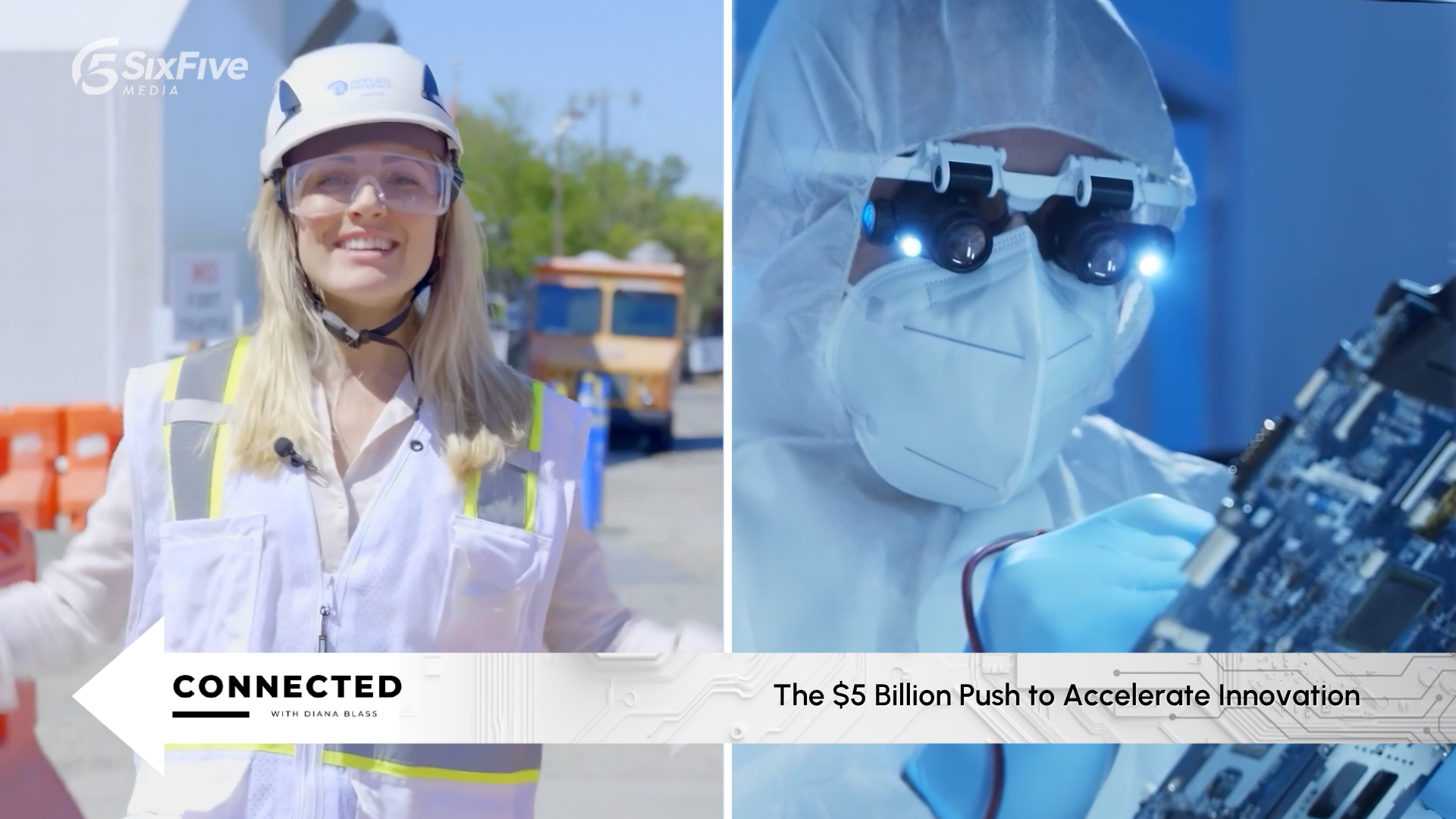
The $5 Billion Push to Accelerate Innovation - Six Five Connected with Diana Blass
On Connected, Diana Blass tours Applied Materials' $5 billion EPIC Center, where chipmakers, equipment developers, and researchers will work in parallel to move AI chip breakthroughs from lab to market faster. Earlier collaboration could cut years from development cycles as AI demand outpaces manufacturing capacity.
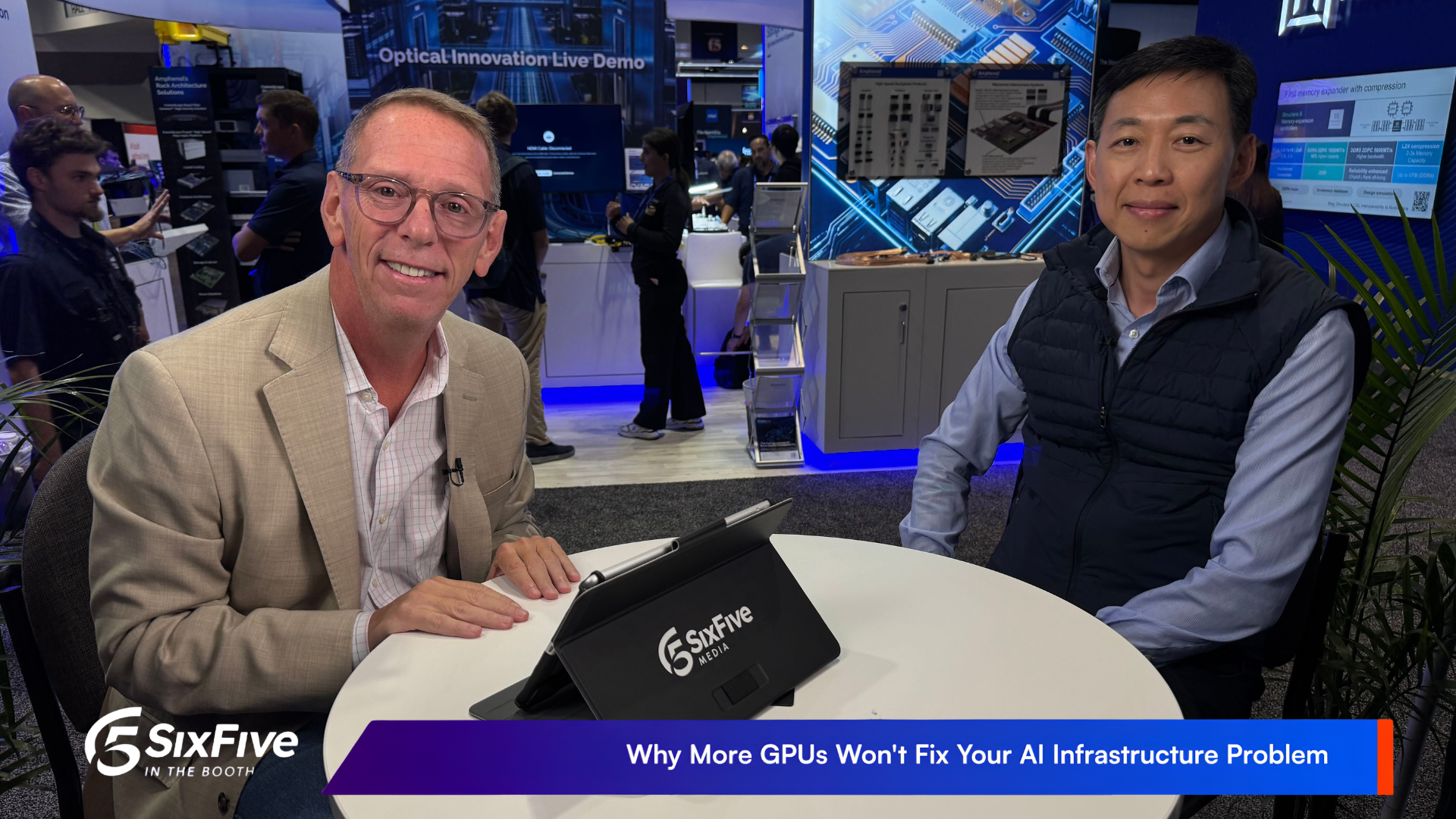
Why More GPUs Won't Fix Your AI Infrastructure Problem
At OCP Global Summit 2026, MiTAC Computing's Raymond Huang explains why AI infrastructure has become a full-stack integration problem spanning compute density, cooling, firmware, and deployment speed. For data center operators, advanced cooling and open management are now as decisive to scaling AI as GPU selection.
Other Categories
CYBERSECURITY
Threat Intelligence: Insights on Cybersecurity from Secureworks
Alex Rose from Secureworks joins Shira Rubinoff on the Cybersphere to share his insights on the critical role of threat intelligence in modern cybersecurity efforts, underscoring the importance of proactive, intelligence-driven defense mechanisms.

HP Launches World’s First Business PCs to Protect Against Quantum Hacks - The Six Five On the Road
On this episode of the Six Five - On the Road, hosts Patrick Moorhead and Daniel Newman are joined by HP's Ian Pratt, Global Head of Security for Personal Systems.
What is Autonomous Endpoint Management?
Autonomous Endpoint Management is a framework designed to unify IT operations and security teams on a single platform through real-time control and visibility.
QUANTUM
Quantum in Action: Insights and Applications with Matt Kinsella
Quantum is no longer a technology of the future; the quantum opportunity is here now. During this keynote conversation, Infleqtion CEO, Matt Kinsella will explore the latest quantum developments and how organizations can best leverage quantum to their advantage.
Accelerating Breakthrough Quantum Applications with Neutral Atoms
Our planet needs major breakthroughs for a more sustainable future and quantum computing promises to provide a path to new solutions in a variety of industry segments. This talk will explore what it takes for quantum computers to be able to solve these significant computational challenges, and will show that the timeline to addressing valuable applications may be sooner than previously thought.