
Modernizing Manufacturing Without Disruption, How SMBs Move from Visibility to Autonomy
SHARE


Manufacturing SMBs are under pressure to do more with less while navigating workforce challenges and rising operational complexity. AI is shifting the industry from visibility into more autonomous decision-making.
Manufacturing SMBs are under pressure to increase output, reduce downtime, and operate with fewer resources. The challenge isn’t access to technology, but rather turning existing data and systems into something that actually drives decisions.
David Nicholson is joined by Todd Edmunds of Dell Technologies to examine how AI is reshaping smart manufacturing and enabling SMBs to move beyond visibility into more autonomous operations.
The conversation focuses on execution. Many manufacturers already have data, but it’s trapped in silos and underutilized. The next step is operationalizing it, standardizing it at the edge, layering analytics, and applying AI to continuously improve performance. As Edmonds notes, the industry has moved from talking about Industry 4.0 to actively implementing it, with AI acting as the missing layer that enables real-time optimization and decision-making.
Key Takeaways Include:
🔹 AI is enabling the transition from smart to autonomous manufacturing.
Manufacturers are moving beyond dashboards and visibility toward systems that can act, adapt, and improve without constant human intervention.
🔹 Data is abundant but underutilized across the plant floor.
The primary challenge isn’t data collection, but integrating and operationalizing siloed data to drive efficiency and output.
🔹 Digital twins are becoming a core operational layer.
Virtual models of equipment, processes, and workflows allow manufacturers to simulate, optimize, and scale without disrupting production.
🔹 Workforce constraints are accelerating automation adoption.
With experienced workers nearing retirement, AI and automation are helping preserve institutional knowledge and maintain productivity.
🔹 Starting small with scalable infrastructure is critical.
SMBs can begin with targeted use cases and build toward broader transformation without shutting down operations.
🔹 Efficiency and sustainability are converging.
Reducing waste, energy consumption, and operational inefficiencies is increasingly tied directly to cost savings and competitiveness.
The core message is that manufacturers that focus on operationalizing data and building scalable foundations will be better positioned to transition into more autonomous, resilient environments.
Disclaimer: Six Five Media is for information and entertainment purposes only. Over the course of this webcast, we may talk about companies that are publicly traded, and we may even reference that fact and their equity share price, but please do not take anything that we say as a recommendation about what you should do with your investment dollars. We are not investment advisors, and we ask that you do not treat us as such.
TODD EDMUNDS:
You've been talking about smart manufacturing, Industry 4.0, Industrial IoT for a long, long time. And now we're finally done talking about it. We're really doing it. That really applies to the small and medium businesses. The AI can provide that brain that was missing in the Industry 4.0 days. We're seeing that all over the place.
DAVID NICHOLSON:
Hello and welcome to this edition of Six Five, a virtual webcast. I'm Dave Nicholson, and today we're exploring how small and mid-sized manufacturers are navigating modernization, automation, and data-driven transformation. I have with me today Todd Edmonds. Todd is Global CTO of Smart Manufacturing at Dell Technologies. Welcome to Six Five, Todd.
TODD EDMUNDS:
David, thanks for having me. It's great to be here.
DAVID NICHOLSON:
So tell us a little bit about what that means. Smart manufacturing, is that as opposed to dumb manufacturing? What is this smart manufacturing of which we speak?
TODD EDMUNDS:
Well, we've spent the last maybe 15 years now talking about it, and we're really, really starting to do it. Smart manufacturing is really the application of technology to make manufacturing and manufacturers much, much more efficient with what they have. and be able to do that. So we're seeing a resurgence, if you will, in smart manufacturing, especially in this new age of AI and digital twins and all these fun things that are coming up that I really get excited about when we start talking about it.
DAVID NICHOLSON:
So we're gonna focus on the small and medium size manufacturers. And of course, those are always relative terms. Are you seeing an increase in the number of small and medium manufacturing firms because of the new tools that are available? I mean, I think of the ultimate small manufacturer as me with my bamboo 3D printer. and then scaling up from there. Are you paying particular attention to this because the market is growing or do these small and medium manufacturers have very specific use cases and needs that we have to pay attention to?
TODD EDMUNDS:
No, I think they have the same use cases, the same challenges that even the larger manufacturers have. which is really doing more with less. And they have a unique perspective on it that their less is significantly less. But in this age of AI, we're really kind of starting to equalize a lot of what they can do. There's been an enormous amount of investments, as you know, and we all know, into the latest and greatest tools in the arms race, if you will, in the AI side. And that's really starting to percolate down into the manufacturing side. So if you've got a small or medium-sized business, you've been talking about smart manufacturing, industry 4.0, industrial IoT for a long, long time. And now we're finally done talking about it, we're really doing it. And that really applies to the small and medium businesses too, because the AI can provide that brain that was missing in the industry 4.0 days, You know, we're seeing that all over the place. Like, we're working with a fairly small, I guess it's now owned by a global company, but it's a small brewery that is saying, all right, how can I maximize the amount of beer I can get out of this brewery? And so one of the things we started doing with them, for example, is implementing a digital twin. And we like to start from the bottom up, we call it, which is connecting to the things that are driving that production of the beer. In this case, it's a centrifuge and it's still a $20 million piece of equipment. And if we can connect to that and start getting more information and start building more models and start getting more data out of that, and apply AI to it. So we're not just using it and just monitoring that centrifuge, for example. We're making that equipment smarter every time it's used. And this type of technology is great because it's applicable to all manufacturers and all size manufacturers, even down to that small size manufacturer that we're talking about.
DAVID NICHOLSON:
So it's interesting, I wanna seize upon this idea of the brewery, not because it's making me thirsty, but just because it's an interesting case study. When we think about an entity that has all sorts of data that can be reasoned over, underutilized data, I wouldn't think of a brewery as the first, I usually would think of sort of tech focused entities that have underutilized data. You're saying a brewery, has information and by monitor by modernizing they're able to better utilize that data 100 percent.
TODD EDMUNDS:
A lot of times in manufacturing small growing manufacturers you know are all and even the large manufacturers they all have some sort of data graveyard right. Data is trapped in these proprietary silos. in systems that are designed to function really, really well, but not necessarily function well with others, not play well with others. So they like to do what they do and do it really, really well, but don't share, right? They're not going very, they're not sharing. So what we're doing with a lot of the newer technologies is helping them from just collecting that data to operationalizing that data. And not just one piece, but how it works with all the other pieces that go into that production. So if you're making beer, how do you operationalize the data that's coming out of the centrifuge, that's coming out of this lauter tun, there's a craft brewing or a brewery term for you, or the bottling lines or whatever, and how do you put that all together and make it much more efficient to operate and get more with the same amount that you already have? And so we're seeing that across all different size manufacturers. And we're seeing those best in breed, no matter their size, really look at this from like three, taking that three steps at it, right? Is standardizing where that data is born at the edge, right? That edge data. We then abstract that data, so we apply a data and analytics layer over the top of that. And then we can really analyze what's going on, putting all those pieces together, and then add AI over the top and close that loop to make it all work much, much better.
DAVID NICHOLSON:
And manufacturing is particularly interesting because in some cases you can have literally hundreds of years of history at work. And you just talked a lot about introducing and teasing out intelligence from an environment. What about automation, especially when you consider that the workforce at large is aging? There's certainly expertise and craftspersonship associated with a lot of manufacturing techniques. How can you help a smaller or medium manufacturer navigate those waters? Can you automate enough to account for the sort of loss of human capital as we move forward? What are your thoughts?
TODD EDMUNDS:
Yeah, we're hearing it. I've heard it called a lot of things. The silver tsunami is one of the good things that we've been hearing. Yeah, absolutely. And that's a very big challenge. There's a lot of tribal knowledge that's going to be lost. And I really believe that, and we're seeing it across the globe, is that AI can really help with that. you know, you can offload a lot of the mundane tasks that some of those people do to AI and using AI agents and chatbots, and then let them focus on the high-value work, and then using agentic AI and digital twins, and in manufacturing, digital twins seems to be one of the most important technologies that they're adopting today, even a lot more than the starting out with AI, is using digital twins to build a virtual replica of what's going on in the factory or what's going on with that particular individual who may be nearing retirement age and what they do. And you build that into a digital twin of that system, of that area, of even that facet. and you start to figure out how it's working and how to make it work better. And that's where even like agentic AI, even more than generative AI, like everybody talks about chat GPT or Gemini or Claude. But what's really happening is that agentic capabilities on the factory where they start to learn from each other and make sure that they follow the prescriptive past and they follow the rules. But then they start to learn what those, you know, those very experienced operators that are about ready to retire, start to learn that and sort of learn and how to operate that just as well or a lot of cases better. And so we're seeing that a lot. We're seeing that being built into the operation of manufacturing, you know, and you can start small with that. You can start small with a simple use case and then make sure that you can have composability built into whatever framework you're building and build on that. And now you start building a much more valuable digital twin, not just of what that person's doing, but how that area, how that machine fits into the broader ecosystem of what they're doing on that brewery or factory floor.
DAVID NICHOLSON:
So if you're coming to me to advise me on this subject, of course, I hopefully am aware enough to know that I should be modernizing, that I should be trying to move from smart manufacturing into more of an automated environment. You mentioned things like digital twins. Of course, without specific details about my manufacturing business, the hypothetical manufacturing business, Daveco, let's call it.
TODD EDMUNDS:
I was going to say Dave Coe myself.
DAVID NICHOLSON:
I'm glad you beat me. Is something like a digital twin at the forefront of your mind when you're going in to have a conversation? What's the best place for Dave Coe to start? And I know these are general prescriptions here. And I need you to assume one thing. I can't have my operation cease for six months. I could be down this entire time. While you're fixing me, you can't destroy my business. So Todd, where are we going to start?
TODD EDMUNDS:
We call that brownfield, right? Great point, right? Smart manufacturing initially was about visibility. The next area is autonomy, right? Instead of from rear view mirror to autopilot, right? And so just looking at where we were, we don't need just more dashboards. Small manufacturers, Daveco, needs decisions, right? And you can start to do that from a scalable way. And when I talk to any manufacturer across the globe, Scalability is one of the key things we preach and that we talk about and that is key. Whether you're a smaller, whether you're a growing manufacturer, whether you're an existing large manufacturer and have hundreds of manufacturing, the scalability piece is key. Number one, why? Because the number of applications needed to get to where you're going is not going down. The amount of compute needed to run those applications is not decreasing, it's increasing. So you want to plan for that. from the get-go. To get started at Daveco, though, I'm sure as a modern-looking, forward-looking manufacturer, Daveco has already started to do some smart manufacturing use cases. They've been around, like I said, they've been around for a long time. They're about ready to have their driver's license so they can drive because we've been working on it for that long. we can start to apply the latest technology and the latest capabilities in infrastructure to be able to say, all right, let's take those existing use cases, apply AI to them, and make them much, much better. So, for example, OEE, overall equipment effectiveness, it's always tough to say that. OEE, overall equipment effectiveness, has been one of the standards of, okay, build dashboards to find out how effectively you're using your assets on the plant floor. Well, applying AI to that actually accelerates that and turbocharges that. you can, instead of just saying OEE, we're going to do autonomous equipment effectiveness, where the machine doesn't just wait for you to do something, it makes itself better. Predictive maintenance is another one. Everybody talks about predictive maintenance. Well, instead, we're going to apply predictive asset enhancement. And so we're going to do, like I talked about at the brewery, we're going to have a machine that gets better every single time it's being used. I'm a big fan of turbocharging those existing applications. And so you can start there. You've got a lot of applications, a lot of use cases, a lot of companies will have hundreds, dozens or hundreds, and I'm sure Daveco does too. We can apply AI to accelerate and enhance those. And then you start building, like I talked about the digital twins, digital twins are going to be very, very big in Daveco and in every company, because you can use that start small and drive an ROI now do particular use cases and build them up into a composable framework. And then their future ready to start adding in digital twins and adding in things like simulation and AI capability. So you can run a, you can say, what if, and run it a thousand times without wasting anything and being able to say, all right, let's figure out the best way to do that. And that's happening right now. And then the last thing I'd say is make sure you invest in a smart factory foundation. It's not about. individual use cases that don't go anywhere, that kind of end up going to a use case graveyard because you haven't planned for scale, you haven't planned to repeat them at your other factories that Daveco might have, three or four other factories, right? But having that plan to say, I'm going to need to have an infrastructure that allows me to run these applications, run these use cases, but then accelerate and expand them, and that becomes that scalability. So really start to look at that, having an AI-ready infrastructure. And it doesn't have to be giant, right? It can still feature the standard stack that we're used to, right? Dell, Microsoft, Intel kind of stack that stack that's been around and has been the MVP for manufacturing for so long, right? We can start with that and have that ability to scale up and do whatever's coming right around the corner or what's coming years from now. Nobody knows. It's moving so fast, you wake up and there's something new. But if you do the infrastructure right, you have the ability to be able to jump in with the next greatest thing.
DAVID NICHOLSON:
So Todd at Daveco, you know, you know that we're in that SMB category, but I want to call it out specifically, you know, we're not. we don't have the kind of infrastructure that you're hearing about constantly, you know, the mega GPUs and the ultimate enterprise software packages. I mean, our dabbling in AI is primarily co-pilot as part of office. And, you know, we're kind of a CPU driven entity.
TODD EDMUNDS:
Are you still good for us? Well, absolutely. It's, you know, it's not just GPUs in the manufacturing space. The CPU is the breathing heart of what a lot is going on in the manufacturing space. And manufacturing has always loved Windows. You'll still find Windows. There's not a lot of other things going on in the factory floor. It's a lot of Windows, probably a lot of some even like Windows. I've seen Windows 3.1 still in manufacturing. It's time to upgrade people. Anyway, Intel, Intel CPUs, Intel, absolutely Intel CPUs in the factory. And and we're seeing a lot of adoption of Azure local. So putting an actual on premises, edge cloud, if you will, using Azure local, from from Microsoft as well. So we're seeing a lot of that.
DAVID NICHOLSON:
Final question for you, Todd. At Daveco, we're very proud of a philosophy that we cling tightly to. It's something called hippie capitalism. So some of us like to be efficient and do things in a sustainable way because it's the right thing to do. And then there are others just really, really like money. And it seems like we managed to accomplish both of those things if we can be really efficient. And I'll tell you where efficiency shows up first, and that's in our energy bills. So do you have any thoughts on that? Again, save the planet, save the cash, do both at the same time.
TODD EDMUNDS:
I love it. I love it. Hippie capitalism. I'm going to steal that. You're right. Sustainability is a lot of times viewed as a tax. It's like, oh gosh, here we go. We've got to do it. But really, if you look at it the right way, it's an untapped profit center, right? So if you do efficient, if you become more efficient, if you save money on energy, and really when you think of back to your very initial first question, what is smart manufacturing? Smart manufacturing is sustainability. It's optimizing the resources you have, optimizing the assets and getting more out of them. You're doing more with less. You're doing a paperless factory, for example, right? And you're connecting all your workers with the next generation of rugged tablets and laptops and stuff, getting rid of that paper. And then now you've got that much more optimized factory. To your point, you're saving money, but you're also saving the planet at the same time. And I keep talking about it, but you think about a digital twin. If you build a digital twin of your factory, you can run thousands of production runs virtually before you ever flip a switch, before you ever commit resources or start to turn on the water flow or the electricity. Then you optimize everything before you actually build it, before you actually run. And now you're the ultimate hippie capitalist because you've done it and you've done it the right way. And you've started to like, you know, that edge capabilities is really reducing the carbon cost of data. So it's really interesting.
DAVID NICHOLSON:
Fantastic. Well, as they say, Mr. Edmonds, you may be working yourself out of a job because you, along with your colleagues at Dell, could take my co, your co, and take us into the very, very large manufacturing world, and then hopefully you have a colleague in the very, very large manufacturing space, smart manufacturing, or is that you?
TODD EDMUNDS:
That's me as well, right? Fantastic. I think to get to that space, remember that this AI capability isn't something you bolt on. It's something you build in from the very beginning. to become that very, very large company. And I think that we're going to see a lot of disruption in that area because these smaller, more nimbler manufacturers, if they do it right, they'll have the capabilities to become the very, very large manufacturers as well.
DAVID NICHOLSON:
Well, thanks very much, Todd Edmonds, Global CTO for Smart Manufacturing at Dell Technologies. I'm Dave Nicholson. This has been a Six Five virtual webcast. Thanks for joining us and stick around for more exciting content on the channel.
MORE VIDEOS
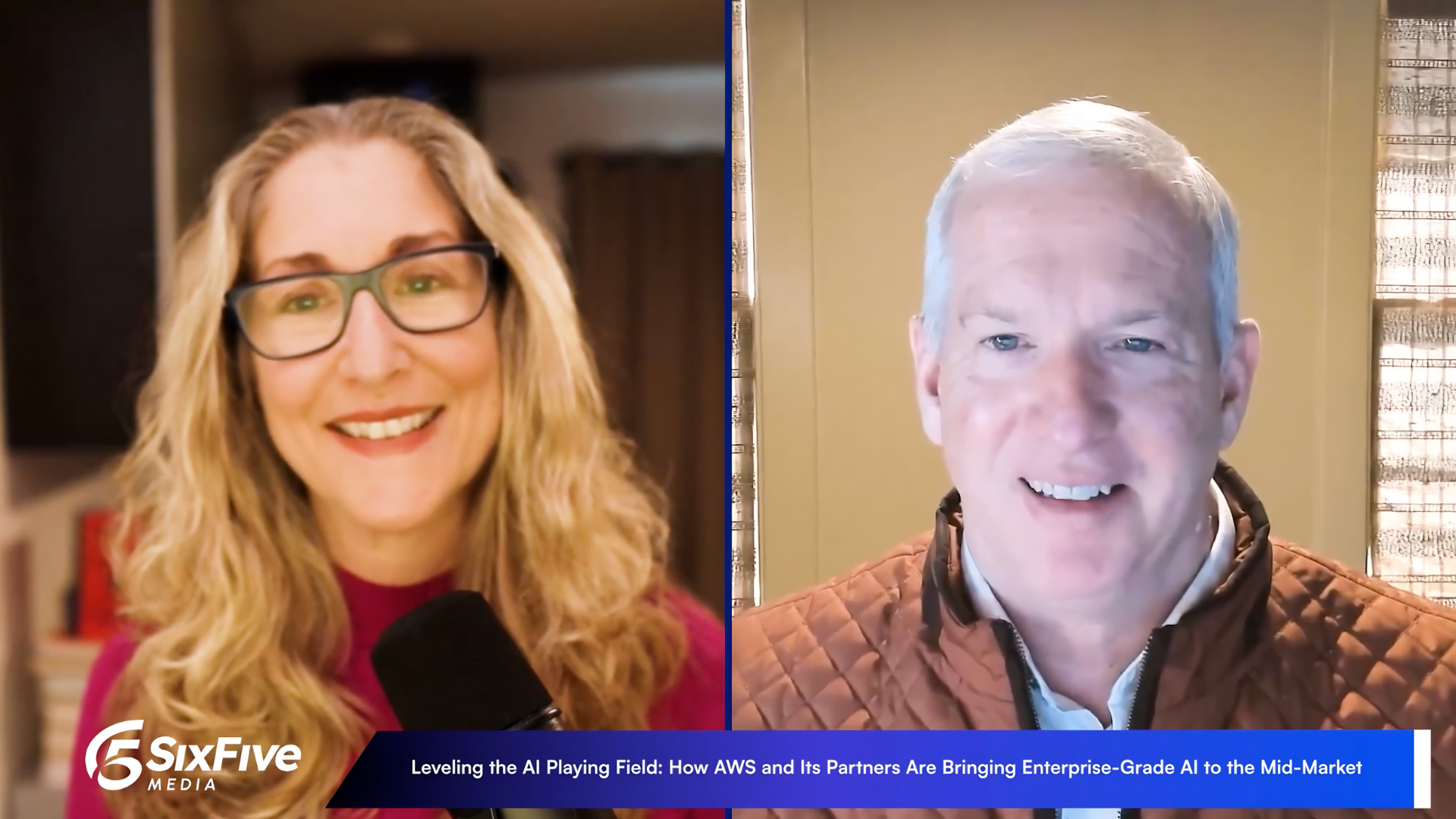
How the Mid-Market Gets Enterprise AI Without a 300-Person IT Org
On this Six Five Virtual Webcast, AWS’s Chris Sullivan explains how partners and AWS Marketplace are helping mid-market companies move agentic AI from proof of concept to production without enterprise-sized IT teams. Starting with a real business problem and the right partner gives these organizations a faster path to measurable results.


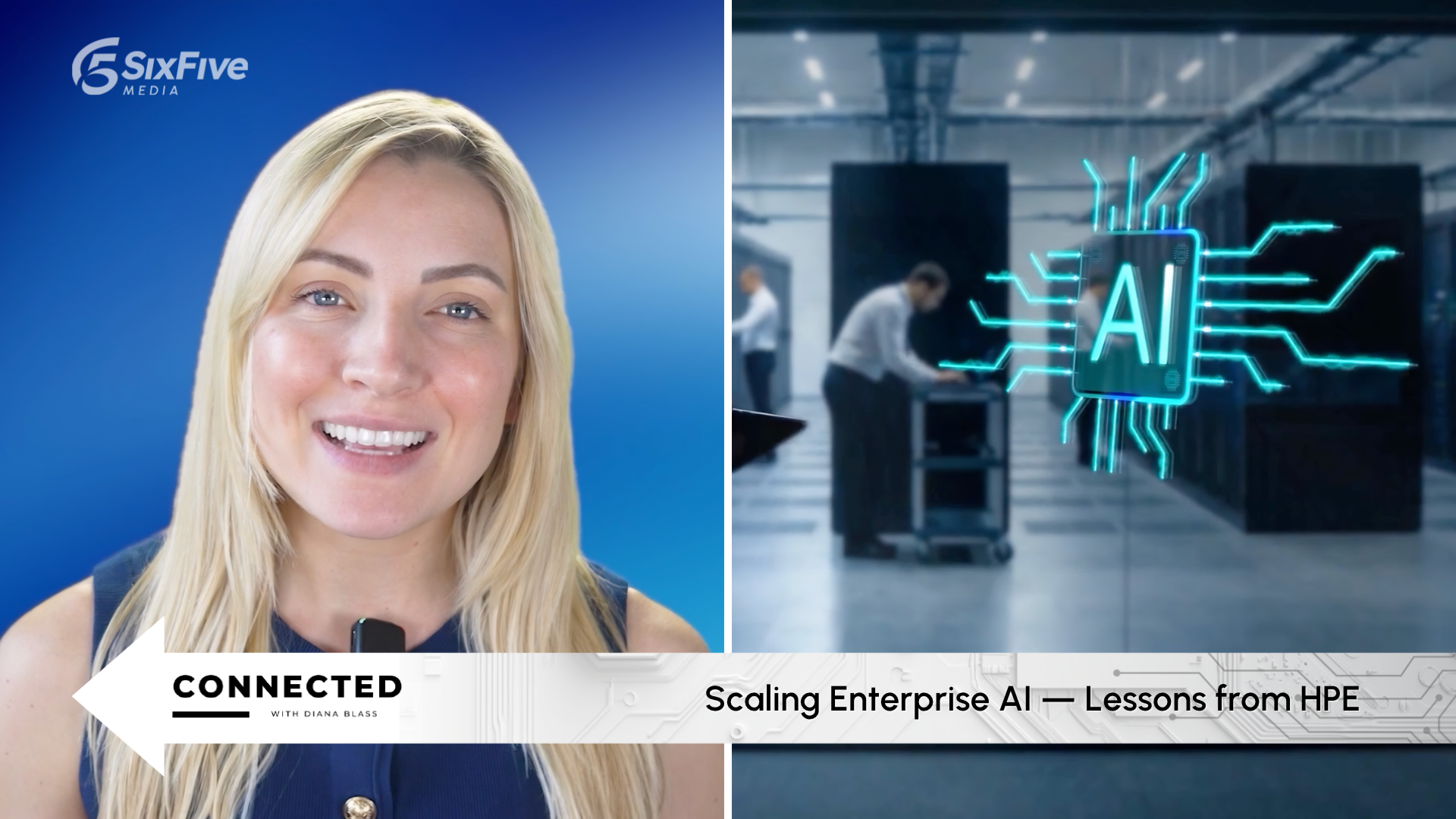
Scaling Enterprise AI, Lessons from HPE - Six Five Connected with Diana Blass
On Six Five Connected, Diana Blass explores how HPE is scaling AI across its own business and what agentic AI demands from compute, memory, edge, and networking infrastructure. Enterprises that design infrastructure around their most valuable use cases can turn AI adoption into measurable savings.
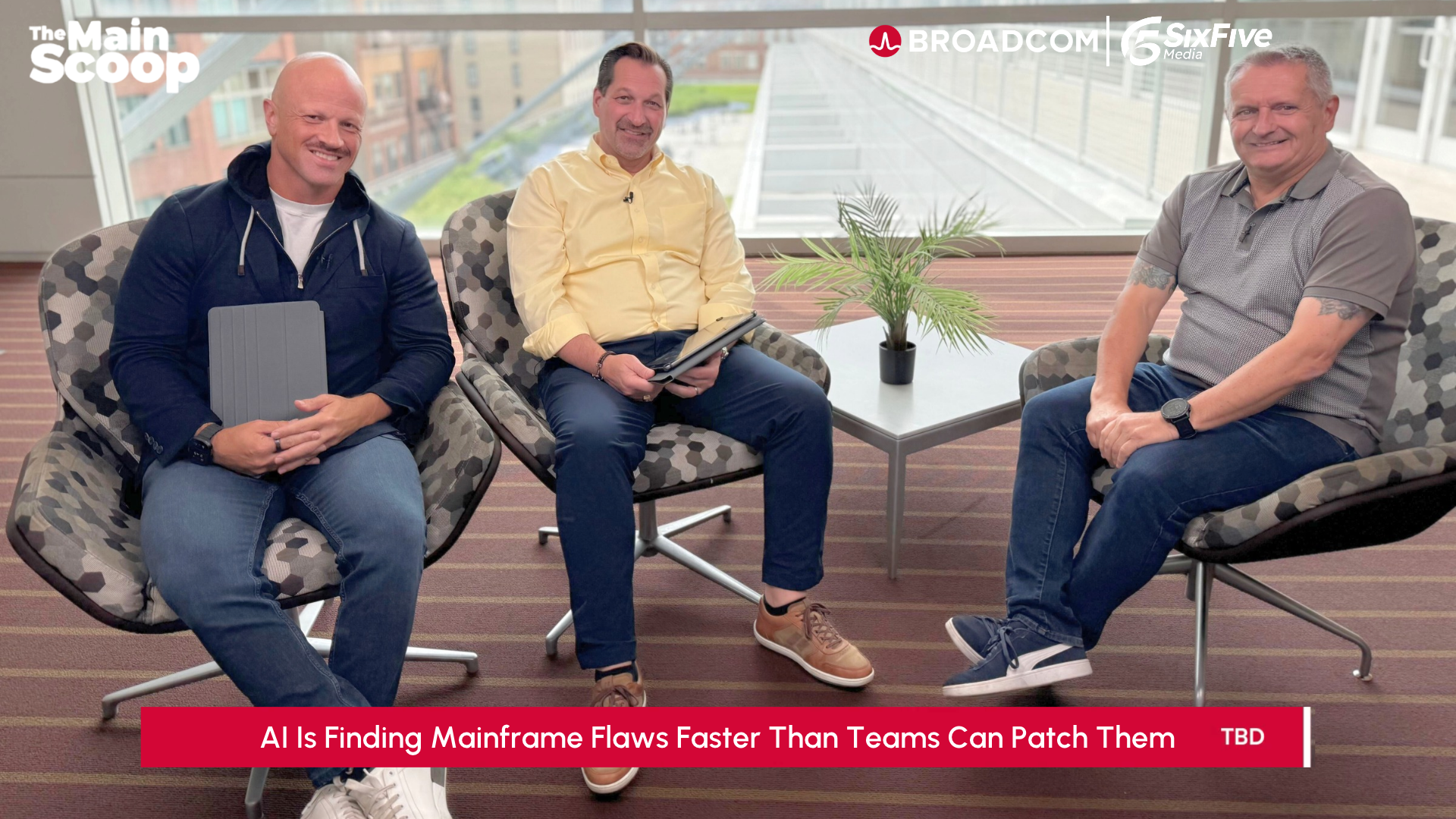
Outpacing Threat Actors: Mainframe Security in the Age of AI and Quantum
On The Main Scoop, Vertali's Mark Wilson explains why AI-driven vulnerability discovery and looming post-quantum deadlines are forcing mainframe teams to rebuild their maintenance cycles. Teams that combine AI-assisted vigilance with security fundamentals and early cryptographic inventories will stay ahead of threat actors.
Other Categories
CYBERSECURITY
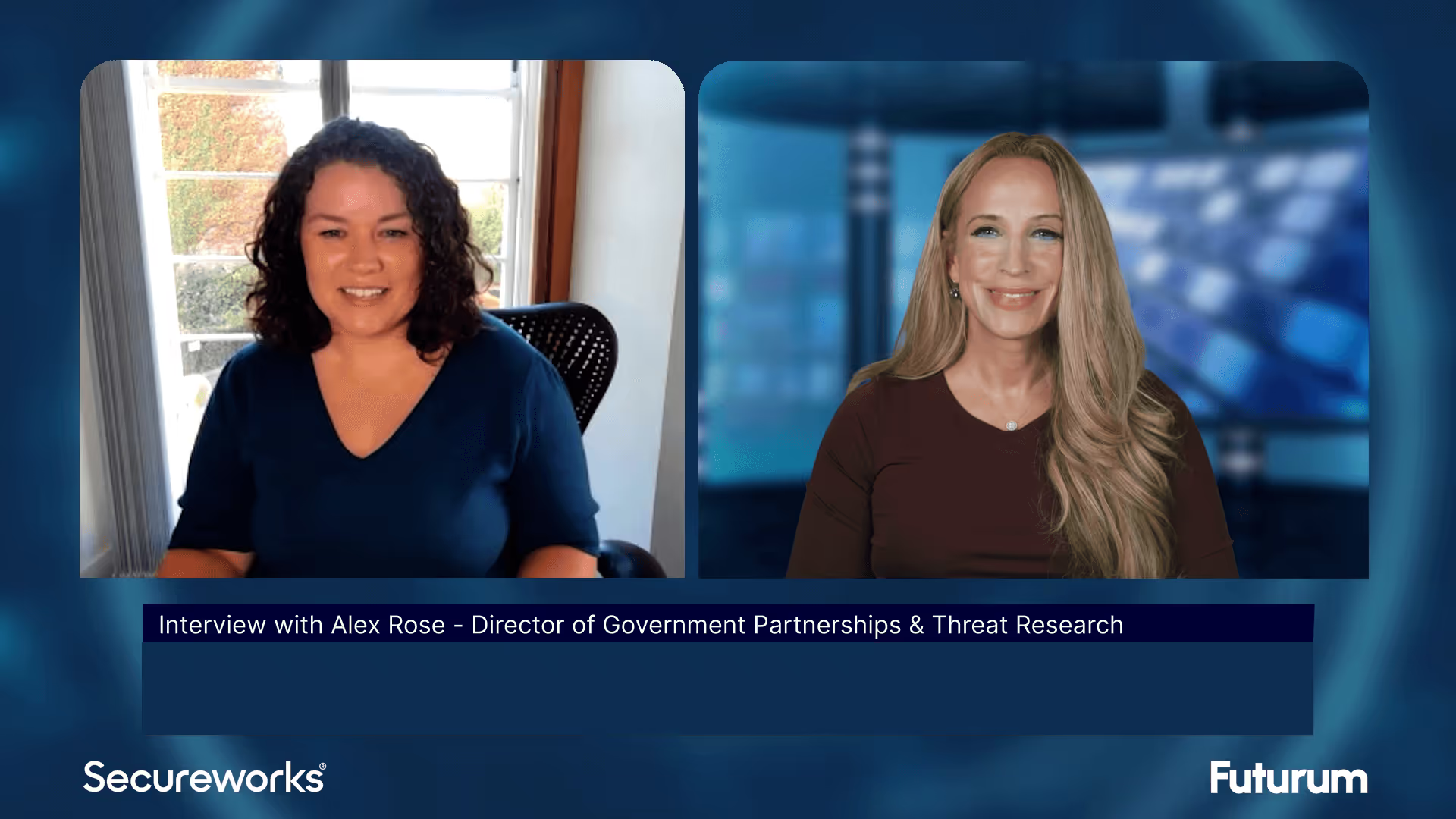
Threat Intelligence: Insights on Cybersecurity from Secureworks
Alex Rose from Secureworks joins Shira Rubinoff on the Cybersphere to share his insights on the critical role of threat intelligence in modern cybersecurity efforts, underscoring the importance of proactive, intelligence-driven defense mechanisms.

HP Launches World’s First Business PCs to Protect Against Quantum Hacks - The Six Five On the Road
On this episode of the Six Five - On the Road, hosts Patrick Moorhead and Daniel Newman are joined by HP's Ian Pratt, Global Head of Security for Personal Systems.
What is Autonomous Endpoint Management?
Autonomous Endpoint Management is a framework designed to unify IT operations and security teams on a single platform through real-time control and visibility.
QUANTUM
Quantum in Action: Insights and Applications with Matt Kinsella
Quantum is no longer a technology of the future; the quantum opportunity is here now. During this keynote conversation, Infleqtion CEO, Matt Kinsella will explore the latest quantum developments and how organizations can best leverage quantum to their advantage.
Accelerating Breakthrough Quantum Applications with Neutral Atoms
Our planet needs major breakthroughs for a more sustainable future and quantum computing promises to provide a path to new solutions in a variety of industry segments. This talk will explore what it takes for quantum computers to be able to solve these significant computational challenges, and will show that the timeline to addressing valuable applications may be sooner than previously thought.