
Networking for AI Workloads and Security at HPE Discover Barcelona 2025 - Six Five On The Road
SHARE


Will Townsend, VP & Principal Analyst at The Futurum Group, joins David Nicholson and Ryan Shrout to share insights from HPE Discover Barcelona 2025 on evolving networking and security strategies for the AI-native enterprise—covering Ethernet, wireless, observability, and integration trends.
How is networking evolving to support the demands of AI workloads, and what role does security play in next-generation enterprise infrastructure?
From HPE Discover Barcelona 2025, Six Five Media analysts David Nicholson, Ryan Shrout and Will Townsend unpack the networking and security trends shaping the AI-native enterprise. They explore HPE's vision of the network as a central nervous system for enterprise infrastructure, the evolving role of Ethernet and wireless solutions, and how security and observability are being integrated into modern infrastructures.
Key Takeaways Include:
🔹The New "Nervous System" of the AI-native Enterprise: Will Townsend explains the vital role networking plays in data movement, AI model training, and inference, both in cloud and at the edge.
🔹OpenEthernet vs. InfiniBand: in AI workloads: Analysis of how Ethernet's ongoing evolution in AI workloads and recent HPE collaborations support AI infrastructure at scale.
🔹Integration of Wireless Tech: The increasing importance of private 5G and Wi-Fi 7, along with integration announcements from Aruba and Juniper, with HPE aiming to facilitate growth in diverse operational technology (OT) environments.
🔹Distinguishing "AI for Networking" from "Networking for AI": Townsend analyzes the difference between AI-powered network management tools and infrastructure designed specifically for AI's data demands.
🔹Security and Observability Progress: Insights on the merging of observability and AIOps capabilities from Aruba, Juniper, Apstra, and OpsRamp—driving comprehensive visibility and higher network assurance for enterprises.
Learn more at HPE.
Watch the full video at sixfivemedia.com, and be sure to subscribe to our YouTube channel, so you never miss an episode.
Or listen to the audio here:
Disclaimer: Six Five On The Road is for information and entertainment purposes only. Over the course of this webcast, we may talk about companies that are publicly traded, and we may even reference that fact and their equity share price, but please do not take anything that we say as a recommendation about what you should do with your investment dollars. We are not investment advisors, and we ask that you do not treat us as such.
Will Townsend:
This is Six Five Media in the booth. We're at HPE Discover Barcelona 2025. I'm joined by Dave and Ryan. We're the Six Five Media crew and we're talking about the keynote that just wrapped up. Antonio spoke about discover what's next. And he also mentioned how AI is sort of stuck in proof of concept. The MIT report that we've all heard about, you know, 95% of AI deployments aren't meeting, you know, ROI. Ryan, I'm so glad they let you out of the Signal 6-5 labs. I'd love for you to weigh in on this. So what's your perspective on that?
Ryan Shrout:
I actually thought that stat was, is still one of the most interesting things that you could talk about, right, is that huge kind of failure rate. I think it gives a dramatic kind of significant opportunity for somebody like HPE to come in and offer solutions, hardware, software, implementation help to really kind of drive that number up quite a bit. It's one of the things that we focus on a lot at Signal 65 is how do you go from you know, ideas about AI to proof of concepts to deployments and kind of doing that measurement. So it's really good to see HPE focusing on it. It's a good opportunity.
Will Townsend:
Yeah. Well, and I love the focus on networking, cloud and AI. I think it's complete. The company has demonstrated a lot of depth in each of those three areas. Dave, what are your thoughts around that? Well,
Dave Nicholson:
First, you mentioned the MIT study. Largely, that has been supplanted by a study. It's going to make Ryan groan, but it was a study that was done by Wharton. What they found is that we're kind of going into this era of actually doing things with AI as opposed to languishing in proof of concepts. And I think that from an HPE perspective, because they address all of the various aspects that go into a successful AI deployment, they're very well positioned for 2026, where things are starting to really get off of the ground. So I don't put a lot of stock in anything that comes out of MIT. There's a reason why the Constitution was signed in Philadelphia and not in Boston, but that's a discussion for another day. I do find the categories that you labeled off there of AI and cloud and networking very succinctly tells the story about what HPE is going to offer to these different clients and enterprises. I think it helps set the framework for what are the three components that you need to drive to do these on-prem or hybrid cloud solutions for AI. So it's really good to see.
Will Townsend:
Yeah, and from my perspective, the company's double down focus on networking is really important. It's often lost in the AI conversation around GPUs and compute and that sort of thing. And what really underscores that is HPE's acquisition of Juniper. Very hard fought, took a little bit longer to close than I think Antonio expected. But Rami was on stage during the keynote as well. And he talked about the strengths in bringing Aruba and Juniper together. And when you look at what Juniper brings from the service provider perspective, also with Mist and what they've done with building their enterprise business, and just Aruba's long track record. It's quite impressive. And I think what's really relevant for the European Union is sovereignty, right? And we've heard a lot of discussion around the need for that. Private cloud AI is a solution that HPE is offering. That is AirGap. Ryan, from your perspective, how is HPE going to address this huge concern around sovereignty?
Ryan Shrout:
Well, I think they have the capability to do that because of those three categories that we were just talking about, right? They can kind of offer a full stack solution that can be air-gapped and contained, still offer high performance and all the features and capabilities, all the operations management. We've got a network operations center behind us as a great demonstration for it. So I think they have a significant opportunity there and they have great expertise. I'm also, you know, I think the experience they have of working with large-scale enterprise deployments helps with that as well. I think there's pretty significant overlap between those two categories of consumers. Sure, sure. Anything else to add there, Dave, from your perspective? No, it's just sort of back to the hybrid cloud story. I think hybrid cloud really gets off the ground. Hybrid cloud, including sovereign hybrid cloud, really gets off the ground. And HPE is very, very well positioned to take advantage of what the market is asking for. People don't necessarily want everything they're doing to be hosted in a hyperscale cloud provider. There's a level of trust there. Some of it's rational, some of it's irrational. But the fact is, a lot of the work that will be done in inferencing will be happening on premises. And HPE is perfectly well positioned for that. The other part of this that's interesting, we talk about networking. We're talking about networking in the open space. NVIDIA has dominated a lot of the conversations in AI, and I think 2026 in particular, with HPE benefiting a lot from this dynamic, is going to be one where HPE's Switzerland-like approach to things is really going to pay off. And so when you look at Juniper at the center of things, at the networking layer, being first and foremost an open platform, that's really important to keep an eye on.
Will Townsend:
No, I agree. And during the keynote, Rami also talked about the work with AMD and the Helios platform for AI rack scale infrastructure, and also the fact that the company is first to market now with a scale up Ethernet switch. And that just speaks to exactly, Dave, what you were saying about that ecosystem approach. Fits very well within HPE sort of DNA. Certainly, that's the way AMD is going after things relative to NVIDIA that is providing more of a full stack. Ryan, your additional thoughts on that.
Ryan Shrout:
I think from a sovereign computer, sovereign AI perspective, they want that open ecosystem. They want to have options. They don't want to be bottled into any particular one vendor. And HPE's ability to work with all those customers, I think, is a significant benefit for them. So huge risk mitigation from the sovereign side.
Will Townsend:
Dave, anything else to add there?
Dave Nicholson:
I just want to double down on the idea that if you're looking for a single back to pat or throat to choke, depending upon your demeanor, people want to work with HPE. Again, NVIDIA has dominated the conversation. We talk about NVIDIA offering a full stack. I would argue that It's not as full a stack as what HPE offers. And increasingly, HPE customers are going to come to them not asking for a specific GPU or TPU or APU, a specific accelerator. They're going to come to HPE and they're going to say, I have a problem, help me solve it. They're asking for solutions. They're asking for services to be provided. And so I think that, yeah, 2026 is going to be a year of ascendancy based upon what we saw in the keynote.
Will Townsend:
Yeah, and it's all about driving outcomes, right? So I don't believe enterprises necessarily want to align to specific tech stacks and that sort of thing. They need a solution that's going to work for them. That's what I like about GreenLake as well, providing that consumptive service. that you don't have to make these huge investments in hardware and software to get started. And I, you know, there was some sort of day zero sessions that we attended yesterday that sort of talked about how HP Financial Services is sort of easing the friction there. And like within the first six months, it's like you're paying 1% of whatever the service value is to get you ramped up and get started there. But I want to shift to the whole notion of self-driving networks. This was another theme during the keynote. And it's an idea and a concept that's been around for quite some time. It started out as intent-based networking. And the whole idea is making the network intelligent, right? So you're infusing AI into it. You're integrating security into the network layer so that you can, with smart policy decisions, remediate things and that sort of thing. And all of that frees the operational team to do more value-added support for the line of business. Ryan, do you think that HPE is delivering on that promise of a self-driving network? Because it's been this, like, grand idea for so long.
Ryan Shrout:
I mean, based on what I've seen so far, they're making significant progress there, right? I also think that an area, you know, the network can handle a lot more compute than it used to be able to handle as well, another area of that kind of self-driving network. I think there's a lot more demos and kind of exhibits for me to go witness here at the show, right, that I think will help tell some of that story. But it looks promising. Yeah, I take kind of a big picture point of view on this. If you look at the role of a CIO or a CTO in an organization, they've got this juggling act that they're constantly dealing with. Keep the lights on, innovate. Run the business, change the business. They've got infinite demands on their time and resources and finite time and resources to deal with. One of the things that we've all been subjected to in the world of AI is this sort of chase the shiny object mentality, where you're looking for novelty, you're looking for some new line of business that will be driven by AI. HPE is recognizing and putting at the forefront the idea that no, possibly the sexiest thing you will do with AI is improve operational efficiency. Something that your end user customers may never see. But when you can drive efficiency to the bottom line, that is sexy as heck when it comes to deployment of AI. So I really like that. I really like when somebody like HPE comes out. And yeah, we're looking at transforming the fan experience here, really cool stuff. You can see what they're doing with Formula One. But where the rubber meets the road, it's operational efficiency. So I'm a big believer in at least the messaging. Juniper has actually come a long way with that prior to even being acquired by HPE. So I think that's going to resonate really, really well with the people who actually write checks for this stuff.
Will Townsend:
I agree. I agree. Well, as we close our conversation, I want to pose like, you know, the biggest enterprise takeaway that you could If you were to give some advice to an enterprise, what would you do? From my perspective, what I'm really impressed with is the depth and breadth of Juniper and HPE Aruba coming together to drive those business outcomes, Dave, that you were just speaking to. But if you were to provide your biggest enterprise takeaway, what would it be?
Dave Nicholson:
The biggest enterprise takeaway is just a reminder that if you're freaking out not knowing what to do with AI because you thought you were gonna make an investment last week that turned out to be a bad investment this week, you can at least breathe a sigh of relief knowing that there's someone like HPE out there that is an umbrella over all of the things that need to happen. And a lot of those specific decisions that people are freaking out about, don't need to worry about that because HPE can fill in behind the scenes with the appropriate technology to get the mission done.
Will Townsend:
Yeah, be that trusted advisor. Yeah. Yeah. Ryan.
Dave Nicholson:
I follow up on that a little bit and say that you should start now. Experiment, right? Yeah, some of the technologies and the capabilities that HPE has shown here so far is this ability to start with one server, add from there. Start with a small server, move to big servers. Scale up, scale out. And all those are capabilities that you can do. You don't have to invest $10 million day one. to go action this, and right, it follows HPE's messaging of this is not, it's no longer AI ready, it's like AI now, AI deployed, AI in use. And you can do that today with a small investment and scale up as you find those opportunities for efficiencies.
Will Townsend:
Sure, great. Thanks guys, fantastic insights. So with that, this is Six Five Media in the booth at HPE Discover 2025.
MORE VIDEOS
.png)
Anthropic’s AI Slowdown, OpenAI’s $1.2T Valuation & Salesforce’s AI Bet
Anthropic's "Pace the Frontier" essay set off a week in which nearly every major AI leader, and two heads of state, weighed in on whether the frontier should slow down. Patrick Moorhead and Daniel Newman read the incident as something larger than a safety debate. Whoever sets the pace of the frontier also sets the pace for open-weight models, enterprise custom models, and the trillion-dollar valuations riding on top of them. That contest, not the essay itself, is the through-line of Episode 320 of The Six Five Pod.


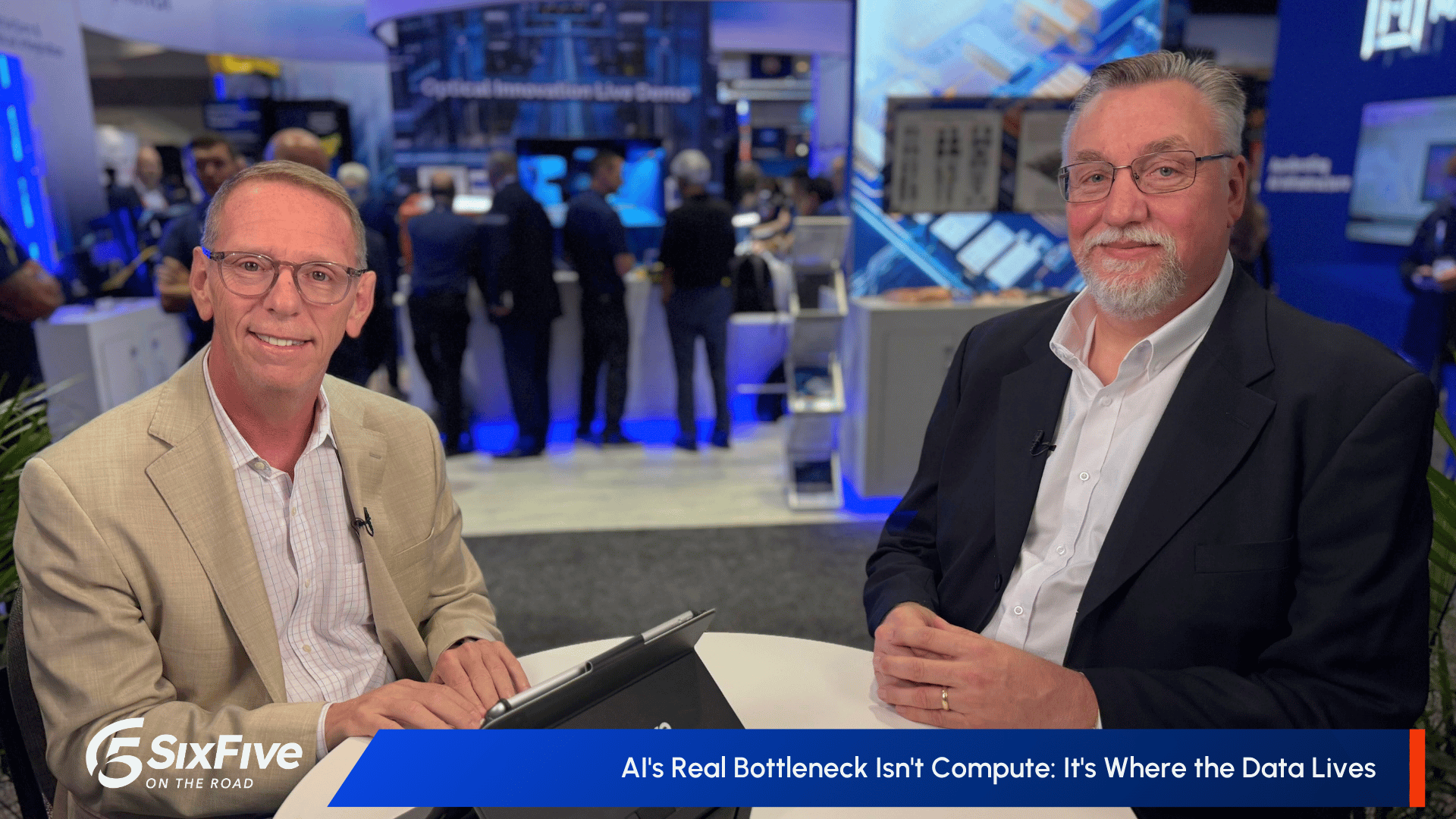
WD's Tim Rausch: AI Storage Demand Compounds With Every GPU Cycle
Western Digital's Tim Rausch argues that AI's compounding data growth, more than GPU capacity, sets the real ceiling on infrastructure scaling. He joins Matt Kimball at AI InfraSummit 2026 to walk through how total cost of ownership, archived data reuse, and WD's capacity roadmap are reshaping enterprise plans to scale AI over the next several years.
.png)
The Main Scoop Ep. 45: Attackers Only Need to Be Right Once. AI Just Made That Easier.
Chad Rikansrud, R&D Software Security Engineer at Broadcom, explains how frontier AI models are finding decades-old mainframe vulnerabilities in seconds, collapsing the complexity advantage that once protected legacy platforms. He outlines why enterprises need faster Security Intelligence (SECINT) ingestion and disciplined human oversight to keep pace with adversaries wielding the same tools.
Other Categories
CYBERSECURITY
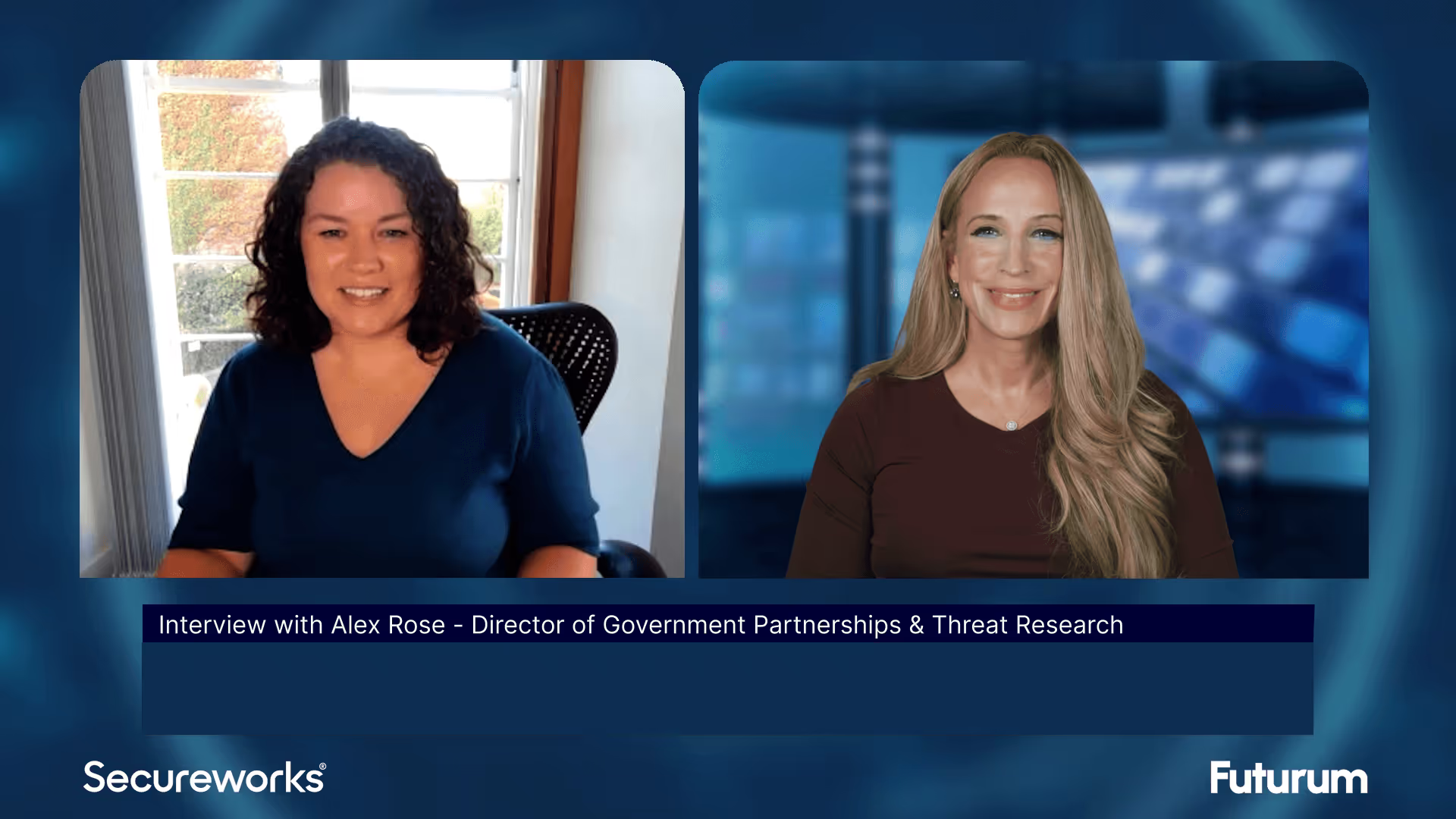
Threat Intelligence: Insights on Cybersecurity from Secureworks
Alex Rose from Secureworks joins Shira Rubinoff on the Cybersphere to share his insights on the critical role of threat intelligence in modern cybersecurity efforts, underscoring the importance of proactive, intelligence-driven defense mechanisms.

HP Launches World’s First Business PCs to Protect Against Quantum Hacks - The Six Five On the Road
On this episode of the Six Five - On the Road, hosts Patrick Moorhead and Daniel Newman are joined by HP's Ian Pratt, Global Head of Security for Personal Systems.
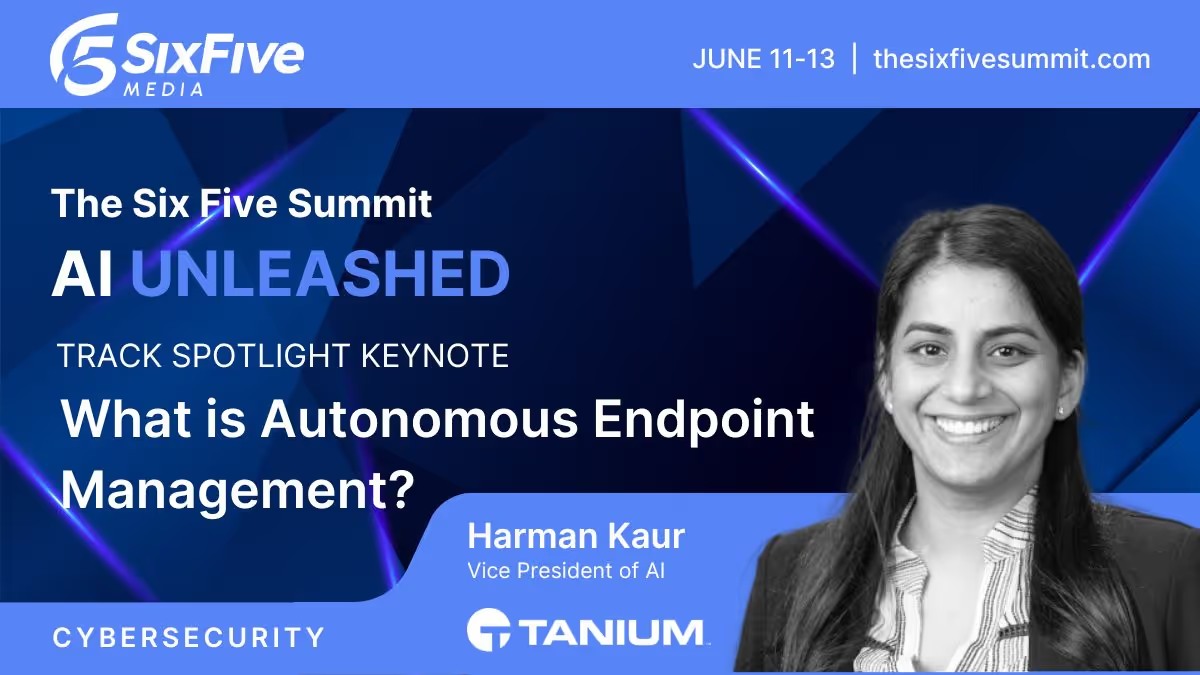
What is Autonomous Endpoint Management?
Autonomous Endpoint Management is a framework designed to unify IT operations and security teams on a single platform through real-time control and visibility.
QUANTUM
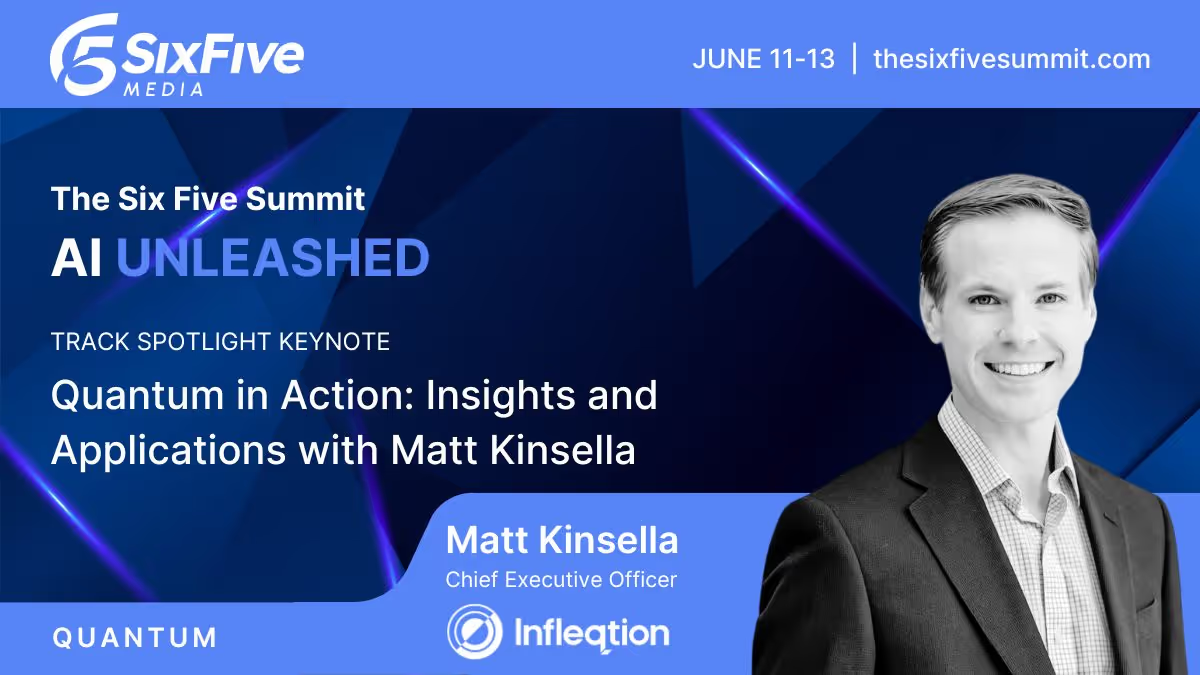
Quantum in Action: Insights and Applications with Matt Kinsella
Quantum is no longer a technology of the future; the quantum opportunity is here now. During this keynote conversation, Infleqtion CEO, Matt Kinsella will explore the latest quantum developments and how organizations can best leverage quantum to their advantage.
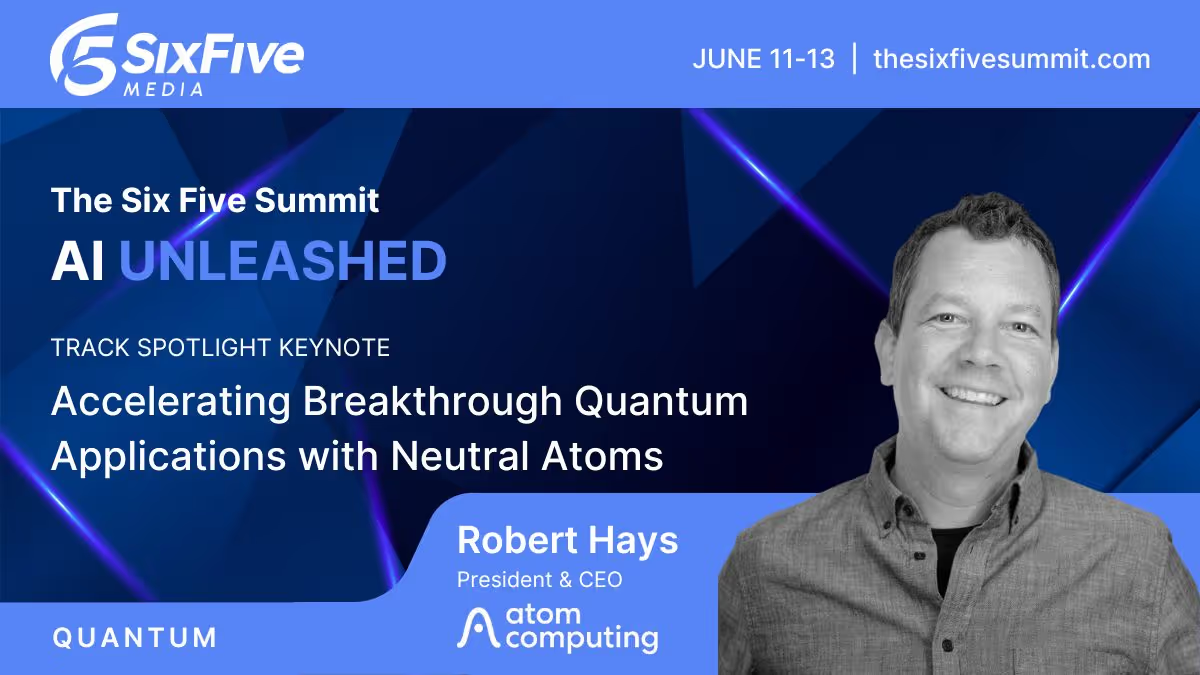
Accelerating Breakthrough Quantum Applications with Neutral Atoms
Our planet needs major breakthroughs for a more sustainable future and quantum computing promises to provide a path to new solutions in a variety of industry segments. This talk will explore what it takes for quantum computers to be able to solve these significant computational challenges, and will show that the timeline to addressing valuable applications may be sooner than previously thought.