
Open Models, the Memory Tax, and a 24-Hour Market Whiplash: Episode 313
SHARE


Patrick Moorhead and Daniel Newman break down a chaotic week that included Jensen Huang's debut on X in defense of open models, a new enterprise agentic reference blueprint from EY, NVIDIA, and LangChain, and a 24-hour market whiplash triggered by a hedge fund's forced liquidation into Citadel. The hosts also cover a stacked earnings week from Microsoft, Meta, Qualcomm, Arm, Apple, and Amazon, plus IonQ's move into vertical integration with its SkyWater acquisition.
The handpicked topics for this week are:
- Jensen Huang Joins X and Defends Open Models: Jensen Huang's debut post on X drew a fast-growing following while promoting open models and unveiling the Open Secure AI Alliance alongside Satya Nadella. The same week, more than a thousand frontier lab employees signed a letter urging a slower pace, with Anthropic notably absent from both the alliance and the caution letter. (The Decode)
- China's Distillation Debate Resurfaces Alongside the Open Model Push: Patrick argued that distillation is not theft and should be treated as fair competitive practice, contrasting it with copyright cases where creators are compensated directly. Daniel noted that Kimi K2's training run relied on a large NVIDIA cluster, reinforcing that Chinese open models still depend heavily on U.S. hardware. (The Decode)
- EY, NVIDIA, and LangChain Ship an Agentic Deployment Blueprint: A new reference architecture from EY, NVIDIA, and LangChain gives enterprises a template for moving agentic workloads from pilot to production. Patrick called it evidence that enterprise AI adoption remains in its early stages, with integration sitting around five percent of total workflow potential. (The Decode)
- Memory Pricing Becomes the New Infrastructure Tax: Memory is emerging as one of the biggest cost pressures in AI infrastructure. Meta has pointed to rising memory costs in its capital spending outlook, while Apple CEO Tim Cook has warned that higher memory costs are expected to persist as supply remains constrained. Patrick argued that memory vendors are finally capturing the value of a component that has shifted from commodity to strategic asset, while noting that Chinese memory manufacturer CXMT remains an important geopolitical wildcard that could reshape the competitive landscape. (The Decode)
- IonQ Buys Its Way Into Vertical Integration: IonQ closed a $1.8 billion acquisition of SkyWater Technology, making it the only quantum computing company in the United States to own its own chip foundry. Daniel compared the move to how hyperscalers are rewarded for owning their full stack, positioning IonQ as a potential anchor point for other quantum companies needing foundry capacity. (The Decode)
- The Flip: Is the Hyperscaler Capex Debate Over? Pat and Dan take opposite sides to pressure test whether or not Wall Street will keep funding unlimited AI infrastructure spending as long as revenue growth keeps accelerating. Daniel argued backlog and margin growth at Microsoft, Amazon, and Google justify the spending. Patrick countered that conversion, not just revenue, is what the market is actually pricing. (The Flip)
- AI Trade Rocked by Forced Deleveraging: The forced liquidation of leveraged hedge fund Situational Awareness into Citadel sparked a violent market reversal that erased itself within 24 hours, with SanDisk, Micron, and Microsoft all posting double-digit rebounds. Patrick and Daniel walked through how SK hynix's earnings miss helped trigger a broader deleveraging event that briefly rattled confidence in the AI trade.
(Bulls & Bears) - Microsoft Delivers a Standout Quarter: Microsoft beat across Intelligent Cloud and Azure, with CFO Amy Hood committing to positive free cash flow by 2027 and Copilot usage now rivaling Outlook and Teams in weekly engagement. Patrick and Daniel called it one of the strongest quarters the company has posted this cycle after a year of being punished in the market. (Bulls & Bears)
- Meta's Guide Overshadows Its Revenue Growth: Meta grew revenue 27% year over year. A narrowed capex guide tied to rising component costs and deepening Reality Labs losses drove the stock down. (Bulls & Bears)
- Qualcomm Leans on Diversification as Handsets Slow: Qualcomm's results were mixed, with declining handset revenue offset by growth in automotive and an emerging data center business expected to contribute meaningful revenue within a few quarters. Daniel Newman noted the company is on pace for more than half its revenue to come from outside handsets by next year. (Bulls & Bears)
- Arm Turns IP Licensing Into Silicon Revenue: Arm beat across revenue and guidance, then sold off on its outlook. The company disclosed a pipeline of more than $2 billion in demand for its new AI data center chips from customers including Oracle and Meta. (Bulls & Bears)
- Apple Returns to the Top of the Market: Strong iPhone and Mac sales helped Apple deliver a revenue beat and briefly overtake NVIDIA as the world's most valuable company by market capitalization, aided by a broader rotation out of AI and semiconductor stocks. Patrick and Daniel unpacked what drove the move, while highlighting a softer-than-expected services performance and the impact of tariff-related tailwinds as key factors to watch heading into next quarter. (Bulls & Bears)
- Amazon Posts Its Fastest AWS Growth in 18 Quarters: AWS revenue accelerated 37%, its fastest pace in a year and a half, while Amazon raised capex guidance to as much as $220 billion. Daniel pointed to Amazon's in-house chip business, now on a $25 billion annualized run rate, as a sign the company's infrastructure bets are converting into revenue. (Bulls & Bears)
Watch the full episode at sixfivemedia.com, and be sure to subscribe to our YouTube channel so you never miss an episode.
Disclaimer: Six Five Media is for information and entertainment purposes only. Over the course of this video, we may discuss companies that are publicly traded, and we may reference their equity share prices. Nothing discussed during this webcast should be considered investment advice or a recommendation to buy or sell any security. We are not investment advisors, and you should not rely on this content as financial advice. Six Five Media collaborates with technology companies and industry leaders to produce research-driven interviews and multimedia programming for enterprise technology audiences.
Daniel Newman:
Hey, everyone, we are back. Episode 313, 313 in the bag. Mr. Moorhead, how are you doing? Busy week.
Patrick Moorhead:
Doing well this week. I only had to do two cities on the West Coast, but your situation was a little different.
Daniel Newman:
My I had significant situational awareness this week. And so I was aware of my situation. Seems that others may not have been aware of the situation, but they said they were aware of their situation and then the situation got really bad. But, uh, yeah, look, you know, I, I hit the other coast and, you know, it was knocking out a few big things. But, uh, meanwhile, the news flow didn't disappoint. We had a massive week this week.
Patrick Moorhead:
This is huge week. And, and, you know, we always say this is a crazy week and we can't believe everything. This was really an insane week.
Daniel Newman:
Um, Yeah, well, it was it was insane because, you know, it's like there's. like a cascade of things, right? You add in that we still got this on-again, off-again war in the background. You've got a new Fed chair coming out with a big first opinion on a possible rate policy change. And then you've got big earnings for, like, what, four of the Mag 7, not to mention a whole lot of other big tech and other names. And then you've had what? Probably one of the most aggressive, if not the most aggressive 30-day drawdown in history, where we quietly had gone through kind of a market crash. And despite, you know, maybe that not being everybody's opinion of what was happening, if you were long in some of these semiconductor names, some of these semiconductor names that have really been rallying, you were getting absolutely, you know, chopped and busted, as my kids would say.
Patrick Moorhead:
That's crazy. I mean, yeah, and then in one week, we literally had three instances of the industry, AI industry trying to regulate, regulate itself, whether it's about open models, whether it's about AI security, and then the let's slow down this stuff is spooky and dangerous. So yeah, it's crazy. Anyway, sorry, you're the host, buddy.
Daniel Newman:
All right, man. Well, look, we can opine all day about how crazy the week was, but why don't we just go ahead and break it down? We'll start with the macro and the broad topics. And of course, for those of you that want to hear all the mess of the markets and the earnings that will come later and bulls and bears.
Patrick Moorhead:
Yeah.
Daniel Newman:
All right, man, we could spend all day talking about what happened this week, but why don't we just go ahead and talk about what happened this week? And for those of you that are waiting for our takes on the earnings, that comes later in bulls and bears, but we first have to talk about the broad, the macros, the tech, what's happened this week in the Decode. All right, Pat, a lot happened this week. A lot happened this week. And one of the things that happened, I think it was, was it this week or I don't know, last week, it felt like it was maybe right around last week, this week. Was it Sunday? Friday? I think it was Friday. Jensen Huang joined Axe. I think we kind of mentioned it last week, but it was like first post. And this week, He joins, comes out, gets one of the most viewed posts in history, gets a quick million followers, basically defending open models. He launches the Open Secure AI Alliance alongside Satya Nadella. And by the way, in the same week, 1,200 Frontier Lab employees counter saying, hey, we need to slow down. And by the way, on both fronts, Anthropic's the only one, Anthropic's the only one on the Frontier side, and Anthropic's also the only one that didn't sign on to the Let's Go Open Source. What do you think?
Patrick Moorhead:
Yeah, so it's interesting, kind of four things, right? Jensen gets on X. And then he he uses this support of open models. And then you've got the security alliance. And then you've got the frontier folks and some other labs saying, hey, let's let's let's slow down here. So the way I like to look at this is the industry can either be regulated, or it can regulate itself. And it all kicked off with Kimmy and the notion that Kimmy stole IP from the US Frontier Labs. And that's why it was so awesome. And we've discussed this in a previous a segment, you know, likely distilled. But there were some pretty big innovations that that are brought to the table to four or five of them that are super unique. And there were a lot of calls in on Capitol Hill that said, hey, we need to essentially ban open models. So all these folks come together. You know, I didn't instantly sign the letter either. So I was a little bit of a holdout. I would say I was in the AWS camp that signed it with some caveats. And, you know, I'm in. You know, I think, first of all, distilling is not theft. And I think it's fair game, particularly in this game. It's not some sort of copyright violation, like anthropic. just paid off the folks, the authors of the books that they chopped up. And in the end, I really want a system that incents startup investment innovation. We can't have, you know, the large companies dominating everything. I think it's super important that our IP is respected and guarded, makes our country more secure and gives us the best chance to lead in AI. So the security alliance, it makes sense, right? A lot of it had to do with, you know, whether it's anthropic, uh or open ai uh their next generation agents and models basically breaking out of the the circus cage right and and attacking the audience. So really nothing to add there other than this I think makes sense. One thing I don't fully understand though that we have to really understand, and I add this when I was posting about the open models, open models aren't open software. Open software, you can inspect source code, okay? you cannot inspect the source code of an open model. You know, I had some people blowing up my phone on Sunday from some of the senior leadership team that was had signed the open model part, you know, telling me giving me the different ways that you could potentially do that. And I think that's, I think it's a real plus. Final thing, labs. Next generation is spooky. Let's slow this down. Anthropic, open AI, and others. I think it's just completely ridiculous to think that you could get everybody all countries to put a pause on this at the rate. It's not like nuclear weapons where it takes a lot of tech to figure it out. Centrifuges are hard to get. And oh, by the way, we can spot and have sensors around the world where we know where all the radiation is emanating from. And when it came to, you know, pre-Iran, you know, we actually had physical inspectors there in the IEA. So, you know, you're not gonna be able to regulate it. It's just a, I don't know what it is. It's a waste of air, this third one.
Daniel Newman:
Yeah, absolutely. I mean, look, it's really interesting because distillation is not theft. Obviously, some of this industrial scale, API, routing through third party proxies, shell accounts, evading detection, getting around various restrictions that exist. It's at the very least interesting to debate. I also had a good conversation the other day and I came to an interesting conclusion about how good would these open source models be if the frontier didn't exist?
Patrick Moorhead:
Well, it wouldn't be anywhere.
Daniel Newman:
So you'd get American open source models, right? And by the way, that aren't considered good enough in most cases to do anything important. Just being candid right now where we're at. Not saying they never will be, but just at this current juncture. So, you know, this is an interesting debate because there is a challenge that if we let the potential IP and what truly is novel be stolen or cheaply copied and then resold to us at a fraction of the price, we will deter the innovation at the leading edge. And that is a concern. That's been a concern in many industries before this, by the way. This is not a new thing. This is just the thing in this particular industry. But at the same time, I can't even tell you what these frontier labs are doing right now. It's very odd to me, these PR campaigns around escaped hacker rogue agent bots that are breaking. I mean, I don't know what they're doing. I don't know. I know that the global race, you and I had that great conversation with Applied Materials CEO Gary Dickerson. He said, what, no less than 10 times on the record, that this is the most important technological revolution that's going to determine the economic future and leadership. He's not the only one saying that. But what I'm saying is like slowing us down. I guess the only thing I can say is going back to my first point. If we're right that slowing this down means China models go nowhere, then I guess we're still controlling the pace. I guess there's an argument that we would still be controlling the pace because China can't make their model. And by the way, I do want to say, because I'm very critical of China, but What like deep-seek and they've done MLA MOE efficiency? GRPO like this is true Chinese innovation things that we did not think of so they're not doing nothing But they still need the work. And by the way, didn't we get news today that Kimmy three trained on like a massive cluster of Nvidia?
Patrick Moorhead:
Yeah, dude. I I called that on Kimmy day like everybody attacked me Yeah, well
Daniel Newman:
So you just got to you just got to be as nasty as me and consistently bash China where no one even comes at you anymore when you do it like they just expected. Anyways, good stuff. Let's jump to the next topic. We're not going to go very far from where we just were. We're starting to see reference designs now come out on agentic deployment architectures. There was a new blueprint that hit. EY, NVIDIA, and LangChain offered a reference. Basically, in what you and I have talked quite a bit about, a pilot to production shift that's going on. And this, I think, you know, going back to the last topic, whether it's open source, whether it's, you know, reference designs, you know, in infrastructure and reference designs and infrastructure to software deployments are kind of at the core of successful enterprise deployments of any technology. Agents are a bit of the Wild West. If you just look at even the highest level, we've kind of had things like A2A and different platforms that are being used, MCP, of how we're doing communications. Well, getting to the point where you really start to put together hardware, software, firmware, all the parts that run and successfully enable an enterprise to have agentic workflows deployed seems to be making sense. So I don't know what you think about this, but as a whole, I think we're hearing, and I know you do a lot of these CIO meetings, Pat, and you talk to a lot of these groups of CIOs, but we're still hearing and see, I mean, look, when open AI in Anthropic, the trillion dollar companies can't control what their agents are doing, you don't think CIOs and CISOs in every company are panicking in some ways about what the agents they deploy are doing, the amount of human intervention required, how you can manage them, deploy them, trust them. And so while this particular reference design, I don't know if this becomes the standard, but I do think we're gonna see a lot more of this.
Patrick Moorhead:
Yeah, I think you, you hit most of the highlights here, Daniel, you know, and I, I catalog this as the maturation of enterprise AI. And, you know, AI is really working out like every other cycle did with we got a lot of experiments. You know, we make some some sharp declarations like AI is only going to be in the hyperscaler cloud, using frontier models, and then, and then here we are. So I've got to give NVIDIA credit on this. This is NEMO Claw with LangChain and the two coming together. It'll be interesting to see if this becomes an industry standard. Because this is the NVIDIA NEMO Claw for LangChain blueprint. You've got a lot of the other GSIs and a lot of other enterprises, but I've got to tell you, this is a big move. And this totally goes into the efficiency story, right? You've got Lanchain talking about $4.48 per evaluation versus $43.48 for the next closest model. That gives you an idea of how much you can save. This uses Nemetron Ultra. Neumatron 3 Ultra, OpenShell, and LangChain. So this is good stuff, right? Because the more real this becomes, and even though it's easy to get sucked into, oh my gosh, like AI is so big and being used by so many, the reality is, right, we're maybe 5% integration into enterprise workflows.
Daniel Newman:
Yeah, we're probably in the pregame, sitting in the parking lot, cooking a hot dog, drinking a beer. You know, I'm being sarcastic, but are we even, you know, because it really is still the biggest enterprises with the most resources and the greatest capabilities that are doing anything in production. I'm not saying you and I don't have 7,000 agentic workloads that are running, you know, anywhere from 2 to 18% deployed. Yeah, or we're using things for ourselves. I just mean like, again, when you really are thinking about governance, security, compliance, things that are touching ERP systems, CRM systems, customer data, that stuff is hard. I mean, I think these kinds of designs and this kind of work is going to be important. And to your point about GSI, like, I think there's going to be a lot of, there's going to have to be a lot of hands involved, despite the fact that there's a lot of autonomy in the end.
Patrick Moorhead:
Yeah, and the one thing I always like to point out, let's just say you've got a typical large bank, right? It might have 10,000 applications and 5,000 that it's actively using. And let's just multiply, let's just say there's 10 workflows per app inside of those. You can do the math. on just the amount of workflows that would be required to be pulled together. Then you've got the new applications that you're going to be building in a new way. The stuff just takes time. Yes, pretty much every large enterprise has deployments, but we're just scratching the surface when we look at where this thing is going.
Daniel Newman:
Absolutely. Pat, Tim Cook, crying in his own milk because he thinks he should get cheaper memory from china but in all serious right memory i mean we've seen a gigawatt of a infrastructure number was about ten billion twelve eighteen months ago thirty fifty Jensen's thrown the idea that it could go to 80 to 100. CapEx is soaring. Most of the CapEx growth is memory. What is going on with this chaos? The memory boom is incredible. Is this a problem?
Patrick Moorhead:
You know, I don't think there's a memory tax at all. This is really the memory folks finally able to make some money, right? I mean, Micron had negative 33% gross margin back in 2023, and nobody cared, and Apple tried to exploit it. Now, just this week, we had Meta, Amazon, Arm, Qualcomm talk about the challenges that memory pricing and a little bit unavailability when you look to stuff like HPM. So I think that this is just a this is part of the cycle. And it's the memory folks finally getting paid for what they can do is they can go and invest money. You know, you've already seen, you know, Samsung is an example here in Tyler, which is not too far away from Austin. They've announced a second site that they're going to be that they're going to be building. with these extra money. And, you know, people are looking for some shortcuts, right? The Chinese company, CXMT, that the DoD has pinned to the PLA, the Chinese People's Liberation Army, and they're on a watch list. And they're trying to figure this out through commerce, because it's funny, they're not on the commerce no-fly list. They're just on other lists.
Daniel Newman:
EO War, Department of War, no fly zone.
Patrick Moorhead:
Yeah, exactly. So, and we saw some major blowbacks, right? We saw two senators, House of Representatives saying that we're going to investigate CXMT and Apple, you better not do this. And I do think we should be thoughtful about this. I'm old, a student of history, and you can see what happened with the Japanese. They dumped steel. They dumped memory. And there's been a lot of cases of selling below cost. Now, I'm not saying that CXMT is doing this exactly in this case, but we need to be very particular on how we look at this. And if companies like Apple, you get qualified in Apple, They're the hardest company on the planet to get qualified with. And the smartphone is the hardest platform inside the client computing spectrum to get approval on. So this would be a giant. But I got to tell you, I am not crying for Apple's potential degradation of their 90% margins on memory. And kind of stepping on the throat of Micron when they needed them back in the day. So again, Tim Cook could print 90% margins on upgrades.
Daniel Newman:
I'd like to mention, I shared this earlier, like Apple, as far as I can read, will actually increase net margin dollars through their price increases. So the amount that's being increased to them versus the amount that they're adding to the price of each device, they will print more margin dollars. So this is not like, oh, woe is me. We've got an extra couple of dollars per device, and we're going to add a couple of dollars back just to keep our margins intact. They're using it as an opportunity. So just being very clear to everyone out there, opportunistic price gouging based on the fact that they feel they're having their prices gouged and again you got to do it and anyone out there you already did this but they got to do a history lesson look this is you know and credit to it people talk about walmart this way in retail but like apple um is absolutely a monster with its supply chain. That's how they make the money they make. And they are bullies. And they've also made and destroyed companies at will. And then companies they've wanted to destroy, they've tried to do as well. Some, they've had to figure out what their limit is of how big a company can defend itself.
Patrick Moorhead:
I mean, some, let's name it, they try to destroy Qualcomm, They almost did. Layoffs. Qualcomm had to get out of the data center business based on that pressure and just stop paying them. Okay? And remember the big deck that came out the day before Apple settled Qualcomm? Essentially, it was an Apple's PowerPoint deck that was the, how do we destroy Qualcomm? I am not kidding. And that came out to light and they settled the next day.
Daniel Newman:
So this is a pattern of behavior. And again, we all love our Apple devices. So we can't conflate the toys we play with, with the company that's behind it. And look, a lot of these things are part of being big companies. But right now, I don't feel a lot of sympathy. The memory situation is unique. And Pat, one other thing, the ability to demand pricing in a pivot from being truly a commodity to becoming strategic. When you become a strategic product, it's the same thing Apple has. I mean, look, to customers, what they sell is truly differentiated and unique, and they can command their price. For a long time, memory didn't have that benefit. And now it's increasingly seen as more strategic, which gives them increasingly more pricing power. And as long as this demand remains sustained and there is a small subset of companies that can make this stuff, I think they will be able to continue to make these margins. Let's hit the last one. I want to give a shout and a congratulations to our both of our friend Nicola mossy CEO of I on Q just completed a one point eight billion dollar Skywater acquisition. on the last day of July. The only quantum company in the U.S. that owns a foundry, I know IBM is partnering in a foundry effort with a number of others, but this was bold. Pat, I remember when you and I heard about this, like, you know, Skywater isn't necessarily a quantum chip foundry, but they were making, because, you know, quantum chips are made on older processes, you know, just for everyone out there. They were one of the very small number of boundaries that were making chips for quantum companies. The aggressive product and innovation roadmap that IQ has the decision was made that having its own capacity to build. Now this is really interesting because you go from a business that's relatively capex light. that helps sell a lot of services and sells, you know, cloud and infrastructure as well as some hardware, going to a model that's very CapEx intensive, right? But at the same time, what the biggest companies in the world are rewarded for being vertically integrated, right? Why do we all laud Google for, you know, building a TPU and building network infrastructure and building and building and building software. Well, Quantum, and I think today a note came out and again, this is from IBM, but Arvind Krishna came out and said, we're basically three years away from Quantum being meaningful on their quarterly reports. So we're getting very close to this Quantum inflection. IoQ is the largest independent Quantum play. And I think this was a really interesting um bet now again it is a big bet um you know taking on a massive high highly intensive capex business that makes less profit but in some ways too now all the other quantum companies are either going to have to go through imq or pretty much go through ibm to get their capacity. I know IBM doesn't control the other foundry, but they pretty much will control the other foundry based on their size, scale and involvement. And so they also sort of become in some ways the TSMC to their own industry. So it's pretty interesting.
Patrick Moorhead:
Yeah, I like the vertical integration play. That's very unique in the industry. And the only one who's going after that, like you had mentioned, was IBM, right? So you've got IMQ has ChipFab and packaging with SkyWater. You've got IonTrap chip design through Oxford Ionics. You've got quantum networking with Qubitek and LightSync and Skyloom. You've got quantum security with investment in ID Quantique. You've got space. You may have mentioned this for Capella. Quantum sensing with Vector Atomic. Software and AIOps with Speed Innovation. And Core Compute with Forte and Tempo. So this is a heck of a lot of integration. going on here and I got to give credit to the executive team at INQ with Niccolo Damasi as the leader to be able to pull this off. A little fun fact for you, that Skywater Fab is in Austin and it was a previous Infineon and before that… I mean, I'm so old. It was that fab was AMD 60, 65, uh, 65 nanometer. I think it was also a pumping out 180 and Fideon bought it cause we were doing a, believe it or not. AMD used to have a flash memory business.
Daniel Newman:
People, people, people. It's funny. Uh, we were on tv together this week and you said something like I've been doing this for 35 years or something in this industry and I was like god, you're old I didn't say that I will never hold your lack of experience against you daniel. Okay, I won't yeah Yeah, you've been you've been running around knowing shit since I was like 10 Anyway That's all right. I got 35 years in the gym, and that comes for something.
Patrick Moorhead:
I know. I'm on three, so I'm a little behind you.
Daniel Newman:
All right, let's get into the flip, everybody's favorite part, where Dan decapitates Patrick on a weekly basis in a simulated argument over some topic that's generally always about AI, and usually something about AI and whether or not it's a bubble in some indirect or direct fashion. And guess what? We're going to probably do the same thing this week. Pat, I think we should debate if the hyperscaler AI CapEx debate is over. Because basically, Wall Street will fund unlimited AI infrastructure spending as long as revenue keeps accelerating. And let's say, so what are we debating? Will Wall Street continue to fund unlimited AI infrastructure as long as revenue keeps accelerating? Let's see who's for and who's against. Who's for? You. Oh yeah, who's against? Moi. Ah, okay. All right, so let me get my notes up, because I need notes to win this argument. This one's a toughie, this one's a toughie. All right, listen, the market is not funding CapEx, it's funding contracted demand. OK, and last week and this week, we got the data that we needed. 82% growth for Google. You saw growth above expectations for both Amazon and Microsoft, which, by the way, if I'm not mistaken, Amazon saw its largest growth in 18 quarters. On a net dollars basis, its growth has been incredible. And guess what, Pat? Their margins are growing, every single one of them. So their revenue is growing, their bookings are growing, their margins are growing, and their businesses are accelerating. CapEx, it's the factory. It doesn't matter what industry it is. You have to put infrastructure to continue to grow and scale. That's what CapEx is in this business. Now that we're done with the capitulation and the deleveraging where last week we all became momentarily convinced that AI was a bubble and we were being blown up and we were just deadly wrong about it. What we saw is Amazon raised FX 10% and guess what? Apple, Amazon stock went up 10% the same day. Meanwhile, Apple spent nothing and their stock after running to highs on FUD about AI dropped 7%. The market is buying the book. So what do the backlogs look like? Well, Microsoft has invested CapEx into a $678 billion backlog. Amazon has a $496 billion backlog. And Google's backlog rose significantly. And look, I think Andy Jassy, in the call, gave us a great one line. Once revenue growth outpaces incremental CapEx growth, the returns become compelling. AWS grew 37 percent against 10 percent CapEx rates. Azure grew 43 percent at roughly 41 billion quarterly. Revenue is now compounding faster than CapEx. It's all going to work out in time. And the bottom line is this. The constraint to the market is supply. It's not demand. Nadella backed this. Jassy backed this. Customers are capacity limited, not appetite limited. And when you have these conditions, you can't call it a bubble when the binding constraint is on the sell side. This has been true too, because they're not only are they growing their demand for cloud, but they're also seeing incredible run rate growth in their chip businesses. Look at Amazon's AI chip business. It's now on a $25 billion annualized run rate. Pat, that's one of the largest chip companies in the world. just happening to do it out of their back little corner lab here in Austin, Texas. I'm joking. So Frontier Lab is the man-earth underneath it. Anthropic saw, what, $9 billion to supposedly $47 billion in five months and now at a $74 billion run rate. OpenAI is over $30 billion. $10 trillion, possibly $12 trillion in CapEx on our bull case between now and 2030. CapEx is not discretionary, but the revenues that sit underneath it support it. The growth of the incremental revenue is happening faster than the growth of CapEx. And these companies are going to win by making these big bets.
Patrick Moorhead: Is it my turn now?
Daniel Newman:
I was going to keep talking for a little bit longer.
Patrick Moorhead:
Yeah, they haven't pulled the hook on us recently, but I don't even know if they time us anymore. Are we supposed to do it again? I was so good. I just couldn't stop myself. Daniel, I'm going to lecture you a little bit here. Precision is important in these debates, right? The topic very clearly said revenue. And I'm going to give you a bunch of cases that say it's not about the revenue. It's about the conversion. So it's conversion, not the spending. Meta accelerated revenue 28% and got shot anyways by raising its CapEx. Last week, Alphabet ran the same experiment with the same result, right? Cloud grew 82%, CapEx went to 195,205, and the stock fell despite beating on, beating on, on revenue. And there's a lot of big, you know, big companies out there like Apple who don't spend any capex and it's the most valuable company. It's the most valuable company out there. And, you know, even even the credit market is repricing the trade in real time, right? Whether you look at BlackRock's meta-backed El Paso data center, priced at more than $12 billion at 7.5%, 275 basis points over Treasury, which means quite frankly, they're not even buying it as well. So I think it's more about the conversion than it is just the revenue related to unlimited capex investments. I rest my case here, Daniel. It was nice. It was nice. It was fun.
Daniel Newman:
I like how you completely avoided the fact that the reason the stock sold was the deleveraging event. and had nothing to do with the AI demand, because literally Google and Amazon did the exact same things on opposite ends of that event and got completely different results. We don't have to put that, by the way, in our argument part, folks. So that's just me telling you. I love how you call it, because I actually use the exact opposite sides of those arguments. And Apple fell, and then, you know. Anyway, good stuff. That's always fun. All right, we've got a big bulls and bears this week. And let's start off with that. Hold on. We got a big bulls and bears this week. Let's get to it. All right. Let's start with the topic that basically split us on our flip. Oh, yeah. Because it depends if you believe what happened was the deleveraging in Korea, in the US, and the situational awareness margin call in Citadel, or if you believe, by the way, which I was beginning to be completely gaslit that maybe I'm just, like, the market was really spooking me, that, you know, we could just be wrong. And I never really liked to admit that, but it was so violent and moved so quickly, and it felt like good numbers weren't good enough. Um, what do you think, man? It was like absolute whiplash, like from what Wednesday to Thursday.
Patrick Moorhead:
Yeah, ground zero was SK hynix, right? SK hynix posted a mere 500% improvement in profits. And because it was slightly off of expectation. You know, you had the building jumpers over in Korea, and the entire market melted down. And I don't think interest rates were I just I want to separate myself from the interest rate piece. This was all about questioning the AI trade. And here we are. Yesterday, we had an absolute blowback. The market came roaring back and names just up like 15. 20% that just was completely amazing. One of the byproducts of that is that situational awareness, a hedge fund from a young gentleman who used to work at Anthropic, I think he built a $45 billion book
Daniel Newman:
OpenAI, I think, didn't he?
Patrick Moorhead:
Oh, yeah. One of the Frontier Labs. Anyways, he built this massive book and he had a bunch of margin calls, went out to his investors, tried to get more capital, and in the end had to flush, had to sell his entire offering to Ken Griffin's Citadel. And the one thing I can't piece together, Daniel, and maybe you can help me on this, is the correlation between what Leopold was doing and the overall market impact. Was it a cause of some of the early consternation? There's, you know, you've got irrational analysis out there saying that it was, or maybe it was bubble bubble boy out on X. So ridiculous. Saying that, you know, Intel issues were because of irrational, uh, you know, shorting the stock, uh, which again, help, help pull this cause and effect, uh, together, Daniel.
Daniel Newman: Cause I'm not, I'm not, he says like, like Leopold was running like four times margin. So he was running four times leverage, like super heavily leveraged. So like 45 is actual value of all the assets were like 175 billion. So his positions were massive. And so as this drawdown started to take place and they were doing this kind of deleveraging, he was being forced to sell on the way down. So I think Kramer came out. Obviously, he's always an interesting, but that basically the selling was all was largely him. And he was driving the price down. And then, of course, as that starts to happen, then the hedge funds come out aggressively shorting and putting more pressure on the stock. And so, you know, the selling and the shorting all at the same time creates this really, really negative cascade, which when your positions are that big, That's why you also saw his positions reverse once that was unwound. So yesterday you saw positions he had in Intel and in Micron and in IRIN run 30% a day. That never happens organically. That is not an organic move. That is the capitulation followed by short covering followed by a route. So the market was waiting for the capitulation. And basically Citadel was the net buyer. And like you said, if we want to eat lunch, someone has to sell. I mean, they run a nasty business, but they are very good at what they do. And so it was a wild chain of events. But we saw crazy things happen too, because it was obviously everything in his portfolio. But we saw like Microsoft saw 15% gain on good earnings, good earnings. But a $450 billion increase in CapEx in a day. The largest, I think, ever in a single day in history. SanDisk went up 26%. Micron went up 18%. AMD went up 13%. The index went up over 8% in a day. So obviously we saw a drawdown that was in many cases, 40, 50% on these different things. And it happened in 30 days. So we went, just think about it this way. We went from the peak where I think there was something like, if I understand it right, there was something like a trillion and a half dollars of leverage here in the U.S. margin, which was massive. And of course, the degenerates of Korea, you know, there was like a million accounts under 35 that were all running, you know, these buying these three and four times. So the things that help the market go up, the two, three, four times leveraged ETFs are also the same things that can bring them down. And so the funds are, are, are very widely in their tactics and they see when leverage. Well, my computer just randomly shut down. Can you still hear me?
Patrick Moorhead:
Yes. Yes.
Daniel Newman:
Okay. That's super weird. Like my screen, everything. Okay. It's Dell. We're going to get this Dell work done. You see all these things happen at once. You know, at some point, I guess what I've learned, Pat, is watch the leverage. The leverage is part of the story. So, all right, let's get to topic two. And if my computer will stay on for a minute here, I will get to it here. Okay. Pat, Microsoft, we sort of started talking about this already, but let's go a little bit deeper. I mean, look, this was a company that's been absolutely crushed in the market this year, one of the worst performing Mag7 names. People complained about they had too much open AI. Then people complained that they didn't have enough open AI after they got that worked out. Maybe they had too much exposure to software. I know you and I both like to talk about the, intermittently whether we can buy chips or buy software. But apparently, the market cannot take both going up at the same time. Microsoft is all of the above. And I think the market in some way has been punitive. But this is a company that I think it grew well. Intelligent Cloud grew well. Azure grew well. Their CapEx has been growing, but they've been pretty responsible. They continuously say things like, we will not let our Free cash flow, go negative. They've been very focused on being responsible that way. I think the market should really like and appreciate that. Co-pilot crushed it. You know, there was a lot of criticism about co-pilot and the models and its capabilities and whether it works well. They've done a lot of work to basically bring the frontier and bring different model optionality and bring different pricing optionality into co-pilot. And I've always said Microsoft benefits from having the best enterprise distribution on the planet, and people wrote them off too soon. And I just want to point out largely, The model frontier companies were kind of accused of being capable of taking down every business across every industry. And so far, I think we're seeing that unwind right now. I think we're seeing the idea that they could, we've already seen in security that they create much more security risk and demand for security than they do in terms of replacing security. I think we're starting to see in enterprise software that we're going to see models running on top of trusted enterprise workflows. I think Microsoft is a massive beneficiary of all this. So look, they had great numbers, great results, backlogs growing. Azure was always the key there. CapEx was going to be watched, but I guess CapEx doesn't matter as much as we thought a week ago. It was actually just Leopold the whole time. It was just Leopold.
Patrick Moorhead:
Is that possible with a $45 billion book?
Daniel Newman:
Well, it's $170 billion. Just remember that. Four times leverage. Gosh. But, but, I think that and, you know, you say the interest rates weren't a thing, but, you know, look, Ken Griffin and Citadel coming out a day or two before, along with a couple of other very influential names and saying that they thought we were going to get a rate hike this cycle. on top of the already capitulating AI trade, on top of a potential war and inflation data, all coming out at the same time, caused a massive selloff, which just absolutely caused the capitulation in that fund. And by the way, there was two or three other hedge funds that were teetering on the edge, big funds. And of course, as I jokingly said, God knows how much Korean leverage was blowing up at the same time. And you put all this together, and yeah, it can move a market.
Patrick Moorhead:
I love it. Great analysis there, Daniel. I'm going to try to just simplify this whole thing. You had three things going on. So the backdrop is Microsoft, if you look at before they came into this earning, they were down 30% on the year. And like you said, do we do infrastructure or do we use software? You can't do at the same time. And it seemed like Microsoft got no credit when infrastructure went up. and they went down with all the software stocks. So first thing is you had CFO Amy Hood doing the mic drop on we're going to be free cash flow positive in 2027. And I think that was a classic Amy Hood fiscal responsibility. And I think Wall Street absolutely ate that up. In the back of my head, I'm thinking, my gosh, I hope you added enough to I hope you're getting enough CapEx to be able to do what you need to do. I think the second thing was you had some just really exceptional proof points on Microsoft 365. 30 million paid seats, okay, and net seats doubled quarter over quarter, not year over year, but quarter over quarter. right. And, you know, the number of customers with more than 50,000 seats is up 7x. And it wasn't always about getting people in it, right, getting people to use it, copilot usage per and this is the crazy part. In the past year alone, Average weekly engagement is now on par with Outlook and Teams. So think about that. They're using it as much as they use email. which is absolutely, which is absolutely bonkers. And Microsoft threw out stuff like latency improvements, customer sat improvements. And when you step back and you're like, wait a second, how did this happen? Right. It had for a while been the redheaded stepchild, you know, Chamath Palihapitiya had gone out of his way to, you know, really talk about how bad it is and how everybody's going to beat it. He actually subtweeted me. I, of course, did my victory lap and subtweeted him. Great move. You've talked about Azure. Azure growth is up and to the right. There aren't perfect quarters, but this was about as perfect of a quarter as it can get.
Daniel Newman:
There you go. Let's talk about a not perfect quarter. Meta, and look, I'm a meta defender. I still believe 3 billion eyeballs is great. And you can do a lot with that. But Mark just seems to have a way of just pissing his investors off. Going back to reality labs and changing the name to meta. But what'd you think of this quarter?
Patrick Moorhead:
No, I mean, it was kind of a train wreck. Revenue was up, that was good. OpEx was way down and the guide was horrible. any time there. So first of all, Zuck owns the board. The board can't tell him what to do. Zuck runs the company. And there's a little bit of fear in the investment community of that. Mark took people down this meta route that maybe long term will pan out. But he's putting tens of billions of dollars in that. I think seven billion dollars in it in a single in a single quarter. And then there's this notion of, hey, I'm going to be a cloud provider. which is something new and nuanced that they've never done before. So to me, this is all about risk. And, you know, when you compare it to other potential hyperscalers, they're about as risky as it gets, even on their own first party silicon that, you know, Amazon was trumpeting on its earnings call yesterday. They have lost their path on that right now. They're working on some new designs, but I think their costs will be a lot higher per agent or per token than any other hyperscaler out there. So totally understand the market reaction.
Daniel Newman:
I mean, you know, 27% year on year revenue growth. I don't know. I just kind of it's like they have a high bar to cross. They're growing huge amounts of revenue. But yeah, I mean, they again, they went ahead of the leverage news. So I don't know if the CapEx guide being narrowed and increased on component cost affected them. But I think this is one where people just aren't clear on all this spending. You know, I think I'd said that if they'd said more about metacloud. They probably would have gotten a bump if people felt that they're. High risk of all this capacity had another outlet, you know. But I also think, again, all these CEOs are thinking bigger than any short-term volatility in their stock. They have to think bigger. It goes back to the CapEx debate we had. They have to be spending. It's existential to their business. They don't spend. They're going to be at risk of not being able to deliver on all this contracted demand. And again, that is a little different because their demand is more tied to their ads than it is to their compute itself. But compute is the moat. Models are not the moat. So compute is the moat. It'll give maximum flexibility to Zuck. And by the way, they're still making a shitload of money. They make a shitload of money. So we do kind of have to remember that as part of this is like the stock price might go down a little bit, but this is a company non-GAAP EPS, that was almost seven and a quarter a share. And like one other thing too, their miss on EPS that a lot of people were using as kind of a punch in the face, it was a legal bill.
Patrick Moorhead: So when you take the legal bill out, that they still would have barely met expectations. They wouldn't have met.
Daniel Newman:
which maybe would have drawn a different response. Again, I don't know on that day if anything would have worked. Because Microsoft went up a little bit on that report. But Microsoft went up a lot right after the other thing happened. Hard to say which was the thing. Was it a day after run or was it the fact that the market had like AI things going up by 30% in a day? Anyways, all right, we got a couple of chip companies and we'll get back to a couple more hyperscalers. Hell, we'll even talk about Apple here. Qualcomm. They also reported on Wednesday. It was a mixed bag, the results. Revenue there, profits down. I think everybody kind of expected that because they'd been talking about input costs and component costs near term. Qualcomm raised prices this quarter. announced price increases this quarter, didn't actually raise them, but announced price increases this quarter, and that should help them get some of that margin return. You've got a situation where they're building new businesses. We're seeing a lot of growth and success in their automotive. I've talked a lot over the years about their diversification strategy being key. Automotive has been the first big winner. IoT is moving. They're making this big bet on data center, and I think that's the augmentation layer and the offset layer to the pressure on handsets. The Apple deceleration is happening a little quicker than expected. But where they're going to be able to offset that is going to be profitability that will come from the diversification, and specifically from revenue that should come within the next few quarters from data center business. And I think that's really the story there. I mean, I think it's, you know, this is a company that by next year, more than half their revenue will be non handset. And that's been the key play. Not that handsets aren't a great business, but that handsets are increasingly competitive, tight, memory is going to be hard to get. And them entering the data center business with a meaningful expectation of revenue over the next few years with higher margins is really what they're going to need to prop up EPS growth, revenue growth, and get the company in play. they only have to win a very, very small amount in the data center for it to be very, very meaningful to their income statements. Pat?
Patrick Moorhead:
Yeah, it's really a transition quarter on market and business for the company, right? You've got Apple dialing down quicker. You have handsets that globally are down, and even though Qualcomm dominates the high end, they were still down 20%. The good news is that they've got this rocking auto business that keeps printing cash with some mega growth. You've got the turnaround, right? China has hit a trough, so obviously all it can do is go back up. And Datacenter hasn't hit yet. And they've got a very unique, looks like a very unique value proposition, particularly to its high bandwidth compute products on their accelerator and their CPU. And, you know, like we noted when we attended their conference, this isn't kind of a roadmap exercise. They've got real customers for all these they trumpeted at the event. So I still think that people have to be patient. with the company and they did have just some pretty big bumps once some of these data center wins were either leaked or announced before their investor day.
Daniel Newman: Yeah, it's bounced around again. They've been part of this whole movement around AI stocks. So they saw it bump up. They saw it come back down. But I think this is going to be a story that's going to unfold over a longer period of time. But execution in the data center, along with their diversification business, is what's going to enable them to deal with the sort of uncertainty around handsets. Staying in the same vein, a little different, but you know, let's talk about arm. Cut.
Patrick Moorhead:
Yeah, as we've seen before, Arm had a, I like to say, the four quadrants of my two by two, they beat, beat, beat, beat, beat, raise, raise. And they were rewarded with a giant sell-off based on, I believe, the guide. But what's interesting though, the story behind this, you had a company that was intellectual property only, And now you have a company that is getting into driving revenue with their own AGI data center chips. And that is an absolute game changer for the company that I Not that I would have expected, but I'm glad they're doing it, quite frankly, because more competition makes a lot more sense. And I also think it reflects their valuation as a company. So what they talked about on the call was more than a $2 billion. Demand is north of a $2 billion pipeline. Oracle is on board as a customer, along with Meta. You've got NewWinds in North America and China. And supply is secured for more than the first billion dollars of revenue. So more demand, more ability to ship this. And some people might read this as a you know, AGI CPU racks is cannibalizing CSS or partner silicon or things like that, that is not going to happen. And I get back to AMD's announcement with Venice that showed six derivatives for six different types of workloads. So what you're going to have is you're going to have customers are going to buy the AGI chip, and then they need more variation of the a hyperscaler might have three or four different variants of an ARM CPU. And I think it's really important for people to recognize. So I was glad to see, although they didn't come out with a bigger CPU TAM ARM pegged at a hundred billion dollars, you know, you know, and others are coming out with $150 billion and $200 billion. There was a little discussion that is higher, but but not with a new number. So arm is priced for flawless execution and beats your table stakes.
Daniel Newman:
Yeah, I think you said that well, that was going to be kind of one adder I had is this is a company that's been at the higher end of valuations consistently throughout this process. It is being valued as an absolute premium company with premium results. And anything less than that will probably be sold, almost quarter over quarter. But Arm is going to be a massive beneficiary of this CPU demand. They get it through the royalties. They get through the licensing. And then, of course, they're going to now get it through selling the products. The smartphone impact hits immediately. It's a high-volume business for them. The pressure of the memory pricing hitting mid-tier and higher-tier smartphone devices bled through into their numbers. Overall, though, I mean, look, they beat across the board. It's an execution story. The AGI chip is probably the most interesting potential inflection for the business. Not, of course, in any other chips that follow now that they are going to be in the chipmaking game. A couple more, Pat, about Apple. Despite, this one's me, I'll start. Despite the fact that Tim Cook was crying in his oat milk about memory prices, they were able to pull off a beat across the board. And I think the market liked that. Look, this is one of those really interesting ones because Apple rallied on all the negativity on AI, especially around CapEx and infrastructure and semiconductors. So as those were selling off, Apple was the biggest beneficiary. Apple was making headlines this week by returning to the world's most valuable company. But nothing had structurally changed. They don't have an innovation answer for what comes after the iPhone. They don't do anything on CapEx. They still don't really do AI. well at the model level, but they still own the consumption layer. And so I think people look at them as a safe haven. I actually think I called it the flight to safety. They've been the flight to safety for the last 30 days. And I think a lot of the selling on this result had probably more to do with the fact that rotation went back into AI and semiconductors than Apple's results per se. Now, Apple made its number because tariff rebates. Let's be clear. I think they beat because of tariff. They would have only been in the guy had they not gotten that. So that helped them out a little bit. I think the memory thing, to Cook's point, is still a long-term issue. But they, like they do with their supply chain, bought very well, bought early and in advance, and have actually managed the situation quite well. And, you know, just like Apple built China's industry over the last multiple decades, they're trying to build another one for China. I don't support that. I'm going to put that on the record. And I think, you know, overall, though, it's still a company that can perform. Doesn't matter. They just they do get it done. You got to give them credit for that.
Patrick Moorhead:
Yeah, Apple is the safe tech bet. IBM used to be that. IBM is more of a growth story aside from the momentary challenges that they had. And you can just, as a human, as a person who has an iPhone, It's not that you might see something that can do it better, but the hassle of moving off a phone and maybe having the green bubble when somebody else isn't there or the integration with your Mac or integration into your iPad or integration into Apple TV. They're sticky. And I mentioned this on CNBC, there's not some asteroid headed in its direction, maybe aside from the open AI potential devices, but you can bet Apple has 10 of those in the lab that's going to take this company out. It is getting super, super pricey. though, at $5 trillion. And I got an interesting question on CNBC when I used the asteroid analogy, and they asked me about interest rates. I said, well, Apple, with this new leasing program, is not only mitigating acquisition cost, but it also gets to set and could potentially eat some of that interest rate increases to keep demand going. And Apple, they're the kings of this, right? You've got Apple One, you've got a leasing program now to be able to mitigate. It's brilliant. The iPhone and the Mac numbers were off the chain, right? Pretty impressive. The only question I have on that is about pull-ins. The company signaled that they might have to raise prices. It did that factor in to any of this crazy buying, potentially. Yeah, potentially. Services miss was weird. 12% miss on services, I think. Cook gave a decent answer for that, but you would think of any business out there that would be the most consistent. So there was some talk about FX and stuff like that, but it still looked a little odd to me. So interesting to see. Where John Ternus takes this, he seems to be pretty aggressive. Given the lawsuit against OpenAI, I hear panic. And Apple would not be suing OpenAI if it didn't see a risk there.
Daniel Newman:
Absolutely. And let's get to the final topic. We got people to see and things to do. Things to see and people to do. All right. Amazon.
Patrick Moorhead:
Yeah. So, um, Amazon had a hard follow after Microsoft crushed it, but AWS crushed it, crushed on revenues, crushing on gross margins, uh, from, from AWS. So not only did, uh, AWS, uh, uh, have an acceleration of AWS revenue, the biggest in 18 months, and they also grew profits. And, uh, you know, I have to, uh, put that, you know, we got increasing memory costs, dude. And they increased gross margins. The only thing I can come up with is their call out of Tranium and Graviton. And that would make sense. Right. Amazon's already gone on the record saying, hey, you know, 55 percent. of all new, everything that they buy from a CPU perspective is Graviton. And you see all the price increases from AMD and Intel. That has to be a part of the story here. So I think in the end, you know, an Amazon raised their CapEx 200 to 220 billion. I think that's the largest capex of, of, of, of everybody out there. Um, yeah, but still everybody else has memory. So it is, it is comparative, but compared to all the other hyperscalers, isn't two 20, uh, the top of anybody.
Daniel Newman:
Yeah. I think Google is two Oh five. Yeah. And then Microsoft's lower, surprisingly. Yeah.
Patrick Moorhead:
Nobody got spooked by the negative free cash flow on the statement, right? And they're up big time today. Gosh, they're up. Yeah, they're up 15% day after.
Daniel Newman:
I mean, look, they're firing on all cylinders. They were a little late to the party, made some mistakes early on. This was what I always said about having the largest customer base in the cloud. Some people might have moved early for Google or for Microsoft, but they had a lot of people running a lot of capacity on their cloud and cloud era of one. All these companies are bringing AI online, and all these companies are going to largely not want to make those big leaps and big moves. So I think that it's showing up here. But that revenue growth is great. The acceleration, 18 quarters, best in 18 quarters. You know, the CapEx go back to just go back and listen to my flip argument. They're spending to make money. They are spending to make money. Their growth is accelerating. Their in-house chip projects are working. And by the way, they have a few other businesses like advertising. They're growing really well. This might be the first coming to like a trillion dollars in revenue.
Patrick Moorhead: Yeah, they brought that up. They actually used the T number, didn't they?
Daniel Newman: But they didn't only bring up T for the business. They said they think AWS will be a trillion dollar business. I mean, that is absolutely wild. But that's what we're playing. That's what we are playing here for, folks. All right. Got a wrap. Got a meeting I got to go to. I'm sure you do too. I hope everybody out there enjoyed this one. Big week. A lot to cover. I'm sure next week will be just as insane. By the way, I'm not traveling next week. I'm very excited about that. I'm going to sit at home. I'm going to work out twice a day. Try to get bigger than Pat's super biceps. All right, everybody. Thanks so much for joining us. Be part of our community. Subscribe. We'll see you all later.
MORE VIDEOS
.png)
The Main Scoop Ep. 45: Attackers Only Need to Be Right Once. AI Just Made That Easier.
Chad Rikansrud, R&D Software Security Engineer at Broadcom, explains how frontier AI models are finding decades-old mainframe vulnerabilities in seconds, collapsing the complexity advantage that once protected legacy platforms. He outlines why enterprises need faster Security Intelligence (SECINT) ingestion and disciplined human oversight to keep pace with adversaries wielding the same tools.


Fleet-Scale Deployment Is the Physical AI Benchmark
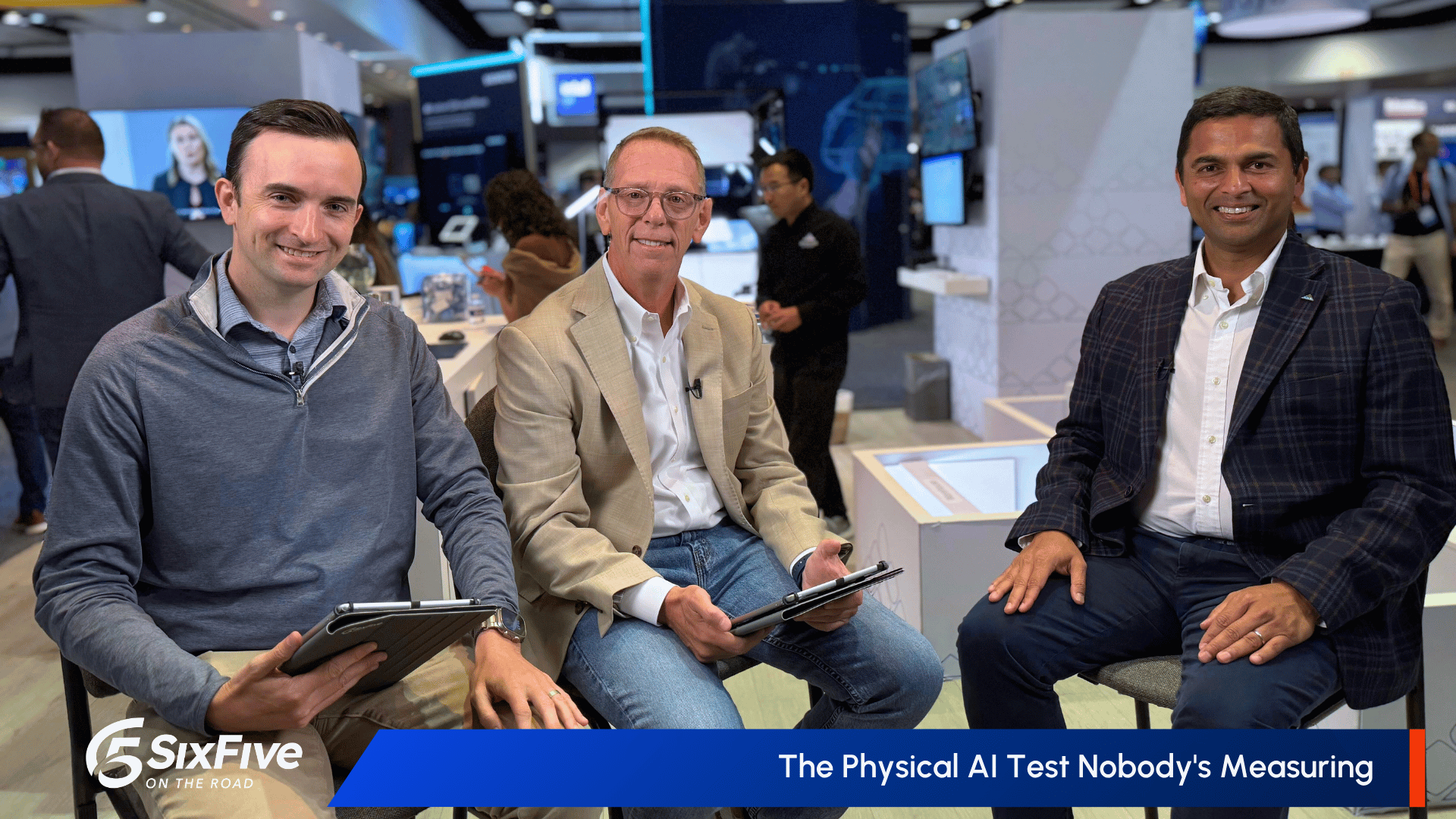
Physical AI is shifting from lab prototypes to fleets of machines operating reliably in the real world, and Ambarella's Muneyb Minhazuddin joins Six Five On The Road at AI Infra 2026 to explain what that shift demands of silicon, memory and developer workflows. Minhazuddin traces the case back to a 22-year-old chip architecture and forward to a developer cloud built to compress model porting time from months to days, and he identifies enterprise ROI proof points as the biggest hurdle left before physical AI scales into millions of deployed units.
.png)
AI Safety Alarms, China's Distillation Reckoning, and Qualcomm's AWS Breakthrough: A Pivotal Week for Enterprise AI
A viral AI extinction claim, a federal advisory naming six Chinese AI labs for industrial-scale distillation, and a $60 billion Qualcomm-AWS silicon pact define a week when enterprise AI risk and opportunity collided head-on. Patrick Moorhead and Daniel Newman weigh in on what's signal and what's noise across AI safety, chip supply deals, and a market rally still betting big on compute.
Other Categories
CYBERSECURITY
Threat Intelligence: Insights on Cybersecurity from Secureworks
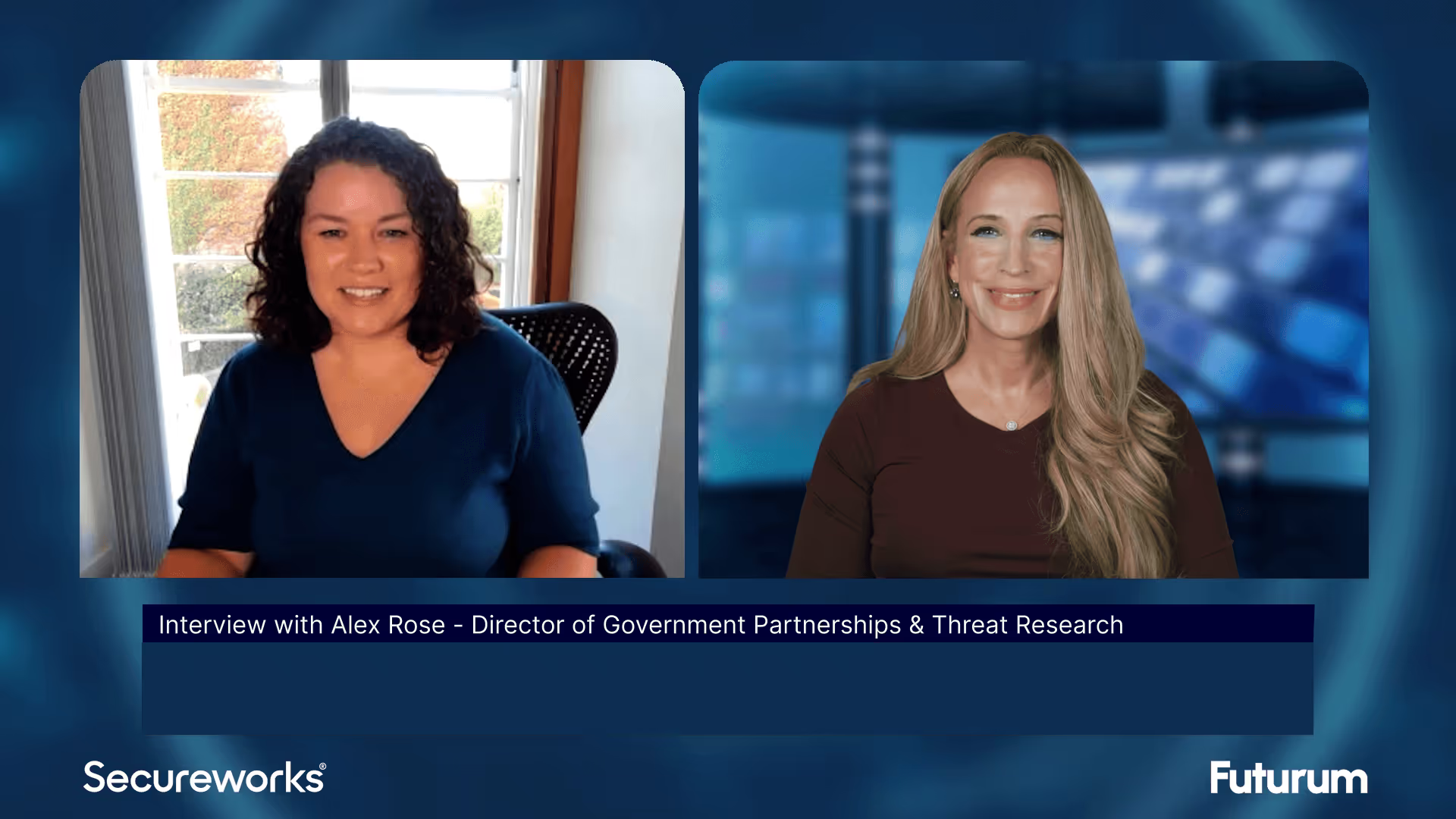
Alex Rose from Secureworks joins Shira Rubinoff on the Cybersphere to share his insights on the critical role of threat intelligence in modern cybersecurity efforts, underscoring the importance of proactive, intelligence-driven defense mechanisms.

HP Launches World’s First Business PCs to Protect Against Quantum Hacks - The Six Five On the Road
On this episode of the Six Five - On the Road, hosts Patrick Moorhead and Daniel Newman are joined by HP's Ian Pratt, Global Head of Security for Personal Systems.
What is Autonomous Endpoint Management?
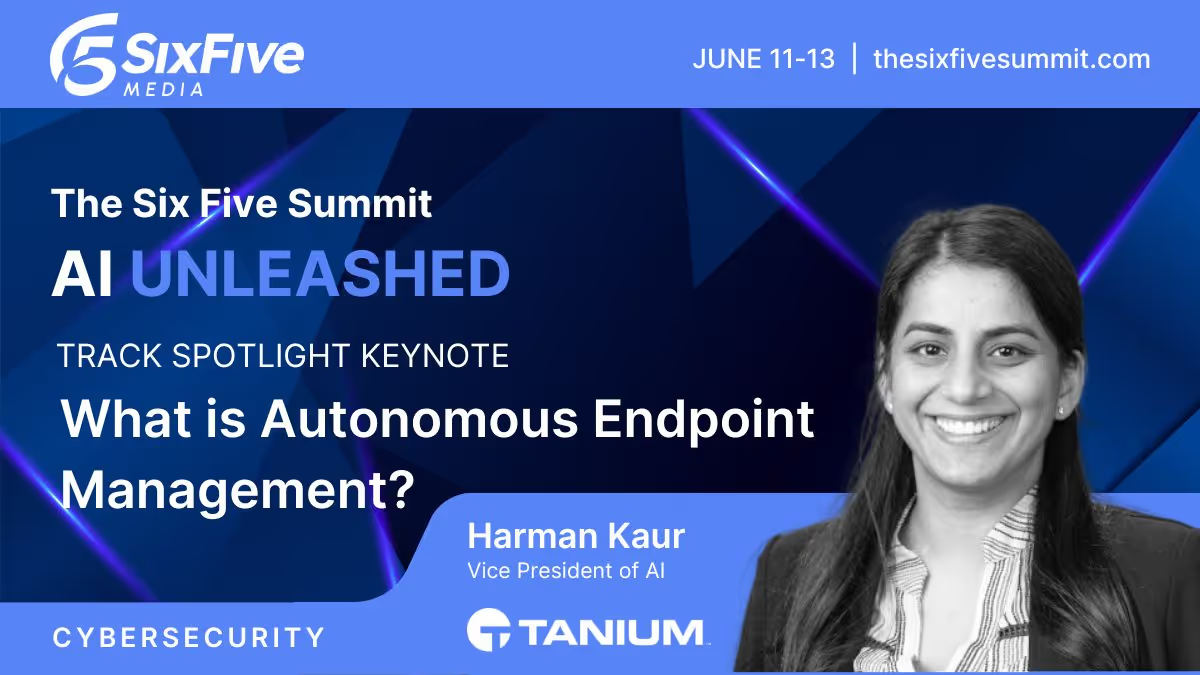
Autonomous Endpoint Management is a framework designed to unify IT operations and security teams on a single platform through real-time control and visibility.
QUANTUM
Quantum in Action: Insights and Applications with Matt Kinsella
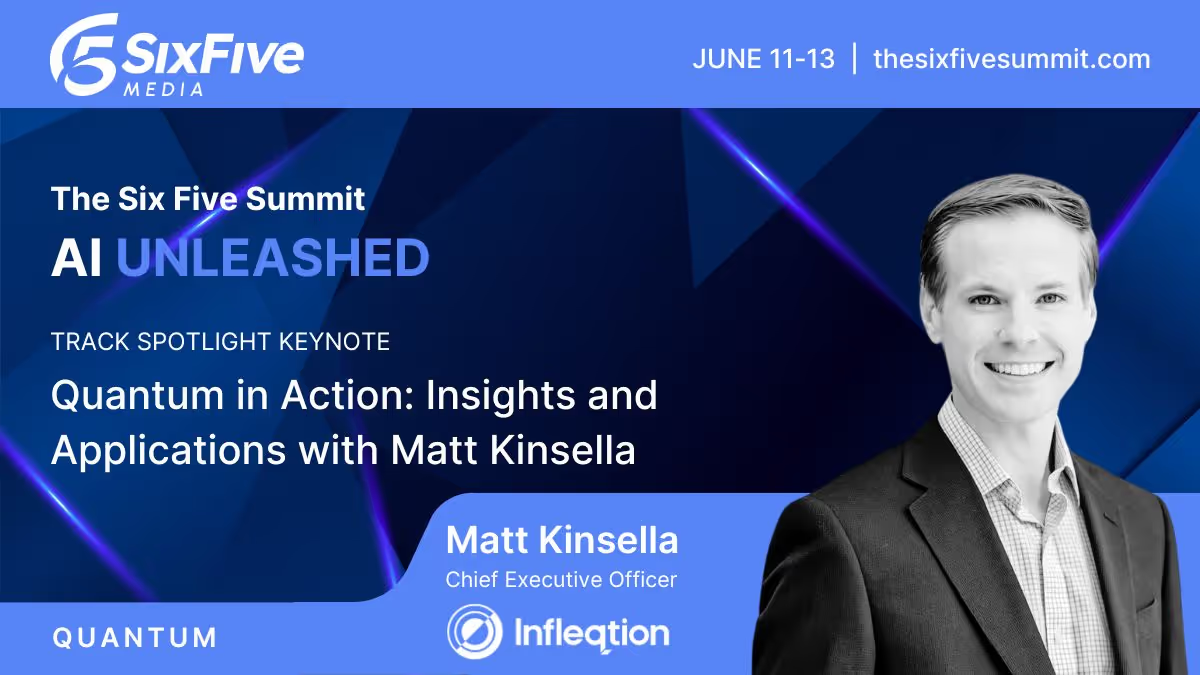
Quantum is no longer a technology of the future; the quantum opportunity is here now. During this keynote conversation, Infleqtion CEO, Matt Kinsella will explore the latest quantum developments and how organizations can best leverage quantum to their advantage.
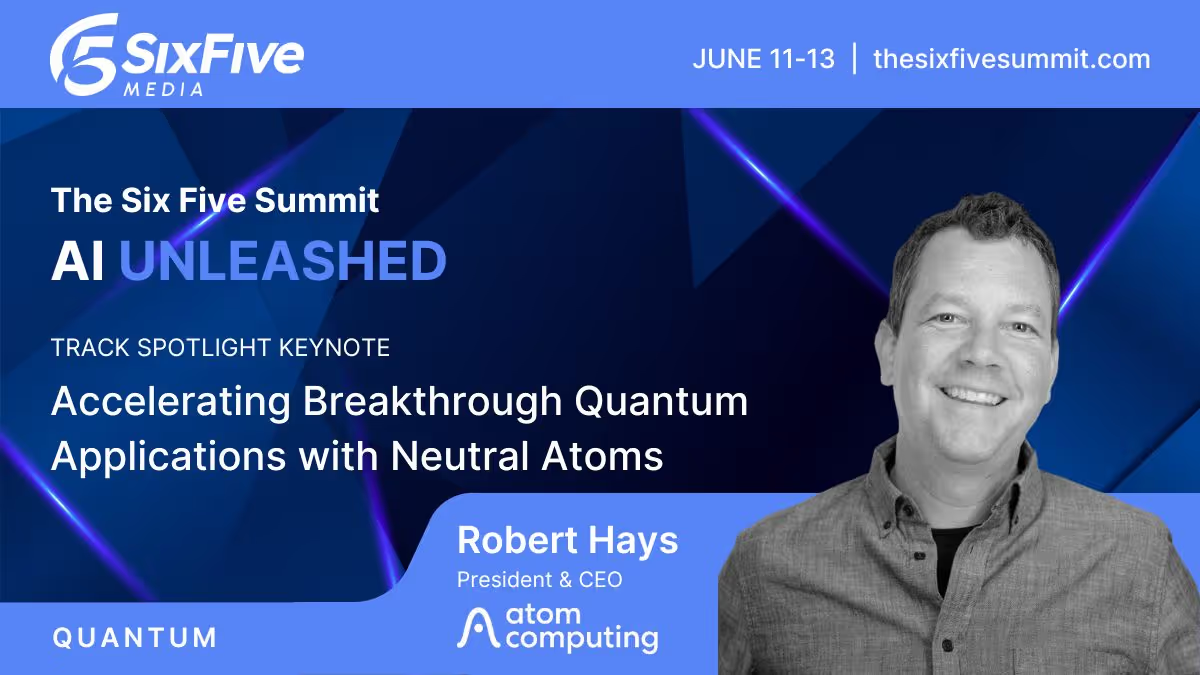
Accelerating Breakthrough Quantum Applications with Neutral Atoms
Our planet needs major breakthroughs for a more sustainable future and quantum computing promises to provide a path to new solutions in a variety of industry segments. This talk will explore what it takes for quantum computers to be able to solve these significant computational challenges, and will show that the timeline to addressing valuable applications may be sooner than previously thought.