
The Orchestrators Ep. 4: Partnerships Built to Execute with Oracle
SHARE


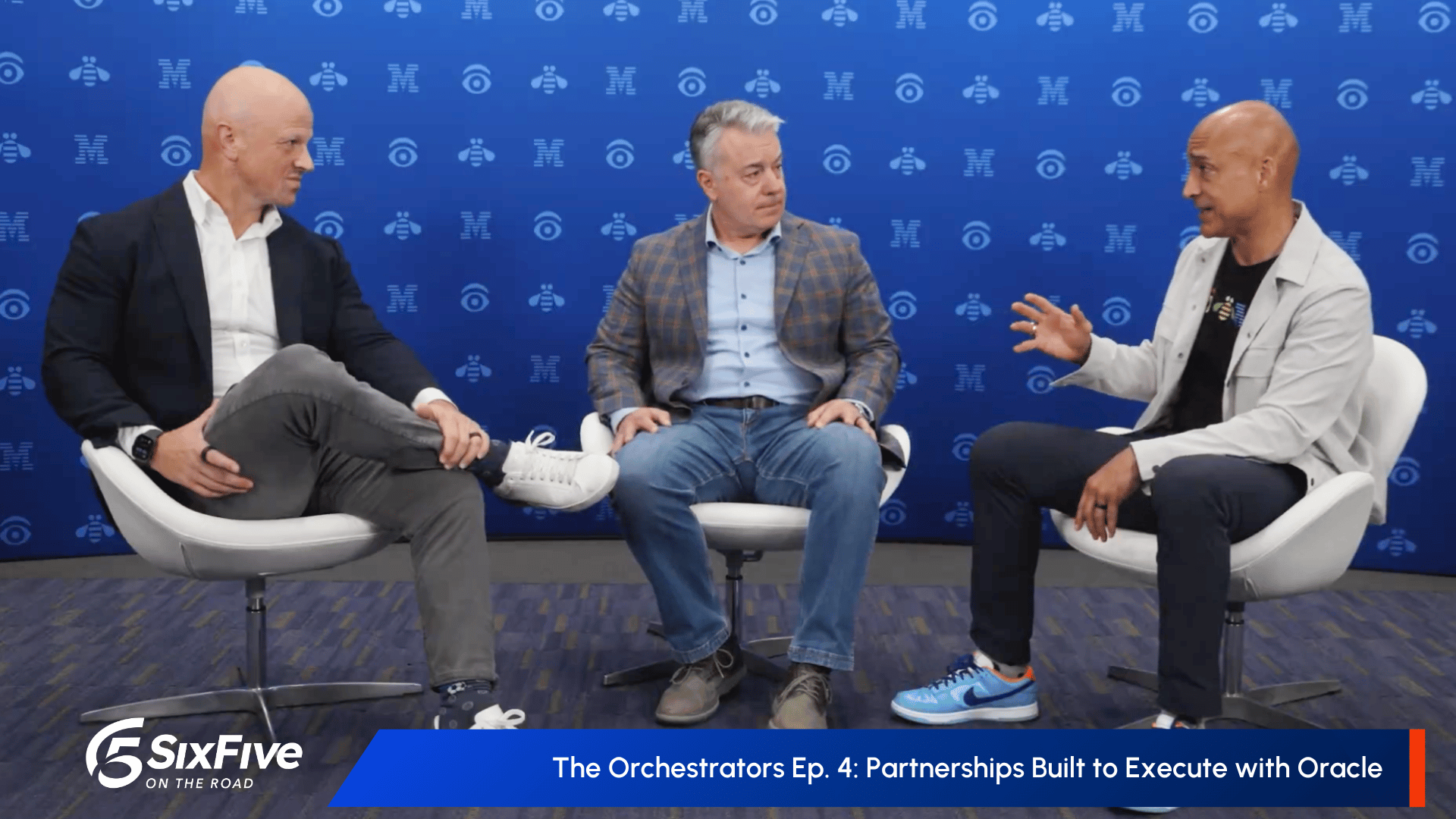
Jason Kelley, GM and Managing Partner at IBM Consulting, and Tim Hatton, Vice President of Global Strategic Alliances at Oracle, tell Daniel Newman what it actually takes to make a multi-vendor AI partnership work: reward sharing, built-in failure prevention, and agreement on the outcome before any partner is assigned a role.
"Partnership? Easy to say, but not easily executed." Jason Kelley draws the line at reward sharing. He calls it partnership only when both companies are locked together in technology, intent, outcomes, and how the money and credit get split with the client, not two vendors working the same account side-by-side.
In Boston, Daniel Newman talks with Jason Kelley, GM and Managing Partner at IBM Consulting, and Tim Hatton, Vice President of Global Strategic Alliances at Oracle, as part of The Orchestrators, an IBM Techumentary series, about what that definition actually requires once a multi-vendor project is underway.
Hatton makes the operational version of Kelley's point concrete. Oracle runs dedicated partner success managers working, in his words, elbow to elbow with IBM on live projects, a structure he traces back to a talk he heard early in his career from Gene Kranz, the Apollo mission control director whose standard was that failure is not an option. When Newman asks Hatton directly whether multi-vendor projects break on technology, Hatton points to transparency and operating model as the answer just as often. That's the reasoning behind building the monitoring structure in before a project starts rather than adding it after something breaks.
Key Takeaways Include:
🔹 Kelley's definition of partnership rests on reward sharing, not just technology. Being locked together on outcomes includes agreement on how rewards flow to each party and to the client, not just which systems connect to which.
🔹 Oracle built failure prevention into the partnership structure itself. Dedicated partner success managers work directly alongside IBM on live projects, a model Hatton ties to Gene Kranz's "failure is not an option" standard from Apollo mission control.
🔹 Kelley's orchestra metaphor turns on one question: who's the conductor?. Alignment on outcome only works, in his framing, once someone is set as the conductor keeping tempo, whether the project calls for jazz or classical.
🔹 Hatton's advice to a CXO comes down to three tenets: trust, choice, and scale. Trust means customer control over data security. Choice means supporting multiple operating models, from public cloud to sovereign deployment, without forcing lock-in. Scale means infrastructure that grows into global operations without architectural rework.
🔹 Kelley's advice starts at the outcome and works backward. Process, technology, systems, and data, in that order, force an honest look at current state before any transformation plan gets built, and determine which partner is genuinely differentiated for which piece.
🔹 Kelley names the failure mode directly: treating a partner's piece as someone else's problem. Knowing where IBM and Oracle each play, and where they play together, is what keeps a multi-vendor project from splitting into separate blame zones when something goes wrong.
Kelley's framework and Hatton's trust-choice-scale model both start at the same instruction: define the outcome first, then let that decide who plays where.
Watch the full conversation and subscribe to Six Five Media on YouTube so you never miss an episode.
Disclaimer: Six Five Media is for information and entertainment purposes only. Over the course of this video, we may discuss companies that are publicly traded, and we may reference their equity share prices. Nothing discussed during this webcast should be considered investment advice or a recommendation to buy or sell any security. We are not investment advisors, and you should not rely on this content as financial advice. Six Five Media collaborates with technology companies and industry leaders to produce research-driven interviews and multimedia programming for enterprise technology audiences.
Jason Kelley:
Partnership? Easy to say, but not easily executed.
Daniel Newman:
Hey everyone, the Six Five is On The Road. We are here in Boston, Massachusetts. Excited to be here for a great conversation as part of our IBM Orchestrator Techumentary series. Today we're gonna be talking about partnerships, and I've got two great guests. I've got Jason Kelly at IBM, and I've got Tim Hatton from Oracle. When you're putting together a partnership, what makes a partnership really, really work?
Jason Kelley:
When we say partners and partnership, it means something I think that's the past. It's not like, oh yeah, we're just working together. In the new era of really execution, so that means that you're literally locked together. In many ways, that means in your technology, in your intent and outcome with clients. There's a lot of linkages there. There's a lot of points of failure, a lot of gaps. So partnership is easy to say, but not easily executed.
Tim Hatto:
It's part of our DNA. It's strategic to Oracle. And we put a lot of thought and rigor into the process. Where do we want to prioritize? By region? by industry, around use cases, around unique solution offerings that our partners come to the table with. And a lot of them have very unique, like IBM, unique industry expertise. We're very conscious of having a governance. Are we setting the right goals? Are we meeting our goals? and be very transparent where we might be falling short. What do we need to do to course correct and address it? So the best partnerships, I think, are where we have that transparency, we have that rigor and focus and commitment to ensure that our customers are going to be successful, but then also that we can differentiate in the market in a unique way.
Daniel Newman:
You're working really hard to try to orchestrate all this technology. And by the way, when you start to have different hands in and in these partnerships, like it's kind of easy to be like, well, it's not our thing. It's their thing that doesn't work, but it's again, your partner.
Jason Kelley:
So it's, it is our thing. We have to know when we're going in together, where we play together and how we play together. We know where we're going to play. We know where our strengths are, we know the solutions that we're going to deliver, how we're going to deliver them, and we have the skills together to deliver it. That's what's most important is that we, when we sit down with our teams, is we make sure that we pick the places where we are different. in my opinion, better than the competition for our clients. That it's not just the IBM and Oracle, it's when IBM and Oracle are working with multiple hyperscalers, multiple clouds, with data that's sovereign, with data that's public. And so we're picking our plays across these different players to get that outcome, to orchestrate to that outcome together.
Daniel Newman:
Is it a tech problem where it goes wrong?
Tim Hatto:
You know, I think, I think it's about transparency and collaboration. Sometimes it could be technology. A lot of times it could be an operating model. At a very early part in my career, I had an opportunity to see a speech from Gene Kranz, who was the head of mission control for the Apollo missions. And his whole theme was, failure is not an option. A lot of work goes into it up front, right? You prepare. And then also you have to be agile because things come up and you address it. So we put a lot of resources in place working with the IBM partnership. We have dedicated partner success managers that are working elbow to elbow with IBM monitoring projects and ensuring that they're going to be successful. These are things that you have transparency, you have collaboration, and I would say over-communicate.
Daniel Newman:
Yeah, the best partnerships, I always say, are created in the foxhole. You know, Tim, from your perspective, what does the work up front look like? How do you create this partnership and make sure that it's going to work and that, you know, it is optimized?
Tim Hatto: We use the term AI changes everything, and it is, right? It's coming at such rapid scale. We're seeing it with our partners in terms of accelerated delivery. IBM is leveraging both technology as well as best practices with IBM Consulting to really ensure our customers can deliver very quickly their solutions, but then also that they get value, right? So what's changing is it's less and less about the go-live. A big part of that is around innovation. and activation. So at Oracle, we're embedding AI across every layer of our solutions. We'll work very closely with IBM to ensure our customers are taking advantage of those. That's a long-term value creation that's really critical.
Jason Kelley:
How do you get that all organized so it goes well? So we'll pick something that I don't do, and that's play music, and we talk about orchestrate. When we talk about what our clients are looking for, Tim said it, it's the outcome. So if we can keep all the players focused on that outcome, and that outcome in this case is, so, okay, it's a client, is it an industrial client, is it a consumer client? And in the analogy, are we playing jazz or is it classical? And so if we can get everyone to understanding what type of music we're playing, and then understanding, okay, we have the same language and we have the same outcome, same type of music, And then that orchestration you have to, it gets very complicated because you're actually orchestrating a lot of orchestration. Where's the conductor? Bingo. And so then you need the conductor that's setting the tone, the tenor, and has that stickiness, keeping the rate and pace. And as long as everyone is aligned on that, they know, okay, we're playing classical music, but the conductor is going to keep us on track. Are we going to play it fast? Are we going to play it slow? Is it going to pull out the bass, the percussions, the woodwind? That's what we do. And as long as we are reading from the same sheet of music. We know how to do it together.
Daniel Newman:
You know, I'm the CXO of a company about to get into a multi-partner project. What kind of advice would you give me that would help ensure success?
Tim Hatto:
I think it's three key tenets. It's around trust, it's around choice, and it's around scale. And from a trust standpoint, we take it hard. The data, you want to have customer control of the data, and you want to have the ability to ensure that that data is trusted, it's secure. So we put a lot of emphasis around that. We say bring AI to your data, and we think that's a very key differentiation. Around choice, we think it's critical that you would want to support multiple operating models. This could be a public cloud, it could be a dedicated region within a regulated industry, it could be sovereign for governments and defense. And that's what we focus on with our partners and with IBM is how can we scale and ensure that our customers are going to have trusted security, they have flexibility and choice, and then they can scale to global operations.
Daniel Newman:
Here I am, I'm about to get into this complicated AI first project, multi-vendor. What advice are you giving to that CXO, in this case me?
Jason Kelley:
What is the outcome that you want to get to? And then we work backward from there. The outcome is not an easy definition because they'll say, Oh, I want to improve my order to cash. You say, OK, but what does that mean for you? What is order to cash in your organization, in your industry, and with your current landscape? I'll give you four points. I'm going to give you that it's PTSD. And it's not the PTSD that you think that I'm talking about. It's their process, their technology, their systems, and their data. That's their current landscape. You look at outcomes, your PTSD, and the people that you're going to get there with, and the partners that get there. And that starts to set the stage for a true plan, because your true north is that objective. And we say, OK, now what people and skills do they have, the client, and then what skills are unique for us to deliver that outcome.
Daniel Newman:
Yeah, start at the end, work backwards. And keep it simple. And if you take trust, choice, scale, outcome, you guys have orchestrated a pretty exciting path for a very complicated but exciting technology future. Tim, Jason, thanks so much for being here with me.
Tim Hatto:
Thank you, Daniel. I appreciate it. Thank you.
Daniel Newman:
Thanks, everybody, for being part of This Six Five On The Road, part of the IBM Orchestrator Techumentary series. It's great to have had a conversation here with Tim and Jason. Subscribe, be part of all of the conversations here. So much great information. We appreciate you being part of the community. We'll see you all later.
MORE VIDEOS
.png)
The Main Scoop Ep. 45: Attackers Only Need to Be Right Once. AI Just Made That Easier.
Chad Rikansrud, R&D Software Security Engineer at Broadcom, explains how frontier AI models are finding decades-old mainframe vulnerabilities in seconds, collapsing the complexity advantage that once protected legacy platforms. He outlines why enterprises need faster Security Intelligence (SECINT) ingestion and disciplined human oversight to keep pace with adversaries wielding the same tools.


Fleet-Scale Deployment Is the Physical AI Benchmark
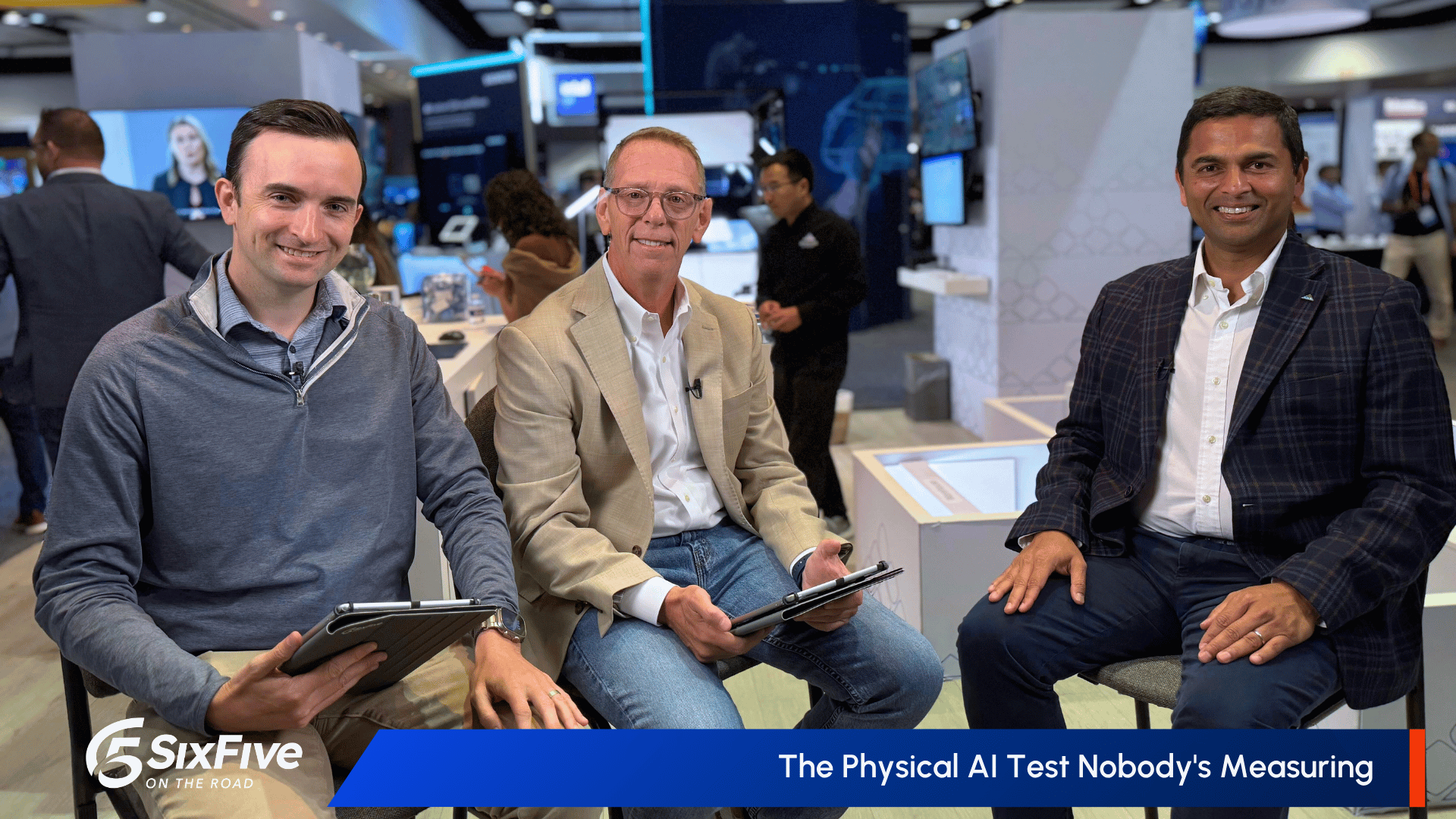
Physical AI is shifting from lab prototypes to fleets of machines operating reliably in the real world, and Ambarella's Muneyb Minhazuddin joins Six Five On The Road at AI Infra 2026 to explain what that shift demands of silicon, memory and developer workflows. Minhazuddin traces the case back to a 22-year-old chip architecture and forward to a developer cloud built to compress model porting time from months to days, and he identifies enterprise ROI proof points as the biggest hurdle left before physical AI scales into millions of deployed units.
.png)
AI Safety Alarms, China's Distillation Reckoning, and Qualcomm's AWS Breakthrough: A Pivotal Week for Enterprise AI
A viral AI extinction claim, a federal advisory naming six Chinese AI labs for industrial-scale distillation, and a $60 billion Qualcomm-AWS silicon pact define a week when enterprise AI risk and opportunity collided head-on. Patrick Moorhead and Daniel Newman weigh in on what's signal and what's noise across AI safety, chip supply deals, and a market rally still betting big on compute.
Other Categories
CYBERSECURITY
Threat Intelligence: Insights on Cybersecurity from Secureworks
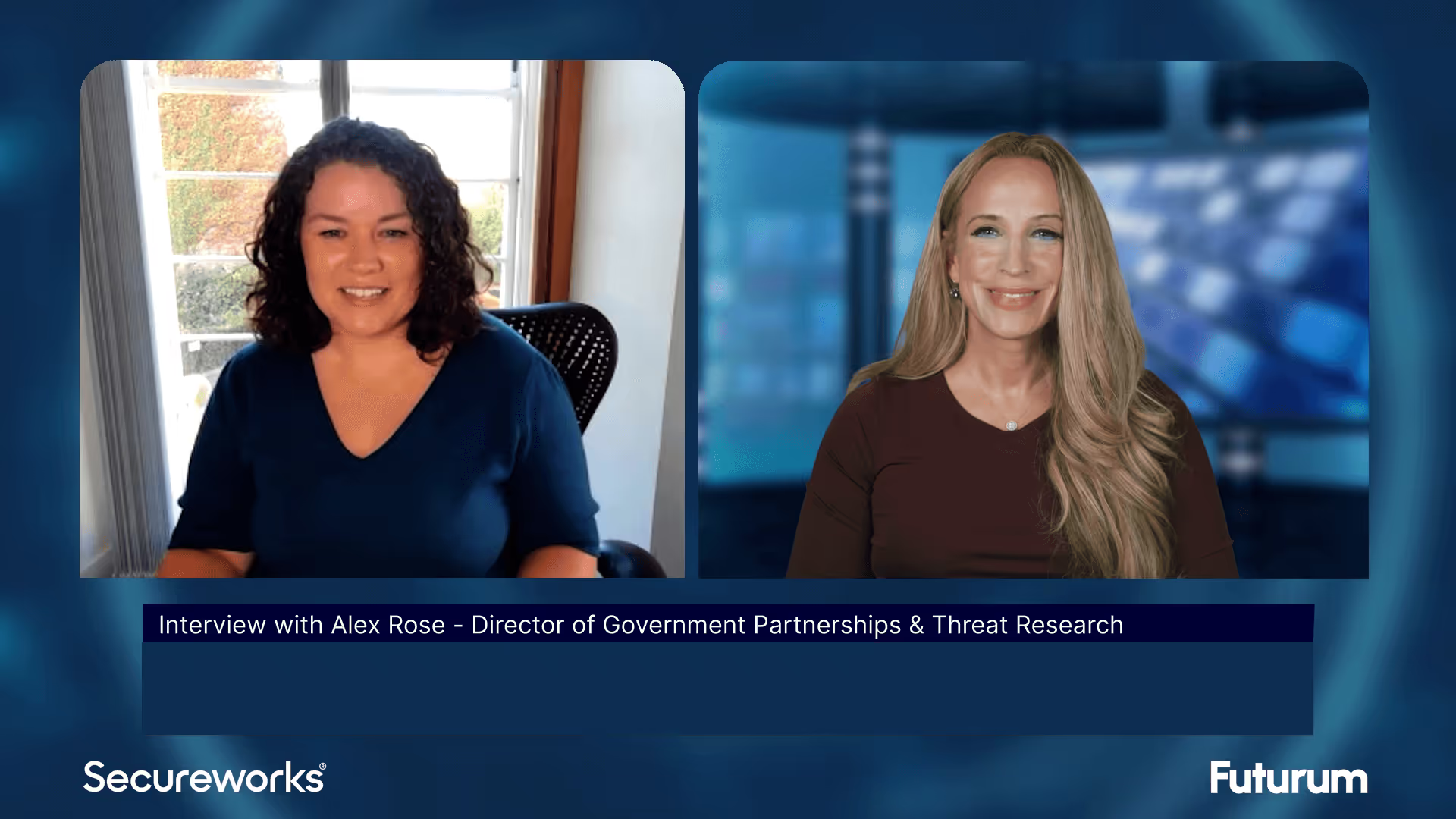
Alex Rose from Secureworks joins Shira Rubinoff on the Cybersphere to share his insights on the critical role of threat intelligence in modern cybersecurity efforts, underscoring the importance of proactive, intelligence-driven defense mechanisms.

HP Launches World’s First Business PCs to Protect Against Quantum Hacks - The Six Five On the Road
On this episode of the Six Five - On the Road, hosts Patrick Moorhead and Daniel Newman are joined by HP's Ian Pratt, Global Head of Security for Personal Systems.
What is Autonomous Endpoint Management?
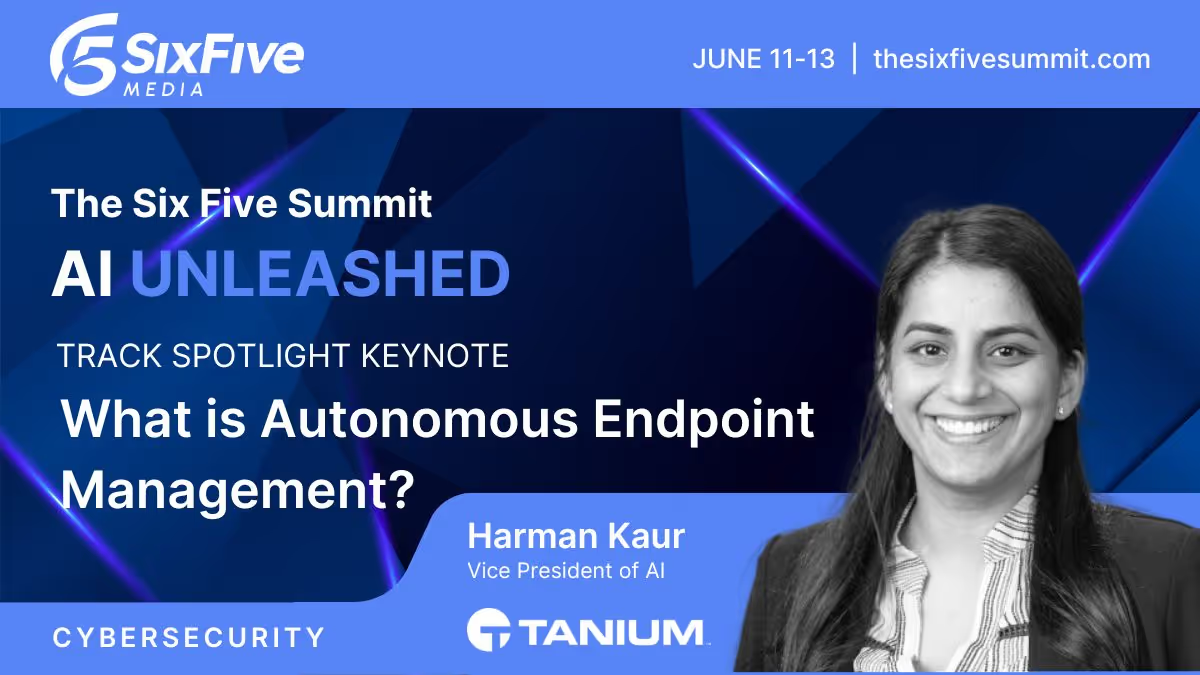
Autonomous Endpoint Management is a framework designed to unify IT operations and security teams on a single platform through real-time control and visibility.
QUANTUM
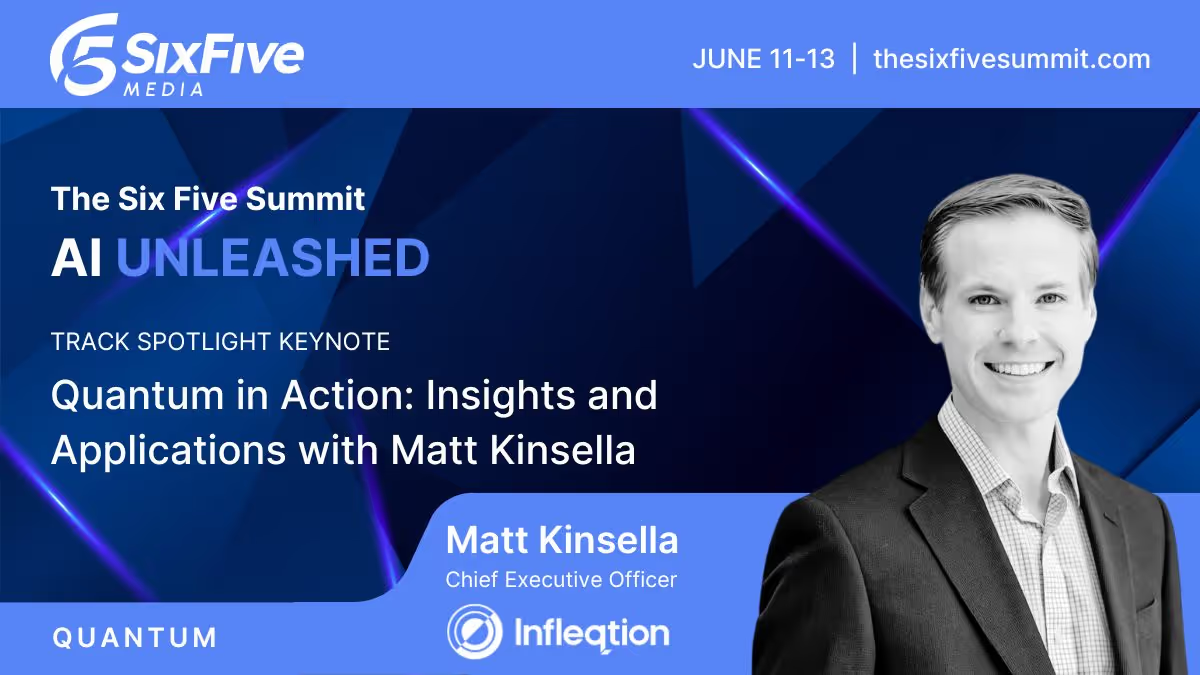
Quantum in Action: Insights and Applications with Matt Kinsella
Quantum is no longer a technology of the future; the quantum opportunity is here now. During this keynote conversation, Infleqtion CEO, Matt Kinsella will explore the latest quantum developments and how organizations can best leverage quantum to their advantage.
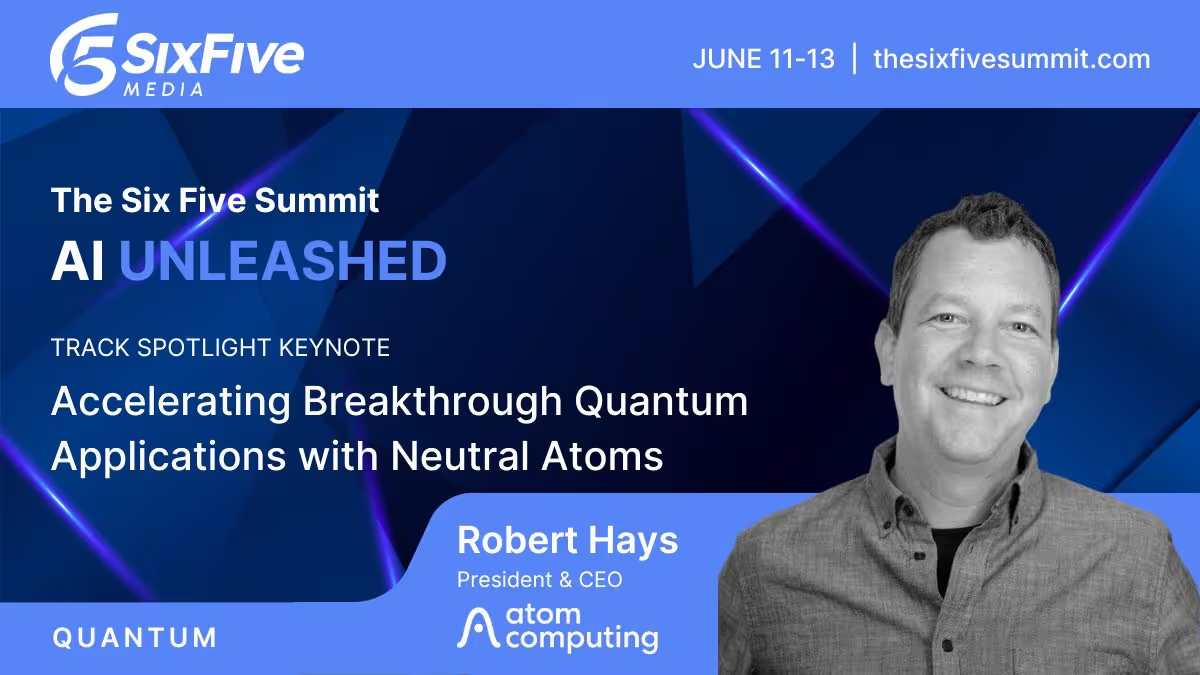
Accelerating Breakthrough Quantum Applications with Neutral Atoms
Our planet needs major breakthroughs for a more sustainable future and quantum computing promises to provide a path to new solutions in a variety of industry segments. This talk will explore what it takes for quantum computers to be able to solve these significant computational challenges, and will show that the timeline to addressing valuable applications may be sooner than previously thought.