
The Orchestrators Ep. 5: From Modernization to Outcomes with Nestlé
SHARE


Nestlé's SAP modernization consolidated its global platform — but exposed that technology upgrades alone do not resolve accountability gaps, integration overhead, or execution speed. In this Six Five Virtual Webcast with IBM, David Mullen, Head of Strategic IT Sourcing at Nestlé, details how the company rebuilt its operating model around a vertically integrated delivery structure, outcome-based commercial agreements, and a single prime integrator — redefining what enterprise IT sourcing looks like at 200-country scale
By the time Nestlé completed its SAP S/4 transformation, the platform itself was no longer the challenge. David Mullen says the company was already running on a consolidated, memory-resident SAP HANA environment before the migration finished. What the business wanted wasn't a better platform. It wanted to move faster.
In this episode of The Orchestrators, IBM's six-part techumentary series, Daniel Newman speaks with Mullen, Head of Strategic IT Sourcing at Nestlé, about what comes after modernization, when the technology is in place but the operating model still has to change.
Mullen argues that many companies treat a platform migration as the finish line when it's really the starting point. Once the technical foundation was in place, Nestlé shifted its focus to how engineering measured success. The team replaced story points with value items, giving engineers and business leaders a shared way to measure speed, quality, and business impact as AI became part of development. Mullen also spent six months coaching IT leaders to stop leading with technical explanations and instead define the business outcome first. That change in mindset helped a company spanning 2,000 brands across 200 countries reduce delivery cycles from months to weeks.
They also eliminated what Mullen calls one of outsourcing's silent killers: the integration overhead of Nestlé sitting in the middle of every vendor handoff. Moving to a single vertically integrated partner owning the full value chain didn't just simplify vendor management. It removed Nestlé as a required party in the process entirely, and Mullen says defect rates and incident resolution time dropped past a benchmark the company already considered best-in-class. The harder shift, by his own account, wasn't structural. It was that Nestlé's senior IT leaders had spent 25 years earning their credibility by explaining how, and that exact fluency doesn't translate into articulating what the business actually needs.
Key Takeaways Include:
🔹 The platform problem was already solved before S/4 finished. Nestlé was memory-resident on HANA with a consolidated global SAP ecosystem going into the transformation. Mullen frames S/4 as a necessary step, but not the one that addressed what the business was actually asking for: speed.
🔹 Story points couldn't hold a comparison once AI entered engineering. Mullen's team needed a baseline that stayed meaningful as AI changed development velocity, and found seat-based, story-point metrics too arbitrary to track that shift. Value items became the shared commercial language instead.
🔹 Removing Nestlé from the middle of vendor handoffs, not just consolidating vendors, cut the real cost. Mullen calls integration overhead one of outsourcing's silent killers. A single prime integrator didn't just reduce vendor count. It removed Nestlé as a required party in the process, and defect rates and incident resolution both improved past an already best-in-class benchmark.
🔹 Verticalizing products individually creates isolated pockets, not value. Mullen argues no single product delivers business benefit on its own. Value comes from chaining multiple products into one working chain under a single accountable partner.
🔹 The skill that built IT leaders' careers is the one blocking the transition. Mullen says it's easy for IT professionals to tell other IT professionals how to do IT. Articulating a business outcome the way stakeholders actually think about it is a different, harder skill entirely, one his team spent months coaching leadership toward.
🔹 Nestlé is deliberately not building data science expertise in-house. The company's AI factory runs on partner expertise for real use cases rather than Nestlé trying to own that capability itself, the same logic behind its sourcing model.
Watch the full conversation and subscribe to Six Five Media on YouTube so you never miss an episode.
Disclaimer: Six Five Media is for information and entertainment purposes only. Over the course of this video, we may discuss companies that are publicly traded, and we may reference their equity share prices. Nothing discussed during this webcast should be considered investment advice or a recommendation to buy or sell any security. We are not investment advisors, and you should not rely on this content as financial advice. Six Five Media collaborates with technology companies and industry leaders to produce research-driven interviews and multimedia programming for enterprise technology audiences.
David Mullen:
So by having a single partner across multiple products in these business value chains, we were able to get even more benefit.
Daniel Newman:
Joining us is David Mullen, Director of Global IT Sourcing Strategy at Nestle. David, welcome to The Six Five.
David Mullen:
Thank you.
Daniel Newman:
So let's start off big picture here. Nestle, 2,000 brands, 200 countries. And you've been through a lot of transformation in the business, just recently completing a major SAP and platform modernization. What did that fix for you? And at that scale, what challenges does a technology upgrade alone tend to fail to address?
David Mullen:
The transformation of SAP going to S4 is a huge step, but Nestle was already memory resident with HANA, so we'd already got a consolidated global SAP ecosystem and a common platform, common model, but that just wasn't what the business needs. The business is looking for speed and innovation. We're also looking at how we could make real big steps in terms of the business experience. And one of those is looking at how does the full ecosystem fit end to end. And that goes from the various business processes that we have and how they connect with technology. how can we bring the accountability end-to-end with a single partner? And so, yes, SAP transformation is the first step in the right direction, but then we were looking at more the full ecosystem of applications and how we can connect those together to deliver those actual enterprise value chains that we see.
Daniel Newman:
How did you sort of define business value and what it should look like?
David Mullen:
Business is looking for stuff to be turned around in weeks, not in years. And if you think that we come from a 25 years of doing massive SAP transformation and projects, which would take years to execute, that is just not fast enough for our business. And so as you move into the agile ways of working and then trying to put a commercial model around agile ways of working, And then how do you inject AI into agile ways of working and making a commercial model that makes sense was the code to crack for us. And so how we addressed it was In engineering, how do we find a means of measure that A, you can baseline, and then when you introduce AI, that you can still say, well, we can still identify the velocity and the rate of development that is happening. and work out a quality metric to be able to say, well, commercially, does this still make sense? So working with IBM, we were able to build not only incentives and measurable outcomes, but we agreed a common language that was a lot less arbitrary than story points and some more of the traditional agile ways of working. that allowed us to move from a seat-based engineering metric into a value-based, so we use value items as a common agile language, which meant that we would focus on the value that each development sprint would deliver, and then how do we make sure that as we increase the velocity, that we're reducing the defect that we have coming into engineering, And ultimately, we're constantly trying to do things faster to also deliver higher quality end product to our business users, but to free up that capital.
Daniel Newman:
When did you first see clear evidence that this new operating model was improving conditions, performance, efficiencies, productivity? Where did you see it most? Was it in the teams working day-to-day? Was it in the data?
David Mullen:
Actually, it was a combination of both. One of the silent killers in any sort of outsourcing is the cost of integration. That integration overhead has always been a massive headache for us, especially moving from a waterfall project delivery way of working where we would have multiple actors providing the various layers of the the SDLC layer cake. Nestle was always the party integrated. When we move to our new model, which is this vertically integrated operating model, where we have a single supplier that is driving the entire value chain, that integration overhead is gone. The IBM is working with IBM. There doesn't need to be a Nestle party in the middle of that process just to supervise and look after it. So, that was the first easy thing. So, we saw a massive improvement in efficiency simply because Nestle didn't have to be a party to every single step of the journey. So, we saw a measurable decrease in defect. and decreasing the number of incidents. And where we did have incidents, we were seeing a massive increase in the speed to get them resolved. So we were going from best-in-class performance in terms of incident resolution and the amount of defect that our business users were facing to the next level, which was Pretty incredible. When we compare ourselves to our peers, we were already at the top of the game, and then we shaved off half again. A big benefit, aside from both the financial benefits and the operational performance, we just found that relationship between our IT technology product teams and the partners got stronger. So that became more of a partnership than a supplier-customer relationship.
Daniel Newman:
IBM is acting as your prime integrator, right? So they, at least across a significant portion of Nestle's app and product landscape, you know, for an organization operating at your scale, like what does it mean in practice to have a single partner owning, like owning that orchestration layer, such a significant role?
David Mullen:
When we first started this program, it was about seven years ago. And IBM had already established themselves as a major partner in the ADMS space. And again, after five years, we said, OK, based on merit, based on experience, IBM still came top of the game. We said, OK, then we're going to go one click deeper with IBM. And we also realized that the notion of verticalization was great. But the danger you have of verticalizing multiple times is you create this kind of archipelago of violent states of applications and products, which was a detriment to what we were trying to deliver. There is no single business benefit that comes from a single product. Business benefits come from how you chain products together, multiple products that make that value chain work. So by having a single partner, across multiple products in these business value chains, we're able to get even more benefit. So A, you have one partner who understands how they're driving an actual contribution to business benefit rather than just a technology conversation. And so it also helps us deal with some of the challenges that we have outside of ADMS, which is, well, how do we make that experience better for the business?
Daniel Newman:
Nestle shifted, right? When you no longer have seat-based software, when you start getting to action-based, outcome-based, you're trying to make that pivot, right? How is that changing sort of the way your teams are executing? And maybe just an adder there is how hard do you think it will be to get all the way there to truly being able to be outcome measured?
David Mullen:
It's not easy, right? Most of the Nestle IT senior IT leaders come from delivery. They've sharpened their teeth and they have the welts on their back of having to do a good job, right? So they've still got the grease under their fingernails of actually having to make this stuff work. And giving over the reins to a third party and letting them focus on the how is a big challenge, right? And One of the things that I've been heavily focused on over the last six months is working with the Nestle teams to help them realize that they should be having a conversation around the what. So what is it that we're trying to achieve? What are the measures of success? And then let the supplier work out the how, right? And it's difficult. It's very easy for IT professionals to tell other IT professionals how to do IT. It's very difficult for them to be able to articulate a business outcome that they actually need to achieve. that is what their stakeholders are actually looking for. Your business does not care what sort of technology database you've got running or how many APIs you've got. They want to know that they're able to ship, or they want to know that they're able to sell, or they want to know that their field sales are going to have better sales recommendations in their palm to be able to drive growth. Focus on what matters to the business. Let the technology partners focus on how to make the technology work. The other point is that we also like to think that we're the experts of everything technology. The reality is that we should be the experts of understanding what we need and speaking to the people who can advise us on better ways of working. This is where the whole AI piece starts to become even more interesting. We have an AI factory where we're looking at real use cases. And again, we don't want to be the experts of data science. We want to use data science and technology expertise from our partners to be able to achieve that.
Daniel Newman:
Yeah, you hit the nail on the head. It's technology for business purposes, right? There's a tribalism in IT at times that this is what we're certified in, this is what we know, this is the technology we work with. You guys are doing a lot of great work over there at Nestle. David, I would love to continue to follow your journey and I appreciate you spending some time with me here. I'm happy to. I want to thank everybody for joining us here for this Orchestrator Techumentary Series done in partnership with IBM. I'm Daniel Newman and this is The Six Five. We'll see you all soon.
MORE VIDEOS
.png)
The Main Scoop Ep. 45: Attackers Only Need to Be Right Once. AI Just Made That Easier.
Chad Rikansrud, R&D Software Security Engineer at Broadcom, explains how frontier AI models are finding decades-old mainframe vulnerabilities in seconds, collapsing the complexity advantage that once protected legacy platforms. He outlines why enterprises need faster Security Intelligence (SECINT) ingestion and disciplined human oversight to keep pace with adversaries wielding the same tools.


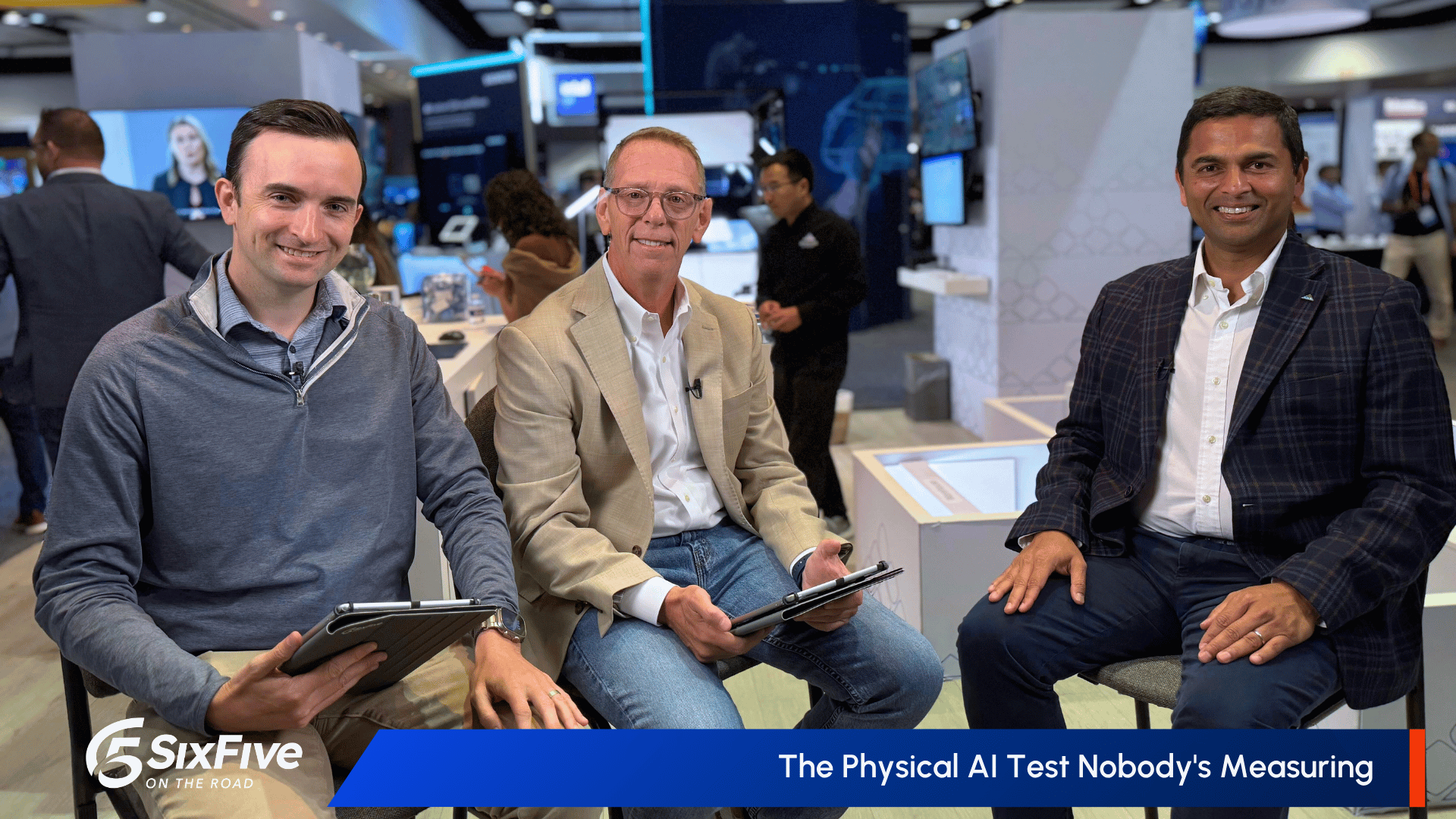
Fleet-Scale Deployment Is the Physical AI Benchmark
Physical AI is shifting from lab prototypes to fleets of machines operating reliably in the real world, and Ambarella's Muneyb Minhazuddin joins Six Five On The Road at AI Infra 2026 to explain what that shift demands of silicon, memory and developer workflows. Minhazuddin traces the case back to a 22-year-old chip architecture and forward to a developer cloud built to compress model porting time from months to days, and he identifies enterprise ROI proof points as the biggest hurdle left before physical AI scales into millions of deployed units.
.png)
AI Safety Alarms, China's Distillation Reckoning, and Qualcomm's AWS Breakthrough: A Pivotal Week for Enterprise AI
A viral AI extinction claim, a federal advisory naming six Chinese AI labs for industrial-scale distillation, and a $60 billion Qualcomm-AWS silicon pact define a week when enterprise AI risk and opportunity collided head-on. Patrick Moorhead and Daniel Newman weigh in on what's signal and what's noise across AI safety, chip supply deals, and a market rally still betting big on compute.
Other Categories
CYBERSECURITY
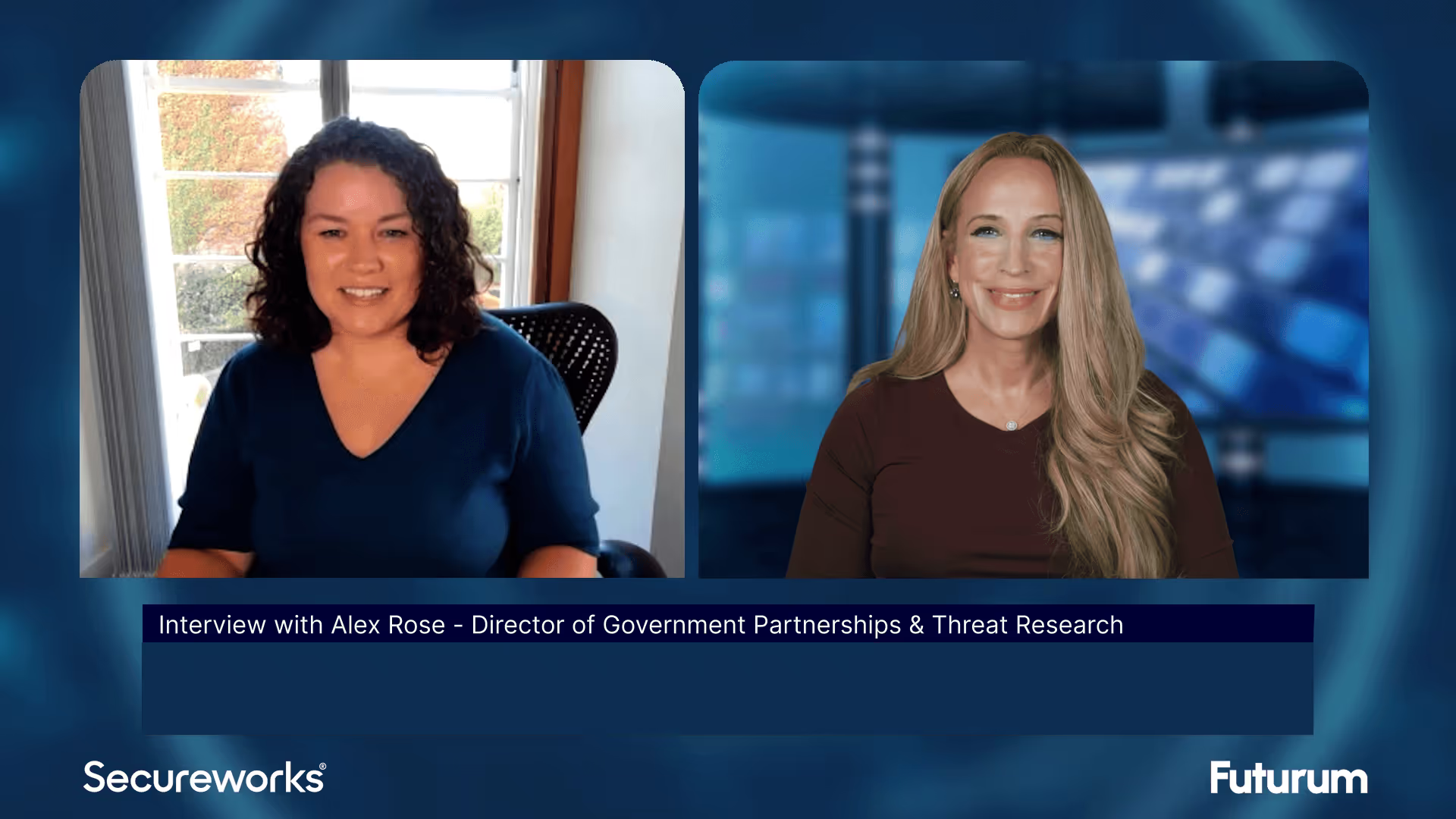
Threat Intelligence: Insights on Cybersecurity from Secureworks
Alex Rose from Secureworks joins Shira Rubinoff on the Cybersphere to share his insights on the critical role of threat intelligence in modern cybersecurity efforts, underscoring the importance of proactive, intelligence-driven defense mechanisms.

HP Launches World’s First Business PCs to Protect Against Quantum Hacks - The Six Five On the Road
On this episode of the Six Five - On the Road, hosts Patrick Moorhead and Daniel Newman are joined by HP's Ian Pratt, Global Head of Security for Personal Systems.
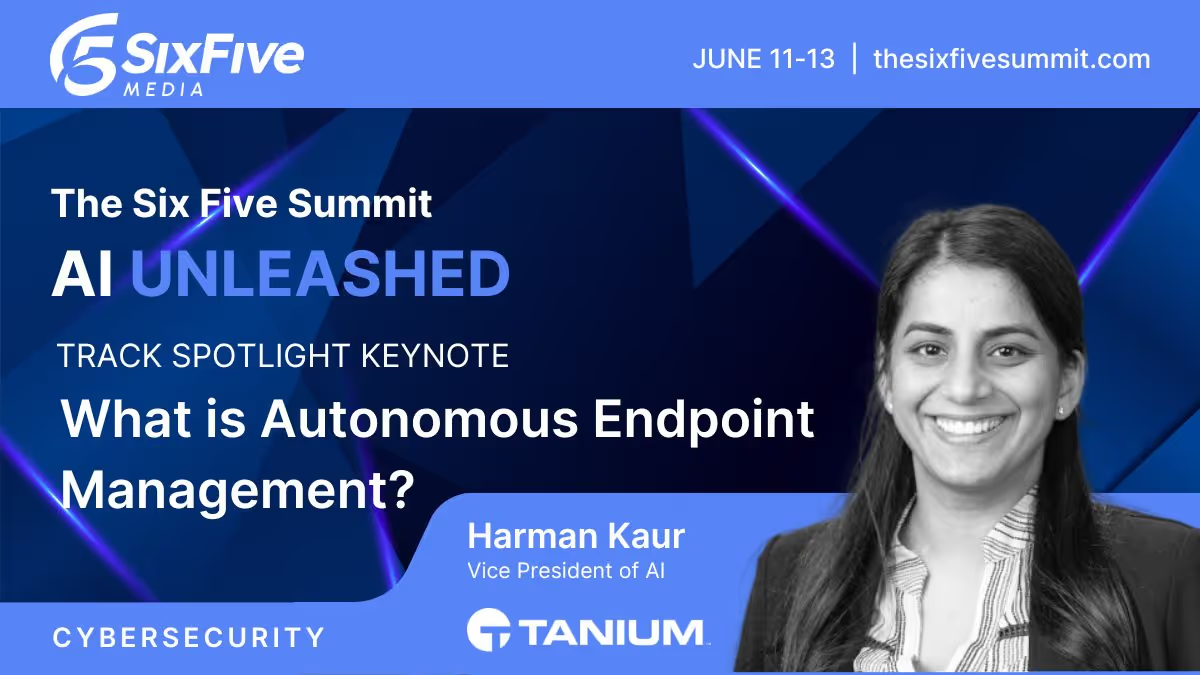
What is Autonomous Endpoint Management?
Autonomous Endpoint Management is a framework designed to unify IT operations and security teams on a single platform through real-time control and visibility.
QUANTUM
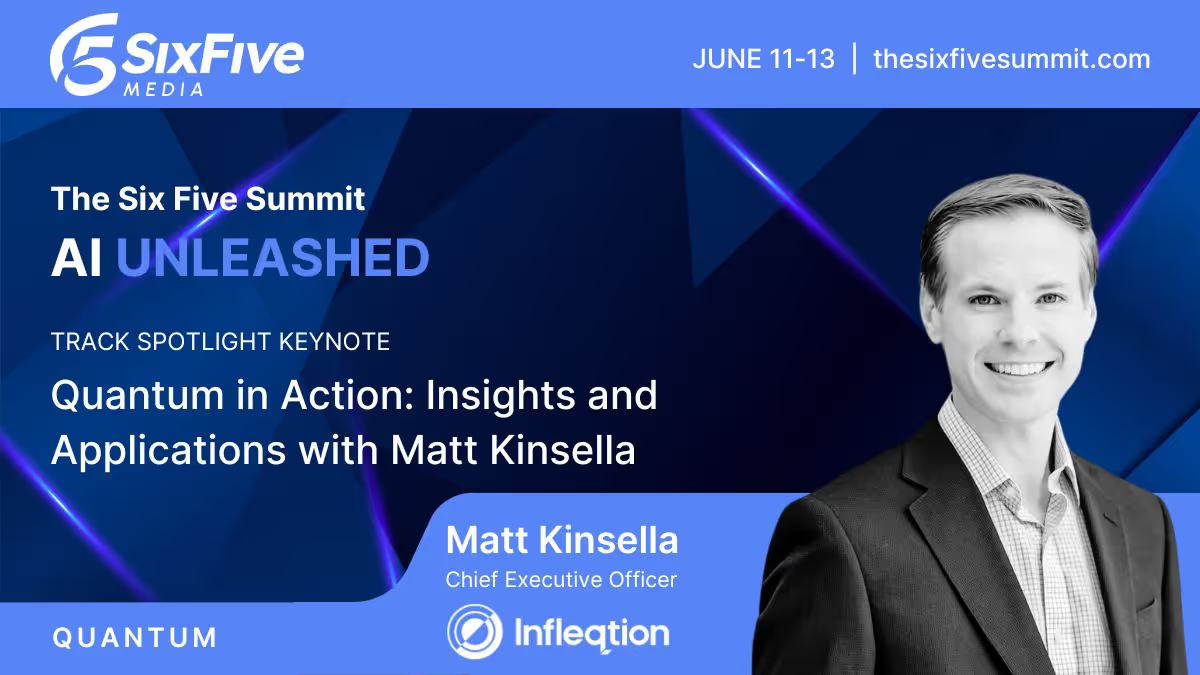
Quantum in Action: Insights and Applications with Matt Kinsella
Quantum is no longer a technology of the future; the quantum opportunity is here now. During this keynote conversation, Infleqtion CEO, Matt Kinsella will explore the latest quantum developments and how organizations can best leverage quantum to their advantage.
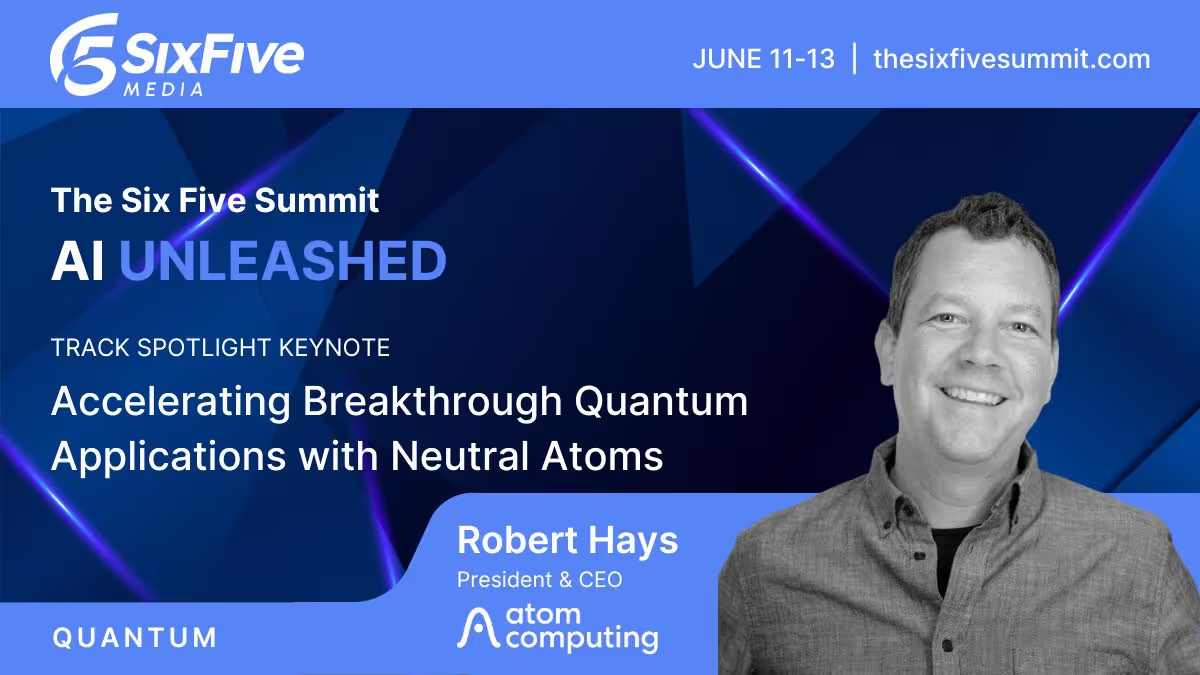
Accelerating Breakthrough Quantum Applications with Neutral Atoms
Our planet needs major breakthroughs for a more sustainable future and quantum computing promises to provide a path to new solutions in a variety of industry segments. This talk will explore what it takes for quantum computers to be able to solve these significant computational challenges, and will show that the timeline to addressing valuable applications may be sooner than previously thought.