


AI fluency depends less on model sophistication and more on whether enterprises can trust the data feeding their systems. From Davos, Daniel Newman speaks with Workiva CSO Mike Rost about why governance, accuracy, and execution discipline are becoming the foundation for scaling AI in regulated, high-stakes environments.
From Davos, Six Five Media examines how AI is reshaping enterprise software through the lens of trust, governance, and execution. Daniel Newman is with Mike Rost, Chief Strategy Officer at Workiva, to explore what changes when AI moves from literacy to fluency inside regulated, zero-error environments.
Rather than framing AI as a threat to SaaS, the discussion surfaces a more grounded reality: AI depends on trusted, validated data and disciplined systems. As speculation grows around AI “replacing” enterprise software, Workiva’s position is clear: platforms built on investor-grade data, governance, and deterministic workflows become more critical, not less, as AI adoption accelerates. They believe the focus should not be autonomy for autonomy’s sake, but productivity gains that organizations can trust at scale.
Key Takeaways Include:
🔷 AI fluency is replacing AI literacy: Enterprises are moving beyond experimentation toward embedding AI directly into core workflows and processes.
🔷 Trusted data is the real AI advantage: Investor-grade, validated data determines whether AI accelerates work or introduces unacceptable risk.
🔷 AI accelerates SaaS, it does not replace it: Regulated environments still require platforms that continuously adapt to compliance, reporting, and governance demands.
🔷 Governance defines the ceiling for AI adoption: In zero-error domains, speed without control creates more risk than value.
🔷 Productivity beats autonomy: Customers prioritize tools that augment judgment and reduce friction over fully autonomous systems.
Listen to the audio:
Disclaimer: Six Five Media’s The View from Davos is for information and entertainment purposes only. Over the course of this webcast, we may talk about companies that are publicly traded and we may even reference that fact and their equity share price, but please do not take anything that we say as a recommendation about what you should do with your investment dollars. We are not investment advisors and we ask that you do not treat us as such.
Daniel Newman:
Hey everyone, the Six Five is here with a view from Davos. Excited to have this conversation with Mike Rost:. Mike is the chief strategy officer at Workiva. Correct?
Mike Rost:
Yes.
Daniel Newman:
Yeah. Excited to have you here.
Mike Rost:
Well, thanks for taking the time.
Daniel Newman:
By the way, the view from Davos, the camera probably doesn't do justice, but we are in the most majestic, amazing apartment that I've been in while I've been here so far.
So it was worth the hike up the mountain. And if you see a little bit of sweat on my head, that's that's what you're dealing with here. But great to be with you here. How's the event going for you?
Mike Rost:
It's fantastic. Yeah, we're having a great time. A lot of information, a lot of good conversations, and it's been a good event so far.
Daniel Newman:
Yeah, I, I know this is my third year. You got. You've been…
Mike Rost:
The first year for me. Workiva has been here for for two years now.
Daniel Newman:
I know you said you've been in the industry like 25 years. So what's your kind of first impression?
Mike Rost:
Um, yeah, it's I mean, just a great meeting of a lot of people, right? Everything from, you know, business leaders, you know, celebrities, obviously, a number of government officials coming here this week. So it's just a great mash up of people from all over the world.
Daniel Newman:
Snuck in a picture with Matt Damon?
Mike Rost:
Uh, Matt Damon was within ten feet of me earlier.
Daniel Newman:
It just might have happened, right?
Mike Rost:
It might have happened.
Daniel Newman:
So where Workiva is at the intersection of cloud software, compliance, sustainability, helping companies really manage a complicated set of tasks, that's very important.
Things like financial reporting for public companies. We're also at this really interesting inflection right now of software. As you're having conversations out there, kind of how are you seeing the shift, the impact of AI on on work and on skilling and on your industry as a whole?
Mike Rost:
Yeah, I mean, AI is a topic, you know, primary topic this week. It's obviously a topic that we talked to a lot of our customers about. And you're right, I mean, the industry is at this inflection point. You know, I think it's interesting as I look at kind of this transition of AI, I think we're moving from a, a point of, you know, people talking about AI literacy to AI fluency, and it's just moving to a different level of becoming integral part of people's processes. Right. So, you know, us as a software company, you know, we're attuned to that and looking to make sure that we are serving our customers the best we can.
Daniel Newman:
So I'm going to set you up with a good one. I think this is a good one. You know, I'm having a lot of conversations with CEOs and leaders inside of the enterprise software and SaaS space. There is this kind of hyperbolic conversation going on that, you know, basically AI is going to eat SaaS. What's the word Workiva response to that? Because I'm not seeing it in the numbers. I'm not seeing it in the metrics of the SaaS companies I'm tracking. But I am somewhat seeing it, maybe the rating and how the markets are looking at these companies.
How is where Workiva answering that? Because I'm sure you're seeing it on both sides. You help these companies and you are one of these companies.
Mike Rost:
Yeah. No, as a as a publicly traded SaaS company. Yeah. It's been a conversation we've been having with investors and it's been written by the sell side and the analysts on this. And I think there's a couple of things that we look at it right. I mean, first of all, you know, the fuel of AI is data and trusted data, right? You wouldn't have to worry about, you know, is there going to be any hallucinations with the models? The other thing is, is the model being fed good data, right. And our customers have that trusted, validated investor grade data inside of our platform.
So we believe that we're at this, you know, intersection where, you know, because we have 6500 customers with their trusted data. And it makes us a a natural point of where AI can leverage the data we have. That's not going to be replaced by that. We believe the LMS in the near term.
Daniel Newman:
Yeah. I saw some really interesting fodder on the web this week. One of the leaders of HubSpot talking about how they use SaaS in the company and how they also use vibe coding. But that vibe coding has not replaced a single app in terms of either customer or anything they're doing inside of the company at this point, because at this point, it's more of a tool that the developers use.
But one of the great points that I saw made was that, what are you going to do when you have some, you know, young, you know, star in the company, create a vibe coded app and then they leave. You know, he was kind of looking at all these reasons. It's kind of interesting. And by the way, what are you going to do when you need to continuously update all the features to meet all the like?
Having a company like Workiva that's super focused on every new regulatory, every new compliance update, right. Your customers, when they're filing a 10-q, um, they can use what you've built, and they don't have to necessarily worry about what's changed since the last quarter, for instance. Right,
Mike Rost:
Right. Yeah. I mean, I think for us, you know, we look at AI as an accelerator for the work for our customers, not necessarily a replacement of workers. I think that's part of the dialog that's happening right now is, you know, how much autonomy will AI take and how much we'll still have human in the loop. Um, and, you know, to some degree, there's this, you know, perception that there has to we have to be moving fast.
On the other hand, people are trying to put the right rules and systems in place for governance of what's going on there. So I think that's kind of the intersection we're at is, yes, moving fast, iterate, try to find the race use cases, but at the same time, again, what's important for our customers to make sure the governance is there because there is no room for hallucination and investor grade reporting.
Daniel Newman:
So with as many companies as you work with, maybe we can we can end here with a little bit of vision from a strategy leader. What is the strategy that you're taking both inward but also sharing with the customers outward as to how to sort of approach the intersection right now of this technology, but still staying within compliance. Meeting, you know, those strict rules because I guess, you know, we always say this is a kind of a zero error business that you're in.
And errors need to be corrected, documented and scrutinized like crazy. And if you know you're looking for the software to really meet the moment, be right. And if you're a CFO or if you're one of the business leaders, you want to trust this stuff, right?
Mike Rost:
Yes. I mean, again, there is no, you know, it's a deterministic process that we support for our customers. And again, there's no randomness that can happen, you know, in the in the output for us, it's really meeting where customers where they're at, and then helping them see the vision of where they can go with this. So we've had AI as part of our platform for a couple of years. We continue to roll out new things in.
Just in the last couple of months, we've rolled out something called our financial intelligence, our SEC intelligence that augments the work to help people benchmark when they're doing their filings, but not necessarily replace, you know, necessarily autonomy of doing it. It's not like AA1 button close.
It's just going to automatically create your 10-q. But how to make people more productive. And that's really where our customers are asking us to be.
Daniel Newman:
Well, listen, I want you to get to that one button closed. I think it would be a lot of fun, but I think between now and then there's a lot of work to be done, a lot of work to be done. Yeah. And I hope you have a really great Davos here. And that your first World Economic Forum is very successful for you Mike. And I hope that we're Workiva continues to see a lot of scale and growth. And thanks for spending all the time with me.
Mike Rost:
Yeah thanks for taking time.
Daniel Newman:
And thank you everybody for being part of this six five. We are On The Road with a View From Davos. Great conversation there. There's a lot going on in the cloud software SaaS space. You're going to be hearing a lot more from us about this soon. But for now we got to go. We'll see you all later.
MORE VIDEOS
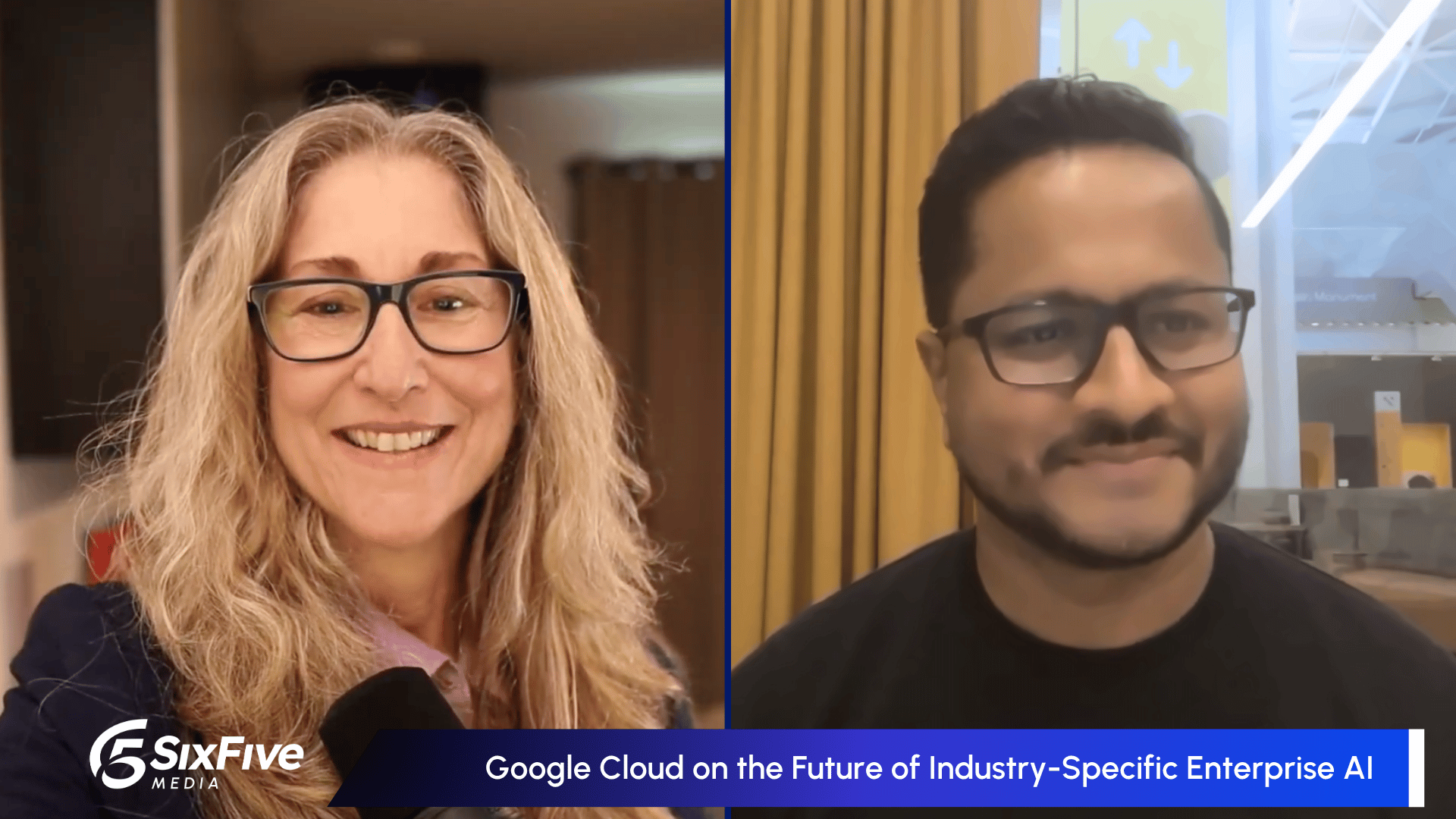
Industry Veteran and Google’s Satish Thomas on Replacing One-Size-Fits-All Enterprise AI With Industry-Specific Agents
Google is moving enterprise AI beyond general-purpose tools and into industry-specific workflows built for regulated sectors such as legal and financial services. Satish Thomas, Vice President, Business and Industry Solutions at Google, joins Six Five to explain how Gemini Enterprise for Industries combines purpose-built skills, ready-to-deploy agents, model choice, and an open partner ecosystem to bring AI into the workflows enterprises already run.


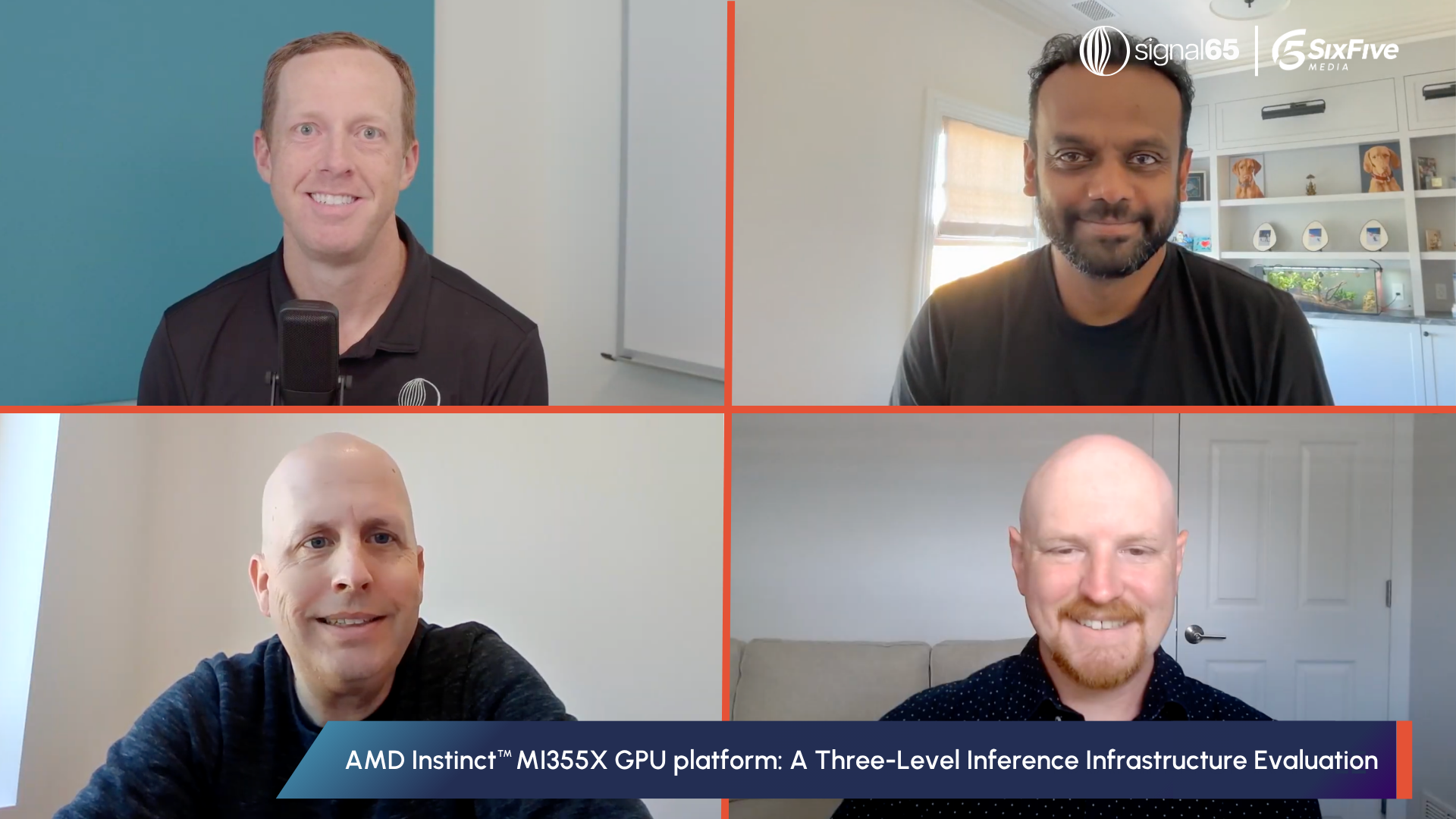
AMD Instinct MI355X vs NVIDIA HGX B200 GPU platforms AMD vs NVIDIA: A Three-Level Inference Infrastructure Evaluation
Signal65 President Ryan Shrout and Senior Performance Analyst Mitch Lewis review a new three-level inference infrastructure evaluation of AMD's Instinct MI355X against NVIDIA's HGX B200 with AMD's Andrew Dieckmann and Anush Elangovan. The MI355X's memory bandwidth advantage compounds as context and concurrency scale, delivering up to 2.25x throughput gains and roughly 40 percent lower cost per GPU hour.
.png)
Anthropic’s AI Slowdown, OpenAI’s $1.2T Valuation & Salesforce’s AI Bet
Anthropic's "Pace the Frontier" essay set off a week in which nearly every major AI leader, and two heads of state, weighed in on whether the frontier should slow down. Patrick Moorhead and Daniel Newman read the incident as something larger than a safety debate. Whoever sets the pace of the frontier also sets the pace for open-weight models, enterprise custom models, and the trillion-dollar valuations riding on top of them. That contest, not the essay itself, is the through-line of Episode 320 of The Six Five Pod.
Other Categories
CYBERSECURITY
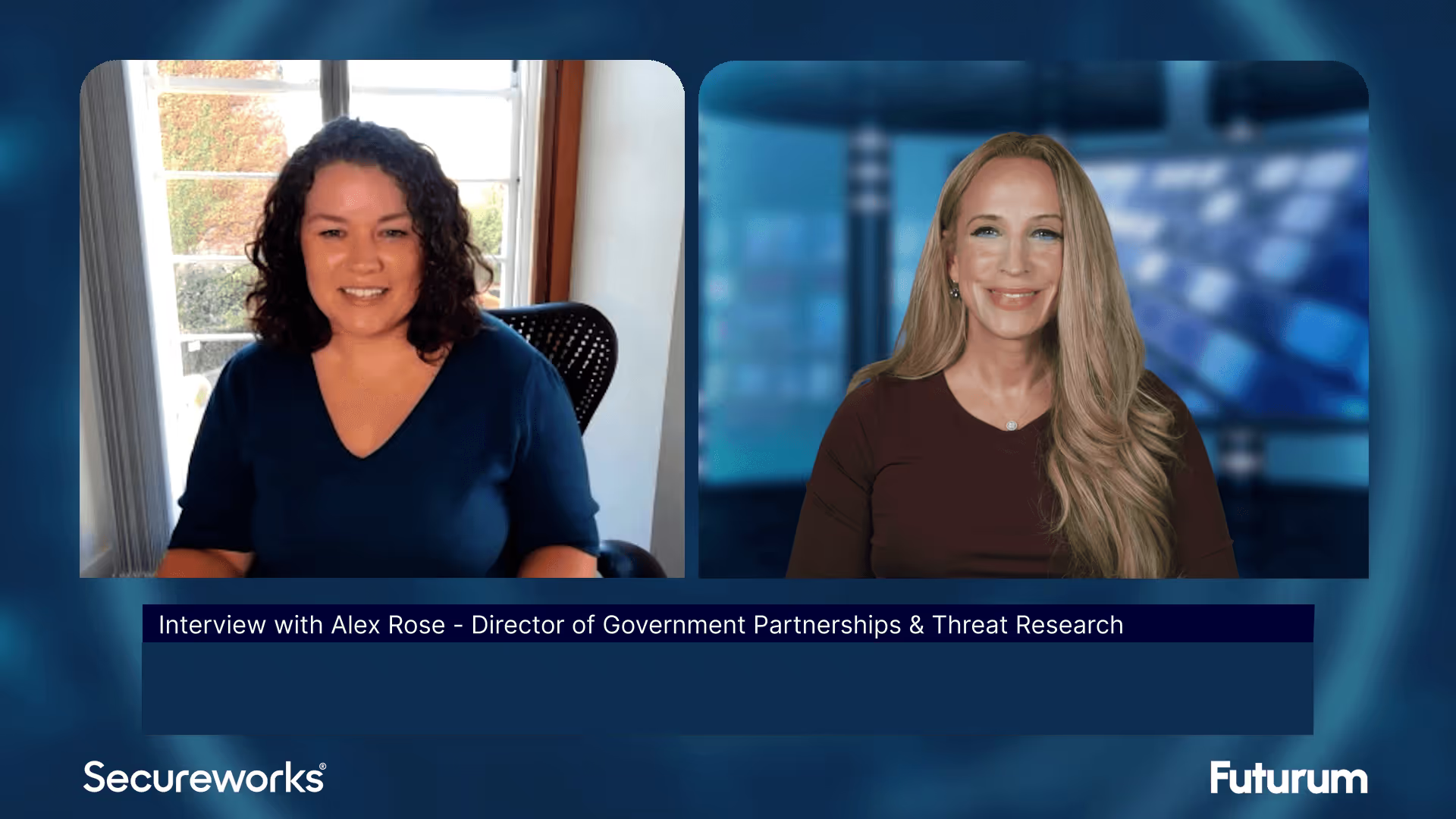
Threat Intelligence: Insights on Cybersecurity from Secureworks
Alex Rose from Secureworks joins Shira Rubinoff on the Cybersphere to share his insights on the critical role of threat intelligence in modern cybersecurity efforts, underscoring the importance of proactive, intelligence-driven defense mechanisms.

HP Launches World’s First Business PCs to Protect Against Quantum Hacks - The Six Five On the Road
On this episode of the Six Five - On the Road, hosts Patrick Moorhead and Daniel Newman are joined by HP's Ian Pratt, Global Head of Security for Personal Systems.
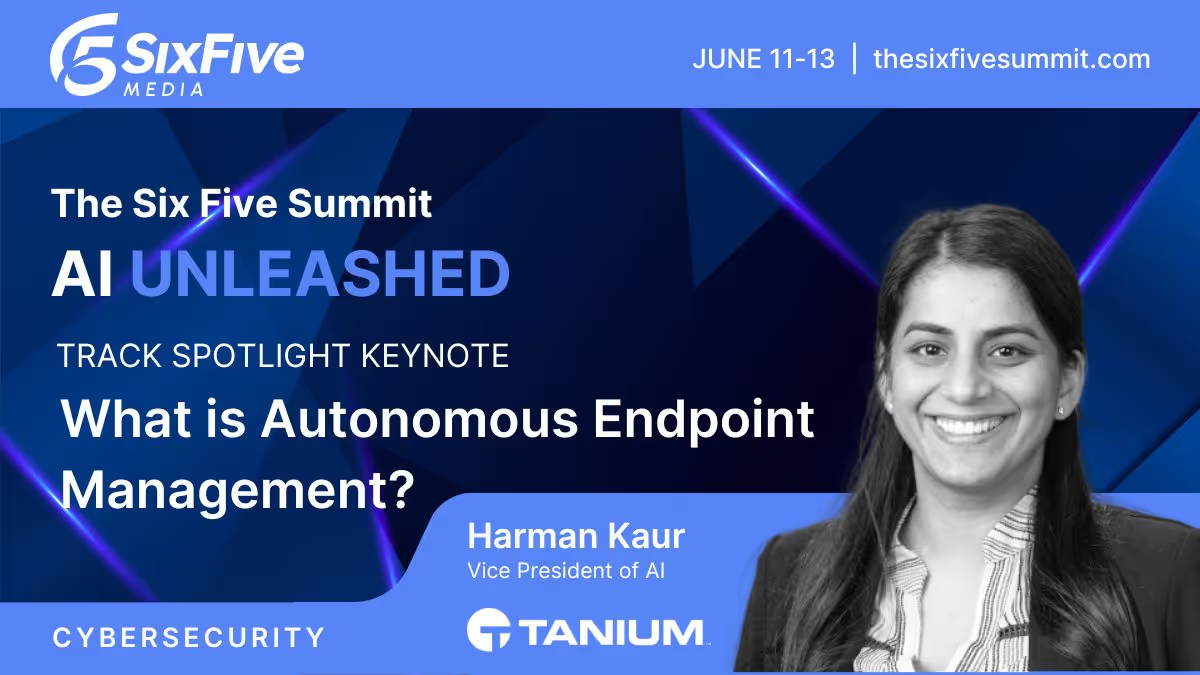
What is Autonomous Endpoint Management?
Autonomous Endpoint Management is a framework designed to unify IT operations and security teams on a single platform through real-time control and visibility.
QUANTUM
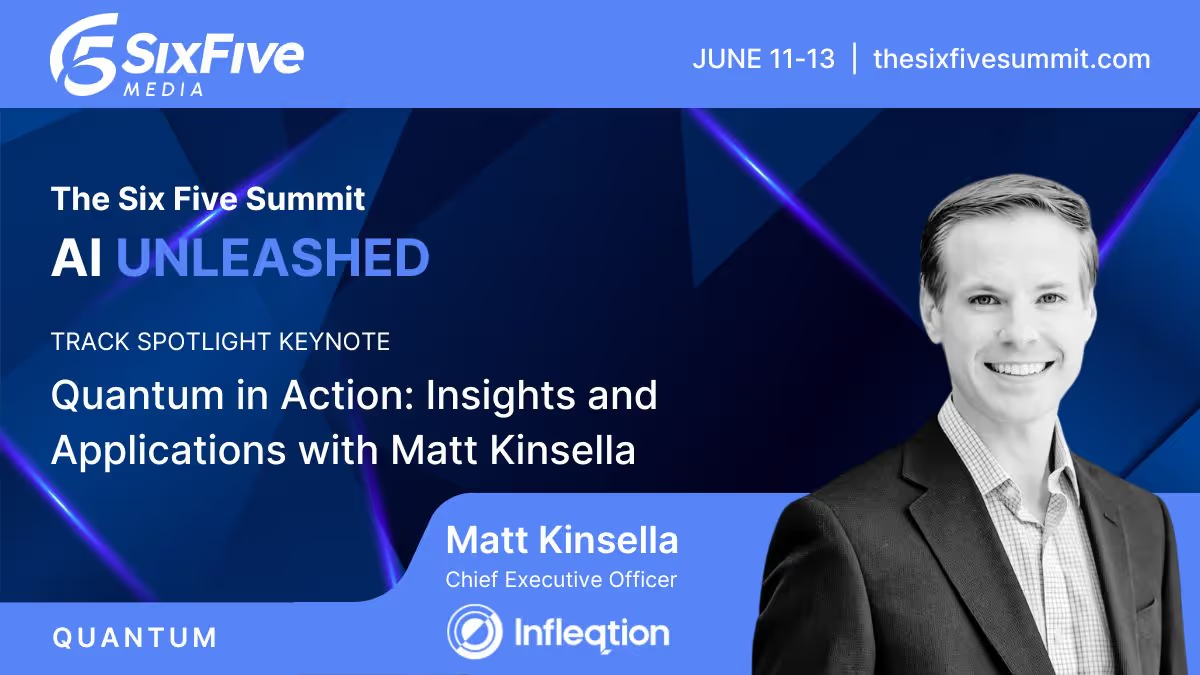
Quantum in Action: Insights and Applications with Matt Kinsella
Quantum is no longer a technology of the future; the quantum opportunity is here now. During this keynote conversation, Infleqtion CEO, Matt Kinsella will explore the latest quantum developments and how organizations can best leverage quantum to their advantage.
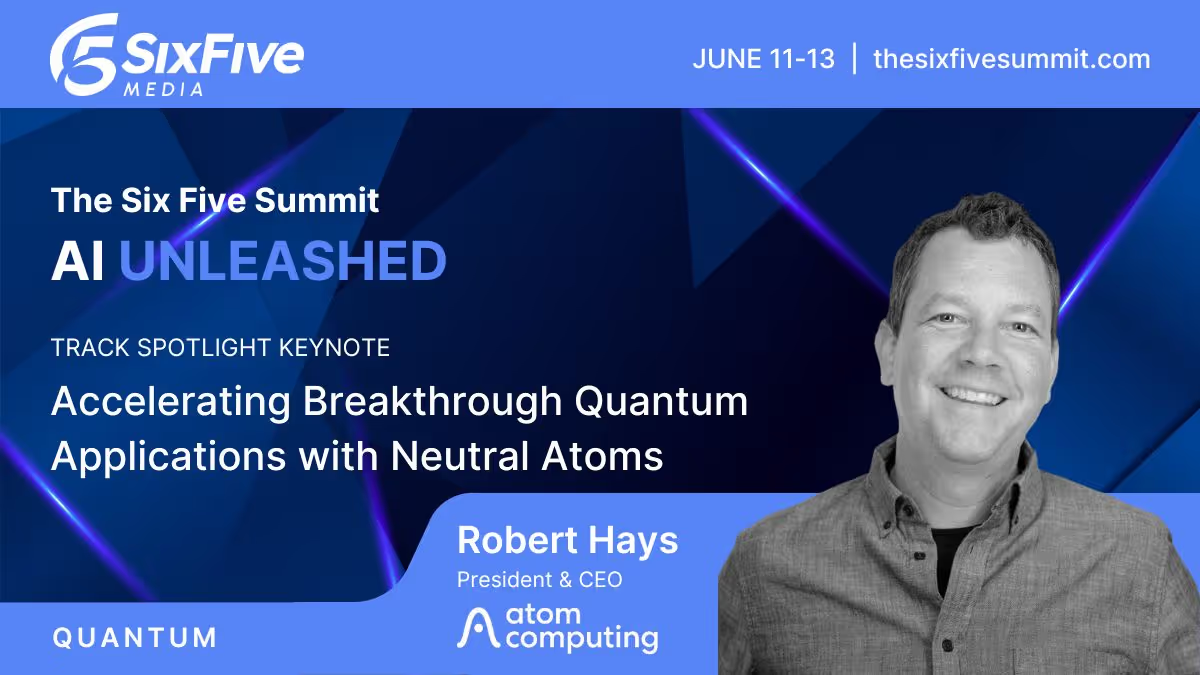
Accelerating Breakthrough Quantum Applications with Neutral Atoms
Our planet needs major breakthroughs for a more sustainable future and quantum computing promises to provide a path to new solutions in a variety of industry segments. This talk will explore what it takes for quantum computers to be able to solve these significant computational challenges, and will show that the timeline to addressing valuable applications may be sooner than previously thought.