Home

Unlock your Hybrid Cloud: HPE’s Software Strategy for Virtualization and Hybrid Cloud – Six Five In The Booth
Unlock your Hybrid Cloud: HPE’s Software Strategy for Virtualization and Hybrid Cloud – Six Five In The Booth
SHARE


Brad Parks, Chief Product / GTM Officer at HPE, joins David Nicholson to discuss HPE’s unified virtualization and hybrid cloud software strategy, Morpheus and CloudOps updates, and what’s next for VM Essentials and future integrations.
Enterprises want simpler operations, unified control, and flexibility across every environment. That pressure is reshaping both virtualization and hybrid cloud. What’s driving the transformation?
From HPE Discover 2025, host David Nicholson is joined by Hewlett Packard Enterprise’s Brad Parks, Chief Product / GTM Officer, for a conversation on HPE’s latest software innovations for virtualization and hybrid cloud environments. They highlight HPE’s unified platform approach, ongoing cloud operating model advancements, and key updates to the Morpheus and CloudOps portfolios—addressing the core focus of hybrid cloud and virtualization simplification.
Key Takeaways Include:
🔹Customer Focus on Hybrid Cloud: Enterprises are seeking simple, unified provisioning and observability across on-premise and public clouds for both VMs and containers to meet new workload demands.
🔹Strategic Investments in CloudOps: HPE has bolstered its hybrid cloud offerings through Morpheus and OpsRamp, forming a new CloudOps software organization to underpin its private cloud portfolio.
🔹Advancements in Virtualization: The momentum behind HPE VM Essentials—a year after launch—shows strong adoption in their portfolio, with notable integrations announced this week with Veeam and Juniper.
🔹Preparing for the Future of Cloud Operations: HPE is planning deeper integration across Morpheus, OpsRamp, and Zerto, with an increased emphasis on Kubernetes, AI workloads using GPUs, FinOps, and further alignment with HPE GreenLake.
Learn more at HPE.
Watch the full video at sixfivemedia.com, and be sure to subscribe to our YouTube channel so you never miss an episode.
Or listen to the audio here:
Disclaimer: Six Five In The Booth is for information and entertainment purposes only. Over the course of this webcast, we may talk about companies that are publicly traded, and we may even reference that fact and their equity share price, but please do not take anything that we say as a recommendation about what you should do with your investment dollars. We are not investment advisors, and we ask that you do not treat us as such.
David Nicholson:
Welcome to Six Five In The Booth here at HPE Discover Barcelona 2025. I'm Dave Nicholson, and I'm joined by a very special guest. Introduce yourself.
Brad Parks:
I am Brad Parks. As we were talking, I actually just recently rejoined HPE as part of the Morpheus data acquisition, where I manage product and go to market and wear a lot of hats as one does at a little company.
David Nicholson:
So what's your perspective, Brad, when it comes to all things going on in sort of the virtualization world, the hybrid cloud world? What's HPE's perspective on that?
Brad Parks:
I'll give you my perspective and a little of HP's perspective. It's been fun at Discover, this one and then back in June, we ended up with, I think a room of about 500 plus senior IT leaders in a packed house talking about virtualization. And my opening joke was how many people thought they'd be in a packed house talking about a problem we all thought we had solved a decade ago. And it's really a hot button issue, not because of technology, but because of economics. And so it's definitely come back around as something to solve. But really, it's almost more of a distraction for a lot of people because they want to get back to thinking about a hybrid cloud operating model and where they go on that journey.
David Nicholson:
How does that fit into the AI revolution? I've made this joke several times with my students in the AI program that I teach. If you're a CIO and your CEO walks up to you and says, what's our AI strategy? And you say, I'm going to do virtualization in a different way. Well, you get fired. So is this often part of an overall strategy conversation that's looking at infrastructure from a variety of ways, or are these conversations still driven from the virtualization conversation up?
Brad Parks:
I think there's two parts. I mean, back to money, you know, a lot of things come down to money. It's a math equation. I think there's very run rate virtualization conversations that are due to cost, right? Vendor landscape changes, your costs go up. It's hard to invest money in AI and other initiatives if your core infrastructure costs went up by 3 or 4x. So there's a very tactical problem: how do I find more money in my IT budget that is down in the virtualization layer? But kind of upstack. you know, digital transformation, whatever you want to call it, right, has been really a failed initiative for a lot of companies because they haven't gotten to that, what I call cloud operating model, right? The ability for IT to be an internal service provider, to fully automate and orchestrate how internal teams can provision workloads, take advantage of new technologies, that I think, is a precursor to being successful in AI, in next-gen applications. I think a lot of it gets back to, how do we think about workloads differently? How do we think about the role of IT differently? What is the tooling that helps IT get out of its own way so that the business can go back to focusing on what it does well?
David Nicholson:
You talk about a cloud operating model. That operating model doesn't depend upon what some people would call cloud native. Absolutely not. So it's an interesting idea because I think you'd agree that if, I don't know, if it's five years ago, seven years ago, 10 years ago, whatever it is, we may have looked into the future and underestimated the stickiness of good old-fashioned virtualization and the kinds of applications that are supported there. For sure.
Brad Parks:
Is that a fair statement? I mean, old technologies never die. They just pile up at the bottom of the escalator and there is going to be, you know, bare metal and virtualized workloads, you know, forever. Net new things are certainly going to find their way to new application formats but there are ways to help whether you call it legacy, traditional, or just things that work, work better, work faster. And so the cloud operating model to me is, yeah, it's about being able to deploy workloads faster in a much more efficient way with all the right guardrails. That transcends application format. It's really about, again, that operating model.
David Nicholson:
So the last traditional VM will be decommissioned the day after the last SAN is unplugged, which will happen the day after the last mainframe is turned off.
Brad Parks:
Probably shortly after the last tape drive, you know, it probably comes off of a shelf. So yeah, it's all here to stay.
David Nicholson:
So you're saying that from your perspective, that cloud operating model extends beyond what we would think of as traditional VMs into the Kubernetes space?
Brad Parks:
Yeah. I think one of the things we've certainly noticed is people are using this inflection point or forcing function of what do I do about my VMware contract, my virtualization costs, as really a way to rethink their application architecture and their landscape in general. And one of the things we've seen as a result is the world is getting more heterogeneous, not less. So you've got some stuff on VMs on VMware. You've got some stuff replatforming potentially to another hypervisor. In parallel, Are we accelerating or changing our relationship between VMs and containers? Then you've got on-prem and public cloud, so you've got more apps running on more formats in more places, yet kind of the incremental investment in resources and skills is disproportionate, which kind of comes back to, all right, how do I orchestrate, automate, and make that a seamless surface area without having the context switch between all of these different stacks? And that's really what Morpheus is all about, is helping to create that frictionless surface area for IT to kind of focus on workloads and not all of the underlying complexity.
David Nicholson:
So if you're a CIO or a CTO, you face a never-ending dilemma. And we talk about this in terms of ambidextrous management. With the left hand, you're running the business. With the right hand, you're changing the business. You're keeping the lights on, you're innovating. But you have finite budget to do this, finite time, infinite demands on you. Someone says, I want you to formulate an AI strategy. Well, where's that money going to come from? Are you in the business of optimizing infrastructure in a way that can free up capital for those novel projects? Do you see it that way? Is that a reasonable argument to make? when approaching this?
Brad Parks:
There's probably two sides of it. It's money and time, right? And where we fit as a platform technology is to solve for both, right? If we agree that you're not getting incremental time and money, but yet you're being asked to do more things, you've got to find both somewhere. So as a workload orchestration platform, we're going to help take time out of the equation. If I can empower my data analysts, my internal project teams to get resources on demand and avoid five different teams turning wrenches and taking two weeks to provision applications, well, that's going to give me time back. At the same measure, if we can use that infrastructure more effectively, keep people in guardrails from having to over-provision things, constantly right-size, find the right landing zone for the right workloads, that's gonna get down to money. So I think if we can, as a platform company, as HPE, help organizations be both more effective and more efficient, then I think we've won.
David Nicholson:
Give me some more detail on what you mean by VM essentials in this conversation. What's that all about?
Brad Parks:
For sure. So when HP did the acquisition of Morpheus Data, we had traditionally played in very large enterprises as well as service providers as that orchestration layer that would essentially turn VMware, Nutanix, Microsoft, other hypervisors, other Kubernetes clusters into a true private cloud. with self-service, with guardrails, with FinOps, all of that advanced functionality. But over the years, we always use technologies like KVM as just an internal sandbox for us to rough out concepts before we would apply those to those production commercial hypervisors. Well, obviously the economics in the virtualization landscape changed a couple of years ago. So we had a lot of big customers saying, hey, We know you guys have been in this KVM world for a long time. Can we use that as a production-ready landing zone for workloads? So over the last couple of years, we actually did a lot of investment in our KVM stack to add things like resource scheduling, live migration, snapshots, backup, high availability, affinity rules, all of the things you'd expect from a landing zone for virtualized workloads. with the acquisition by HPE, they saw that opportunity. So we took what was Morpheus and we essentially split it into two products in the family. Morpheus VM Essentials, think of it as baby Morpheus, will let you do VM vending and provisioning for both VMware workloads and our built-in KVM stack. So you can, over time, decide how you want to maximize where workloads live. So that's Morpheus VM Essentials. Morpheus Enterprise does a lot of upstock capabilities. So things like orchestration, policy management, thin ops. So kind of similar to where you might think of a VMware vSphere Enterprise versus VCF. One's a superset of the other. In our case, they're both part of the same software stack, just optimized for different use cases.
David Nicholson:
Is there a sweet spot in the market? Let's say someone is watching this right now and they have N number of virtual machines under management. And maybe they think that in a move, let's say that 5% or 10% of those might be retired or refactored or replatformed. Is there a number where it's like, if your neighbor said to you, I have 500 VMs, 5,000 VMs, 25,000 VMs, is there a sweet spot where you would immediately say, look, it's the classic, this is going to pay for itself. You really need to do this.
Brad Parks:
I think the inflection point for us is kind of sub that 500 measure. That's where the essentials kind of package really plays. That's where the costs have gone up. People are potentially being pushed into suites of software where that's a feature function they don't need. Essentials is right there. More than 500, you're starting into Morpheus Enterprise territory. That's where we see the gap between the aspirations of the business and the investments in IT have kind of gotten disproportionate. So you really need that advanced automation and orchestration. So yeah, kind of by scale of business, but honestly, I mean, I've never met any vendor that doesn't have an ROI calculator that shows 10,000, you know, we've all... Right, right. That trope. The time savings alone and just getting away from human middleware having to, the networking guy has to do their bit, and then the VM admin, and then the backup admin, and then the storage admin. If you can actually go from what I call a software to find a bold data center, where you have a lot of tools that all have APIs, but you still have humans doing a fair amount of the work. If you can take the humans out of the equation, it pays for itself extremely fast.
David Nicholson:
So Brad, you've been on both sides of the acquisition equation before. I know that you were involved in acquisitions of storage companies in the past. And then as part of Morpheus, you were acquired.
Brad Parks:
I think I'm getting my punishment for having been on the other side.
David Nicholson:
You get to be on the other side of the table. So I want to hear about that experience from your perspective. But the burning question is, you know, Has it gone over like a ton of bricks, like the proverbial lead balloon? Or has the integration... It's more lead zeppelin, it's really rock. Is it more lead zeppelin? Yes. More lead zeppelin than lead balloon, perfect. So tell me about that, what's your experience been?
Brad Parks:
You know, acquisitions a lot of times look good on paper, like that's going to cover a part of the landscape, but oftentimes it's hard to do the technical work. I think one of the advantages we've had here is we were actually co-engineering with HPE for the last five years, pre-acquisition. And as a platform framework, it's been really exciting to see how quickly we've kind of threaded this Morpheus technology throughout HPE's portfolio. A couple of good examples. Not only did we launch the Essentials flavor of Morpheus, that is now the standard control plane inside HPE's engineered private cloud systems, like Private Cloud Business Edition, Private Cloud AI. So that's one good proof point. One of the others actually on the flip side, Juniper, right? We just recently closed that. At this show this week, we've already announced the integration of their software-defined networking technology inside our KVM stack. So just like you have NSX inside the VMware stack, we now have a Juniper-powered SDN inside our KVM stack. So the integration points just in the first nine months have been phenomenal, so very exciting.
David Nicholson:
So I want to make sure I heard that right. There was kind of co-development work working hand in hand between Morpheus and HPE long before the acquisition took place. So this was not one of those acquisitions that we have seen many times that was in response to Wall Street raising an objection. Well, we better go out and find someone to buy.
Brad Parks:
They've been on this journey, actually. So Hank Tan, who I've known for a while on the COO side at HPE, we were talking a couple of years ago that a lot of the large OEM hardware providers and systems integrators were already using Morpheus to help stand up private and hybrid cloud businesses. Those same providers were also using OpsRamp actually as a observability platform. This was before HPE had acquired either Morpheus or OpsRamp. So the fact that we're now under the same tent with the same engineering team, all as part of HPE was definitely not accidental. There's been a a few-year journey with some very strategic investments, and now we're rapidly seeing the fruition of that in things like the CloudOps suite, and as I mentioned, some of these integrations of things like Juniper.
David Nicholson:
So final question for you. What's the sort of state of the landscape when it comes to what people are actually doing in a hybrid fashion. We used to talk about, you know, at the dawn of the age of hybrid cloud, we talked about, well, it's the last day of the month, spin up VMs, rent the space, pull it back, move it, cloud bursting, all of these ideas. And then we realized that data had a certain gravity associated with it. as a practical matter, what are people really doing? Because going back to that, the change that's happened in the marketplace, one of the interesting things about that hybrid cloud story was how much it was tied to embracing a certain networking technology that most people, frankly, never adopted. So where are we with that? When you say hybrid cloud, what's really being used?
Brad Parks:
Being in this hybrid landscape, you're right. People want to have dreams about moving workloads around to shave dollars off of their cloud spend or what they're doing on-prem. But just like there's data gravity, there's application gravity. Teams have an affinity for a certain tool stack or a certain landing zone. The analogy I use often is leaves, Trees and forests, right? There are certain projects, applications that live in a certain stack for a good reason, whether that's access to services, skills within an application team. But if I look at a large enterprise, you end up with a VMware-based hypervisor stack, an OpenShift-based Kubernetes stack. We just did an M&A, and that team really loves GCP or AWS. Hybrid cloud's an inevitability more than a strategy for most large enterprises. And the more you can start thinking about some things horizontally, like provisioning, like governance, like financial accountability, these should not be stack dependent. So managing those in a way that lets individual application teams, where that data sits, continue to play in their world, but You're not having added overhead for everything being duplicated across all of those stacks. So we see that more as a business outcome versus moving whole workloads around simply for some presumed cost efficiency. That's less relevant in a real hybrid cloud. But it's thinking horizontally about more activities and making the underlying runtime irrelevant, making the underlying networking stack less relevant. I should be able to, as an enterprise, change my hypervisor decision or change my automation tool decision without having to do 12 months of engineering effort. It should become a non-event.
David Nicholson:
Yeah, no, it makes perfect sense. Brad Parks, HPE, absolute pleasure. I have to say, sometimes A very simple statement, something that sounds simple, can only exist because of the deep expertise that exists in the person who says it. I absolutely love this idea that hybrid cloud is an inevitability and not a strategy. I will attribute that to Brad Park. I will attribute it. I will give you attribution. That's absolutely brilliant because it encapsulates a lot of truth. For 6.5 On The Road, I'm Dave Nicholson. Thanks for joining us here at HPE Discover Barcelona 2025. Stay tuned for more content.
MORE VIDEOS
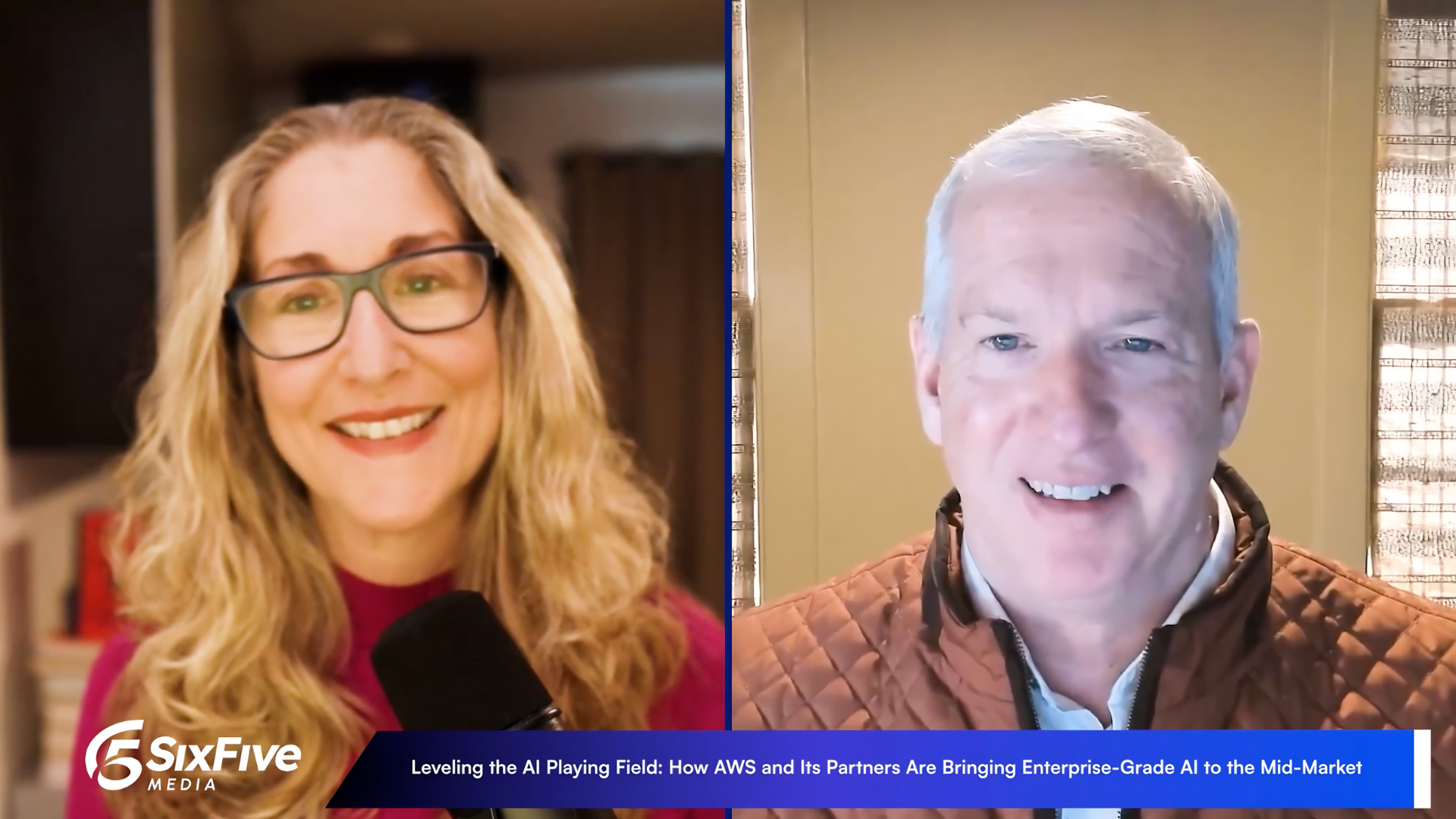
How the Mid-Market Gets Enterprise AI Without a 300-Person IT Org
On this Six Five Virtual Webcast, AWS’s Chris Sullivan explains how partners and AWS Marketplace are helping mid-market companies move agentic AI from proof of concept to production without enterprise-sized IT teams. Starting with a real business problem and the right partner gives these organizations a faster path to measurable results.


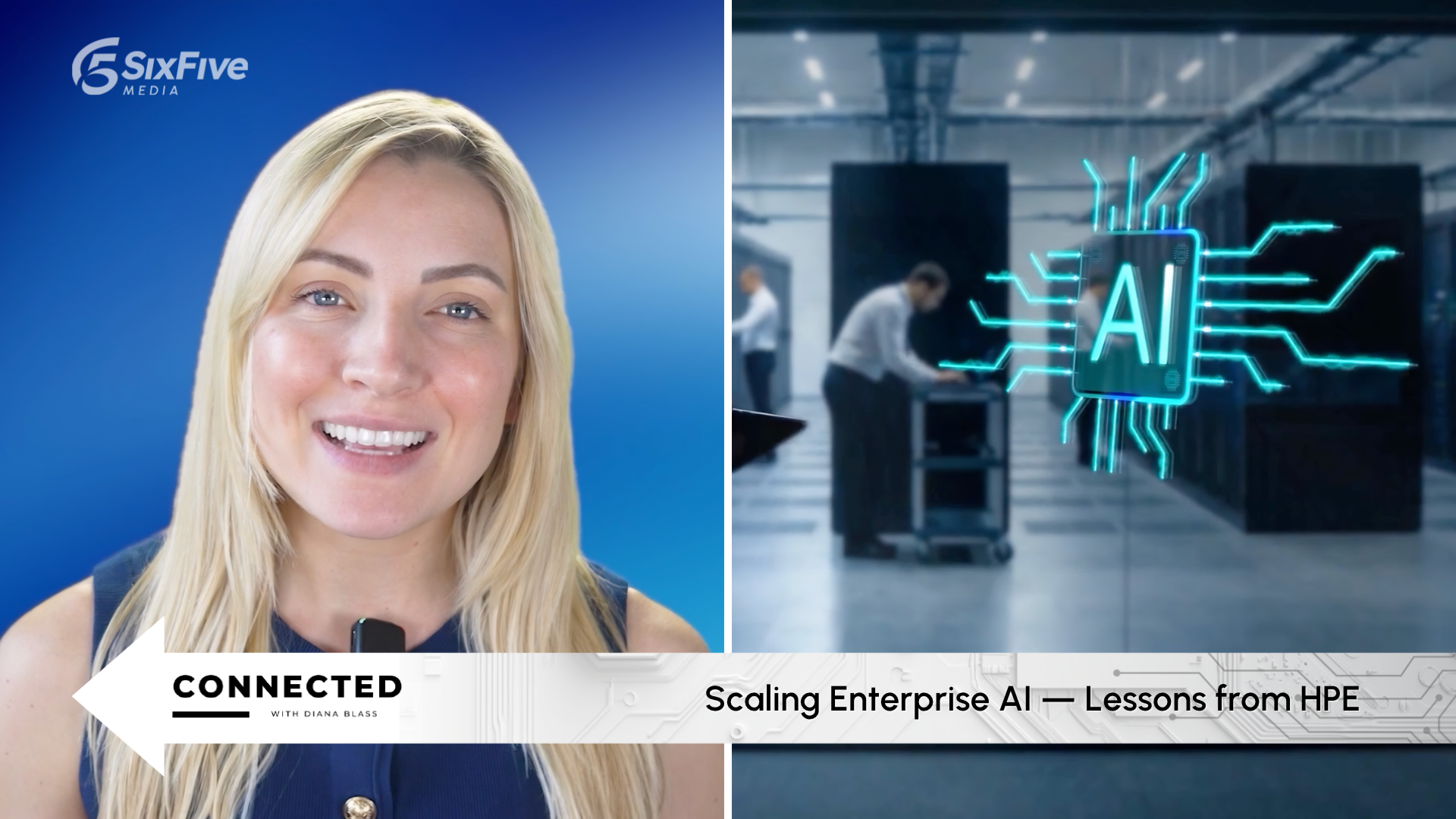
Scaling Enterprise AI, Lessons from HPE - Six Five Connected with Diana Blass
On Six Five Connected, Diana Blass explores how HPE is scaling AI across its own business and what agentic AI demands from compute, memory, edge, and networking infrastructure. Enterprises that design infrastructure around their most valuable use cases can turn AI adoption into measurable savings.
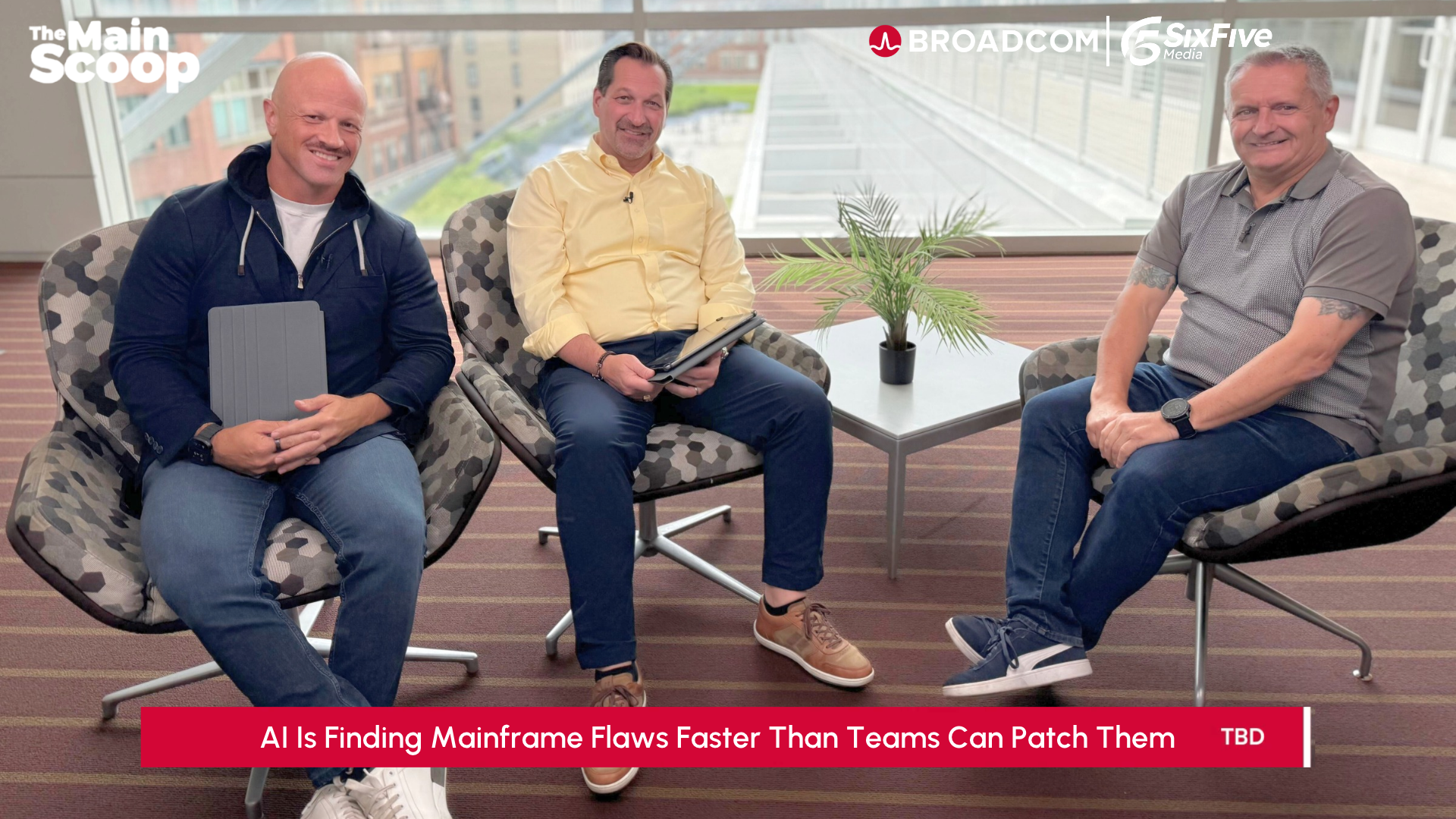
Outpacing Threat Actors: Mainframe Security in the Age of AI and Quantum
On The Main Scoop, Vertali's Mark Wilson explains why AI-driven vulnerability discovery and looming post-quantum deadlines are forcing mainframe teams to rebuild their maintenance cycles. Teams that combine AI-assisted vigilance with security fundamentals and early cryptographic inventories will stay ahead of threat actors.
Other Categories
CYBERSECURITY
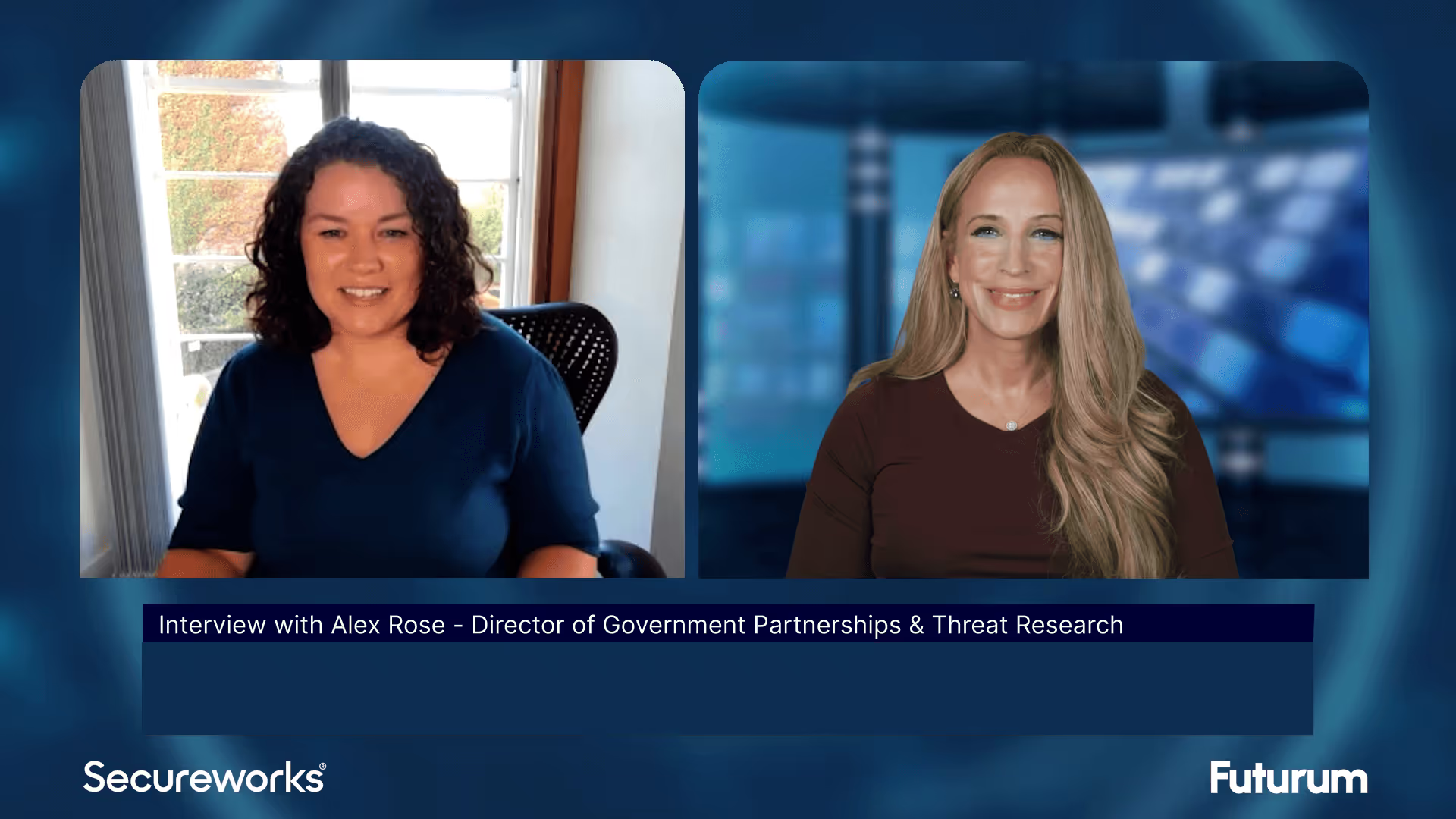
Threat Intelligence: Insights on Cybersecurity from Secureworks
Alex Rose from Secureworks joins Shira Rubinoff on the Cybersphere to share his insights on the critical role of threat intelligence in modern cybersecurity efforts, underscoring the importance of proactive, intelligence-driven defense mechanisms.

HP Launches World’s First Business PCs to Protect Against Quantum Hacks - The Six Five On the Road
On this episode of the Six Five - On the Road, hosts Patrick Moorhead and Daniel Newman are joined by HP's Ian Pratt, Global Head of Security for Personal Systems.
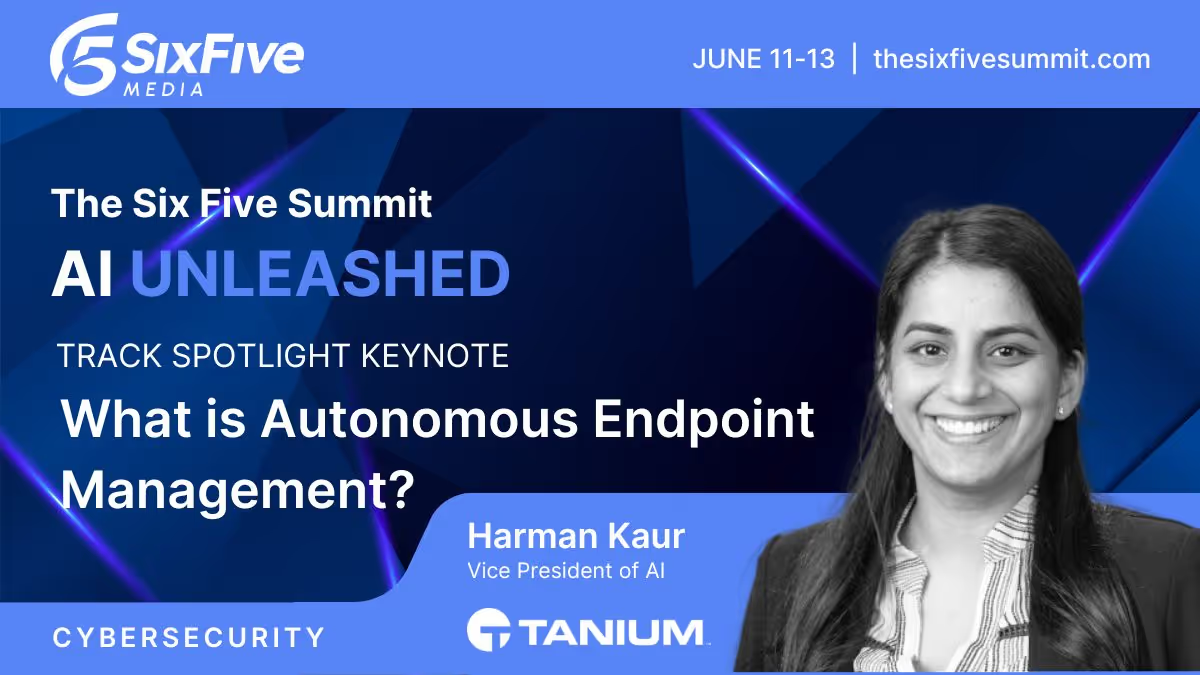
What is Autonomous Endpoint Management?
Autonomous Endpoint Management is a framework designed to unify IT operations and security teams on a single platform through real-time control and visibility.
QUANTUM
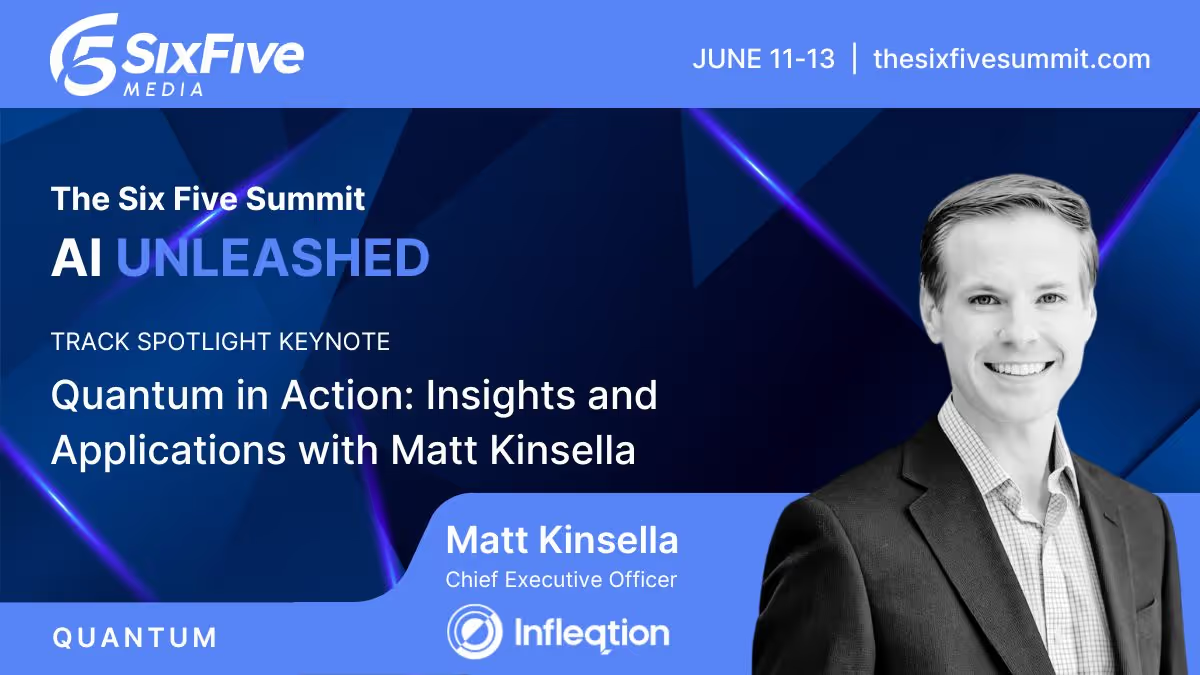
Quantum in Action: Insights and Applications with Matt Kinsella
Quantum is no longer a technology of the future; the quantum opportunity is here now. During this keynote conversation, Infleqtion CEO, Matt Kinsella will explore the latest quantum developments and how organizations can best leverage quantum to their advantage.
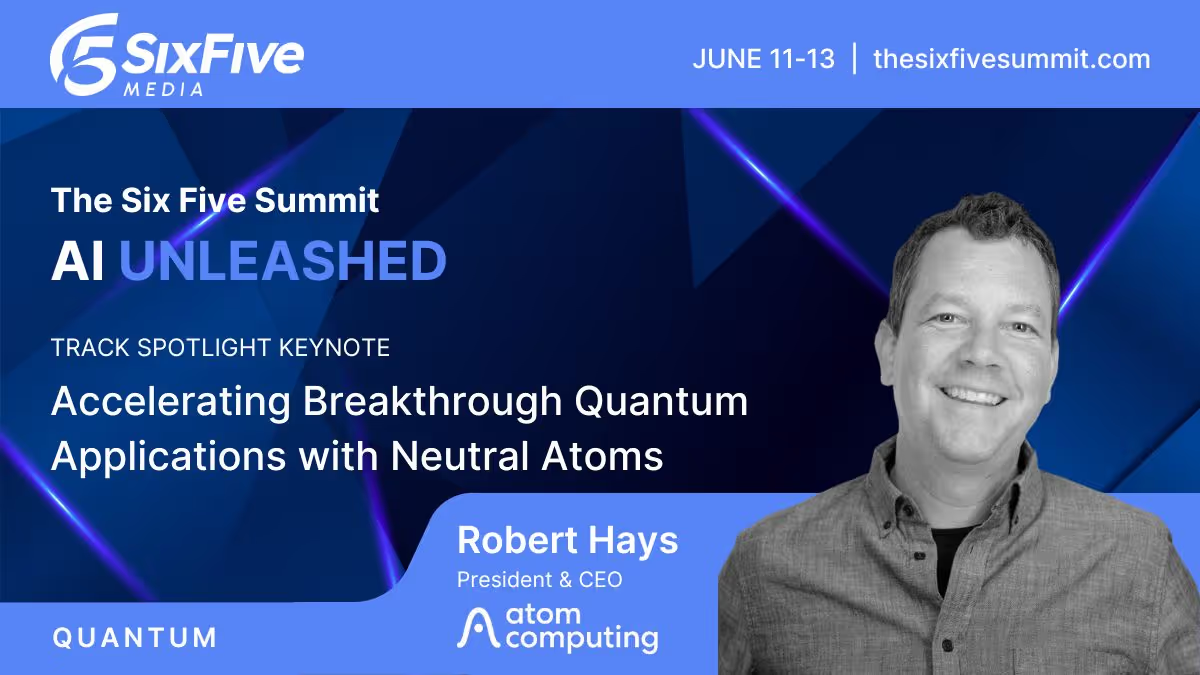
Accelerating Breakthrough Quantum Applications with Neutral Atoms
Our planet needs major breakthroughs for a more sustainable future and quantum computing promises to provide a path to new solutions in a variety of industry segments. This talk will explore what it takes for quantum computers to be able to solve these significant computational challenges, and will show that the timeline to addressing valuable applications may be sooner than previously thought.