
Where HPC Meets Scale: How HPE and AMD Are Powering the Next Era of AI – Six Five On The Road
SHARE


Trish Damkroger of HPE and Safy Fishov of AMD join David Nicholson and Ryan Shrout to share insights into how the HPE–AMD partnership is driving HPC-class AI innovation via new platforms, sovereign AI initiatives, and rapid time-to-value for organizations.
How are HPC-class engineering, strategic partnerships, and next-generation hardware redefining the pace of enterprise and national AI infrastructure?
From HPE Discover Barcelona 2025, hosts David Nicholson and Ryan Shrout are joined by Hewlett Packard Enterprise's Trish Damkroger, Senior Vice President and General Manager of HPC & AI, and AMD's Safy Fishov, CVP Sales, for a deep dive into scaling AI with HPC-grade capabilities. The conversation explores the HPE Cray XD685 platform, the momentum behind the HPE–AMD partnership, and how both companies are driving breakthroughs in performance, efficiency, and sovereign AI. Together, they map out the evolving intersection of high-performance computing and the operational demands of enterprise and national AI deployments worldwide.
Key Takeaways Include:
🔹HPC-Class Engineering Accelerates AI: How HPE and AMD’s combined engineering has enabled leading systems in the Top500 ranking of non-distributed computer systems, optimized for enterprise AI and large-scale training workloads.
🔹AMD Architecture Drives Next-Gen AI: Architectural advances from AMD are enabling robust support for LLM training, hybrid HPC+AI workloads, and highly efficient, scalable AI systems.
🔹Supporting Sovereign and National AI: HPE’s selection for U.S. national AI infrastructure and European sovereign AI signals a commitment to agility and security in next-generation data environments.
🔹The Cray XD685 Platform in Action: This new platform, co-developed with HPE and AMD, is helping enterprise customers build and scale mission-driven AI faster, with tailored solutions for their most demanding needs.
🔹Accelerating Time-to-Value: Both companies emphasize seamless deployment, pre-integrated systems, and ongoing support to help organizations realize rapid ROI from AI investments.
Learn more at HPE.
Watch the full video at sixfivemedia.com, and be sure to subscribe to our YouTube channel, so you never miss an episode.
Or listen to the audio here:
Disclaimer:Six Five On The Road is for information and entertainment purposes only. Over the course of this webcast, we may talk about companies that are publicly traded, and we may even reference that fact and their equity share price, but please do not take anything that we say as a recommendation about what you should do with your investment dollars. We are not investment advisors, and we ask that you do not treat us as such.
David Nicholson:
Welcome back to HPE Discover Barcelona 2025. I'm here with my sidekick, Ryan Shrout. Not sure what he does, but he's my sidekick. Good to see you, Ryan. Thanks for having me, I guess, yeah. But the really interesting folks at the table are not Ryan, nor me. We have Trish Damkroger from HPE and Safi Fishaf from AMD. Welcome, both of you. Thank you. Good to see you. Great to be here. Trish, you've done a lot of cool stuff with AMD.: But one of the big ones is the number one leader in high-performance computing, El Capitan, and all sorts of other stuff. But talk about how you're leveraging those things that you've engineered together to scale AI into the future.
Trish Damkroger: Yeah, so I mean not only number one, we also have number two together with Frontier at Oak Ridge National Lab and I mean that partnership has been for years that we've been working together and it just continues to grow with some of our announcements being made. this week at Discover. Can I talk about that?
David Nicholson: You sure can.
Trish Damkroger: Okay, so we announced Helios together so we're going to be one of the first suppliers of Helios and it's exciting because we're also bringing in our Juniper as in our scale-up switch as part of the Helios infrastructure.
Trish Damkroger: With Broadcom. So it's a great partnership and this is just one of the things as we go towards liquid cooling, dense racks, you know, doing big important things.
David Nicholson: Yeah, it's an impressive system up right at the front of the show floor. We got to take a look at it.
Ryan Shrout: It's been the highlight of, I've seen a lot of people taking photos with that platform.
Trish Damkroger: Yes, it is pretty impressive. It is, it is.
Ryan Shrout: Safy, I'm curious from an AMD perspective, as you look at what currently exists in the market, what you've announced here and you're talking about, what are these innovations and technologies that AMD is bringing to the table that is really helping drive this success in the top 500 list, these successes going forward and these new sovereign deployments? What's the AMD vision for this?
Safy Fishov: Yeah, I mean, first of all, Thank you, Trish, and to HPE for being our longtime partner. In HPC and compute and AI, just generally, the partnership, as you said, it's been going on for a long time, and the results speak for themselves. Number one, number two, and something like six of the top 10. The further you go, the more machines you find of AMD and HPE partnering together. But our vision, really, I mean, Trish mentioned Helios, which is AMD's rack-scale reference design. the first one built on fully open standards. And our belief is that having an open ecosystem is better for the community, and it's better for customers, and it's better for the industry overall. And as Trish said yesterday, Rami on stage here announced that HPE is going to be building the world's first scale-up Ethernet switch built fully on open standards. is going to be HPE's hardware and software. And so this ecosystem we're building, which I'm sure we'll get to Lux in a second, is just expanding. Broadcom's Tomahawk 6 is in it. HPE will be bringing the scale-up switch, and they'll be part of the reference design on the compute side as well. And OCI at Lux has been announced as our partner. So more people are contributing. So our vision, I think if I could summarize it, is that all of us are smarter than any one of us. in this space.
Ryan Shrout: Do you feel like the openness of this partnership that you have and the designs that A&E goes with as well lead to more acceptance and these sovereign government integrations? Is that an important piece for them too?
Safy Fishov: It's a good question, and Sovereign, in all the meetings I've been in here, has continued to come up. We had a session this morning on defense and security and some other topics. And when you have an open standard, it means that the people that are using the data, if you talk about security, you have data in motion with networking security. You have data at rest that needs to be encrypted. And now, there's also data in use. And that was a place, there was, let's say, not as much openness. And as a result, you could imagine it was not as comfortable for certain entities or organizations on the sovereign side to go with these closed ecosystems. So now contrast that with being able to open that up and saying, hey, we're going to bring those folks who want to build a sovereign system into the conversation. Hey, contribute your security piece to this. Let's make you feel comfortable. We believe together with HPE that that's going to accelerate the adoption of these machines even more quickly from a sovereign perspective.
David Nicholson: So big news over the last couple of weeks. It was in the form of an executive order in the US. It was revealed that we're undertaking sort of the next Manhattan Project, if you will, the Genesis mission. And we've recently learned that HPE and AMD are going to be part of building out some of these systems in our national labs. And not just in the US, but we're talking about sovereign systems in Europe. It's a big deal. The first question I have for you, Trish, is who's the person who thinks it's a good idea to let you near a national lab? They're going to steal you away. They're going to take you back.
Safy Fishov: I think they've tried that already.
David Nicholson: They're going to steal you away.
Trish Damkroger: No, I'm having too much fun. I'm not going to go back.
David Nicholson: But tell us about what's going on there in terms of what you can share about the role that AMD and HPE are playing in this kind of mission to the future for AI.
Trish Damkroger: Yeah, so I mean, there were two systems announced at Washington, D.C. One was the Discovery system at Oak Ridge, which is that follow-on to Frontier. So this is more in our traditional space. It's going to do HPC and AI. The convergence of HPC and AI has happened. And, you know, that's just part of what we do every day, our bread and butter. But the other really interesting thing was the Lux system, which is a public-private partnership that AMD, I mean, I have to give Lisa Su and AMD a lot of credit for really driving. They've asked us to provide the infrastructure for the Lux system to OCI. So it's a, it's, as you say, it's broadening our partners as we're delivering to the nation what is needed, this critical AI infrastructure.
Ryan Shrout: Beyond just these supercomputer announcements, which I think are super exciting, no pun intended, right? They're really cool. And our kind of massive, you also announced this week the XD685, I believe, right? So it's a platform for these large scale kinds of AI training, HPC type workloads. I'm curious if you could talk about that platform, what kind of markets does it address? How is it different or similar to what we've talked about with Lux and other platforms?
Trish Damkroger: So, I mean, so Lux is based on the XD685, so it is going to be part of that with the MI355X. And I'll let you talk about all your amazing technology, but it's got the AMD CPU and GPU that's going to be delivered. And that's an eight-way system, you know, versus these rack scales, this is your more typical put into your 19-inch rack with the different systems. liquid cooled, you got to do the liquid cooling because you're going to want these systems. I mean, you've only got so much space and so much power. So it's got that. So yes, we announced, we released the XD-685 at the beginning of this year, and we will continue to deliver it. I mean, it also has the MI-300X in there. Yes, so both airday and liquid pool. So it's just a continual innovation along that way. So about the eight way to the rack scale with Helios.
Ryan Shrout: I mean, anything in terms of those technologies that are in that platform? I mean, I'm very curious, again, outside of this kind of massive, large-scale deployments, how a platform like this, as an eight-way solution, is useful for moderate-sized enterprises, I guess I would say, and allows them to scale as well.
Safy Fishov: Just to build on what Trish said, I mean, I completely agree. By taking a step back, I think the Lux machine is an example of this public-private partnership that you touched on. I mean, a lot of the larger supercomputers take many years to deploy. Yeah, that's right. And Lux really just came as an idea relatively recently and was announced and will be deployed very quickly. So I think it's a great example of how a public-private partnership can end up accelerating things like deployment times and then times for being able to access these machines and Lux in particular will be partly open and partly closed, partly for government use, partly for scientific use. So it's in some ways a hybrid machine, but it's a nice bridge for those moderate sized organizations who are trying to figure out what they want to do from an AI perspective. What we've seen is the largest companies have so far been the fastest. to adopt a lot of AI technology. But the smaller ones are still trying to figure it out. I think there was an announcement a couple of days ago, maybe it was a couple of weeks ago, 90 to 95% of AI POCs fail to meet their initial objectives. which is great. To me, that's good news because it means folks are trying stuff out, they're failing fast, and they're continuing to move forward. So the learning is accelerated, and these types of POCs are the things that can be run on Lux, on the XT685, because it is the most advanced technology now. It's got the latest AMD GPUs, it's got the latest AMD Arturn CPUs, it's got the latest AMD networking technology on Pensando. So now, because it's a public-private partnership, a lot of these entities you talked about, these mid-sized companies, are going to have access to it. And once those POCs get traction and start taking off, because I do believe we're kind of early in the AI revolution, let's call it, once folks have a better feeling for what they want to do, they can go out and buy any number of XD685s or other platforms from HPE to help their business achieve their objectives, which is really what this is all about.
David Nicholson: I love your perspective on that MIT study that you're referencing.
Trish Damkroger: I was going to say, it's an MIT study, but we have some other studies. Wharton just came out with a new study that isn't as dim.
David Nicholson: Yes, yes. Thank you. I'm going to Venmo you for the Wharton comment there. Exactly. Things look a lot rosier, but your assessment of that is very optimistic. The Wharton survey showing people coming out of the fear of missing out phase to the actual implementation and execution phase, kind of inadvertently, this public-private partnership has shown the world how HPE and AMD together can accelerate time to value. Yeah, which is what people are.
Trish Damkroger: That's the most important thing.
David Nicholson: So you're building sort of pre-packaged systems that you know work. That's one thing that you're doing for the time to value questions. But what are some of the other things that HPE does to help people in that execution phase that we all see is happening going into 2026?
Trish Damkroger: Right, I mean, some of the important things are bringing in deployment and our services. So we are, we've been doing this for 50 years. In fact, Cray is 50 years old. And so being able to set up these large systems quickly, you know, so we're deploying, installing, and then servicing them, keeping them up, because you need to keep them up to run the models, right? And so I think HPE is well known as a leader in this space. Because we've had so much experience doing that, but then we also have a software stack that we work on to make sure that it's a curated stack. You can work in data management is also one of the key things in getting your AI pilots to work. mature data, so it's not garbage in, garbage out for your model. It's the infrastructure and that's where we work together to make sure that. And then we find the third thing that's really important to be successful in AI is a clear strategy. Some of the things you say 95% didn't work or whatever the number is, a lot of times when you ask them what success looks like, they kind of give you that deer in the headlights. Like, oh, well I was supposed to be an AI pilot. So it's just getting a little bit more mature on that whole AI process and the steps that it takes.
David Nicholson: So Safy, how should people think about AMD's role in this? Complete reductionism would be like, AMD, okay, here it is, here it is, I need eight of them. That's not a complete thing in and of itself. So how do you see AMD's role in that? decreasing time to value?
Safy Fishov: I mean, so part of it is figuring out the right partners, because as this technology continues to grow, more people will be able to bring more things to customers to accelerate time to value. We have to look at the ISVs we're working with. We have to look at the hardware partners like HPE that we're working with, things like government entities. You know, we're a founding member of the Ultra Ethernet Consortium. of UALink, all these sorts of things that bring in the sharpest minds in the industry. We have Broadcom in there and many others. So in terms of time to value, I mean, imagine the number of companies that are now engaged in solving this problem has just grown exponentially. So as the silicon provider, you know, our role is to build out the hardware and provide things like reference designs like Helios that we're doing to make sure that the best people can come in and do what they do best on what we do best.
Ryan Shrout: I also give AMD a lot of credit for accelerating its software development cadence with things like Rockom that drastically improved time to market, time to value, even in our own testing, right, that we've seen internally.
Safy Fishov: Yeah, I think you're right. I mean, historically, you know, that's an area that we've needed to improve, and we've doubled down. We've made quite a few acquisitions in that space, and that's also helped accelerate our cadence on that. So, yeah, thank you for recognizing that, and we're proud of the progress that we've made so far. I had a question for you, Trish. I had heard that HPE is like the third largest data center services company in the world.
Trish Damkroger: Is that right? Yes, we are.
Safy Fishov: I did not know that. So I didn't realize that was such a huge part of your business.
Trish Damkroger: It is a big part. It has been part of the business for decades. I think like 15 years. So maybe not decades, but longer than a decade. And yes, they came out with the AI Mod Pod as the marketing term, which makes me think of the 70s. I'm kind of wearing that genre. So maybe I'm living the part.
David Nicholson: Did you think they just dropped crates off at loading docks?
Safy Fishov: Well, there's a lot of hardware suppliers in the data center business, and there's a lot of service providers. But I think when people think of HPE, mostly they think of hardware. They do. That's right. They don't think of HPE being a data center services company, but they're huge.
Trish Damkroger: Well, I mean, we want to do the full system, right? Yeah. And again, it's that time to science, time to value. So deploying, I don't know if, even in Antonio's keynote, he talked about UK Bristol. And so if you look, if you talk to Simon MacDosh Smith, who was responsible for that project, he said, I could have it up and running from like a parking lot to a full system producing science in a year. Where if I, and it was a third of the cost. If I waited, it would have taken me more like three years and I would have spent a lot more.
David Nicholson: Well, the race is on. These are very, very exciting times. I think it's amazing to see this Genesis mission thing sort of come across my iPad, if you will, and then be able to sit down less than two weeks later and talk to two people who are actually involved in getting these things up and running. The global race is absolutely on. The sovereign AI environment's popping up. It's a great time to, excuse me, I'm choking up. It's a great time. It's a great time to be in this business. It's an emotional topic. It is very emotional. It is very emotional. Safi Fishov, AMD, thank you so much. And Trish, always great to see you. Trish Stamkroger from HPE and from HPE Discover 2025 with my sidekick, Ryan Shrout. I'm Dave Nicholson for Six Five On The Road. Thanks for tuning in and stay tuned for more exciting content.
MORE VIDEOS
.png)
Anthropic’s AI Slowdown, OpenAI’s $1.2T Valuation & Salesforce’s AI Bet
Anthropic's "Pace the Frontier" essay set off a week in which nearly every major AI leader, and two heads of state, weighed in on whether the frontier should slow down. Patrick Moorhead and Daniel Newman read the incident as something larger than a safety debate. Whoever sets the pace of the frontier also sets the pace for open-weight models, enterprise custom models, and the trillion-dollar valuations riding on top of them. That contest, not the essay itself, is the through-line of Episode 320 of The Six Five Pod.


WD's Tim Rausch: AI Storage Demand Compounds With Every GPU Cycle
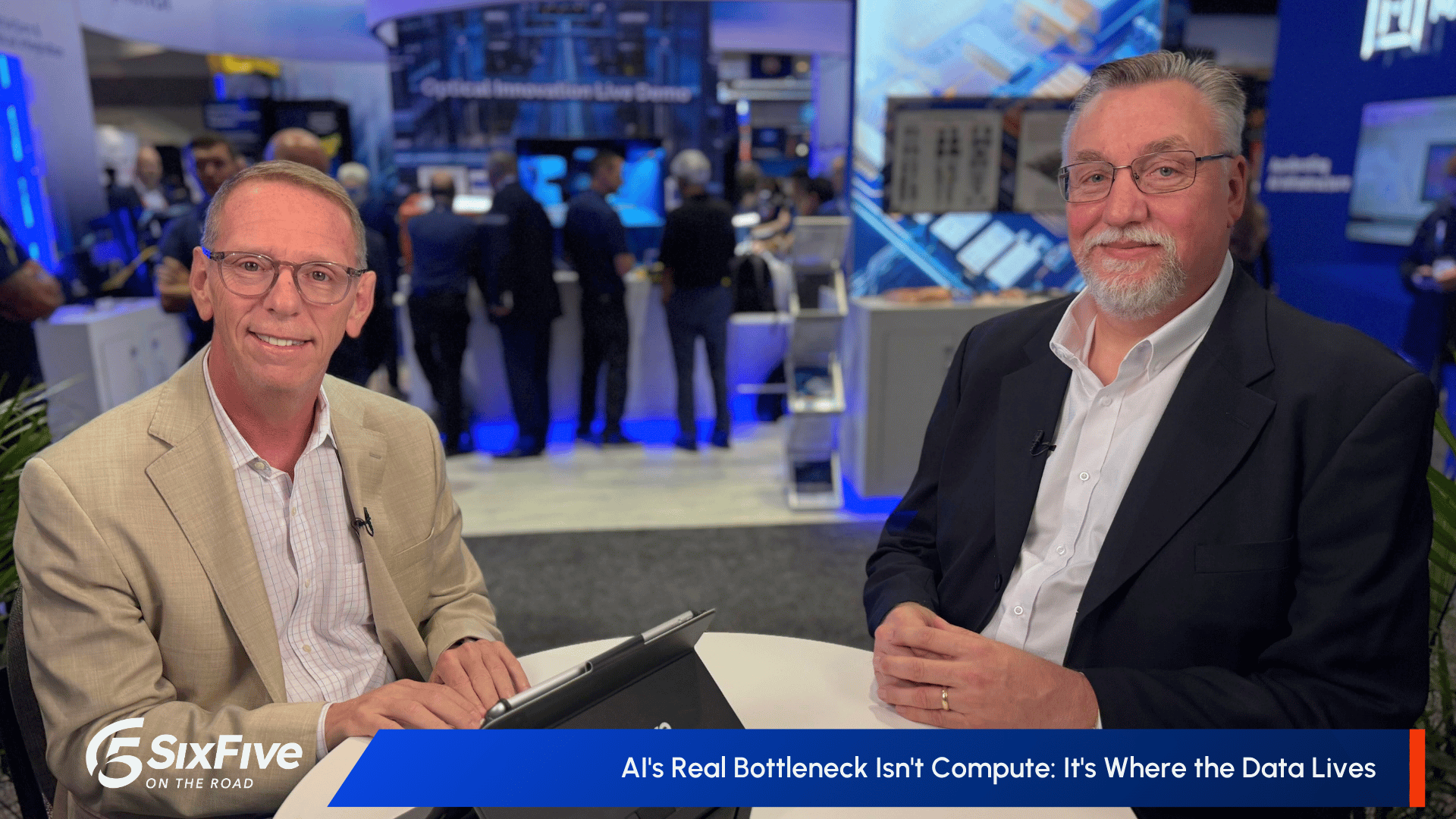
Western Digital's Tim Rausch argues that AI's compounding data growth, more than GPU capacity, sets the real ceiling on infrastructure scaling. He joins Matt Kimball at AI InfraSummit 2026 to walk through how total cost of ownership, archived data reuse, and WD's capacity roadmap are reshaping enterprise plans to scale AI over the next several years.
.png)
The Main Scoop Ep. 45: Attackers Only Need to Be Right Once. AI Just Made That Easier.
Chad Rikansrud, R&D Software Security Engineer at Broadcom, explains how frontier AI models are finding decades-old mainframe vulnerabilities in seconds, collapsing the complexity advantage that once protected legacy platforms. He outlines why enterprises need faster Security Intelligence (SECINT) ingestion and disciplined human oversight to keep pace with adversaries wielding the same tools.
Other Categories
CYBERSECURITY
Threat Intelligence: Insights on Cybersecurity from Secureworks
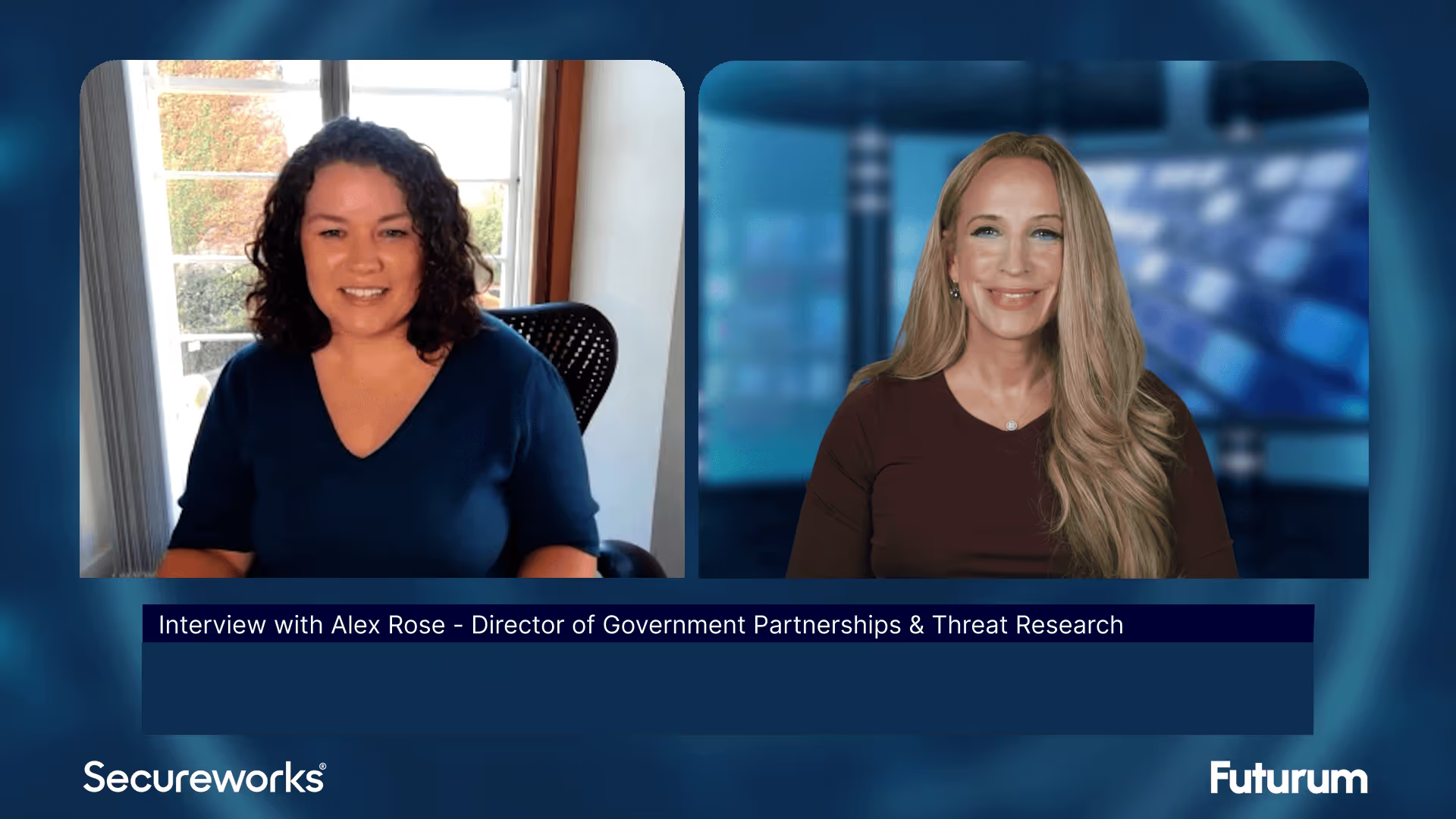
Alex Rose from Secureworks joins Shira Rubinoff on the Cybersphere to share his insights on the critical role of threat intelligence in modern cybersecurity efforts, underscoring the importance of proactive, intelligence-driven defense mechanisms.

HP Launches World’s First Business PCs to Protect Against Quantum Hacks - The Six Five On the Road
On this episode of the Six Five - On the Road, hosts Patrick Moorhead and Daniel Newman are joined by HP's Ian Pratt, Global Head of Security for Personal Systems.
What is Autonomous Endpoint Management?
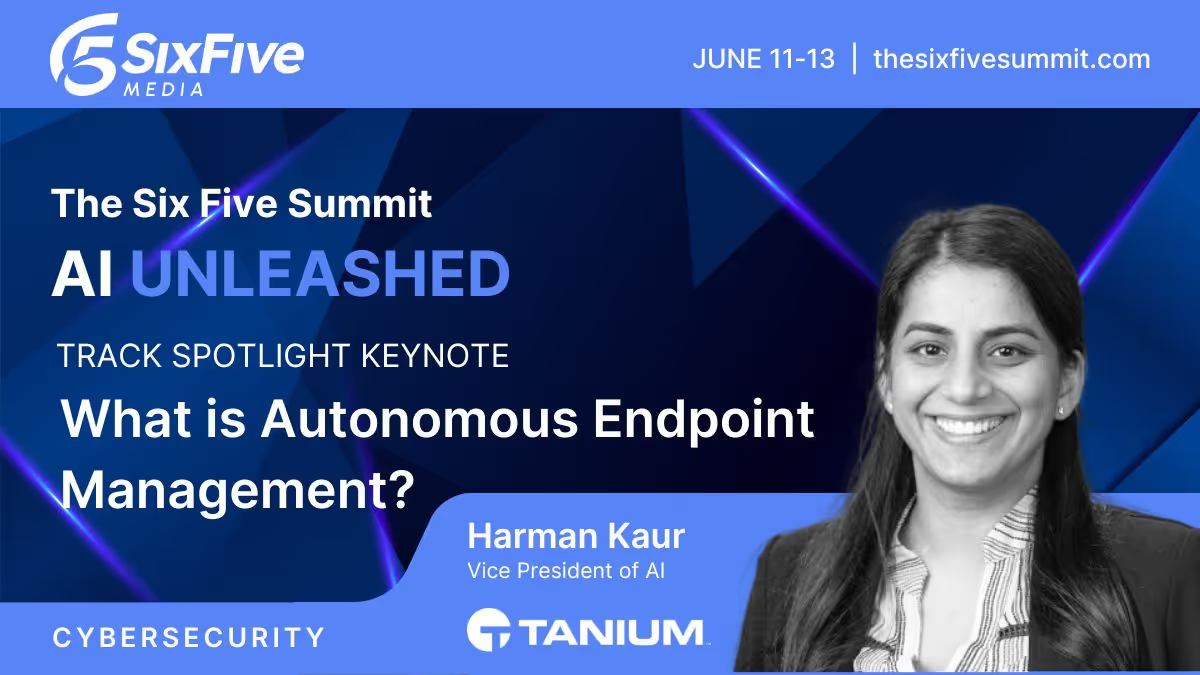
Autonomous Endpoint Management is a framework designed to unify IT operations and security teams on a single platform through real-time control and visibility.
QUANTUM
Quantum in Action: Insights and Applications with Matt Kinsella
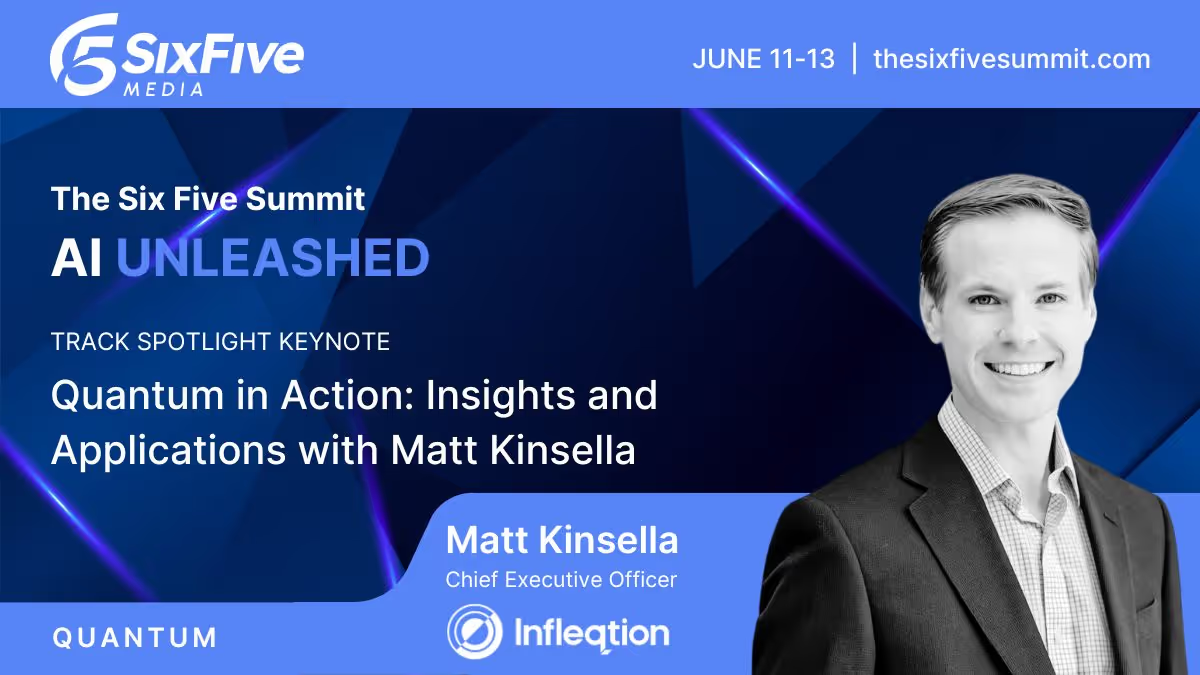
Quantum is no longer a technology of the future; the quantum opportunity is here now. During this keynote conversation, Infleqtion CEO, Matt Kinsella will explore the latest quantum developments and how organizations can best leverage quantum to their advantage.
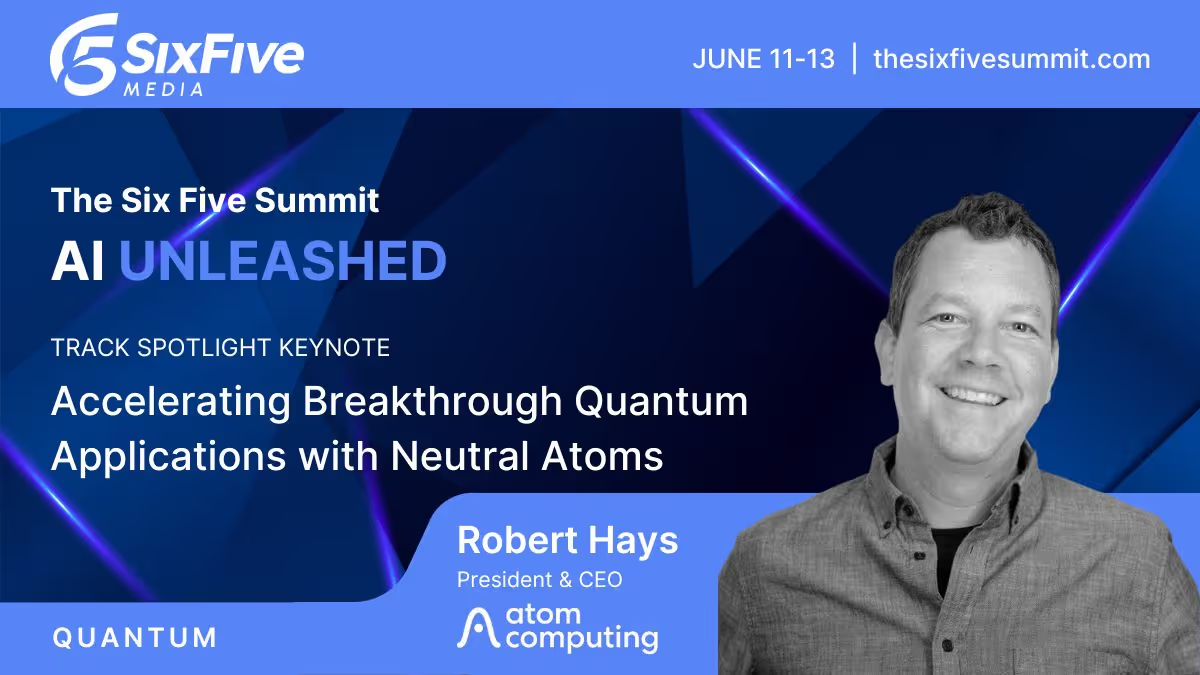
Accelerating Breakthrough Quantum Applications with Neutral Atoms
Our planet needs major breakthroughs for a more sustainable future and quantum computing promises to provide a path to new solutions in a variety of industry segments. This talk will explore what it takes for quantum computers to be able to solve these significant computational challenges, and will show that the timeline to addressing valuable applications may be sooner than previously thought.