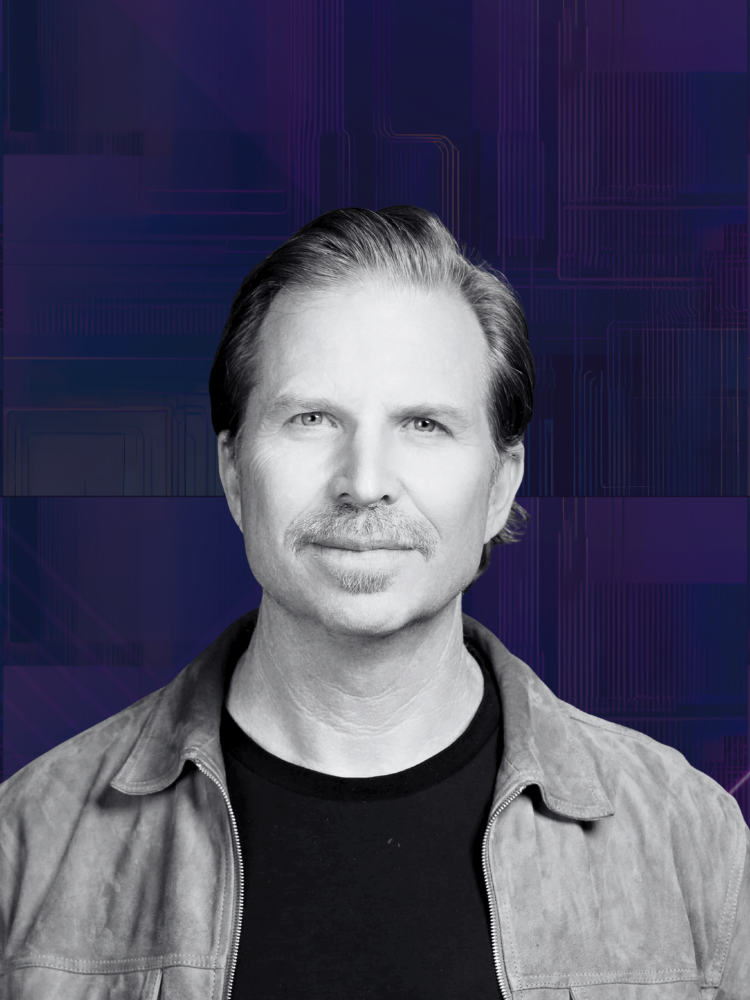
Equinix on Scaling Data Centers Responsibly: Energy, Water, and Community Impact
Equinix says its entire global water footprint is roughly equal to the irrigation demand of 16 golf courses.
Nick Patience welcomed Christopher Wellise, VP of Sustainability at Equinix, for a Sustainability Spotlight interview at the Six Five Summit: AI Unleashed 2026.
Wellise frames data centers as "the fourth utility," arguing the real question isn't whether digital infrastructure matters, since cloud, banking, healthcare, and commerce all run through it, but whether the industry can grow it in a way that earns community trust. He points to Equinix's San Jose expansion as a concrete test case: PG&E estimates that for every gigawatt of new, predictable data center demand connected under the right conditions, residential customer bills could drop by 1% or more, since consistent 24/7 load helps utilities plan and spread fixed costs more efficiently. Wellise also details Equinix's shift from what he calls "grid hogs to grid assets," anchored by a fuel cell footprint exceeding 100 megawatts across 19 data centers in six states.
Key Insights:
🔹 Responsible data center growth begins with transparency. Wellise argues that community concerns about power, water, and land use should be treated as legitimate inputs, not obstacles to work around.
🔹 Equinix’s San Jose expansion shows how data centers can strengthen the grid. PG&E estimates that every gigawatt of new, predictable 24/7 demand connected under the right conditions could reduce residential utility bills by 1% or more.
🔹 Equinix is working to turn data centers from “grid hogs into grid assets,” operating more than 100 megawatts of Bloom Energy solid oxide fuel cells across 19 facilities in six states.
🔹 Sustainability remains a priority. Equinix’s fourth renewable energy agreement with Flow Energy will bring its Singapore renewable energy portfolio to 215 megawatts by 2028.
🔹 Two-thirds of Equinix data centers use zero water for cooling, relying instead on air-based or closed-loop systems that recirculate water rather than consume it.
Wellise's framing for community engagement: permits are required, but they aren't the same as community acceptance, which he says has to be earned through consistency and long-term presence rather than a single project milestone.
Watch the full video at sixfivemedia.com, and subscribe to our YouTube channel so you never miss an episode.
Explore more sessions from Six Five Summit: AI Unleashed 2026 at sixfivemedia.com/summit.
Disclaimer: Six Five Media is for information and entertainment purposes only. Over the course of this video, we may discuss companies that are publicly traded, and we may reference their equity share prices. Nothing discussed during this webcast should be considered investment advice or a recommendation to buy or sell any security. We are not investment advisors, and you should not rely on this content as financial advice. Six Five Media collaborates with technology companies and industry leaders to produce research-driven interviews and multimedia programming for enterprise technology audiences.
Christopher Wellise:
Meaningful engagement with communities is more than just outreach, right? It means we have to, as an industry, engage early. We have to listen before decisions harden and share data transparently and incorporating feedback into how projects are developed and operated.
Nick Patience:
Hello and welcome to the Six Five Summit AI Unleashed 2026. I'm Nick Patience and this is the Sustainability Spotlight. Today we're exploring how the data center industry can respond to growing demand while addressing the energy, water and community considerations that come with that growth. Today I'm joined by Christopher Wellis, the VP of Sustainability at Equinix. Christopher, welcome back to the Six Five.
Christopher Wellise:
Thank you very much, Nick. Good afternoon. Great to be back with you.
Nick Patience:
So let's start with the first question. So data centers are facing, as you know, growing scrutiny. At the same time, they're becoming increasingly important to how we work, how we communicate, and how we get access to all these great digital services. So how should leaders think about the role that data centers play in everyday life and the responsibility that comes with that growth?
Christopher Wellise:
First, I think it's important to start by acknowledging that scrutiny around data centers is legitimate. Communities are asking fair questions about things like power, water, land use, jobs, and local values. And as an industry, we really need to meet those questions with transparency, not with defensiveness. But at the same time, data centers are not abstract industrial assets. They are the infrastructure behind the digital services that people rely on every day. I often refer to data centers as the fourth utility. whether it's cloud applications, video calls like the one we're on now, banking, healthcare, education, research, commerce, and public services, everything we do are connected to data centers and the traffic that goes through them. So the question really is not whether digital infrastructure matters. It clearly does. The question should really be whether we can grow it in a way that earns and keeps community trust. For Equinix, this really means that you know we think of ourselves as a long term community partner we've been in business over 30 years. Our approach is really built around responsible public infrastructure investment power responsibility. jobs and skills development, natural resource protection and helping to bridge the digital divide. This sort of core set of principles we call our community principles and growth really has to create value beyond the walls of the data center.
Nick Patience:
So with energy demand growing, how should the industry approach expansion while keeping energy affordability and interests of ratepayers in view?
Christopher Wellise:
Yeah, well, I don't think that the industry can avoid the energy demand conversation, right? It has to be front and center. So AI, cloud growth, and broader electrification of the economy are increasing load. We've known this for a while. Particularly in places like the United States, you have a repatriation of things like factory production. We have to be clear about how that growth is planned, how it's powered, and how it's paid for. And it's not just in the US. If you think of some international markets, there have been in the last few years moratoriums placed on data centers around concern of growing load. So from my perspective, responsible data center development means investing in the infrastructure we require, avoiding cost shifts to residential customers and under the right conditions, large predictable load can actually help utilities plan more efficiently and spread fixed good costs across a broader base. San Jose, California is a really useful example. In the context of an expansion project, we continue to expand in Silicon Valley. PG&E has estimated that for every gigawatt of new data center demand connected under the right conditions, this could actually reduce customer bills by 1% or more. We actually did a recent ribbon-cutting ceremony in San Jose and the Silicon Valley here in California, and the president of PG&E was with our America's President Arkel Shaw and really sort of indicated the importance of a consistent demand load that's 24 by 7 and how that could actually smooth out the modeling that energy producers like PG&E have to do. So it's really a reminder that load growth and affordability do not have to be in conflict if the model is designed responsibly. The broader opportunity in my view really is around grid modernization. So predictable demand, cleaner procurement, and a clear taxpayer protection can really help utilities build the infrastructure that supports communities as well as the digital economy that we're building here at Equinix. So the industry has to grow in a way that strengthens the grid, but at the same time does not strain residential household budgets.
Nick Patience:
And sticking with the energy question, so how is Equinix thinking about its energy strategy to improve efficiency and support more sustainable growth?
Christopher Wellise: Yeah, I mean, when I think about energy strategy and when we do here at Equinix, you know, we think about it in a practical sequence, both on the demand and supply side. So first, we have to reduce demand through things like efficiency, which continue to really be top of mind. With respect to data centers, you're already talking about very highly optimized infrastructure. So squeezing additional levels of efficiency out of that infrastructure is possible. It's expensive, but it's also an imperative. Second, we procure renewable energy where it's available on the grid. And third, where direct local supply is not yet available, we support additional clean energy through tools like power purchase agreements and energy attribute certificates where we're not able to invest in large utility scale power purchase agreements. For me, additionality simply means that we're not just claiming credit for clean energy or existing clean energy. we're actually trying to support the development of new generation that better matches the grid that we use and also helps to move the grid in the right direction, which is displacing ground electrons for green ones. And this also affects our site strategy. So renewable energy access, supportive policy environments, and grid readiness are increasingly part of how responsible operators think about where and how to grow. From a local context perspective, it's important. For example, Equinix, we just announced our fourth renewable energy power purchase agreement in Singapore with a company called Flow Energy, which brings our total local renewable energy portfolio to 215 megawatts by 2028. And this is really critical. We talked a little bit earlier about moratoriums on data centers. Governments are increasingly looking to companies to partner with that really bring a sustainability related mindset into where we're growing in order to really sort of highlight how they're also as a city or a municipality growing in a responsible way. AI and electrification, we're all hearing about tons about this today, are really creating an energy super cycle. But they're also accelerating investment in cleaner generation, things like storage, grid flexibility, and on-site energy solutions. An example of on-site energy solutions is we've really been an early adopter of solid oxide fuel cells. It includes a large Bloom fuel cell deployment. Bloom's a local company here in the Silicon Valley, but they're rapidly growing. And it's an example of how we've really tried to bring innovation into our energy strategy. We're trying to convert data centers really, for lack of a better term, from grid hogs to really grid assets. So Equinix now operates one of the largest fuel cell footprints among data center providers. We have more than 100 megawatts across over 19 data centers in six states. And in some of our locations, we're actually looking to ramp up on-site electricity generation to 100%. And there's flexibility associated with the bloom fuel cells. You can actually convert them to biogas or hydrogen as those technologies really become more and more available. And sustainability in the AI era is really no longer a side program, nor can it be. It really has to become a core design constraint for digital infrastructure.
Nick Patience:
So switching from energy to a related topic of water. So it's another area that gets seeing a lot of attention. So what does effective water stewardship look like for operators, particularly in communities where water resources may be already under pressure?
Christopher Wellise:
Yeah, it's a great question. I mean, and water is really becoming the new hot topic, as you mentioned, Nick. And water stewardship really has to start with local context. Water, as we all know, is a precious local resource, and communities are right to ask how it's being used, especially in regions that are already water stressed. Think about places like, whether it's the Middle East or the Southwestern United States, places like Spain, and so on. These are really important top-of-mind issues for communities and policy makers. At Equinix, we employ a set of tools which conduct a thorough water risk assessment down to the basin level for all of our new sites. We also look at things like inter-basin transfer, because often just looking at the watershed is not enough. And the trade-off is really that data centers generate heat, which most people know that all the compute generates heat. And we need cooling. So depending on the site, cooling can rely more heavily on electricity or more heavily on water. So there's a balance. And there's a trade-off there. In water-plentiful regions, water is actually highly effective at cooling and will actually lower our carbon footprint and electricity use. But we need to be context-aware. So responsible stewardship is not just about applying a one-size-fits-all model. It's really about making the best resource decision for each community and each climate and each level of water stress. Two-thirds of Equinix data centers do not use water for cooling. Many rely on air-based or closed-loop systems where water is recirculated, if you think about almost like your car radiator. if you have a traditional vehicle. And water is recirculated rather than consumed. And where we do use water, we're focused on efficiency, transparency, and alternative water strategies. We publish our complete water footprint on an annual basis. And I also, Nick, I think it's important to put the scale in context without minimizing the issue. Because we're hearing a lot about water. Every panel I'm on, nearly, it comes up recently. Globally, we're one of the largest digital infrastructure companies in the world. And globally, our annual water consumption is roughly comparable to the irrigation demand of about 16 golf courses in the Southwestern United States. If you think about a city like Palm Springs, there are over 100 large 18-hole golf courses. So I think it's important to kind of keep things in context. But that means also that continued improvement, especially in markets where water stress is high, is still really important. So responsible operators, I think, and we push for should be as transparent about the tradeoffs as they are about things like power and carbon.
Nick Patience:
So finally, as the industry expands, what does meaningful community engagement look like and how should operators think about creating lasting value locally?
Christopher Wellise:
Well, you know, to me, meaningful engagement with communities is more than just outreach, right? It means we have to, as an industry, engage early. We have to listen before decisions harden and share data transparently andincorporating feedback into how projects are developed and operated. I think largely, you know, communities want transparency. They don't want to feel like a large company is going in in some obfuscated, opaque way and not being clear about the resourcing that's going to be required and so on. Permits are obviously necessary and required, but permits are not the same as community acceptance. So trust really has to be earned in the communities that we're building and operating in through consistency, through responsiveness, and through long-term presence and really that listening cycle. It's especially true for infrastructure that may be physically located in one community, but supporting digital infrastructure, for instance, across a much broader economy. So I think, you know, lasting local value has to show up in very practical ways. That can include things like local investment, you know, whether it's bike paths or libraries and so on things that are really needed within communities where we're operating in construction activity; things like tax revenue, which can really benefit communities, skilled jobs workforce workforce pathways. Infrastructure improvements and things like digital inclusion, where the digital divide is still a very real thing. And, you know, I think the strongest data center projects are the ones where local communities can really see the value and not just the building footprint. And I also don't think there's a single community engagement playbook. As an industry, I talk to my peers a lot around this. And it's not going to work everywhere. Any community really has its own different priorities. And I think our job is really to tailor the approach locally while also staying grounded in consistent principles and a long-term partnership mindset. I think that's really where it's going to sort of pay off. And I think communities feel that, right? They recognize that you're really truly engaging and it's not just a set of talking points. So, you know, in the end, community engagement is not a milestone in the development process. I really think it needs to be a discipline across the entire life cycle of the Davis Center asset.
Nick Patience:
Great. Well, Christopher, thank you so much for being with us today. And to our viewers, thanks for tuning in to the Six Five Summit for this sustainability spotlight. Don't forget to hit subscribe to follow us on social media and check out all our summit coverage at sixfivemedia.com forward slash summit. See you next time.
Speaker
BeforeChristopher Wellise is the Global VP of Sustainability for Equinix. He and his team set the sustainability strategy and key targets for the company, and collaborate with the CEO, CFO, CRO, Operations and Board to interpret changes in the external sustainability environment and work out strategic consequences for Equinix. This ESG team communicates and cuts through organizational complexity to enable Equinix to deliver on ESG commitments.
Prior to Equinix, Christopher led AWS’s global sustainability effort focused on improving company performance and meeting customer needs. Prior to AWS, he was the Chief Sustainability Officer at Hewlett Packard Enterprise (HPE), where he led the setting of the first science-based supply chain climate target and built a customer-facing sustainability team to deliver revenue. Christopher began his career as an Environmental/Physical Scientist working for the US Department of the Interior studying the impact of investment in pollution control systems on river and estuary ecosystems.