Inside the AI Data Center: Marvell on Custom Silicon, Memory and Connectivity
Marvell's Will Chu and Dave Lazovsky make the same case from two distinct technical perspectives. Chu says value in AI infrastructure radiates outward from the XPU into everything built around it, estimating 3-4 additional "XPU attach" design wins for every custom processor Marvell ships. Lazovsky says reasoning models are forcing that entire system past a single rack: KV cache sizes have grown roughly 10x in the past nine months, driving scale-up domains from 144 XPUs today toward 576 and beyond. Chu's silicon and Lazovsky's connectivity aren't two separate problems at Marvell; they're two halves of one design.
At Marvell headquarters for The Six Five Summit: AI Unleashed 2026 Semiconductors Spotlight, Patrick Moorhead and Daniel Newman spoke with Chu, EVP and General Manager of Marvell's Custom Cloud Solutions Business, and Lazovsky, EVP and General Manager of Marvell's Data Center Networking Business Group.
Chu lays out four ways Marvell works around the memory wall: dense SRAM built into the chip itself, custom HBM with 3D stacking on top of the die, CXL-based expansion outside the server tray, and a disaggregated photonic fabric memory appliance holding 32 terabytes outside the rack entirely.
Lazovsky connects Marvell's ability to fully customize that connectivity to market concentration: just four companies represent more than 75 percent of AI data center infrastructure spend, a concentration that lets Marvell tailor everything from the IO chiplet to the switch topology for each customer.
When asked what's on the roadmap for the next 12 months, Chu frames the answer around three elements working together: connectivity, memory, and compute. Lazovsky picks up the connectivity piece, pointing to Marvell's coherent optical team and a 1.6T optical technology bringing Marvell to market first in that category, plus a power efficiency bet: roughly 85% of data center traffic moves processor to processor within a scale-up network, and Marvell's optical, analog-based scale-up links cut power consumption by about 4x compared to a conventional 224-gig copper link, a change Lazovsky expects to cut total data center power consumption by more than 25% once deployed at scale.
Key Insights:
🔹 Chu counts three to four "XPU attach" design wins in networking, memory, storage, and security for every custom XPU Marvell ships, the basis for his argument that AI infrastructure value extends well past the XPU socket itself.
🔹 Chu attacks the memory wall on four fronts: on-chip dense SRAM, custom HBM with 3D stacking, CXL-based expansion, and a disaggregated 32-terabyte photonic fabric memory appliance.
🔹 Lazovsky ties reasoning models directly to the connectivity shift: KV cache sizes have grown roughly 10x in nine months, pushing scale-up domains from 144 XPUs today toward 576 and beyond.
🔹 Lazovsky's coherent optical scale-up links cut power consumption roughly 4x versus a conventional copper connection, a change he expects to reduce total data center power consumption more than 25% once deployed at scale.
🔹 Both guests tie their arguments to the same underlying fact: four companies account for more than 75% of AI data center infrastructure spend, a concentration that makes full end-to-end customization, from Chu's silicon to Lazovsky's network, commercially viable for Marvell.
Cumulative data center capex forecasts through 2030 climbed from $10.7 trillion to $12 trillion within a single quarter. Chu's silicon and Lazovsky's connectivity together make up the system Marvell is counting on to capture that spend.
Watch the full session at sixfivemedia.com, and explore the rest of our Six Five Summit: AI Unleashed 2026 Semiconductors Spotlight coverage.
Disclaimer: Six Five Media is for information and entertainment purposes only. Over the course of this video, we may discuss companies that are publicly traded, and we may reference their equity share prices. Nothing discussed during this webcast should be considered investment advice or a recommendation to buy or sell any security. We are not investment advisors, and you should not rely on this content as financial advice. Six Five Media collaborates with technology companies and industry leaders to produce research-driven interviews and multimedia programming for enterprise technology audiences.
Dave Lazovsky:
Well, I think fundamentally, um AI infrastructure is the forcing function, right? And so if you go to the to the specific drivers of what is requiring not a nice-to-have but a must-have uh for the shift from copper to optical scale-up networks, it comes down to the models.
Patrick Moorhead:
Welcome to the Six Five Summit 2026. The theme of this year is AI unleashed here with Daniel Newman. How are you doing, my friend?
Daniel Newman:
Hey, doing good.
Patrick Moorhead:
Isn't it amazing just how much, I mean, compute is still super important, but this year connectivity has come front and center so many discussions.
Daniel Newman:
Oh yeah, I mean, look, we just go from one constraint to the next. Like, you said connectivity's come front and center, but we've been through it all this year. We went through the compute cycle, then the CPU became more important than the GPU, and then memory became the thing, and then right, then you know, not just connectivity but optics became the big focus. Just you, we could
talk energy if you want, but yeah, I mean, look, it's thing to thing, Pat but it's been a banger
Patrick Moorhead:
Yeah, so we're here at Marvell headquarters, and we are going to have a conversation about custom silicon memory interconnectivity. I'd like to introduce Will and Dave. Great to see you guys
Dave Lazovsky:
Thank you guys so much for having us.
Patrick Moorhead:
Yeah it's fun um I've I've seen you guys on stage you have your analyst days uh you know show up to the product briefings but it's great to have you on the Six Five.
Daniel Newman:
It's great to have you here and congratulations. I know recently acquired uh and it sounds like that's going great. Yeah. And then obviously so much to do and you know Pat you bring up connectivity but the cool thing about Marvell is that you know they're really kind of in everything you know that's right you know cross silicon memory connectivity scale up scale out scale across uh playing all the games. So…
Patrick Moorhead:
Whatever it takes
Daniel Newman:
220 221 people you think people know Mr. Mom?
Patrick Moorhead:
I think they do.
Daniel Newman:
Okay we'll see. Um, I'll start with you, Will. You know, I'd like to, you know, the the business you run here. You know, you're you're, it's among the fastest growing in the silicon space. I believe one Jensen Hong called you guys the next trillion dollar company. It's a little bit of pressure, but uh you guys are you guys are well on your on your way.
Patrick Moorhead
Come on guys, Let's step this up.
Daniel Newman:
I think what brought Marvell into the forefront over the last few years had a lot to do with your custom silicon business. Now having said that your businesses are custom silicon they're memory scale up you know scale up fabrics scale across interconnects. I mean doing so many different things I'm just kind of curious like your viewpoint looking very holistically at the business that focus is one thing but like what is the market getting right about kind of the obsessive focus on XPU and custom silicon and what are they kind of missing right now as you heard me talk about kind of it is really a lot that is building this this AI boom It's not just the XPUs themselves.
Will Chu:
Yeah, great question, uh, Daniel. It took a while. Yeah, and thanks for and thanks for being here, uh, at Marvell. So, absolutely, I think the market kind of honed in on XPU as the main custom element that's needed in AI infrastructure. And of course, we spent a lot of time trying to talk about what we call XPU attach, which is everything that goes around the XPU, right? And what we see broadly as a holistic kind of view is we see AI infrastructure broadly getting customized across the board. Of course, there's the XPU that gets customized that's tied to the workload, but we see all the elements that go around it. So this is networking, memory, storage, and even security. These are kind of the main categories, and we're participating in all those other technologies to support the XPU uh, to make, you know better better infrastructure, and we have lots of, uh, opportunities. If you think about just raw numbers in terms of the count of opportunities for every XPU, you can imagine three, four, or even more opportunities that, with XPU attached that support that XPU in next-generation offerings, and then that ties to the connectivity uh that we offer as well as the networking. So we we do have a holistic solution end to end.
Daniel Newman:
And I imagine you you'd see that framing as a pretty big miss.
Dave Lazovsky:
Well, it's, you know it it is interesting. Um, the uh one of the big opportunities is the fact that will is doing so much in custom XPU which includes the uh the IO and Marvell is one of the leaders in IO technology. Um, certainly you know a lot of uh uh a lot of press a lot of focus right now on optics and we are uh we we do have what I believe is the world's uh strongest team in the whole field of optical interconnectivity, but in addition to that which complements it is our SerDes technology right uh 224 gig city 448 gigs um and that's uh that being integrated on the XPU side just provides an opportunity for us to optimize full network uh based solutions um including scale of network connectivity. I think what's interesting about this market right now is um you know not just that it's massive right it's the largest infrastructure investment in the history of humanity um but it's also very concentrated. So when you when you think about custom um at this point there are four companies that represent north of 75% of the total addressable market and data center infrastructure and what that does is it allows us to implement a business model that would be entirely different than if we had 40 companies to serve right um so we can effectively uh give them what they want right so we're we're we're creating custom solutions that extend beyond the XPU we're delivering custom network solutions scale out and scale It's a unique opportunity to really partner with customers and um and they work with us effectively as an extension of their own development teams.
Daniel Newman:
It's interesting. We just uh published a new forecast for cumulative capex between now and 2030.You guys guess on how big that number is now?
Dave Lazovsky:
Between now and 2030. Um four and a half trillion. I was going to say yeah four or five trillion.
Daniel Newman:
12.
Dave Lazovsky:
12!
Daniel Newman:
Total data center infrastructure bill. Now, you're probably looking at the at the at the chips.
Dave Lazovsky:
Yes.
Daniel Newman:
we're looking at the whole thing. But yeah, you're about right. Yeah. On the chip side, but I mean it was, by the way, it was 10.7 less than a quarter ago. So, what an opportunity.
Dave Lazovsky:
Can't keep up.
Patrick Moorhead:
So, guys, it's been fascinating. Again, I I talked a little bit in the runup on this. Listen, it networking and balanced systems have always been important. It's just the question is which one is holding you up the most? And when I look at basic systems architecture and you know GPUs and XPUs um once you can't do what you need to do inside of a certain tray you hit the rack and when you go need to go beyond the rack you go to the rack next to it and if if you add up a bunch of fleets then you have to go outside maybe to another data center to get the work you need done. uh one of the bigger debates and not just on X, it's coming up in um uh uh earnings calls as well is when is CPO going to hit? Okay. And then we can let's not debate the variance of of of CPO out there. But I have a question. Uh, is is is the XPU going to be the forcing function that makes it more mainstream?
Dave Lazovsky:
Yeah, I think fundamentally, um AI infrastructure is the forcing function, right? And so if you go to the to the specific drivers of what is requiring not a nice-to-have but a must-have for this shift from copper to optical scale-up networks in particular, it comes down to the models, right? So we've had um, initially, this wave of large multi-trillion-parameter foundation models which drove a certain requirement for total memory capacity, um, inside of a scale-up domain. But what has changed over the course of the last 24 months is reasoning models which is effectively inference time compute which is adding it's adding memory requirements on top of foundation model parameters which is KB cache right so you're doing inference time um reasoning uh inference time compute which is increasing KV cache sizes again just over the course of of the last nine months KB caches have increased about 10x and that requires memory it's why you know Micron and and Hinx and the memory companies are now north of a trillion dollars market value. But what that does is it the only way to house the memory capacity to serve these models in fast memory. HBM is is scaling beyond the rack, right? There's no there's no choice. So you have to extend beyond 144 unconnected XPUs to, you know, the next wave will be on the order of 576 and applaud, and scaling from there.
Patrick Moorhead:
So where is Marvell in this transition and maybe we can bracket this to scale up for for co- package to optics?
Dave Lazovsky:
Yeah. Yeah. So, we're implementing um co-packaged optics in a few different ways. So, for us, um you know, there's a lot of focus on diff you know, differentiating between NPO and CPO, right, on-board optics or NPO versus CPO, and the answer for us is yes, when, when, when you know when when we ask what's the question, right, so it doesn't matter to us, uh, what the form factor is because we've got an entire portfolio of optical interconnectivity solutions. So um for our own switches um we have the confidence in our technology to deploy CPO directly um on the package itself and we are doing that now with both um Ethernet based systems as well as UAL for scale up um and but we also offer um interconnectivity for the XPU side uh which we have active engagements for both CPO and multiple NPO engagements because it does help uh you know uh our customers get comfortable having an NPO based solution uh to just in in the first wave of deployments of optical interconnectivity as as an option there are trade-offs right um there are trade-offs.
Will Chu:
I would add you know on the XPU side uh to Dave's point traditionally we might uh develop a copperbased solution you know an IIO chiplet or something but as you approach that copper wall and you need to go to optics to today's point we have that full portfolio that we're demonstrating already on the switch side that we can leverage on the XPU side to take the customer from traditional copperbased solutions to NPO to CPO and depending on the speed and the pace of their transition as well as their requirements customize the whole solution from the compute section all the way through to the IO all the way out across end to end to the switch and back. So yeah, we have a full portfolio.
Dave Lazovsky:
And yeah, just you know just to dovetail into that last point that is immensely valuable to our customers right to have the same IO on both sides in particular the scaleup link right given the importance of ensuring that there are no link flaps right in your in your scaleup network connectivity so whether it's uh our 224 gig copper series uh that is being used on both sides of the link between the XPU and our scaleup switches or our optics and our optics are what we call fast pipe uh which are you know 200 gig going to 400 gig and what we call flat pipe which are 56 gig uh NRZ going to roughly 112 gig um analog S it's much more much more energy efficient and
Will Chu:
Maybe just to add one more point is we're one of the few companies that can do that end to end and then we're actually going in together and most you know to to discuss with customers on both sides of the link how to how to make their next generation infrastructure uh meet their needs.
Daniel Newman:
Which kind of goes back to where we started is you're not just you know …
Will Chu:
Oh yeah! …Just an XPU company. Yeah, absolutely.
Daniel Newman:
It was the market was absolutely obsessed with it.
Patrick Moorhead:
No, it was Yeah, I mean it was fun while it lasted, but the market did understand that after after a few rotations.
Daniel Newman:
Yeah, there's a few great interviews with uh your your President and uh COO Chris Koopman's where we talked about that at length, right, on the Six Five. So, you all can check that out if you have a chance. You you kind of fed in started beating in the memory wall. Yeah. I mean, what a time, what an interesting time to go from something that was literally commoditized, selling at, you know, multi-digit negative gross profit margins to now driving the highest margins in the industry. Um, and of course, you know, kudos to these companies, especially those that are
building beyond just traditional NAN and and DRAM into HBM because this is what's
making it possible. you guys are taking a lot of approaches here, you know, dense uh SRAMM pooling, a number of different kind of architectures that you're doing creatively because I also argue that every company building a chip right now is trying to figure out how to get around the memory wall in some like because we'll just keep needing more even if we figure out a way around the memory guys will be fine, right? Are we going to agree on that? But like talk a little bit about the different techniques that you're using and maybe some of the trade-offs of each and and and you know because I think the market's going to love to hear kind of how Marvel's thinking about this.
Will Chu:
Yeah,maybe I'll take that, uh, Daniel. So, yeah, absolutely. As Dave mentioned before, with the model sizes growing, you need more memory. That's just the math. And, uh, obviously with prices going up and the let's say to the traditional techniques, they're they're creating bottlenecks across all the systems. So, within Marvell and across our customer base, we're looking at many many different ways to get over that memory wall. So, the first would be the dense SRAM. So, this is in the chip itself. Uh uh IP specialized IP that give you much denser uh memory that's tightly coupled typically with the compute so that you get better performance and you can you can hold larger models at least in that chip and that's really a custom-based solution. Uh I think the days of traditional kind of off-the-shelf memory compilers is going to be very difficult to be to to meet the needs of our customers. So, we're investing heavily to do that. So that's within the chip. Obviously, if we uh then there's everything that goes let's say around or on top of the chip. So, of course, that's HPM, right? And where you can integrate HPM. Of course, there's a a drive for custom HPM which increases the bandwidth as well as the capacity. And there's that's coming down the pipeline is 3D stacking where you're going to start to stack the memory on top of the die uh so that you can get more memory tightly coupled uh with your logic die. And it keeps going on from there. Then you go outside and then you have me traditional memory expansion with something like CXL or proprietary methods to literally just get you more physical memory uh with maybe some trade-offs in terms of bandwidth but a lot more capacity because you're not physically forced into a tight space uh and there's many different forms of then uh outside the tray uh disaggregated memory. So we have like at the FMS I'll I'll speak for Dave you know we announced the photonic fabric memory appliance which gives you let's say 32 terabytes of memory outside of you know in a separate uh rack uh space outside of your uh compute. So we really have an end-to-end solution and in addition to that maybe the last thing is what we call near-memory compute. So that's putting CPUs right up next to the memory and so that you can offload the CPU or the GPU and push a bunch of workloads in tight with a bunch of memory to so that you can have higher efficiency with all your resources. So all of these things are are happening today. Um and uh today's point before uh all of that memory that expansion in memory just actually drives more need for IO and connectivity because you're still in the end want to move that from place to place in your infrastructure
Daniel Newman:
and they're like symbiotic you know they they work together a lot of people are you know there's a whole debate all over social this weekend about memories over you know optics are here you know like your point was like I don't think it's one or the other I think these two right …
Will Chu:
I call it I say they compete against each other.
Patrick Moorhead:
Oh, if they both do all their jobs, it's going to be this constant, you know, compute, memory, storage, just keep going back and forth. Side note, I never seen so much interest in CXL that I I mean, my company, one of my analysts wrote a white white paper on it three or four years ago. It was super hot, right? The spec was coming out. Memory pooling wasn't there. But now, right, you've got a huge need here and a technology that that you guys have been working on for for four or five years or longer. It just it seems like it's about to hit.
Dave Lazovsky:
Yeah, I mean it's it's hitting again in large part driven by by reason models, right? By inference time compute, right? So there's a need for rapid access with very low latency to high capacity, high bandwidth memory. And as as Will is mentioning, you know, one of the things we've done uh for example with that photonic fabric memory appliance is we we've tried to ensure you don't have to make a trade-off, right? a trade-off between um the capacity and cost structure of DDR which we include in that uh in that system as well as the bandwidth and multiple um pseudo channels per HBM stack uh uh for to to enable very high bandwidth and the ability to to run parallel memory transactions to high latency. So you get the best of both worlds in that system which for the first time should allow our customers uh and their customers to um uh to to be able to scale memory capacity and bandwidth independent from compute.
Patrick Moorhead:
I love it. Who who would have thought right when it was I think the initial spec came out like five or six years ago and who would have thought like it pre-LLMs pre- agents pre uh um all of this.
Will Chu:
I'd add, you know, the the high memory prices is definitely forcing architects at various hypers scales to rethink their entire infrastructure if they expect memory prices to say high. So, we are getting a good amount of demand for our CXL products for people that are recycling old memory and wanting to attach it to new servers because they can't direct attach old memory to new servers to new uh CPUs or GPUs. So, we we're bridging that. We enable uh compression de you know compression of the memory so that you physically have you know you can get 2x the the memory with you know 1x the actual number of chips uh and then of course the pooling's coming as as we discussed to try to increase the utilization and then we see a final bleed over into flash where uh that's kind of the last realm which and then that there's a lot of demand HPF or even traditional flash at some level they're trying to uh today's point kind of tier their memory in a that they can use and they're looking at many different ways to look at flashbased solutions uh to enable more capacity uh because it's less expensive than traditional let's say D
Daniel Newman:
Pushes more connectivity demand for sure you know not to mention where they say you know necessity is the mother of all invention and you got the forcing function necessity to drive margin and vendors you got the necessity you got the necessity because every time you guys develop something that delivers better outcomes compute-wise people use more I mean it's It's not like a little bit. I think I was talking to Google at one of the 65 something sessions and they were saying we're I think it was like four quadrillion tokens per month now. Just Google four quadrillion.
Dave Lazovsky:
Yeah, it's amazing.
Patrick Moorhead:
Hey guys, there was a a little bit of talk about customization in in networking and right and we go through this in cycles in the industry like an accordion like okay we need to do scale it needs to be cookie cutter right this is the standard and you're going to eat it okay and then oh my gosh like we're hitting the wall somewhere we need to do some custom things you know every hyperscaler has their has their architecture djour that they you know have to manage and and they want to drive can you talk a a little bit about the need for customization in in the scale up like like it might be obvious in scale up why you need customization but also you talked about the value of end to end and I'm assuming value of end to end from one vendor and Dave I'd love to hit you with that one First.
Dave Lazovsky:
Yeah. So um again because of the concentration this of this market right you've got huge hyperscalers that really dominate and there are no two companies that have standardized um u AI infrastructure solutions right so they're all developing their own uh customized scale up networks in particular which is not just the physical layer but it's also the logical layer and so there is some um alignment u that is taking place I'm not going to call it standardization uh but there's some alignment uh on the physical layer and on the logical layer. So you know two probably the four that are leaning a bit toward Ethernet scaleup networks. Um and then UAL which is just a another going a UAL route which is a higher performant more like an NVLink type scaleup network which is a memory semantic load store uh based system which is going to be inherently more efficient uh than than moving Ethernet packets and and then you have another one who has their own entirely uh customized um proprietary um you know raptor based network topology. Yeah, in all cases the solutions that we're developing for our customers are entirely customized from the XPU attached the chiplet the IO chiplet in which in many cases even the protocol layer is tailored specifically to meet their needs. They'll look at the channel requirements and we'll tune the FEC uh to to optimize between the uh to you know the ability to ensure that they get good solid bit air rate with solid robust links balancing that with power consumption and latency um uh to the switch and um the switch input is not this is not a merchant silicon world any longer right um we are we are architecting co-architecting in fact uh the switch requirements with these hybrid failures um many years in advance to ensure that we're delivering what they need when they need it.
Will Chu:
Yeah, maybe I'll add, you know, you know, Dan, you mentioned the multi- double-digit trillion dollars of investment. So, that is really the economic rationale if you're spending that kind of money to optimize your infrastructure. And of course, the XPU and the scale up uh network that's associated with it are very very tightly coupled to deliver the performance that they're uh targeting. So that invariably uh results in a customized set of uh protocols and optimizations that eventually end up in silicon that we build. And so that's really what we're bringing to our customers as value. We're unique that we can do this. And I'll be upfront, it's not easy. It's actually quite difficult. uh but we have been investing heavily uh in our engineering capability and we have a track record and the trust of our customers to go do that because for their most the most critical parts of their infrastructure.
Daniel Newman:
Well, I'm going to stay with you here kind of tying this all together. Six Five Summit 26 is AI Unleashed. You are partnering and unleashing solutions to your customers. And by the way, for everyone out there, they will never say or almost never say who their customers are, but these are the the the big hyperscalers. These are the biggest companies in the world that they are building these custom solutions for. So, a lot to learn there. But going back to that Will like what is the thing if I had to ask from your viewpoint that Marvell is working on that's public, right? Because I can't get you giving me any of the good stuff. It's at least not online. Yeah, you can't. We don't care. You would care. Um, but like what is the thing that you're working on that you see as like the biggest breakthrough to sort of meet this just insatiable demand for for you know capacity and capability growth across AI across all the things you're doing here at Marvell.
Will Chu:
Well, that's a it's a loaded question. It's a loaded question. Yeah. I think the hard to answer with just one thing, Dan.
Daniel Newman:
Okay. Say a couple, but I'm gonna I'm gonna have Dave give a couple to so he'll have a chance to to fill fill in.
Will Chu:
Yeah. fundamentally I think um you know there's three elements in the system right there's the connectivity I'll let you know I let Dave talk about that we're doing lots there on the memory side we're doing you know tons of breakthrough work there to enable very dense and really optimized memory based solutions for our customers that is a key to kind of get over the memory wall that's actually coupled of course with the compute side which actually relatively speaking is uh um you a problem that's more well understood and more easily engineered. Uh it's actually the other it's really the memory elements that are really driving the requirements in a very different way than they have in the past. So I mean that coupled with our IO that I'll let Dave talk about. I think those three things and we can put it all together is really unique.
Dave Lazovsky:
We uh we haven't spent a lot of time talking about um the scale out or scale across uh but that those are very large growth uh elements of our business. These data center campuses are growing right I think Zuckerberg talked about the fact that the most recent META data center is about the size of Manhattan. All right. If you think about interconnectivity terafit. Yeah. Right. Yeah. It's unbloo. Right. So that that's what that's done is it's accelerated the need for a new class of optics um that are suited for for that less than 10 km reach um which is called coherent light which has taken off. The coherent uh optical team that Marvell has is honestly it's like nothing I've ever seen. It's unbelievable. Really unbelievable. We are going to be first. We are first uh to uh to market with a 1.6T 6T optical technology that's just unbelievable. Um but um the scale across white hot uh scale out is is growing like mad. But I think in terms of the one of the things that's going to move the needle in a way that's for us we believe is going to be disruptive is um if you if you think about for scale up roughly 85% of data traffic in data centers is processor to processor data traffic inside of a scaleup network. 15% is scale up, right? So, if you can impact um efficiency there and specifically energy efficiency there, um it has a huge impact on total power consumption for data center infrastructure, which we know right now it's a problem, but over the course of the next 3 to 5 years, that's that's going to become a burning problem, right? because at least in the United States there's nowhere near enough power to support the the buildout of uh of the next generation next wave of data center infrastructure that's being stood up. So, what we're working on there um and what we have developed and and we're working on deploying is scale up networks based on optical uh technology that use an analog series right and that what the result of that is that it it reduces by about 4x the power consumption relative to a conventional link that would just puts optics on a conventional 224 gig service. Um and uh we believe that can have a huge impact you know 25 plus percent uh reduction in total power consumption at the data center level uh once fully deployed.
Daniel Newman:
I was about to ask how much because you know we're talking multiple hundreds of gigawatts that we need to create and there's only so much fuel cell and there's only so much and obviously nuclear is still a little bit of a pipe dream. It's hopefully coming down and grid connections are seven years and turbines are multiple years out. I mean making every gigawatt more efficient being able to you know deliver more for that gigawatt is obviously a huge opportunity. By the way, I know the terra fab is not a not a data center, but I was thinking one meta being the size I think it was Central Park. They actually overlaid it like park. These buildings are getting very large though. Can we just agree on that? So, um yeah. Yeah. Did you want to add something on that?
Will Chu:
I wanted to add to Dave's point, you know, because I think the real secret sauce is that we have all these uh fundamental technologies and then we can integrate them. So that really so you know maybe somebody could do you know XYZ IP uh but then integrating and then but you need this large collection of them all from you know memory IO networking and to be able to uh actually stitch them together or architect them in different chips that actually have to work together end to end is very very challenging and ultimately it's really that portfolio of of all the you know all the great IP that we have and then making it work at you AI infrastructure scales is is really our secret sauce that we're you know continue to execute every day on.
Daniel Newman:
Yeah. Beyond beyond the socket getting all those attaches has been has been a real winner.
Dave Lazovsky:
You know I think one thing that that goes a bit unnoticed in addition to the breadth and depth of technical capabilities the products and the technical acumen of this unbelievable team is the depth of the relationships with our customers. Um and uh that uh that for me um you know being relatively new to Marvell um is one of the most significant assets that we have as a company right that uh that takes years and years to develop uh to build trust and uh I can tell you with the big four right now um and with the GP manufacturers that we're partnered with um we've established relationships that are built on de you know years and years of trust and it's nice to be uh again operating like an extension of the development teams for the some of the biggest companies is in the world.
Patrick Moorhead:
And they have shared that with me, and I'm sure Daniel but um it's very hard for them to do that to share it publicly and I've even seen some you know even press releases that I wouldn't ever have expected uh kind of supporting uh what you're doing though. So uh bravo on that is amazing what you can do when you're partner with customers.
Daniel Newman:
Well Dave want to thank you both so much for for going deep here. There's a lot of uh great content there for our Six Five Summit attendees and congratulations on all the progress. Congratulations on the acquisition, the integration. We look forward to continuing to track the journey and continuing to cover all the work that Marvell is doing.
Dave Lazovsky:
Thanks so much for having us.
Will Chu:
Thank you.
Daniel Newman
Thank you, and thank you, everybody for being part of this Six Five Summit 2026 Semiconductor Spotlight Session. Stay with us. Subscribe. Join all of our otherSix Five Summit sessions. Appreciate you being here. Stay tuned for the next segment.
Speaker
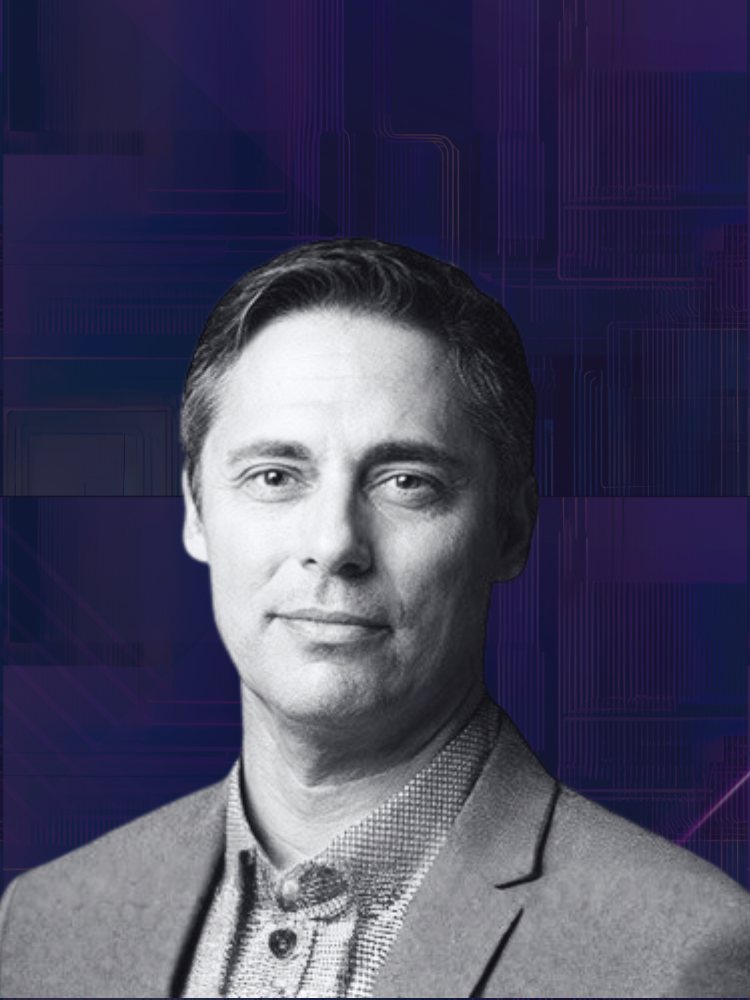
Will Chu is the Executive Vice President and General Manager of the Custom Cloud Solutions Business at Marvell. In this role, he oversees all aspects of the company’s custom silicon business for cloud and AI infrastructure.
Previously, Will served as Senior Vice President and General Manager of the Custom, Compute and Storage Group at Marvell, where he led the Processor, ASIC, CXL, Security, and Storage businesses. Before that, he formed the company’s Automotive Business unit and served as its Senior Vice President and General Manager, driving the strategy and implementation of semiconductor solutions for the automotive market and advancing the company’s leadership in in-vehicle networks and automotive Ethernet.
Will brings more than 25 years of semiconductor industry experience. Before joining Marvell, he was Managing Director of the Automotive Business Unit at Maxim Integrated. Earlier in his career, he held leadership roles at Texas Instruments and Fidelity Investments as well as start-ups and in venture capital.
Will holds a B.S. and M.S. in Electrical Engineering from Tufts University and an MBA from MIT Sloan. He holds multiple patents and frequently represents Marvell as an industry thought leader at conferences and technical events.
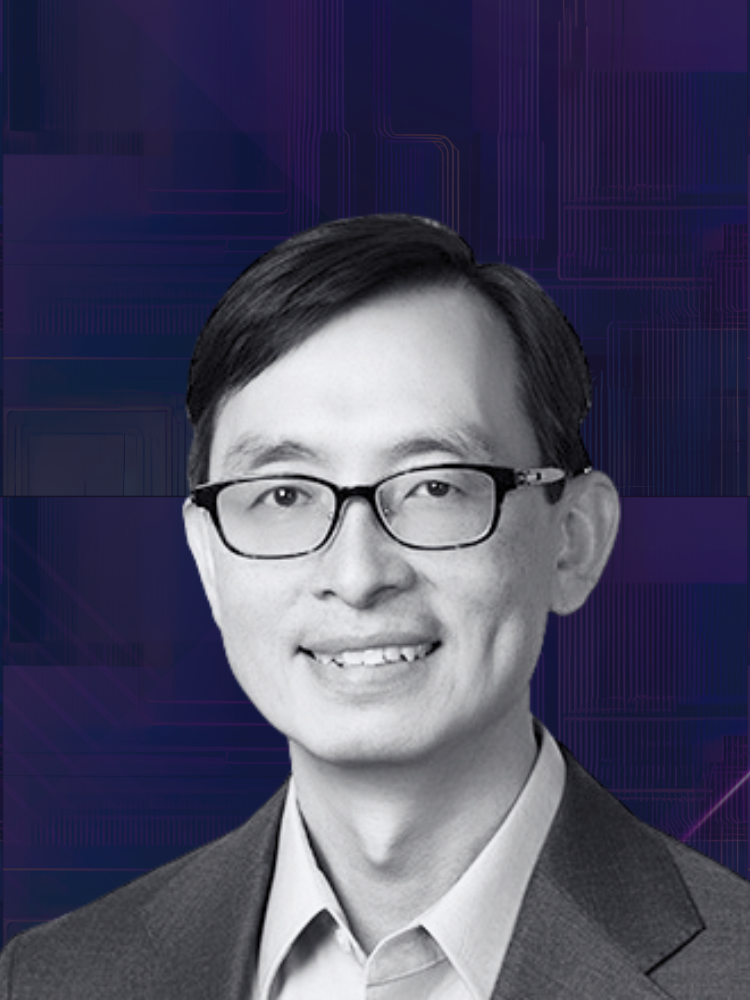


Dave Lazovsky is Executive Vice President and General Manager of the Data Center Networking Business Group at Marvell. In this role, he is responsible for setting business strategy, guiding product and technology direction, and leading cross-functional execution across Marvell’s data center networking portfolio.
Dave has 30 years of experience in the semiconductor industry, including more than two decades building and leading high-growth technology companies. He joined Marvell through the acquisition of Celestial AI, where he served as Co-Founder and Chief Executive Officer. At Celestial AI, Dave helped pioneer optical scale-up connectivity, a critical emerging technology for next-generation AI infrastructure, and led the company from early innovation through customer adoption.
Dave is widely recognized for building innovative teams, driving breakthrough technologies, and translating bold ideas into real-world customer impact. Prior to founding Celestial AI, he was a Venture Partner at Khosla Ventures. Earlier in his career, Dave founded Intermolecular, where he served as Chief Executive Officer and President, leading the company from early-stage development through commercialization and initial public offering on the NASDAQ.
Dave holds a B.S. in Mechanical Engineering from Ohio University and has more than 80 issued and pending U.S. patents.