Lenovo's Vision for AI Cloud Gigafactories: The New Operating Model for AI Infrastructure
Some AI cloud capacity is already sold out before construction even begins.
Nick Patience welcomed Lenovo’s Binoy Unnikrishnan, VP of CSP Worldwide Sales, and Wil Wellington, Global Director of AI Data Center Services, SSG, for this AI Infrastructure Spotlight conversation.
Unnikrishnan argues the real bottleneck in AI infrastructure now spans land acquisition, power, shell construction, deployment, and financing simultaneously, measured by KPIs like tokens per dollar per hour and tokens per dollar per watt.
Wellington makes the case for starting optimization at the design phase itself, engaging on site readiness, power availability, and thermal footprint before deployment begins, an approach built around Lenovo's Neptune liquid cooling technology.
Unnikrishnan points to Lenovo's work with neocloud customers including Nscale and IREN, plus financing support through Lenovo Global Financial Solutions, as evidence that speed to revenue now depends on removing friction across the entire build cycle, extending well beyond hardware supply alone.
Key Insights:
🔹 The constraint on AI infrastructure has shifted from a single bottleneck like GPU supply to a comprehensive execution challenge spanning land, power, shell construction, deployment, and financing simultaneously.
🔹 Some neocloud AI capacity is already sold out before construction begins, according to Unnikrishnan, making any delay in the build cycle a direct hit to investor ROI.
🔹 Wellington's team engages customers at the design phase itself, evaluating site readiness, power availability, and thermal footprint before deployment, built around Lenovo's Neptune liquid cooling technology.
🔹 Lenovo Global Financial Solutions gives customers access to flexible capital for infrastructure buildout, extending Lenovo's role beyond hardware sales into the financing layer of AI infrastructure.
🔹 Wellington's core design principle is building for future scale ahead of current need, treating repeatable architecture as essential whether a customer deploys a single cluster or multiple global sites.
Lenovo's mandate after deployment: keep the environment operational, treating optimization as a guiding principle woven across the entire AI factory lifecycle.
Watch the full video at sixfivemedia.com, and subscribe to our YouTube channel so you never miss an episode.
Explore more sessions from Six Five Summit: AI Unleashed 2026 at sixfivemedia.com/summit.
Disclaimer: Six Five Media is for information and entertainment purposes only. Over the course of this video, we may discuss companies that are publicly traded, and we may reference their equity share prices. Nothing discussed during this webcast should be considered investment advice or a recommendation to buy or sell any security. We are not investment advisors, and you should not rely on this content as financial advice. Six Five Media collaborates with technology companies and industry leaders to produce research-driven interviews and multimedia programming for enterprise technology audiences.
Binoy Unnikrishnan:
We've heard people sort of use KPIs and metrics like tokens per dollar per hour, tokens per dollar per watt. Those are sort of the key metrics that are being used to sort of track how soon infrastructure can be up and running. Speed is definitely key in this space.
Nick Patience: Hi everyone, and welcome to the Six Five Summit AI Unleashed 2026. We're continuing the conversation with another AI infrastructure spotlight. I'm Nick Patience from Futurum, and today we're exploring the next evolution of AI infrastructure as organizations look to build, activate, and operate AI capacity at greater scale. Joining me today are Binoy Unnikrishnan, VP of Cloud Worldwide Sales, and Will Wellington, Global Director of AI Data Center Services, SSG, at Lenovo. Binoy, Will, welcome to The Six Five.
Binoy Unnikrishnan:
Thank you very much.
Nick Patience:
Thank you. So, Binoy, just start with you, first of all. So, if compute is no longer the primary constraint on AI at scale, what has become the defining challenge for organizations building the next generation of AI infrastructure?
Binoy Unnikrishnan:
Yeah, I mean, it's hard to pinpoint as one particular item. You know, we've seen the constraint sort of move around quite a bit from GPUs to memory to power, LAN power shell, all of the above. I call it kind of a comprehensive execution, if I were to use a couple of words to define it. It's how soon can organizations coordinate all of the above from land, power, shell, infrastructure, deployment, getting it all up and running.
Nick Patience:
So it's not one thing. It's not like being able to pinpoint on that one thing anymore. It's a whole gamut of things.
Binoy Unnikrishnan:
Yeah, I think it's a gamut of all things coming together to get the infrastructure up and running and delivering tokens at scale.
Nick Patience:
So Will, a question for you. So if execution has become the real differentiator in scaling AI infrastructure, where do organizations need to start thinking differently before deployment has actually begun?
Wil Wellington:
One core belief that drives our strategy is that optimization shouldn't start after deployment. It has to start during the initial design phase. That's precisely why we engage so early with our customers. We help them evaluate site readiness, power availability, thermal footprint, rack density, and long-term operation targets right from the start. Because those upfront decisions directly impact how efficiently that AI factory performs over its entire lifetime. Our Neptune liquid cooling expertise is a prime example of this in action. We aren't just helping customers select cooling hardware. We're working alongside them to address overall power efficiency, warm water cooling strategies, thermal management, and facility design. So the environment is engineered for long-term economics. Now, by the time the AI factory actually goes live, we already have optimized the design to support higher compute utilization, superior power efficiency, and far easier lifecycle. At that point, the conversation left the shift to continuous optimization maintenance. You focusing on fine-tuning thermal performance, maximizing support in the environment with our on-site team, and adapting as AI models, inference workloads, and business demands evolve. Overall, our mandate is to keep the environment operational post-deployment. It's very important to remember that. Keep the actual environment operational post-deployment. Ultimately, Optimizer isn't just a final project phase for us. It's the guiding principle across every stage of the AI lifecycle, ensuring physician efficiency is built in from day one.
Nick Patience:
Binoy, back to you. So we're thinking about building AI capacity with confidence. How does that translate into getting customers onto that infrastructure and creating business outcomes faster?
Binoy Unnikrishnan:
Yeah, like, I mean, you know, I maybe draw a parallel kind of going back, you know, 10 to 12 years to the beginning of the cloud era, right? We saw hyperscalers were sort of building massive infrastructures going back then. And it feels a lot similar to me, but it's not just a few hyperscalers. You know, you've got a lot of neoclouds in this space as well, a lot of startups. And it's not, you know, infrastructure back then was probably in the millions, tens of millions. Now you've got some of these startup companies. investing billions tens of billions of dollars to generate tokens and results as soon as possible. And in quite a few cases you know the capacity is already sold out before they even start building their infrastructure. So any delay, you know, in any of the phase, right, I've talked about like constraints being not just one, but there's multiple constraints in acquiring the land, planning it, manufacturing it, deploying it, activating it, meeting your commitments and keeping it up and running. Any delay has a significant impact in terms of the investment going in and the ROI that, you know, businesses can get out of it. We've heard people sort of use KPIs and metrics like tokens per dollar, tokens per dollar per hour, tokens per dollar per watt. Those are sort of the key metrics that are being used to sort of track how soon Infrastructure can be up and running. Speed is definitely key in this space. From our perspective, we view our role as removing friction, removing some of these roadblocks. We work with customers Upfront, we've worked with, like Will mentioned, Nscale. We've also worked with Iren and several others in sort of planning ahead, shifting left and thinking ahead on some of these problems before you get into execution. The more you can do before the execution actually starts, the sooner it is that you can deploy and deliver outcome for customers. I also want to talk a little bit about capital. It hit the billions or tens of billions of dollars and lots of Neo clouds in the space. Access to capital, flexible capital is key. You know, Lenovo has also been, has worked with customers, with our LGFS financial services organization. in helping them access capital that's needed to get the infrastructure up and running. So it's sort of a comprehensive view in terms of how we engage customers in, you know, not just selling hardware, but all the services that sort of go with it.
Nick Patience:
So Will, another question for you. So if we think about deployment as only being the beginning, once an AI factory is operational, what does it take to keep improving its performance and efficiency as workloads and custom demands evolve?
Wil Wellington:
Well, one of the big lessons we've learned along the way is to always design for where you're going, not just where you are today. Fundamental mistakes that a lot of people make. Even if you aren't building a gigawatt scale AI cloud, a gig factory right now, These exact same execution principles still apply. You have to think holistically about power, cooling, networking operations, and lifecycle management from day one. It's also critical that we don't pre-deployment as the finish line. An AI factory is a living production environment, one that will continuously evolve as work life modules and customer demand shift over time. That's why building repeatable into the design is non-negotiable. Whether a customer is deploying a single cluster or scaling across multiple global sites, repeatable architectures make operations smoother and continuously improve vastly easier. At the same time, we have to recognize that supply chain is no longer just procurement. Manufacturing, deployment, maintenance, firmware updates, spare parts, provisioning, and full lifecycle planning are all integral parts of the long-term operating model. Finally, don't underestimate the power of a good partnership. Successful organizations aren't just buying hardware. They're looking for partners who engage early to reduce execution risk, optimize their footprint, and stay by their side throughout the entire operational cycle.
Nick Patience:
So looking ahead, and Binoy, I'll come to you first, and then we'll get Will's comments. What capabilities will distinguish the organizations that successfully scaled towards AI cloud gigafactories? And what lessons can enterprises begin applying today, regardless of their size?
Binoy Unnikrishnan:
Yeah, so if you look at organizations that will lead the next generation of AI, it's not just building more infrastructure, it's sort of building with confidence and time. And I kind of go back to the analogy of back in the early days of cloud. If you look at, I mean, cloud was initially a destination, then it was sort of a deployment model and architecture. But when you actually deploy something at scale, you're solving a different kind of problem, right? And then that sort of becomes the default. Similar to that, you know, I think only a small number of organizations will truly be building kind of gigawatt scale factory, but the deployment principles, the problems that are solved at that scale will sort of percolate all the way down to smaller enterprises as well. You think, you know, liquid cooling is an example that drives a lot of density. Once your infrastructure is liquid cool ready, then there's no going back. That's how infrastructure is designed and that's how you can get a competitive advantage. And that sort of builds on it. So the next, it's not about, you asked what the constraints were. I said, it's not just one constraint, it's kind of many constraints and solving it at that scale and that speed. So I see these problems being solved at the gigafactory level And then the same sort of architectural innovation and solutions will be sort of available to enterprise customers right after that. So the technology is obviously critical, but how you operate the environment over time is also equally important. And I'll probably hand it over to Wil to talk a little bit more about our services capability and how we do that.
Wil Wellington:
One core belief that drives our strategy is that optimization shouldn't start after deployment. It has to start during the initial design phase. That's precisely why we engage so early with our customers. We help them evaluate site readiness, power availability, thermal footprint, rack density, and long-term operational targets right from the start. Because those upfront decisions directly impact how efficiently that AI factory performs over its entire lifespan. Our liquid cooling expertise is a prime example of this in action. We aren't just helping customers select cooling hardware. We're working alongside them to address overall power efficiency, warm water cooling strategy, thermal management and facility design so the environment is engineered for long-term economics. By the time the AI factory actually goes live, we already have optimized the design to support higher compute utilization, superior power efficiency, and a far easier lifecycle management at that point. conversation naturally shift to continuous optimization and maintenance. A few focusing on the fine-tuning thermal performances, and I say a few are focusing on the fine-tuning thermal performances, but they are maximizing and supporting the environment with our on-site team, and adapting AI models, inference workflows, and business demands evolve. Overall, our mandate is to keep them from operational post-deployment. Ultimately, optimization isn't just a final product or project phase for us. It's the guiding principle across every stage of the AI factory lifecycle, ensuring efficiency is built in from day one.
Nick Patience:
That's great, Will. Benoit, thanks for joining us for this AI infrastructure spotlight here at the Six Five Summit AI Unleashed 2026. Thanks, Nick. To our viewers, don't forget to hit subscribe, follow us on socials, and check out all our Six Five Summit content at sixfivemedia.com forward slash summit. We'll see you next time.
Speaker
With over 20 years of executive expertise, Wil is driving the global expansion of top-tier HPC and AI ecosystems, redefining how world-class infrastructure supports the next generation of intelligence. As a strategist at the forefront of the Agentic AI transition, he empowers his international teams to bridge the gap between AI requirements and the rigorous power and cooling demands of high-density compute. By orchestrating the deployment of AI Gigafactories, he ensures that hyperscale infrastructures are meticulously engineered to sustain the complex, continuous reasoning of agentic frameworks across every continent. Wil turns raw technical capacity into a future-proof, energy-optimized asset that sets the standard for performance and reliability in the AI era.
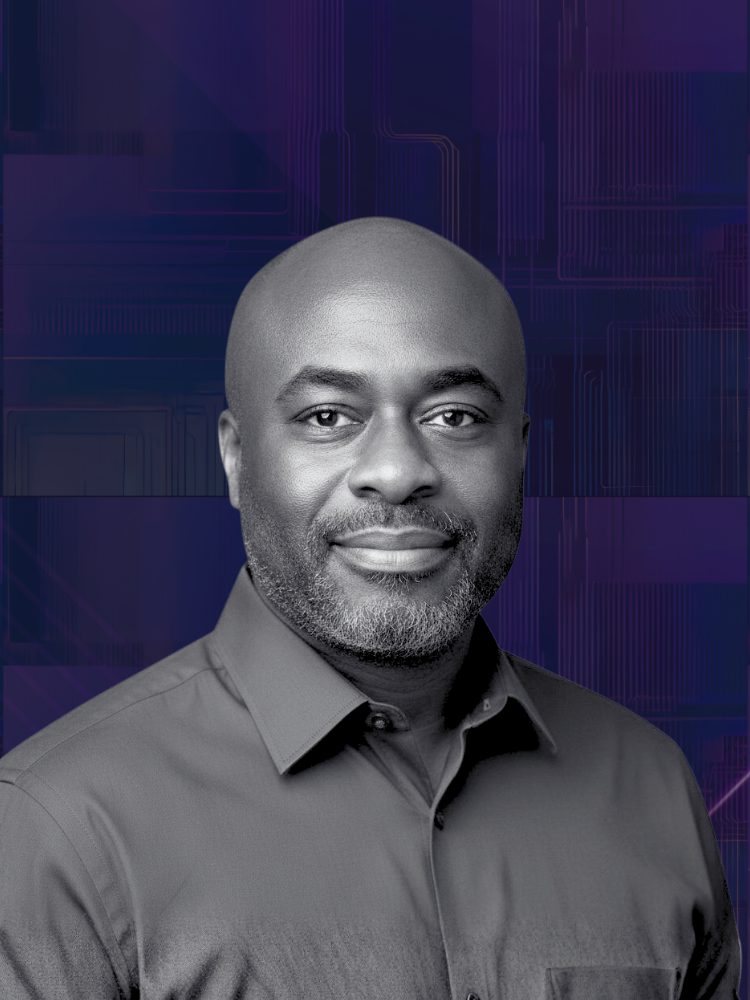


Binoy Unnikrishnan is a strategic global sales executive with more than two decades of experience driving growth across semiconductors, cloud, and client market segments. He joins Lenovo as the Vice President of Worldwide Cloud Sales at Lenovo, responsible for leading the company’s global cloud sales, go-to-market strategy, customer engagement with our key hyperscaler and next-wave cloud customers.
He joins Lenovo from Samsung where he was Vice President of Sales, leading multi-billion-dollar memory sales to hyperscaler and data center customers, managing DRAM and NAND, and establishing the HBM portfolio.
Previously, Binoy served as Co-Chief Revenue Officer and Vice President of Worldwide Sales at Ampere Computing, where he built a global team, drove double-digit growth, and secured marquee wins with several cloud service providers worldwide. During his 20+ year career at Intel, Binoy was instrumental in scaling strategic accounts including Amazon and Dell, where he grew Intel’s AWS revenues fivefold, established and expanded Intel’s co-sell pipeline to over $1B annually.
His leadership combines deep technical expertise with proven go-to-market strategies, resulting in sustained competitive advantage and building long-term customer partnerships.
Binoy holds an MBA and an M.S. in Electrical and Computer Engineering from the University of Washington, and a B.S. in Electronics Engineering from the University of Bombay.