Redefining AI Secure Management and Control Infrastructure from Silicon to Firmware, with Lattice
AI infrastructure is splitting into more pieces than any one management layer was built to track. A server that once ran a handful of sensors now carries roughly 1,200, and Lattice Semiconductor has watched its low-power FPGA footprint climb from tens of chips per rack to hundreds of chips per rack in the space of two years, spread across millions of servers and tens of thousands of data centers.
At The Six Five Summit: AI Unleashed 2026, Patrick Moorhead spoke with Ford Tamer, CEO of Lattice, and Sanjoy Maity, Senior Vice President and AMI Business Unit Leader at Lattice, about what the combination of Lattice and AMI means for secure management and control across AI infrastructure, from silicon through firmware.
Tamer and Maity walked through the strategic logic behind bringing the two companies together. Lattice's low-power FPGAs sit closest to the hardware, handling boot, power sequencing, security, and sensor fusion for everything from XPUs and networking silicon to LIDAR and industrial sensors.
AMI's firmware has performed the same boot, manage, and secure function at the software layer for four decades. As racks disaggregate into separate compute, power, cooling, network, and storage modules, that disaggregation has created two new management components, the host processor module and the secure control module, and Tamer and Maity argue that pairing FPGA and firmware closes the gap between them for customers trying to move faster to market.
On security specifically, Tamer pointed to the recent executive order mandating protection against quantum-era cryptographic threats as validation for Lattice's post-quantum cryptography work, arguing that FPGAs can adapt to evolving attack methods in ways fixed-function ASICs cannot. He also detailed the Holoscan Sensor Bridge partnership with NVIDIA, where Lattice FPGAs handle sensor fusion and pre-processing that feeds NVIDIA's Jetson Thor and Jetson Orin edge compute platforms.
Key Insights:
🔹 FPGA density at the rack level has grown sharply. Lattice's footprint moved from tens of FPGAs per rack to hundreds within two years, a shift Tamer ties directly to the roughly 1,200 sensors now found in a single AI server and the broader move toward rack-scale disaggregation.
🔹 Disaggregation is creating new management boundaries. Maity described the host processor module and secure control module as the two components emerging from disaggregated rack architecture, each requiring its own secure management and control layer.
🔹 Lattice frames FPGA flexibility as a security advantage over ASICs. With post-quantum cryptography requirements now shaped by federal policy, Tamer argued that FPGAs can update to counter new attack methods in the field, while fixed-function ASICs cannot keep pace with algorithms that keep changing.
🔹 The combined business has an aggressive financial runway. Lattice guided to a $1 billion run rate at the midpoint of Q3, expects to exit 2026 near $1.2 billion, and has set an aspirational goal of $3 billion in run rate revenue exiting 2030, up from $520 million in total 2025 revenue.
🔹 The long-term roadmap extends past the data center into physical AI and eventually space. Tamer described a shift from human-repaired infrastructure to self-diagnosing, self-healing systems, positioning FPGA and firmware as the foundation for infrastructure that has to fix itself without a technician on site.
The nearer-term proving ground for Lattice and AMI is rack-level firmware consolidation and sensor management. The self-healing, space-hardened version of that vision is the stated long-term direction, not the current business.
Watch the full video at sixfivemedia.com, and subscribe to our YouTube channel so you never miss an episode.
Catch more Six Five Summit: AI Unleashed 2026 sessions at sixfivemedia.com/summit.
Disclaimer: Six Five Media is for information and entertainment purposes only. Over the course of this video, we may discuss companies that are publicly traded, and we may reference their equity share prices. Nothing discussed during this webcast should be considered investment advice or a recommendation to buy or sell any security. We are not investment advisors, and you should not rely on this content as financial advice. Six Five Media collaborates with technology companies and industry leaders to produce research-driven interviews and multimedia programming for enterprise technology audiences.
Ford Tamer:
What's great about FPGA is we stay ahead of the bad actors. So ASICs can't because ASICs are fixed functions and these algorithms keep changing faster than the ASIC can react. Having the FPGA in the field allows our customers to constantly adapt and constantly change to the fast-moving requirement that security is imposing on server and networking type of infrastructure system.
Patrick Moorhead:
Hey everybody, welcome to the Six Five Summit 2026. The theme of this year's show or seven years in here is AI Unleashed. And as you've seen, there's a tremendous amount of unleashing of benefits downstream, but also some challenges related to security and control and doing all this Silicon through firmware. And we're joined today by Ford Tammer, CEO of Lattice, and Sanjoy Maiti, Senior Vice President of the AMI Business Unit Leader of Lattice. Sanjoy, welcome to Six Five and Ford. Welcome back.
Ford Tamer:
Thank you. Thank you.
Patrick Moorhead:
Yeah. First of all, congratulations on the deal. It was interesting. I got it the first time, having worked at a bunch of systems companies and silicon companies before, but I just wanted to say congratulations on that. Thank you, Pat. So, Ford, let's start with you. You and I have talked a ton about Lattice and where the company is headed. And now with AMI coming into the family, into the picture, we've got Sanjoy here as well. But before we get into some of the bigger market shifts, can you give a little bit of context to our viewers on the new acquisition and strategically, what made this a fit?
Ford Tamer:
Excellent, Pat. Thank you. Thank you. Thanks again for the opportunity to be at your Six Five Summit. And good morning or good evening to your 6.5 audience. Sanjoy and I will maybe ping-pong and do this together. We're very excited about this session. So let me start with a quick overview of Lattice and AMI for your audience. I'll do Lattice, and Sanjoy will do AMI. But as some of you know, and some of you may be new to our story, Lattice is the low-power programmable companionship for data center AI and physical AI. Our small and mid-range FPGA provide companion functions for secure management and control and data plane processing. We do things like, you know, booting, power sequencing, security management, control, bridging, IO expansion, sensor fusion, and data processing. And we do this for partners on the data side, such as XPU, GPUs, CPUs, DPUs, microprocessor, microcontrollers, but also networking function and switch and NICs, the board management controllers, and then on the physical eye, we also do this for all kinds of sensors, from image to LIDAR to radar, infrared, thermal cameras, and then industrial motion and various other industrial sensors. And Sanjoy, can you say a few words about AMI, please?
Sanjoy Maity:
Sure. Thank you, Ford. So AMI is the foundation of the firmware for the last 40 years. So that use is very essential for the AI data center infrastructure. We make firmware to boot, manage, and secure them. And these are very, very essential for the data center. At the same time, the AI data centers are very complex, right? So there are so many components, so many infrastructure elements. So we also provide holistic view of the data center through a single pane of glass view, from telemetry to monitoring, 24 by seven monitoring, error correction, and boosting up time all together. So the data center administrator in a hyperscale data center environment can have a total view of the AI data center. So Ford, you can elaborate why we joined hands.
Ford Tamer: Thank you, Sanjoy. So, we've been, quote unquote, dating for six years. We've known each other for that long, Pat. So, we serve as very similar customers on hyperscaler, NeoCloud, major server and networking system OEMs, as well as silicon and system partners that we work with very closely. So we ascribe, both of us ascribe to this open system neutrality across the whole ecosystem. We both operate very close to the hardware. So fundamentally, our FPGAs are very close to all of these sensors I just discussed. We're the first chip that goes from the sensor to, before they go to digital type of processing. We provide these deterministic, real-time control, low latency, parallel processing capabilities near these sensors and partners. And similarly, AMI is also very low-level firmware booting, managing, securing all of these hardware. So you can see we're very complementary, and our customers now have a tremendous pressure to go shift left and go faster time to market. And together, we believe we're going to provide secure management control solution, a turnkey, and speed up our customers' time to market and tremendous benefit to them. Do you want to elaborate on that, Sanjoy, before we go back to Pat?
Sanjoy Maity:
Yes, absolutely. So as Ford mentioned, right, our strategic intent is pre-validated, proven solution, handing over to our customer. So the customer do not spend their time in the integration issues, and they can focus on their IP development and focus on their business. So this is a massive faster to market advantage that we are going to give them. That's the main intent for us to do together.
Patrick Moorhead:
Yeah, I've been a fan of the two companies coming together, and it's great to hear it in your own words here. So Ford, I want to pull out a little bit, go macro here. So AI is obviously changing more than the processors themselves, right? We've seen a lot of Massive changes, not just subtle changes, massive changes in power, connectivity, security. How do you control these systems and also the devices themselves? Even how the systems themselves are managed. But ask you, how is AI changing the overall end-to-end infrastructure that surrounds the compute?
Ford Tamer:
Yeah, no, thank you, Pat. Look, I've been in this industry too long. I've been working for the past 20 years with the hyperscalers, server networking, OEMs, ODMs. starting at Broadcom on the networking side, where we spearheaded the switch architecture that you've got today, then going to Infi, creating and growing the optical interconnect. And from the boards of Marvell, Teradyne, and Groth, before coming to Lattice, I've never seen a massive scale out and build out like we're having today. So it's just phenomenal. 2025 was a year of training. So we saw a lot of our revenue being driven by GPU and associated infrastructure. In 2026, we've seen a tremendous move to inference, and this has been driving the agentic revolution, has driven tremendous growth in CPU storage and associated networking. So we're benefiting from both of these trends, and we're witnessing rapid adoption of, as you said, a whole bunch of new architecture on the networking being disaggregated on the scale up, scale out, scale across, on the liquid cooling being widely adopted, on the move to 800 volt. But over the past couple of years, the number of sensors in a server has mushroomed to 1,200 sensors controlling all the various aspects from fan to CDUs to optical interconnect. And we sit near each and every one of these sensors. So this has driven the adoption of our low-power FPGA from when I joined that is two years ago to tens of FPGAs per rack to hundreds of FPGAs per rack. And this is across millions of servers, across tens of thousands of data centers. So you could see providing this secure management and control of this very complex infrastructure becomes very key We work very closely with all the various board management controller, microprocessor, microcontroller in a very complimentary way. We provide, again, the deterministic low latency connectivity, high precision parallel processing function very close to the hardware. Let me give you two examples. On the data center AI, security has been our calling card. And we're really excited to the latest executive order mandating protection against crypto quantum. with post quantum cryptography or PQC. We've really done a great job providing this PQC solution ahead of everyone in the space. And what's great about FPGA is we stay ahead of the bad actors. So ASICs can't because ASICs are fixed functions and these algorithms keep changing faster than the ASIC can react. Having the FPGA in the field allows our customers to constantly adapt and constantly change to the fast moving requirement that security is imposing on server and networking type of infrastructure system. The second example I'll give you on our physical AI. On physical AI we're seeing all of these systems now adopting a brain with AI and we're providing very important bridging from the analog world on the sensor to the physical world to the digital world with the AI. A good example is what we do with our key partner, NVIDIA, where we provide a function they call HoloScan, us and their other partners, where we take a whole bunch of different sensors, do the sensor fusion, pre-processing according to some algorithm they gave us, and feed TOR and ORIN on the physical system, the metadata, making TOR and ORIN more efficient. So we're very excited about this partnership. So you could see how our capabilities are really helping AI tremendously across both data center AI and physical AI.
Patrick Moorhead:
That was a great explanation. And Sanjoy, it was one thing to control and manage an XPU or a single GPU. But now we've gone from that to a tray, to a rack, to pods or fleets, and it's increasingly heterogeneous, right? We've got five to six flavors of XPU at any one moment. CPUs are cool again as well. I'm trying to be funny there. But let me ask you this, from a management increase in complexity, what changes when the infrastructure has to be managed at that kind of scale?
Sanjoy Maity:
Great question. So let me tell you that what are the challenges that the industry is facing today for this? Yes, there is a massive level of fragmentation in terms of technologies, in terms of architecture. x86 is not the only architecture, we have arm, we have risks and everything. So scalability, security, sustainability. These are the three major challenges that the ecosystem is facing today. And heterogeneous architecture is massively, I would say, hugely complex to manage from one single pane of glass. That is why I mentioned single pane of glass, because each one has to be managed differently. So in my firm, we implement a very modular firmware using the open source such a way that it can support with a single version of code. We support all architecture, all BMCs, all companion chips. And that is the greatest value that we bring to our customer. That is the customer benefits. So what is the customer benefits is time to market because it is proven and pre-validated. What is another customer benefit is a lower integration cost. They don't even have to worry about it. Lattice FPGA, AMI firmware, together we bring that. And as Ford mentioned, that there's disaggregated and all these different solutions that CDU, sensors, environmental sensors, the CPU sensors, GPU sensors, all are coming together and who is going to manage that heterogeneous sensors even. So we provide the brain behind it. So this together that we bring the tremendous benefit to the customer.
Patrick Moorhead:
Yeah, so as the environments get more complex and heterogeneous, you're meeting them, you're meeting your customers where they are. And that's a really good place to be. So Ford, let's look forward ahead here. You mentioned already some of the forces that were coming together, right? Started off with a lot of training and back of the envelope, we were 80-20 training and inference an hour. 80-20 inference and then training. Agentic AI, right? I mean, three years ago, it was LLMs, right? And now we have swarms and order of magnitude of agents per employee that we're forecasting. We have brand new architectures. Brand new architectures in the rack, outside of the rack of the entire data center. And then we have physical AI, which hasn't busted open yet, like we've seen inside of the data center, but it's the clear next thing. And on top of that, security requirements are evolving as well. I mean, who thought that the biggest headline two weeks ago would be about jailbroken models? that the zoo animals got outside of the sandbox. So all these things going. So I know they're all coming together forward, but which market shift do you think will have the greatest impact on infrastructure over the next few years?
Ford Tamer:
Yeah, in fact, what we'll do, it's a partnership between us and AMI. So we're going to do the same here. I'll have Sanjoy cover a couple of trends, and let me cover a couple. And then, Sanjoy, please go ahead.
Sanjoy Maity:
Yes. So, Ford, as mentioned previously, that inference, agentic trends are going on. And this will be beyond 2028, it will continue. But in the infrastructure side, what is the change that we are seeing? Because we support the infrastructure, right, the hardware level. We see disaggregation, massive level of disaggregation. Because of the scalability, the racks are disaggregated. Computer, power and cooling rack, network, storage, these are all disaggregated. Even within the compute rack, we see the heterogeneous architecture. It could be CPU, NPU, everything. Now, this disaggregated solution has two major elements. One is called HPM, which is the host processor module, where the CPU, GPU, NPU sits. Another one is the SCM, where secure control module comes into the picture. And there, these are the two components we, Lattice and AMI, has a lot to contribute because we are open secure manage and control that we are bringing to this element. So this is desegregated then it comes into the power and cooling rack where EPGs are used You have heard that hundreds of APGs are used today in the CDUs, PowerShell, everywhere. Then network and storage comes. When you have all these desegregated elements, somebody has to manage overall. So there is one more item that we are doing is back wide or data center wide, forward wide management. That is the more critical things. So these are the trends that we are seeing in the industry. Rack management, forward management, data center management is coming. So customer benefits is again integration, lower integration costs, time to market. And I will support, please elaborate with this lattice firmware and a lattice FPGA and AMI firmware. What else we can offer to the industry?
Ford Tamer:
Thank you. I mean, so if you take this to the ultimate frontier, that's going to be space, right? So there's a lot of talk about this data center in space. And I think eventually it's going to happen, but it will happen first on Earth. So the interesting part is you won't be able to have humans go out there and manage these data centers. So you're going to have to go from predictive maintenance, predictive failure, where telemetry is going to be monitored by FPGA and firmware, and then go from human intervention to self-diagnostic, self-manage, self-control, and self-healing infrastructure, right? Human repairing the faults to AI predicting the failure and having these robots fix the failure ahead of time. And this is where our joint solution can come in. We, again, our lower power FPGA are hardened for space. We're in this FDSI process, which is very reliable process in the US fab in Austin, Texas. We also have the firmware be part of the solution. For example, if a bit has been wrongly flipped, the firmware can fix it. If a processor is hung, the firmware can restart it. If a component is about to fail, the firmware can flag it and direct the robot to replace the part. So again, further evidence of our synergistic solutions. And the final one, as I hinted before, is we see the rise of physical AI being a huge benefit for both of us in industrial robotics, humanoids, autonomous vehicle like drones and robotaxis, HMI, AGI, AR, VR. And so you can see we together can provide secure management and control across both of these data center and physical AI.
Patrick Moorhead:
Yeah, I'm really glad we ended on space there and the thought of, you know, you can't just send a service person up there. This thing better be self healing. If it's not self healing, you better have a 1 put a 1 button push where you can update not only the software, but the firmware and also. all the FPGA code. So I'm really glad we did this. Hey guys, it's been a great conversation. We started with, you know, why Lattice and AMI are coming together and you spent some time really doing a good job kind of interspersing the magic of the two companies. But let's try to just summarize this as we look ahead And Sanjoy, maybe you can answer this one first. What does the combined lattice and AMI company look like going forward? Just very simply.
Sanjoy Maity:
Both the companies, we are very committed to support the neutrality first, and support a broad ecosystem, and most importantly, open source. Open community, open source community is very important. And there are, in our estimation, probably 12,000 firmware engineers around the world. And guess what? 10% are at AMI. What see the challenge is there are many contributors. Everybody contributes to the open community, but the code gets fragmented and with no single ownership and accountability. So at EMI, we're continuously merging those, validating them, and providing a single version of truth to all our customers. Our aspiration is to become like a red hat of firmware. So we can provide customers such a way that customers can have a massive time to market advantage. And for With this lattice and AMI story, you can tell the audience now, where do you want to take the company next level?
Ford Tamer:
Yeah. Thank you, Sanjoy. So if that's okay, Pat, I'll just give you a quick view on what this means financially. So near term, we're very focused on accelerating both companies, adding more resources, delivering on the commitment to customer and going faster to market together with solutions. Long term, as I said, we aspire to be the leader in secure management and control for both data center AI and physical AI. Financially, what it means, we at the last earnings call guided to a midpoint Q3 of a billion run rate, billion dollar run rate together on the revenue side. We expect to exit this year at about 1.2 billion run rate. And we also outlined on that call our aspirational goal to reach 3 billion run rate exiting 2030. And that would require only just over 25% annual revenue growth rate, so very doable for us. So considering we only did 520 million in revenue last year in 2025, you could see it's a very significant gross opportunity we're delivering for our customers, for our partners, and our shareholders.
Patrick Moorhead:
Yeah, guys. Yeah, I didn't even congratulate you on the earnings. They were stunning. I do like the charts in particular that you pulled together, but I thought you did a really good job expressing financially and your long-term guide was strong as well and really does show in the end the power of the two companies together and what that can mean financially. Guys, I really appreciate this conversation. I knew the connection of these two, I got it the first time you briefed me and now the hard part starts, making it happen and sounds like the two of you are up for the task.
Ford Tamer:
Thank you, Pat. Yeah, we're looking together to a bright future.
Patrick Moorhead:
Yeah. Thanks for being part of this Semiconductor Spotlight. Hey, to our viewers out there, don't forget to hit that subscribe button, follow us on social media and check out all of our Six Five Summit content at sixfivemedia.com. And also check out all the Lattice content on my website and more insights and strategy and also the Futurum Group. We'll be right back. Don't go anywhere. Bring me back with some more great content. Take care.
,
Speaker
Ford Tamer is Lattice Semiconductor’s Chief Executive Officer and serves on the company’s Board of Directors. He joined Lattice in September 2024.
Ford brings to his role extensive industry experience and leadership spanning 20 years in semiconductors and 10 years in software. Before joining Lattice, in his most recent operating position, Ford served as President and CEO of Inphi for more than nine years, where he led the company to become the market leader for electro-optics solutions for cloud and telecom operators until its merger with Marvell Technologies, Inc. Prior to Inphi, he was CEO of Telegent Systems, Senior Vice President and General Manager of Broadcom’s Infrastructure Networking Group, co-founder and CEO of Agere Inc., amongst other operating roles earlier in his career. He also, most recently, held a senior operating partner role at Francisco Partners.
Ford holds an M.S. and Ph.D. in Engineering from MIT.He currently serves on the Board of Directors of the Global Semiconductor Alliance (GSA) and the Semiconductor Industry Association (SIA), and previously served on the Board of Directors of Groq, Inc., Marvell Technologies, Inc., and Teradyne Inc.
.png)


.png)
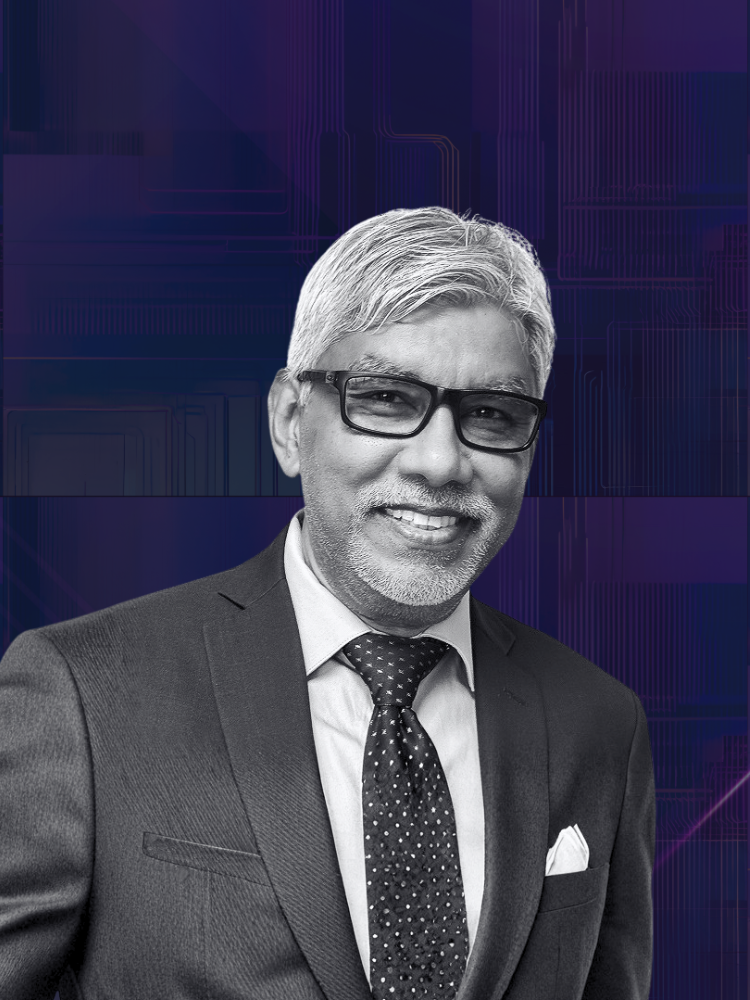
Sanjoy Maity leads Lattice Semiconductor’s AMI business unit. He joined Lattice following the acquisition of AMI in July 2026. Sanjoy is responsible for driving the continued success of AMI security, orchestration, and manageability products and solutions across strategy, business management, customer and partner engagement, and engineering.
Sanjoy brings more than 35 years of deep expertise in firmware, server manageability, and platform security to the role. He joined AMI in 1991 and, prior to its acquisition by Lattice, most recently served as its Chief Executive Officer, a role he assumed in 2019. Under his leadership, AMI expanded its position as the global standard-bearer for firmware, with solutions deployed in billions of devices worldwide. Prior to becoming CEO, he headed AMI’s Manageability Solutions Group, where he designed and developed the industry’s first true out-of-band manageability solution – a technology that has since become an industry standard.
Sanjoy holds more than 80 patents from the United States Patent and Trademark Office spanning firmware and system management technologies. He holds a Bachelor’s degree in Computer Science and Technology from the Indian Institute of Engineering, Science & Technology (IIEST).