
Agentic AI Frameworks at IBM TechXchange Conference
SHARE


Alex Seymour, Product Manager at IBM, joins Keith Townsend to share his insights on the evolution and importance of Agentic AI frameworks within IBM's strategy at the TechXchange Conference.
What’s the next frontier for AI? On this episode of Six Five in the Booth, host Keith Townsend sits down with IBM's Alex Seymour, Product Manager for watsonx.ai, to explore Agentic AI—an innovative framework redefining how AI interacts with the world. Live from IBM TechXchange, they dive into how this groundbreaking tech is shaping industries and pushing the boundaries of AI innovation.Their discussion covers:
- The concept and benefits of Agentic AI frameworks.
- How IBM is implementing these frameworks in its products.
- The potential impacts of Agentic AI on various industries.
- Future developments and research in AI at IBM.
- Challenges and ethical considerations in advancing AI technology.
Learn more at IBM, watsonx developer hub, and Github developer repository.Watch the video below at Six Five Media, and be sure to subscribe to our YouTube channel, so you never miss an episode.
Keith Townsend:
All right. We're live, as you can tell, from the show floor of Xchange, IBM TechXchange. Sandbox 2.0, I love that name. I'm with Alex. Alex, IBM watsonx video. We're not going to get into the X. I want to talk to the developer audience. Talk to me about what's here for developers at TechXchange.
Alex Seymour:
Yeah. I think, just take a step back. Right? Developers are at the core of this next generation of applications. So within the .ai platform, we're focused on building and sharing a collection of services to support developers through that development lifecycle towards building this next generation of applications.
Keith Townsend:
All right. So I got to be blunt, we're, again, at IBM. I remember the days, the early days of watson, I had to call in to get someone to come in, build an application for me. I got a lot of value out of it, but I don't know if I would have called it a developer experience. How has that experience changed? What's the entry point for developers with IBM Cloud?
Alex Seymour:
Yeah, it's a really good question. So, we're focused on sharing collections of learning materials and assets to help developers start and accelerate the development of those applications. So we've got our Developer Hub, which contains all of the information and learning materials required to get started with the platform, as well as our Git repo, which contains a load of starting applications to provide the foundation for a lot of these applications.
Keith Townsend:
So we've talked abstracted. Talk to me about some level of detail. What type of applications are developers actually building with IBM?
Alex Seymour:
Yeah, it's a good question. So we see four core areas for applications in generative AI and enterprises. We've got applications focused on classification and summarization. So, asking models, "Right. We've got this transcript from our clients. Is this positive in sentiment, negative in sentiment?" And that kind of analysis. We're then seeing a lot of knowledge search in Q&A use cases. So, many clients today have massive collections of data and documentation about their business and want to expose that to their own internal stakeholders as well as their customers through a knowledge Q&A system. And then finally, we have the automation of business workflows. So we're talking a lot about agents and agentic behavior and how we can use those applications to automate the workflows that we do in our day-to-day role.
Keith Townsend:
So IBM with Granite are on a cutting-edge of small models that are labeled to me to customize these small models for my use cases. But talk to me about model selection in general. What's my options for models in the IBM development world?
Alex Seymour:
100%. So within our .ai platform, we offer a collection of third-party models provided by partners like Mistral and Meta with their Llama series of models. We've also released our own set of Granite models, open source, that are smaller focused models that are optimized for specific use cases. Now, the benefit of that with these smaller models is they're cheaper and they're more performant for these specific use cases.
Keith Townsend:
So bonus question, last question. Talk to me about the AI community within IBM. Where can I get help from my peer group?
Alex Seymour:
100%. So as I mentioned, we share a whole load of resources publicly and openly. If you want to connect with the AI community within IBM, we just released our developer-focused Discord channel. So that's where we'll be sharing updates and answering questions about how to build AI applications with the .ai platform.
Keith Townsend:
Alex, thanks a lot for joining me. Stay tuned for more coverage from the show floor of IBM TechXchange.
MORE VIDEOS
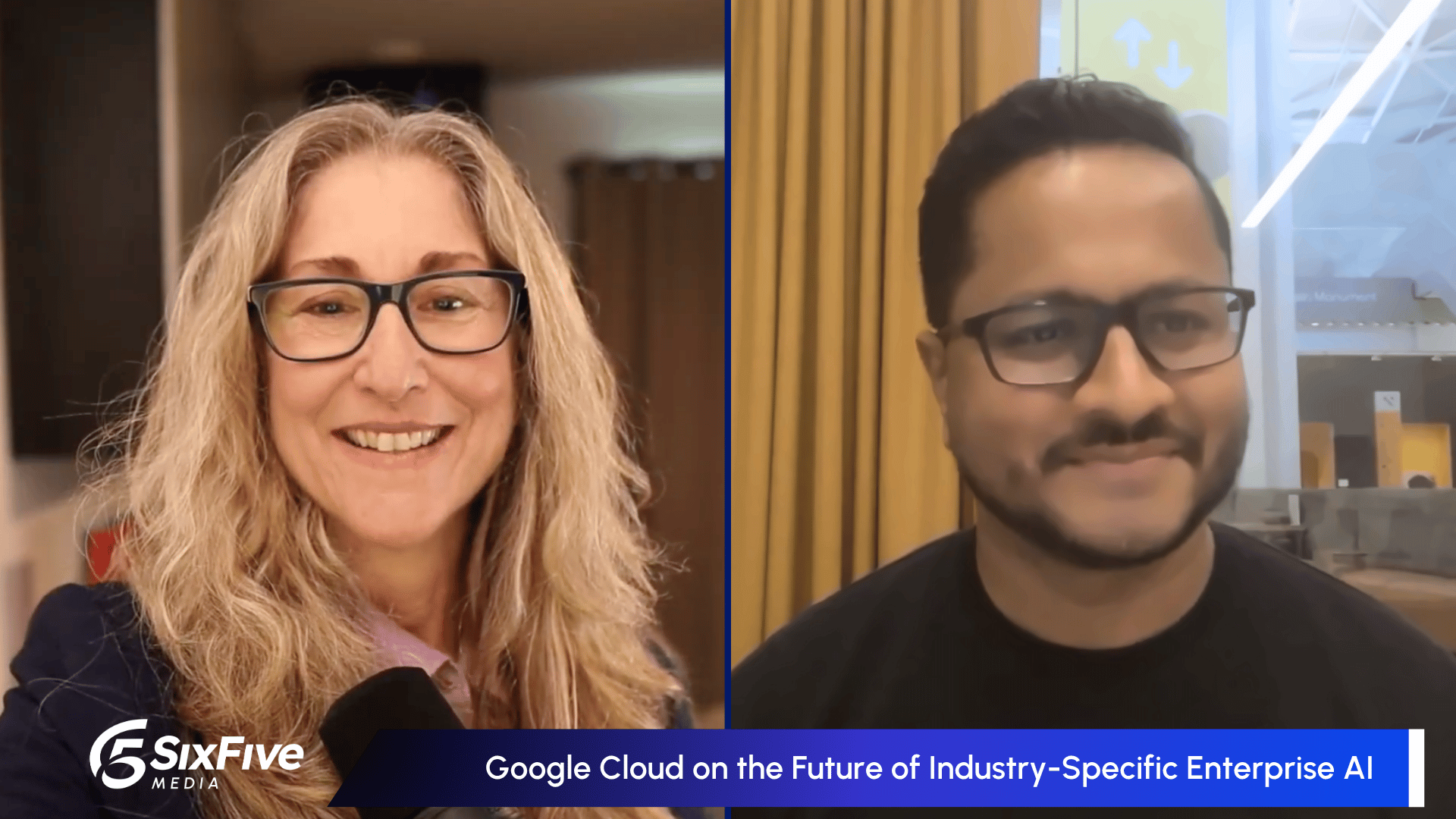
Industry Veteran and Google’s Satish Thomas on Replacing One-Size-Fits-All Enterprise AI With Industry-Specific Agents
Google is moving enterprise AI beyond general-purpose tools and into industry-specific workflows built for regulated sectors such as legal and financial services. Satish Thomas, Vice President, Business and Industry Solutions at Google, joins Six Five to explain how Gemini Enterprise for Industries combines purpose-built skills, ready-to-deploy agents, model choice, and an open partner ecosystem to bring AI into the workflows enterprises already run.


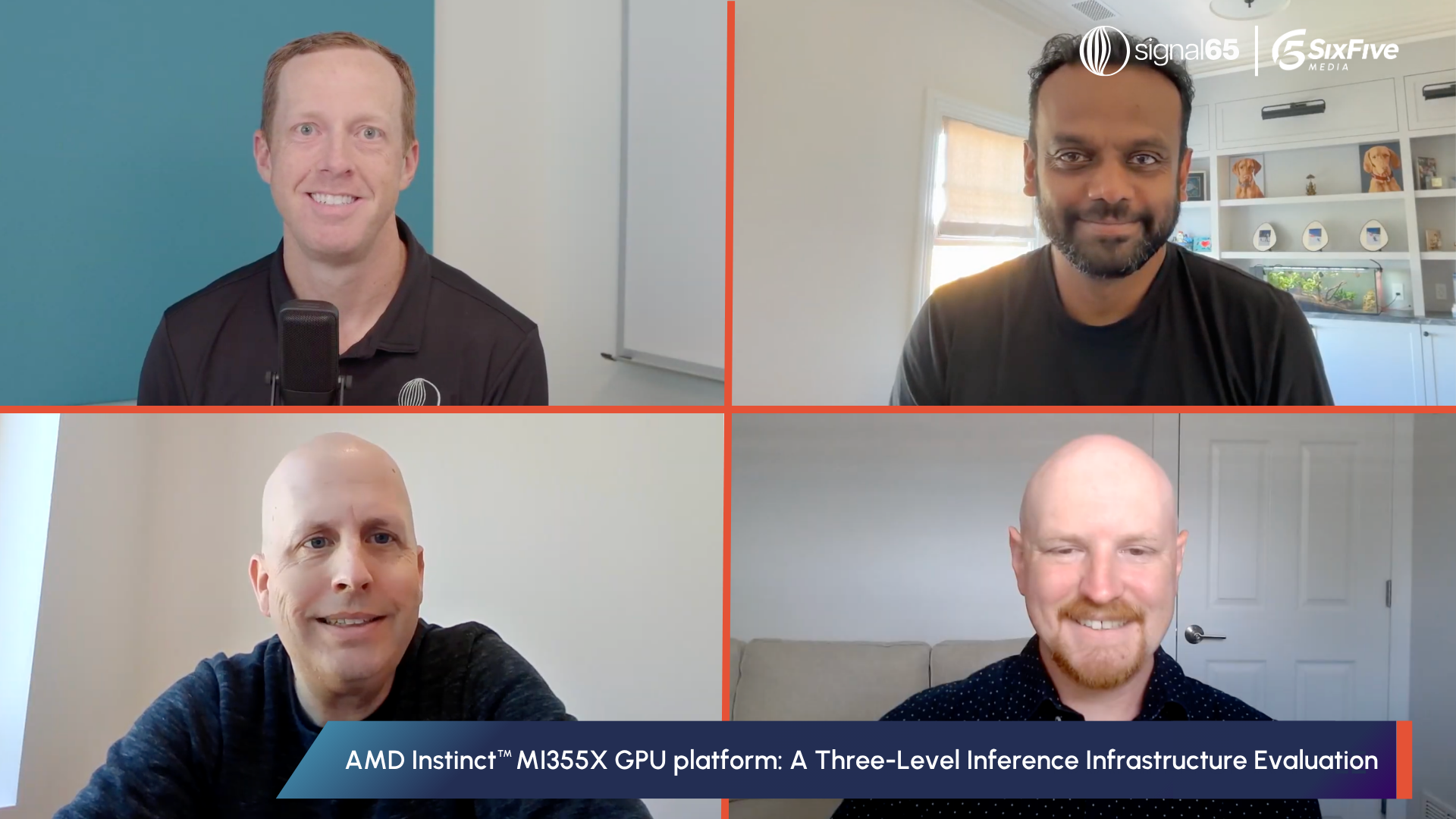
AMD Instinct MI355X vs NVIDIA HGX B200 GPU platforms AMD vs NVIDIA: A Three-Level Inference Infrastructure Evaluation
Signal65 President Ryan Shrout and Senior Performance Analyst Mitch Lewis review a new three-level inference infrastructure evaluation of AMD's Instinct MI355X against NVIDIA's HGX B200 with AMD's Andrew Dieckmann and Anush Elangovan. The MI355X's memory bandwidth advantage compounds as context and concurrency scale, delivering up to 2.25x throughput gains and roughly 40 percent lower cost per GPU hour.
.png)
Anthropic’s AI Slowdown, OpenAI’s $1.2T Valuation & Salesforce’s AI Bet
Anthropic's "Pace the Frontier" essay set off a week in which nearly every major AI leader, and two heads of state, weighed in on whether the frontier should slow down. Patrick Moorhead and Daniel Newman read the incident as something larger than a safety debate. Whoever sets the pace of the frontier also sets the pace for open-weight models, enterprise custom models, and the trillion-dollar valuations riding on top of them. That contest, not the essay itself, is the through-line of Episode 320 of The Six Five Pod.
Other Categories
CYBERSECURITY
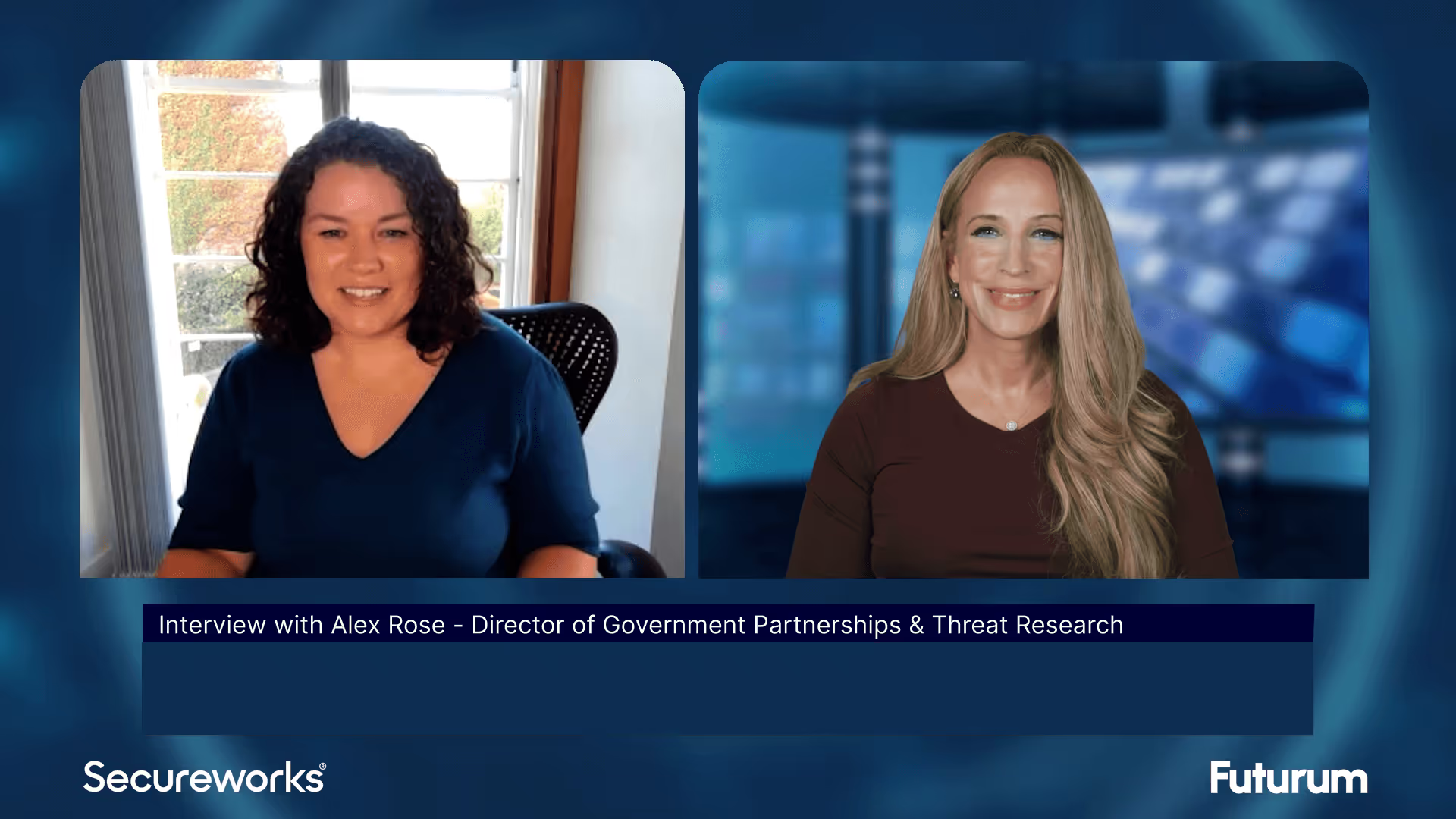
Threat Intelligence: Insights on Cybersecurity from Secureworks
Alex Rose from Secureworks joins Shira Rubinoff on the Cybersphere to share his insights on the critical role of threat intelligence in modern cybersecurity efforts, underscoring the importance of proactive, intelligence-driven defense mechanisms.

HP Launches World’s First Business PCs to Protect Against Quantum Hacks - The Six Five On the Road
On this episode of the Six Five - On the Road, hosts Patrick Moorhead and Daniel Newman are joined by HP's Ian Pratt, Global Head of Security for Personal Systems.
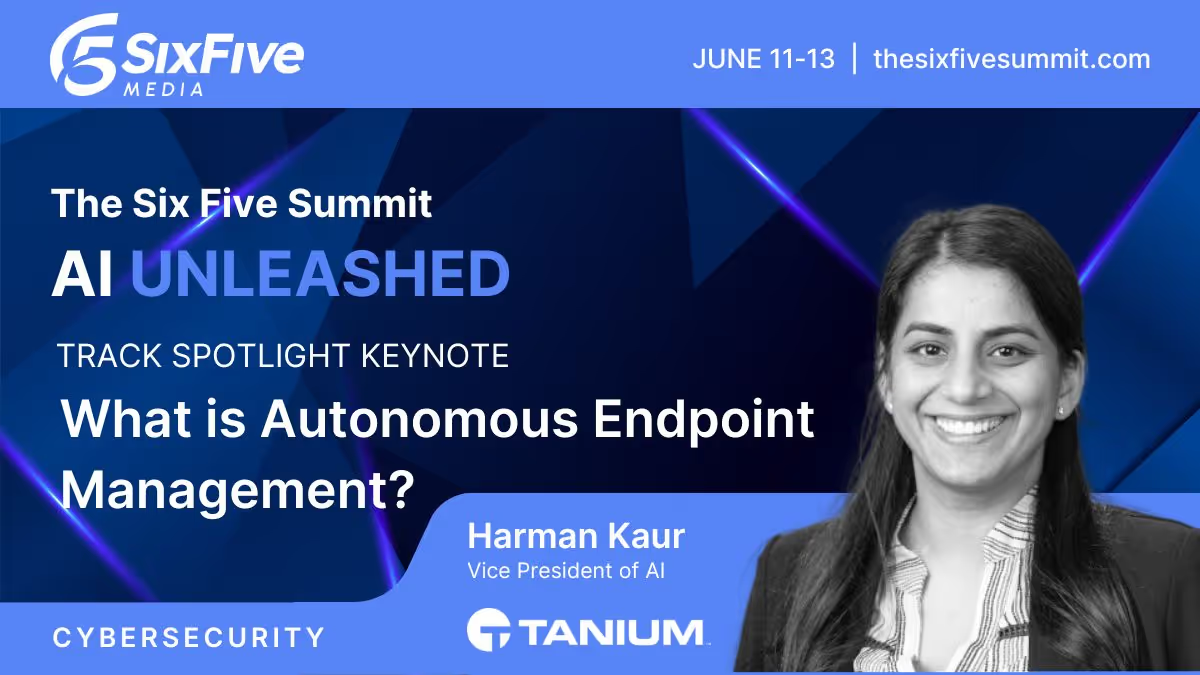
What is Autonomous Endpoint Management?
Autonomous Endpoint Management is a framework designed to unify IT operations and security teams on a single platform through real-time control and visibility.
QUANTUM
Quantum in Action: Insights and Applications with Matt Kinsella
Quantum is no longer a technology of the future; the quantum opportunity is here now. During this keynote conversation, Infleqtion CEO, Matt Kinsella will explore the latest quantum developments and how organizations can best leverage quantum to their advantage.
Accelerating Breakthrough Quantum Applications with Neutral Atoms
Our planet needs major breakthroughs for a more sustainable future and quantum computing promises to provide a path to new solutions in a variety of industry segments. This talk will explore what it takes for quantum computers to be able to solve these significant computational challenges, and will show that the timeline to addressing valuable applications may be sooner than previously thought.