
Bringing AI Agents to the Code That Can’t Leave the Building
SHARE


IBM’s Max Jesch joins Jason Andersen to explain how IBM Bob pairs premium packages, rule-based migration tooling, and on-premises models to bring AI agents to mainframe and other mission-critical code. For regulated teams, where agents run and how much control developers keep determine whether modernization can move forward.
Mission-critical code has become the test for enterprise coding agents. A COBOL codebase can exceed 50 million lines, far more than a million-token context window can hold, and banks and defense teams need to understand every change that enters production code.
At IBM TechXchange 2026 in Atlanta, Jason Andersen, Vice President and Principal Analyst at Moor Insights & Strategy, joins Max Jesch, Senior Outbound Product Manager for IBM Bob at IBM, to explore how IBM is bringing agentic AI to enterprise development and modernization. Their conversation covers the introduction of Bob Desktop, specialized packages for mainframe, Java, and DevSecOps workflows, the growing viability of on-premises AI, and the importance of keeping developers in control.
For enterprises operating in regulated and mission-critical environments, adopting AI coding agents requires more than model performance. Organizations must consider where models run, how agents interact with existing tooling, and how to maintain consistency and accountability across complex codebases. IBM's approach combines flexible deployment options with established, rule-based modernization tools, enabling more predictable outcomes without sacrificing enterprise governance.
Key Takeaways Include:
🔹 Why IBM Bob is expanding beyond developers. Of approximately 170,000 Bob users, 50,000 are developers, while 120,000 primarily use it for non-development tasks. This shift prompted IBM to introduce Bob Desktop, making AI-powered workflows more accessible to users who don't need the complexity of an IDE.
🔹 How specialized packages bring decades of expertise into agentic workflows. IBM's mainframe package integrates established COBOL tooling developed over decades, helping agents navigate codebases that can exceed 50 million lines and overwhelm general-purpose context windows. Similar capabilities support Java modernization, while DevSecOps represents IBM's fourth premium package.
🔹 Why rule-based tooling is critical for modernization at scale. A general-purpose agent might successfully complete the same Java upgrade 20 times but take a different approach each time, introducing inconsistency across legacy environments. By integrating deterministic tools such as OpenRewrite recipes, IBM enables more repeatable, cost-effective migrations across large application portfolios.
🔹 Why human oversight remains essential for mission-critical development. In highly regulated sectors such as banking and defense, organizations need visibility into code changes and clear accountability for outcomes. IBM's approach keeps developers in control of agentic workflows, balancing AI-driven productivity with the governance these environments demand.
🔹 How advances in AI models are making on-premises deployment practical. Enterprises can access models through existing hyperscaler gateways to meet compliance requirements or leverage committed cloud spending. Alternatively, Bob supports fully on-premises deployments using models such as NVIDIA Nemotron and Poolside Laguna. While GPU infrastructure requires upfront investment, Jesch notes that ongoing compute costs can be more predictable than expected.
As agentic AI moves deeper into enterprise software development, successful adoption depends on more than automating code generation. By combining deployment flexibility, proven modernization tooling, and human oversight, organizations can apply AI to mission-critical systems while maintaining the consistency, security, and accountability those environments require.
Watch the full video at sixfivemedia.com, and subscribe to our YouTube channel so you never miss an episode.
Learn more about IBM Bob’s self-hosted option at ibm.com.
Disclaimer: Six Five Media is for information and entertainment purposes only. Over the course of this video, we may discuss companies that are publicly traded, and we may reference their equity share prices. Nothing discussed during this webcast should be considered investment advice or a recommendation to buy or sell any security. We are not investment advisors, and you should not rely on this content as financial advice. Six Five Media collaborates with technology companies and industry leaders to produce research-driven interviews and multimedia programming for enterprise technology audiences.
Jason Andersen:
Hi, it's Jason Andersen with Six Five at IBM TechXchange 2026 here in Atlanta. And one of the great topics we're going to be talking about today is IBM Bob. I'm joined by Max. He's one of the product management team at Bob, and we're just going to jump right into it. Big announcements today around some of the new technology. One of the things I'm really excited to see is the Bob Desktop, which kind of extends the type of user that can work with Bob now, right? It kind of goes beyond the developer. Let's talk about it a little bit.
Max Jesch:
Yeah. But Bob Desktop, it's a really big thing. I mean, you've seen the keynote. We've got like 170,000 users at Bob now, which is insane when you think about it. Last year, we announced Bob. Right. I remember like a few thousand back then, if that. And now we're at like 170,000. But if you do the math, it's only like 50,000 of them are actually developers. So the other 120,000, they are already using it for mainly non-developer work. Just as Neel said, everyone's kind of a software engineer at this point. And if you're not, you will be eventually. But still, the view of an IDE, seeing all those files there, those auxiliary Python scripts that are created, and even markdown is kind of intimidating for some people. So we built this new interface that enables a completely different set of users to feel really comfortable within Bob. And that's going to be really big. We have got so much awesome stuff planned for Bob Desktop.
Jason Andersen:
Well, it's interesting because you've taken another couple steps that are a little bit more, I would say, what we're seeing in mainstream SaaS types of deployments, too. Like, for example, you've got this role-based agent, right? DevSecOps. So that's kind of a new preview type of thing you've got going in. Again, it's kind of that move from developer tool to the horizontal tool, and now we're going to do some specialization as well, maybe?
Max Jesch:
Yeah, that's the new premium package that we announced. Those premium packages, that's a really interesting concept. I mean, obviously, it's one of the main ways how we deliver value and specific value around Bob. And it's a lot of different concepts that go into that thing of a premium package. It's kind of an abstract thing. I mean, if you think about COBOL, for example, the thing with COBOL is it's a very simple language, per se. Even if you're not a developer at all, you can kind of read COBOL. It's really simple. But being so simple, it makes it super baboos. A COBOL codebase can be gigantic, like 50 million lines of code. More than that. And if you now use a normal language model, like any AI coding agent, and you throw it at it, it's not even going to make a dent. It's just like a million tokens context window is just not enough to make anything reasonable with a COBOL codebase. So for that mainframe premium package, or premium package for C, we've got those very specific tools that we created over the decades for humans to interact with the COBOL core base. And we wired this up into Bob now, so Bob can use them just like any human would. And that's kind of the core idea of a premium package. So you've got a very different set of tools and solutions. And it's way more than just skills or like a markdown or some additional rules. It's like a complete set of different components that goes into this. And now DevSecOps is the newest, the fourth one of our premium packages.
Jason Andersen:
Right. Cool. I mean, I think one of the things that stood out with me during the demonstrations today was also in terms of you have all these different faces, but also the transferability like in the demonstration we showed you showed somebody started to work on it in the desktop but then you were able to see the markdown same markdown in the IDE so yeah you know from a collaborative point of view that helps but also just from a point of view of Ultimately, users, as people get more comfortable with these tools, they are switching around. We are seeing that out in the field quite a bit.
Max Jesch:
Yeah, totally, totally. So the thing is, when you're building anything with AI, particularly these days, you cannot get too attached to any given idea of a user interface.
Jason Andersen:
Yeah, I get you.
Max Jesch:
And the IDE as the most powerful interface for anything AI, that has been like what we've seen the last few months, the last year. But it's evolving, it's constantly evolving. And one thing about that, for example, we talked about that before, ACP, which is, I mean, it's a pretty simple protocol, but it enables us to use Bob in pretty much any given client, for example, IntelliJ, which is what many of our customers want. And that's a different way to think about a product like Bob. Traditionally, you think about a product, a product has a UI. It might be a backend thing that nobody sees, but it's got a UI. It's like a product. It's a bundle of something. But with Bob, we're going that way. Bob being something you can plug into many different things, you can use it in IDE, you can use it in Bob Desktop, it's still Bob, but you can also use it in, you call it a headless mode, which is actually a pretty decent description of what ACP does. You can kind of plug it into IntelliJ using that ACP protocol, and it's still Bob, but it's Bob like in all different interfaces.
Jason Andersen:
Right. Well, you brought up IntelliJ. Talk about Java a bit. You know, one of the first use cases that came when we announced, when you guys announced Bob last year at TechXchange, so this is kind of like the one-year anniversary almost, right? In that, one of the first use cases that you talked about was Java upgrades, right? It was a big part of it. So, how's the migration story coming along? in addition to being able to plug it into Java-based tools now. But lots of success, it seems like. So can you talk a little bit about what's going on?
Max Jesch:
Yeah, totally. That story works out really well. And it's not all that intuitive to understand, particularly if you're messing around with any coding agent. You can point at any given code base. And if you tell any coding agent to upgrade this Java version from whatever to the newest version, It's going to work. It's going to find its way to do that, and it's probably going to be fine. You do that once, it's going to be fine. You do it twice, it's going to be fine. It's going to do it 20 times. It's going to be probably fine 20 times, but it's going to be different 20 times. The amount of entropy you put into a legacy estate when you do it that way is crazy. You're going to have so many different migration paths that will be used, so many different solutions that will be found to different problems. And this is where our modernization story comes in. Modernization is not about a single code base, usually, but about many different services. And this is where you need reliability, you need repeatability, and you just need it to be... a lot more consistent. And that's what we achieve with our approach and that's kind of the approach that we take with all the premium packages or Bob in general even. We try to bring the good parts of software engineering, the good parts about migration, for example, which are always rule-based parts in the past, like OpenRewrite recipes being the main ingredient of the premium package for Java. We bring this to the agentic world and put it together. And that's kind of a really good match. It's a lot more specific. It's not that a general-purpose codiation that you can just throw at anything. It's kind of very specific for Java monetization problems. But if you use the right tool for the right job, it's just going to get you there a lot more reliably and also cheaper.
Jason Andersen:
Yeah. Yeah. I also think what's interesting with Bob is, you know, you've got the phases, right? You've got plan mode and different modes. And in that, one of the things I've discovered, especially talking to clients, is how tools that have that give you a better understanding of your starting point, because how many times, and the answer's almost every time, is the original person who built that old code base, are they still there? Do they still remember? Have you documented well the answers to all those questions? There's usually no. So just the fact that you can point a tool at the base, look at it, and be able to even understand what's going on before you begin to execute a plan is hugely helpful. I also think it's a great, In some ways, I think it's also a bit of a defensive mode for IBM because when you talk about COBOL or you talk about some of the other platforms, being able to kind of modernize your code base on IBM infrastructure, whether that's a Z-series or I or whatever, that's a big deal, right? Because it kind of helps people stay current, right? And I think that's another reason to extend the value. I've seen many customers feel like they're forced to move away from certain types of infrastructure because of software updates. In this case, you can actually stay put, right? I think there's an element to that too.
Max Jesch:
Absolutely. I mean, particularly when we talk about COBOL, the skill gap is a huge issue.
Jason Andersen:
Yeah.
Max Jesch:
And Bob is a way to make COBOL approachable again. Yep. I mean, it's a complicated discussion about which technology is the right technology for the job. But the skill gap is a big argument that we can totally address with Bob now, which is great. And you also hinted at something else, you talked about the modes, and that's also something I want to emphasize here. One of the core philosophies of Bob is we want to keep the developer in control. A lot of the industry is moving heavily into full autonomy. Right. Let it, shoot it off, let it run for a few hours, let it run for a day, come back to some amazing result. But, I mean, it usually is amazing. Yeah. You're not going to read the code and it's probably going to do what you said and maybe a bit more even. Yeah. But that's not what you want when you're working in an enterprise.
Jason Andersen:
You're flying blind all over again, right?
Max Jesch:
Yeah. If you're working with anything mission critical, like that's, I mean, that's fun, and it's awesome, and it's like, it makes a great presentation. But if you're a bank, if you're like a defense, like whatever mission critical stuff you're doing, you need to understand what you put into your existing code base, and at the end of the day, if something goes wrong, somebody has to be responsible. And just letting it wipe away and then say like, yeah, whatever, the AI did this, that just doesn't cut it when you're talking about like real enterprise stuff.
Jason Andersen:
You know, we've talked about COBOL, we've talked about some of the platform stuff. Kind of maybe the way to close this discussion out is the big news with Bob recently was also on-prem.
Max Jesch:
Oh yeah.
Jason Andersen:
So let's, why don't we wrap with that? Why don't we talk a little bit about on-prem?
Max Jesch:
Absolutely.
Jason Andersen:
I think it's one of the more fascinating agentic developer stories of the past six months is that you don't have to be in the cloud all the time, right?
Max Jesch:
Yeah, you don't have to be. So where do I even start? So there are a bunch of different ways to look at on-prem. I mean, we can also do a hybrid on-prem where you... Okay, consume the models from any model gateway that you want. For example, if you've got committed spend with Azure or AWS or any other hyperscaler, you can use that. That's a valid approach to do. It's more common than you think actually.
Jason Andersen:
I bet.
Max Jesch:
And also for compliance reasons. At the end of the day, it's the same model, but the model gateway you use to consume it makes a big difference for many clients. But that's the one side, that's more common than you'd think. But the more exciting part is actually running the whole thing on-prem, including the models. And that is something that just pretty recently actually became viable. Because you need a certain quality of model to do those pretty complicated, agentic workloads that require some back and forth, some iterations. We've been there. You could make it work before, but now we're at the point where it's actually a really good experience. And sure, if you do on-prem, you have some upfront cost. You will need GPUs. Maybe you already have some, but you will need to invest a little there. But compute is more cost stable than you might think. So the investment that you do in GPUs, it's going to carry you quite some time. There are new models coming out all the time, almost all the time. We've got kind of an opinionated approach. We enable pretty much all models that you could bring. We don't keep you from using any models. But we've got a set, which in this case are two. It's Nemotron Ultra and the Poolside Laguna, the new one, that we explicitly embrace because we optimized for them. The next story that's also really interesting is how we evaluate models because it's surprisingly different. We've got our internal benchmarks at this point. We're not officially talking about them yet, so I can't give many details, but we collected a lot of data from our internal users, 170,000 users, and we used that to evaluate models. And that's how we decide which models we're going to use. And it's very surprising how different our internal benchmarks, the results based on those internal benchmarks, are compared to the public benchmarks. It really makes you wonder sometimes.
Jason Andersen:
Well, did you see the piece that IBM released about a week ago about LLMD and LLMD plus the open weight model versus a frontier model and the results on that?
Max Jesch:
I haven't seen it.
Jason Andersen:
It's a new piece of research. It's really fascinating because it basically kind of dispelled the notion of you know, the model by itself. Benchmarking a model by itself is important. The more important angle is, it's really where the model sits and how it's configured. And the results are like, you know, order of magnitude difference in terms of size of the model versus the output. So it's pretty... That is pretty interesting. I want to look that up. I think it's a big trend for next year, right, is that people are going to start to look at it like not the way they have. They're going to start changing how they look at models, in terms of not only how they fit into the AI superstructure you're building for your enterprise, but also the diversity of models for the job. I think you're going to start to see it really break open. And it's partly the performance angle, but it's also partly the fact that you've got new types of models, like tabular models coming along with SAP, or what you see with Jev in the community. So there's a lot going on where people will really start to look at model diversity in a new way.
Max Jesch:
Absolutely.
Jason Andersen:
Yeah, so it's pretty exciting times. Really exciting. This is a great discussion. So thank you for joining me. Thanks for having me. For Jason and Max, I just want to say again, this was Six Five at IBM TechXchange 2026. Appreciate you all tuning in and like, follow and subscribe as soon as you can. Thank you very much. Absolutely.
MORE VIDEOS
AI Agents Acting on Stale Data Make Bad Decisions…Fast
IBM’s Shaun Clowes joins Brad Shimmin to explain Streamhouse, an emerging architecture that continuously delivers the current state of the business to AI agents and applications alongside the lakehouse. Organizations that move real-time processing out of batch systems let agents act on what is happening now instead of stale data.


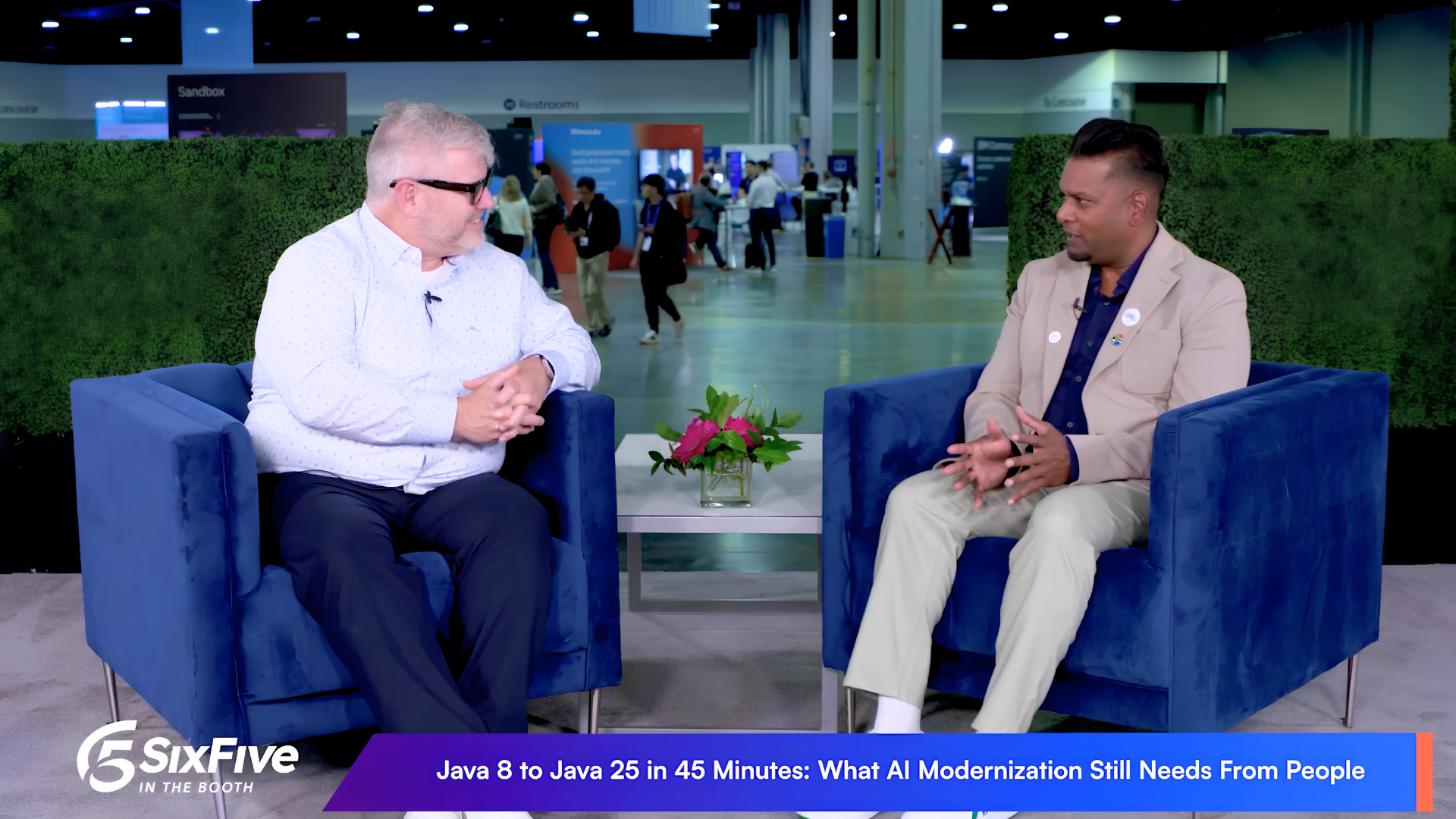
Java 8 to Java 25 in 45 Minutes: What AI Modernization Still Needs From People
Sai Govender, Founder and CEO of Blue Pearl, joins Jason Andersen at IBM TechXchange 2026 to explain how IBM Bob cut Java, .NET, and Excel modernization work from months to days or weeks. He says the approach holds up because senior engineers stay in the loop to validate the output before it reaches production.
Scaling Agentic AI with Arm AGI CPU
According to Signal65's findings, Arm AGI CPU delivers roughly twice the modeled work per rack compared with AMD EPYC 9755, building on a 1.2x average per-chip performance advantage, because density within a fixed power budget decides how much agentic CPU work a data center can host.
Other Categories
CYBERSECURITY
Threat Intelligence: Insights on Cybersecurity from Secureworks
Alex Rose from Secureworks joins Shira Rubinoff on the Cybersphere to share his insights on the critical role of threat intelligence in modern cybersecurity efforts, underscoring the importance of proactive, intelligence-driven defense mechanisms.

HP Launches World’s First Business PCs to Protect Against Quantum Hacks - The Six Five On the Road
On this episode of the Six Five - On the Road, hosts Patrick Moorhead and Daniel Newman are joined by HP's Ian Pratt, Global Head of Security for Personal Systems.
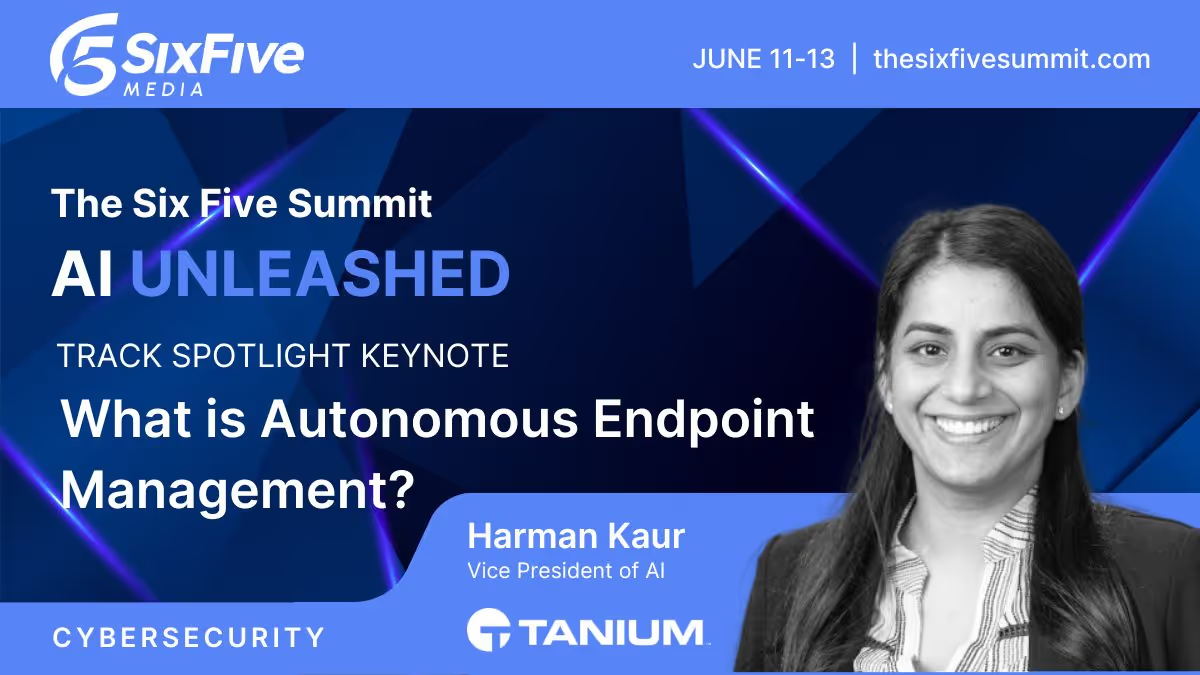
What is Autonomous Endpoint Management?
Autonomous Endpoint Management is a framework designed to unify IT operations and security teams on a single platform through real-time control and visibility.
QUANTUM
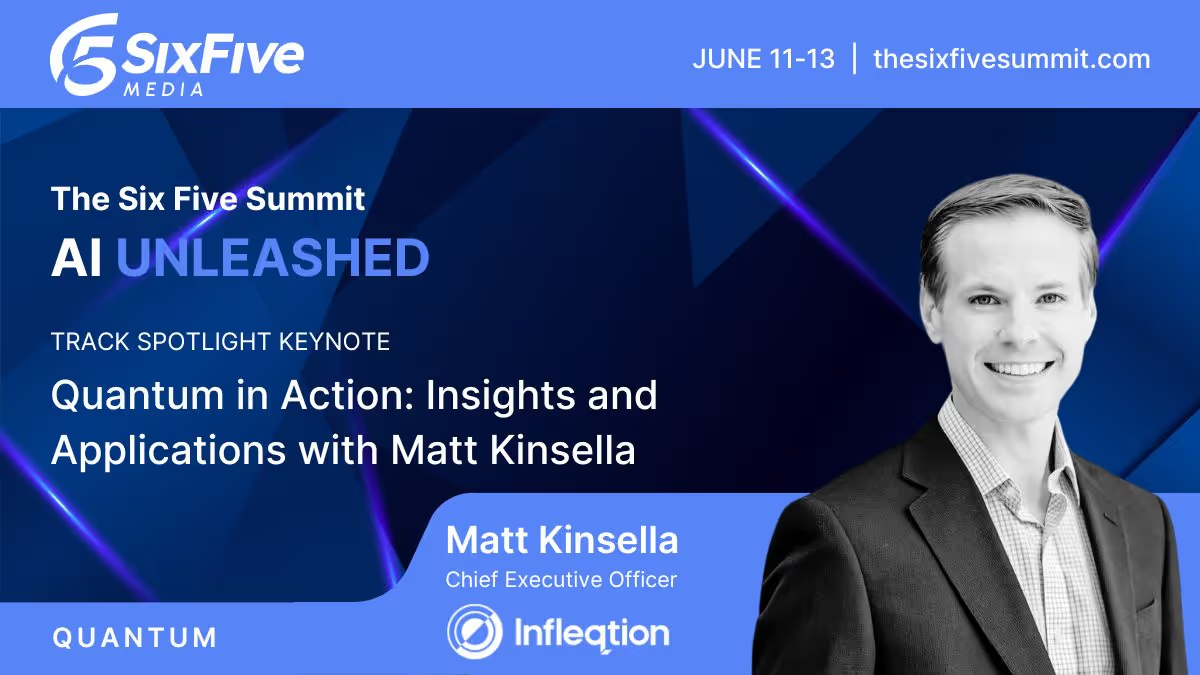
Quantum in Action: Insights and Applications with Matt Kinsella
Quantum is no longer a technology of the future; the quantum opportunity is here now. During this keynote conversation, Infleqtion CEO, Matt Kinsella will explore the latest quantum developments and how organizations can best leverage quantum to their advantage.
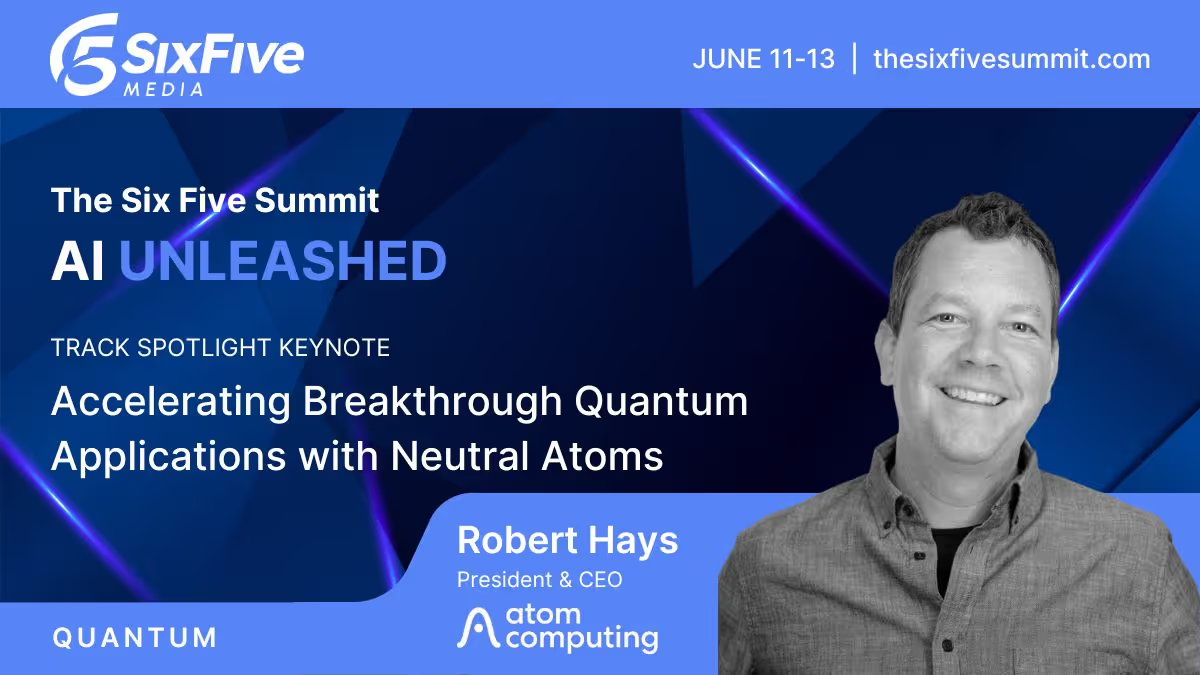
Accelerating Breakthrough Quantum Applications with Neutral Atoms
Our planet needs major breakthroughs for a more sustainable future and quantum computing promises to provide a path to new solutions in a variety of industry segments. This talk will explore what it takes for quantum computers to be able to solve these significant computational challenges, and will show that the timeline to addressing valuable applications may be sooner than previously thought.