
Mercedes F1 Rebuilds Its Data Center 24 Times a Year. Here’s How.
SHARE


At the F1 U.S. Grand Prix, Mercedes-AMG PETRONAS F1 Team CIO Michael Taylor and HPE’s Max Walker explain how the team rebuilds its IT at every race, self-hosts AI under the FIA cost cap, and cuts simulation time from three days to one. Their partnership shows how resilient infrastructure and iterative AI adoption let organizations move fast without breaking what works.
For an F1 team, the data center moves 24 times a year. Each race weekend, the team stands up a complete IT operation in a new country, in an environment full of heat, sand, brake dust, and humidity, and it all has to work before the car ever turns a wheel. This feat happens under a cost cap that puts IT spending in direct competition with hardware that makes the car faster, including the growing cost of AI tokens.
At the Formula 1 US Grand Prix in Austin, Patrick Moorhead and Daniel Newman sit down with Michael Taylor, CIO of the Mercedes-AMG PETRONAS F1 Team, and Max Walker, Chief Technologist at HPE. They walk through how telemetry moves from the car to the garage to the factories in Brackley and Brixworth, how ruggedized networking keeps a temporary site reliable, and how the team gets more out of every dollar of compute.
For execs modernizing for AI, the lessons translate directly. The team is now self-hosting large language models on HPE infrastructure to give engineers room to iterate without runaway token costs, and an HPC cluster built with HPE and AMD has cut simulation time from three days to one. Walker's advice is to build iteratively, in small steps, instead of trying to transform everything at once.
Key Takeaways:
🔹 The edge travels with the team. Taylor's team runs a small, air-cooled mobile data center at every race that handles connectivity, the telemetry chain, and the first layer of data analysis. Data then streams over a global network to the UK factories, with latency of about 280 to 290 milliseconds on the longest route, from Australia.
🔹 Networking is built into the paddock. HPE Aruba access points are built into the pit wall and team furniture, with Wi-Fi 7 and Wi-Fi 6, SD-WAN, and WAN optimization reducing the data sent back to Brackley. Ruggedized compute handles conditions from sand and brake dust to Singapore humidity.
🔹 Self-hosting AI tames token costs under the cap. Since the FIA introduced its cost cap in 2021, IT competes for the same budget as car performance. After an experimentation phase that made agentic software development transformational, the team now self-hosts LLMs on HPE networking and compute and sees cache hit rates of about 92%, giving engineers freedom to iterate without fear of runaway spend.
🔹 Faster simulation means faster learning. An HPC cluster built with HPE and AMD runs simulations that used to take three days in one, so the team can test aerodynamic and suspension changes and act on results sooner. Taylor describes Mercedes as a learning-based organization, where moments like an A/B test of two update kits in Singapore produce some of the best insights.
🔹 Eat the elephant one bite at a time. Walker calls the F1 car the epitome of DevOps, constantly updated from testing to the final race. His advice for CxOs starting their AI journeys is to keep projects small and iterative, fail fast, and invest in people, process, and technology together.
Organizations that pair resilient infrastructure with disciplined, iterative AI adoption can move at race pace without breaking what already works.
Curious about the technology behind it all? Take a closer look at HPE Networking in action.
Watch the full video at sixfivemedia.com, and subscribe to our YouTube channel so you never miss an episode.
Learn more about HPE at hpe.com.
Disclaimer: Six Five Media is for information and entertainment purposes only. Over the course of this video, we may discuss companies that are publicly traded, and we may reference their equity share prices. Nothing discussed during this webcast should be considered investment advice or a recommendation to buy or sell any security. We are not investment advisors, and you should not rely on this content as financial advice. Six Five Media collaborates with technology companies and industry leaders to produce research-driven interviews and multimedia programming for enterprise technology audiences.
Patrick Moorhead:
Okay, and five, four, the Six Five is On The Road. I'm Patrick Moorhead, and I'm here with my bestie, Daniel Newman. We're here in Austin, Texas at the F1 Grand Prix race out at the Circuit of the Americas. Daniel, isn't it amazing the amount of tech that goes into all of this? It's funny, like, we're talking about, you know, thousands of a second at this point.
Daniel Newman:
Yeah, it's an incredible proliferation of technology that goes year after year. They're chasing milliseconds. I've driven that truck a few times. So have you. I think I chased you off at once. I think you did. But when you think about the precision and you think about the fact that all of these different teams are basically working up against the same restrictions and requirements, and in the end, it's going to be the smallest differences, and technology is paving the way.
Patrick Moorhead:
Yeah, totally. And what amazes me even more is that each week in every country, you're rebuilding that IT capability every single time. And it's pretty amazing.
Daniel Newman:
Everything. I mean, people that are watching our show that don't watch F1, I mean, I always call it like a traveling circus. You'll go there, and we'll be at the track tomorrow, and you'll see the buildings, and you'll see each team. And they set up, they build their little mansions, and their little homes, and their experience. 24 hours after it's done, it's gone. I want to be part of the service. By the way, there's a lot of technology that goes into making that happen, but that's a supply chain.
Patrick Moorhead:
No, there is. So hey, let's bring in our guests here. Michael, CIO at Mercedes F1 team, and Max, who's a chief technologist with HPE. Welcome to The Six Five, guys. Thanks for having us, guys. Great to be here. Yeah, it was good. Loved the presentation that you guys gave. It was really awesome. Learned a lot about this. But let's do some double clicks on this.
Daniel Newman:
Yeah, let's talk about the IT circus. Every week, it's not every week, but it's 20 plus races. This year was a few less. Other years, there's more. You're basically moving a data center somewhere around the world. Talk a little bit about kind of how you, weekend after weekend, with no excuses, are able to get it up and running so that your team can be racing on the track.
Michael Taylor:
Yeah, absolutely. So we're due to have 24 races this year.
Daniel Newman:
We're going to end up with… Was it 26 before?
Michael Taylor:
No, no, no. It was always… Oh yeah, they added them back.
Daniel Newman:
Yeah, my bad. My bad.
Michael Taylor:
But 24 races, yeah, across the globe. We're currently at the start of what we call a triple header, so three consecutive race weekends. So from here, we'll move down to Mexico and then on to Brazil. So quite a logistics and supply chain challenge. But from a tech perspective, my team, they're responsible for ensuring that the edge, our edge is obviously the track and the car, is able to run effectively whilst on track. So we're responsible for providing all of the connectivity and then the telemetry chain. So a small mobile data center that travels around the world. Very robust, obviously, the environment that it operates in is not particularly kind. are air-cooled, so we're not able to run too much in the way of really resource-intensive compute. So the Edge is very much focused around on the tools that are required to be able to run that car effectively, the telemetry chain, and then the first layer of data analysis that the engineering teams like to operate here. We obviously then connect that up via a global network and take as much data back to the factories in Brackley and Bricksworth back in the UK so we can add additional engineering capability to analyse the data and provide real-time feedback to their counterparts here at the track.
Patrick Moorhead:
Yeah, as a follow-up on Michael and Max, I'm going to ask you a related question here. So very simplified, right? It goes from car to the garage to Brackley. And I'm curious, how quickly does the data need to get between those hops to do what you need to do?
Michael Taylor:
Well, we move the data in as near to real-time as we possibly can. Obviously, the law of physics dictates the latency of how long it gets back to Brackley, but the longest stretch now is these days from Australia back to the UK, and that's about 280, 290 milliseconds. So, a slight delay when you're talking about real-time data, but nothing that causes too much of an impact for the engineering teams to be able to do their work.
Patrick Moorhead:
Yeah, so Max, how do you keep a network reliable that's temporary and moving all the time and moving data as quickly as it needs to? In all those hot places. Oh, I know.
Max Walker:
Yeah, so we deployed a solution using our Ruber portfolio, basically. The access points are actually built into some of the actual pit wall, right, and some of the furniture that goes along with those mobile homes. We actually use a WAN optimization platform as well, an SD-WAN platform that actually reduces the amount of data that's sent across. We also have deployed Wi-Fi 7, Wi-Fi 6 at the track. which allows that communication and the latency to get back to Brackley and to the Racer boardroom. So yeah, so the ruggedized nature of those access points is key and the switches as well is key to making that reliable, right? But I think Part of that is, as well as accessing the data, is computing that data, right? So, we have a platform out there that's ruggedized, that can handle environmental differences from sand to brake dust to the environmental humidity like in Singapore, etc. So, we're able to build an entire solution basically to handle that.
Patrick Moorhead:
Yeah, and it must be a bigger challenge, I mean, when it's wireless, because you have all of these other people using wireless technologies, and you've got the fans. I know it's on a different frequency, but they're all colliding together. I'm amazed that you can keep it reliable.
Max Walker:
Yeah, well, we worked heavily on the design aspect of it when we were building that solution. And with the team of Trackside, they managed to optimize that Wi-Fi frequency to ensure that the maximum bandwidth and the lowest latency is implemented, basically. Interesting.
Daniel Newman:
So Michael one of the more interesting things we hear about are kind of like spending caps cost caps. I mean we heard talked about a I think we threw a bunch of questions. You know nerding out we're all thinking oh everyone's using Claude and just building you know and it's like we can't do anything like you guys first of all like. There's certain restrictions around AI, right? And then, on top of that, you can't just throw more compute. In some industries, it's like, token maxing was the joke, but how much… You've got tons of limitations. I'm kind of curious how you're thinking about deploying compute, and then how does the partnership at HPE sort of help you to maximize what compute you can access?
Michael Taylor:
Yeah, sure. You're absolutely right. So in 2021, the regulator, the FIA, introduced financial regulations, which effectively means we're operating within a cost cap. The net result of that means that we're limited in terms of how much money we're able to spend to go racing. So anything that contributes performance to the car, the cost of the design, manufacture, build, and then racing of the cars, all falls within the included cost cap. Naturally, IT falls squarely in there. So we now are necessarily able to go and invest huge sums of money in advanced technologies that will hopefully bring us benefit. We very much have to make sure that anything we are investing in does move the needle from a performance competitive advantage, new capability or unfortunately elements of compliance and governance too. The AI equation is an interesting one as you can imagine. an engineering-led organization. Everyone loves to solve problems. Everyone has a slightly different way of trying to solve problems and preferences. There's so many models out there and different kind of frontier-based models and agents that you can use. There's lots of preference that goes on. So our initial strategy with AI, where we are able to use it and use it effectively, was very much allow people to go out and experiment and learn. conscious and aware that that kind of level of flexibility will bring some additional complexity and time. We're now in the process of consolidating that down because we've seen great advancements in what we're able to do and what we're able to produce in much shorter cycle times. Our Gentix software development has been really transformational for us over the last six months or so. But then we do have the challenge, unfortunately, of costs running away. And naturally, the cost cap means that we have to manage our finances, our forecasting, our planning. We have to be really, really clear. I'm competing with our technical director who wants to put hardware on the car to make it go faster. I'm competing for the same P&L. So the risk of runaway token spend obviously has a potential to impact the performance of the car. So trying to find that balance is not always easy. So some of the things that my group have been working on recently is how do we remove some of those restrictions? How do we enable our development community to go away and solve those really complex problems without the fear of token maxing as we describe it? So we're hosting our own large language models now. And obviously HPE massively underpinned that through both the networking, but also the compute that we have back in the factory. The ability to self-host just opens up so many possibilities where you can really max out input tokens and you can run away with yourself, solving complex problems, iterating over multiple days. It just reduces that kind of anxiety of runaway costs. That's one great example where through the partnership we're really able to enable the engineering community to go and do more, but we're able to maintain that cost control that we need to be compliant with the CAP.
Patrick Moorhead:
I'm sitting here with a huge smile on my face. Daniel and I have a testing company called Signal 65 with a benchmark that, you know, it doesn't just measure tokens. It measures the known good output, the cost, right? And that's exactly what you're doing. It's not just about input tokens, not just about output tokens. It's getting the known good result that you're getting. You're on the leading edge here.
Daniel Newman:
Like optimizing it right across the hardware, the harness, the actual model that you're choosing to use, and then getting to that. And obviously, if you get that right, you can do so much more AI.
Michael Taylor:
Yeah, absolutely. And some of the really interesting data points that you refer to there that we're seeing is caches as well, which you don't think about when you're using SAS-based frontier models, but a 92% cache hit. Yes. There's no expense on the cash shed, because it's in cash. No, absolutely. Exactly. You know, the optimization then allows you to go even further. I love it. We are definitely nerding out here, folks.
Patrick Moorhead:
It just needs more compute and a little bit more memory.
Michael Taylor:
Exactly.
Patrick Moorhead:
So, Max. And, you know, Toto brought this up in the interview that he was giving on stage beforehand, and he had talked about, you know, you have to have a known good design that they're going to be racing, but in between races, they're going to be doing experiments on how to get a new design. Maybe it's an aerodynamic change. Maybe it's a slight engine change. Maybe it's a transmission change. Just a lot of changes. So how do you run a mixed environment that has to be rock solid, and you give the resiliency, the control, and the security when they lock down? In fact, Toto even said that they were running two different designs on a race as well. How do you deal with that?
Max Walker:
So we have obviously a heritage, HPE has a heritage in HPC, and we have expertise along with Mercedes. We work hand in glove with Mercedes around benchmarking, optimising the results and the accuracy from those models, right, or from that solving. platform and what we've done is built a cluster in conjunction with Mercedes and AMD as well that can run a simulation that used to take three days but now can take one day which means that actually the time between it they can actually develop a part and understand it and get the results quicker to make changes to aerodynamic components or suspension components whatever the components are that they are running those models against essentially.
Patrick Moorhead:
Interesting. But make no mistakes, right?
Max Walker:
Exactly. Yeah, exactly. Because, yeah, time used to be the currency.
Michael Taylor:
I think though, you know, to add to that, we are a learning-based organization. So often the best learning is when things don't go quite as planned. Right. So you referenced the scenario where we had in Singapore, we had two different update kits on the two cars and we were trying to do what we call an A-B test or a back-to-back compare. That's when the best learning happens because you're looking at the data with a slightly different perspective because it's all about learning and understanding differences then. So what may actually come to light through that kind of scenario is that there's further optimizations that we can make to the car either with the previous package or the current package that then brings another few milliseconds of performance. And they're the really, really fine margins we're looking for all of the time. So a learning-based organization, mistakes invariably happen. It's how we learn from that and what we then develop that makes the difference. That's fascinating.
Daniel Newman:
And Michael did a good job of sort of answering the last question I was going to ask both of you. So I'm just going to ask Max because the question is going to be about the kind of partnership and lessons learned. And it sounds like running learning-based and really kind of continuously They call it RL, reinforcement learning. You're sort of doing it with humans and machines together. Absolutely. Max, from your angle, there's executives and CIOs and CEOs all over the planet trying to figure out AI. They're trying to build autonomous operations in their businesses. What are you learning from this partnership? What's one or two things you're learning that you could provide to them?
Max Walker:
Yeah, I think there's a lot of learnings between us, right? We're in a partnership. That's a two-way partnership. So, you know, Michael will feedback to me, I'll feedback to Michael, and we'll build something that works for both of us, right? And that's the key, I think. Not biting off too much either, right? A lot of projects fail because they try and eat the elephant in one go, but taking parts of that and eating it actually is a lot easier. So making things smaller and making them iterative. Actually, yeah, it's due that time. But yeah, so making it more iterative and failing fast, right? I think the F1 car is the epitome of DevOps, right? And it's so cool in terms of, like Michael said earlier, that the car that really goes to testing isn't the car that finishes the season, right? It's constantly updated.
Patrick Moorhead:
And what can other CXOs learn from this that aren't in racing?
Max Walker:
Yeah, I think that competitive nature within F1 is in any business, right? It's about finding that value to that business and investing in it and nurturing the people, the process and the technology in order to achieve that. I think a lot of CXOs around the world are obviously struggling on where to start on AI journeys, right? Let alone, we hear the stories in the press around AI The future but actually I think it's about taking that small step and then building on that small step.
Daniel Newman:
I love that you say that and you know I read something really profound. I think it was one of the. You know leading developers from club club but he was saying something along the lines of like the actual diffusion of AI is not anything like what us nerds there in it every day like it's like. There's like a handful of thousands of people in the world that have access to the very most leading edge. And then there's a handful of millions of people across all the big enterprises that are really using AI, like, you know, pervasively in their lives. And then there's, like, everyone else that basically is just using chat GPT or something as a glorified Google search. And then there's the part of the world that's not even touched this stuff. But we live in this, like, It's diverse, right? It's diverse, and it's really early. Yeah, yeah. So I think maybe if I summarize what you both said, it's like for the first time in history, technology is evolving almost as fast as your sport is. And so there's this interchangeable. You guys are week to week. And before this, AI would be upgraded. It was a handful of years between major upgrades. Now it's like every week there's a new model. And you're like, oh, now I've got to think about the harness. Now I've got to think about the network ops. In the SAS era, or in the last computer, or in the big data, you didn't think that way. It's profound. That's good.
Patrick Moorhead:
Literally week to week. I know. You should do this for all the shows, Daniel.
Daniel Newman:
I know, but then I wouldn't. I don't have that much.
Patrick Moorhead:
No, but it was profound. I don't have that much compute. And then all these things changing, and at least my takeaway would be if you're an enterprise and you are at peak performance, whatever you do, whether it's banking, retail, or anything like that, you could change things week to week if it made a difference and if you could win.
Daniel Newman:
Certainly HP is doing it for many of the other customers.
Max Walker:
Absolutely. In the financial services space, in the life sciences space, we're pioneering some pretty crazy things that are going to change how people live and work. Changing the economics of the world. Exactly. Max, Michael, thank you both so much.
Daniel Newman:
Thank you. Thank you everybody for being part of this Six Five. We are on the road here at the U.S. Grand Prix F1 race. Going to be at the track tomorrow. I am. Womp womp. Womp womp. Appreciate you so much for being part of our community. Subscribe. Watch all of our great content here from the race, from this week, and of course, across the Six Five. But we got to go for now. See you all later.
MORE VIDEOS
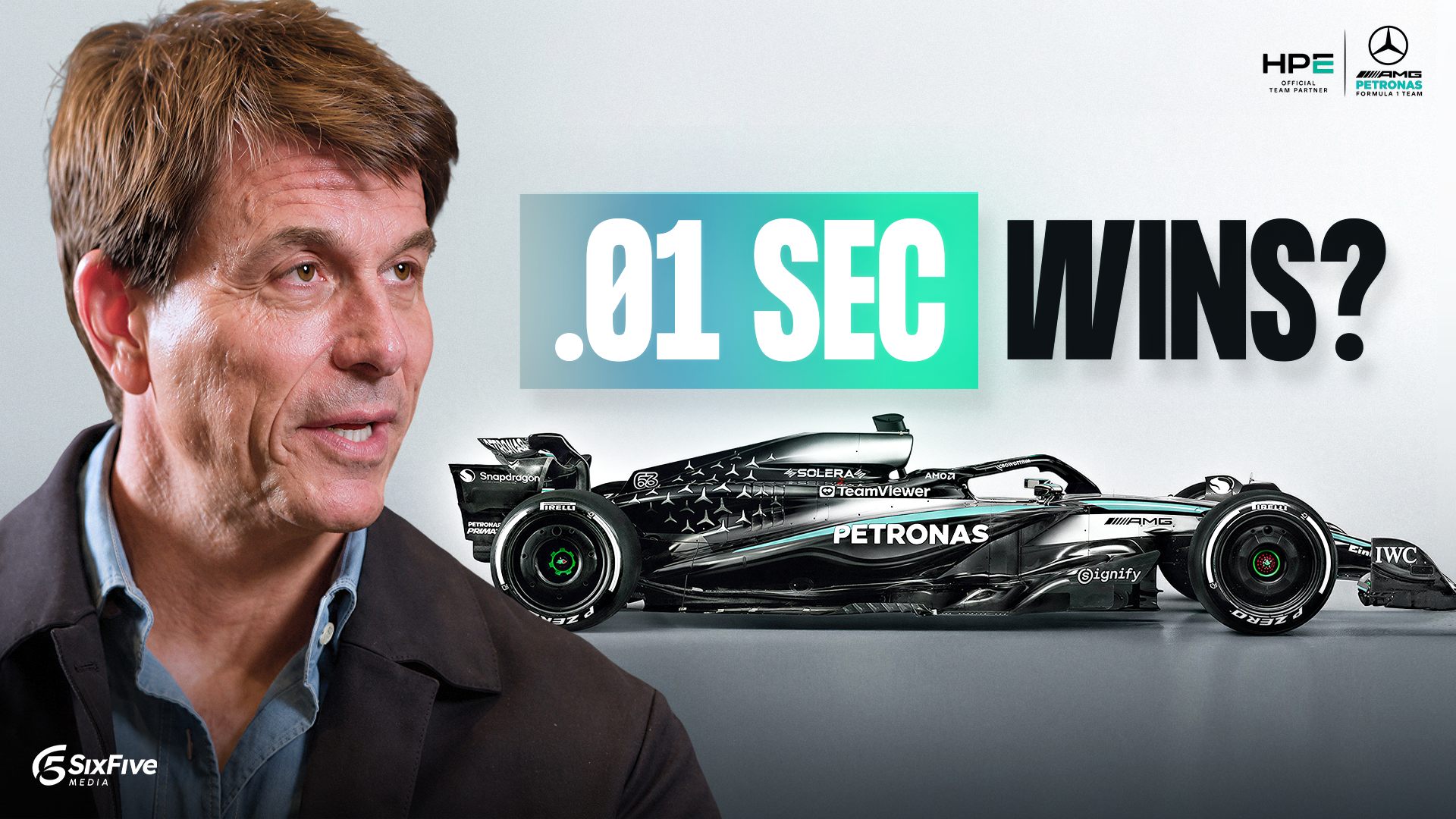
Toto Wolff: What Happens When the Data and the Driver Disagree
At the F1 U.S. Grand Prix, Toto Wolff and Antonio Neri join Patrick Moorhead and Daniel Newman to talk about what happens when the strategy model and the driver disagree, why Wolff’s strategy team wins that argument 99% of the time, and where the cost cap lets Mercedes spend on AI next. Nearly 10 years into the HPE partnership, the lesson for the enterprise is to decide who owns the final call before the pressure hits.


How the Mid-Market Gets Enterprise AI Without a 300-Person IT Org
On this Six Five Virtual Webcast, AWS’s Chris Sullivan explains how partners and AWS Marketplace are helping mid-market companies move agentic AI from proof of concept to production without enterprise-sized IT teams. Starting with a real business problem and the right partner gives these organizations a faster path to measurable results.
Scaling Enterprise AI, Lessons from HPE - Six Five Connected with Diana Blass
On Six Five Connected, Diana Blass explores how HPE is scaling AI across its own business and what agentic AI demands from compute, memory, edge, and networking infrastructure. Enterprises that design infrastructure around their most valuable use cases can turn AI adoption into measurable savings.
Other Categories
CYBERSECURITY
Threat Intelligence: Insights on Cybersecurity from Secureworks
Alex Rose from Secureworks joins Shira Rubinoff on the Cybersphere to share his insights on the critical role of threat intelligence in modern cybersecurity efforts, underscoring the importance of proactive, intelligence-driven defense mechanisms.

HP Launches World’s First Business PCs to Protect Against Quantum Hacks - The Six Five On the Road
On this episode of the Six Five - On the Road, hosts Patrick Moorhead and Daniel Newman are joined by HP's Ian Pratt, Global Head of Security for Personal Systems.
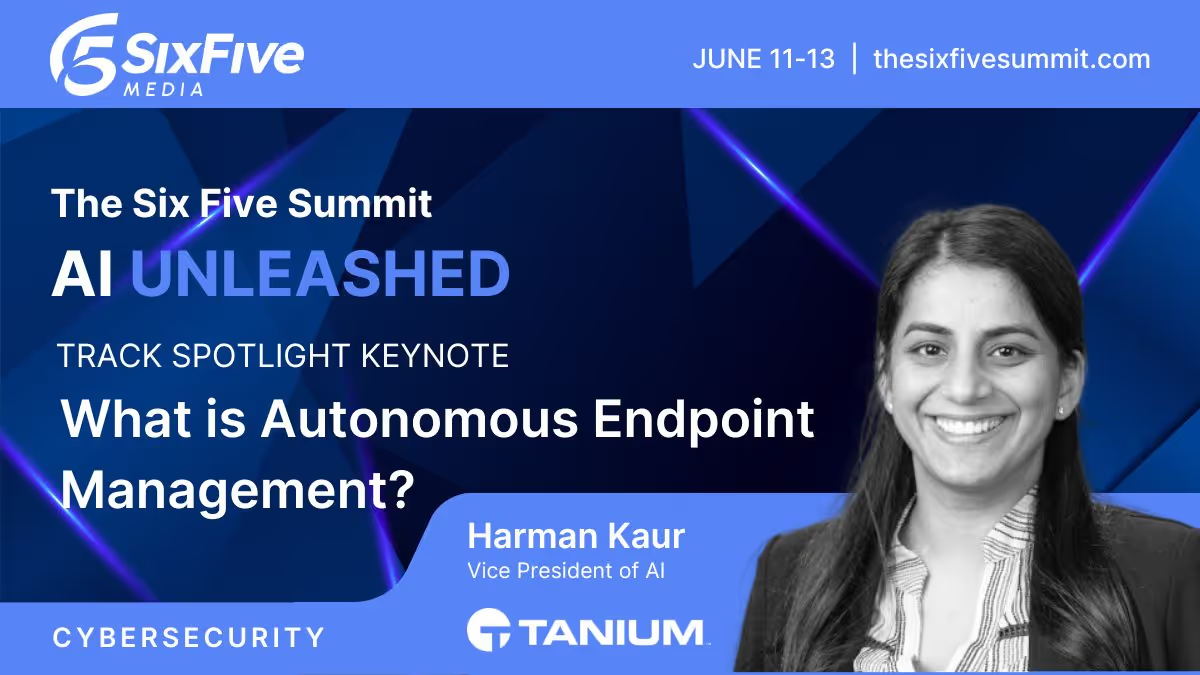
What is Autonomous Endpoint Management?
Autonomous Endpoint Management is a framework designed to unify IT operations and security teams on a single platform through real-time control and visibility.
QUANTUM
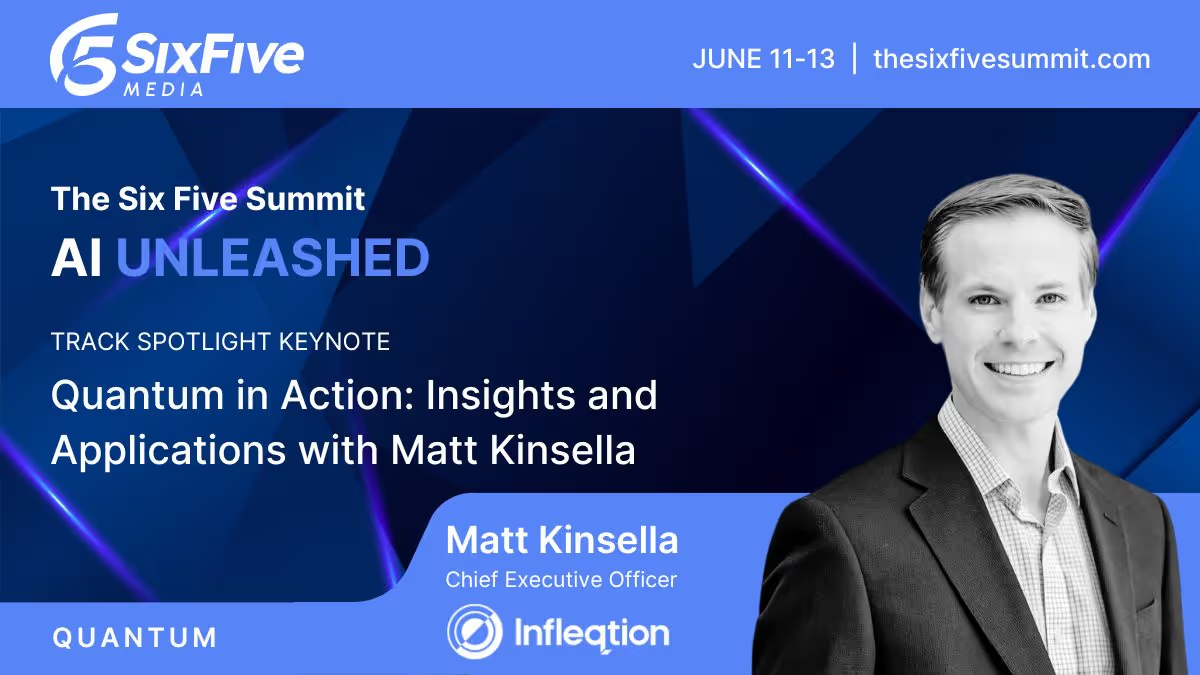
Quantum in Action: Insights and Applications with Matt Kinsella
Quantum is no longer a technology of the future; the quantum opportunity is here now. During this keynote conversation, Infleqtion CEO, Matt Kinsella will explore the latest quantum developments and how organizations can best leverage quantum to their advantage.
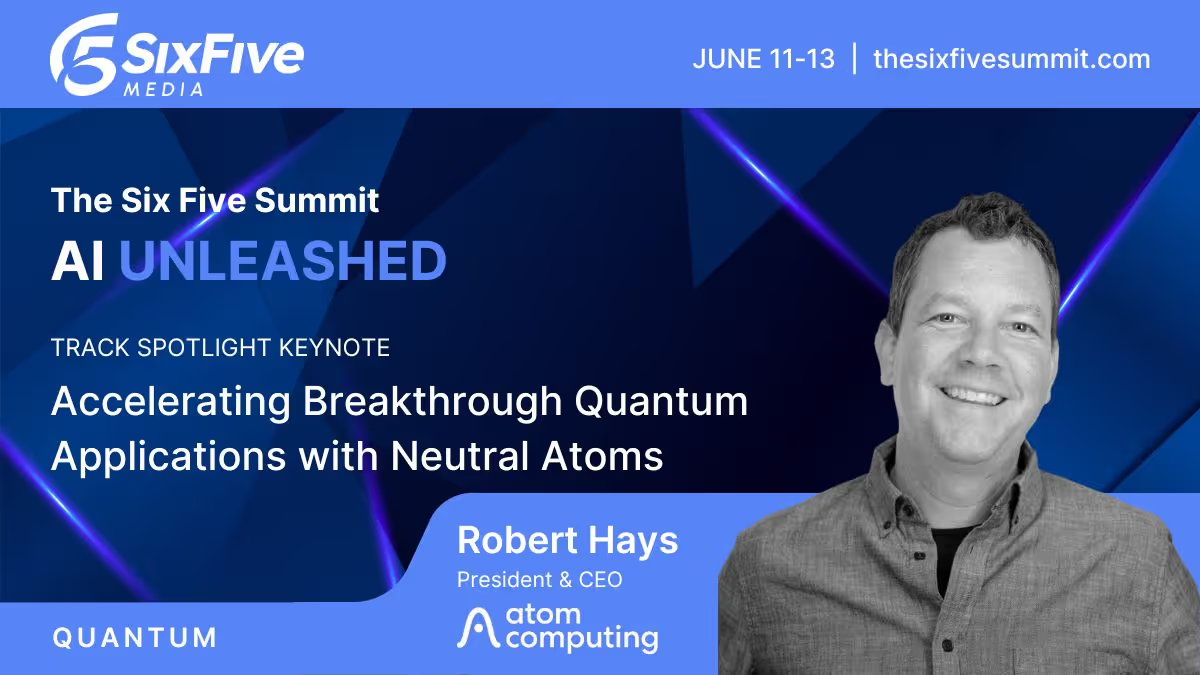
Accelerating Breakthrough Quantum Applications with Neutral Atoms
Our planet needs major breakthroughs for a more sustainable future and quantum computing promises to provide a path to new solutions in a variety of industry segments. This talk will explore what it takes for quantum computers to be able to solve these significant computational challenges, and will show that the timeline to addressing valuable applications may be sooner than previously thought.