
AI Ambition Meets Infrastructure Reality: HPE and AMD, Silicon to System
SHARE


HPE’s Krista Satterthwaite and AMD’s Dan McNamara join Patrick Moorhead and Daniel Newman to explain how agentic AI is multiplying CPU demand and why silicon and system design now have to be tuned together for threads per watt. For enterprises, matching each workload to the right platform and model determines whether AI value outpaces the cost of running it.
Agentic AI is multiplying the CPU work around every GPU, because each concurrent agent adds calls to databases and storage that general-purpose compute has to absorb. That makes threads per watt and threads per dollar the measures infrastructure teams are optimizing.
On the road to HPE Discover Barcelona 2026, Patrick Moorhead, CEO and Chief Analyst at Moor Insights & Strategy, and Daniel Newman, CEO of The Futurum Group, are joined by Krista Satterthwaite, SVP and GM of HPE Compute at HPE, and Dan McNamara, SVP and GM of Compute and Enterprise AI at AMD. They discuss where today's infrastructure falls short for inference and agentic AI, how silicon decisions and system design come together for demanding workloads, and how customers balance the value of AI adoption against the cost of running it.
Satterthwaite says the variety of platform needs is unlike anything HPE has seen, which is why it introduced four new ProLiant Gen13 platforms, two AI-focused and two ultra-dense for high-performance computing. For workloads such as electronic design automation, AMD defines high-frequency and stacked-cache parts, and HPE designs the system around them for space, power, and cooling. On cost, McNamara says not every workload needs a frontier model, so token routing matters, and customers can host open-weight models locally on ProLiant while some traffic still goes to frontier models.
Key Takeaways Include:
🔹 How agentic AI is driving CPU demand as well as GPU demand. Newman notes AI has moved from training to inference to agentic work. McNamara says concurrent agents, from overnight coding to enterprise assistants, call for optimizing threads per watt and per dollar, while general-purpose compute keeps growing as agents call databases and storage.
🔹 Why four new platforms reflect an unusually varied set of needs. The DL525 is a dense 1U server for AI inference, virtualization, and simulation, and the DL585a accepts eight GPUs for agentic AI. Two ultra-dense platforms target high-performance computing, liquid-cooled with four nodes in the chassis and air-cooled with two. Satterthwaite says customers are waiting on all of them.
🔹 How electronic design automation shows silicon and system design working together. McNamara describes high-frequency and stacked-cache parts tuned for different EDA workloads and brought to customers in Gen13 with Venice. Satterthwaite says the design runs from the chip to the data center, including space, power, and liquid or air cooling.
🔹 Why token routing is how customers balance AI value and cost. McNamara says customers can host open-weight models locally on ProLiant with an AMD Instinct PCIe card and build a semantic router, with some traffic always going to frontier models. Satterthwaite sees more customers moving workloads on-premises to reduce token usage.
🔹 Why different destinations call for different platforms. Newman compares AI deployment to choosing a car for the trip, since an F1 car isn’t needed for a coffee run. Satterthwaite agrees that customers have different destinations and need different models.
Matching silicon, system design, and model choice to each workload gives enterprises a path to scale AI without letting power and token costs set the limits.
Watch the full video at sixfivemedia.com, and subscribe to our YouTube channel so you never miss an episode.
Disclaimer: Six Five Media is for information and entertainment purposes only. Over the course of this video, we may discuss companies that are publicly traded, and we may reference their equity share prices. Nothing discussed during this webcast should be considered investment advice or a recommendation to buy or sell any security. We are not investment advisors, and you should not rely on this content as financial advice. Six Five Media collaborates with technology companies and industry leaders to produce research-driven interviews and multimedia programming for enterprise technology audiences.
Patrick Moorhead:
Hey everybody, welcome to this Six Five On The Road. I'm Patrick Moorhead here with my bestie Daniel Newman. We are on the road, kind of, to HPE Discover Barcelona. So Daniel, I mean, AI has put enterprise compute back at the center of literally every infrastructure conversation, every stock market conversation. I mean, it is absolutely bonkers, right?
Daniel Newman:
Everything's moving so fast. The world is building an economy on compute and capacity and the ability for us to deliver on the promise of AI, Pat. So it's a really exciting time to be us. It's a really exciting time to be on our show, of course, and it's a really exciting time to be setting up for HPE Discover Barcelona. I know it's great stuff.
Patrick Moorhead:
Welcome back to the show, Krista Satterwhite, SVP and GM of HPE Compute, Dan McNamara, SVP and GM Compute Enterprise AI at AMD. It's great to see you both back here on The Six Five.
Krista Satterthwaite:
It's great to be here. Thanks for having us.
Dan McNamara:
Great to see you guys and great to be sharing the show with Krista.
Daniel Newman:
So AI is basically expanding, right? It was very model training centric, became inference centric, and now you'd say it's agentic, which of course is a lot of inference and more. That CPU number is massive because of this transition into agentic. So Dan, where do you think today's infrastructure is not hitting the mark?
Dan McNamara:
By the way, you just teed that up perfectly. I, you know, the opportunity we've, we've talked about with agentic for CPUs, you know, we talked about it last year in November at our financial analyst day, we talked about it at advancing AI and, you know, the, the opportunity is just huge, but I think I'd go back to sort of the optimization, right. It's really about delivering the, the, you know, we call it threads per watt, right. Really driving. So you can drive so many. concurrence agents working on whether it's coding overnight or just enterprise assistance. It's really trying to drive out that optimized price and performance per watt. And then delivering that high performance for the general purpose compute. Because the general purpose compute is also growing as the calls go back and forth to the database and storage. So it's really continuing to optimize for those individual workloads and delivering that that thread per watt and thread per dollar capability.
Daniel Newman:
What about you, Krista? What do you think we need to do that we're not doing?
Krista Satterthwaite:
Yeah, so I would say that part of the reason why we introduced those four new platforms is because, you know, I totally agree with Dan. It required a different type of architecture, which is what AMD is providing. We have two new AI-focused platforms. One's called the DL525, and it's a 1U, so a very dense platform. but focused on AI inference and virtualization and simulation. And then we have the DL585A, which is much, much longer, bigger, and accepts eight GPUs. And that's where you can do agentic AI and much more heavy lifting when it comes to AI use cases. And then we have two new platforms that are extremely dense. And those are for high performance computing. So they're basically plugged into a 2U infrastructure. You can fit either four of them in or two of them in. If you put four in, they're liquid cooled. If you put two, they're air cooled. So we feel like what we're hearing is the variety of needs that we're seeing now is unlike anything we've ever seen before. If I look at the history of compute and how many platforms we've introduced even this year compared to what we normally do, it's very, very different. And there are customers waiting for all of the platforms that I just mentioned. So we have a quite a demand for a variety of needs. And I think we're going to continue to see that.
Patrick Moorhead:
Yeah, so I want to do the double click on one of this. And I want to drill into a customer workload, a very demanding customer workload. And it can be fluid modeling. It can be even a gentic sandbox or something like that. So I'll start with you, Dan. I want to capture. the value of silicon decision and the system design coming together to truly solve a challenge in a unique way. Listen, I'm an ex-silicon and systems guy, so I'm feeling like, wait a second, where did this question come from? But I don't think everybody in the audience can fully appreciate that.
Dan McNamara:
Yeah, it's a great question. So, you know, let's pick EDA. Right. We can talk about agentic sandboxing, but, but EDA, you know, with the opportunity across accelerators and all of that, EDA is really a big area right now. And, you know, when you think about that, we define a number of different devices for that. We deliver a high frequency part, right. We deliver our stack cache part. Right. And again, it's about delivering these very optimized design points. and then bringing it to Gen 13 in delivery to customer. Now, for EDA, in certain cases, you really, you know, for certain workloads within EDA, it's really, really high frequency you want, or you want, you know, the extra memory. And, you know, the best part about this is with HPE, with Gen 13, we're delivering this to a broad swath of customers that are currently using Ternan, right, with Gen 12, but they're all very much waiting for Gen 13 with Venice to deliver, you know, newer EDA solutions. And then again, back to the F1 theme, you know, we're both sponsors of Mercedes, which by the way, congratulations to that team. But, you know, they're, they're leveraging CFD. So computation fluid dynamics is another very high end workload where fine tuning the silicon with the platform is super critical.
Patrick Moorhead:
Yeah, so Christy, you're designing the ProLiant platforms and you're choosing the silicon. Feel free to riff off of the EDA discussion, but if you have another workload, but bringing the magic, bringing them together. In other words, you didn't just design the system and then choose the processor. You had to work together to optimize the full stack.
Krista Satterthwaite:
Yes. And it's funny, I was meeting with a customer not long ago that had an EDA use case, and they're building new data centers. And so when we think about this, and we think about it from the chip, all the way to the data center, and what they need to build for the future, from a power and cooling perspective. So when I think about design of the system, It's a holistic approach and goes to how much space we're taking up, how much power, whether they're going to do liquid or they're going to do air-cooled. It's a holistic approach that they have to take as a customer, and that means that I have to take that as a server vendor. pulling it all together so it has all the right characteristics from the processor all the way to where the power and cooling play in in the data center.
Daniel Newman:
Great example. So so I'm going to I'm going to hit you with the most important thematic question that the entire world wants an answer to. And I'm going to keep you guys tight on time here because we don't have forever to have you answer it. But ROI. Right. So the value of the companies that you are helping and their adoption. and balancing that with cost of running it, right? We quickly went from token maxing to token economics to everybody being super focused on getting their costs right and open source versus closed and frontier versus leading, right? All that stuff was all happening at one time. Dan, you go, I mean, how do you balance that for customers? Because the spend can go crazy and the ROI has been hard to measure.
Dan McNamara:
Yeah, I mean, you're right. It's the main topic, right? And you think about it, the way, it's really two different ways. One is all about efficiency and driving efficiencies through the, through the company, but you're trying, everyone's trying to enable their, their employees to truly scale and drive innovation. Right. And if you look at some of the key, you know, workloads that are, or use use cases like coding, coding is, you know, obviously very, very well understood. And that's a big return for many companies today. But I do believe that it's going to be very similar to what we talked about with compute. Not every workload needs a frontier model. or use case, right there. And this token routing is super critical. And what we're doing with Krista and team is you can actually host locally some of the open waste models with the ProLiant with a PCI card with our, you know, instinct MI 350P. And that's how we're, we're sort of enabling customers to try out, you know, how do you actually build a semantic router, you know, based on ProLiant. that helps you, you know, no doubts, certain amounts will always go to frontier. But then what do you do locally with your open ways to truly kind of offload some of it? So I think that's really what I see. Most enterprises are very, very focused on building that capability as quickly as possible.
Krista Satterthwaite:
Yeah. And I totally agree. They're trying to see how they can do things more economically because they can't stop. I mean, they all know when it comes to AI, they've got to drive more efficiencies, get the productivity, stay competitive. And so they're looking for a solve and they don't want to tell their employees don't use AI. You know, if it's helping them, they want to continue doing it. So I'm seeing more and more in here and more and more people trying to put something on-prem so they don't, they can reduce that token usage.
Daniel Newman:
Isn't it funny how everything ends up hybrid? Like everything, it doesn't matter if it's like hybrid device utilization, hybrid AI use, hybrid cloud, like in the end it ends up being some mix of all of the above. Like in the beginning it's like you're just gonna do everything on your, you know, on the API and your web browser and then it's like, oh, Maybe we'll do some on our workstation locally in the office and we'll build a small edge data center. And over time though, we've seen that happen with over and over and over with trends and it's going to happen again here. You don't need, you know, I know you guys both picked the same team to support NF1 and you picked the best team this year. I can admit that even as a McLaren guy. But having said that, like, you know, we will in the end end up picking different models. You won't need to drive an F1 car to go get a cup of coffee at Starbucks. So it's at least the best analogy I could come up with. Dan.
Krista Satterthwaite:
It's actually a really good analogy. It's actually a good analogy because what I would say is that people now have different destinations. And so there's like different models of cars that are needed because people have different places they're going. So it's a really great analogy from that perspective. And it's amazing how much things have changed in a short period of time.
Daniel Newman:
But you can use it. Don't even need to attribute to me, because I'm sure I stole it from someone as well. But anyways, it was a lot of fun to talk to both of you. Really appreciate the time, always. Both of you have been on the show a handful of times. We need to do this again and more often. Thanks for being part of this Six Five On The Road as we are heading to HPE Discover Barcelona. We will have more coverage from the show floor at the event, so look out for that. hit subscribe, be part of us across all the social of our coverage on 65 media
MORE VIDEOS
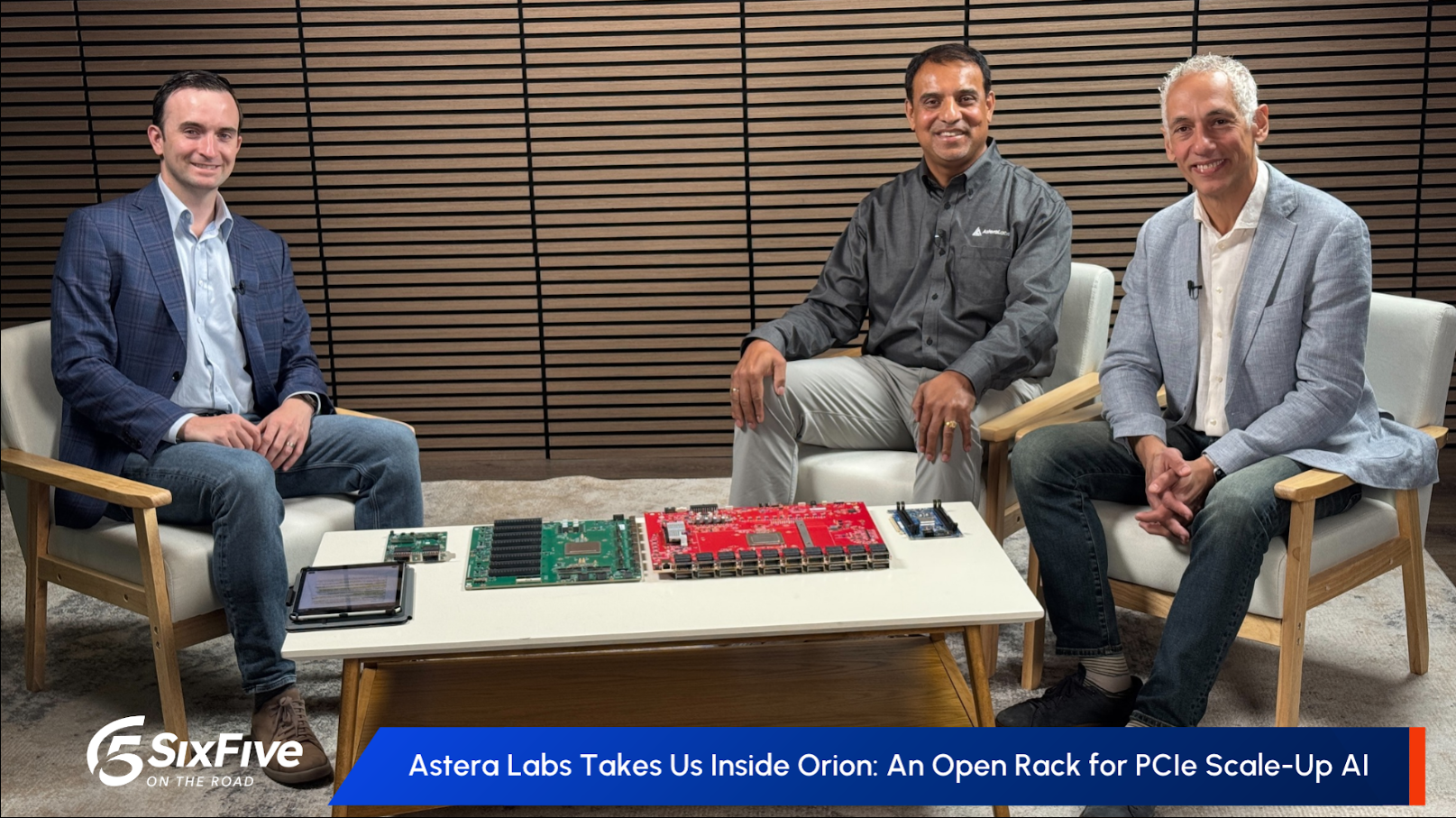
Astera Labs & Hyve on Orion: A Rack Built to Outlast the GPU
At OCP Global Summit 2026, Astera Labs and Hyve Solutions introduce Orion, an open PCIe rack-scale reference design that decouples the rack from the accelerator. For neoclouds and enterprises, it means scaling AI inference to 160 GPUs with any CPU or GPU while lowering cost per token.


Jensen Huang Steps Down: What NVIDIA’s Leadership Shock Means for AI, Washington, and the Market
Few weeks in tech have moved this fast. Within days of the first reports of an alleged affair, Jensen Huang resigned as CEO of NVIDIA, the company at the center of the AI buildout, leaving Wall Street, Washington, and the entire AI supply chain asking what comes next. Patrick Moorhead and Daniel Newman devote most of the episode to the NVIDIA story: the leadership transition, the unresolved questions, the export control fight it reignited, and whether the company needs an operator or another visionary. They close with Bulls and Bears on Anthropic's IPO filing and earnings from Applied Materials, CoreWeave, and Cisco.
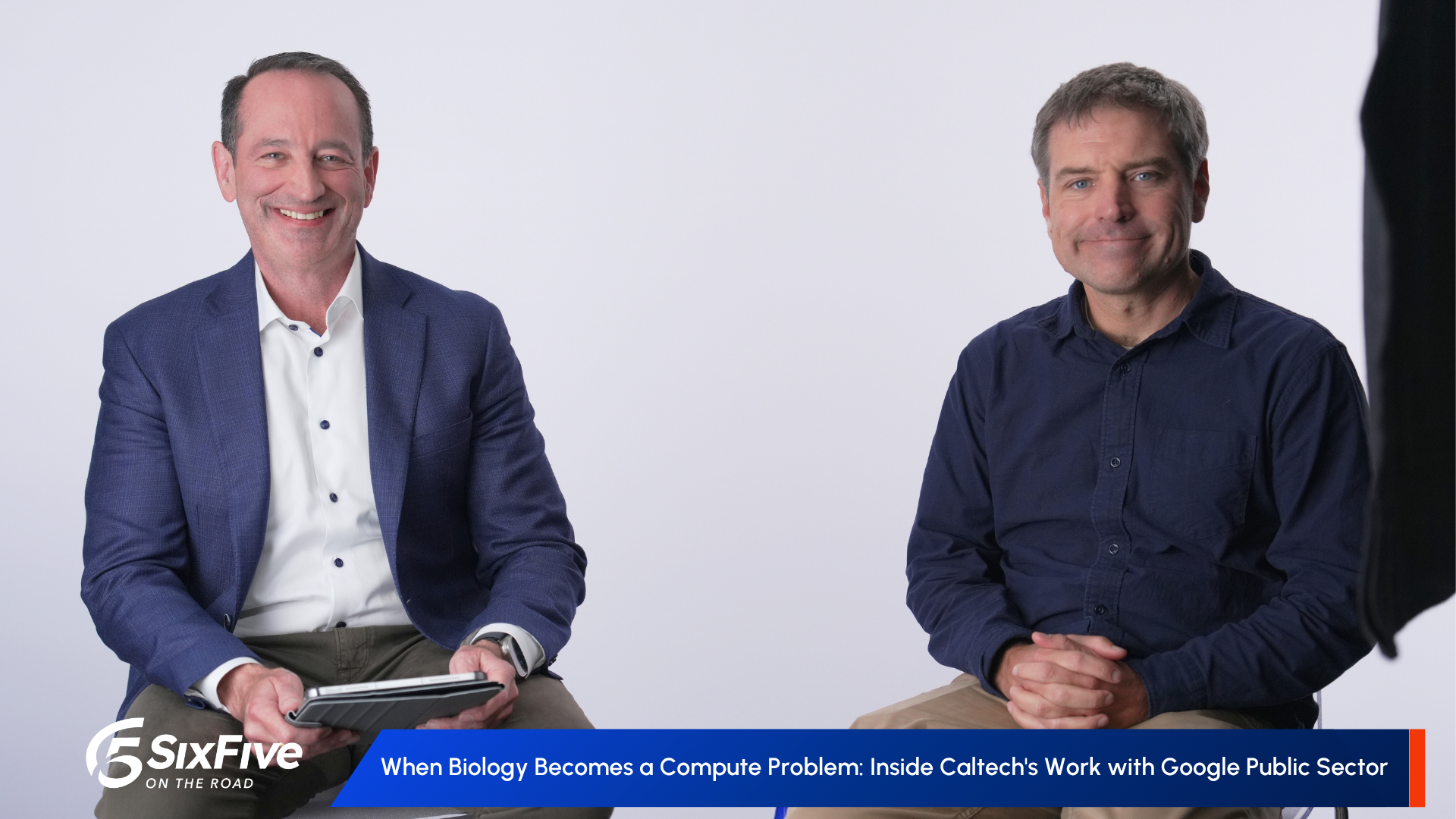
How a Research Institute Got a 100x Speedup Moving Biology Sims to TPUs
At the Google Public Sector Summit, Caltech’s Matt Thomson explains how virtual tissue models running on Google Cloud TPUs are turning biology into a compute problem, with a 100-fold speedup in therapeutic simulations. Pairing that infrastructure with clean data could compress the path from research insight to new therapies.
Other Categories
CYBERSECURITY
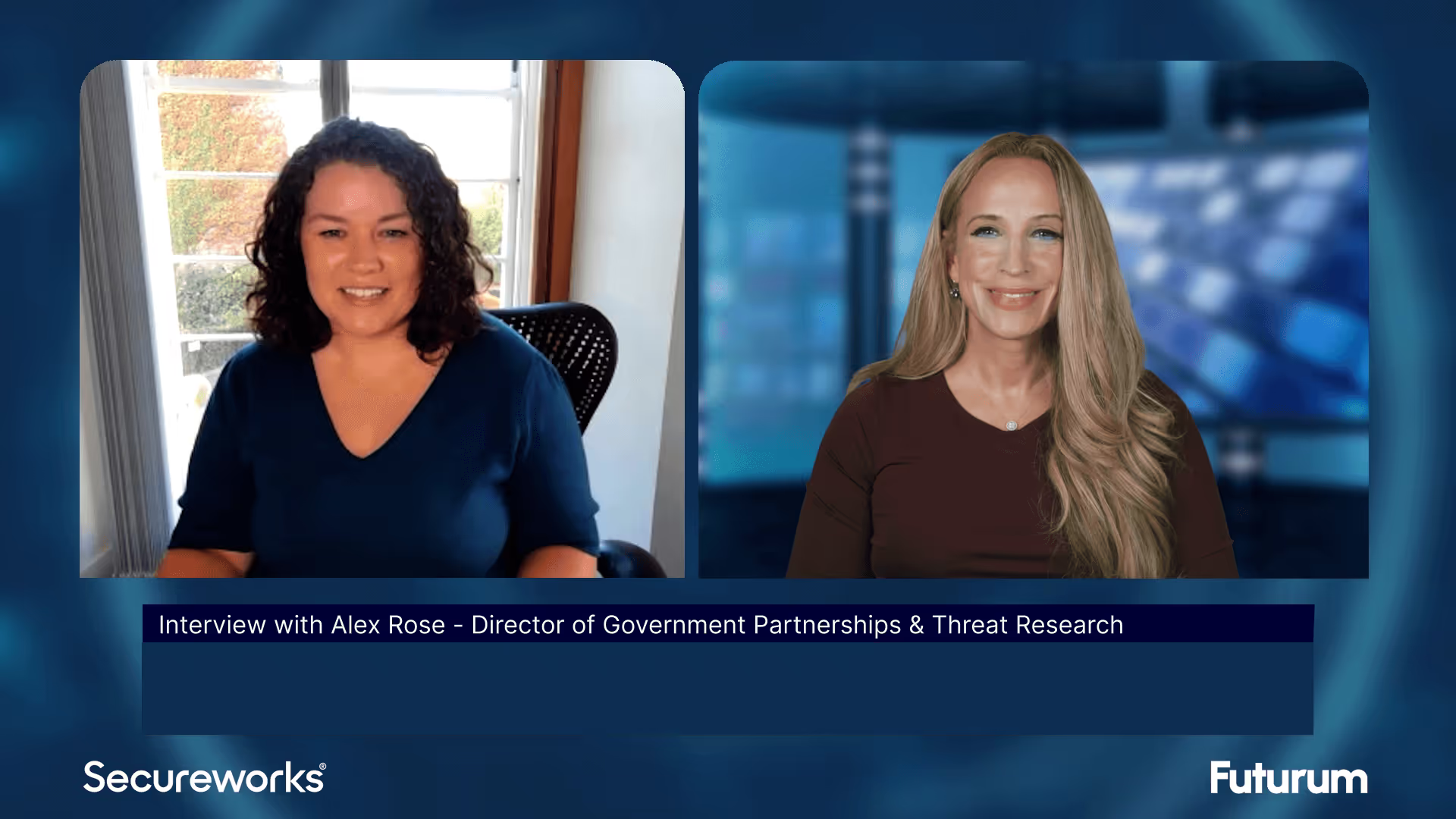
Threat Intelligence: Insights on Cybersecurity from Secureworks
Alex Rose from Secureworks joins Shira Rubinoff on the Cybersphere to share his insights on the critical role of threat intelligence in modern cybersecurity efforts, underscoring the importance of proactive, intelligence-driven defense mechanisms.

HP Launches World’s First Business PCs to Protect Against Quantum Hacks - The Six Five On the Road
On this episode of the Six Five - On the Road, hosts Patrick Moorhead and Daniel Newman are joined by HP's Ian Pratt, Global Head of Security for Personal Systems.
What is Autonomous Endpoint Management?
Autonomous Endpoint Management is a framework designed to unify IT operations and security teams on a single platform through real-time control and visibility.
QUANTUM
Quantum in Action: Insights and Applications with Matt Kinsella
Quantum is no longer a technology of the future; the quantum opportunity is here now. During this keynote conversation, Infleqtion CEO, Matt Kinsella will explore the latest quantum developments and how organizations can best leverage quantum to their advantage.
Accelerating Breakthrough Quantum Applications with Neutral Atoms
Our planet needs major breakthroughs for a more sustainable future and quantum computing promises to provide a path to new solutions in a variety of industry segments. This talk will explore what it takes for quantum computers to be able to solve these significant computational challenges, and will show that the timeline to addressing valuable applications may be sooner than previously thought.