
Breaking Down Adobe Summit 2026: Strategy, Signals, and What's Next
SHARE


Melody Brue, VP and Principal Analyst at Moor Insights & Strategy, and Keith Kirkpatrick, VP and Research Director at The Futurum Group, recap Adobe Summit 2026 from Las Vegas. The conversation covers CX Enterprise as an architectural consolidation, the creativity-to-marketing convergence thesis, governance messaging gaps, enterprise proof points from the strategy sessions, and what the investor narrative signals about Adobe's trajectory.
Adobe Summit 2026 made a broad argument that customer experience is no longer a campaign function, it’s an orchestrated, agent-driven system spanning content, data, journeys, governance, and discovery. Whether or not platforms can deliver on that argument in enterprise environments is the question that matters most heading into the second half of 2026.
From Adobe Summit 2026 in Las Vegas, Melody Brue and Keith Kirkpatrick break down the event’s biggest announcements and what they signal for enterprise marketing, commerce, and customer experience platform strategy.
Key Takeaways Include:
- CX Enterprise is basically an architectural consolidation. It reorganizes existing components under an agent-first, ecosystem-aware umbrella that replaces Experience Cloud, changing how enterprises plan ownership, governance, and buying without replacing prior technology investments.
- The creativity-to-marketing convergence is the real strategic bet. Adobe is positioning itself as the platform that unifies ideation, content production, and campaign execution in a single experience layer, supported by an agentic content supply chain that spans human and automated workflows.
- Governance messaging was present but underplayed. Adobe’s focus on commercially safe content is something it’s built into Firefly from the start and remains a competitive differentiator for large brands. Our analysts flagged it as a drum worth beating harder, especially as AI-generated content scale increases brand risk exposure.
- Enterprise proof points came through in the strategy sessions. Ulta Beauty was the clearest example of CX Enterprise concepts in use, demonstrating the CMO-CTO relationship and how Adobe fits into a broader ecosystem that includes hyperscalers and ISVs.
- The investor signal matters. Adobe is moving from efficiency metrics to outcome-based subscription models, directly addressing Wall Street pressure on SaaS companies to demonstrate AI-generated revenue beyond baseline growth.
Watch the full analyst breakdown to understand what is execution-ready now, what’s still early, and what enterprise buyers should track over the next six to twelve months.
Disclaimer: Six Five Media is a media and analyst firm. All statements, views, and opinions expressed in this program are those of the hosts and guests and do not represent the views of any companies discussed. This content is for informational purposes only and should not be construed as investment advice.
KEITH KIRKPATRICK:
Adobe is really trying to deliver on this promise around creativity and marketing kind of merging together. Because if we think about the way that content and customer engagement is really being delivered now, we can't look at that as two sort of separate things.
MELODY BRUE:
Hi, and welcome to another Six Five virtual webcast. I'm Melody Brew. I'm here with Keith Kirkpatrick. And today we are wrapping up Adobe Summit 2026 in Las Vegas. This year's event was anchored around agentic AI, of course, customer experience, orchestration, and a series of major platform announcements across Adobe's enterprise stack. So, hey, Keith, how are you?
KEITH KIRKPATRICK:
I'm well, and you, Mel?
MELODY BRUE:
Good. I mean we had a busy few days there was a lot to take in there. I have some questions for you on the financial analyst event that you attended. Let's just get started. There's a lot to talk about a lot of announcements but when you step back from the keynote, the announcements, everything that was happening at Summit. What do you think was kind of the single most important takeaways from Summit? And then also, I think when we have to look at that, we look at what does that matter for enterprise leaders that are evaluating the future of what the main focus really was, was on customer experience platforms.
KEITH KIRKPATRICK:
Right, absolutely. Well, you know, I think we both realized there was a lot that was announced at Summit and really trying to cut through the noise. I think the thing that kind of resonated with me is that Adobe is really trying to deliver on this promise around creativity and marketing, kind of merging together into a single experience platform. Because if we think about the way that content and customer engagement is really being delivered now, you know, you can't look at it as two sort of separate things. You're going to have, perhaps an idea coming out of marketing that they send to a designer, or perhaps designers have ideas that they want to jumpstart ideas that marketing can come into and perhaps make modifications and so forth. So I think what Adobe really was trying to emphasize is they're the ones that are providing the platform and the tools to do that in a unified and seamless way.
MELODY BRUE:
Yeah, I think that content supply chain really becomes the connective tissue there because you talk about human ideation, creative tools, and then now this agent-driven production, omni-channel activation, all of this kind of still sits on top of that same data and governance layer. So it's like that plus Adobe plus, you know, then we talk about the whole ecosystem and everything, but I think that big takeaway what matters to the CMO and the CTO and now the CFO because it gives them this single system that they can point to when they talk about customer experience as a driver of revenue and retention, not just a campaign engine or a line item on the budget, which that's typically, you know, what marketers have dealt with for a really long time is being seen as a cost center. And now it really has shifted to it's a revenue driver.
KEITH KIRKPATRICK:
And, you know, another thing I kind of wanted to highlight is that Adobe seemed to really emphasize that, again, you have all of these tools, you have this platform, but there's still room for the individual creator. I think they're very, very emphatic that, you know, when we hear a lot about AI, this does not mean that AI is coming to replace creators. It's not coming to replace marketers. What it's there to do really is help them, you know, become more efficient and then hopefully, you know, take away some of the things that they really don't enjoy doing that take a lot of time or really are considered, I guess, you know, drudge work. and then let them refocus their efforts on doing things that will actually drive real outcomes. you know, for the business in terms of, you know, making more effect, not just making more content, but making it more effective.
MELODY BRUE:
And I think there's also amplifying the judgment of a human. So when you look across thousands, if not tens of thousands of things that are being produced per day, a human eye might miss something that's not in compliance or that is using somebody's IP. And there's an extra layer there that this still is going to require humans, but it gives humans kind of this superpower of not just speed, but that governance layer that it helps them to eliminate some of that risk.
KEITH KIRKPATRICK:
Absolutely. And you know, Mel, I'm glad you brought up governance because while there certainly were, you know, this sort of, you know, completely packed agenda across the, I guess, two or three days, The one message that I did not hear as much as I probably would have liked to, and I would love to get your thought on it, is Adobe's messaging around Adobe being that sort of enterprise grade choice when it comes to actually working with large brands. You can't use generative AI and have the AI hallucinate. I'll use an obvious example, like if you type in generate a picture of a soda can, you can't generate a can with imagery that looks like Coca-Cola. And I feel like they could have doubled down on that a bit more, given how much is at stake, particularly for large brands.
MELODY BRUE:
For sure, there's a lot at stake there. And I wonder if there's a little bit of Adobe has really led in that from day one when they came out with Firefly, it is commercially safe, that it's something that they've just baked into everything. And I wonder if maybe it was a little bit taken for granted that they don't have to kind of beat that drum. But I think that's a drum worth beating a little bit more. And I think you're right that if you look hard into each layer of the announcements, you can see where it supports that governance, where their decision making is clear, where they have kind of that AI control tower layer. But I think that you can't overstate that.
KEITH KIRKPATRICK:
I mean, that would just be my sort of message to the company is even though Adobe may feel like they've said it a lot. It is so important and it's something that is worth repeating and hopefully we'll hear more about that, you know, come the fall with Max.
MELODY BRUE:
It is worth repeating, and I feel like it's something like, and we'll get to pricing at some point, but it's something like pricing where you continue to have to talk about it. They continue, they need to reiterate, they need to really solidify their position there, but it's always changing. There's always sort of a new governance layer, a new agent that, like I said, can help humans to detect things, anomalies that maybe they wouldn't have seen just, you know, in the speed of things. There is that velocity that Adobe is continuing to push on and that will require additional governance layers that they have to continue to talk about.
KEITH KIRKPATRICK:
You know, Mel, I'm also curious to get your take on sort of one of the big announcements there, and that's Adobe kind of positioning the CX Enterprise as their big architectural move for the AI or for the agentic AI era. How did that land with you? Is that sort of a meaningful shift or is it kind of a repackaging of what Adobe already has in the market?
MELODY BRUE:
I think it's a it's more of an architectural consolidation. I think if you take the agent framework this coworker layer shared intelligence services on top of a P.A.W. experience platform and then the existing app portfolio. So a lot of the components are not new. but they are being reorganized under one umbrella. It replaces experience cloud and is designed to be agent first and then ecosystem aware, which I think this ecosystem thing is really important. But yeah, I think it is best understood as a meaningful reframing. So on top of their existing plummet. So it changes how you plan. ownership, governance again, and buying, but it doesn't necessarily replace all prior technology. These are kind of add on things to it. How do you think it was framed or what do you think wasn't said?
KEITH KIRKPATRICK:
Well, I think the, you know, I think they were alluding to it. Actually they were saying it, not necessarily, you know, on the first day, but in the second day with the second keynotes, I think they were really starting to establish the fact that, look, they view CX as, you know, it really is. Organizations really are kind of coalescing around the idea of in order to be successful in the market, you have to have a solid strategy for driving, you know, better customer experience. Adobe is being that platform. It's trying to say, look, we're the platform. We can handle everything. But we are also trying to take the approach of being as open as possible. So if you're an organization that wants to use models from other organizations, other companies, they're going to enable that. If you have other tools from other vendors, they're going to enable that for integrations. And I think the reason that they are realizing that that's the right move is in the end, I think from an enterprise perspective, an enterprise software perspective, it's really going to be about the orchestration, all these moving parts, you know, as organizations become more agentic. And it's not going to be necessarily that you try to gobble up all of the real estate. It's just to make sure that your software and, you know, wherever data is held in there can be accessed and leveraged for the value of that.
MELODY BRUE:
That orchestration layer, that's so important. And when they announced CX Enterprise coworker, this looks like a big move from campaign execution to that always on orchestration. So what in that announcement did you hear that you think is real operational value for marketers? And what in that feels early?
KEITH KIRKPATRICK:
Obviously, announcements always precede usage and utilization in the market. I had some customer interviews during the show, and a lot of this sounds like it is a really great goal or mile post that they want to hit in terms of actually being able to really utilize agentic technology to orchestrate basic tasks and then eventually get to that point where You will just take in data to actually create these automated campaign plans where yes, you will still have humans in the loop, but it will be in a much more automated way so that let's say you're able to, if a customer goes to the website, I think they showed a demo on this on stage, it will be automatically tailored directly to that user based on the data. I think we're not quite there yet in terms of execution, but what they're doing is they're saying, look, we're making this capability available. So when organizations are ready, it will function as it should.
MELODY BRUE:
I think that personalization is important, but when you look at the data for that, that's really like one of the key things and one of the hardest things to get right. And if you look at a brand that you may visit, let's say weekly or even daily versus a brand that maybe you only encounter one time, per year. Let's use an airport as an example. I actually got, I was on a briefing this morning, not with Adobe, but about an airport. And you may go through that airport only one time, but they still have to get that experience right. And it may, they may not have enough data about you to have it be super personalized. But I think that's where all this data coming into like kind of taking across the journey regardless of personalization that that's where it has to be right and this is where we look at like consolidating all of this like where you look at retention and revenue across audience journey that offer the creative instead of just like an isolated task So I think with, with co worker, the operational value is really where you can serve, like, and we heard this in the executive q amp a underserved products markets or tasks and then show this incremental impact without immediately threatening any sort of role that is existing like a human or. Maybe it's just something that wasn't able to the company wasn't able to get around to yet so there's a lot that goes into where do I use this. And it looks like that, you know, the parts around governance and data still remain really important. The customer still needs to have clear policy controls, those audit trails, data readiness patterns, and then they can let that orchestration layer influence the higher risk decisions at scale.
KEITH KIRKPATRICK:
Yeah, it does kind of all start with the data. Now, with that being said, I know that Adobe and other companies out there are talking about using synthetic data to help inform strategy where And obviously, it's early days for that, but that's a good sign. Particularly, I think you hit on it with particular use cases where you're not going to necessarily have a lot of individual customer data because of whether it's frequency or maybe it's demographics don't match up, generally speaking. with the product or service. Yeah.
MELODY BRUE:
And different regulations in different parts of the world. I like that synthetic data on that. That's really interesting and can help kind of create these personas that at least are best guests and they're informed guesses. They're not just like, well, we don't know this person, so hey, Keith, here's a new makeup brand for you. Speaking of makeup brands, though, there were some, they called them strategy keynotes. And outside of the keynote, it really was where kind of the proof points came. And that was nice to see. One of them was Ulta Beauty. And it actually served as a proof point in a couple of ways, because they are kind of, they're already using some of these newly announced things as sort of proof of concept. as well as that, they showed that relationship between the CMO and the CTO and how important that relationship is. As a former CMO, I know how important that is in terms of building a product, creating offers, but also what things in your stack, where does this fit in? What do we need to replace? What has to kind of, fall into the existing ecosystem. And I think that's one of the places, as we discussed the other day, that Adobe could really help their customers understand some playbooks. Like, this is what this experience for Ulta Beauty looks like. And we saw a little of that. But if you weren't at Summit, or you're not looking at these, you know, keynotes or strategy keynotes, a playbook that says Adobe plus AWS plus this plus that got us to this, right? And because they do have this massive ecosystem of hyperscalers, ISVs, everything that it's not just, I hate to like use the phrase one Adobe, it's not just one Adobe and it's not just only Adobe, right? So, those playbooks, I think, could really help to illustrate that of what does this look like. I mean, we talked the other night about wouldn't it be great to go through a full implementation with the company to really see how they're driving this through. I would love to see it with an existing customer.
KEITH KIRKPATRICK:
Right.
MELODY BRUE:
Implementing new tools, but then also a net new. And there's not probably a whole lot of net news for Adobe in terms of like the Fortune 500. But there certainly are bigger use cases that they could get into. And I think this is my formal request that we do a ride along.
KEITH KIRKPATRICK:
Right. Yeah. You know, I actually had some other meetings while I was at Adobe with some partners talking about this, you know, issue. And a lot of it is also around, if you think of tool, you know, big platforms like Adobe, they do a lot of things very well on a horizontal level. But when we start to get into verticals, that's where you really do need a solid playbook. You probably almost definitely need a partner who knows and really understands the nuances when we're talking regulation and workflows. types of employees, things that can be automated, things that probably shouldn't be because just knowing the business. So yeah, so I think that's something that I'm looking to hear a bit more about over the next several months. I guess the other thing I'm curious about is, as we kind of head out of Summit, what should buyers be looking at over the next six to 12 months to really judge whether Adobe can take these announcements and actually deliver measurable customer outcomes?
MELODY BRUE:
Yeah, I think, looking for those big customer references on CX enterprise and co worker with clear metrics campaign faster campaign cycles, higher on brand content rate, better conversion, higher retention. reduced manual ops. And so it's not just about agents and workflows, right? It's whether Adobe can, and its partners, can really turn the ecosystem into package solutions. Like we were talking about named plays, reference architectures. joint programs. I think there's a lot of progress that we need to pay attention to on that governance and data, the practical frameworks, permissions, and policies. And then I think really the audience definition and the data quality lead to improvements in customer acquisition cost, lifetime value, and churn. And these are the things that a CFO is going to recognize. And my guess is that the market would recognize. And I would love to hear your take on that, too. What should buyers be paying attention to? But because you are also a part of the financial analyst meeting, what's the street paying attention to? And what does Adobe need to kind of prove to customers, the street, the buyer? And when I say customers, I mean current customers and potential customers.
KEITH KIRKPATRICK:
Yeah, absolutely. I did get the opportunity to sit into that session and it was, um, to me, there was a marked change from even six months ago, where six months ago, we were hearing a lot about let's improve efficiency. Let's, you know, get productivity up there. Now we're starting to hear much more about, let's look at how we can actually help you achieve your business outcomes. And that really goes into the heart of the challenge that many companies, whether we're talking about Adobe or other SaaS companies, they're being honestly getting beat up a little bit on Wall Street because they're not able to demonstrate or haven't yet convincingly said, look, we're investing all of this money into AI. Are we generating any revenue on top of what we already would have generated? what Adobe was talking about in this industry, I'm sorry, in this investor session, they were talking about using outcomes as a way to level set with customers to then set subscription levels for their services, which to me is a great idea because it helps align what the customer needs to do along with what Adobe is delivering. They can then in turn use those results and show the street, look, We are generating real value here from AI. To me, that's huge, given that it has been such, you know, we look back three or four months ago where everybody was talking about the death of SaaS, which by the way, was completely exaggerated. But there is a point. There is a point. There's a lot of money being poured into this. Vendors like Adobe need to demonstrate they are actually generating returns. And I was so glad to hear that they are thinking critically about that.
MELODY BRUE:
Yeah, it really is this whole flywheel effect, right? I mean, you start even with like a simple entry point of, you know, one of our favorites, Adobe Express, right? Like we, that's often a very, that's an early entry point in the organization, whether it's a, an Adobe customer that is an enterprise customer, there are still these entry points all throughout the organization that may actually quite often hit the CFO's office, right? Because it's It's finance, it's HR, a great tool that's an entry point into the organization. That flywheel sometimes starts there. It sometimes starts at the larger enterprise buyer. But then that customer experience journey then leads to revenue, which leads back to the CFO's office, which leads to budget, which leads to the street, right? Like there's this whole diagram that I'm drawing with my hands. But yeah, I think no matter what the entry point is, and often it is Express, I mean, I am a daily Express user, and find that even Express really has gotten so much more advanced. And there's some proof points there of this AI works. And it works for anybody. It doesn't have to be super complicated. So yeah, I think interesting on what's happening on Wall Street, especially with SaaS, is there are some anomaly points there that I think we could sort of excuse. I think there's also a lot of retail buyers that are influencing stock prices because X new startup releases this. So it's going to be an Adobe killer. Oh, no, actually, it's not. They just shut down. They can't operate. There's this kind of cycle that's happening that's stirring up a little bit of chaos. But good to hear that Adobe has their eye on the prize in terms of what they need to do to show value to the market. One of those things is going to be a new CEO. Any thoughts on the timing of that or what's happening there?
KEITH KIRKPATRICK:
I suppose that they're probably, you know, somebody somewhere out there is making some sort of wager on that. I don't know. I don't know, but I do think that the main thing I think that folks need to pay attention is, you know, looking at the type, the persona of someone who might go in that role. And I think really, if I were making that decision, which obviously I'm not, I would hope that they would choose someone or be looking for someone who really could tell the story around AI, but not from just a technological perspective, but how it is being embedded and used to drive, as you just mentioned, that flywheel effect of really, you know, starting out with small wins, whether it's through Express or through one of their other, you know, individual applications and driving those wins, those small wins over time. into a large sort of flywheel that will, you know, just help them deliver returns year upon year upon year.
MELODY BRUE:
Great points. And we were in Vegas and we missed the opportunity to place a wager on that. But I will say that, you know, a CEO obviously is very important, but so is the whole leadership team. And the people that we saw on stage from Anil to Amit to David, these are solid leaders in their, their divisions on AI, right? So you've got some really solid leaders in there. And so, yes, the CEO is important, but I look at the entire executive team and how they're executing and how they're now, especially more recently, really working together And it's not like this is the creative side and this is the enterprise side. That came across to me really clearly at this summit. And so I look forward to seeing, you know, who they choose. But I think that there's some weight that you can put on just having a really solid team in place as it is.
KEITH KIRKPATRICK:
Absolutely. You know, I think that's why, you know, we look at how the keynotes were constructed. This, you know, I think I made the comment to you and several others. In some ways, summit felt like a mini-max, and I think that was intentional to show that this is a cohesive platform and company that is designed to move everything forward utilizing AI. Yeah. All right, well, I think that is all the time we have. So thanks for tuning in to this Six Five virtual webcast covering Adobe Summit 2026. Don't forget to hit subscribe, follow us on the socials, and check out all of our coverage at sixfivemedia.com. Thanks, and we'll see you next time.
MORE VIDEOS
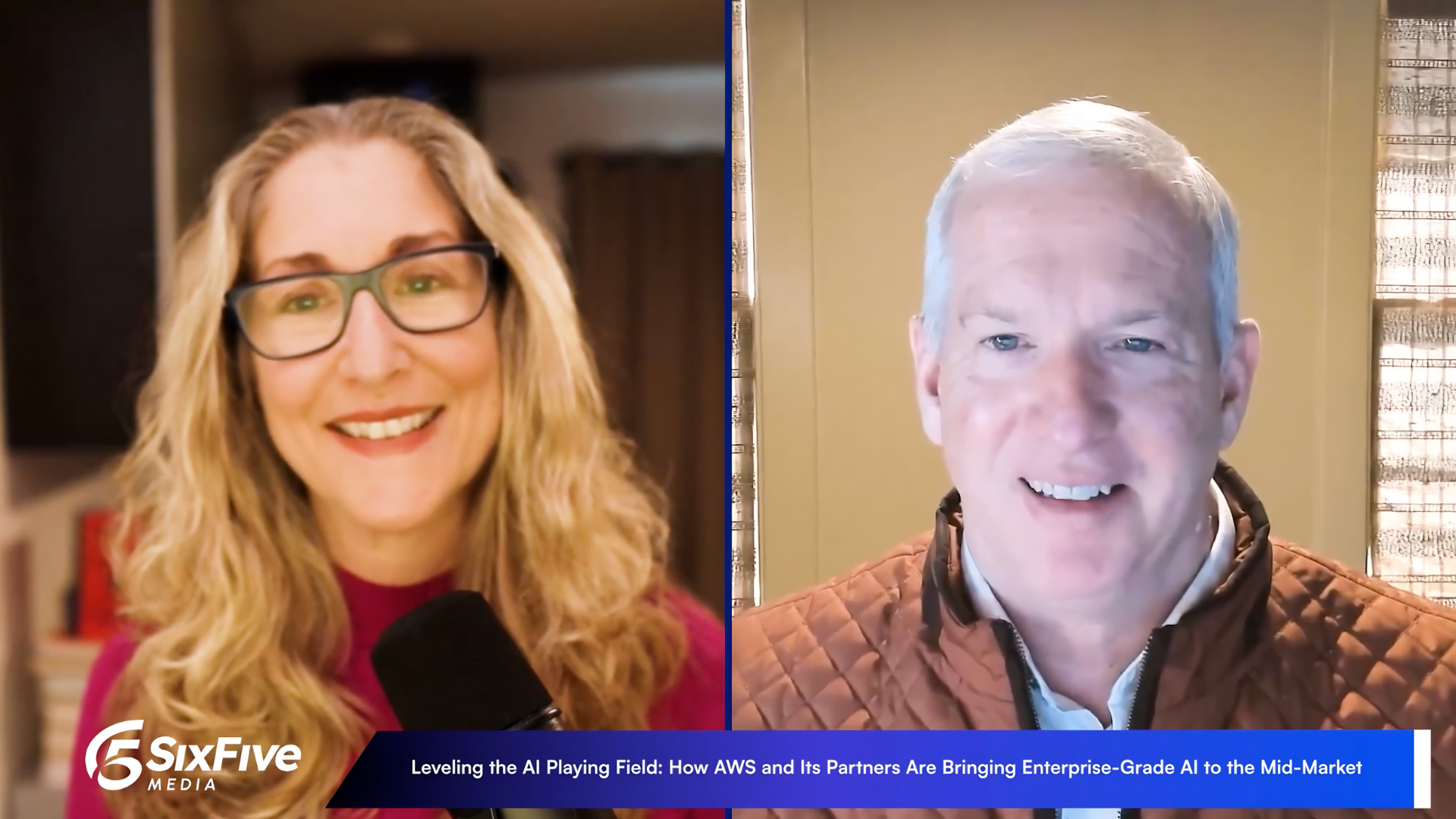
How the Mid-Market Gets Enterprise AI Without a 300-Person IT Org
On this Six Five Virtual Webcast, AWS’s Chris Sullivan explains how partners and AWS Marketplace are helping mid-market companies move agentic AI from proof of concept to production without enterprise-sized IT teams. Starting with a real business problem and the right partner gives these organizations a faster path to measurable results.


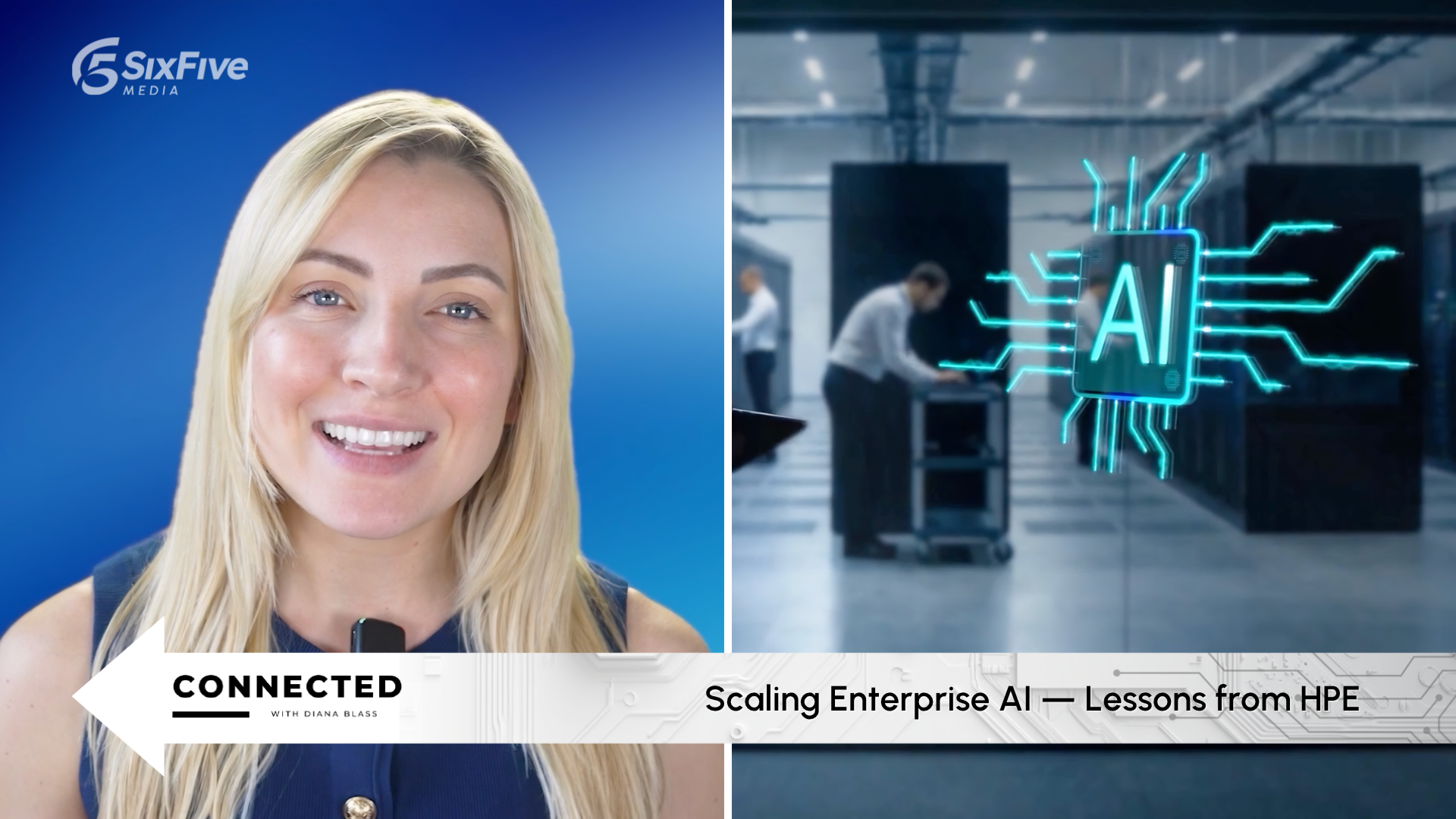
Scaling Enterprise AI, Lessons from HPE - Six Five Connected with Diana Blass
On Six Five Connected, Diana Blass explores how HPE is scaling AI across its own business and what agentic AI demands from compute, memory, edge, and networking infrastructure. Enterprises that design infrastructure around their most valuable use cases can turn AI adoption into measurable savings.
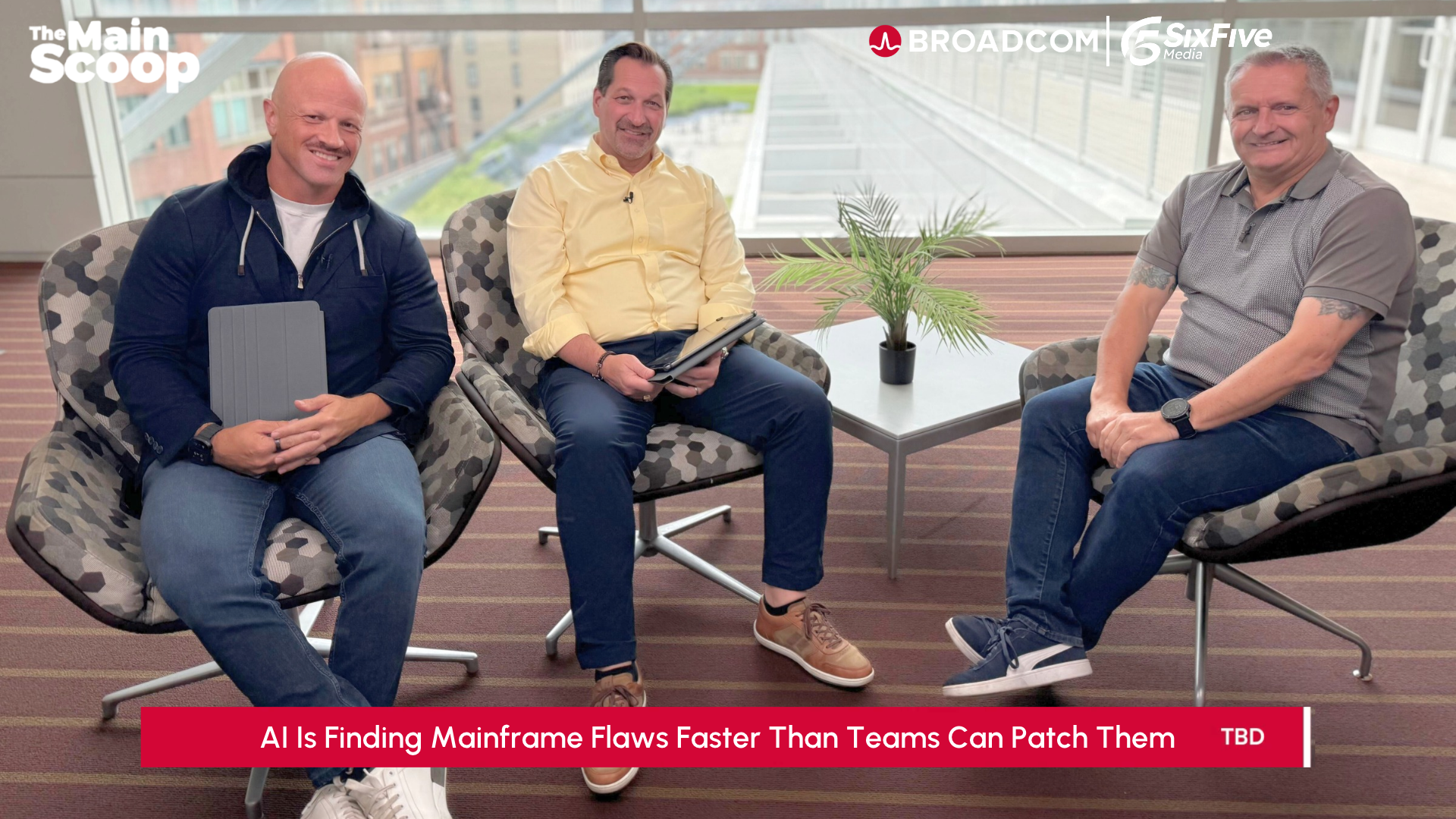
Outpacing Threat Actors: Mainframe Security in the Age of AI and Quantum
On The Main Scoop, Vertali's Mark Wilson explains why AI-driven vulnerability discovery and looming post-quantum deadlines are forcing mainframe teams to rebuild their maintenance cycles. Teams that combine AI-assisted vigilance with security fundamentals and early cryptographic inventories will stay ahead of threat actors.
Other Categories
CYBERSECURITY
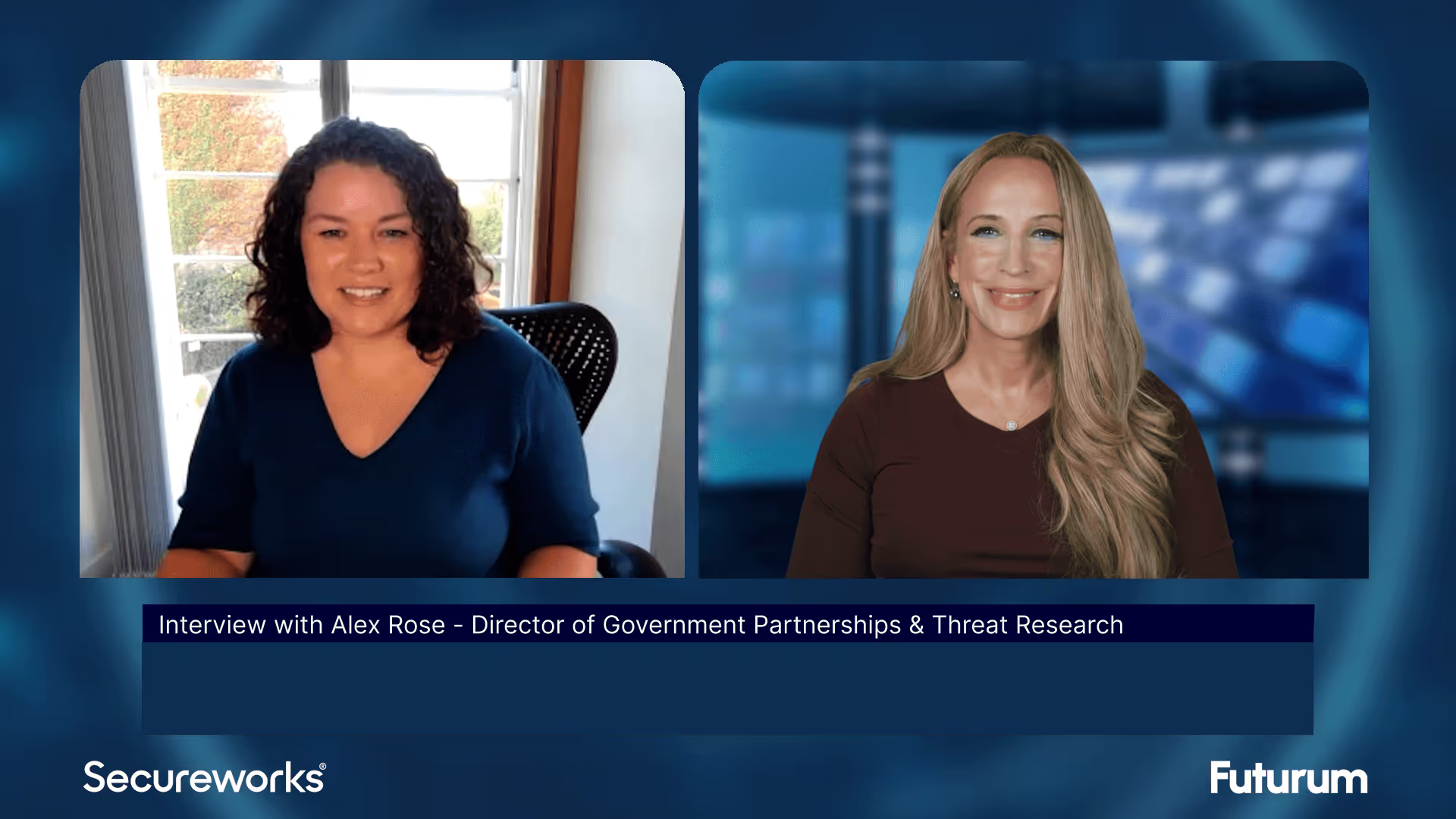
Threat Intelligence: Insights on Cybersecurity from Secureworks
Alex Rose from Secureworks joins Shira Rubinoff on the Cybersphere to share his insights on the critical role of threat intelligence in modern cybersecurity efforts, underscoring the importance of proactive, intelligence-driven defense mechanisms.

HP Launches World’s First Business PCs to Protect Against Quantum Hacks - The Six Five On the Road
On this episode of the Six Five - On the Road, hosts Patrick Moorhead and Daniel Newman are joined by HP's Ian Pratt, Global Head of Security for Personal Systems.
What is Autonomous Endpoint Management?
Autonomous Endpoint Management is a framework designed to unify IT operations and security teams on a single platform through real-time control and visibility.
QUANTUM
Quantum in Action: Insights and Applications with Matt Kinsella
Quantum is no longer a technology of the future; the quantum opportunity is here now. During this keynote conversation, Infleqtion CEO, Matt Kinsella will explore the latest quantum developments and how organizations can best leverage quantum to their advantage.
Accelerating Breakthrough Quantum Applications with Neutral Atoms
Our planet needs major breakthroughs for a more sustainable future and quantum computing promises to provide a path to new solutions in a variety of industry segments. This talk will explore what it takes for quantum computers to be able to solve these significant computational challenges, and will show that the timeline to addressing valuable applications may be sooner than previously thought.