
Java 8 to Java 25 in 45 Minutes: What AI Modernization Still Needs From People
SHARE


Sai Govender, Founder and CEO of Blue Pearl, joins Jason Andersen at IBM TechXchange 2026 to explain how IBM Bob cut Java, .NET, and Excel modernization work from months to days or weeks. He says the approach holds up because senior engineers stay in the loop to validate the output before it reaches production.
Blue Pearl planned for 30-90 days to modernize an internal Java 8 application. IBM Bob did the heavy lifting in 3 days, and on a supervised third run moved the code to Java 25 in just 45 minutes. Since then, contractor hours sold through the app have grown from about 800,000 to 2 million, according to Blue Pearl.
At IBM TechXchange 2026 in Atlanta, Jason Andersen spoke with Sai Govender, Founder and CEO of Blue Pearl, a South Africa-founded technology company and IBM partner, about AI-assisted modernization across Java, .NET, Excel, Delphi, and SAP ABAP code.
Blue Pearl works through Bob's modes in order. "Ask mode" is used to assess existing code and infrastructure, "Plan mode" maps the migration and its AWS dependencies, and "Agent mode" makes the changes. The team also built custom modes, including one that checks cloud costs against the AWS calculator.
Every project follows one rule, in Govender's words: "AI does the heavy lifting, does the work, but the human in the loop makes the decision."
Key Takeaways:
🔹 The upgrade took 45 minutes; checking it took longer. Blue Pearl validated Bob's Java 8 to Java 25 output three times, with Govender in the room for the third run, before trusting the result.
🔹 A 9-month .NET estimate finished in 6 weeks. For a customer in the gambling sector, Blue Pearl modernized a .NET codebase of about 14 million lines. The original plan called for 9 months of work from senior .NET developers.
🔹 Code nobody understands can be read back to the business. An investment firm's 30,000-line Excel macro had outlived the people who built it. Blue Pearl used Bob to convert it to Python, then to plain English, and returned the exact business rules.
🔹 Scarce-skill code is where the economics change most. Blue Pearl had been pulling Delphi developers out of retirement or paying high rates to support mining applications. Now a senior Delphi developer spends about 10–12 hours validating Bob's output.
🔹 SAP's on-prem deadline is the next target. Govender points to SAP ending on-prem support in 2027, with some customers given until 2029. Blue Pearl is modernizing ABAP code for 2 customers moving from on-prem to AWS.
Blue Pearl and IBM are also exploring an on-site appliance preloaded with Bob, so customers that need to keep code in their mainframe environments can modernize it in place. For those customers, modernization could start without any code ever leaving the building.
Watch the full video at sixfivemedia.com, and subscribe to our YouTube channel so you never miss an episode.
Disclaimer: Six Five Media is for information and entertainment purposes only. Over the course of this video, we may discuss companies that are publicly traded, and we may reference their equity share prices. Nothing discussed during this webcast should be considered investment advice or a recommendation to buy or sell any security. We are not investment advisors, and you should not rely on this content as financial advice. Six Five Media collaborates with technology companies and industry leaders to produce research-driven interviews and multimedia programming for enterprise technology audiences.
Jason Andersen:
Hi, this is Jason Andersen with Six Five on the road. And today we're talking a little bit about application migration here at IBM Tech Exchange 2026. I am joined by Sai, who's the CEO of Blue Pearl, great IBM partner, has a great case study for IBM Bob. But you also have been doing a lot of things with migration. So we'd love to hear a little bit more about that. So why don't you tell us a little bit about Blue Pearl, and then we can dive into some of the technology stuff.
Sai Govender:
Thank you Jason and it's a pleasure to be here. So Bluepearl is a technology company founded in South Africa by myself about 13 years ago. Our service offerings and our specialties is cloud services where we're heavily involved in migrations and Bob has a direct play there. We also do software and app development as well. Bob has a perfect play there in the SDLC process. Data and AI, I can't tell you how Bob fits into that service line. And then we do a bit of cybersecurity and ICT resourcing. So Bluepoll as it stands now is a global company. We have offices in Australia, New Zealand, India, Dubai, Saudi Arabia. We're planning expansions into the US, into Malaysia and Singapore over the next couple months.
Jason Andersen:
Okay, that's great. Are there any particular markets you serve, verticals you serve, like manufacturing? Mining's big in South Africa. I don't know what that looks like.
Sai Govender:
So mining is quite a strategic vertical for us, but also banking, FSI, retail, manufacturing. So those are some of the service lines we work with. Okay, great. And how did you get introduced to Bob? How did that process start with IBM? The reason I smile is because it's quite an interesting story. And it started a year ago, actually in Orlando. So it was a ticket exchange in Orlando. I was doing a panel discussion on Watson Orchestrate because we just implemented it for one of our customers. And I was walking with another colleague and as you can imagine the flight from South Africa is quite long. If I go via the Middle East it's about 23 hours to get here. So I was quite jet-lagged and I said I wanted to go back to the hotel to get some sleep. And he said, let's go into this Bob session. And I said, no, I just want to go back and sleep. I think it was the best decision of my life to walk into that Bob session. I do have some technical background, although I'm a founder and CEO. And so when I walked into the Bob session, it was actually a lab. And we started working with Bob in ask mode, plan mode, and eventually in the agent mode. And a few things started to, you know they say that light bulb goes off in your head, it happened a year ago. So I brought it back to my engineering team and told them can we test out Bob's capability. I reached out to the Bob team, asked them for early access to Bob. They gave me early access with one caveat and that was to give them a public case study. Oh, well, okay. Makes sense. And we tested it on our own internal code base. We didn't want to do it on any client-based code bases at that point in time. And when we tested it out, we did it on an internal application, and that application had a lot of deprecated APIs. It was running on Java 8. It needed to be modernized. The initial project plan, we were looking at between 30 days to about three months to modernize that, with a few senior Java developers to do so. Introducing IBM Bob, my team came back to me and said, Bob did the heavy lifting. And it was three days later. Oh, really? Wow. Okay. I was quite surprised, as you can imagine. And I asked a lot of questions around Can we validate this? So they went, they validated it, they said the results speak for itself. They validated it a second time, I said can we do it a third time, but I want to be in the room this time. And it was amazing. Actually Bob upgraded from Java 8 to Java 25 within 45 minutes. It took us some time to validate the results. Human in the loop type of scenario. And that was our start to the journey of Bob. That application blew up at the moment. Initially, we were sitting at about 800,000 hours sold. What that application does, it connects a contractor, ICT contractor, to a job specification that customers are looking for. And we had a lot of AI models running within that process. Today, as it stands, a year later, well, about nine months later after we've done the modernization piece, we now sold two million hours on the application. Now the API is a separate stream that's been accessed by some of our customers like Ernst & Young, Accenture, and the rest of it.
Jason Andersen:
So, this is great. A couple questions though. So the first one was, you were at Tech Exchange last year when Bob was launched. And you had just seen it. So had your team been using other types of development tools with AI in them, like some of the vibe tools out there or chatbots or GitHub? Were they doing any of that stuff already? Or was this one of your first AI implementations with code? No.
Sai Govender:
As I mentioned, we're an ICT company. AI is really relevant to what we do. It's included in one of our service lines. And we've been using other tools. We've been using other coding tools, low-code platform tools, and nothing like Bob, though. Really? Yeah, nothing like Bob. Bob is an IDE, and it has about six different scenarios that sit around Bob, which includes the security, the governance, the testing, and we've never come across something like this in my 13 years that I've worked with, so we were excited and scared at the same time. But the scariness went away very quickly. Good. And we had a massive return on investment around that.
Jason Andersen:
So you mentioned the API as well. Is that a net new functionality since the migration? So it wasn't just a migration of, hey, I've got functionality. I'm going to lift it and shift it. You actually lifted, shifted, and added, right?
Sai Govender:
Yes. That's my understanding. OK, good. If you understand Bob, it has a few different modes, right? Yeah, right. Ask mode is really, you are asking Bob to evaluate your existing code bases, your existing infrastructure. It's really not doing any, when I say not doing any work, it's not doing any implementation work. It's purely just advisory at that point. Then we go into planning mode, and planning mode is where now I've got the information from Bob, now I want to plan my modernization piece or my migration piece. And what we found within that mode is you can do things like evaluate your infrastructure. which in our case was running on AWS, our cloud infrastructure. As well as application dependencies around that cloud infrastructure. And Bob starts to do some amazing things at that point. Because it starts talking to you about how you can best deploy your modernized application on, or your revised modernized application on a more optimal infrastructure. How you can turn on things like auto-scaling, how you can look at containerization, how you can look at, if you're not looking at those things. And then you've got the agent mode. And the agent mode is where Bob really does the heavy lifting. But we've also got things like Bob Suggests, which Bob doesn't, it gives you exactly what you want and what you ask it for, but it also makes suggestions on things that you can improve and make better. And we found that really exceptional. But there's also custom modes that we've built into Bob, like our cloud mode, and our cloud mode is basically evaluating our cloud infrastructure. And then our cloud costing mode that evaluates your cost of your cloud towards an AWS calculator and that sort of thing. Okay, great.
Jason Andersen:
So, the other thing that stood out with this is that you've mentioned migrations, right? A big part of your business is migrations. So this was your first Java migration with Bob, and there's a case study actually with IBM on this topic, but since then, it's been a few months, where are you now? What are you doing with Bob now in terms of client interactions, other applications? What's going on lately?
Sai Govender:
Yeah, so we're an IBM business partner as well. So one of our strategies was developing a sales mechanism where we could get Bob to our existing customers. And we started, so our migration practice is quite significant. We are a key AWS partner and we have our migration competency. which allows us to then unlock funding from AWS to be able to migrate customers. But a big part of that migration is, we all know traditional lift and shift doesn't work anymore, right? There's a huge modernization piece. And normally that modernization piece doesn't come on the, there's a bit on the infrastructure side, but there's more on the application side. And it's normally around a code base. And we've been testing Bob out on things like .NET code bases in a production environment that public case study is out. The customer is within the gambling space. They wanted to do any bet anytime. They had about 14 million lines of code in a .NET code base that we needed to modernize. It was going to take us about nine months to do so with a couple of senior .NET developers. Bob did it in six weeks. Oh wow, okay, so yeah. Yeah, so amazing. We've tested out on an Excel macro, a 30,000 line macro for an investment capital house if you're running a macro. Phenomenal. These guys came to us and they wanted to understand what the macro was doing. They knew the output of it, but it's been developed over time and nobody really had that institutional knowledge around it. We converted it to Python using Bob, and then we converted it to English, and we gave them the exact rules around the Excel code base.
Jason Andersen:
It's another great point around these tools, especially like Bob is with plan mode and the ability to examine and look over the code. A lot of these apps that are out there, the people who took care of them are no longer around. Or maybe they've moved on to another job, they've forgotten. So even the ability to just come in and look at what you have to figure out what's going on and what could be optimized, or where there's been business requirements drift or architectural drift is a big deal.
Sai Govender:
Yeah, it's becoming a challenge, especially where, I'll give you an example. I understand Delphi codebase, and Delphi goes back a few years, but if you try to find Delphi developers in South Africa. it's extremely difficult. I'm sure. Well, Delphi developers around the world, it's extremely difficult to find them. But you've got a lot of, especially in the mining industry, where those applications are Delphi code bases, that now needs to be modernized, needs to be updated, or needs to be understood at a bare minimum. And we struggle to find resources. We either had to pull guys out of retirement, or their hourly rates were extremely high. I see. Now, introduce Bob into that scenario, it changes how you look at that. You know, we have a rule. AI does the heavy lifting, does the work, but the human in the loop makes the decision. And we still have to use, like a senior Delphi developer, but all the heavy lifting's been done. That person, all they come in, they're spending maybe like 10 or 12 hours just to validate exactly what's there, and we can push it to production after that.
Jason Andersen:
I think that's one of the best parts of your story is you have the expertise, you have the experience, you know, from a service perspective coming in. It's not just, you know, this isn't just simply plug the tool at the old cold base and, you know, some people make this stuff out to be just magical, right? And the truth is that you still need people to help make the magic really happen, right? Great, great, great. So, you know, we're kind of closing in on the end of 2026 right now, looking ahead to 2027. What are the types of things you're thinking about for Blue Pearl or, you know, what you're going to be doing with Bob, like any kind of crystal ball for us in terms of what you're thinking about heading into next year?
Sai Govender:
Yes, absolutely. I spoke to my team and asked them if I could mention this and they said absolutely. Great. SAP ABAP. Oh, okay. All right. Yeah. SAP is stopping support for all on-prem by 2027. That's true. Giving some customers to 2029 and It's almost a power of three mechanism. AWS would be our private and public cloud that we'd be using. IBM Bob would be the tool that we'd be using around with the modernization piece. Okay. And Blue Pearl would be the delivery partner. Okay. We've tested the ABAP Bob on ABAP code base. We're getting some absolutely phenomenal results coming back. We're currently working with two customers that we're migrating them from on-prem onto public cloud, onto AWS, where we started modernizing those code bases with ABAP. We feel this has an extremely large play, especially in the EMEA market, the European market, and the US market as well. Especially, I mean, you're getting quite a few public workloads running, SAP workloads are running on-prem, we think this is going to be a massive game changer. Also, we're looking at things like, I don't know whether I should mention this, but I'm going to anyway. A lot of customers are saying, we don't want our code bases to leave our on-prem mainframe environments. So, we've been working with IBM quite significantly on seeing whether we could get a box in place, comes pre-installed with IBM Bob, and probably Watson Orchestrate as well, roll the box into a customer, look at modernization of their code bases on site, get that done, and their code bases have never left. Sovereign migration, right? 100%.
Jason Andersen:
Great. That's awesome. Well, well, you heard it here first and thanks for the time. Thank you. And thank you all for tuning in again. This is Jason with 65 on the road and like subscribe, follow 65 media and we'll see you next time. Have a good one. You want to do the close out one more time just to that camera? I'm sorry. Was I? Okay, looking over there. I don't know if someone was walking down or whatever. No, no, no. I don't know. I was just didn't know where to look. I'm sorry.
Sai Govender:
Okay.
Jason Andersen:
That was my fault. Great. So where do you want me to pick it up from? Just finish the conversation and just your closeout. Great. Okay. Sure. So thanks Sai. Thanks for taking the time. We appreciate it. And this is Jason with Six Five Media and Six Five On The Road. Please like, subscribe and follow and we will catch you next time. Have a good one. Got it? Thank you so much. Yeah. Was that okay? Perfect.
MORE VIDEOS
Scaling Agentic AI with Arm AGI CPU
According to Signal65's findings, Arm AGI CPU delivers roughly twice the modeled work per rack compared with AMD EPYC 9755, building on a 1.2x average per-chip performance advantage, because density within a fixed power budget decides how much agentic CPU work a data center can host.


Anthropic's S-1 Opens the Books, Oracle Goes Heterogeneous, and the Real AI Capital Race
Anthropic's S-1 puts frontier AI economics on the public record, Oracle adds TPUs and Cerebras to a compute stack that was mostly NVIDIA, and hyperscaler earnings show cloud growth is exceeding free cash flow. Together they make capital structure, more than demand, the constraint on who can scale. Patrick Moorhead and Daniel Newman work through what the filings, the earnings, and a neocloud financing debate say about who can afford the build-out.
Megawatt Racks Need a New Power Architecture: Inside the Shift to 800 VDC
At OCP Global Summit 2026, LITEON, NVIDIA, and QCT explain why megawatt-scale AI racks are driving a shift from 54-volt to 800 VDC power architecture. For data center operators, the transition depends on a shared specification, retrofit paths for existing sites, and liquid-cooled power innovation.
Other Categories
CYBERSECURITY
Threat Intelligence: Insights on Cybersecurity from Secureworks
Alex Rose from Secureworks joins Shira Rubinoff on the Cybersphere to share his insights on the critical role of threat intelligence in modern cybersecurity efforts, underscoring the importance of proactive, intelligence-driven defense mechanisms.

HP Launches World’s First Business PCs to Protect Against Quantum Hacks - The Six Five On the Road
On this episode of the Six Five - On the Road, hosts Patrick Moorhead and Daniel Newman are joined by HP's Ian Pratt, Global Head of Security for Personal Systems.
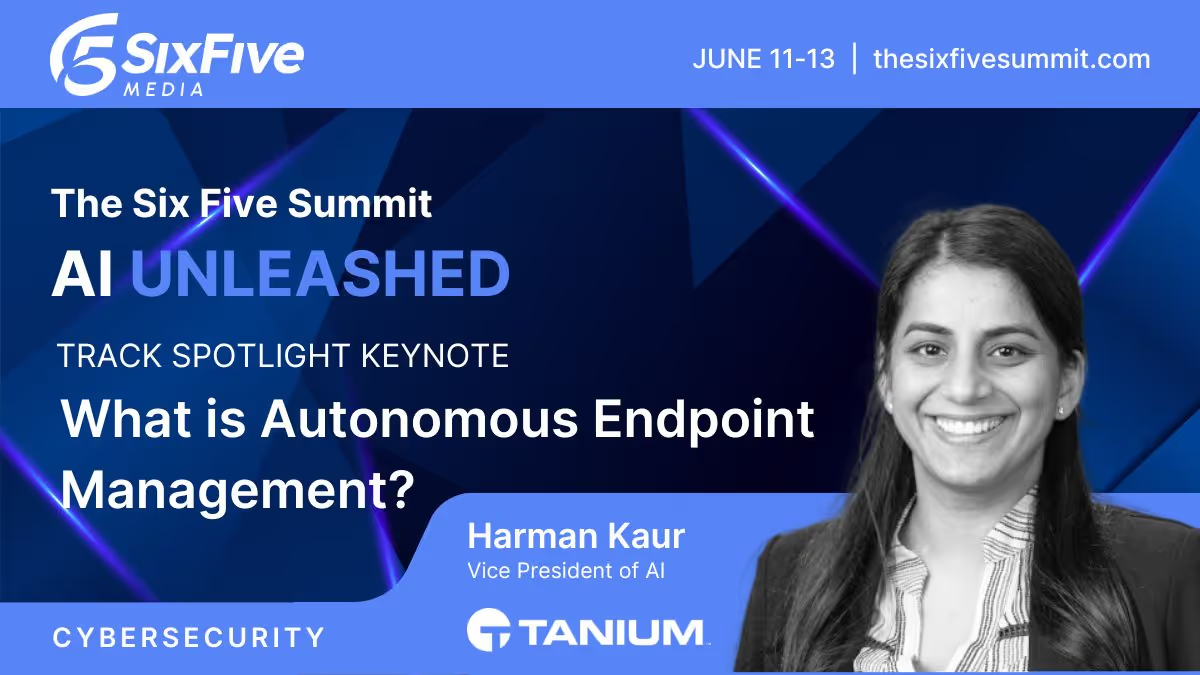
What is Autonomous Endpoint Management?
Autonomous Endpoint Management is a framework designed to unify IT operations and security teams on a single platform through real-time control and visibility.
QUANTUM
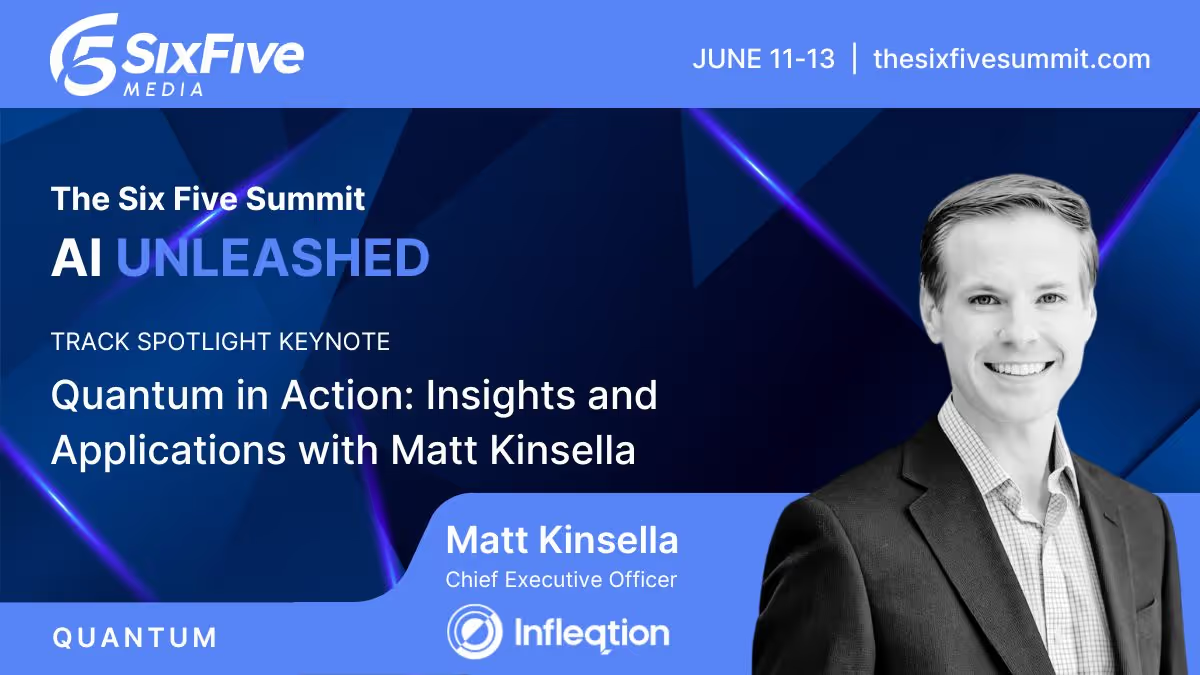
Quantum in Action: Insights and Applications with Matt Kinsella
Quantum is no longer a technology of the future; the quantum opportunity is here now. During this keynote conversation, Infleqtion CEO, Matt Kinsella will explore the latest quantum developments and how organizations can best leverage quantum to their advantage.
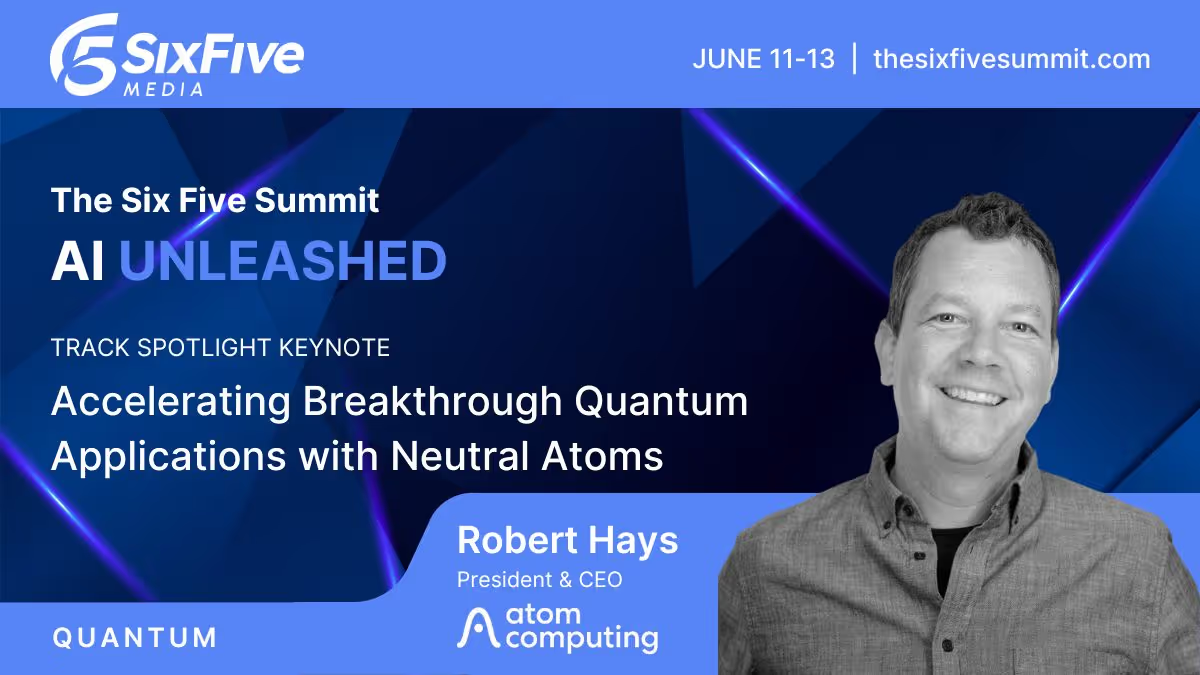
Accelerating Breakthrough Quantum Applications with Neutral Atoms
Our planet needs major breakthroughs for a more sustainable future and quantum computing promises to provide a path to new solutions in a variety of industry segments. This talk will explore what it takes for quantum computers to be able to solve these significant computational challenges, and will show that the timeline to addressing valuable applications may be sooner than previously thought.