
Building Trust at Scale: How RAG Is Evolving for Enterprise AI - Signal65
SHARE


Seamus Jones, Director, Technical Marketing Engineering at Dell, joins David Nicholson and Brian Martin to share lab-based insights on the evolution of RAG—including how Agentic RAG and advanced AI infrastructure are raising the bar for enterprise-ready, trustworthy generative AI.
How are emerging Retrieval-Augmented Generation (RAG) techniques reshaping how enterprises deploy generative AI—and what do these advances mean for building trustworthy, production-ready systems?
In this Signal65 conversation, host David Nicholson is joined by Dell Technologies Director, Technical Marketing Engineering Seamus Jones, to examine the evolution of RAG in enterprise AI. They explore key milestones, from traditional vector-based retrieval to Graph RAG and the rise of Agentic RAG, and highlight where each approach delivers value, how use cases differ, and why these architectural shifts are critical for trust, reliability, and governance in regulated, high-stakes enterprise environments.
Key Takeaways Include:
🔹 RAG Evolution in Enterprise AI: Classic RAG struggles with multi-hop reasoning, while Graph and Agentic RAG approaches improve context retrieval and reasoning accuracy.
🔹 Graph RAG Benefits: By modeling data relationships, Graph RAG can recover 15–20% more supporting context versus traditional vector methods.
🔹 Agentic RAG’s Value-Add: Iterative self-grading in Agentic RAG reduces hallucinations by approximately 40%, enhancing answer verifiability and trust.
🔹 Latency vs. Accuracy: The webcast explores the trade-offs between Classic, Graph, and Agentic RAG, focusing on balancing response time and output quality.
🔹 Infrastructure Insights: Enterprise-grade platforms like Dell PowerEdge XE7745 with AMD EPYC CPUs, NVIDIA L40S GPUs, and high-bandwidth networking play a pivotal role in enabling robust, scalable, and reliable RAG pipelines.
Download the whitepaper at Signal65.
Visit Dell Technologies for more info.
Watch the full video at sixfivemedia.com, and be sure to subscribe to our YouTube channel so you never miss an episode.
Or listen to the audio here:
Disclaimer: Signal65’s Insights from the AI Lab is for information and entertainment purposes only. Over the course of this webcast, we may talk about companies that are publicly traded, and we may even reference that fact and their equity share price, but please do not take anything that we say as a recommendation about what you should do with your investment dollars. We are not investment advisors, and we ask that you do not treat us as such.
David Nicholson:
Welcome to this special edition of Insights from the AI Lab presented by Six Five Media. I'm Dave Nicholson with the Futurum Group, and we're going to be talking to Seamus Jones from Dell about some testing that Signal65 helped Dell work on, specifically in the area of RAG. RAG is Retrieval Augmented Generation. Let's talk about the variations of RAG and what the learnings were from these tests.
Seamus Jones:
Yeah, I mean, when we started looking at the traditional RAG, right, where you think about it like instead of just asking a question, you're referencing a very specific source material.
David Nicholson:
Yeah.
Seamus Jones:
So very useful for things like law firms that are specializing in a specific type of law. Instead of just answering a question in a broad answer, it's going to be a very detailed question on that specific part of the firm. The next step was really graph rags. And I mean, you're great at these types of things, right? Mind maps, like finding the connections that exist between two, what you would perceive to be unconnected items. And then the third one that we looked at within this paper was agentic. And man, agentic has been everywhere. I'd say in the last two to three months, agentic has been–agentic workflows, agentic rag models. People are talking about it. Yeah, and half the people don't know what agentic is or means, and truly what it does for their LLMs, and their chatbots, and their exchanges. Agentic really is–you're taking that understanding and knowledge and then having agents within the model take an action. So the best known next action. So that way, instead of just saying, okay, retrieve this answer, it's more like go off and find the new set, research it, develop a plan, and bring me back the most accurate, developed, and intimate plan for that model. You know, the most important thing that I saw out of the testing was that it gave us a 40% greater accuracy rate when you use an agentic AI workflow.
David Nicholson:
The big question today, still for CIOs, CTOs, everyone is, how do I save money? How do I make money with AI? Okay, specifically generative AI.
Seamus Jones:
If you look at it, you could either train your own model and continually train and continually spend big dollars on big systems with GPUs, or you can use open source models. and then use RAG implementations to actually reference very specific data. And that's more realistic for most customers, right? Because you're not going to be buying these massive clusters to deploy in your small-medium enterprise. And we're seeing that there's a huge need in the market today for inferencing. Inferencing is the direction that a lot of customers require now, and using these rack models means that you can deploy scalable architectures that can go multi-node and really have linear scale, and do it in a way that's sustainable for both the environment, for the data center, whatever your architecture is, whether it's air or liquid cooled. So there are a lot of options.
David Nicholson:
We're going to have a link to the paper that goes into much greater detail, but I think, Seamus, you covered it very, very well. I'm sort of thinking of changing the name of this series to Seamus' Toybox. Seamus Jones, great to see you again. Thanks so much. For the Futurum Group, Six Five Media, and Signal 65 Labs, I'm Dave Nicholson. Thanks for joining us. Look forward to more installments in the Insights from the AI Lab series.
MORE VIDEOS
What Happens When AI Starts Designing the Chips That Power It | Synopsys at AI Infra Summit
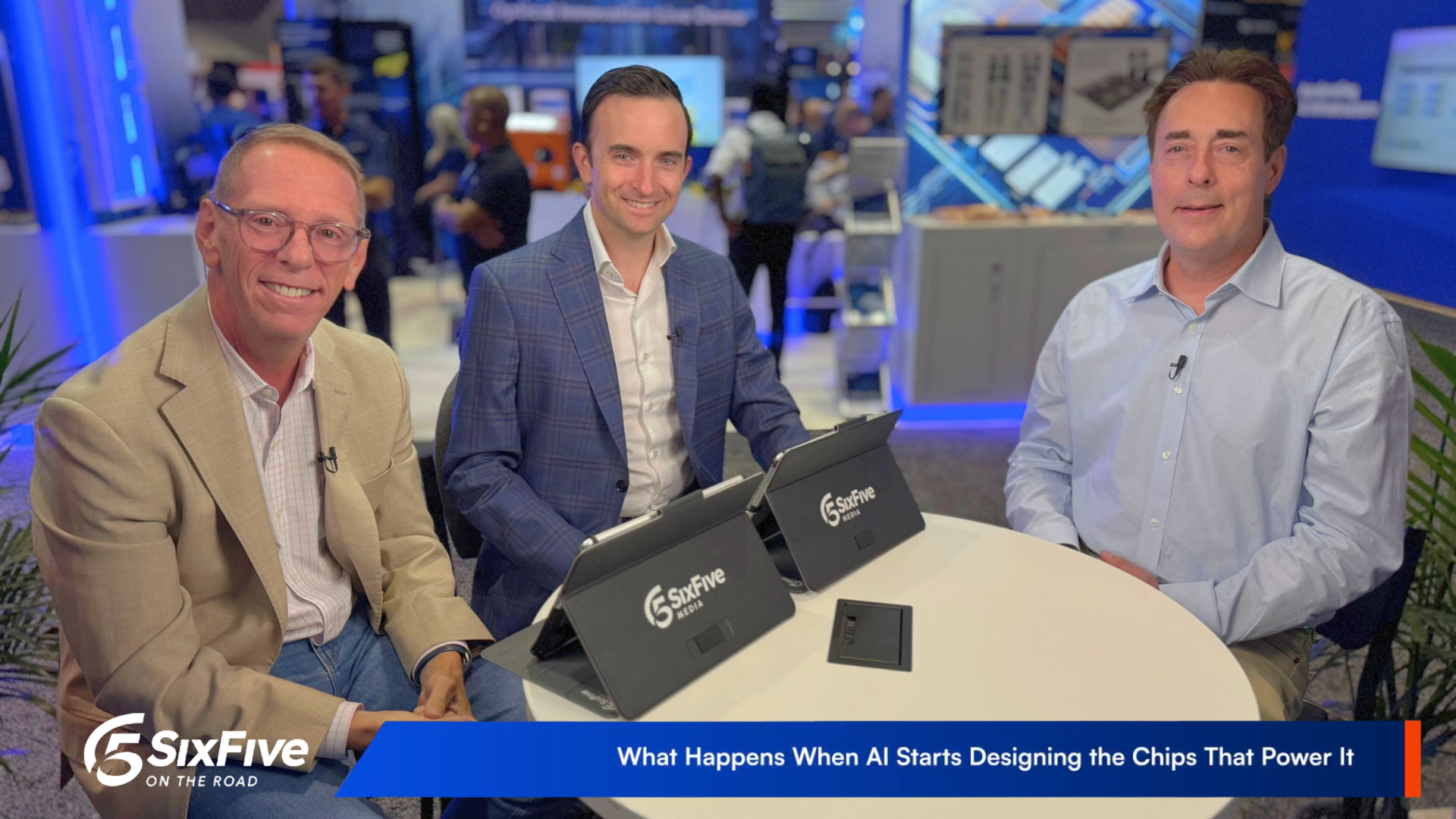
At AI Infra Summit 2026, Synopsys' Thomas Andersen joins Brendan Burke and Matt Kimball to explain how chip design is moving from AI copilots that suggest to agentic systems that execute tool orchestration, timing fixes, and verification from a written spec. For enterprises, that shift compresses spec-to-tapeout timelines and lowers the resource barrier to custom silicon.


The Six Five Pod | EP 322: AI Writes Its Own Rules, Copilot Bills by the Task, and Memory Names Its Price
The companies racing to build frontier AI just agreed to referee themselves. Over the same week, launches, investor days, and earnings put a price on that arrangement. Microsoft is charging for finished work, NVIDIA is selling agent containment as infrastructure, and the suppliers AI can't route around, from Synopsys to Micron, are collecting the premium. Patrick Moorhead and Daniel Newman separate signal from stagecraft, then split hard on whether the White House accord actually binds these key players to anything.
The Major Decision Hiding Behind Every Hypervisor Renewal
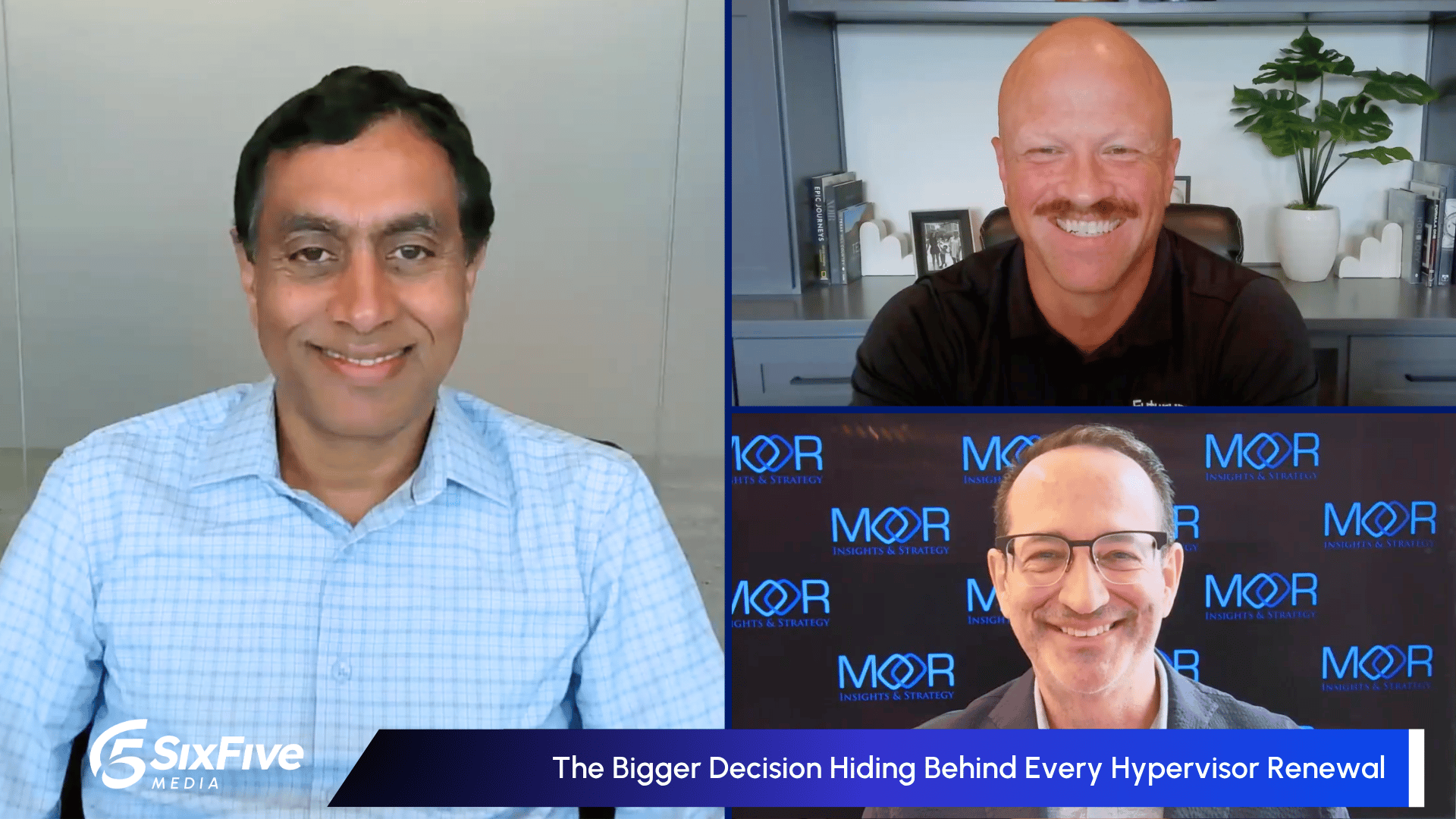
HPE's Varma Kunaparaju talks with Patrick Moorhead and Daniel Newman about why virtualization licensing changes are forcing enterprises to confront a bigger decision than which hypervisor to choose next: what operating model sits underneath their private cloud and AI factory. He outlines how CxOs can sequence modernization in phases, extend governance across open and frontier models, and decide where automation should replace human approval in IT operations.
Other Categories
CYBERSECURITY
Threat Intelligence: Insights on Cybersecurity from Secureworks
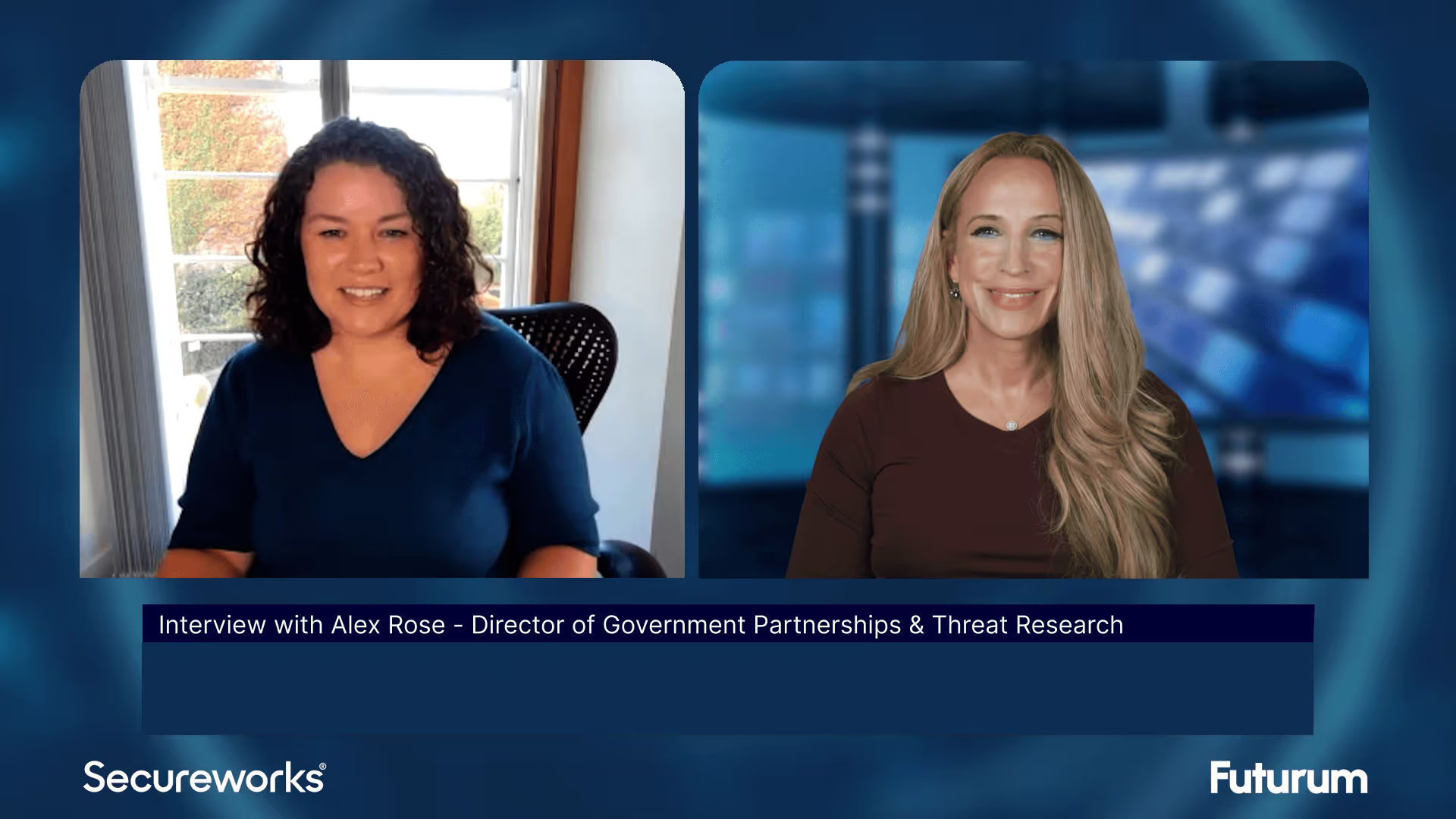
Alex Rose from Secureworks joins Shira Rubinoff on the Cybersphere to share his insights on the critical role of threat intelligence in modern cybersecurity efforts, underscoring the importance of proactive, intelligence-driven defense mechanisms.

HP Launches World’s First Business PCs to Protect Against Quantum Hacks - The Six Five On the Road
On this episode of the Six Five - On the Road, hosts Patrick Moorhead and Daniel Newman are joined by HP's Ian Pratt, Global Head of Security for Personal Systems.
What is Autonomous Endpoint Management?
Autonomous Endpoint Management is a framework designed to unify IT operations and security teams on a single platform through real-time control and visibility.
QUANTUM
Quantum in Action: Insights and Applications with Matt Kinsella
Quantum is no longer a technology of the future; the quantum opportunity is here now. During this keynote conversation, Infleqtion CEO, Matt Kinsella will explore the latest quantum developments and how organizations can best leverage quantum to their advantage.
Accelerating Breakthrough Quantum Applications with Neutral Atoms
Our planet needs major breakthroughs for a more sustainable future and quantum computing promises to provide a path to new solutions in a variety of industry segments. This talk will explore what it takes for quantum computers to be able to solve these significant computational challenges, and will show that the timeline to addressing valuable applications may be sooner than previously thought.