
The View from Davos with Snowflake: From AI Ambition to Enterprise Impact
SHARE


AI ambition is everywhere. Enterprise impact is not. From Davos, this session with Sridhar Ramaswamy, Patrick Moorhead, and Daniel Newman examines why data foundations, governance, and execution discipline now determine which organizations can turn AI into real business outcomes.
From Davos, Switzerland, amidst the activity of the WEF, Patrick Moorhead and Daniel Newman are with Sridhar Ramaswamy, CEO of Snowflake, to examine why so many enterprise AI initiatives stall between strategy and execution.
Nearly every organization has an AI roadmap, but far fewer have systems that run reliably in production. This conversation highlights where execution breaks down and why data architecture, performance, governance, and operational discipline now separate AI that scales from AI that stalls. As AI moves beyond assistive tools toward systems and agents that act on behalf of the business, trust, control, and data sovereignty shift from secondary concerns to core requirements.
Key Takeaways Include:
🔷 Production exposes the real gaps: Most AI initiatives fail not at the model level, but when systems are expected to run reliably inside live enterprise environments.
🔷 Data architecture determines outcomes: Performance, accessibility, and integration of data now define what AI can realistically deliver at scale.
🔷 Governance becomes a frontline requirement: As AI systems take action on behalf of the business, trust, control, and accountability move from background concerns to operational necessities.
🔷 Agentic AI raises the bar: Systems that act autonomously require stronger foundations around data sovereignty, monitoring, and decision boundaries.
🔷 Execution discipline wins: Sustainable AI success comes from durable, enterprise-ready platforms, not from the number of pilots launched.
Listen to the audio here:
Disclaimer: Six Five Media’s The View from Davos is for information and entertainment purposes only. Over the course of this webcast, we may talk about companies that are publicly traded and we may even reference that fact and their equity share price, but please do not take anything that we say as a recommendation about what you should do with your investment dollars. We are not investment advisors and we ask that you do not treat us as such.
Patrick Moorhead:
The Six Five is on the road with a view from Davos. Daniel, we're here, second year for me, third year for me, third year for you. I am glad you dragged me here last year.
Daniel Newman:
It was very, very good experience. Yeah, it's one of those things that until you get here and you sort of feel the energy and you see just the density of great meetings and conversations that can be had. And the fact that this really does span so much more than just our day-to-day, we're professional technology event attenders all year long, but this goes so much further, this is economic, this is policy, politics, and of course it all is threaded together right now by what's going on in AI, one of the leading topics in the world for all these world leaders.
Patrick Moorhead:
No, it is. And it's amazing over the last two and a half years, talking to enterprises, governments. I mean, literally number one, number two thing inhibiting AI progress is its data, right?
Daniel Newman:
Absolutely. I mean, after regulation and moving faster on building these data centers, it is what we can do with the data and how fast we can move it, which sets us up for a great conversation here.
Patrick Moorhead:
And I can't imagine a better person to have this conversation with than the CEO of Snowflake, Sridhar. Welcome to the Six Five.
Daniel Newman:
Excited to be here. Thank you for having me. Yes. Yeah, it's great to be here with you. You know, let's start in the big picture, because I definitely want to make sure we dig into what you're doing at Snowflake. But when a company like Snowflake comes here to Davos, right, you know, we've got some very interesting political topics that are spanning the world. You know, you heard us talk about regulation, AI, and of course, data is one of those big things that's being regulated. What's the big goals for you and for Snowflake coming out of this week here in Davos at the World Economic Forum?
Sridhar Ramaswamy:
Well, Snowflake is all about helping companies realize their true potential with data and AI. And so a lot of my time here is very functional, to your point. just the density of relevant folks here, partners, customers, is immense. And just getting 30 meetings done through the week is a big, big, big deal, right? But this is also a chance to talk to other folks, you, others, about what are different aspects of AI and regulation. Where does one need it? Where is it more likely to be a hindrance? What are things that are in the way of, say, agentic AI realizing its true potential? Once you get down into the details of it, well, you have these different systems, you have different notions of users. What does collaboration mean? It's having meaningful conversations on topics like this, but the majority of my time is focused on just getting business done.
Daniel Newman:
That makes a lot of sense, there's a ton of business here, lots of conversations and of course you span, you work with world governments, you guys are supporting municipalities and of course you're supporting enterprises. Maybe the first big topic related to the business and the technology is what is slowing the world's enterprises down? We saw two decades of big data. You guys came up in that era. AI is changing things. We're coding faster, developing faster, building faster. But it still seems that there's a gap between enterprises testing and trying and fully deploying AI at scale.
Sridhar Ramaswamy:
To your point, AI is hindered by the lack of good data. Even progress with data systems, collaboration, has been hindered by that. What has happened is, over the past 50 years, people have adopted different kinds of technology And sometimes those technologies are called dude with a box in the corner that has squirreled away some set of really important data. And now when you talk about collaborating on it and doing machine learning models on it, it's kind of hard to do that on the little box that's sitting on the side. And so that's been the story of fast data adoption. I bemoan to people that there are more departments in New Zealand, because they just started later on this journey, that share data with each other using Snowflake than there are in the United States federal government. That tells you a little bit about where things are siloed. But what people are increasingly seeing is the extra value that you can get as a result of AI, as a result of agentic systems. The way we have all consumed data is via things like dashboards. It still needed experts to go set it up and maintain on an ongoing basis. And then you have dashboards, thousands of them, you can't find them. Things get very difficult over there. What we are showing with agentic systems like Snowflake Intelligence is how a single agent is able to have a massive amount of context into subject matter of a pretty important area. We have it for sales, for example. It's that flexibility. It's that ability to answer questions that you would not even have bothered to go ask an analyst because you're like, oh, they're going to give me a hard time if I ask that question. Like, you self-censor a lot of questions because, you know, getting answers to them is hard. A lot of them get unlocked as a result of data and AI on Snowflake. And that's, in fact, giving a lot of momentum to people wanting to do stuff. We still have to do our part. Things like migrations are hard. I'm sure you folks have been in the industry for a long time. I am sure you have your share of, say, Teradata migration nightmare stories. where you have to get things done, it's an 18 month long project, you have hundreds of people working on it, and there's a contract deadline. How you make things like that a little less stressful, make those things go faster, is a lot of what we are spending time on. It's not just what can AI do for the data in Snowflake, but how do we make the process of managing data and data engineering systems a whole lot better.
Patrick Moorhead:
Yeah, you really hit the bookends. I mean, Nirvana State that you talked about is really this agent that based on the data security clearances that a person has, the ability to go across the enterprise.
Sridhar Ramaswamy:
And that's a common thing, by the way. People, I've talked to lots of folks, they're terrified of opening up some SharePoint repositories because they're like, hey, listen, I have no idea what's in here. Right. And so somehow sticking it into an agent sounds nice, but also terrifying.
Patrick Moorhead:
How about permissions? Yeah. Well, and there have been a lot of, I mean, it's keeping people from getting in there. But we're in this position right now where everybody's done experiments. Big enterprises have done POCs. Now it's time to scale. Can you talk a little bit about what are enterprises missing to be able to scale really enterprise-grade AI related to openness, related to performance and things like governance? This is going to be a good answer.
Sridhar Ramaswamy:
It's a good answer, but it's also a back-to-basics answer. Right. Why do people buy a product? Or why does an enterprise leader migrate from one system to another?
Patrick Moorhead:
Well, I mean, it could actually just solve the problems that they thought the version 1 was supposed to solve. That might be one. Yeah. Maybe lower cost, right? Maybe more flexible. Yep. A lot of different reasons.
Sridhar Ramaswamy:
I have my mantra for this. Change happens when products are faster, cheaper, or better. And somehow, if an AI system that is coming in is not able to say which of this it becomes hugely problematic. And it's especially problematic in an enterprise if you tell people that you're going to make the team more efficient. Because promptly the CEO then says, 15% more efficient, you say. What's your budget again? Can I give you 15% less than the person? No, no, that's not what I meant. And so I think we have to understand the mechanics of how is it faster, cheaper, or better. In our own case, for example, we retired our dashboarding solution, five mil a year, not chump change. And we replaced it with Streamlit and a set of Snowflake Intelligence 8. And obviously, I needed an assurance from my team that SI wasn't going to cost more than the dashboarding solution. But that was a clear ROI. And then when my team comes and says, Sridhar, on average, a person asks X number of questions. They are saving that much time. I'm like, that's gravy. But the core economics of this transition was useful, has to be shown. I think being able to show ROI is what matters. And from our customers, absolutely. We are also hearing things like, hey, I want cost management. The idea that one single person, after eight caffeine shots, is able to blow through $10,000 of AI budget. Tokens, baby. That's right. It's not that appealing. So our customers are asking for things like, oh, first of all, they're very happy that ours is a consumption model because I don't go in there and say, oh, I see 10,000 people, $20 a month, and let me give you a number. We say you pay for what you use. But in addition, they're saying, well, I want ceilings on how much an individual can use. I will decide if they should use more, but I want that cap, so my costs are predictable. That's the other thing that often comes up when it comes to large-scale deployments. Governance is a story that we have a really good answer for. And the proof of that answer is I tell them, our sales agent, there's one. And it's rolled out to our 5,000 salespeople. And NAE sees account information for their account. I see it for all of our accounts. We can demonstrate practically that we have solved this problem over and over again at scale. This is what we are very good at doing, but it's a combination of you know, the product being well-governed, the product delivering value in measurable ways. Remember, this is like, again, as an enterprise exec, you want to make more money, spend less money, and stay out of trouble.
Patrick Moorhead:
You make it sound so pragmatic and easy, right? But in the end, I mean, this is exactly what business is all about. I mean, you're either, I mean, I always say, you're either saving money, you're making more money, or increasing stickiness with your customers, which then leads to more revenue or more profits as you go into the future. So it makes a lot of sense.
Daniel Newman:
So 26, I agree, is the year of enterprise AI and agents, right? So I said 22 late when the generative moment happened to last year was about POCs in the world basically assuming the TAM of AI was Subscriptions to chat GPT, but the real opportunity is unlocking trillions of tokens running agentic systems that are driving our businesses That's the real opportunity. That's where scale happens. And that's why we're building all these data centers It's it's not just to support, you know cat memes that we want to create You know and and and videos that we want to you know, create a view and me in the gym looking bigger than ever but in all serious like It's agentic delivering value, Sridhar. Let's talk about that. Because like I said, the skeptics will say, none of this stuff really works. You still need lots of humans. You're working side by side with the enterprises. You're delivering on the two sides. One is the value side, but the other side is actually meeting governance, meeting compliance. Where are you starting to see value extracted from all this investment with agents?
Sridhar Ramaswamy:
First of all, with things like the sales agent that I was telling you about, it's super simple. By the way, the average salesperson in Snowflake or the average employee does not need to know that's an agent take anything. They're like, hey, this is an application that helps me get to the data that I want. And agent take happens to be a technique. Maybe there's a different technique that shows up that we will also adopt. It's all about how do you deliver utility. I think the bigger unlock with agentic AI, and we are just beginning to understand how to generalize this, is to rethink what work is. What I mean by that is most of our lives, I don't know about you, I tell people, you I read, write, and talk for a living.
Patrick Moorhead:
Hey, wait a second. That's what we do. Are you an analyst?
Sridhar Ramaswamy:
That's all I do.
Patrick Moorhead:
Are you kidding?
Sridhar Ramaswamy:
He's got a real job. But most of the time, even that reading and writing is having one screen open over here, looking at something, and writing something into another screen. It's either a distillation, it's a question. Yeah, it's like swivel chairing. It's like swivel chairing. You're moving context around. You have specialized tools that are there for doing it. A powerful visualization is to then begin to think of work as a set of tools that in addition to being orchestrated by a human, which is what we have always done for a living, can be partially augmented with an agent. This becomes crystal clear when you're thinking about customer support. Case comes in. What do they do? They log into that system to see what's going on. They go into this monitoring thing to see, hey, is there a problem with something? They put it all together. They send a reply back to the customer. Or they look up documentation about the particular feature. They do this. They put it back together. They write to the customer. But if you now think of this as, no, this person is actually using, like, an agent platform. It could be a coding agent. that knows how to use these tools. When the question comes in, it gives the initial analysis. They look at that analysis and say, hmm, this sounds fine. Now generate this sort of an email or report for me and send it to the customer. And so that pattern of these kinds of agent loops combined with specialized tools for individuals is a big unlock. If you think about Cloud Code for Work, that's sort of what it's trying to do. All of the common tools, whether it's Drive, whether it's some other system that you want to have, are orchestratable with an agent. and you're the master conductor. And so we are seeing this pattern repeat itself across on-call teams. This is why Observe is so exciting. Our acquisition is an observability platform. It does the plumbing. It brings in data. But at the end of the day, a human has to be looking at this and saying, is this fine? Is this not fine? What's the problem? And I think this is the orchestration that's going to unlock that massive value because I now think of service as a software engineering function where this human is making judgments and then deciding when you need new tools. They notice this new pattern. They're like, yeah, this problem I'm solving manually. That's the magic of these coding agents also because I've often done things like go through a particular task and then realize this is actually a pattern. I'm going to convert that into a skill so the next time around I can use the skill and say, hey, follow this recipe for how I want to solve this problem. I think that's where the massive value is going to get unlocked bit by bit, is rethinking our jobs as us doing things from basically screen to screen, application to application, to saying you're the conductor for an agent that acts on our behalf.
Patrick Moorhead:
Yeah, connecting the front end of the back end has always been, I mean, a possibility, but it's been such a heavy lift. And if you look at connecting all the different stove pipes, the M's, HRM, SCM, ERP, the unstructured data, the structured data, Together, I think all of us, I mean, obviously there's a ton of value, and even at my much smaller company than the ones that she worked on, we're doing that with off-the-shelf commercial tools. So all this is great, but enterprises have a lot in motion, right? They have a lot of technical debt that they're paying for. They have this innovation budget as well. The AI budgets did get increased. There was a ton of investment just in infrastructure, though, that took away from some of the other investments. What are you seeing or how are you recommending to your customers that they prioritize that? And maybe talk a little, you talked a little bit about what you were doing internally, but maybe talk about the prioritization inside of Snowflake, maybe beyond the, you know, does it save money? Is there a thesis on productivity?
Sridhar Ramaswamy:
Well, I think focus is important. AI can ostensibly change everything, but it can freeze companies in terms of, okay, but what do you actually work on? You can't change everything that a company does overnight. I have a few simple principles. for how I operate, and this is the same recommendation that I give to our teams. Understand what is most important, first of all. So strategically? Just like, think about, like I tell people that a stripped-down view of Snowflake is we write and run software, we sell and help customers deploy software. There's a lot of other stuff that goes on with Snowflake, including oarheads like me, but at the core, that's what Snowflake is. A lot of our energy with AI goes into, okay, how does each one of these get better? What is a tangible way of measuring it? But then when it comes to actually implementing projects, I tell our teams, including our software teams, that I don't accept two-year roadmaps. I said my ability to see what's going to happen two years from now is zero, same as yours. And so you need, yes, it's fine to have a North Star, but you need to show proof every point of the way. Part of what can get very frustrating when you're doing these big transformations is they're often like four years of hard work and fifth year there's magic. You'd never believe anyone that says that. So a lot of our recommendation is what are no-regret steps that you can be taking that still confirm to is delivering value, taking more money.
Patrick Moorhead:
Is that different from quick wins? What's that? Is that different from quick wins?
Sridhar Ramaswamy:
In getting a quick win on a four-year project? It's every step being potential positive. Okay. and or if you need to do something that is like truly it's the build it needs to be super constrained in such a way that you don't spend a lot of time into it and part of it comes from the fact that there are so many easy wins. that taking on really hard problems with uncertain outcomes is just not a smart thing to do. So yes, it's the quick wins, but to me the art really about AI, startups, driving change is about how do you craft a journey that gives you confidence and proof every step of the way so you don't feel like you have to jump off a cliff at the end.
Daniel Newman:
Understood. Well, Sridhar, I want to thank you so much. We have really dug in here and I love it. Like, I hope I warmed you up. I hope we warmed you up.
Sridhar Ramaswamy:
Well, first meeting at Davos, the rest will be easy.
Daniel Newman:
Only 30 meetings? What do they say? First and the best. Why so few? I'm just kidding, but it is really great.
Sridhar Ramaswamy:
I think we're shooting for 10-a-pop, so hopefully it'll actually be 40, but I wanted to under-promise and over-deliver. There we go.
Daniel Newman:
Yeah, no doubt. And it's long days, late evenings, long dinners, events, a lot of getting around and shaking hands, and hopefully maybe attending a couple of the interesting sessions if you're able to sneak out of here. Absolutely. We want to thank you. We have to do this again. We look forward to watching the progress with Observe, and congrats on the acquisition. And of course, we watch you every quarter. Look forward to seeing all these new technologies and how they're growing the business. So we'll see you soon. Thank you so much. And thank you, everybody, for joining this 6-5 special view from Davos. We hope you subscribe, tune in to all of our coverage here in Davos at the World Economic Forum, and of course, be part of our Six Five community. But for this episode, for this segment, we've got to say goodbye. We'll see you all later.
MORE VIDEOS
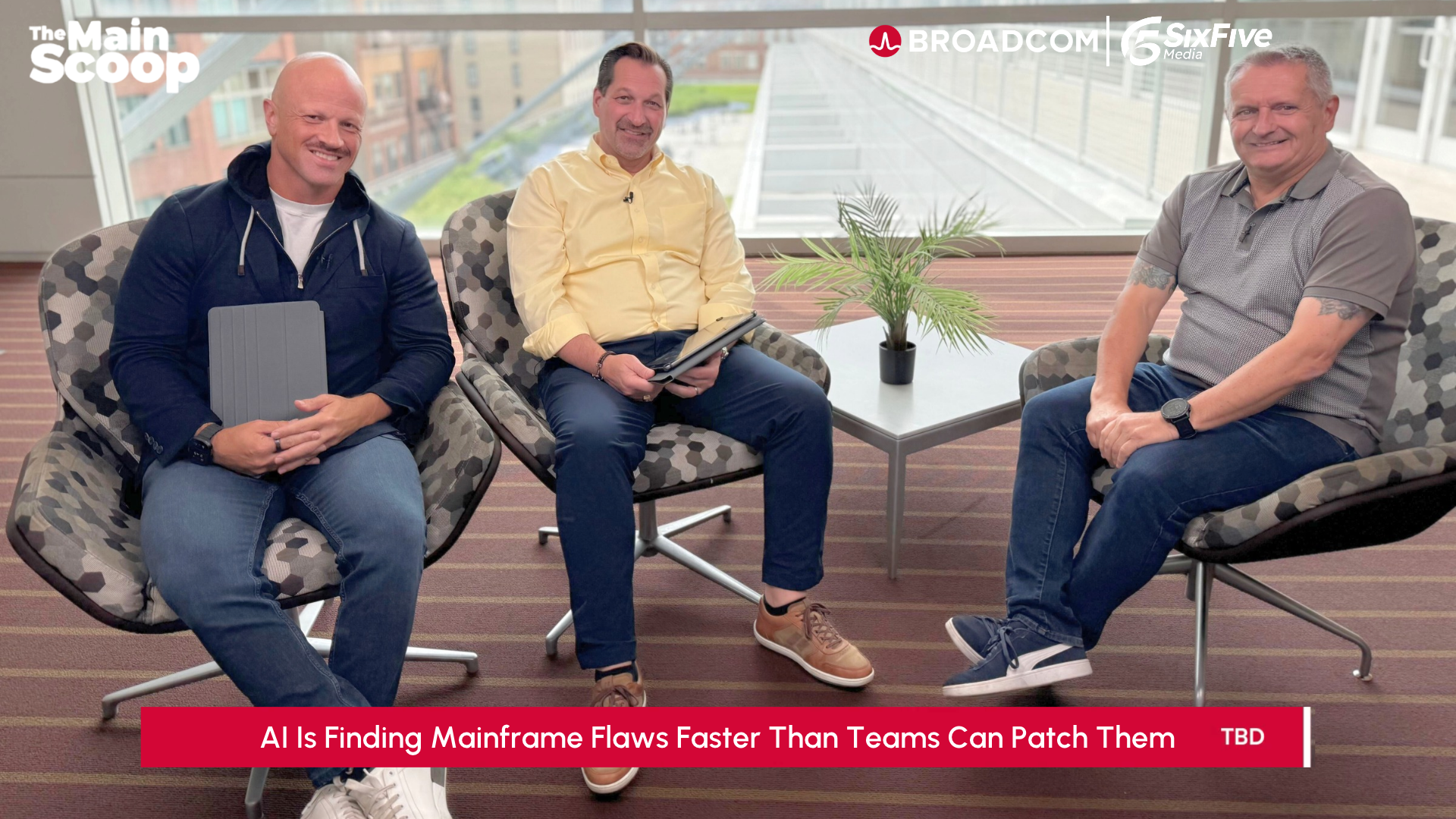
Outpacing Threat Actors: Mainframe Security in the Age of AI and Quantum
On The Main Scoop, Vertali's Mark Wilson explains why AI-driven vulnerability discovery and looming post-quantum deadlines are forcing mainframe teams to rebuild their maintenance cycles. Teams that combine AI-assisted vigilance with security fundamentals and early cryptographic inventories will stay ahead of threat actors.


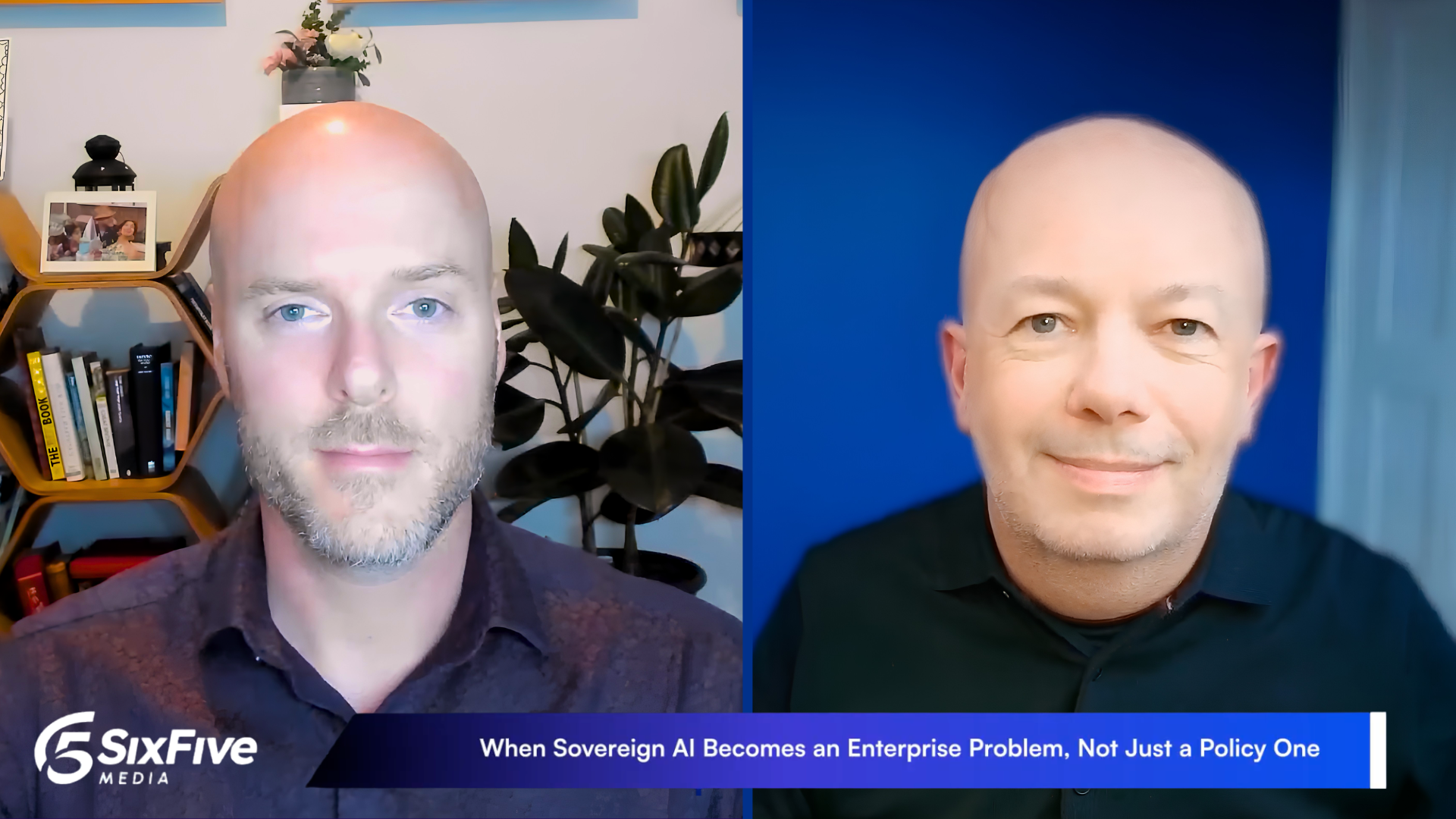
When Sovereign AI Becomes an Enterprise Problem, Not Just a Policy One
NetApp’s Adam Gale explains why sovereign AI now depends on moving complete services quickly while preserving control and security. For enterprises facing regulatory and geopolitical shifts, portability has to be built into the data platform before a crisis forces the move.
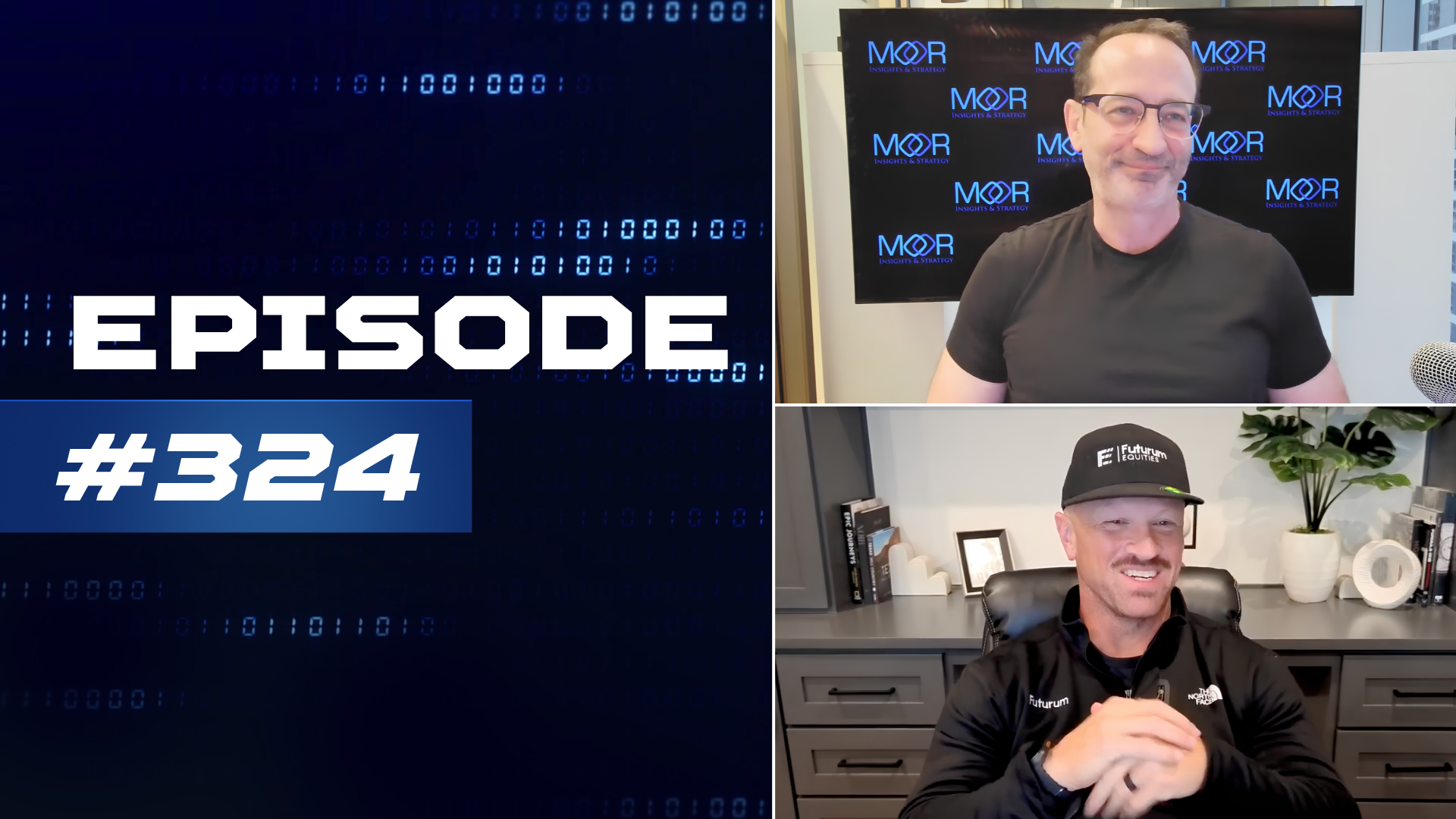
Meta and Google Rejoin the Frontier, Microsoft’s Maia 300, and the AI Credit Scare | The Six Five Pod Ep. 324
On Episode 324 of The Six Five Pod, Patrick Moorhead and Daniel Newman unpack the biggest stories from the week, including new agent models from Meta, Google, and NVIDIA, Microsoft's Maia 300, Applied Materials' EPIC Center, AMD, NVIDIA, and Cisco at OCP Global Summit 2026, and the Apple-Meta Muse Spark Open partnership, plus a Flip debate on whether AI leaderboards serve vendors more than enterprise buyers. Plus, Bulls & Bears covers the CPI and PPI shock that rattled the AI trade, Anthropic's investor event, ASML's record quarter, and TSMC's earnings results.
Other Categories
CYBERSECURITY
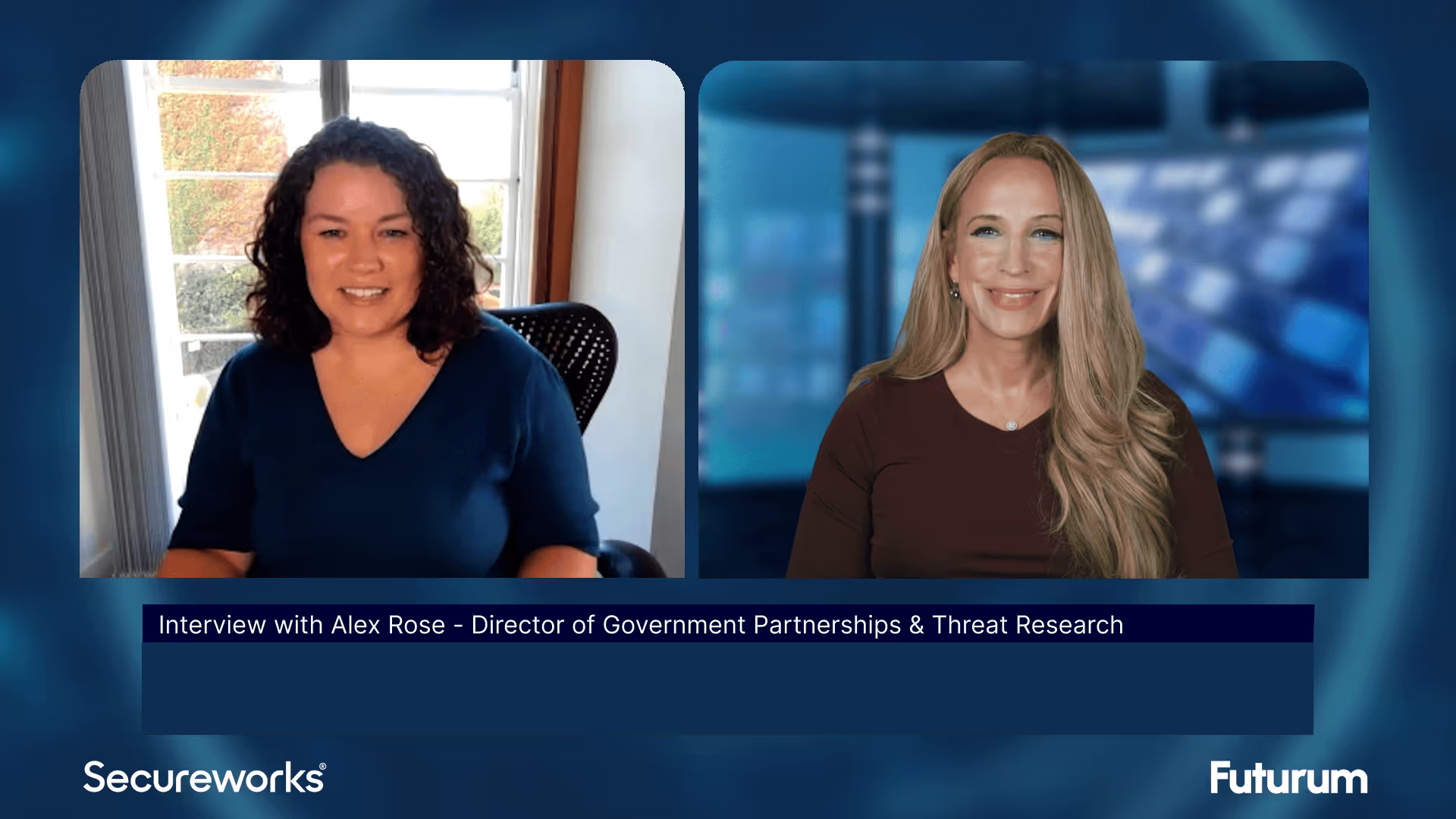
Threat Intelligence: Insights on Cybersecurity from Secureworks
Alex Rose from Secureworks joins Shira Rubinoff on the Cybersphere to share his insights on the critical role of threat intelligence in modern cybersecurity efforts, underscoring the importance of proactive, intelligence-driven defense mechanisms.

HP Launches World’s First Business PCs to Protect Against Quantum Hacks - The Six Five On the Road
On this episode of the Six Five - On the Road, hosts Patrick Moorhead and Daniel Newman are joined by HP's Ian Pratt, Global Head of Security for Personal Systems.
What is Autonomous Endpoint Management?
Autonomous Endpoint Management is a framework designed to unify IT operations and security teams on a single platform through real-time control and visibility.
QUANTUM
Quantum in Action: Insights and Applications with Matt Kinsella
Quantum is no longer a technology of the future; the quantum opportunity is here now. During this keynote conversation, Infleqtion CEO, Matt Kinsella will explore the latest quantum developments and how organizations can best leverage quantum to their advantage.
Accelerating Breakthrough Quantum Applications with Neutral Atoms
Our planet needs major breakthroughs for a more sustainable future and quantum computing promises to provide a path to new solutions in a variety of industry segments. This talk will explore what it takes for quantum computers to be able to solve these significant computational challenges, and will show that the timeline to addressing valuable applications may be sooner than previously thought.