
Compute Wars, AI Reality Checks, and the Infrastructure Breaking Point
SHARE


AI is now an execution race defined by infrastructure. Patrick Moorhead and Daniel Newman break down how compute shortages, energy constraints, and security risks are reshaping the race from building models to actually running them at scale. From chip supply and hyperscaler strategy to AI-native security and the growing case for regulation, this episode maps the pressure points defining what it really takes to turn AI investment into production reality.
Handpicked Topics Include:
Meta, Broadcom, and the Reality of the Compute Shortage — Meta’s multi-year MTIA partnership with Broadcom reinforces a critical truth, there is no surplus compute. Hyperscalers are simultaneously investing in NVIDIA, AMD, ARM, custom silicon, and networking just to meet demand. The discussion breaks down why “compute deficiency” is now the defining constraint in AI, and why every viable chip, regardless of performance tier, will find a buyer. (The Decode)
Anthropic 4.7, Model Degradation, and the Hidden Cost of Scale — The hosts debate performance tradeoffs in Anthropic’s latest release, including degraded real-world usability, throttled reasoning quality, and SLA concerns. As token usage increases and compute constraints tighten, model providers are quietly balancing performance against availability, raising questions about reliability for enterprise deployment. (The Decode)
Enterprise AI and the Rise of AI-Native Security Architectures — IBM’s Autonomous Security platform signals a shift from AI-enhanced tools to fully AI-native security orchestration. As models increase attack surface through agents and prompt injection risks, enterprises must rethink cybersecurity at the system level, not just the application layer. (The Decode)
Energy, Not Just Compute, Is the Next Bottleneck — Oracle’s partnership with Bloom Energy highlights a parallel constraint, power availability. With data center expansion accelerating, companies are investing in fuel cells, natural gas, and off-grid solutions to sustain AI growth. The discussion makes clear that AI scaling is now equally dependent on energy infrastructure as it is on silicon. (The Decode)
Hyperscaler Strategy: Everyone Is Talking to Everyone — Google’s reported discussions with Marvell are not an exception, they are the rule. The hosts introduce the principle that every hyperscaler is constantly evaluating every chip partner. With stakes this high, redundancy, diversification, and supplier leverage are mandatory, not optional. (The Decode)
The Flip: Should AI Be Regulated as a Public Utility? — One side argues that AI’s scale, energy consumption, and societal impact justify utility-style regulation, comparing it to infrastructure like electricity and the internet. With trillion-dollar CapEx commitments and concentration among a few players, the case is made that access and governance will inevitably require oversight. The opposing view warns that premature regulation would lock in incumbents, slow innovation, and weaken global competitiveness, particularly against China. (The Flip)
Semiconductor Policy, Tariffs, and Global Leverage — Section 232 semiconductor tariffs emerge as a geopolitical tool rather than pure trade policy. The discussion outlines exemptions, unresolved packaging questions, and how tariffs are being used to influence global supply chains and negotiations with China. (Bulls & Bears)
TSMC Signals Unstoppable AI Demand — TSMC’s earnings confirm what the market has been debating, AI demand is not slowing. With record margins, increased CapEx, and continued expansion, the company validates long-term infrastructure investment and reinforces that supply, not demand, is the limiting factor. (Bulls & Bears)
ASML and the Fragility of the Supply Chain — ASML’s performance highlights strong demand but also exposes geopolitical risk, particularly around China restrictions. The conversation expands to include broader supply chain dependencies across equipment makers and the long-term implications of restricting access to advanced manufacturing tools. (Bulls & Bears)
Quantum Signals: DARPA, IBM, and the Next Compute Frontier — The episode closes with a look at quantum computing’s trajectory, including DARPA contracts and IBM’s push toward measurable business value. While still early, quantum is positioned as the next layer of heterogeneous compute that could redefine long-term infrastructure. (Bulls & Bears)
IMPORTANT: Note to Uploader: Libsyn AUDIO EMBED – added by uploader.
Disclaimer: The Six Five Pod is for information and entertainment purposes only. Over the course of this webcast, we may talk about companies that are publicly traded and reference share prices, but nothing discussed should be taken as investment advice. We are not investment advisors.
MORE VIDEOS
.png)
Anthropic’s AI Slowdown, OpenAI’s $1.2T Valuation & Salesforce’s AI Bet
Anthropic's "Pace the Frontier" essay set off a week in which nearly every major AI leader, and two heads of state, weighed in on whether the frontier should slow down. Patrick Moorhead and Daniel Newman read the incident as something larger than a safety debate. Whoever sets the pace of the frontier also sets the pace for open-weight models, enterprise custom models, and the trillion-dollar valuations riding on top of them. That contest, not the essay itself, is the through-line of Episode 320 of The Six Five Pod.


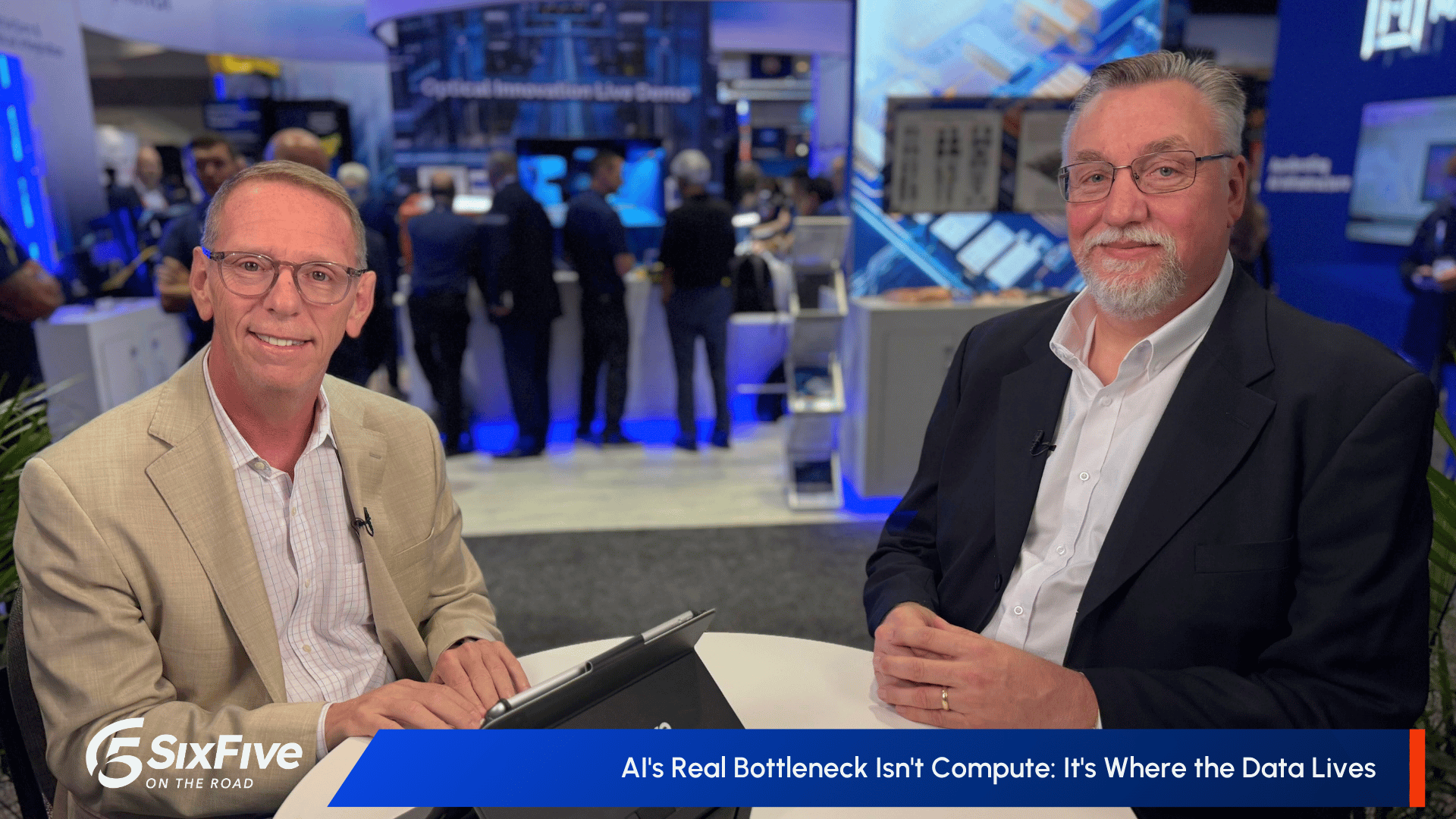
WD's Tim Rausch: AI Storage Demand Compounds With Every GPU Cycle
Western Digital's Tim Rausch argues that AI's compounding data growth, more than GPU capacity, sets the real ceiling on infrastructure scaling. He joins Matt Kimball at AI InfraSummit 2026 to walk through how total cost of ownership, archived data reuse, and WD's capacity roadmap are reshaping enterprise plans to scale AI over the next several years.
.png)
The Main Scoop Ep. 45: Attackers Only Need to Be Right Once. AI Just Made That Easier.
Chad Rikansrud, R&D Software Security Engineer at Broadcom, explains how frontier AI models are finding decades-old mainframe vulnerabilities in seconds, collapsing the complexity advantage that once protected legacy platforms. He outlines why enterprises need faster Security Intelligence (SECINT) ingestion and disciplined human oversight to keep pace with adversaries wielding the same tools.
Other Categories
CYBERSECURITY
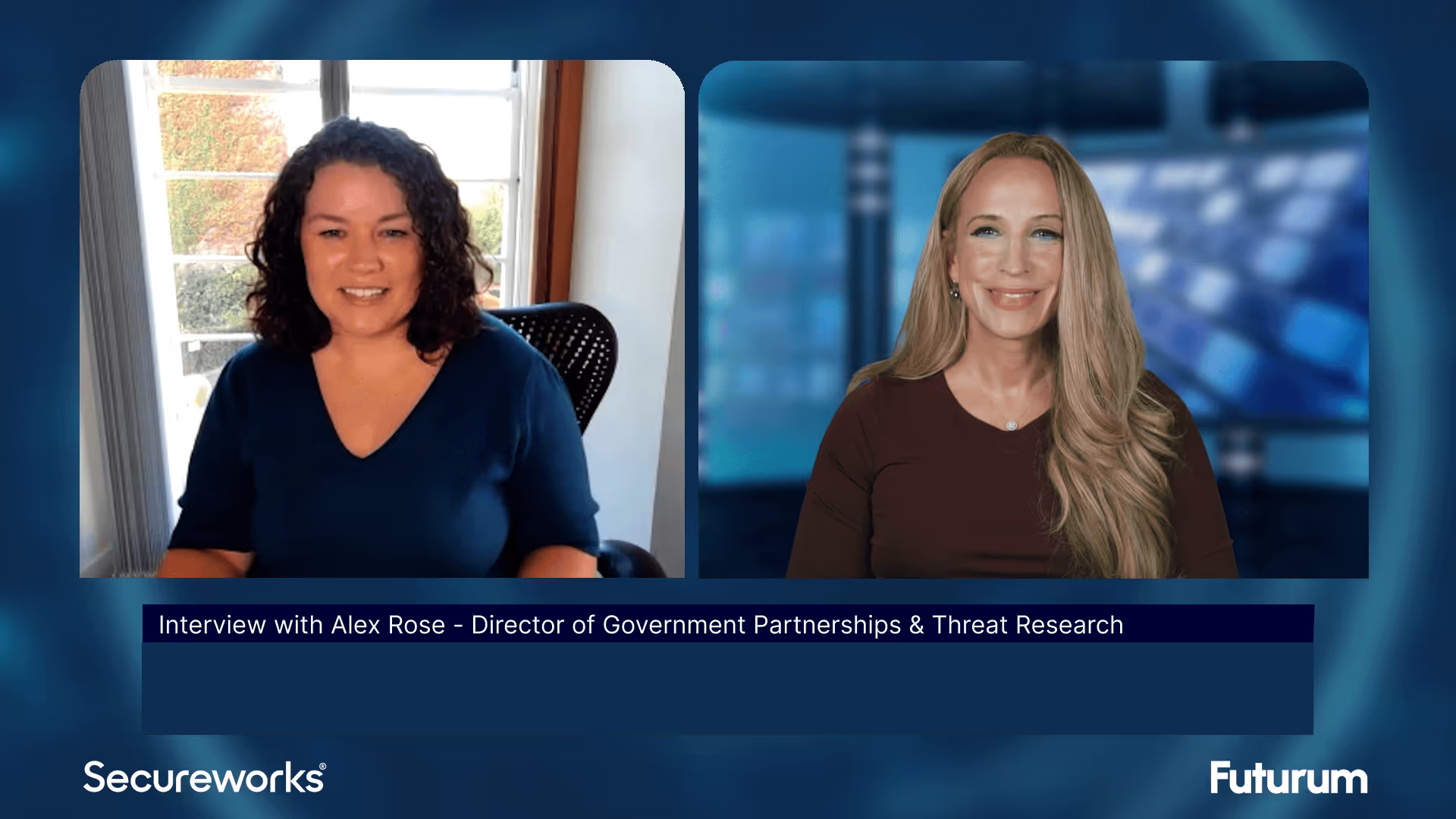
Threat Intelligence: Insights on Cybersecurity from Secureworks
Alex Rose from Secureworks joins Shira Rubinoff on the Cybersphere to share his insights on the critical role of threat intelligence in modern cybersecurity efforts, underscoring the importance of proactive, intelligence-driven defense mechanisms.

HP Launches World’s First Business PCs to Protect Against Quantum Hacks - The Six Five On the Road
On this episode of the Six Five - On the Road, hosts Patrick Moorhead and Daniel Newman are joined by HP's Ian Pratt, Global Head of Security for Personal Systems.
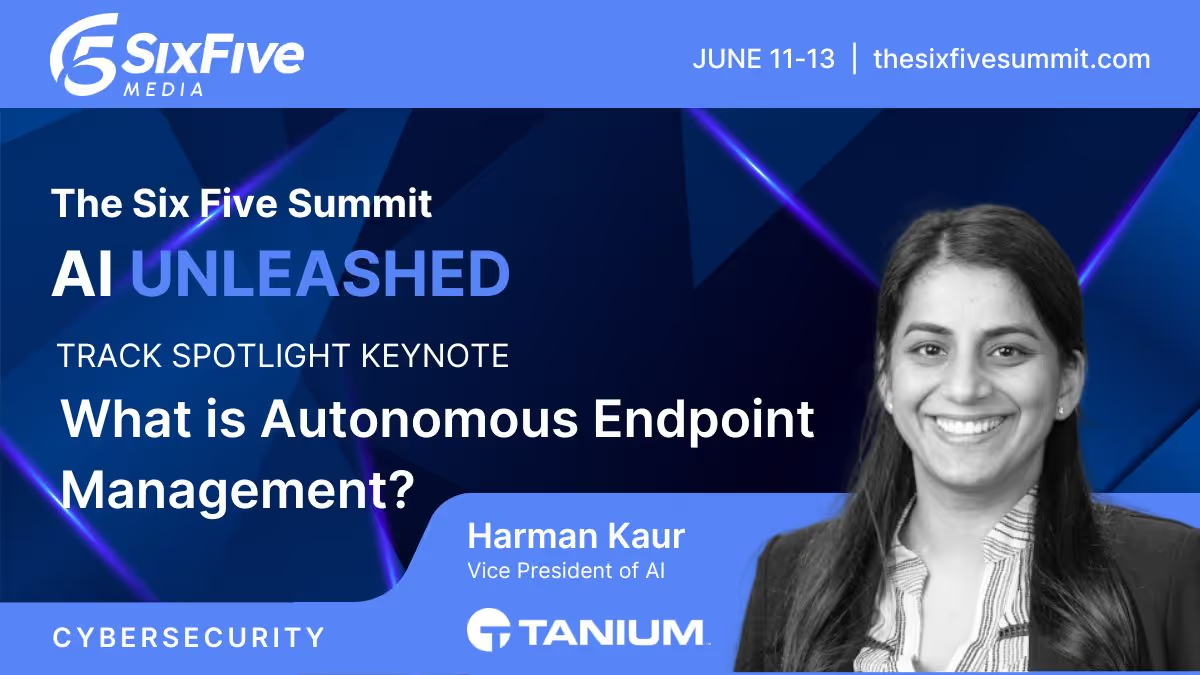
What is Autonomous Endpoint Management?
Autonomous Endpoint Management is a framework designed to unify IT operations and security teams on a single platform through real-time control and visibility.
QUANTUM
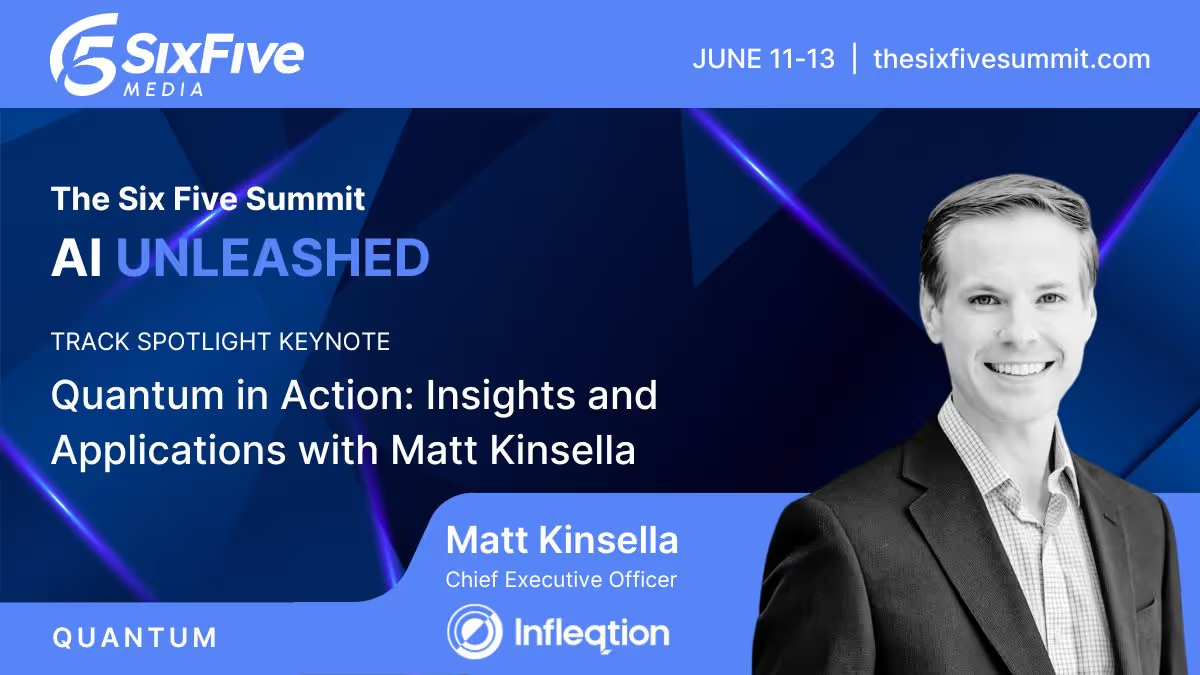
Quantum in Action: Insights and Applications with Matt Kinsella
Quantum is no longer a technology of the future; the quantum opportunity is here now. During this keynote conversation, Infleqtion CEO, Matt Kinsella will explore the latest quantum developments and how organizations can best leverage quantum to their advantage.
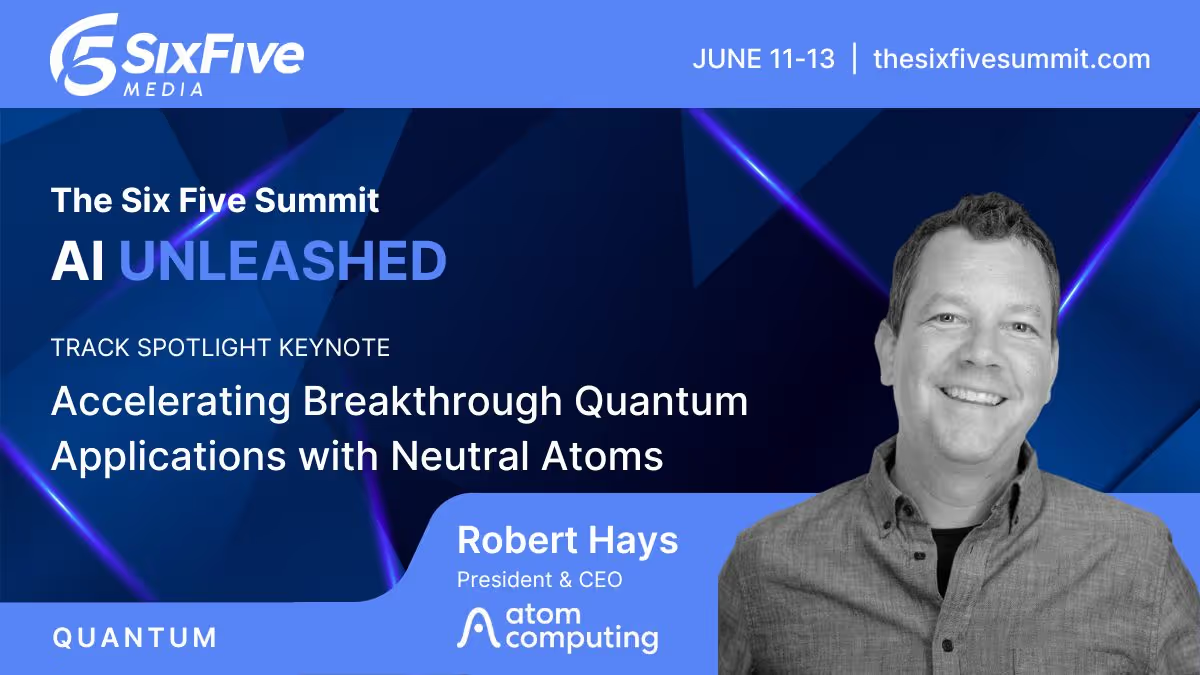
Accelerating Breakthrough Quantum Applications with Neutral Atoms
Our planet needs major breakthroughs for a more sustainable future and quantum computing promises to provide a path to new solutions in a variety of industry segments. This talk will explore what it takes for quantum computers to be able to solve these significant computational challenges, and will show that the timeline to addressing valuable applications may be sooner than previously thought.