
For What’s Next for Enterprise Compute: Inside the HPE and AMD Partnership
SHARE


HPE’s Krista Satterthwaite and AMD’s Dan McNamara join Patrick Moorhead and Daniel Newman to explain how the shift from training to agentic inference is changing enterprise server buying, and why four new ProLiant Gen13 models target performance per watt. For enterprises, matching compute to each workload sets how quickly modernization and AI adoption can move.
Enterprise infrastructure buying is changing as agentic inference gains ground on training. Customers are modernizing older infrastructure that wastes space and power, and the bar for price performance and performance per watt keeps rising.
On the road to HPE Discover Barcelona 2026, Patrick Moorhead, CEO and Chief Analyst at Moor Insights & Strategy, and Daniel Newman, CEO of The Futurum Group, are joined by Krista Satterthwaite, SVP and GM of HPE Compute at HPE, and Dan McNamara, SVP and GM of Compute and Enterprise AI at AMD to examine what customers are asking the two companies to solve together and where co-innovation goes next with HPE ProLiant Gen13.
Satterthwaite says what customers buy for agentic inference differs from what they bought for training, and many are only getting started. McNamara says AMD is matching the right compute element to each workload, from general-purpose compute to head nodes that keep GPUs active to tool execution for agents. The partnership began about nine years ago with 32-core Naples, and platforms now reach 256 cores.
Key Takeaways Include:
🔹 How agentic inference is changing what enterprises buy. Satterthwaite says buying for agentic inference differs from buying for training, and needs are varied: many customers are just getting started, others are investing at the edge, and many are planning their virtualization strategy.
🔹 Why modernization is a space and power decision. Customers running older infrastructure know they aren't getting the most out of their space and power, which makes refresh part of the AI plan alongside new AI investment.
🔹 How the performance bar is rising on three measures. Satterthwaite says customers expect more on performance, price performance, and performance per watt. HPE launched four new ProLiant Gen13 servers with AMD, models it has never offered before, built for demanding workloads.
🔹 How silicon is being matched to agentic workflows. McNamara says AMD is defining silicon for individual workloads, including head nodes that keep GPUs active in reinforcement learning and tool execution for agentic work.
🔹 Why nine years of co-design matters as workloads evolve. Platforms have grown from 32 to 256 cores since the partnership began. McNamara says agentic workflows are still nascent, so AMD is staying closer to model makers to understand where workloads are headed.
Matching compute to each workload, and to the power budget it must fit, sets how quickly enterprises can move from AI plans to production.
Watch the full video at sixfivemedia.com, and subscribe to our YouTube channel so you never miss an episode.
Disclaimer: Six Five Media is for information and entertainment purposes only. Over the course of this video, we may discuss companies that are publicly traded, and we may reference their equity share prices. Nothing discussed during this webcast should be considered investment advice or a recommendation to buy or sell any security. We are not investment advisors, and you should not rely on this content as financial advice. Six Five Media collaborates with technology companies and industry leaders to produce research-driven interviews and multimedia programming for enterprise technology audiences.
Patrick Moorhead:
Hey everybody, welcome to this Six Five On The Road. I'm Patrick Moorhead here with my bestie Daniel Newman. We are on the road, kind of, to HPE Discover Barcelona. So Daniel, I mean, AI has put enterprise compute back at the center of literally every infrastructure conversation, every stock market conversation. I mean, it is absolutely bonkers, right?
Daniel Newman:
Everything's moving so fast. The world is building an economy on compute and capacity and the ability for us to deliver on the promise of AI, Pat. So it's a really exciting time to be us. It's a really exciting time to be on our show, of course, and it's a really exciting time to be setting up for HPE Discover Barcelona.
Patrick Moorhead:
I know it's great stuff. And welcome back to the show, Krista Satterthwaite, SVP and GM of HPE Compute, Dan McNamara, SVP and GM Compute Enterprise AI at AMD. It's great to see you both back here on The Six Five.
Krista Satterthwaite:
It's great to be here. Thanks for having us.
Dan McNamara:
Great to see you guys and great to be sharing the show with Krista.
Daniel Newman:
Yeah, it's great to have both of you. I'm going to ask a question. You know, we're going to, you know, do the 6-5 thing we do, which is going to mean we're going to be putting you both on the questions and the topics will be flowing back and forth. But I want to start with you, Krista. You know, enterprise computing, you kind of heard the setup from Pat and I, big shifts going on right now. How is that in your world sort of influencing how customers are, you know, putting their infrastructure investment to work?
Krista Satterthwaite:
Yeah, so obviously AI has grown considerably. But one thing that's pretty interesting is what they're buying is changing a little bit. So as agentic AI inferencing becomes more popular, It's different than what they were buying, you know, what many customers were buying when it came to training. So it's very dynamic. We're seeing a variety of different types of needs. Many people are just getting started. Many need help getting started. And AI isn't the only investment people are making. Many are investing at the edge. Many are investing to just modernize in
general. They know that they're running on old infrastructure and they're not getting the most out of their space and their power. And so what we're seeing is a variety of needs coming in, many of them very demanding. The other one that's very important people are investing in is their virtualization strategy going forward.
Daniel Newman:
And Dan, are you seeing something similar or something different?
Dan McNamara:
Yeah, I think Krista hit it. When you meet with enterprise customers today, it's how do we modernize? How do we scale AI? How do we control our data? And obviously, how do we manage costs? And it's going to require every enterprise is at a different juncture. So it's really incumbent upon AMD and HPE to really listen to the customer and take them on the journey, and really help them optimize across each of those areas.
Patrick Moorhead:
Yeah, so Dan, with that said, what are customers asking the two of you, and Krista, I'll get to you after Dan, what are you asking to be solved together? I mean, AMD, right, you've got a franchise of CPUs, GPUs, accelerated computing, full platforms, and a whole lot more.
Dan McNamara:
Yeah. Pat, I think that the conversation has certainly changed to, you know, AMD is a silicon provider, but for us, we're trying to innovate around delivering the right compute element for the right workload. And that's been our vision forever. And as we tie it together with Krista and team on Gen13, it's really bringing that full breadth of portfolio for general purpose compute and the modernization we talked about for you know, reinforcement learning, head node type, you know, keeping the GPUs very, very active. And then of course, bringing in the tool execution for agentic, right. So, you know, for us together, we're trying to bring a full solution set to market to enable the customer.
Patrick Moorhead:
Krista, how about from your point of view? So the combined companies, what are your customers asking you to solve together, the two companies?
Krista Satterthwaite:
Yeah. What I would say is the bar is going up in terms of what they're expecting from a performance standpoint, a price performance standpoint, and a performance per watt. What I see is they want more for their dollar, and they also need, as I mentioned before, just different
types of platforms to run AI. With ProLiant Gen13, with AMD, we've launched four brand new servers. And when I say brand new, normally when we do a new generation, we're refreshing this model, refreshing that model. These are four models we've never had before, all focused on very demanding workloads. So that's what they're expecting. And it's funny because, you know, Dan and I work together all the time and we're talking all the time. And I'm typically pushing to get more faster because we have customers that are waiting on these platforms. So that's, you know, a testament to, I think, what they're hungry for that performance and that power efficiency.
Patrick Moorhead:
Come on, Dan, hurry it up, would you?
Dan McNamara:
Yes. Yes. I mean, to Krista's point, though, you know, this partnership started roughly nine years ago with Naples with 32 cores. And, you know, we've now delivered platforms with 256 cores. So it's quite exciting. And the demand is there, as Krista said.
Daniel Newman:
So Dan, what are you kind of thinking that customers are going to be asking you for next? A big part of the job, right, is trying to predict what's coming around the bend, right? What's going to happen next? What do we have to solve together in order to continue to build this partnership?
Dan McNamara:
Yeah, it's a, it's a, you know, I was at F1 this past weekend and we had a lot of conversations about this. And you know, the, the, the thing that comes up the most is agentic work, you know, the workflows are just, I mean, it's nascent still, even though there's a ton of demand, it's like, what do we need to design going forward to enable, you know, the most efficient tool execution, the most, like I said, the most efficient head node capability. And, and, you know, that's really where the focus is, because, you know, really defining the silicon for the individual workloads and the workflows within it is really the challenge. And that's what the customers are asking us to do. And then delivering that to Krista for her breadth of platforms, optimizing around performance and performance per watt and overall cost is really where we're headed.
Krista Satterthwaite:
Yeah. And I would just say, you know, when I look at what's ahead, I think of many enterprises that are just getting started. I mean, just barely getting started. We're really at the very beginning of all of this. And I think the needs are going to grow and they're going to keep challenging us to raise the bar on performance, raise the bar on power efficiency. And it's a really exciting time. And I feel like AI is only limited by people's imagination. I mean, there are so many, when I talk to leaders in IT, there's a lot of angst about how they can deliver AI to their entire workforce, but
there's a lot of excitement at the same time. So I've never really seen that, where it's like, they're very, very nervous and anxious, but super excited all at once.
Dan McNamara:
Yeah, I would say what I would say, sorry, Dan, it would be, you know, some of the enterprises to Krista's point, don't really know where it's headed. But it requires us to be even tighter with the model makers today, right, really understanding the workloads and what they're going forward on. So that's, that's, you know, a big focus for us to stay even tighter than we used to be with those type customers. Yeah.
Daniel Newman:
It's interesting some of the sort of way I've heard it characterized in the market is just that AI is really a business transformation, unlike any sort of technological revolution in the past, meaning in the past, a lot of the shifts have been much more about it like where does the data center live. But AI is like a pure business model revolution for most companies. And that thinking has changed. I mean, Pat and I with our Signal65 Pinnacle, we're constantly trying to figure out what's the workload, what's the agent trying to do, where should it be run. But in the end, it's everyone cares about guys. They care about ROI. They care about if I run a customer service workload, what kind of business ROI can I create by building that agent, running it in that particular location. And I think the future really is you're trying to solve that problem more. You're becoming more like business consultants in terms of how you lay it out than you ever have before. Really appreciate the time. Always. Both of you have been on the show a handful of times. We need to do this again and more often. Thanks for being part of this six five on the road as we are heading to HPE Discover Barcelona. We will have more coverage from the show floor at the event. So look out for that. Hit subscribe. Be part of our community. Follow us across all the social channels and all of our coverage on sixfivemedia.com. See you next time.
Krista Satterthwaite:
All right. Thanks. Bye bye. Guys. Appreciate it.
MORE VIDEOS
The Midterms Hit AI: Data Center Pushback, a Market Whipsaw, and Earnings That Tell a Different Story
A midterm election that put data centers on the ballot, followed by one of the sharpest two-day market swings in recent memory, changed the AI conversation this week, even as earnings from AMD, Arm, Lattice, and Coherent pointed to demand that hasn't slowed. Patrick Moorhead and Daniel Newman unpack what the election results could mean for the AI buildout, why the market reacted the way it did, and what the week's earnings actually showed.


Bringing AI Agents to the Code That Can’t Leave the Building
IBM’s Max Jesch joins Jason Andersen to explain how IBM Bob pairs premium packages, rule-based migration tooling, and on-premises models to bring AI agents to mainframe and other mission-critical code. For regulated teams, where agents run and how much control developers keep determine whether modernization can move forward.
AI Agents Acting on Stale Data Make Bad Decisions…Fast
IBM’s Shaun Clowes joins Brad Shimmin to explain Streamhouse, an emerging architecture that continuously delivers the current state of the business to AI agents and applications alongside the lakehouse. Organizations that move real-time processing out of batch systems let agents act on what is happening now instead of stale data.
Other Categories
CYBERSECURITY
Threat Intelligence: Insights on Cybersecurity from Secureworks
Alex Rose from Secureworks joins Shira Rubinoff on the Cybersphere to share his insights on the critical role of threat intelligence in modern cybersecurity efforts, underscoring the importance of proactive, intelligence-driven defense mechanisms.

HP Launches World’s First Business PCs to Protect Against Quantum Hacks - The Six Five On the Road
On this episode of the Six Five - On the Road, hosts Patrick Moorhead and Daniel Newman are joined by HP's Ian Pratt, Global Head of Security for Personal Systems.
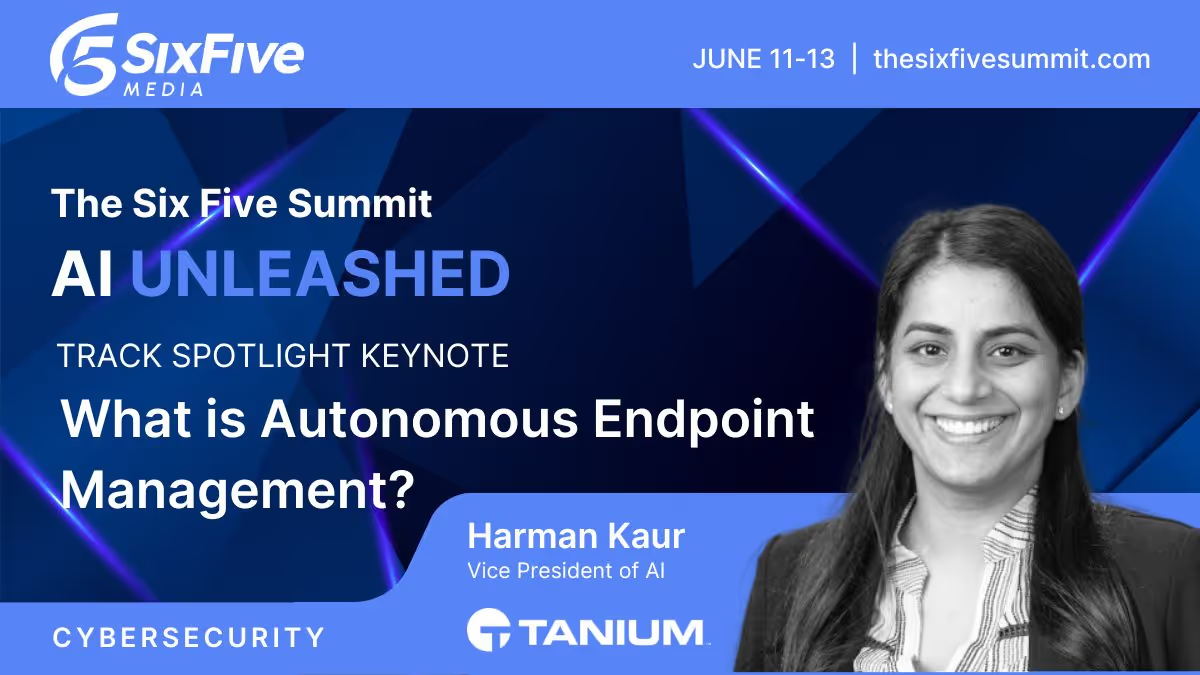
What is Autonomous Endpoint Management?
Autonomous Endpoint Management is a framework designed to unify IT operations and security teams on a single platform through real-time control and visibility.
QUANTUM
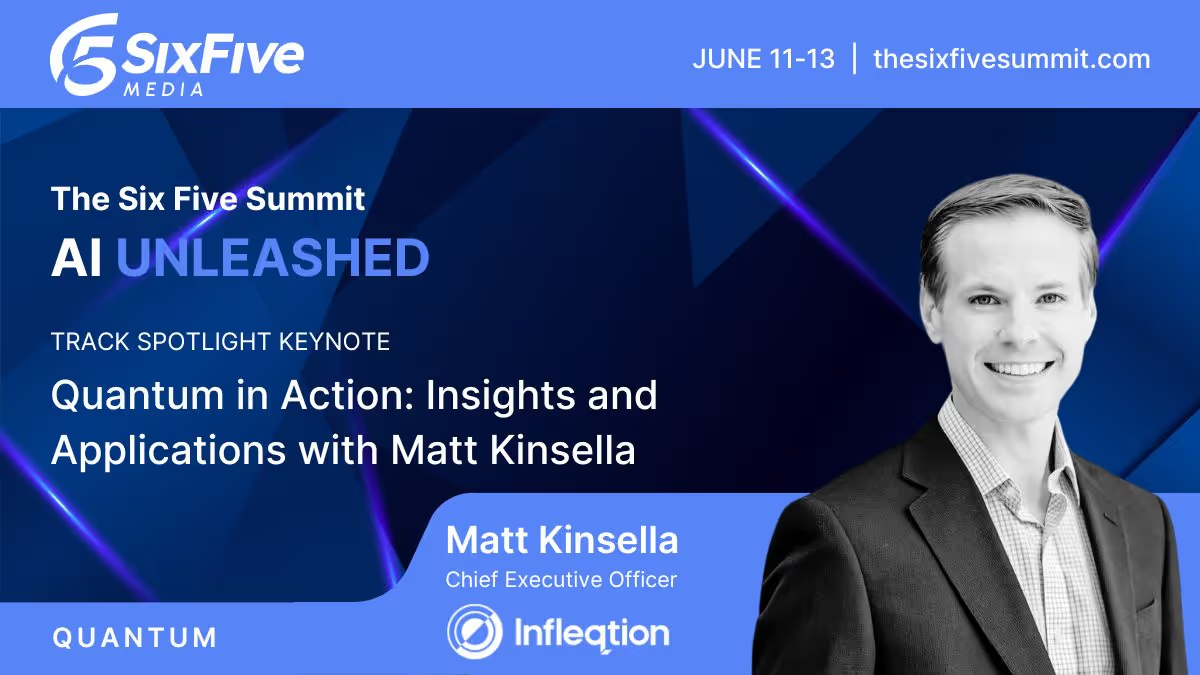
Quantum in Action: Insights and Applications with Matt Kinsella
Quantum is no longer a technology of the future; the quantum opportunity is here now. During this keynote conversation, Infleqtion CEO, Matt Kinsella will explore the latest quantum developments and how organizations can best leverage quantum to their advantage.
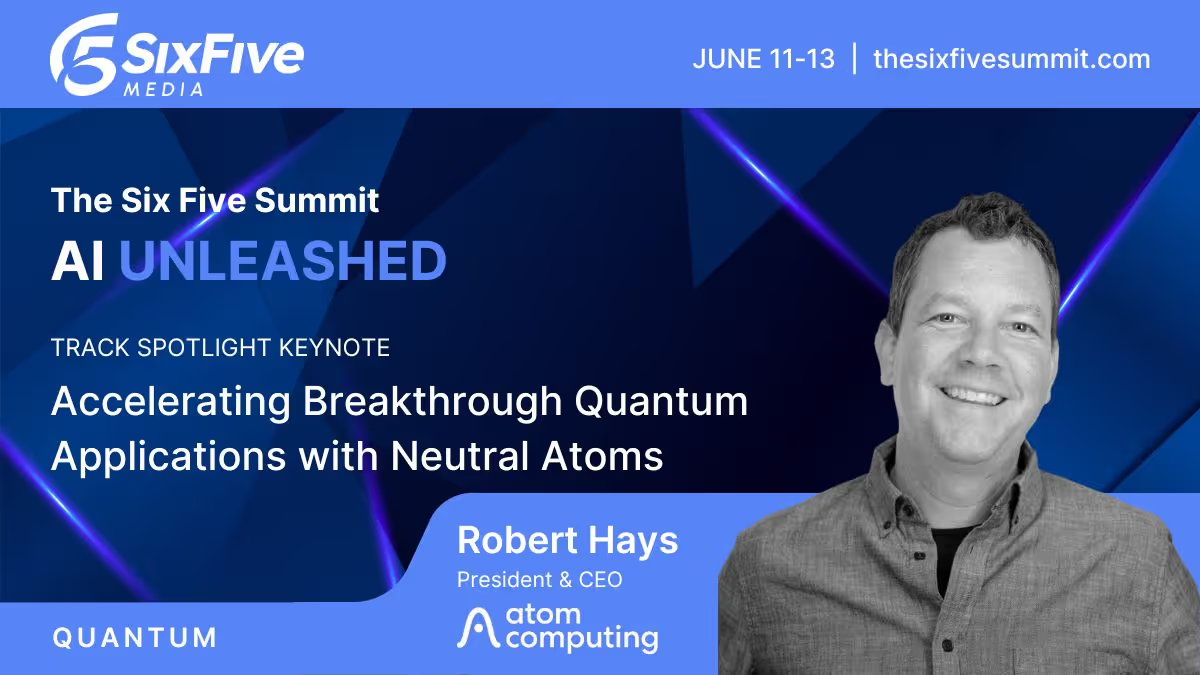
Accelerating Breakthrough Quantum Applications with Neutral Atoms
Our planet needs major breakthroughs for a more sustainable future and quantum computing promises to provide a path to new solutions in a variety of industry segments. This talk will explore what it takes for quantum computers to be able to solve these significant computational challenges, and will show that the timeline to addressing valuable applications may be sooner than previously thought.