
Government Workers Built 500,000 AI Agents in One Department. None of Them Wrote Code.
SHARE


At the Google Public Sector Summit, Katharyn White explains how agencies are turning moonshot AI goals into daily operations, from Gemini for Government Services to more than 500,000 user-built agents in a single deployment. Agencies that prioritize steady progress and real behavior change can deliver mission impact from day one.
Agencies have big ambitions for AI, and the harder part is turning them into something that runs every day, securely and at a sustainable cost. Legacy systems, fragmented data, and a historically long lag between deploying technology and seeing results all stand in the way. Meanwhile, AI capabilities are advancing faster than most teams can build new working habits.
At the Google Public Sector Summit in Washington, D.C., Patrick Moorhead sits down with Katharyn White, Head of Marketing at Google Public Sector, to discuss how agencies are turning moonshot goals into daily operations, why reimagining workflows matters more than perfecting a data strategy, and how prebuilt agents and user-built agents are delivering same-day impact.
For agency leaders, the shift is to measure progress over perfection. White argues that AI can pay off without thousand-fold gains. Catching more fraud or getting resources to an emergency faster unlocks capability that agencies can keep building on, as long as teams pair outcome-focused measurement with real behavior change.
Key Takeaways:
🔹 The moonshot now feels achievable. White says agencies are experiencing AI-driven change firsthand and sharing stories of their progress. That has moved conversations toward leadership, culture, and the freedom to fail fast.
🔹 Why workflows come before data strategy. In White's own team, the bottleneck turned out to be the intelligence layer that manages workflow data. Capabilities such as the agentic data cloud let teams work with data wherever it lives and focus on redesigning how work gets done.
🔹 Progress beats perfection. White says Google is building capability as well as agents. Use cases like fraud detection and emergency response deliver value through steady improvement, bypassing the friction of legacy systems.
🔹 Day one impact is now the expectation. Gemini for Government Services bundles common skills, connectors, and agents for tasks like FOIA requests, redaction, and policy work. In one CDAO deployment, employees built more than 500,000 agents using natural language, without coding.
🔹 How skilling changes the way people work. Google offers broad training and certification, along with 10-minute weekly Boost Bites. White’s view is that the value comes from applying what people learn to their own jobs, which helps new habits keep pace with fast-moving technology.
Agencies that pair outcome-focused measurement with a workforce that keeps experimenting can turn ambitious AI goals into everyday mission results.
Watch the full video at sixfivemedia.com, and subscribe to our YouTube channel so you never miss an episode.
Learn more about Google Public Sector at publicsector.google.
Disclaimer: Six Five Media is for information and entertainment purposes only. Over the course of this video, we may discuss companies that are publicly traded, and we may reference their equity share prices. Nothing discussed during this webcast should be considered investment advice or a recommendation to buy or sell any security. We are not investment advisors, and you should not rely on this content as financial advice. Six Five Media collaborates with technology companies and industry leaders to produce research-driven interviews and multimedia programming for enterprise technology audiences.
Katharyn White:
We don't need the use case to deliver perfection or, you know, thousands of times of improvement, but we need it to deliver progress. This notion of the journey of improvement, where they talk about, you know, perfection is the enemy of progress. Right. That's exactly how we see this kind of return of investment accelerating in this.
Patrick Moorhead:
The Six Five is on the road here in Washington, D.C. I am Patrick Moorhead and we are at the Google Public Sector Summit 2026. it's been a great show so far. And the theme of it was essentially from moonshots to missions. And I love the balance of that kind of the aspirational go for it, but we got to get the job done too, so I love that. And every agency out there has huge ambitions for AI, and the hardest part is turning it into something that runs every day, and it's secure, and it's at cost. And it's my pleasure to dig into this with Katharyn White, head of marketing at Google Public Sector. Katharyn, welcome to Six Five.
Katharyn White:
Thank you.
Patrick Moorhead:
Yeah, it's great being at last year's summit and seeing how the story but also the offerings have evolved and you've made a ton of progress over the last year for sure. And you really champion the idea of Moonshot setting audacious goals, right? Back when I was In tech, it was big hairy beehive, big hairy audacious goals. And that's really awesome. But also, with the grounding that you have to complete the mission, you actually have to get something, you actually have to do it, right? But CIOs are really conflicted here, right? Because they have a lot of legacy environments. They've got to keep the trains running. How are you helping these CIOs turn these goals into reality?
Katharyn White:
I love the question and we really got lucky, I think, with such a powerful theme for this moment in time. First of all, the public sector has long heritage with the word moonshot. Google has heritage with the word moonshot. Suncatcher just happened last week. This all came together in a way that made this thing that should be aspirational is aspirational, seems so achievable. And that balance came together in every conversation, in every panel, in every moment we had throughout the day. And I think what's different about all of the typical CIO constraints is that people now see the possibility, and they don't just see it, they're actually experiencing the change. So the belief is there, and they can share stories with each other around the progress that they're making. And they have gone further than what the technology will enable to then talk about things like the role of leadership, the importance of culture, this be able to fail fast and create this culture of innovation. Things that they weren't able to get to previously, they now see the opportunity to do. And so the nature of the conversation has changed. And it felt like this was really the right moment for that theme.
Patrick Moorhead:
Yeah, I think it was. And just judging, I mean, the conversations at an event like this are as important as the content on the big stage, right? And the demos, just other peers talking to others. Hey, are you seeing this? Or hey, let's do lunch. And how did you get through this together? So this type of stage is super important. One of the challenges, I think this is in any IT group, but maybe even it's magnified given the scale of the U.S. government, even public sector, is everything is fragmented. AI tools, security, and data, and even compute that's disconnected. I think in prior generations of compute, that was actually okay, and it fostered growth and a lot of innovation. But, I mean, I think the, you know, agentic outbreaks have been a perfect example how a unified stack can, makes a lot of sense. How are you delivering an actual kind of end-to-end from silicon to application and everything in between?
Katharyn White:
I'm sure you've had better responses to this from all of my colleagues that have already talked to you about the importance of the stack being able to future-proof the capabilities for agencies and deliver now and have the capability going forward. But I want to also talk to you about my own personal experience with my own team in terms of reimagining workflows. in a way that it became so obvious that the issue was not the data, but the knowledge or the intelligence layer or how the data was being managed to enable the workflows. And again, the nature of the conversation has changed such that we're now in a position to not worry about what the data strategy is, but think differently about how we're gonna do work that then is enabled by accessing the data. And I'm sure you've heard about the, and your readers or your listeners have heard about agentic data cloud benefits that gives us the ability to not care where the data is.
Patrick Moorhead:
That's right.
Katharyn White:
And that's really unlocked potential across all different kind of government use cases.
Patrick Moorhead:
Yeah, I think, I mean, you've been seeing a lot of success with your unified stack. And I think your argument gets even stronger now with agents for a lot of reasons. So there's been a lot of hype and academic history and discussions, and quite frankly, theory in the agentic AI market. what it can deliver, what it is delivering. You know, you turn on one YouTube channel or X, and it's like, oh my gosh, this is amazing. And the other one's like, well, not seeing ROI yet, right? What's the reality? Like, how are you proving to public sector buyers that Google is actually delivering the goods, like an end-to-end transformation?
Katharyn White:
I think it's a really interesting question, and we did explore in some of the panels today how we're measuring success. But again, personally, before I then speak to the use cases across government, I have a strong belief that we're building capability, not only agents.
Patrick Moorhead:
Okay.
Katharyn White:
And this gives us the opportunity, again, to think about the work differently, to think about our data differently, to think about what effectiveness is in a completely new and fresh way that delivers, again, in my marketing role against idea in the morning, ship in the same day. around an integrated lifecycle management and around the planning and optimization process so that we know our content is actually delivering. And we're not spending the time creating slides, but the data is telling us we should be doing a recovery plan. So, we're reversing the thought process almost to reimagine workflows that take advantage of the genetic capabilities. When we do this, we find the quality of the conversation changes and the quality of the output changes. Now, take that into a government scenario where, for example, working with fraud or working with emergency responsiveness. We don't need the use case to deliver perfection. or thousands of times of improvement, but we needed to deliver progress. Because when we are identifying more fraud, when we're able to get resources faster to an emergency situation, we did an activation and a demo around both of these today, we've unlocked more capability. And then we build on that as we go forward. So I think this notion of the journey of improvement, where they talk about perfection is the enemy of progress. Well, that's exactly how we see this kind of return of investment accelerating in this. And we've seen that it's the friction of legacy systems that hold us back. So if we move to a new era, where we're engaging differently with the data and the agenting possibilities, well, then we've bypassed that.
Patrick Moorhead:
Yeah, so in the end, measuring it on real outcomes as opposed to just some, you know, increased in productivity, kind of some horizontal, you know, mush, actually delivering real results.
Katharyn White:
I think that alongside the culture change that you're creating, we have to constantly learn. The velocity of the capabilities are moving faster than our ability to develop habits. So we have to be more resilient as humans to be able to take advantage of that. So I think both has to be the outcome orientation so it's not mushy, but also the behavior change so it's more real.
Patrick Moorhead:
Yeah, behavior change is huge and I think you would be able to better answer this, but in government, there's historically been a huge lag between deploying technology and seeing some of these results. I may get this data point right. I think it is, but I think I saw it took 17 months to get something from pilot to production. on average, in the federal government, and that's a long time. Some very good reasons, but some others could be cultural, and I'm curious, how are you stripping out this friction to have some results, you know, day one? Last year, I actually went up to one of your kiosks, you were there, and I created my own agent, and it was like, it was magic, and it emailed it to me, And by the way, that thing is still operational. Oh, that's great. I think I did something that had to do with safety or something like that, but I'm sure what you're doing now is a lot more sophisticated to get people to a day one impact.
Katharyn White:
There's two examples that come to mind, but that is the big wow about the capability now, that same-day impact. And I always say to my team, if it's not happening to you every day, you're not experimenting enough. But in the opportunity of same-day impact, We've just announced Gemini for Government Services, where we've taken common skills connectors and agents, bringing those together to have immediate day one value for Gemini users. Because we know the use cases that are common. You're going to see more and more of that rollout where we're not only building capability, as we talked about, but those first agents, connectors, and skills have immediate use case around FOIA or redaction or policy, things we know all of us need to improve upon. And then, you know, the CDAO example. where over 500,000 agents have been built as part of that deployment, as part of that capability. Again, I think those agents are being built, not by IT, by people who know, just like you did, who know what is the friction in their job, are the things that they need to improve to make their job more so they can focus more on mission, make their job more fun, however you like to think about it. That capability allows, only they know this. So they're able to do that with natural language, without coding. They create the agent. They get the value. It's day one, over and over and over again.
Patrick Moorhead:
Yeah, I talked a little bit about the evolution from last year and the great products you've built and FOIA, you know, that, I mean, you're essentially getting down to the workflows that are really hard, very people intensive and take a lot of time. I love that. And my expectation next year is we're going to see a lot more of these as they roll out.
Katharyn White:
I think it's going to be exponential week by week, month by month.
Patrick Moorhead:
No, I love that. Not next year, right? Exactly. There we go. Accelerating the output in here. So, we talked a little bit about people, but I kind of want to drill in on it. I mean, you've got a great tech stack, but if the workforce isn't ready, the mission stalls, right? We've seen this in almost every generation of technology, but I really do believe it's amplified. So you have skilling programs, you have partner ecosystems that you're investing a lot in to ensure that your customers can scale the capabilities over the long haul. Can you talk a little bit about those?
Katharyn White:
Google has incredible capability and training, skills, certification that everyone should take advantage of. But I think it has to also be tuned toward the thing you're working on. So applying those trainings into changing how you work, taking the friction out of your job, as we talked about, in terms of really driving the so what, So you apply the skills and the learning and what you learn week over week, we have Boost Bites also available. That's a lot of fun, 10 minutes a week. But the difference is not how many we take, at least in my experience, but what we do with what we've learned. And that allows us to keep up with the velocity of the change so that it has some chance of becoming a habit.
Patrick Moorhead:
No, I love that. And essentially what you're saying really well is simply delivering to the workers what they want. You're making it relevant, right? And you're solving their problems. And once they realize that, and you would sit earlier about if you're not discovering something every day, you're probably not trying enough. And I, you see it every day in your work. I am playing with every different agent, and I'm running a company, and you're running a gigantic group yourself. So this has been a great conversation, Catherine. Congratulations on the event.
Katharyn White:
Thank you.
Patrick Moorhead:
You really have moved a lot in the past year. I'd love to keep the conversation going, not just next year, but throughout the year, because I feel like the velocity of what you're going to be doing is going to be increasing here, and it's exciting to see.
Katharyn White:
Thank you, Patrick. And we hope everyone takes advantage of all of the capability and develop news habits and takes this opportunity to create your own moonshine.
Patrick Moorhead:
I love that. So I thank everybody for tuning into The Six Five here. Check out all of our content for Google Public Sector. Check out this year's, all this year's videos, all last year videos. I may have published a few things out there as well. Check those out. We appreciate those. You hit that subscribe button. Take care.
MORE VIDEOS
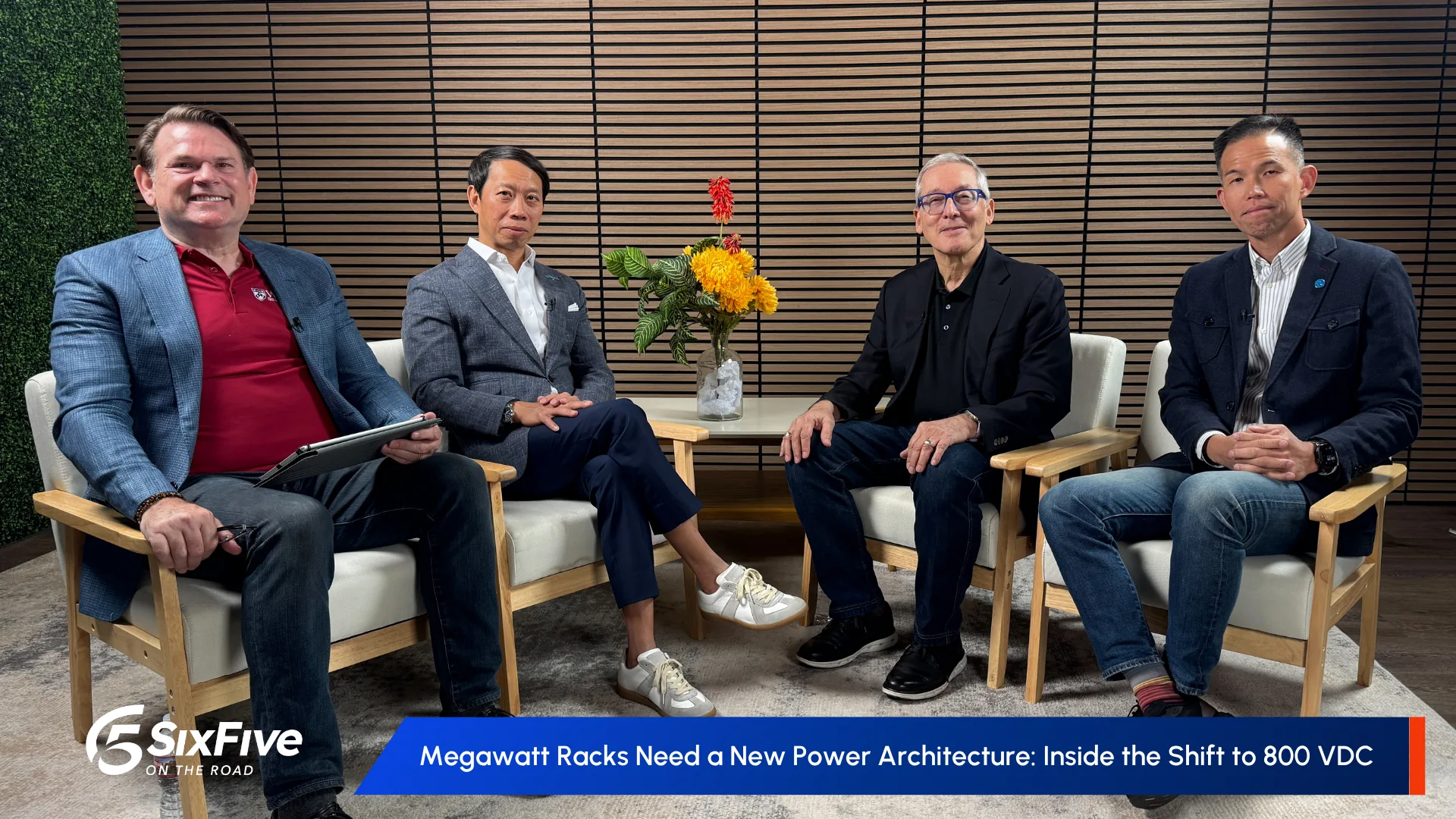
Megawatt Racks Need a New Power Architecture: Inside the Shift to 800 VDC
At OCP Global Summit 2026, LITEON, NVIDIA, and QCT explain why megawatt-scale AI racks are driving a shift from 54-volt to 800 VDC power architecture. For data center operators, the transition depends on a shared specification, retrofit paths for existing sites, and liquid-cooled power innovation.


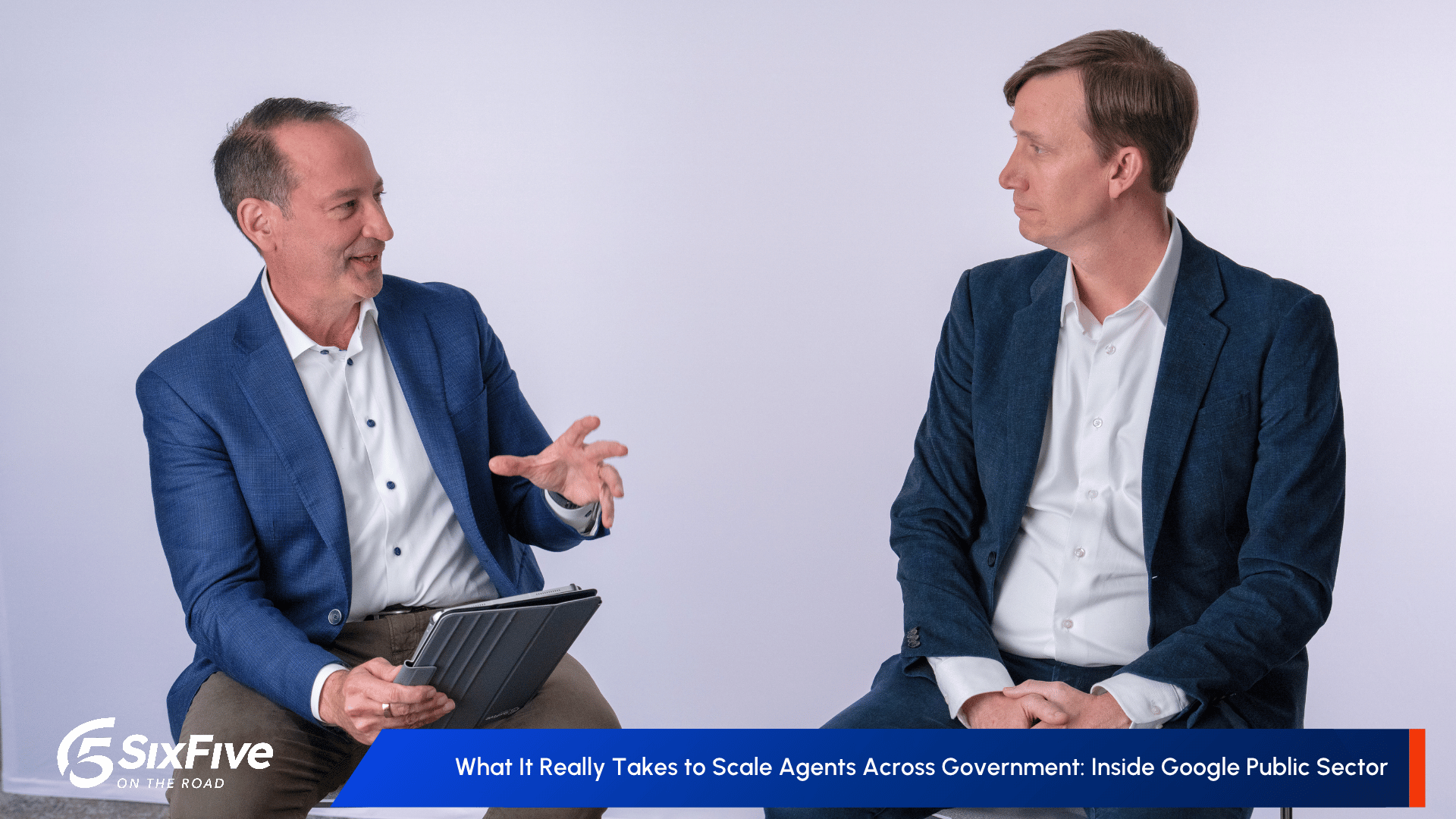
Google Is Putting AI Agents Inside the Pentagon’s Systems. Here’s How They Keep Them in Line.
At the Google Public Sector Summit, Field CTO Chris Hein explains how agencies can scale AI agents safely, from TPU capacity and smart model routing to zero trust for the agentic workforce. Agencies that get those foundations right can deliver government services that beat everyday consumer experiences.
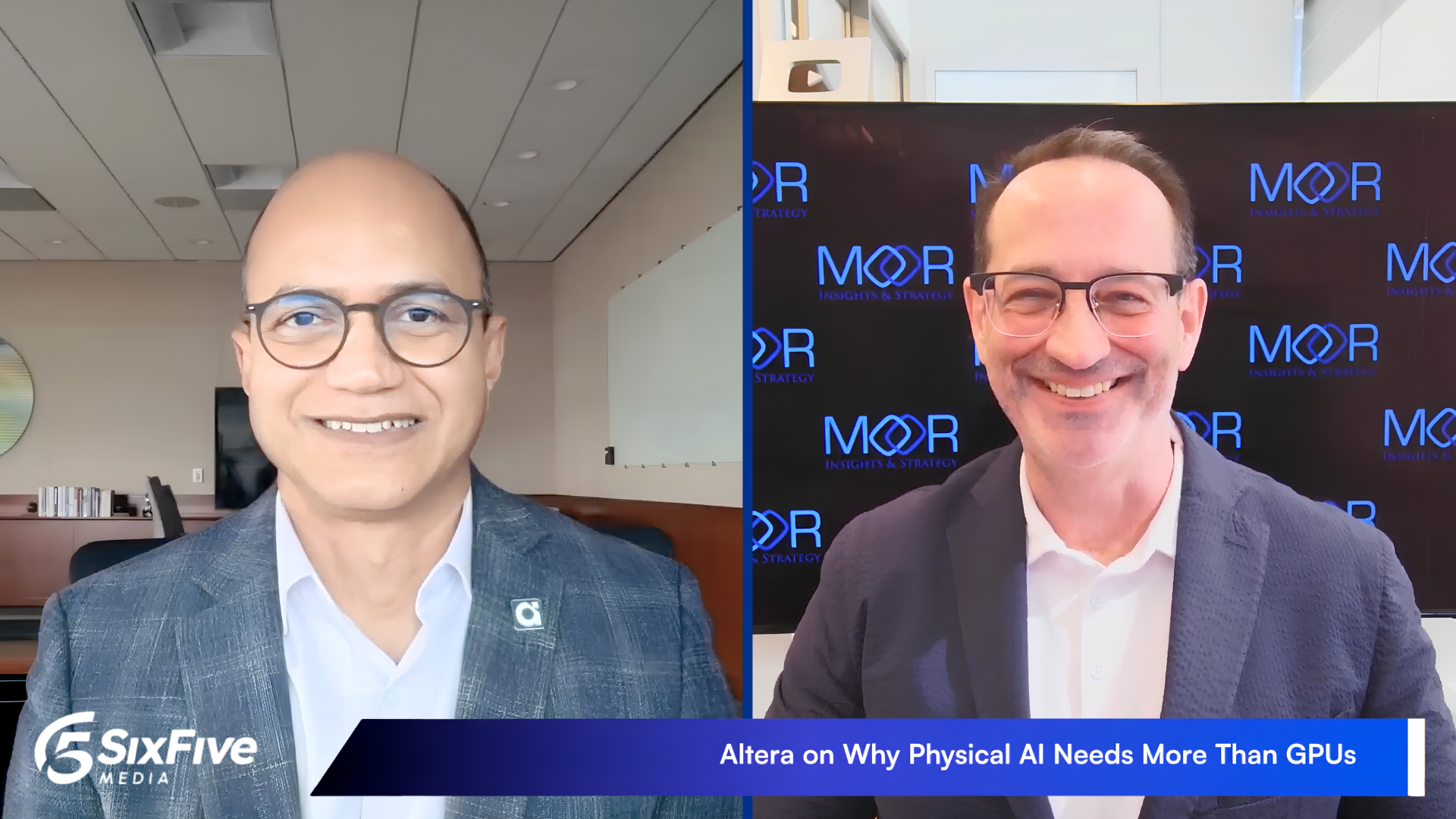
Altera on Why Physical AI Needs More Than GPUs
Altera President and CEO Raghib Hussain explains why FPGAs now operate as programmable companions to CPUs, GPUs, and custom ASICs as AI model churn outpaces silicon design cycles. For infrastructure and physical AI teams, programmable data movement and sensor processing determine how quickly systems adapt after deployment.
Other Categories
CYBERSECURITY
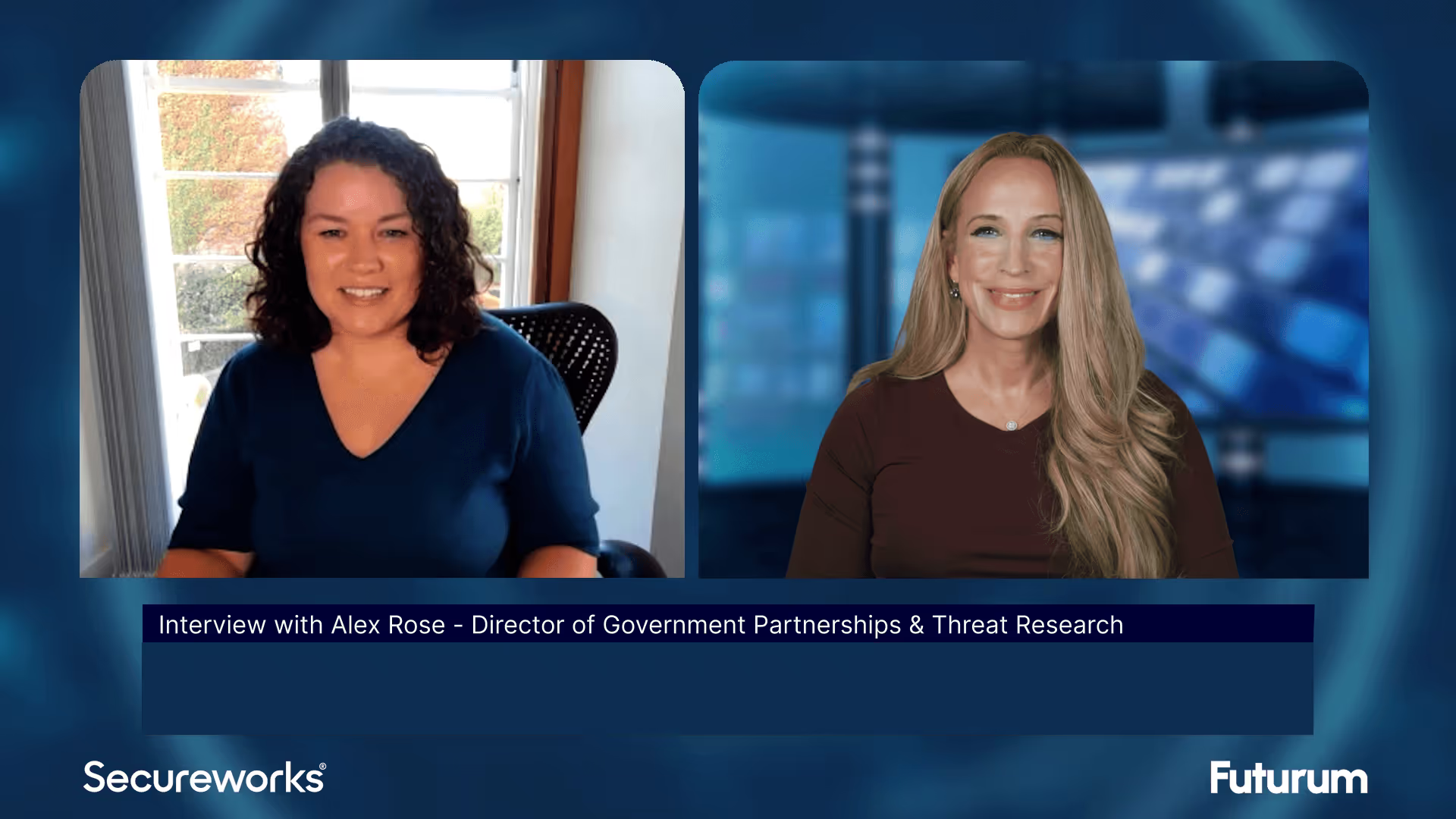
Threat Intelligence: Insights on Cybersecurity from Secureworks
Alex Rose from Secureworks joins Shira Rubinoff on the Cybersphere to share his insights on the critical role of threat intelligence in modern cybersecurity efforts, underscoring the importance of proactive, intelligence-driven defense mechanisms.

HP Launches World’s First Business PCs to Protect Against Quantum Hacks - The Six Five On the Road
On this episode of the Six Five - On the Road, hosts Patrick Moorhead and Daniel Newman are joined by HP's Ian Pratt, Global Head of Security for Personal Systems.
What is Autonomous Endpoint Management?
Autonomous Endpoint Management is a framework designed to unify IT operations and security teams on a single platform through real-time control and visibility.
QUANTUM
Quantum in Action: Insights and Applications with Matt Kinsella
Quantum is no longer a technology of the future; the quantum opportunity is here now. During this keynote conversation, Infleqtion CEO, Matt Kinsella will explore the latest quantum developments and how organizations can best leverage quantum to their advantage.
Accelerating Breakthrough Quantum Applications with Neutral Atoms
Our planet needs major breakthroughs for a more sustainable future and quantum computing promises to provide a path to new solutions in a variety of industry segments. This talk will explore what it takes for quantum computers to be able to solve these significant computational challenges, and will show that the timeline to addressing valuable applications may be sooner than previously thought.