
Maximizing Potential Through AWS Marketplace - Six Five On the Road
SHARE


Thomas Zaki, Global Director of Deal Desk & Sales Operations at Varonis Systems, joins Alex Smith to discuss how Varonis leverages AWS Marketplace to expand globally, streamline customer acquisition, and optimize regional go-to-market strategies.
How can technology providers leverage digital marketplaces to enhance global reach while simplifying customer engagement?
From AWS re:Invent 2025, host Alex Smith is joined by Varonis Systems’ Thomas Zaki, Global Director of Deal Desk & Sales Operations, for a conversation on maximizing potential through the AWS Marketplace. They explore how Varonis Systems, a data security leader, harnesses AWS Marketplace’s capabilities to streamline global expansion, optimize customer acquisition, and deliver secure solutions efficiently.
Key Takeaways Include:
🔹 Faster, Frictionless Global Expansion: Varonis taps AWS Marketplace’s built-in distribution and compliance frameworks to enter new regions rapidly—bypassing the traditional hurdles of localization, procurement complexity, and onboarding delays.
🔹 A More Direct Customer Path: Customers increasingly choose Varonis on AWS Marketplace for streamlined procurement, consolidated billing, and immediate access to secure data protection tools—all of which reduce buying barriers and shorten time to value.
🔹 Market-Adaptive GTM Strategy: AWS Marketplace’s regional flexibility allows Varonis to localize pricing, packaging, and terms to meet the varying needs of global buyers while maintaining operational consistency.
🔹 A Scalable Growth Engine: Zaki underscores how Marketplace participation has become a strategic multiplier for Varonis—supporting predictable growth, operational efficiency, and global reach without adding heavy internal overhead.
Learn more at Varonis Systems.
Watch the full video at sixfivemedia.com, and be sure to subscribe to our YouTube channel, so you never miss an episode.
Or listen to the audio here:
Disclaimer: Six Five On the Road is for information and entertainment purposes only. Over the course of this webcast, we may talk about companies that are publicly traded, and we may even reference that fact and their equity share price, but please do not take anything that we say as a recommendation about what you should do with your investment dollars. We are not investment advisors, and we ask that you do not treat us as such.
Alex Smith:
Welcome to Six Five On The Road here at AWS reInvent. I'm Alex Smith with the Futurum Group, and we're here today to talk about cloud marketplaces. And we see cloud marketplaces as one of the fastest growing routes to market for ISVs, and AWS very much being one of the leaders of this charge. And I'm joined today by Tom Zaki of Varonis, who is responsible for the deal desk and sales operations on the cloud marketplace? That's correct. Thomas, thank you for joining us. Nice to meet you. Of course. Thank you very much for having me. So first, before we dive in and talk about Marketplace, tell us a little bit about Varonis, your company.
Thomas Zaki:
Sure. So Varonis is a SaaS organization. We're the leader in the data security DSPM space. We take a really unique approach as it relates to data security. So focusing on find, fix, and alert if we had to really simplify it. So finding where we might have misconfigurations, permissions, whether it's from human users or agents, fixing. as it relates to maybe classifying data, anything, any misconfigurations, sensitive data that may be overexposed, alerting, so real-time alerts, whether it's to ransomware attacks, insider threats, and remediation. So we're really focusing on if there is an issue, remediating any broken permissions, any broken sets, and keeping it that way while also not messing with any of your business day-to-day.
Alex Smith:
Yeah, data security is the area that just says constant need and demand for it. Yeah, absolutely booming. So, not a startup, been around for a long time. You had a go-to-market prior to Marketplace, but what are some of the reasons that you and your company started to embrace the AWS Marketplace?
Thomas Zaki:
Sure, so I know it really came down to meeting our customers where they want to purchase. They have these cloud commitments. They see the simplistic method of purchasing through the AWS Marketplace. So whether that's related to procuring in their local currencies, simplistic of transaction, burning down on their cloud commitments. And as we adopted what we really saw, was everything that you see AWS markets. It's quicker sales cycles, larger transactions, simplistic purchasing processes. We've seen really expedited procurement cycles as it relates to procuring through the marketplace. So it was a tool as we related to, like you said, we've been around for a really long time, a pretty large organization. And when we made this change as it related to going into 2025 of being a marketplace-led organization. So as we headed towards that, adopting the marketplaces was super critical towards our strategy.
Alex Smith:
And roughly how long have you guys been in the AWS marketplace?
Thomas Zaki:
So we've been on there since the beginning of 2023, but I really would say 2025 was where we took this all-in approach. I think we kind of, and I think like other ISVs, they toy with the idea. They say, hey, this is something maybe we might do. And we really made the strategy with our leadership folks and with our sales org that we were going to dive wholeheartedly into a partner-led hyperscaler motion.
Alex Smith:
That's quite a lean-in in just a matter of three years. Tell us a little bit about the kind of, I guess, the crawl, walk, run to kind of get from, hey, we're going to try it out as a new go-to-market motion to we're kind of getting processes a little bit more, you know, embedded to, oh actually now we're leaning in as used to be marketplace first.
Thomas Zaki:
Sure, so it was as simple as just getting a listing started. Varonis is a pretty easy pricing model, so it's just bundled offerings per year, bundled pricing. So it wasn't too hard getting anything stood up, but it was pretty much just the listing that was there that our sellers just hey, are we available on AWS Marketplace? I was like, yeah, if you want to procure, we have the opportunity. Where it went from this full-fledged switch to, okay, now we need to co-sell, now we need to procure through the Marketplace, now we need to enable our sellers, we need to really go head first as it relates to what we're doing from a Marketplace strategy, and we took a really aggressive, holistic approach of ensuring our sellers were there, while also maintaining we're a channel-first organization as well. So enabling our sellers of, now you have this triad, you have our massive customer base, you have the channel partners that are so important to what we do. And then you have this massive cloud provider, such as AWS, all working towards the same goal of, you know, protecting data.
Alex Smith:
Yeah. And I think you've mentioned a few times in there, sellers, right? So like bringing sellers on that journey is, I think, a big part of, you know, driving that transformation and getting it kind of, you know, really adopted as a kind of core function and route to market.
Thomas Zaki:
It was the enablement around our sellers. It was from SKO all the way through to the calendar year. It was all focused on enabling. It was from the deal from the rev as rev ops leaders, as we have a dedicated enabling org, we have a dedicated partnerships and alliances org. So, and also it just came directly from our leadership as well. It was something that was a top-down approach that wasn't forced. It was, they saw the value in it. The second they started working with AWS sellers, the second they started co-mingling that into our standard day-to-day, it just, you know, it's going back to that motion before, if they started seeing larger deal sizes, stuff started to close quicker. It was a lot easier to click a button and procure. So, yeah.
Alex Smith:
Mm-hmm. So, Varonis is also a global company. You've got, you know, presence all over the world, and I think a big part of leaning into AWS as a route to market means leaning in with your international expansion. So, tell us a little bit about, you know, how you started to think about, you know, working with AWS at different markets across the globe.
Thomas Zaki:
Sure. So exactly like you said, we were a global organization. We have entities all across the world. And it first started off with mirroring. It was saying, hey, we want to make sure operationally we have all these operational procedures from a finance perspective that we wanted to really batten down the hatches with, that we wanted to say, hey, it makes sense from a operational standpoint to mirror exactly what we're doing from a day-to-day perspective. So processing deals and local entities, collecting local entities to what we're doing in the AWS Marketplace, because it was such a big motion for us. It really took off this year. So we really kick started the process with a lot of the available resources that AWS had. And we went and basically got, I think, around 10 seller accounts set up, went through the KYC process where necessary, and we're looking to continue to expand. But it first started operationally. Then it went to, oh, wow. We don't have to, our sellers don't have to have it as an obstacle of, if a customer wants a bill from a local operator, they don't have to worry about it. If they want to pay in their local currency, they don't have to worry about it. We took a lot of that operational burden And then we realized that now we could co-sell in these regions. We can transact in these regions. They can pay in their local currency. They can get invoice from the local operators. So it started off as a mere operational mirroring, and it turned into our co-sell strategy.
Alex Smith:
I think any time you're trying to expand internationally, whether you're doing it within your own organization, with local sales channels, or through a platform like AWS Marketplace, It's complex, right? As you kind of just like alluded to. So, was there a lot of kind of step evolution in that process? Did data like infrastructure really help kind of, you know, overcome some of the natural challenges that occur when trying to operate in different countries?
Thomas Zaki:
I think overall, as it relates to just the immense resources, it was, you know, there's a ton of resources to your abundance that you can take advantage of. It's just kind of raising the red flag of, hey, we need help and we want to do more with AWS in these local regions. We were just doing everything through AWS Inc., which I think a lot of ISVs do, and it's completely okay. But, you know, we didn't want this marketplace to be this whole different process than what we were doing on a day-to-day. So we took advantage of a lot of the resources. applied it to our actual day-to-day, and it was facilitating us through the KYC process, facilitating us through how to manage multiple seller accounts, how do disbursements work, how does local branches work. There were so many resources at The Abundance that it felt, and I think the most important part is these folks also know how to speak to different departments within my org. So it took legal folks, treasury folks, revenue folks, all these different folks that I had to get. But when they were given the, when AWS was given the opportunity, they were able to speak to these different folks within my department and make them feel at ease of expanding operationally, which again, turned into a pretty fruitful partnership as it relates to what we're co-selling internationally with.
Alex Smith:
Yeah. You've mentioned KYC a couple of times. That's Know Your Customer. Correct. And do you want to just kind of quickly elaborate on like, you know, why that's important?
Thomas Zaki:
Sure. So it's not an AWS requirement. It's a standard financial services requirement. So I know sometimes maybe ISVs get confused that it's AWS. It's not that at all. It's a anti-bribery, making sure that we're doing all the right things. as it relates to that. And what we're making sure of is that the process was really quick. I think we had, for example, with one of our international seller accounts, we made sure we got a resource doc from the AWS folks, gathered all the information for all the necessary folks internally. I think we had KYC approved in 24 hours. So it's not a burdensome process. It's just it might be burdensome to get the documents necessary that you need, but it's totally worth it.
Alex Smith:
Yeah, absolutely. Anytime you're running a business internationally or in multiple countries, I should say, you also have to think not just about the, you know, kind of the operational finance side of things, but on the sales side as well, you know, how you kind of have your different pricing and packaging strategies and different markets that you operate in. Can you tell us about some of the ways you're kind of thinking about that? And likewise, can you still achieve what you want through AWS Marketplace as a vehicle there?
Thomas Zaki:
Yeah, absolutely. It really came down to we have a really simplistic pricing model, bundle approach, per annual price, per user price. So we don't have a pay-as-you-go model or like a metering or like a usage or any type of that. For us, Verona's had an advantage of pretty much mirroring our main seller account to what we were doing to all these international entities, while also being compliant to what we need to be doing in all these international seller accounts. So it was a real seamless transition.
Alex Smith:
Yeah, great. So what countries are you kind of targeting now? Are there still markets that you are looking to expand in?
Thomas Zaki:
Absolutely. I mean, we've had the UK, Ireland, pretty much a really heavy EMEA presence, and we've gone through the process of getting any of the available regions that AWS has set up with those seller accounts, really looking to expand it to India, really APAC, LATAM. So we have really good footholds in just our standard day-to-day practices, but we're partnering with AWS to continue expanding it to these regions as well, while also getting international seller accounts set up there as well.
Alex Smith:
Yeah. So maybe as we kind of think about wrapping up, there's obviously lots of ISVs out there that are somewhere on this journey. What would you, what kind of parting advice might you give to someone that's kind of thinking about, you know, you know, increasing their international business through the marketplace. So obviously you blazed a lot of the trail already, but, you know, what are some of the things that they should be thinking about?
Thomas Zaki:
So I think it's whether you're already a global organization or, you know, you're thinking about expanding. For us, we were already a global company. We took it as an operational procedure, and I don't think we were really thinking about how this could actually expand. And I think what I would say is take the time, talk with the necessary folks. I know sometimes, especially with really large organizations, it might be difficult to get the necessary resources together. But I think it's really pitching the value of there were transactions that if we were not didn't have local seller accounts for, we wouldn't have been able to procure through the marketplace. We would have had to go a different route, a more standard purchase order route. And we were able, because we had these international accounts, I think it's more so of the fear of missing out, making sure that you're operationally set up and getting the resources. It might be a bit cumbersome to put the processes in place. You know, you have tax guidelines, treasury guidelines, legal guidelines. I completely get it's absolutely burdensome, but also lean in on the AWS resources that you have available. There's a whole, there's some folks that I even reach out directly just, hey, I need some time. Like, I really want to go through this. We're looking to, we're having an issue here, or we're looking to expand there. And also, the other thing is they also have now the relationship with these folks. So our treasury folks know who these AWS resources are. These legal folks do, our tax folks. Um, so it was, it was cumbersome at the beginning, but then once you get through it and you understand the motions and you go through the KYC, they've made it really, really easy.
Alex Smith:
Yeah. And you've used the term mirroring a few times. So I think it is that because you're already a global organization that's operating in many countries across the globe and how do you mirror those processes and procedures and relationships at all the different markets, um, that, you know, AWS is operating in.
Thomas Zaki:
I think not only mirroring, but also using an opportunity to expand. I think the fact that AWS is a massive global organization. You can utilize the resources there from CoSell, and the fact that these regions are going to start seeing marketplace transactions occur, it's going to open up a whole slew of opportunity for you.
Alex Smith:
Yeah, well, that's exciting. Thomas, thank you so much for taking the time. We know it's been a very busy re-invent schedule, but I really appreciate you taking the time to come and share your journey with us. And to those of you watching, thank you for taking the time. And this is part of our series on AWS Marketplace, and we look forward to sharing more partner stories shortly.
MORE VIDEOS
WD's Tim Rausch: AI Storage Demand Compounds With Every GPU Cycle
Western Digital's Tim Rausch argues that AI's compounding data growth, more than GPU capacity, sets the real ceiling on infrastructure scaling. He joins Matt Kimball at AI InfraSummit 2026 to walk through how total cost of ownership, archived data reuse, and WD's capacity roadmap are reshaping enterprise plans to scale AI over the next several years.


.png)
The Main Scoop Ep. 45: Attackers Only Need to Be Right Once. AI Just Made That Easier.
Chad Rikansrud, R&D Software Security Engineer at Broadcom, explains how frontier AI models are finding decades-old mainframe vulnerabilities in seconds, collapsing the complexity advantage that once protected legacy platforms. He outlines why enterprises need faster Security Intelligence (SECINT) ingestion and disciplined human oversight to keep pace with adversaries wielding the same tools.
Fleet-Scale Deployment Is the Physical AI Benchmark
Physical AI is shifting from lab prototypes to fleets of machines operating reliably in the real world, and Ambarella's Muneyb Minhazuddin joins Six Five On The Road at AI Infra 2026 to explain what that shift demands of silicon, memory and developer workflows. Minhazuddin traces the case back to a 22-year-old chip architecture and forward to a developer cloud built to compress model porting time from months to days, and he identifies enterprise ROI proof points as the biggest hurdle left before physical AI scales into millions of deployed units.
Other Categories
CYBERSECURITY
Threat Intelligence: Insights on Cybersecurity from Secureworks
Alex Rose from Secureworks joins Shira Rubinoff on the Cybersphere to share his insights on the critical role of threat intelligence in modern cybersecurity efforts, underscoring the importance of proactive, intelligence-driven defense mechanisms.

HP Launches World’s First Business PCs to Protect Against Quantum Hacks - The Six Five On the Road
On this episode of the Six Five - On the Road, hosts Patrick Moorhead and Daniel Newman are joined by HP's Ian Pratt, Global Head of Security for Personal Systems.
What is Autonomous Endpoint Management?
Autonomous Endpoint Management is a framework designed to unify IT operations and security teams on a single platform through real-time control and visibility.
QUANTUM
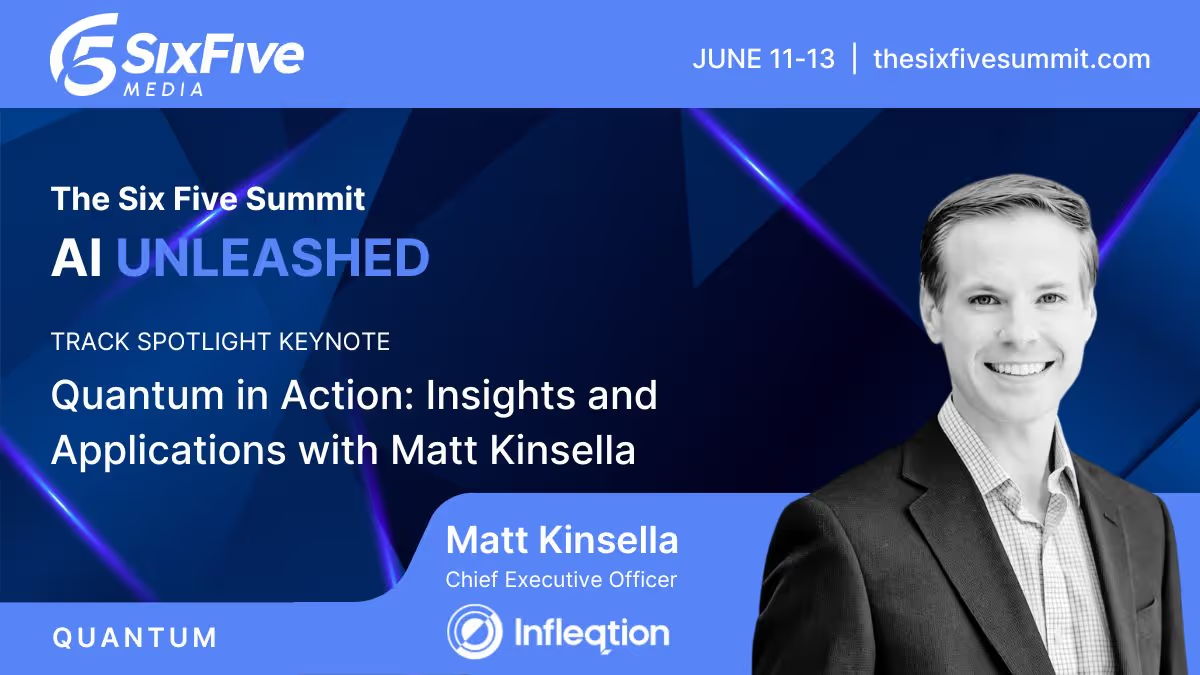
Quantum in Action: Insights and Applications with Matt Kinsella
Quantum is no longer a technology of the future; the quantum opportunity is here now. During this keynote conversation, Infleqtion CEO, Matt Kinsella will explore the latest quantum developments and how organizations can best leverage quantum to their advantage.
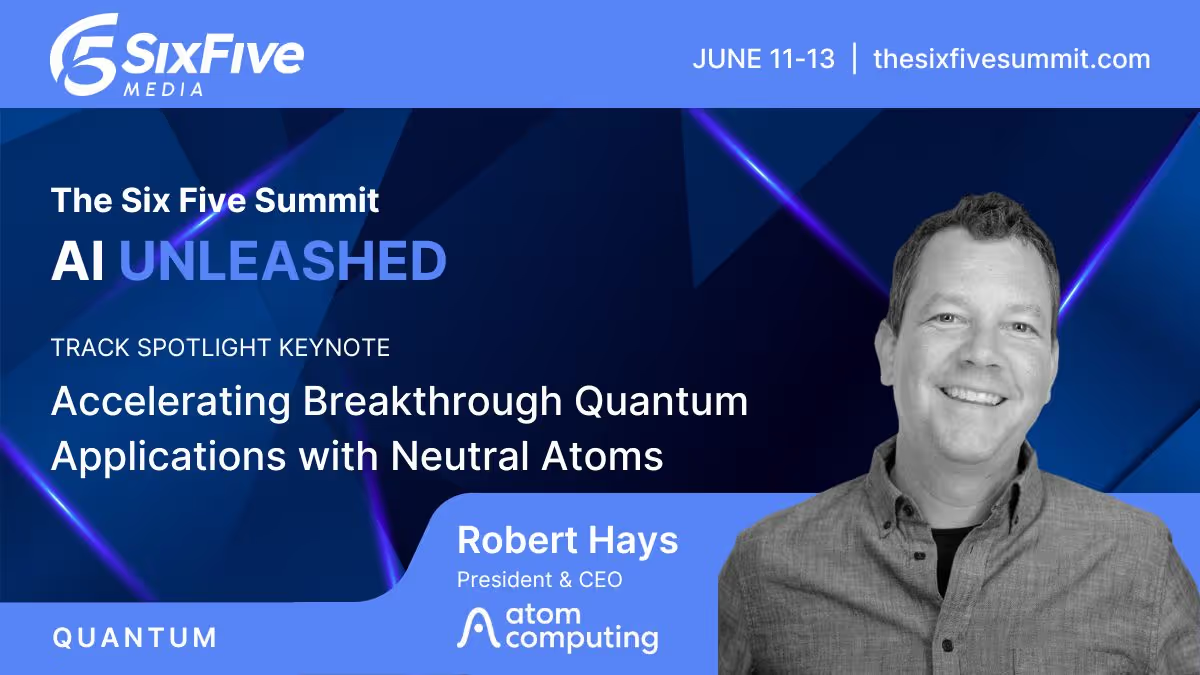
Accelerating Breakthrough Quantum Applications with Neutral Atoms
Our planet needs major breakthroughs for a more sustainable future and quantum computing promises to provide a path to new solutions in a variety of industry segments. This talk will explore what it takes for quantum computers to be able to solve these significant computational challenges, and will show that the timeline to addressing valuable applications may be sooner than previously thought.