Home

Scaling AI Through Partnership: How Dell and Future Tech Are Helping Customers Modernize for the AI Era
Scaling AI Through Partnership: How Dell and Future Tech Are Helping Customers Modernize for the AI Era
SHARE


Technology access is no longer the constraint for enterprise AI. Execution is. In this Six Five On The Road conversation at Dell Technologies World 2026, Dell COO Jeff Clarke and Future Tech CEO Bob Venero join Patrick Moorhead and Daniel Newman to examine how aligned go-to-market partnerships accelerate enterprise AI adoption, where customers are making progress and where ambition breaks down, and what the agentic AI inflection point demands from both enterprise leadership and the partner ecosystem over the next 12 to 24 months.
Technology execution, not access, is the new constraint for enterprise AI. Enterprises that have the infrastructure, the budget, and the strategic intent to move on AI are still struggling to translate that ambition into operational outcomes at scale. The gap between where organizations are and where they need to be is increasingly being closed not by technology alone but by the partner relationships that reduce deployment complexity and accelerate time-to-value.
At Dell Technologies World 2026, Patrick Moorhead and Daniel Newman sit down with Jeff Clarke, Vice Chairman and COO of Dell Technologies, and Bob Venero, President and CEO of Future Tech, to explore how strategic partnerships between technology providers and solution partners are helping enterprises adopt AI faster while cutting through the operational complexity that slows many projects down. Drawing on the long-standing relationship between Dell and Future Tech, the conversation offers a ground-level view of where enterprises are succeeding and where they are still stuck.
The discussion also examines what Jeff Clarke described in his DTW26 keynote as a major inflection point for agentic AI, how the CIO role is evolving as AI decisions become inseparable from business strategy, and what leaders should be prioritizing over the next 12 to 24 months to stay competitive as the pace of change accelerates.
Key Takeaways:
🔹 Aligned go-to-market partnerships reduce the execution gap that stalls enterprise AI. As AI decisions grow more complex, customers increasingly need partners who understand both the technology layer and the business context. The Dell and Future Tech relationship is built around that joint accountability for outcomes, not just product delivery.
🔹 The industry has reached an inflection point around agentic AI. According to Jeff Clarke's DTW26 keynote, enterprises are no longer asking whether to invest in AI. They are asking how to move from isolated pilots into operational systems that can reason, act, and improve across workflows without constant human supervision.
🔹 Customer-facing partners see where AI ambition breaks down before the technology providers do. Bob Venero's ground-level view from Future Tech's direct customer relationships surfaces the prioritization failures, integration gaps, and organizational readiness issues that prevent measurable AI outcomes from materializing at the pace organizations expect.
🔹 The CIO role is being redefined by AI investment decisions. Technology access and budget are no longer the primary bottlenecks. The organizations progressing fastest are those where the CIO has aligned AI priorities with business outcomes and built the internal decision-making structure to evaluate modernization, risk, and investment tradeoffs simultaneously.
🔹 The competitive gap in enterprise AI will widen significantly over the next 12 to 24 months. The organizations that operationalize AI now are building compounding advantages in efficiency, data maturity, and organizational capability that will be difficult for late movers to close once the agentic era fully takes hold.
Watch the full conversation at sixfivemedia.com and subscribe to our YouTube channel so you never miss an episode.
Disclaimer: Six Five Media is for information and entertainment purposes only. Over the course of this webcast, we may talk about companies that are publicly traded, and we may even reference that fact and their equity share price, but please do not take anything that we say as a recommendation about what you should do with your investment dollars. We are not investment advisors, and we ask that you do not treat us as such.
BOB VENERO:
And understanding what their goals are and their outcomes are, not only at the CIO level, but at the CFO level, at the CEO level, and within the ground as well. If you can manage and layer those outcomes that they're being measured on, then you can help them be successful and be a true partner to the customer versus a vendor or a provider.
PATRICK MOORHEAD: The Six FIveis on the road here in Las Vegas at Dell Technologies World 2026 and it has been an amazing event. Probably my biggest takeaway is that Agentic AI for enterprises is closer than you may think.
DANIEL NEWMAN:
I think it's here. I think it's here right now. I think enterprises are building with it. I think we got more proof here. I think one of the big focuses, of course, at this event is how it becomes real, which means not everything's going to be done up in the cloud. It means, you know, we're going to be bringing more of the technology on-prem. We're going to put the harnesses on-prem that have the rules and the rails that businesses operate under. And then we're going to be able to figure out the right economics for tokens to be delivered at scale, because the math has to work. So we send all of our employees home to experiment, and we can't bring our executives, our CFOs, back with $10 million bills after everyone does what we say.
PATRICK MOORHEAD:
Yeah, that's right. And whether it's OpenAI, XAI, Palantir, ServiceNow, on-prem, it's getting interesting. Sure is. As we would say. And Daniel, one thing we haven't talked about yet here on The Six Five at Dell Tech World is, first of all, some of the challenges and how we overcome them to really do this. Partnerships with service providers and tech companies like Dell, this is where the rubber meets the road. And we saw this in client server. We saw this with the PC generation. We saw this with mobile. We saw it with e-commerce. And we're seeing it here with the Gen2Guide. So with that, I'd love to introduce back to the Six Five, Jeff Clarke. Great to see you.
JEFF CLARKE:
Thanks for having me.
PATRICK MOORHEAD:
And Bob from Future Tech. Great to see you again on theSix Five.
BOB VENERO:
Good to see you again. Thank you.
PATRICK MOORHEAD:
Yes, we went from Zoom to the big stage.
BOB VENERO:
Much better. From virtual to reality.
DANIEL NEWMAN:
I spent a lot of time talking to you know the ecosystem but a lot of the time has been spent. You know we talked to video a few times up on the stage but there's the other side of this. You know there's this all this excitement, enthusiasm the forward deployed engineer. You know the how does AI get deployed at scale in the enterprise, not using the methodologies that have been used in historic transformations, which were often slow. And it takes a village. It takes great partnerships. So Jeff, I'd love to kind of start off with you here. But you've had this long partnership with FutureTech. You know what's made that successful. How has that driven your go to market together with A.I. How is that partnership evolving and changing to serve what I just talked about, the new speed of implementation.
JEFF CLARKE:
Why does the partnership work? Him. He embodies a partnership. He embodies everything about what it means to collaborate, work together, trust, and have a partnership. I've known Bob for 20 years. Yeah. Did he have hair? No. I had a little more. A handsome guy. What we've done with future tech and it goes way back near as we could tell we were talking the other morning 2007 maybe even before that one of our earliest strategic partnerships. And it was really built around trust and his tenacity. He was telling me the story how this started. And you take that embodiment and a desire to work because we know we can't reach every customer. We need partnerships. It truly takes a village to do that. And we worked with Bob from what he's done in client in his client model and helping those his customers really save on how they manage their cost. and the edge, and then we just talked about a high-performance compute cluster that we won together, and you kind of go from those two endpoints from where we started to where we are today in the role of AI. I like our hand. I like him, and we work very well together. I wish all of our partners would have those characteristics on a consistent basis and have 20-year partnerships. It would be great.
BOB VENERO:
Yeah.
JEFF CLARKE:
Yeah, absolutely.
PATRICK MOORHEAD:
Come on, Bob. We need to hear your full side of the story now.
BOB VENERO:
My full story? Yeah, look, for us, when Dell was a competitor early on, you know, when we started the company, which was 1996, and they were a very formidable opponent. We lost a lot to Dell over the years. And when we heard that Michael was going to, you know, look at doing the channel and supporting the channel, I picked up the phone. Yeah, first call. And I literally called his office. And it was really interesting because his assistant picked up at the time. And I said, listen, I'd really like to get on Michael's calendar. He's coming to the channel. Can we put something together? And she's like, hold on a minute. And then 38 seconds later, Michael picks up the phone. And I was not ready for that. Right. I'm probably a 50 million dollar company at that point. And Michael's on the phone. I'm like. Then it came out. We said hey let's get together. Let's figure out if there's a business opportunity together. And Michael flew out to New York to our headquarters. We sat down for a couple of hours, and we really felt that there was an opportunity to be able to grow and scale together. And we were one of the first partners that were in there. And there was an article that came out in CRN at the time. It was called My Afternoon with Michael Dell. And I remember the comments. I was being chastised by every other partner out there. How dare you work with them? They're going to take it, right? All that. The following year, I was introducing Michael at the Bob Conference, the Best of Breed Conference, and before I brought him out, I literally said to the audience, I said, before we bring out the guest that everybody wants to talk to tonight, I just want to say to all you sons of bees out there that called me the bad guy for working with this amazing man right now, that we're going to introduce Michael Dell. Literally the channel if you look at what hits is grown from you know 2007 2006 to where it is today. Amazing. And Jeff talks about the partnership for us. Dell does not. There's nobody that better embodies partnership and alignment and growth together. And I talk about this a lot where My company has grown to the levels that it has because of Dell and Dell's portfolio and leadership and partnership with Jeff and team. And we've been able to create an incredible business around the ecosystem that is Dell and all the offerings. And you can't ask for something better than that.
PATRICK MOORHEAD:
Okay, interview's over, let's go home. No, let's dive into agentic AI. Jeff, you characterized on stage essentially agentic AI, paradigm shift, inflection point, whatever, marketing word. It's going paramarketing word.
PATRICK MOORHEAD:
I'm sorry. Jeff’s words.
DANIEL NEWMAN:
Those are fighting words.
PATRICK MOORHEAD:
You would never have used those words. My gosh. But anyway, so we've gone through these stages. How have you changed your approach as your customers have gone from experiments to full deployment and actually seeing value?
JEFF CLARKE:
Well, today we have over 5,000 customers deploying some form of a Dell AI factory. And we continue to evolve that. You saw a bunch of announcements and updates yesterday and Arthur talked about it in more detail today. And we're helping our customers accelerate. Part of the new features are things that we didn't have before that are needed as we've learned. Take this notion of this Dell desk side agentic AI. What is it? Well it's kind of a crude form of a token router. Yeah. Guess what we're going to do. Token routing you undo tokens nearest that where the data is generated where the A.I. should be. We were asked for that. We anticipated, we saw that coming. So what you'll see us do across this great solution set called our Dell AI Factories is continuing to build capability and solutions that make it easier to deploy. Data is one of the biggest challenges. Arthur talked about data today. Data orchestration, one of the challenges. Arthur talked about data orchestration today. We talked about observability. What do these darn things do? We talked about that today. So all of these capabilities, if you will, are the culmination, the learnings that we have with our customer interactions trying to make it easier to deploy this at scale. And now agents are going to force that I think accelerate that to a greater degree because there's real work being done that provides better outcomes to customers. And that's a huge benefit. That makes sense.
DANIEL NEWMAN:
When Arthur talked about. how you could help take a particular prompt that would require X number of tokens and then tool routing or tools. And they talked about how you could basically do the same thing with Dell support on a significantly smaller number of tokens in a single tool. That was one of the things that kind of hit home for me, was like, right now, because of the sort of underwriting and subsidy that so much of AI has, you know, those folks that we're sending home and saying, use AI, like crazy, they're not thinking about that. But when an enterprise goes scale, they have to think about that.
JEFF CLARKE:
They do. And if you think about our partnership here, Well now we're building more capability and where Bob and his team have done a great job is building value and extensions around that. So we build this horizontal capable platform of Bob's team builds value add for his specific customers. That's why the partnership works. He's not trying to do what we do. We don't do what he does. It's complimentary. One plus one hopefully most days is greater than at least two if not greater than two.
DANIEL NEWMAN:
Right. That's what we try to do. Yeah. So Bob, when you're working with specific customers, right? Because we know that for some, it's early. Some have gone well down the road here. You're near the customer. What are you seeing in terms of where is AI and agentic deployment success taking place? And where are you still seeing some of that struggle for them to realize? They all want to do it, but where are they struggling to actually meet those ambitions?
BOB VENERO:
The question for a lot of companies is do they actually know what they want from a business outcome perspective. And that's what a lot of them struggle with. And that's where a lot of the sandbox playing with AI and what are the business cases and the use cases and such. And you know for the companies that we work with in the enterprise space that get the goal around business outcome, we're able to move very quickly with Dell and create a system. We did a lighthouse project for a very large federal systems integrator, and it was featured at GTC, Dell, Future Tech, and NVIDIA, and we were able to stand up a full AI factory from concept to delivery to production. in three months. And when you have an organization that understands what they're trying to accomplish then it's a lot easier to get down that path. It's still a challenge out there for some of the companies to understand where it is. But you know with the education that's coming from the Dell portfolio and the Dell team members and our team members we're helping them on that journey to get to something that is a true business use case and be able to leverage the tools and the technology to do that and avoid tokens. Right. Let's do it on prem. Let's get rid of the token costs as much as we can. And this supports that.
PATRICK MOORHEAD:
So Bob, I've heard you talk about, hey, it's not, the challenge isn't the technology anymore. I think we may have even discussed that previously on our podcast. And I'm hearing that a lot from CIOs as well. It's really about what should we do first? How do we prioritize? What should the strategies be? What are you seeing as the evolving role of the CIO with your customers? Because it's definitely changing.
BOB VENERO:
Oh, yeah. Yeah, I mean, look, if you look at the evolution of the CIOs over the decades that we've all been doing this, right, it's amazing what they have come from. They used to be technologists, right, then they became finance people, right, and now they're becoming business outcome individuals, right, and trying to figure out where the investments tie to the outcomes that they're trying to accomplish and where is the ROI that they're able to deliver back up to the organization to do that. So they become more of this you know business leader associated with outcomes that they're trying to accomplish and then report that back up. So it's not an easy role for right. Not an easy role and especially you know being tasked to do more with less right that we're all all doing. But it's a–it's an interesting evolution. But as we look at what A.I. is doing it's going to help a CIO become a better CIO because they can be focused now and using tools and technology to accomplish those business outcomes that they want to do. And they've got the right ecosystem and partners like Dell and FutureTech and NVIDIA to be able to accomplish that.
PATRICK MOORHEAD:
It's interesting, you know, behavior typically follows compensation or merit or something like that. Are you seeing their compensation packages change to actually move to outcomes?
BOB VENERO:
Oh, they're measured tremendously that way, right? And what's always something, we try to follow the bouncing comp, right? And if you can follow the bouncing comp, you can understand the direction that you need to go to help your customer be successful, right? And understanding what their goals are and their outcomes are, not only at the CIO level, but at the CFO level, at the CEO level, and within the ground as well. If you can manage and layer those outcomes that they're being measured on, then you can help them be successful. and be a true partner to the customer versus a vendor or a provider. And that's what we do.
PATRICK MOORHEAD:
Yeah, and we're seeing a lot of interesting conversations around, who do the agents report into? Like, I built an HR agent, a marketing agent, a legal agent. And if the outcomes, do the agents work for IT? Do they work for the business unit? But this is a weird kind of organizational construct that A lot of the CEOs that we're talking to and the CEOs are having these types of debates.
JEFF CLARKE:
I have my own agent dashboard. They work for me. They go out and grab information. They go out and do things I needed to do that I don't have to do that agents can grab.
DANIEL NEWMAN: Have you put them into your org chart? Are the agents peppered into the org chart now?
JEFF CLARKE:
No, they're on a dashboard that the team knows I have that scares the heck out of them because they go, he already sort of knows a lot already and now he doesn't have to talk to us no more. And it goes out and gets it, and then I can bypass several layers of the organization to get the answer to the question I want to know something about and not have to play that. Agents are perfect for the introverted leader.
DANIEL NEWMAN:
They really are. They're wonderful. Jeff, I'd love to have you do a little crystal balling. This is moving so fast. step of this revolution. I call it a revolution. Analysts like us even the most bullish ones like me and you're pretty bullish firms have underestimated this this rollout. We've underestimated the speed. We've underestimated the demand. We've all been wrong. We've been wrong. The good news is I think we're starting to really see all this value. But we are still really early. We're still really early in AI. People like to say we're in the third and fourth inning. I feel like we're still the pregame. I think we're in the parking lot. We're having a hot dog and drinking a beer. We're just getting the first agents deployed in most enterprises. I mean, about 20% of businesses are really using AI at any scale right now is the data I've seen, which means there's a huge opportunity. Even the ones using it at scale are using it in a small faction of the ways they will be able to. What is sort of your read on what separates the winners and losers? And what are you advising to, whether it's your channel partners, whether it's your IT decision makers and CIOs, what are you advising them to do to make sure they are able to take advantage of this exciting inflection and AI revolution?
JEFF CLARKE:
It's a good question. I tried to put some context around that earlier today. This is a disruption, a disruption that I don't think any of us have ever seen in our careers. At least the magnitude, scale of it, and what it's going to deliver in value and time. Humans don't like change. We generally resist change. And the separation between the winners and losers, those who get it, those who don't get it, are going to be the ones that have a willingness to disrupt what they've built. A willingness to disrupt the organizational construct, the workflows, their power base of how they understand how the organization works, and take all of that and truly just scatter it, tear it down, and rebuild it through the lens of AI and adding intelligence into everything. My fear, and what I see sometimes, is companies, I'll put some of that agent on my existing stuff. And the truth is, you're gonna get a benefit. It'll be incrementally better, 20% better, 30% better, maybe 40% better. But the companies that embrace this, that this intelligence is truly utility, and they're going to inject it and rebuild their workflows like we're seeing in software development, they're gonna get 10X productivity, 100X productivity. If you did the math on the example I gave, it was 860% productivity. Think about how many more features, how much bigger the payloads could be, how much quicker they should come, how much better I know my partners, how much better I know my customers, because I've embraced this. That's gonna be who separates the winners from the losers in my mind.
DANIEL NEWMAN:
So those that can go exponential versus those that go incremental. Everyone's gonna do it, is kind of what you're saying, but the effect is gonna be, there's gonna be orders of magnitude.
JEFF CLARKE:
You got wait and seers. who truly are going to wait. I think they're going to be left behind. You'll got you'll have those who do it because they think it's the right thing to do but are not committed to it. It's those who are committed have the culture have the intestinal fortitude to truly disrupt and tear down what's made them successful to rebuild it in an era that none of us have seen. Like everything I see points to that's what wins.
PATRICK MOORHEAD:
And software development. I mean we talked about that and we're seeing that today with even somebody like Anthropic is saying well I don't fully believe it. We don't write software anymore. They're probably checking a lot of it. The hardcore devs. But what's the next big use case do you think that has that multiplier effect.
JEFF CLARKE:
Well again I mean I'm going to touch base on software development because I think there is a misnomer that there's no more software developers. You hear that in some of the public discussion. Actually, I think. What it's gonna put back into software is the software engineering. It's no longer an art and a craft. It's about architecture, being able to drive spec-driven development, and writing down what you want it to do. Someone else is gonna do it, but your ability to provide the context of what it is, the underlying architecture, what we're all taught in engineering school. break down the problem into solvable pieces, and then being able to communicate that to the thing that does the work, and then being able to put your human judgment that it hit the mark or didn't, that's where software development's going. And if I take that as the context of where this goes, or the pretext of where this goes, services. We're deploying it today. Sales, inside sales. If I think about the marketing we can do and my understanding of what Bob's Meads are and our ability to communicate a very unique value proposition because of the insights we have with one another. And that happens in near real time. I create a digital market for my digital customer. To me, it's the digital provider. And that all happens in a pre-described manner that we determine the rules.
DANIEL NEWMAN:
What's not to like yeah it's a lot to like and leave it to Pat to ask the best question and we only have a minute left thanks for not asking that earlier.
PATRICK MOORHEAD:
You know me.
DANIEL NEWMAN:
Jeff, Bob, I want to thank you both so much. I really appreciate you both spending time with us here at Dell Technologies World and let's do it again soon. Thank you everybody for being part of this Six Five we're on the road here at Dell Technologies World 2026 stick with us for more coverage. We appreciate you tuning in.
MORE VIDEOS
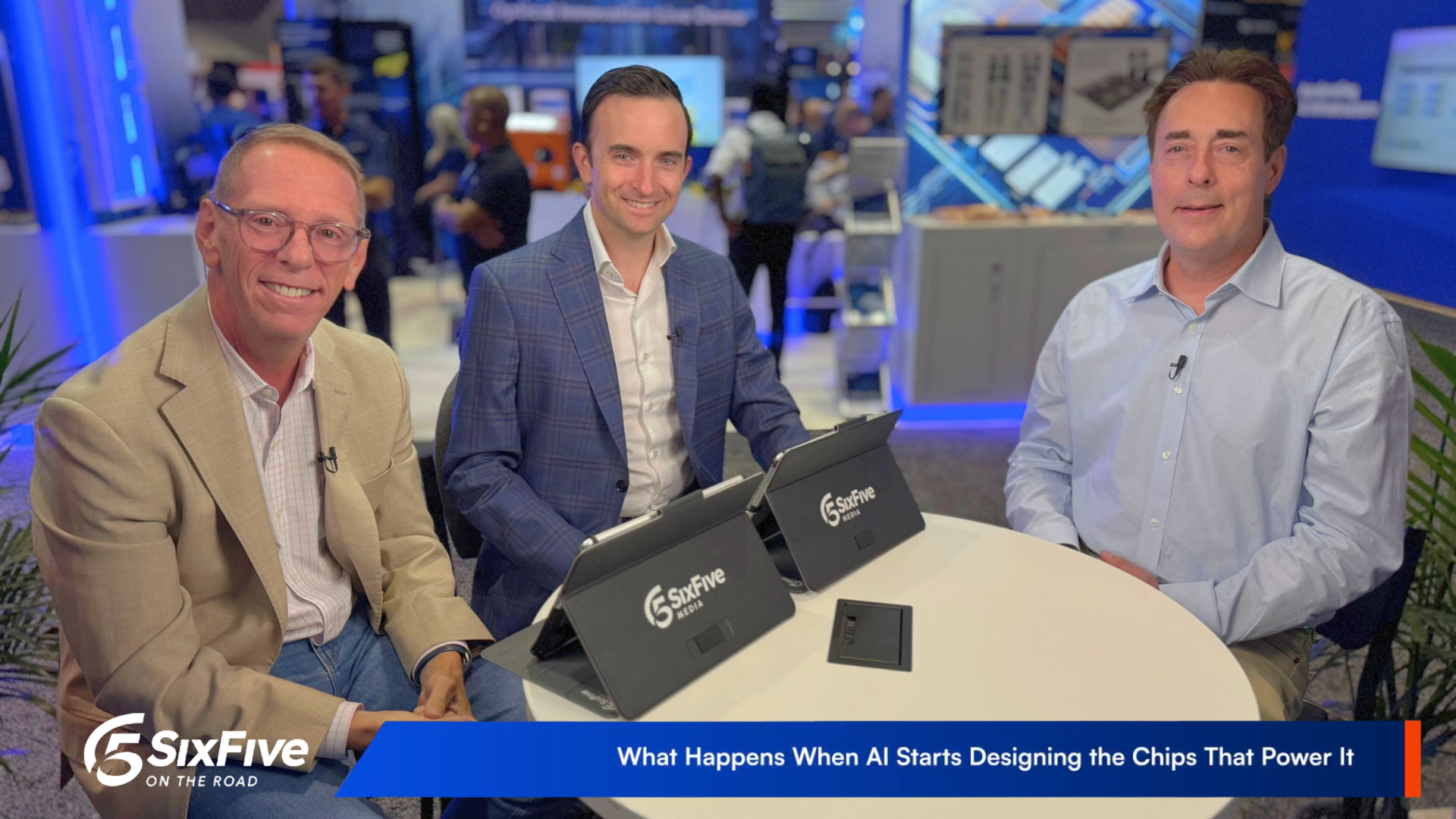
What Happens When AI Starts Designing the Chips That Power It | Synopsys at AI Infra Summit
At AI Infra Summit 2026, Synopsys' Thomas Andersen joins Brendan Burke and Matt Kimball to explain how chip design is moving from AI copilots that suggest to agentic systems that execute tool orchestration, timing fixes, and verification from a written spec. For enterprises, that shift compresses spec-to-tapeout timelines and lowers the resource barrier to custom silicon.


The Six Five Pod | EP 322: AI Writes Its Own Rules, Copilot Bills by the Task, and Memory Names Its Price
The companies racing to build frontier AI just agreed to referee themselves. Over the same week, launches, investor days, and earnings put a price on that arrangement. Microsoft is charging for finished work, NVIDIA is selling agent containment as infrastructure, and the suppliers AI can't route around, from Synopsys to Micron, are collecting the premium. Patrick Moorhead and Daniel Newman separate signal from stagecraft, then split hard on whether the White House accord actually binds these key players to anything.
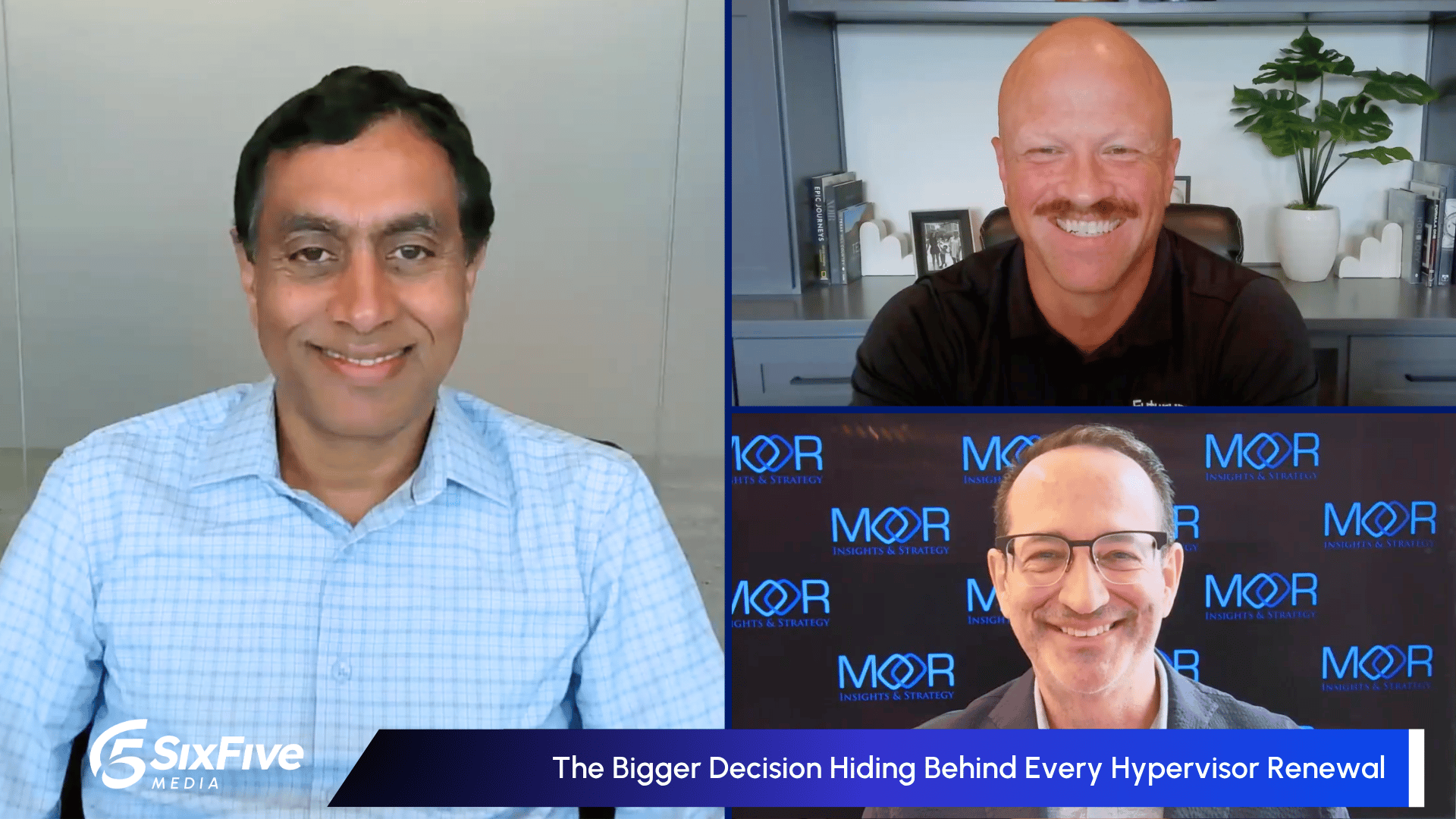
The Major Decision Hiding Behind Every Hypervisor Renewal
HPE's Varma Kunaparaju talks with Patrick Moorhead and Daniel Newman about why virtualization licensing changes are forcing enterprises to confront a bigger decision than which hypervisor to choose next: what operating model sits underneath their private cloud and AI factory. He outlines how CxOs can sequence modernization in phases, extend governance across open and frontier models, and decide where automation should replace human approval in IT operations.
Other Categories
CYBERSECURITY
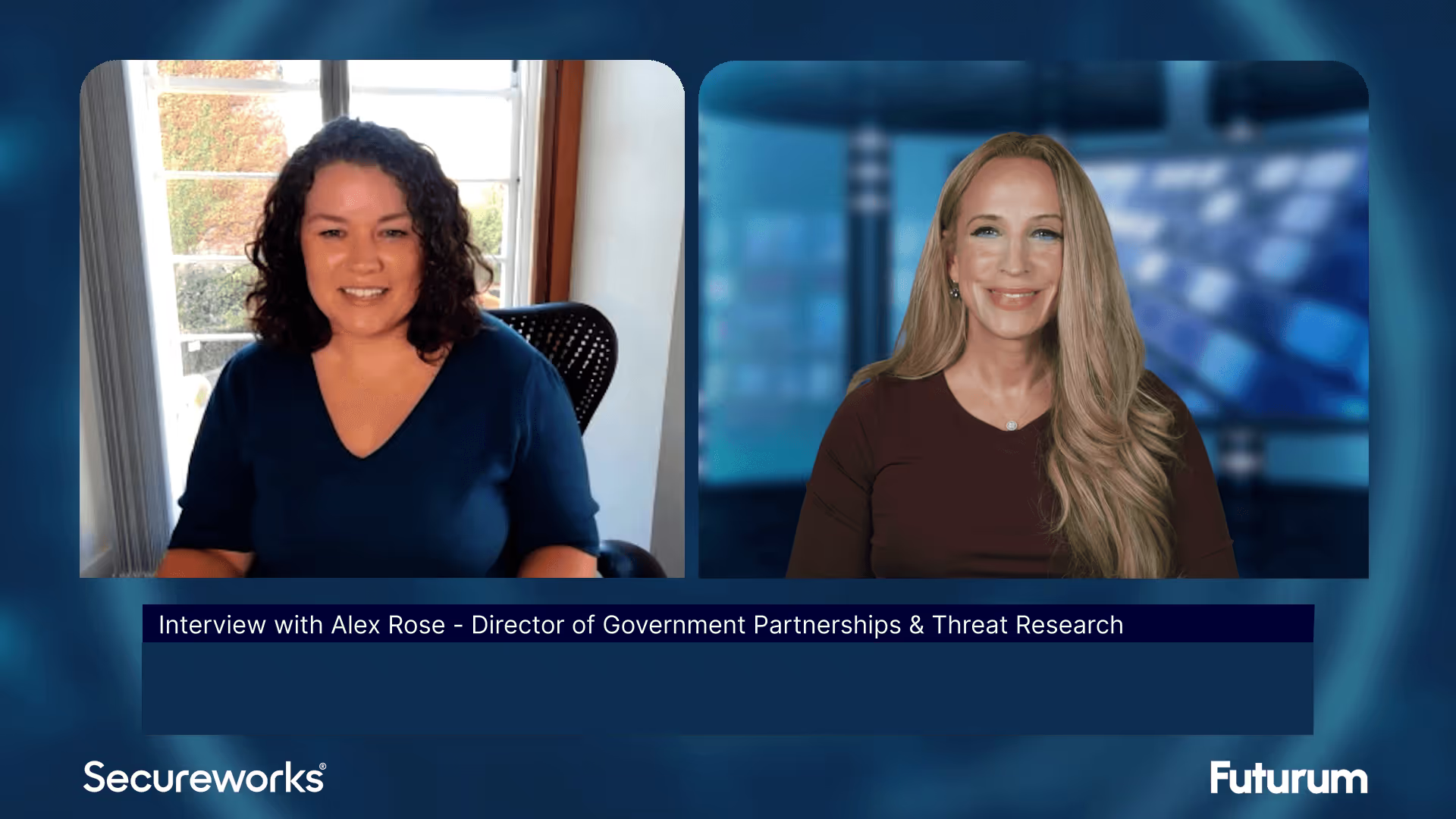
Threat Intelligence: Insights on Cybersecurity from Secureworks
Alex Rose from Secureworks joins Shira Rubinoff on the Cybersphere to share his insights on the critical role of threat intelligence in modern cybersecurity efforts, underscoring the importance of proactive, intelligence-driven defense mechanisms.

HP Launches World’s First Business PCs to Protect Against Quantum Hacks - The Six Five On the Road
On this episode of the Six Five - On the Road, hosts Patrick Moorhead and Daniel Newman are joined by HP's Ian Pratt, Global Head of Security for Personal Systems.
What is Autonomous Endpoint Management?
Autonomous Endpoint Management is a framework designed to unify IT operations and security teams on a single platform through real-time control and visibility.
QUANTUM
Quantum in Action: Insights and Applications with Matt Kinsella
Quantum is no longer a technology of the future; the quantum opportunity is here now. During this keynote conversation, Infleqtion CEO, Matt Kinsella will explore the latest quantum developments and how organizations can best leverage quantum to their advantage.
Accelerating Breakthrough Quantum Applications with Neutral Atoms
Our planet needs major breakthroughs for a more sustainable future and quantum computing promises to provide a path to new solutions in a variety of industry segments. This talk will explore what it takes for quantum computers to be able to solve these significant computational challenges, and will show that the timeline to addressing valuable applications may be sooner than previously thought.