
Supercomputing’s Next Buyers Aren’t Just National Labs
SHARE


Trish Damkroger, SVP and GM of HPC and AI Infrastructure Solutions at HPE, joins Ryan Shrout at SC26 on how the convergence of HPC and AI is changing supercomputing. Customers now define a balanced system as FP4 to FP64, while rack-scale AI increasingly needs the density, liquid cooling and tight coupling of traditional supercomputers.
The definition of a balanced supercomputer is changing. At SC26, HPE's Trish Damkroger says the conversation has shifted from balancing compute, memory, and I/O to supporting everything from FP4 to FP64 precision as AI and traditional HPC workloads converge.
Ryan Shrout, President of Signal65, spoke with Trish Damkroger, SVP and GM, HPC and AI Infrastructure Solutions at Hewlett Packard Enterprise, about the evolution of supercomputing infrastructure and the architectural decisions shaping its future.
Damkroger emphasized that AI doesn't replace modeling and simulation; it depends on them. Traditional HPC customers and emerging AI buyers increasingly need the same infrastructure fundamentals: high density, liquid cooling, and tightly coupled systems. The difference is that AI buyers want to deploy them faster.
Key Takeaways:
🔹 HPE's next-generation supercomputing is GX. Building on the EX architecture developed through the Exascale program, HPE's GX platform represents the next evolution in supercomputing and has already earned an innovation award.
🔹 Rack-scale AI and supercomputing are converging. HPE offers full rack-scale systems powered by NVIDIA and AMD. Damkroger sees these architectures increasingly resembling GX, with dense, liquid-cooled, tightly coupled designs.
🔹 Specialization is challenging the all-in-one model. Customers are evaluating what Damkroger calls macro heterogeneity: interconnected systems optimized for inference, training, modeling, simulation, and potentially quantum computing, rather than relying on a single machine for every workload.
🔹 Power remains a critical constraint. AI infrastructure is driving significant growth and supply chain pressure, but power availability continues to limit how quickly and extensively customers can scale.
🔹 Rising chip power demands are forcing infrastructure redesigns. As chip thermal design power (TDP) increases, HPE is exploring new cooling technologies and direct-to-rack DC power delivery with partners. For existing data centers, that raises a consequential question: retrofit current facilities or build new ones?
Looking toward 2027, Damkroger expects one architectural decision to become increasingly important: should organizations invest in a single system capable of handling diverse workloads, or build an interconnected environment of specialized systems?
As AI and HPC converge, the answer will shape not just system performance, but how organizations plan for power, cooling, scalability, and long-term infrastructure investment.
Watch the full video at sixfivemedia.com, and subscribe to our YouTube channel so you never miss an episode.
Disclaimer: Six Five Media is for information and entertainment purposes only. Over the course of this video, we may discuss companies that are publicly traded, and we may reference their equity share prices. Nothing discussed during this webcast should be considered investment advice or a recommendation to buy or sell any security. We are not investment advisors, and you should not rely on this content as financial advice. Six Five Media collaborates with technology companies and industry leaders to produce research-driven interviews and multimedia programming for enterprise technology audiences.
Ryan Shrout:
Hey everybody, welcome to Six Five On The Road. I'm Ryan Shrout, your host for today. We are here in Chicago for Supercomputing 26. And a lot is going on, as you can see from everything around us. This is a really interesting show as we continue to see this. Advancement, or this addition of AI workloads and discussions, into the world of HPC. We have a great guest to join us to talk about that, Trish Damkroger, who is SVP and GM of HPC and AI infrastructure solutions at HPE. Thanks for joining us.
Trish Damkroger:
My pleasure.
Ryan Shrout:
It's great to see you again.
Trish Damkroger:
Likewise.
Ryan Shrout:
You guys have had a ton of announcements this week, both across HPC, new top solutions, very high rankings in this. Some of them traditional HPC, some of them also AI-centric. I'm curious if one or two of these new announcements really stand out to you as most critical for what you're showing on the show floor today.
Trish Damkroger:
I think some of the ones that I want to highlight, because we're doing some transitions this year from our EX supercomputer to our GX supercomputer, you're like, whatever, to FX, now we won't go there. But this is a step forward of our infrastructure, so the EX was part of our whole Exascale program, so the GX is going to be that next-next generation, and so we've got an award for being one of the newest innovations coming out, so that's always exciting. And we have our normal announcements of, you know, our hybrid storage, so tiered storage and software stack, top-of-rack controller, you know, some of the innovations that we continue to bring to this industry.
Ryan Shrout:
Now, one of the other things that we see a lot is, well, the show used to kind of be very national lab-centric, very large-scale, hyper-scale type HPC deployments, but we see a lot of additional AI customers that are coming in. They have different needs, though. They want to move a little bit faster. They have maybe different infrastructure requirements. From your perspective, where is that differentiation between what we have known as traditional HPC customer solutions and what, you know, that equivalency is in the AI space?
Trish Damkroger:
So the foundation of what they both want is the supercomputer. And so the infrastructure is very, very similar. Whether it's the liquid cooling, the density, I would say the big difference is they're looking more at the floating point for, you know, INT8, and where the modeling and simulation is more the FP64. So the precision, and I think that one of the things that I found really interesting this week is the number of customers that talked about wanting a balanced system, and the balance now is FP4 to FP64, not compute to memory, or compute to IO, which used to be what we talked about as a balanced system. And so the realization is that you can't do AI without modeling and simulation or without HPC. You need them both.
Ryan Shrout:
What does that change from your perspective in terms of, like, component selection? In terms of, like, are there differences in electrical cooling requirements when you have to address that full range?
Trish Damkroger:
No, actually, again, the supercomputer can do it all. And so with the heritage that HPE has, with the 50 years of innovation in liquid cooling, we still have the densest rack, 100% liquid-cooled. And so we can carry that whether you want to do more of an AI inference architecture or if you want to do 100% modeling and simulation. So will the future be macro heterogeneity? That's probably what- will you have one system devoted to AI, one system devoted to your modeling and simulation? Will you have quantum? Because it turns out, I was told this morning, this is the largest quantum conference also, with more quantum manufacturers here than anywhere else.
Ryan Shrout:
OK. So a lot of your traditional customers, maybe classic customers of HPC, really want maximum performance. They're used to custom builds. They're used to maybe longer development times also that come along with that in order to get that performance. But there's also a growing segment of people that want faster deployment, more ready to kind of roll off the shelf or roll into the data center type solutions. Is that something that you're seeing as well?
Trish Damkroger:
Definitely. So you have the more traditional customers, and then you have the time to tokenization, you know, customers. And so we do; that's why we have a pretty broad portfolio where we have our, like I said, our DX solution for those more traditional customers. But we offer the full rack scale from both NVIDIA and our AMD partner.
Ryan Shrout:
Okay. And do you see any differences in what those technologies require, right? Is it really come down to design? Is there a performance difference between those? I mean, there has to be some benefit, I guess, to the kind of the massive machines we see here behind us and kind of that GX. Family.
Trish Damkroger:
Right. But so that GX is not that different than the rack-scale. So as far as you look at, it is going to be more dense, and it does have some more capabilities and warm water cooling and stuff like that. It is 100% liquid-cooled, so you're going to have a better TCO for it. But if you look at where rack-scale is going, I mean, it's becoming more and more like our GX or our supercomputer solutions. And they require the same thing. They require density. They require liquid cooling. They require tight coupling. And so this is why I think HPE is in such a good position because it's our core. It's in our DNA for 50 years.
Ryan Shrout:
How do you see the transition of those two different types, like the ratio of them changing over the next five years?
Trish Damkroger:
I think that we're going to see a pretty steady core customer set. That's not going to change. The growth is obviously in the AI infrastructure build-out. And that is where we've seen all the fund supply chain issues and our continual requirement for more, more, more. And I see power is going to continue to be one of the limiting factors there.
Ryan Shrout:
Power and cooling infrastructure. I'm curious, one of the shifts that I've seen, kind of just even walking around the show floor, is what emphasis people continue to have on power delivery, cooling delivery. Are there innovations in things that HPE is doing with its customers or any of these solutions individually that kind of stand out?
Trish Damkroger:
So some of the things that we are definitely looking at are different cooling technologies, and we're definitely working with some interesting new partners about how to do cooling in different ways, because the parts are getting hotter and hotter. The TDP of a part.
Ryan Shrout:
And people want more density.
Trish Damkroger:
Exactly.
Ryan Shrout:
Exacerbates the problem.
Trish Damkroger:
Right, and then a lot of conversation about going directly, going from DC versus AC, so going directly down to your rack, and that's going to change the infrastructure completely. So, working with the partners to understand how to do that successfully, and do that transition, and how do you retrofit these data centers, or do you just start new?
Ryan Shrout:
Yes, and we have personally run into that problem in our data centers as well. Adding in liquid cooling can be quite a challenge. So I think that paints a pretty impressive picture about what you're doing today. But I'm curious if we look forward, which I always like to do at the end of these, we look at SC27 or SC28. We're all back here again. I think we're in Denver next year. What does that look like from an HPE perspective? What changes, and what are your customers going to be demanding then?
Trish Damkroger:
One of the questions we have is about, and I talked a little bit earlier about, will you have separate systems so that macro heterogeneity, because you might have a quantum hooked up or an inference device that you want this accelerator specific for inference. And that's different than your training. And that's different than your modeling and simulation. And so will you put these different systems together and bring that? We have a number of customers that are looking at that versus a single machine that does it all.
Ryan Shrout:
Yeah, I think having those it'll probably allow you to be more efficient with, like, your workload, right? More efficient in your space density model, but maybe even more cost-effective, but get better performance out of the whole set of things. That's pretty cool. That's pretty interesting. So it'll be interesting to see if that holds up next year.
Trish Damkroger:
Yeah, we'll see.
Ryan Shrout:
Trish, thank you so much. Thank you for joining us. Really appreciate you stopping by. And thank you for joining us on Six Five On The Road. I'm Ryan Shrout. Make sure you follow us on social media. Check out all the other great SC26 videos we have coming up. Thanks.
MORE VIDEOS
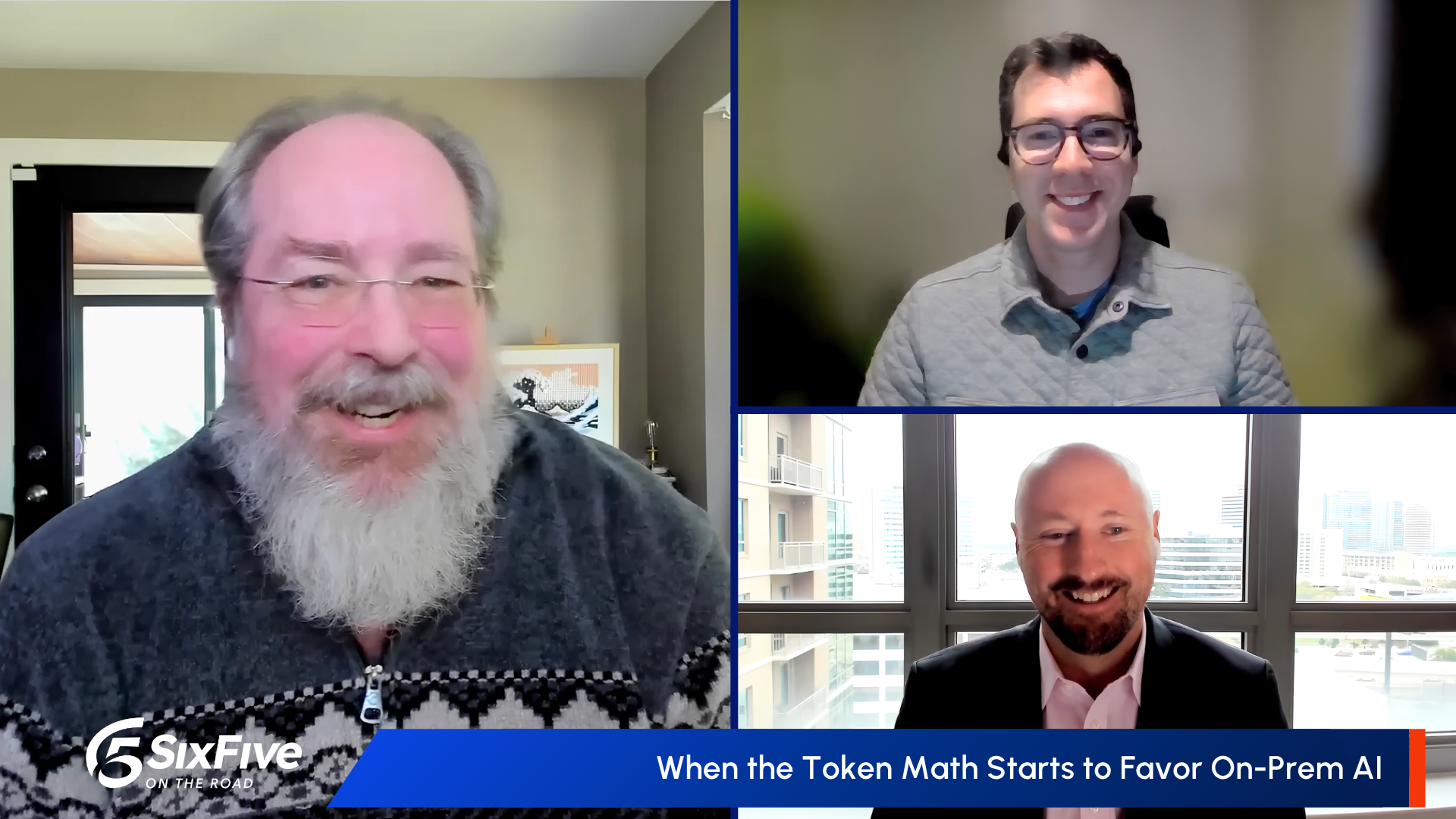
When the Token Math Starts to Favor On-Prem AI
Justin Christiansen of Intel and John Carter of HPE join Brad Shimmin ahead of HPE Discover Barcelona 2026 on how on-prem AI economics are shifting. From CXL memory and HPE VM Essentials to KV cache offload on ProLiant Gen12, they show how enterprises can lower AI infrastructure costs on hardware they already run.


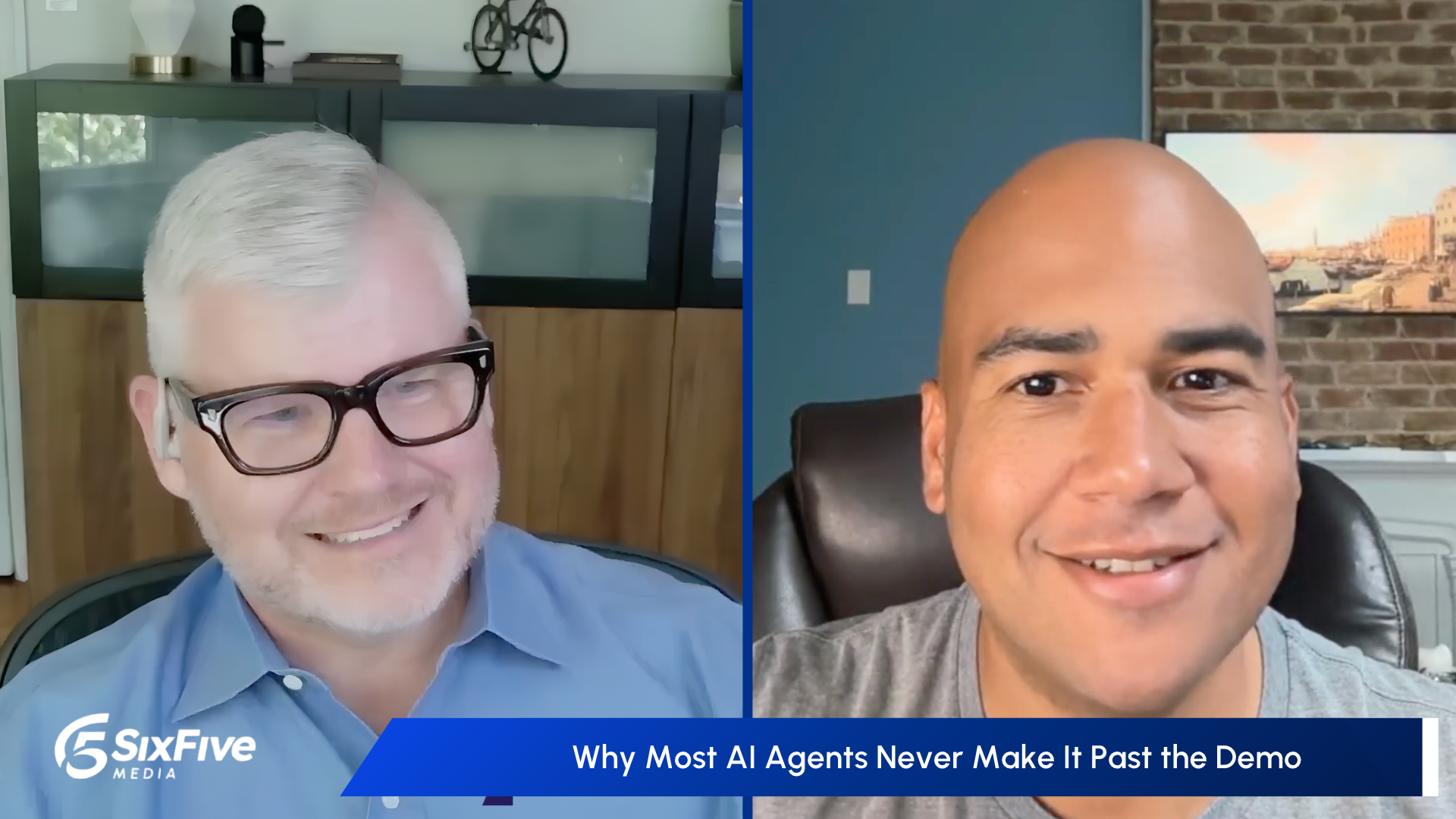
Why Most AI Agents Never Make It Past the Demo (MongoDB)
MongoDB Principal Technologist Devin Dickerson joins Jason Andersen to explain why AI agents fail on the path from demo to production, as data moving across disconnected systems adds latency, drift, and cost. For enterprise platform leaders, collapsing operational data, retrieval, and memory into fewer systems creates the trust and cost predictability that production agents require.
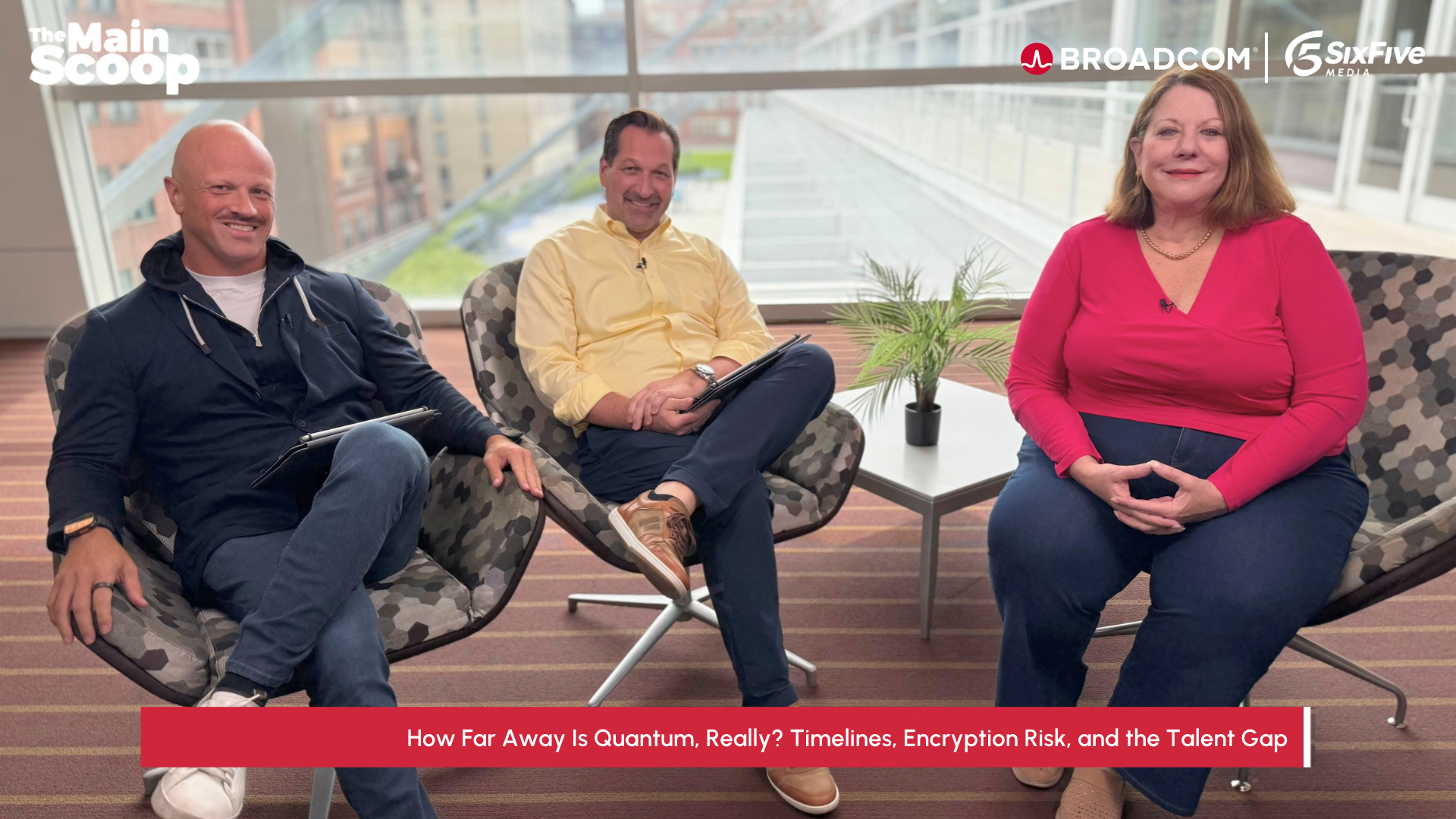
How Far Away Is Quantum, Really? Timelines, Encryption Risk, and the Talent Gap
On The Main Scoop with Daniel Newman and Greg Lotko, quantum industry veteran Denise Ruffner explains why 2030 is an aggressive timeline for quantum computing, why post-quantum security can’t wait, and how the industry can widen its talent pipeline. Organizations that start their quantum-safe transition now will be ready when quantum moves from research to advantage.
Other Categories
CYBERSECURITY
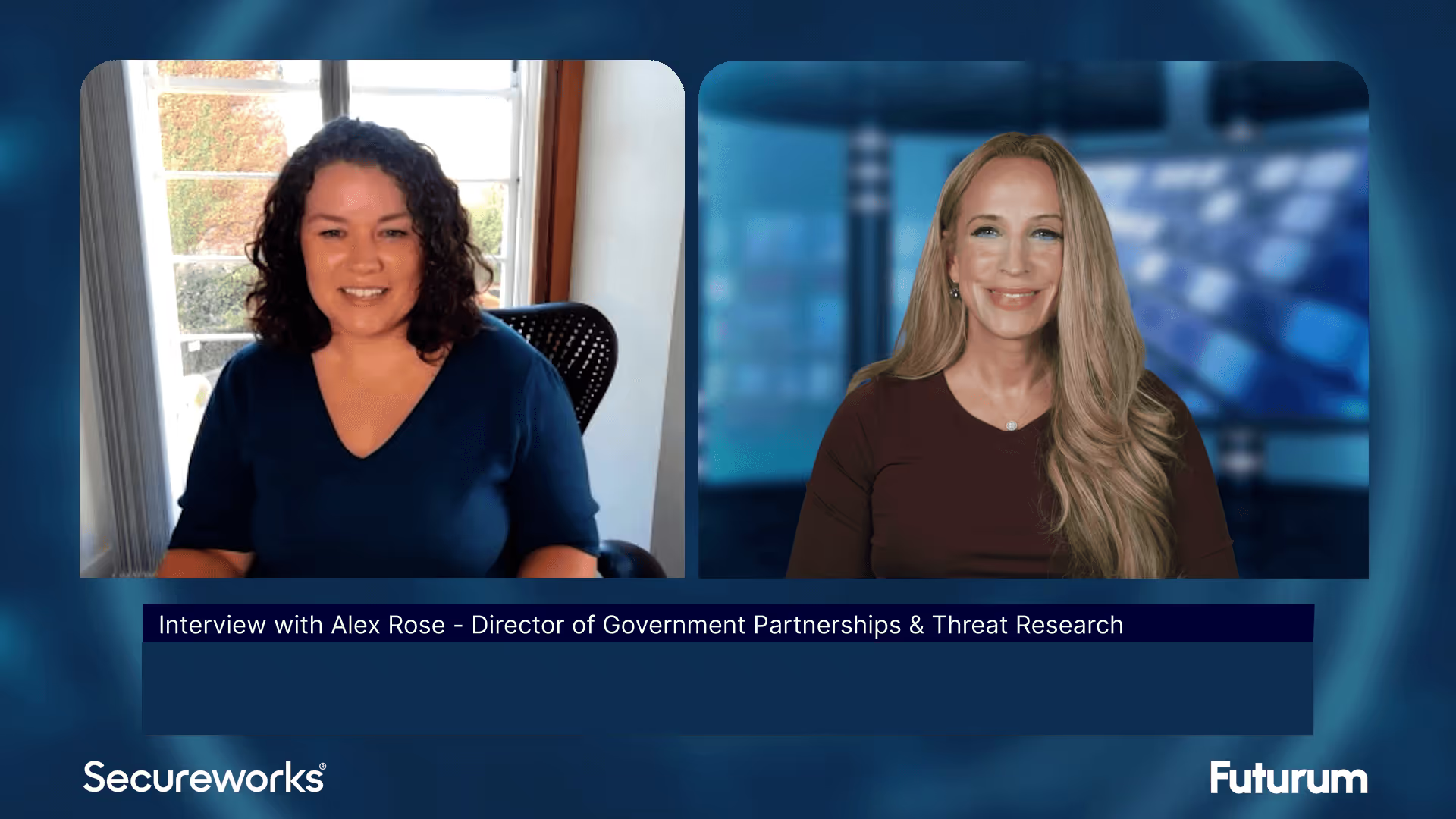
Threat Intelligence: Insights on Cybersecurity from Secureworks
Alex Rose from Secureworks joins Shira Rubinoff on the Cybersphere to share his insights on the critical role of threat intelligence in modern cybersecurity efforts, underscoring the importance of proactive, intelligence-driven defense mechanisms.

HP Launches World’s First Business PCs to Protect Against Quantum Hacks - The Six Five On the Road
On this episode of the Six Five - On the Road, hosts Patrick Moorhead and Daniel Newman are joined by HP's Ian Pratt, Global Head of Security for Personal Systems.
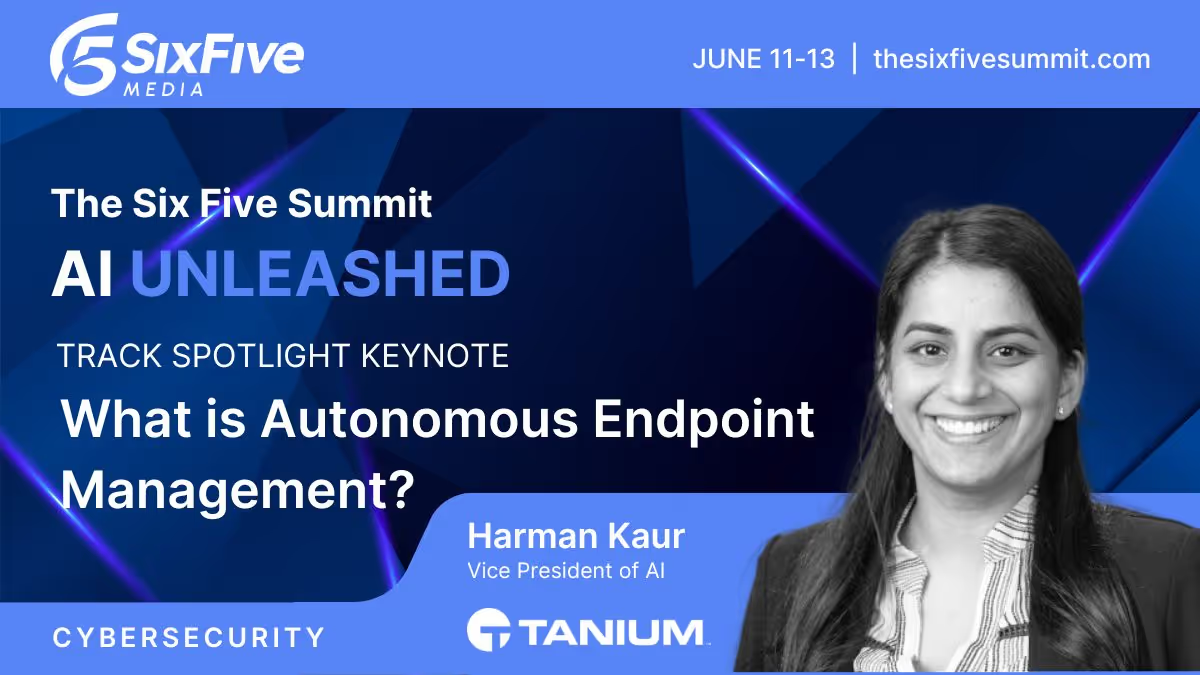
What is Autonomous Endpoint Management?
Autonomous Endpoint Management is a framework designed to unify IT operations and security teams on a single platform through real-time control and visibility.
QUANTUM
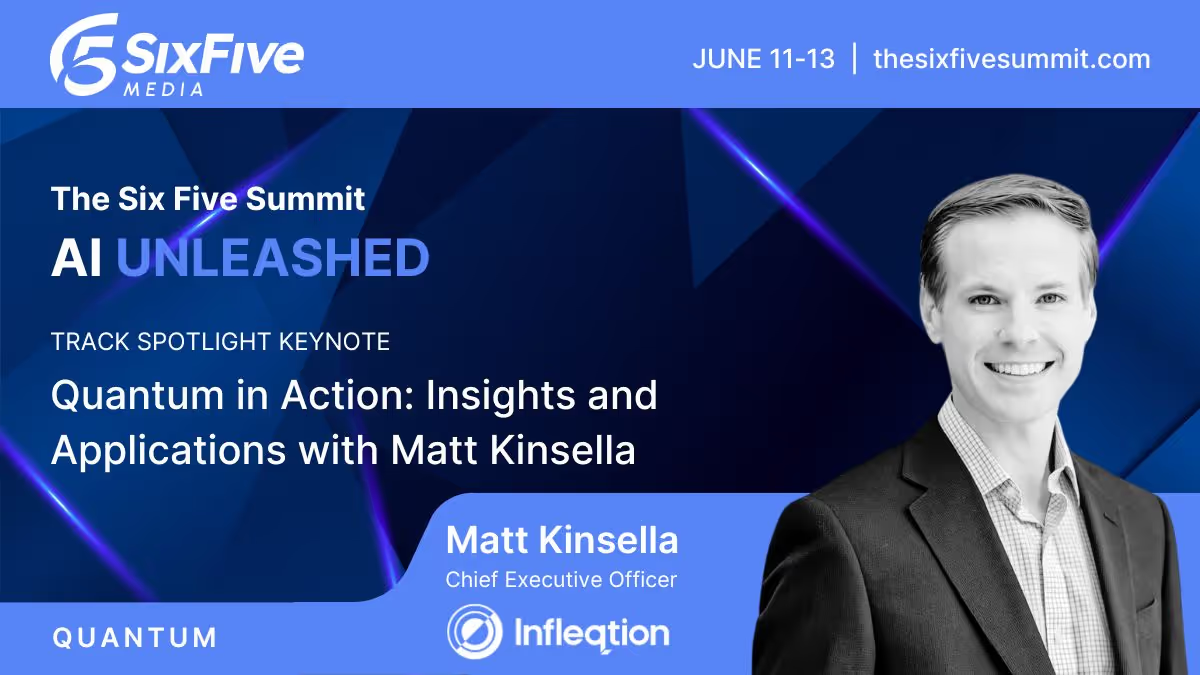
Quantum in Action: Insights and Applications with Matt Kinsella
Quantum is no longer a technology of the future; the quantum opportunity is here now. During this keynote conversation, Infleqtion CEO, Matt Kinsella will explore the latest quantum developments and how organizations can best leverage quantum to their advantage.
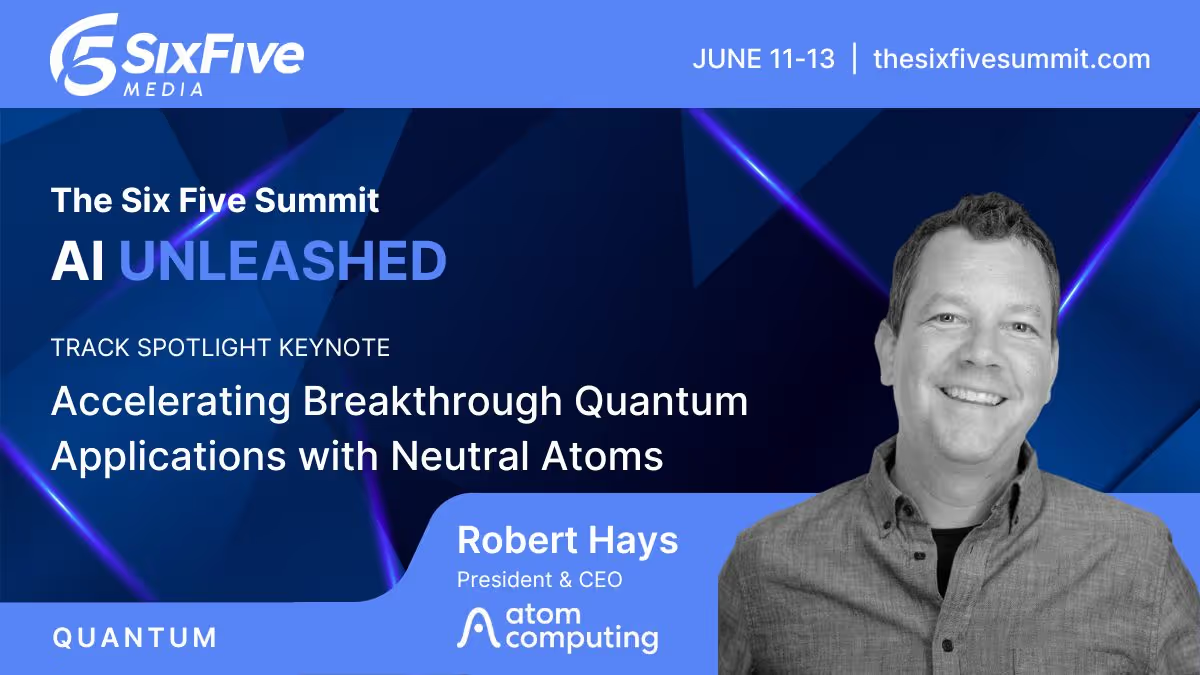
Accelerating Breakthrough Quantum Applications with Neutral Atoms
Our planet needs major breakthroughs for a more sustainable future and quantum computing promises to provide a path to new solutions in a variety of industry segments. This talk will explore what it takes for quantum computers to be able to solve these significant computational challenges, and will show that the timeline to addressing valuable applications may be sooner than previously thought.