
How Far Away Is Quantum, Really? Timelines, Encryption Risk, and the Talent Gap
SHARE


On The Main Scoop with Daniel Newman and Greg Lotko, quantum industry veteran Denise Ruffner explains why 2030 is an aggressive timeline for quantum computing, why post-quantum security can’t wait, and how the industry can widen its talent pipeline. Organizations that start their quantum-safe transition now will be ready when quantum moves from research to advantage.
Roadmaps from the largest vendors point to 2030 as quantum computing’s inflection year, and enterprises are trying to separate realistic timelines from overstated ones. The risk to encryption doesn’t wait for that date. Adversaries can harvest encrypted data today and decrypt it once quantum machines are capable enough, while the industry still faces a shortage of people who can build, program, and sell quantum systems.
On Episode 47 of The Main Scoop, Greg Lotko and Daniel Newman sit down with Denise Ruffner, VP of Business Development and Co-Founder of DiviQ and President of Women in Quantum. Ruffner has worked across superconducting, trapped-ion, and neutral-atom approaches, from IBM Quantum's early days through Cambridge Quantum, IonQ, and Atom Computing. She shares where quantum really stands, what enterprises should do right now about post-quantum cryptography, and how the industry can widen its talent pipeline.
For security and technology leaders, the practical message is that post-quantum readiness can't wait for quantum advantage. Financial institutions are the furthest along, but moving to quantum-safe encryption takes organizational buy-in, budget, and people, and government mandates around the world are now making that a requirement rather than a research topic.
Key Takeaways:
🔹 A firsthand view of quantum's early days. Ruffner joined IBM Quantum when it put a five-qubit device on the cloud that the team thought no one would use. She built its Ambassador Program, which trained 350 people to talk about quantum, and its startup program, then moved to Cambridge Quantum (now Quantinuum), IonQ, and Atom Computing.
🔹 Why 2030 looks aggressive. Ruffner expects examples of quantum advantage on specific, smaller problems in the interim. An enterprise software package that runs on a quantum computer without specialized programming is still a ways off, and she sees the field as largely research for now. Acquisitions such as IBM's purchase of HRL and IonQ's purchase of Oxford Ionics show that innovation is still coming from smaller players.
🔹 Why post-quantum security can't wait. Ruffner cites Google researcher Craig Gidney's estimate that around 100,000 qubits could break today's encryption, compared with roughly 100 qubits today. The bigger near-term danger is data being harvested now for later decryption. Most organizations still need executive buy-in, budget, and staff.
🔹 Where quantum's early value lands. Optimization problems such as packing cargo, planning delivery routes, and balancing electric grids are early targets. Quantum works as a hybrid alongside classical computing, and pairing quantum systems with HPC lets each part of a job run on the right platform.
🔹 How the industry can close its talent gap. Quantum competes with AI for talent, and many candidates assume they need a physics degree. Ruffner points to new quantum degree programs, outreach to good programmers who could learn to control lasers, more accessible job listings, encouraging diversity, and introducing STEM to students early.
Organizations that start their post-quantum transition now, and widen their talent pipeline, will be ready when quantum moves from research to real advantage.
Watch the full video at sixfivemedia.com, and subscribe to our YouTube channel so you never miss an episode.
Learn more about DiviQ at diviq.org.
Disclaimer: Six Five Media is for information and entertainment purposes only. Over the course of this video, we may discuss companies that are publicly traded, and we may reference their equity share prices. Nothing discussed during this webcast should be considered investment advice or a recommendation to buy or sell any security. We are not investment advisors, and you should not rely on this content as financial advice. Six Five Media collaborates with technology companies and industry leaders to produce research-driven interviews and multimedia programming for enterprise technology audiences.
Greg Lotko:
Hey folks, welcome to the next episode of The Main Scoop. I'm here with my co-host, Daniel Newman. Good to see you.
Daniel Newman:
Low five?
Greg Lotko:
Low five. There we go. We got out of the way early.
Daniel Newman:
We did. We got started. What happens is if we don't get to it, you know, on the kind of, we don't get on the front foot.
Greg Lotko:
It would be weird if during while we're talking, we're just sitting here.
Daniel Newman:
Front foot, I'm being punny.
Greg Lotko:
You want to get off on the right foot. I want to get off on the right foot. I got off on the left foot.
Daniel Newman:
With a dad joke? Yes. No, all is good, Greg. It's good to be here with you.
Greg Lotko:
So today, we're talking about quantum computing and post-quantum cryptography. And we've kind of touched on this before. I mean, obviously, in the mainframe space, we already brought the capability to be quantum-safe into the platform, and we have other things that we're doing in the tooling space around this. So we've touched on it, but really haven't had it as the deep dive or the main subject.
Daniel Newman:
Yeah, it's gonna be good. You know, first of all, in the world, there just aren't that many people that can come on and really speak eloquently about quantum for was this show this is like a Rogan episode we're about to do is like four hours of grilling. Is this plan not? I'm kidding, but even 20 minutes?
Greg Lotko:
Do not worry, this is not a four-hour episode. We'll keep to our 20- 25 minutes.
Daniel Newman:
What if some people want that? They can play the same episode over and over. Let the people have what they want. But in serious, people that can really come on and talk at length. I agree. It's a rare commodity.
Greg Lotko:
And you and I have debated, like, hey, when does the proverbial stuff hit the fan? When do we think? Quantum computing is a reality at scale. I mean, I worry about it more from the cryptography perspective and whether or not people are going to be able to hack into our security. So I worry about it, thinking about it as a sooner thing. But we've gone there, but today we have an expert.
Daniel Newman:
I'm pretty excited about solving problems in the physical world that traditional classical computing is particularly ineffective at. It's going to be fun too.
Greg Lotko:
Right, so there's definitely broader applications for sure. So with us today we have Denise Ruffner. She's the VP of Business Development and co-founder of DiviQ and president of Women in Quantum. Welcome.
Denise Ruffner:
Thank you. I have a couple other war titles, but let's let's skip them.
Greg Lotko:
Okay, actually we can save them for another episode.
Daniel Newman:
I'd like to start, you know, a little little journey down memory lane for everybody out there because you heard, you know, the setup. I genuinely think it is hard to find people that have been in and around quantum for a long time that have the depth to talk about it and really have some perspective. You've been in and around the industry for some time. Give us a little bit of the The history. Tell us about the journey and the history from your perspective.
Denise Ruffner:
Sure. So I was an early employee at IBM Quantum when they first put the first device on the cloud. The five-qubit device that we thought no one would use.
Greg Lotko:
And when were you at IBM?
Denise Ruffner:
I was in IBM from 2000 to 2018. So we overlapped. How funny.
Greg Lotko:
We were there at the same time.
Denise Ruffner:
So my last years were in the quantum group. Before that, I was in HPC. Worked quite a few places around the company.
Greg Lotko:
And I was related to HPC from 2013-ish, and to 2017 I was in the storage space. And of course, the storage offerings were part of the high-performance computing offerings.
Denise Ruffner:
So we probably know a lot of people in common. So I joined Quantum. It was a hit. We had to adapt to the hit. And early stages, I was the person that did everything, like, let's give it to Denise. Does anybody want to do this? No, Denise will.
Greg Lotko:
Kind of like Mikey in Life cereal.
Denise Ruffner:
Yeah, yeah. So it was great because I was hired to do sales strategy. So I did that. But then I also started something called the Ambassador Program, where we trained 350 people to talk about quantum. I also started the startup program. So I knew all the startups from the beginning and have stayed in touch with them. So it's been a great journey. And then, after a couple of years of the startup program, this one CEO kept on bugging me to hire me. And I finally gave in. So I joined Cambridge Quantum, which is now Quantinuum. And then I was on a press release for this company that had a new trapped-ion computer. And people kept on calling me and saying, tell me about it. And so I called the president of the company, this is IonQ, and said, tell me about your computer. And he said, I don't want to tell you about my computer. I want to hire you. I want you to start in two weeks. So I did, and was with the company, brought the first customers in, they went public, and then another company called me and said, we want you to join. And so I left IonQ and went to Atom Computing. So I have experience in superconducting, yeah, neutral atoms, trapped ion. And then I travel a lot, and I speak a lot. So I have quite a network in quantum, as does Daniel.
Daniel Newman:
It's not a huge community.
Denise Ruffner:
No, it's not.
Greg Lotko:
He is quite a network in general.
Denise Ruffner:
He is. He is. Thank you.
Daniel Newman:
Sometimes I'm waiting for the punchline.
Denise Ruffner:
I'm pretty safe. It's been really fun. Now I do a lot of consulting. I just took two jobs, but I do a lot of consulting and helping people get started because you see a lot of mistakes that people make when they get started commercializing and quantum computing.
Greg Lotko:
Get started on trying to build their own quantum technology, computing technology, or using quantum computing as a startup?
Denise Ruffner:
I have a quantum computer. I'm introducing it today. Where's the business, Denise? And it's like, does anybody know about this? So it's interesting.
Daniel Newman:
Yeah. So there are a lot of because there's a whole bunch that came public. There's quite a few that are venture-backed. There's an ecosystem of software, quantum companies, hardware companies, quantum security, networking, encryption. But like, you being where you are, maybe even more so than me, is there a whole world of kind of behind-the-scenes that are still trying to come out? I mean, is there still a lot there? You think it's, and do you think it's too late, like because I know it kind of feel like in some ways quantum's early in another show we're talking about, you know, you hear. I think Sundar said we're about. where where I was about five years ago, I think what he said, you'll hear Arvind saying we're 2030 is kind of the magic inflection year. So like, if you're just coming out now, or is there still a shot for those folks? What do you think?
Denise Ruffner:
So I think that roadmap projections are a little overstated. I think there is still opportunities for companies. There's a lot of great companies out there. A lot of them haven't chosen to be more public. We look at something like Oratomic on neutral atoms that just came out with some great results. I'm kind of the person that believes that there can be innovation, and there is innovation. It's shown by IBM just acquiring HRL, Google acquiring Atlantic, IonQ acquiring Oxford Ionics. So there is innovation out there, and a lot of times the big players recognize it and acquire, and a lot of times people want to go it on their own.
Daniel Newman:
So just as an experienced veteran in the industry, all those different kind of prognostications, which one do you use for where we're at with quantum? Five years away from being five years away? Or 2030?
Greg Lotko:
How far from reality?
Daniel Newman:
You know, when you're talking to people, and because obviously, you're probably consulting with a lot of enterprises and businesses that are also thinking about implementation of it. Like, what is the sort of analogy that you like? Or what, who do you think is closest, if not, in terms of when this is going to really inflect?
Denise Ruffner:
I don't name names as much. It's okay, you don't have to.
Greg Lotko:
He just wants time frames.
Denise Ruffner:
Time frames.
Greg Lotko:
He wants your crystal ball.
Daniel Newman:
I was letting you put the blame on someone else if you didn't want to use your own, but if you want to go with your own, I'd love to hear it.
Denise Ruffner:
I think 2030 is aggressive. I think that in the interim we're going to see some examples of quantum advantage for specific problems, generally smaller problems, but I think we're still a ways away from having an enterprise software package that you or me can go and use that actually runs on a quantum computer, but we don't have to know how to program. So I think we're a ways away from that.
Daniel Newman:
We don't have our own Claude for quantum coming just yet.
Denise Ruffner:
Exactly, not yet.
Daniel Newman:
So maybe some are saying five years, where AI was five years ago, and there was no chat tools, or people; AI's 40 years old, right?
Greg Lotko:
50 years old? See, what I worry about is that, you know, like you said, solving specific problems. I worry about the enemy nation-state having enough quantum computing power to decrypt. And that's, you know, one slice, and that slice could be devastating.
Denise Ruffner:
But let's put this in context, OK? Like Craig Gidney of Google is really a thought leader in a lot of times in when quantum computing is really going to be able to decrypt. And over the years, his estimate has come down. So he's now at 100,000 qubits is kind of the sweet spot for decryption. And Craig, I hope I said that right. And so let's think about now, where are we? We're at 100 qubits? So to go from 100 to 100,000 is a big deal. Quantum is really a research project.
Greg Lotko:
Yeah, I agree. What I worry about is what we don't hear about publicly.
Denise Ruffner:
And I also worry about what they're harvesting and locking in a safe, and then decrypting in.
Greg Lotko:
And we've talked about that on the show in another session. We were talking about not that long ago. When when should you start? Are we too late? And I said yesterday, because I do worry about that.
Daniel Newman:
Harvest yesterday, not just now right to cripple it So what do you what do you tell an enterprise about that then about sort of. I mean? I think I think the agreement is pretty well set that you should be already post-quantum, or you should be have deployed quantum-safe, quantum-safe, right, in the sense of not everyone has, but you should, and it's out there, and it's available. What do you tell enterprises to do these days that want to make sure that whether it's the harvesting risk or the breakthrough risk?
Denise Ruffner:
So quantum computing and things that happen in the future are often hard for CEOs to contemplate. And so there needs to be a buy-in in the organization that this is something they need to do. They need to budget, they need to have people, and it needs to happen now. So that's a huge pivot point for an organization. And most aren't there now. And most aren't there now.
Greg Lotko:
Which is why they're using older encryption technologies or models?
Denise Ruffner:
Right, that are going to easily be cracked. It's a lot of work to get the organization convinced. I think with the federal kind of mandates- I'm going to call it a mandate- I think that organizations have to pay attention now. And I think that's really good.
Greg Lotko:
And it's not just federal in the US; it's governments around the world that are mandating.
Denise Ruffner:
Exactly. So I think that's been really important to drive adoption. Do you feel like
Greg Lotko:
Organizations, even with that, are taking it with enough sense of urgency. Because what I hear, and I see, the mandates are absolutely helping, but there's not a lot that I meet with that say, oh yeah, we're going to meet that mandate on that time frame. They're starting, and they're working on it, but they're like, oh, we're all going to tell them we're not going to make it, and they're going to move the date out a little bit. But the problem is on the other side, you don't get to control that date.
Denise Ruffner:
Right. I don't know how many companies are very clear or talking about what they're doing. A lot of the bigger corporations and banks are heavily involved in it and have been for years.
Greg Lotko:
That's where I see the most effort around financial institutions.
Denise Ruffner:
Yes.
Daniel Newman:
Finance and drug, I'd say, life sciences, drug discovery.
Greg Lotko:
Pharmaceuticals.
Daniel Newman:
Pharmaceuticals, yeah. And healthcare. Like, I sat down for an extended with the Cleveland Clinic recently. Actually, I had an IBM Think event. I talked to their head of research and what they were doing. It's very interesting things, but they are, as you said, they're still research projects. Inside of these massive enterprises. You saw some, you know, breakthroughs on bond trading efficiencies. And the other thing is obviously, you know, things that are optimization solving, like how do we pack a plane the best way? Like I always say, like when you have, you know, putting the boxes underneath the cargo and doing it, or line process automation, optimization problems. Is packing a plane a quantum problem? We're like managing the gates in an airport and trying to optimize the efficiency at a gate, because it's very good at optimization problems.
Greg Lotko:
It's funny, I just didn't think that that was large enough scale. I could see optimizing, like if you think about all the weather events that will happen around the world and where planes are out of position, that would seem to be to be on the scale and spatial. Yeah, well, obviously nobody solves it well today.
Daniel Newman:
Too many variables. But. I mean, you're sort of seeing the scale up. They're solving it, you know, like the problems that are being solved are still tend to be, to her point, a little bit smaller.
Greg Lotko:
I'd just be happy if I had a little quantum sidecar to tell me what moves to make with a Rubik's Cube. Also, timing issues are, you know, quantum is very good at timing.
Denise Ruffner:
So I'm going to digress for a minute. Where's the quantum computer at Cleveland Clinic? They didn't tell me that. It's in the cafeteria. Is it really? Yeah. OK. So you see this big IBM. I didn't ask that.
Greg Lotko:
Is for how to serve the food?
Denise Ruffner:
No, it's just like. The big chandelier. Yeah. Well, you can't see it. But it's just like to call attention to that they have a quantum computer and kind of keep people excited.
Daniel Newman:
She's giving me an idea that I'm going to start asking people I interview, where is your computer? You know, like we're not in like, a level five security.
Greg Lotko:
See, I go in, and I meet with financial institutions. And I always ask, you know, I'm meeting with a CIO or whatever. I'm like, show me the vault. Where's the money? And they don't show me that either. They always want to show me the data center. I want to see it.
Daniel Newman:
You're the guy that wants to see inside Fort Knox.
Denise Ruffner:
Yeah.
Daniel Newman:
Is the gold there?
Denise Ruffner:
Yeah. Is the gold there? I would be happy to see that. I'm sorry to digress. No, it's fine. It's OK. It's fine. So we were talking about optimization. Big problem. Packing an airplane, even UPS. What's the best way to make 50 stops in a day? How do you map it out?
Greg Lotko:
Never turn left.
Denise Ruffner:
Right. Exactly. Electric grids. How do you optimize electric grids? So there's a lot of different problems that we can start approaching. And I think it's really positive. But there are also a lot of big problems.
Daniel Newman:
But it's very much hybrid, right? At least as we're seeing it, it's classical with quantum. Meaning in very few cases is quantum operating completely separately from HPC and AI inside these enterprises.
Denise Ruffner:
You need a classical computer to control a quantum computer and to take the data from the quantum computer, so it is a hybrid. What's happening now is there's a lot of emphasis on a quantum computer plus an HPC or supercomputer. And that's really interesting because you think about being able to parse jobs out where you say, this is classical, this is quantum, maybe this is GPU, and use that to solve the problem.
Greg Lotko:
The right workload on the right platform.
Denise Ruffner:
Exactly.
Daniel Newman:
So let's talk a little bit about the, we talk a lot on this about mainframes, because it's The Main Scoop, but about talent and stuff. This is not something that, you know, AI, we had a bit of an advantage. You had tons of students coming out of computer science programs. You had places, Eastern and India, where there was tons and tons of people being trained in computer science and IT, networking. Quantums. We talked about it being a small world. Where does talent come from? And what should talent look like in this industry? And how would you think about shaping that right now when you're really..? And I know this from the execs and CEOs I talk to, they have a hard time finding people that can sell a quantum machine. They have a hard time finding... Well, she likes that part, because that's what she does.
Greg Lotko:
No, no. She wants them to have a hard time. That's right. Because then they keep calling her.
Daniel Newman:
But you get my drift. We need to populate this field take it out of the university, take it out of the national labs and move it into enterprise at scale to make this something that gets the kind of attention and ultimately the kind of funding it's going to need to succeed.
Denise Ruffner:
Agreed. And hiring people. Agreed. Yeah. Isn't that awesome? Hiring people is a big issue. One of the things that I work with, I work with programs that are trying to start like a quantum masters or quantum undergraduate to get people moving. A lot of it is the mindset. You say quantum, and people go, whoo. A lot of what we do, a lot of people do, is talk about, you too can be in quantum computing. You don't have to know the physics. You're a good programmer. We need good programmers. Ever thought about controlling a laser? A lot of it is positioning and trying to attract people, but also a lot of it is competitive, because right now AI is paying so much more, or maybe paying a lot, so does quantum, but a lot of it is just getting people to buy into this. A lot of it is encouraging diversity and a lot of it is also getting to students early in high school or even in grade school and start talking about STEM.
Daniel Newman:
They got to believe it's something they can do.
Denise Ruffner:
Yeah.
Daniel Newman:
Right. So what can the enterprises, the quantum builders, the programs that you're helping stand out like what can they do to to drive that? I mean what is the incentives and other kind of benefits that you're seeing succeed in terms of driving people to this industry it's harder to visualize. I mean, right now you can visualize everybody's playing with Gemini and Claude, and they can kind of feel like oh my gosh I can be anything with this tool and by the way I can teach myself it's very much that kind of era of self starting this is much more abstract to most people like you can't really put them in front of something and be like here here's what it's going to be like to play with a quantum computer like. You know, so how do you kind of get that enthusiasm and excitement and get people to follow into your programs?
Denise Ruffner:
It's a big sales pitch.
Greg Lotko:
I don't think it's that new. I don't think it's that new.
Daniel Newman:
Well, it sounds like it's some of what you're almost like what's old is new.
Greg Lotko:
And that's exactly where I was going. I mean, if you if you think back to you know, 40s, 50s, 60s, and the idea of what, you know, Alan Turing and the machines to decode cryptology. I mean, people didn't know what they were working on, but they thought it was pretty cool, and they had math majors, and people who understood logic really well. And then that evolved into mainframe computers. And remember when you first had mainframe computers, they took up huge buildings, and people didn't actually see the machines. So it was abstract. So I think you're fundamentally right that it's more about instilling in them the belief that this word they're hearing about is not this mystical, magical thing, that they have the foundational skills and they're, thought processes and minds can be applied. They have to believe. I also agree with you. I think that's why diversity becomes an element. Because if you don't have the right people or enough people interested, then you've got to widen your net. The reality is, I mean, we can talk about diverse thought, which always brings a better outcome, but the diversity in the background or the diversity related on any other dimension really doesn't impact the intelligence. But societally, there's a much narrower scope of who's believed or who we target to believe that they're capable of this. So if you widen the net, and you go diverse, and you say, hey, I'm really going to focus on, do you have what it takes? Do you have the intelligence? Do you have the math capability, the logics, and the grit to solve problems? That's how you draw people in. But it takes people. You got to have people out there inspiring them and showing them that this is something they can go into.
Daniel Newman:
I don't know, most people the first time they see a quantum computer you're like, I remember the first time I went into... I think it's cool.
Greg Lotko:
I do.
Daniel Newman:
I remember the first time I went, no I'm saying you went into Honeywell Quantum though, and you realize like if you've ever, I saw the first, like it was a trapped ion computer. It was a whole room. It was like... Where's the keyboard? But I'm saying it was very interesting to be exposed to early.
Greg Lotko:
Don't you think we've had those ahas or experiences all along our career? I remember being an intern, and I was working on power plant control systems and while I was writing code, you weren't saving a disk. There was stuff that was being flashed onto a chip. No, no, it was being flashed onto a chip, and you would actually send out your code, it'd be flashed to the new chip, and it would be put into the console. And. I mean, I got it shipped to me, and it was like, hey, install this chip. And I was like, oh my God, I had a diagram, I had to take the box off. That's when I learned the value of a chip puller because I bent a lot of prongs and ruined a bunch of chips. You get exposed to it. It's something different. You do it and then you learn, and you realize you can be successful. I'm not going to climb into a quantum computer.
Daniel Newman:
People have to want to go and get educated. They need, by the way, there needs to be more programs for them to go and get educated. Like you could say, I'm really interested in this. It's very cool. And, you know, to your point, maybe you're not trying to be a physicist, but you still want to be in the industry somehow. But like, what's the path? Because the path so far has been like, are you a physicist?
Denise Ruffner:
Actually, so I've worked at companies where software programmers have said, this is real, quantum is really cool. I never thought I could control a laser. I could do this. So a lot of it is opening people's mind up that this is cool and this is something. And when people are in school, I tell them this is, this is your med school. You're going to have a great career for the rest of your life. Hang in there. Get that degree. So I think it's a matter of attracting people and not, you know, I was saying job listings, not to make them too technical. Too specific. Right.
Daniel Newman:
Or put a requirement that would eliminate 99% of you.
Greg Lotko:
I mean, think about how the industry goes and tries to hire a programmer. You rarely see a listing that says, I'm looking for a programmer to work on these applications. You see, do you know this narrow skill? Do you know this narrow skill? And. I mean, unfortunately, relative to how economies are doing, people that are getting out of university say, hey, I want to target where the most jobs are, which is what makes it hard to go into something new. So you need that, even if they don't want to start their own business, that entrepreneurial, that that adventure, that discoverer spirit, and then you need to instill the confidence in them that this is something you can do.
Daniel Newman:
Well, it was a lot of fun, Denise. It's been great to chat to you and congratulations on all the progress that you've brought to this growing and exciting space. I think we're just starting to hear about quantum. I know the people that are in it every day; it's kind of like when you're around all this AI every day, you don't realize that there are people out in the world And like quantum, it's moving along, and it's chugging along, but also at the same time, there's a ton of the world to expose us to and a lot of exciting things to happen. And I appreciate you spending some time here with us, sharing your knowledge. Pleasure. We're not far from a quantum leap.
Greg Lotko:
And I don't mean Scott Bakula. You're aging yourself again. You'll have to look that one up. I actually remember the show, but you're aging yourself. Life is aging me. I'm not aging myself.
Daniel Newman:
Greg, I'm going to say goodbye now.
Greg Lotko:
Dan, go have a drink. All right.
Daniel Newman:
Thanks, everyone, so much for joining this episode of The Main Scoop. It was great to have this conversation. And I hope you hit subscribe and join us for all of our great content here on The Main Scoop. See you all later.
Greg Lotko:
Catch you next time. Bye bye. See ya. Hit the button. We're out. Alright. Got it left.
MORE VIDEOS
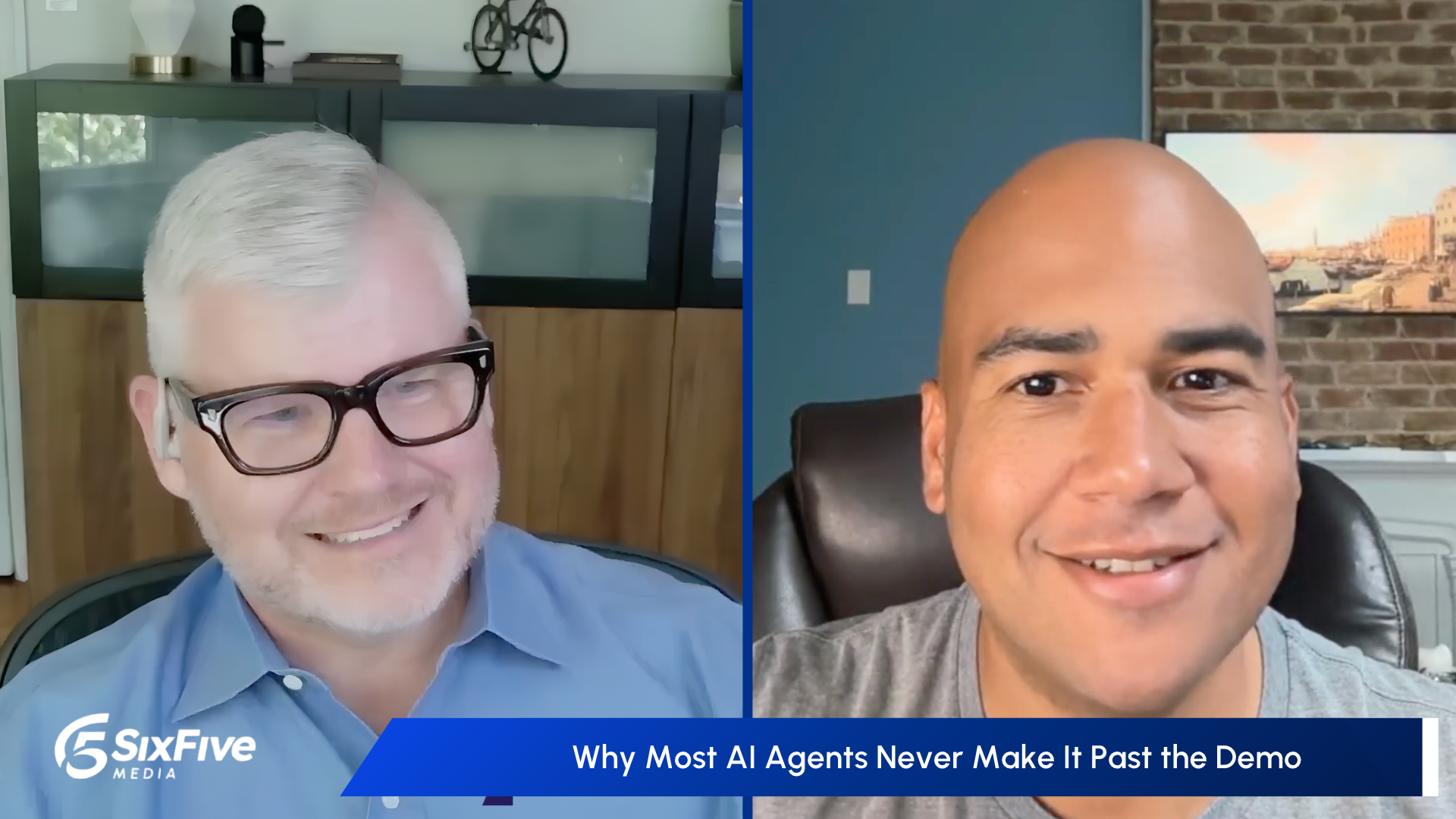
Why Most AI Agents Never Make It Past the Demo (MongoDB)
MongoDB Principal Technologist Devin Dickerson joins Jason Andersen to explain why AI agents fail on the path from demo to production, as data moving across disconnected systems adds latency, drift, and cost. For enterprise platform leaders, collapsing operational data, retrieval, and memory into fewer systems creates the trust and cost predictability that production agents require.


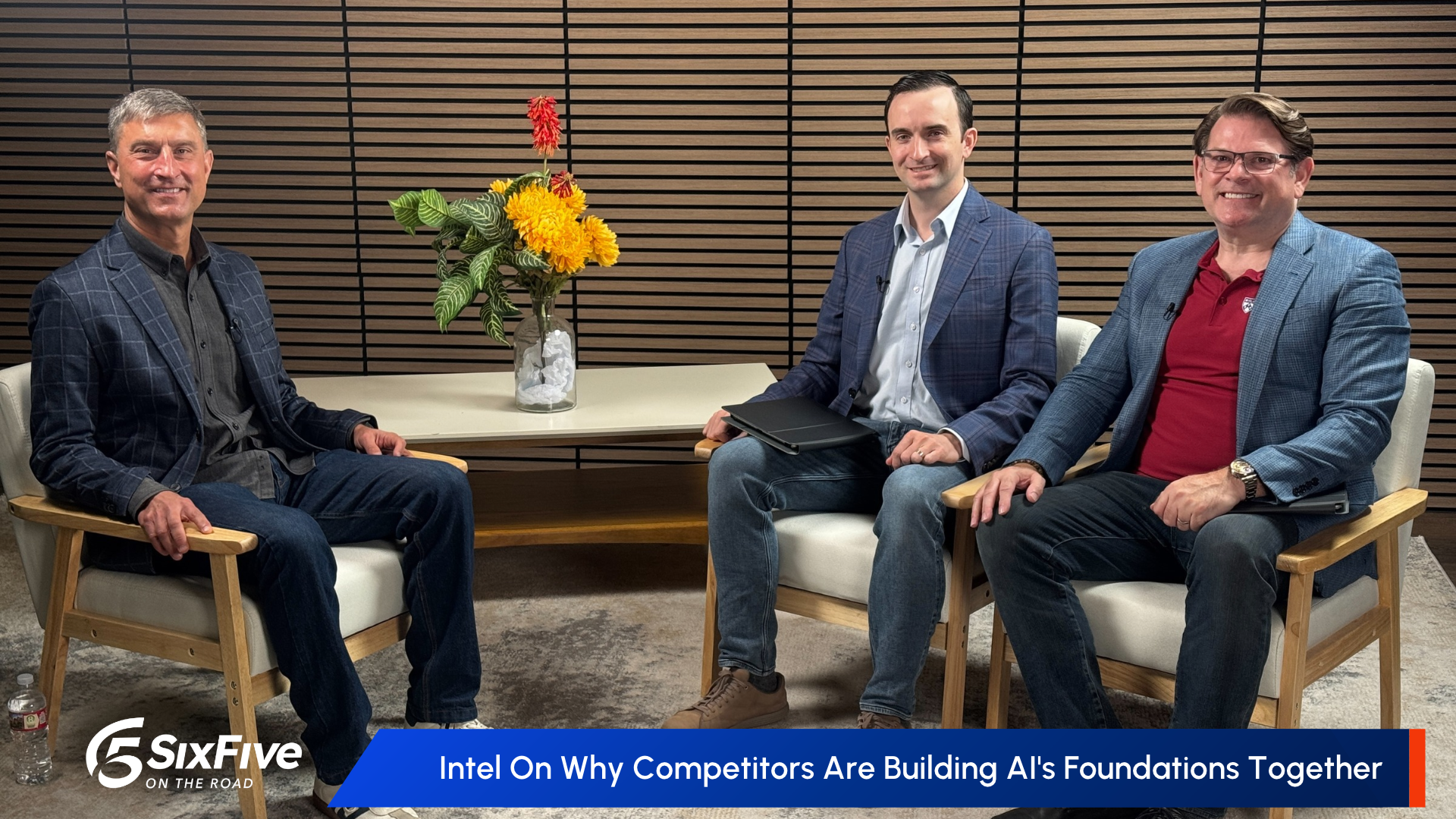
Intel on Why Agents Need More CPUs, Not Just More GPUs
At OCP Global Summit 2026, Intel’s Jeff McVeigh explains how two years of x86 ecosystem collaboration and open standards are shaping AI infrastructure as agentic workloads put CPUs back at the center. For enterprises, shared interfaces make it possible to deploy AI inference inside existing data centers.
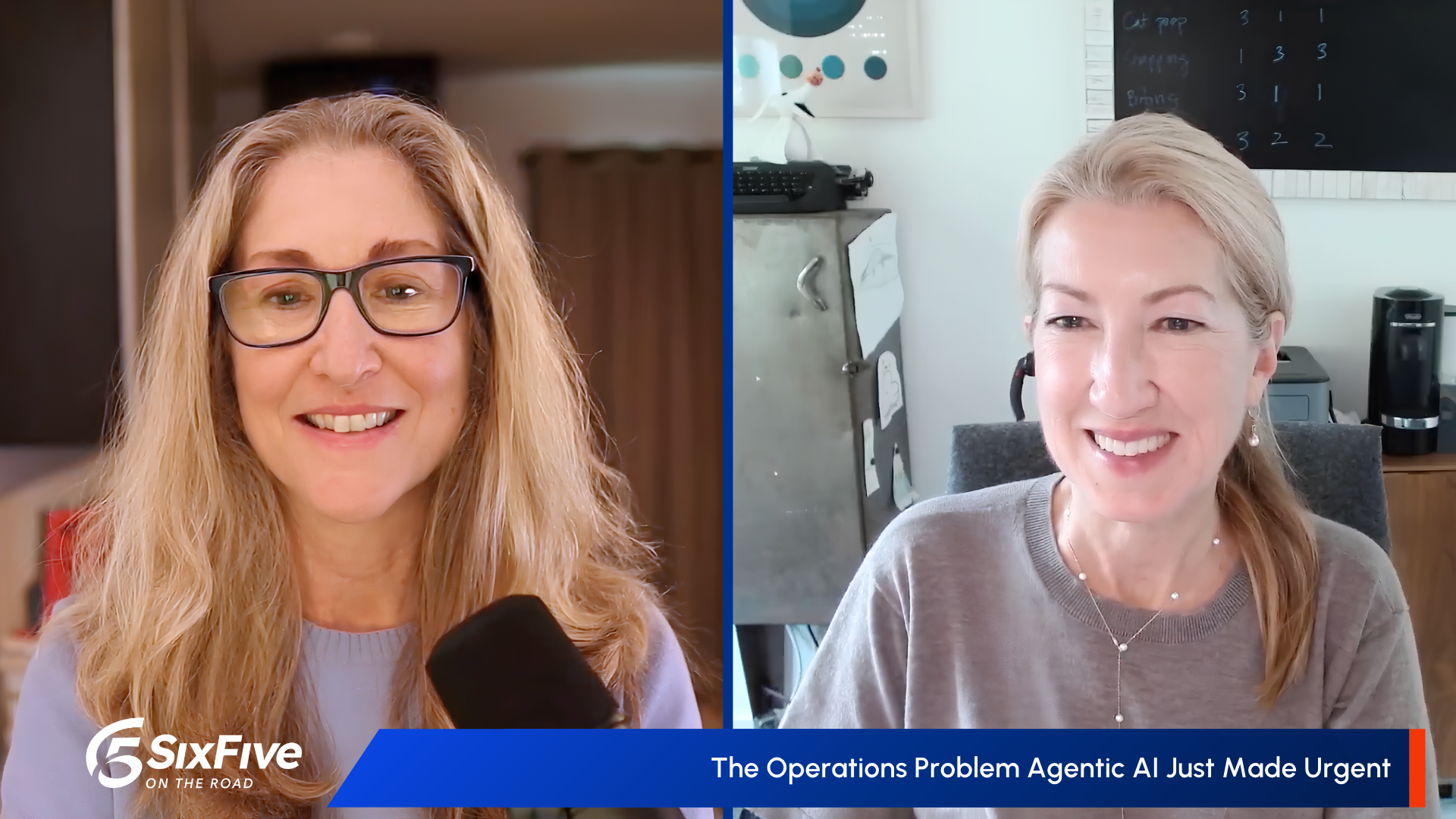
The Operations Problem Agentic AI Just Made Urgent
HPE’s Sylvia Hooks joins Tiffani Bova to explain how agentic AI is pushing IT operations toward self-driving infrastructure, and why trust at machine speed depends on observability, guardrails, and recoverability. For enterprises, how fast operations can automate and govern agents sets how far agentic AI scales.
Other Categories
CYBERSECURITY
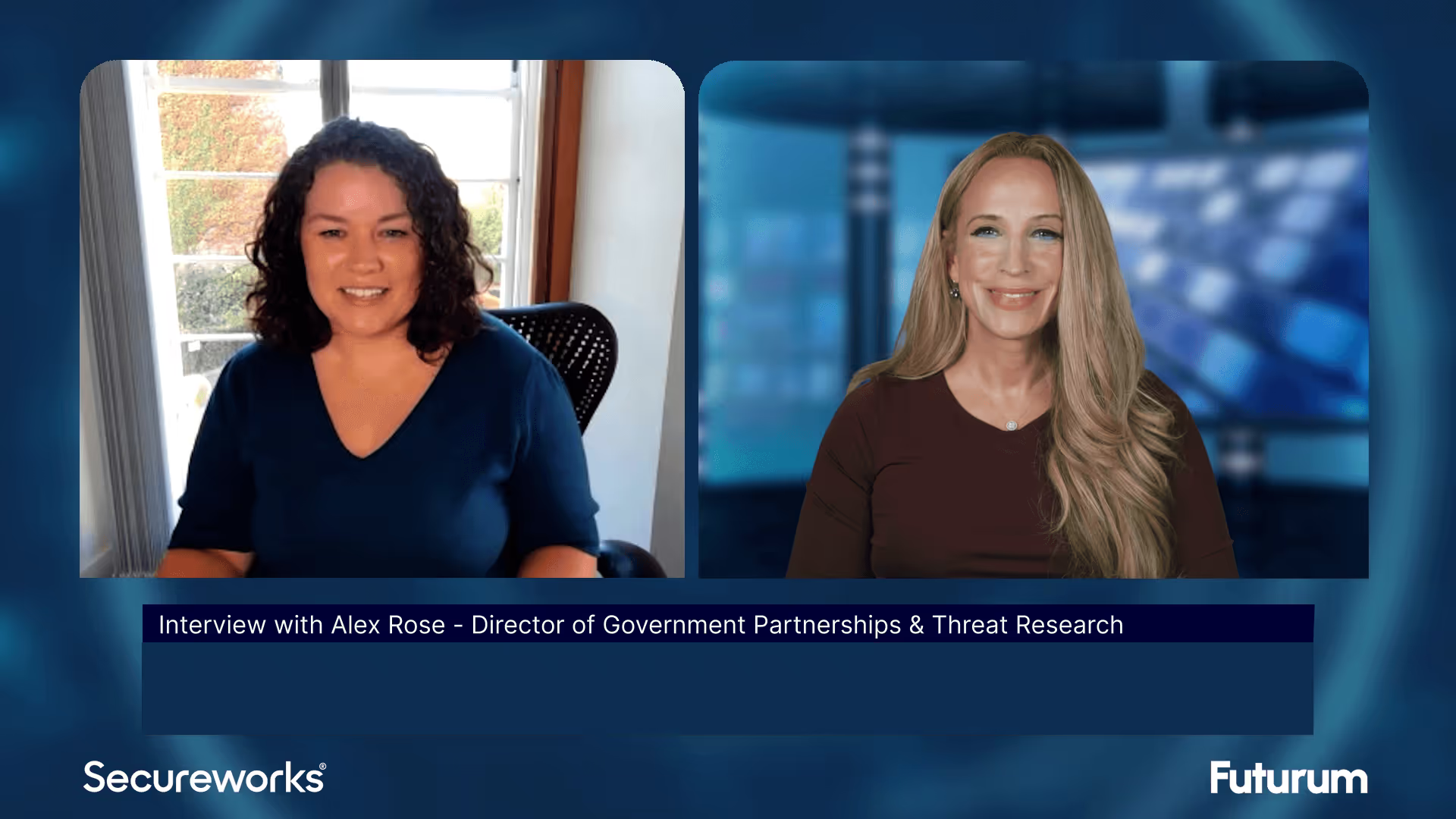
Threat Intelligence: Insights on Cybersecurity from Secureworks
Alex Rose from Secureworks joins Shira Rubinoff on the Cybersphere to share his insights on the critical role of threat intelligence in modern cybersecurity efforts, underscoring the importance of proactive, intelligence-driven defense mechanisms.

HP Launches World’s First Business PCs to Protect Against Quantum Hacks - The Six Five On the Road
On this episode of the Six Five - On the Road, hosts Patrick Moorhead and Daniel Newman are joined by HP's Ian Pratt, Global Head of Security for Personal Systems.
What is Autonomous Endpoint Management?
Autonomous Endpoint Management is a framework designed to unify IT operations and security teams on a single platform through real-time control and visibility.
QUANTUM
Quantum in Action: Insights and Applications with Matt Kinsella
Quantum is no longer a technology of the future; the quantum opportunity is here now. During this keynote conversation, Infleqtion CEO, Matt Kinsella will explore the latest quantum developments and how organizations can best leverage quantum to their advantage.
Accelerating Breakthrough Quantum Applications with Neutral Atoms
Our planet needs major breakthroughs for a more sustainable future and quantum computing promises to provide a path to new solutions in a variety of industry segments. This talk will explore what it takes for quantum computers to be able to solve these significant computational challenges, and will show that the timeline to addressing valuable applications may be sooner than previously thought.