
The Operations Problem Agentic AI Just Made Urgent
SHARE


HPE’s Sylvia Hooks joins Tiffani Bova to explain how agentic AI is pushing IT operations toward self-driving infrastructure, and why trust at machine speed depends on observability, guardrails, and recoverability. For enterprises, how fast operations can automate and govern agents sets how far agentic AI scales.
Agents add a new class of workloads to hybrid environments that IT teams were already stretched to run: traffic patterns shift, servers see different work, and security software needs different governance. Agents that operate at machine speed, at all hours and in all locations, make observability, recoverability, and cost tracking part of the operating model.
Tiffani Bova, Chief Strategy and Research Officer at The Futurum Group, is joined by Sylvia Hooks, SVP of Product Marketing at HPE. They discuss what changes for IT operations when agents run on top of everything else, how customers grow comfortable with self-driving infrastructure, and where AMD's open rack-scale designs fit enterprise planning.
Hooks says HPE's customer advisory board rated its comfort with the company’s self-driving network vision at 4.5 out of 5, though she cautions that the sample is not statistically significant. She describes a gradual path to autonomy, where systems identify problems, correlate cause and effect, and recommend corrective actions before customers authorize automation as trust builds. On silicon, she says mainstream enterprises want turnkey AI systems, often on NVIDIA architectures, while the most sophisticated want the flexibility that AMD's open designs offer.
Key Takeaways Include:
🔹 AI agents are reshaping infrastructure operations. Agents introduce new traffic patterns, server workloads, security requirements, and data demands. Hooks compares four agents to four additional users operating around the clock, expanding IT oversight beyond infrastructure performance to include agent activity and behavior.
🔹 Autonomous infrastructure is gaining traction. Traditional IT operations struggle to keep pace with constant configuration changes and security threats. Hooks outlines a phased approach to automation: identify issues, recommend corrective actions, and gradually enable autonomous remediation as customers build confidence in the system.
🔹 Trust and visibility are prerequisites for automation at machine speed. A unified data fabric, comprehensive observability, permission controls, human oversight, and rollback capabilities give enterprises the guardrails needed to scale agentic operations. Token consumption tracking adds financial visibility, helping organizations manage costs and allocate usage through chargebacks.
🔹 AMD's open rack architectures offer flexibility for different AI workloads. Helion provides a reference architecture for enterprises building their own inference infrastructure, while Helios targets large-scale model training. Both follow Open Compute Project (OCP) specifications, giving organizations greater flexibility in how they design and deploy AI systems.
🔹 HPE brings open rack designs into production. HPE combines OCP-compliant racks, server blades, software, and custom Ethernet switching from HPE Juniper Networking into deployable systems. Hooks also highlights HPE's decades of direct liquid cooling expertise and end-to-end validation services to help customers deploy infrastructure with greater confidence.
As AI agents take on more operational responsibility, enterprises need infrastructure that balances autonomy with control. Unified data management, observability, governance, and cost visibility will be essential to scaling automation without increasing operational risk.
Watch the full video at sixfivemedia.com, and subscribe to our YouTube channel so you never miss an episode.
Learn more about HPE at hpe.com.
Disclaimer: Six Five Media is for information and entertainment purposes only. Over the course of this video, we may discuss companies that are publicly traded, and we may reference their equity share prices. Nothing discussed during this webcast should be considered investment advice or a recommendation to buy or sell any security. We are not investment advisors, and you should not rely on this content as financial advice. Six Five Media collaborates with technology companies and industry leaders to produce research-driven interviews and multimedia programming for enterprise technology audiences.
Tiffani Bova:
Hey, everybody, welcome to this Six Five On The Road. I'm Tiffani Bova. We're on the road to HPE Discover Barcelona. Agentic AI just landed on top of everything IT teams were already struggling to run. Here to talk about what that changes is Sylvia Hooks, SVP Product Marketing at HPE. Sylvia, welcome to The Six Five.
Sylvia Hooks:
Thanks so much. I'm happy to be here. I'm excited. What a great place. Barcelona is wonderful and beautiful. I think getting everybody together to talk about what's happening is great because there's so much going on.
Tiffani Bova:
Absolutely. Let me start at the high level. Look, most IT teams were already stretched thin, as you know, as we all know, managing sprawling hybrid environments before agentic showed up and agent showed up, and it's kind of this shadow IT is now shadow AI. So what changes for IT operations when agents start running on top of everything else should leaders be thinking about today?
Sylvia Hooks:
Yeah, so Tiffani, it's funny, I talk about this literally every day, multiple times a day, the fact that, look, it was already complicated, right? We already had multiple generations, multiple vendors, multiple technologies, disruption from Broadcom contract changes for VMware, so it was already complicated. And then you have the AI agents on top. And it starts to change the workloads and what's running across your infrastructure. So it's no longer is the infrastructure operational or what's the infrastructure doing? It's also what are the agents doing? So your traffic patterns change across your network. It's a different kind of workload affecting your servers. It requires different governance from your security software, different data requirements from your underlying data all over the place. So it really touches all these different places. And I was talking to somebody about this recently. If you think about a user that goes into the office some of the time, stays there some of the time, attends meetings, gets files. I've created four agents. What are my agents doing? They're operating at all different hours in all different locations. It's like I've spawned multiple people across the infrastructure, just changing all the ways that we process data and all the ways that traffic flows.
Tiffani Bova:
Yeah, and you just said sort of the way traffic flows, and I love the whole self-driving infrastructure. The whole ad campaign is brilliant. And so self-driving infrastructure, I always worry that it's an appealing idea, but most enterprises are still a long way away from things running by themselves, number one. And number two, I think, does it maybe make the humans feel uncomfortable going back to your ad campaign about the self-driving, right? It's not humans in the loop. I love the positioning of it being human-driven and directed, right? And kind of agents are the ones facilitating what is happening. And so what's coming at Discover Barcelona that moves customer further down this road to being more comfortable with this kind of self-driving concept?
Sylvia Hooks:
Right. Yeah. And I think five years ago, if you had asked people, how do you feel about automation or self-driving, they would have said, No, I need to be, I need to be in the loop. Right. Interestingly, not a statistically significant group, but we did ask in a customer advisory board rank where you are, gave the self-driving network story from Rami Rahim, and said, " Now, where are you on your comfort level with this? And we were at a 4.5 out of 5, which really surprised me. And I think the reason is, it isn't that humans are no longer important; it's that humans are bogged down with moves, adds, and changes, security problems, and the machine speed that all this stuff is happening at; it's like humans can't do it alone, right? So if you can automate and remediate stuff that feels mundane and gets you out of the monotony, then people embrace it. Right, so it's about automatically finding a problem, correlating different cause and effect, and then recommending action, and if you trust it the first or second time, maybe you can say, go ahead and do that. On your own the next time, so I think what we're seeing coming at Barcelona is a natural extension of that, so networking is our poster child for self-driving. And networking will be announcing even more innovations end-to-end from the access network into the data center network and how people can start to automate and put self-driving functions in. I think that's the thing. It's not that the whole network is self-driving. It's that there's specific functions that become self-driving and let you focus on what's important. We'll also see that coming out on the server storage and hybrid cloud software side. So starting to build some of that same capability into how we manage VM movement, for example, or correlate across the technology domains, across storage, compute, and networking. So without giving too much away, we'll start to really build that across domains.
Tiffani Bova:
Well, you nailed it. Trust is so critical in all of this, trusting both people and the agents. I think it's both sides of that equation. A lot of the conversations I have now are around that governance and compliancy and sovereignty of data and agents autonomously working. How can that actually scale where it's trust on both sides of the equation? Right.
Sylvia Hooks:
So, um, we think about this quite a lot too, right? As soon as you're like, wow, AI is going to really help me. Agents are going to act autonomously. Then you think, okay, now I'm super vulnerable because it's all happening really fast. So, um, first of all, you have to make sure you have a good picture of where your data resides, um, and that you're getting the right data, right? You're only as good as the data in. Um, so all this autonomous action has to be done, uh, with trust data. So you have to, it has to be like. You have the right meta tags; it has to all be in one data fabric, so you can see it and use it. You have to have observability so that you can see and audit what happens. I think that's another way that we add to trust is that you see what's happening, then you start to trust what's happening. So observability becomes really important, not just of the infrastructure, but of what the agents are actually doing too. You need to make sure you're tracking all the permissions and putting in the right guardrails in place. And certainly NVIDIA AI Enterprise software is part of that equation. And we have within our Private Cloud AI, AI Essentials software, the same thing. So putting in those guardrails, making sure humans are part of the workflow. And I think the other, the kind of hidden thing here is you have to trust all that you have to have recoverability. Right? Something is going to go wrong. So you have to have the ability to roll back what the agents did. So you audit that, but you can also roll it back and recover from it. And then finally, what is the cost? So that's the thing we're hearing from all of our big customers right now is, what am I doing about the token costs? Building into the management and the control software, the ability to track your tokenomics, as it were, and then make intelligent business decisions, whether that is chargebacks or not, you need a way to see what is being consumed. You need to govern not just the data and agents, but then the consumption of those.
Tiffani Bova:
Well, and what's been fascinating for me to watch is this swing of now all of a sudden the CPU is back at the center of the AI data center. And that's kind of like, you know, hardware sexy again, right? It's like, it was, you know, it was that we're all going to go to hyperscalers, and now it's kind of coming back. Right. And we're having, I feel like every day it's a conversation about CPUs and GPUs. And in my head, I'm like, I don't remember another time in the 30 years I've been in tech that I've talked so much about these two things, right? And so who should be paying closest attention to what the AMDs are doing, you know, right now with their products, the Helios and Helion and et cetera, because I think this is where- is that too far in the weeds? Do you think it's important to the conversation or things that those IT decision-makers and CIOs and CTOs should be considering? All the way from, or rack scale design, those that are managing and building in the data center. What are your thoughts in order to meet this demand?
Sylvia Hooks:
So I think without sounding squirmy about this, it depends. Right. So the mainstream enterprise really wants a turnkey solution. Right. So, you know, we've been we just last week were in Austin talking to our top customers and asking, what is your silicon strategy? Right. And how are you thinking about AMD, NVIDIA, Intel? And a mainstream enterprise wants an AI system that they don't have to integrate themselves, quite frankly, right? And that oftentimes is an NVIDIA architecture because they have the whole stack. Then you have some very ambitious enterprises, maybe that are like what we call our XL. So they're very sophisticated, they have a lot of talent internally, and they need very custom solutions. They want max flexibility. And now Helion from AMD is a rack that lets enterprises do the inference and build it themselves, right? So they can put the pieces together. It's a reference architecture. But they're really choosing the pieces and doing the architecture themselves. And then Helios is a really big one. And this is for the model builders and the model trainers. But again, the AMD model is to follow the Open Compute Project specifications, the OCP specifications. So it's open, and it has an Ethernet switch in it from HPE Juniper. So it's much more of an open, standards-based new way of doing things. And I think there's pros and cons to that, right? If you want a full integrated stack that's tested, tried, and true, that's one set of things. But AMD is bringing out with HPE, so we're supplying the rack to the OCP specifications, and we're supplying the server blades and the software, and maybe more in the future- who knows. But we're supplying a lot of that stuff so that people can start building more flexibly and differently. So if you're a type of company that has an appetite and a desire and a need for flexibility and customization, that is the AMD Helios value prop, is that it's open, you can mix and match, and that's a hugely important thing for, I think, making sure that innovation continues, right? You need to make sure that things are open. So I love all the AI pieces for what they do. This is a piece that's kind of new. This is open. It's interesting.
Tiffani Bova:
Yeah, and I think it only matters really, as I understand it, right? Once someone turns it into a system, customers can actually deploy and run, right? It's interesting as you talk about it, it's super exciting, but what are you doing? What is HPE doing, and how are you working with AMD to actually make this happen? Because there's so much opportunity, but I think many people are like, where do I start? Where do I begin? How do I do this?
Sylvia Hooks:
Right. So it's like there's degrees of customization and DIY to this, right? So AMD has defined a reference architecture, and then HPE is working on how do we get you the best possible rack design, the best possible cooling, right? This is non-trivial. The Helios model is liquid-cooled. So we have to make sure we're doing a very, very good job of designing that cooling system so that the power and the footprint is something that the data center can handle. HPE has a long legacy of doing that. For 50 years, we've been great at the direct liquid cooling that these huge dense machines really need. We're bringing that to the equation. We also have a very strong services arm that designs, and not that, just tests. We'll test the whole system for you, help you get it on site, help you get up and running. So that kind of expertise is non-trivial, and we have a huge expertise in doing that. So we're a great partner for AMD that way. And then I mentioned the switch inside it; we are the first to announce the Tomahawk 6 1.6 gigabit switch, and that's Ethernet-based. And so that is a really innovative piece that we deliver into that as well. So it's a custom-design switch for that Helios architecture, and we'll have one in the Helion rack as well. But it's all about bringing the expertise about how to design systems, deploy systems successfully, expertise in networking and high-speed networking. All of that is goodness going into AMD so that the customer doesn't have to be on the bleeding edge. With the services, with the integration, we're able to put that together even if they want the flexibility to customize what goes into that system. We're here to package it all, test it all, and get it to them in the best way that they could possibly want.
Tiffani Bova:
Well, Sylvia, this has just been fantastic. Thank you so much for joining us today on The Six Five On The Road as we head to HPE Discover Barcelona. We will have much more coverage coming from the show floor, so don't forget to hit subscribe. Follow us on socials and check out our coverage at sixfivemedia.com. See you next time and thank you again, Sylvia. Thank you.
MORE VIDEOS
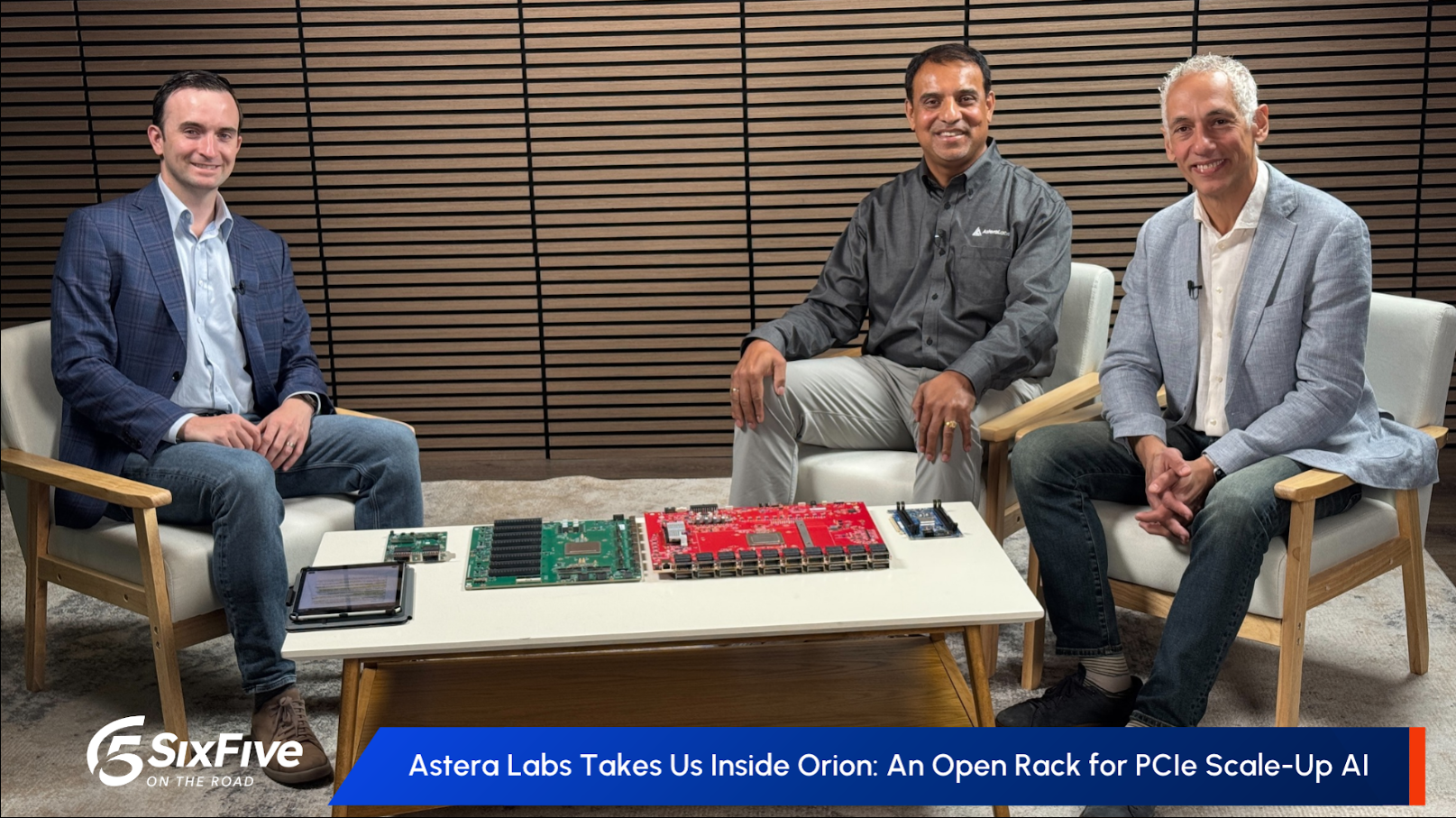
Astera Labs & Hyve on Orion: A Rack Built to Outlast the GPU
At OCP Global Summit 2026, Astera Labs and Hyve Solutions introduce Orion, an open PCIe rack-scale reference design that decouples the rack from the accelerator. For neoclouds and enterprises, it means scaling AI inference to 160 GPUs with any CPU or GPU while lowering cost per token.


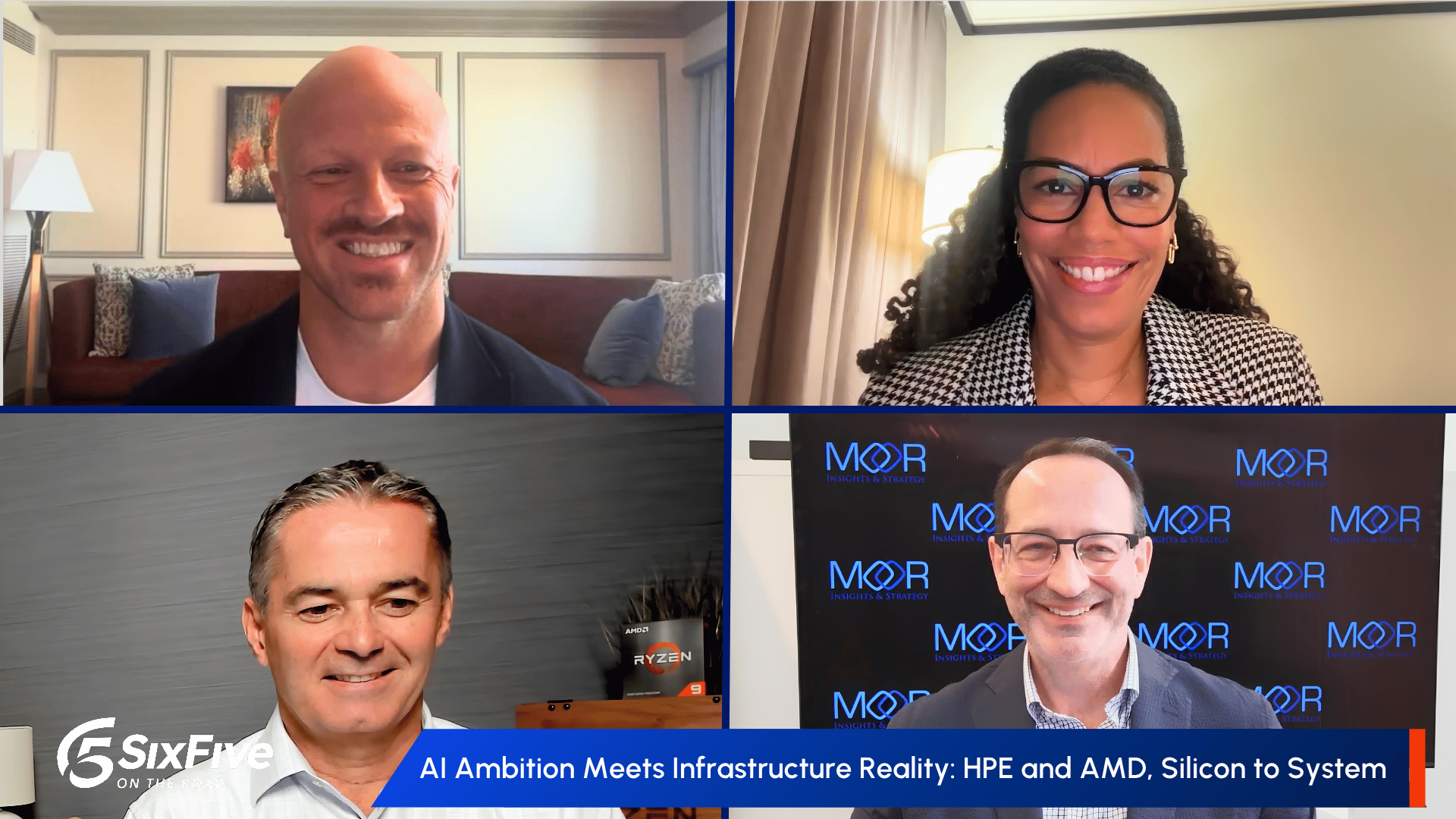
AI Ambition Meets Infrastructure Reality: HPE and AMD, Silicon to System
HPE’s Krista Satterthwaite and AMD’s Dan McNamara join Patrick Moorhead and Daniel Newman to explain how agentic AI is multiplying CPU demand and why silicon and system design now have to be tuned together for threads per watt. For enterprises, matching each workload to the right platform and model determines whether AI value outpaces the cost of running it.
Jensen Huang Steps Down: What NVIDIA’s Leadership Shock Means for AI, Washington, and the Market
Few weeks in tech have moved this fast. Within days of the first reports of an alleged affair, Jensen Huang resigned as CEO of NVIDIA, the company at the center of the AI buildout, leaving Wall Street, Washington, and the entire AI supply chain asking what comes next. Patrick Moorhead and Daniel Newman devote most of the episode to the NVIDIA story: the leadership transition, the unresolved questions, the export control fight it reignited, and whether the company needs an operator or another visionary. They close with Bulls and Bears on Anthropic's IPO filing and earnings from Applied Materials, CoreWeave, and Cisco.
Other Categories
CYBERSECURITY
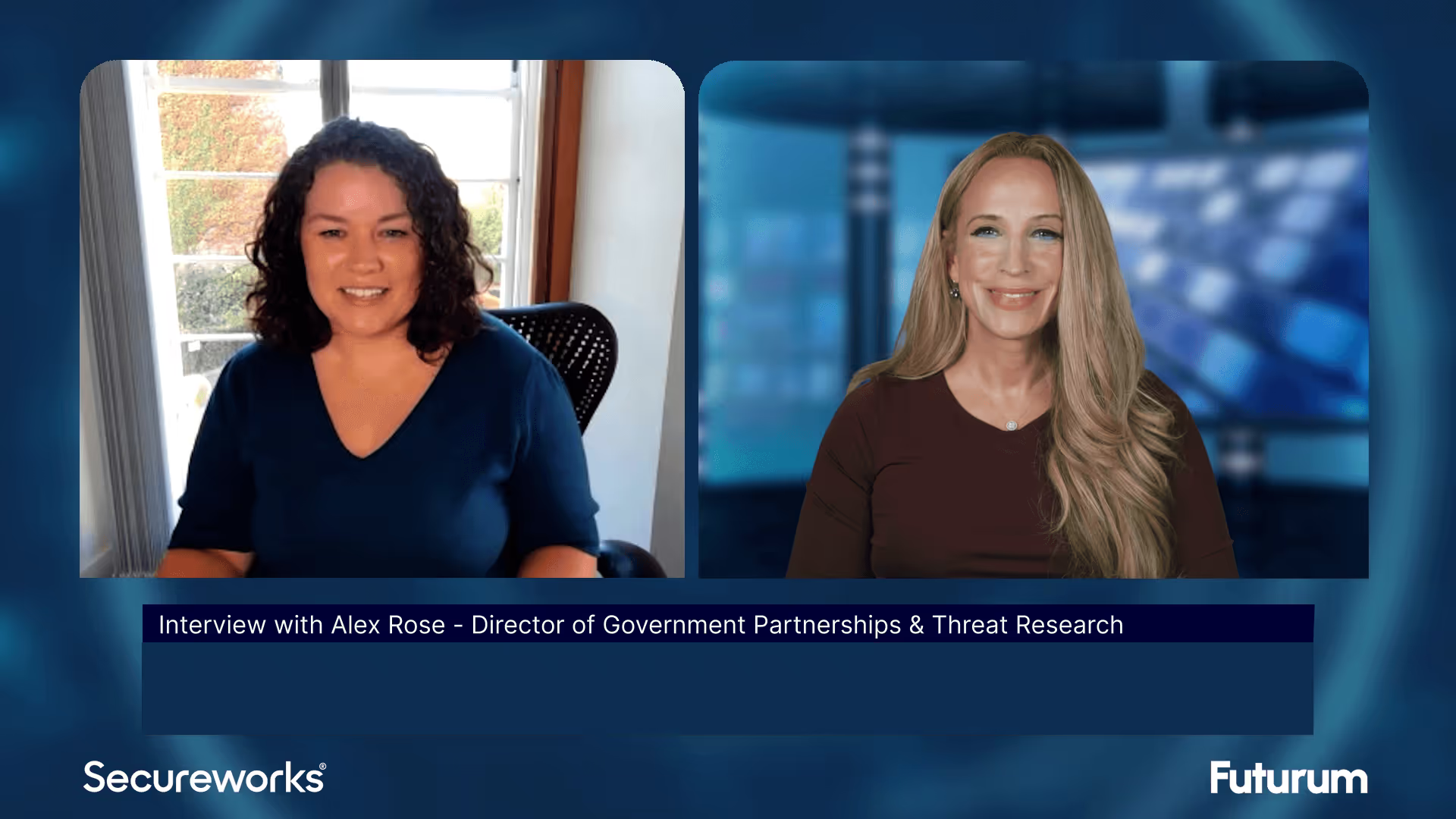
Threat Intelligence: Insights on Cybersecurity from Secureworks
Alex Rose from Secureworks joins Shira Rubinoff on the Cybersphere to share his insights on the critical role of threat intelligence in modern cybersecurity efforts, underscoring the importance of proactive, intelligence-driven defense mechanisms.

HP Launches World’s First Business PCs to Protect Against Quantum Hacks - The Six Five On the Road
On this episode of the Six Five - On the Road, hosts Patrick Moorhead and Daniel Newman are joined by HP's Ian Pratt, Global Head of Security for Personal Systems.
What is Autonomous Endpoint Management?
Autonomous Endpoint Management is a framework designed to unify IT operations and security teams on a single platform through real-time control and visibility.
QUANTUM
Quantum in Action: Insights and Applications with Matt Kinsella
Quantum is no longer a technology of the future; the quantum opportunity is here now. During this keynote conversation, Infleqtion CEO, Matt Kinsella will explore the latest quantum developments and how organizations can best leverage quantum to their advantage.
Accelerating Breakthrough Quantum Applications with Neutral Atoms
Our planet needs major breakthroughs for a more sustainable future and quantum computing promises to provide a path to new solutions in a variety of industry segments. This talk will explore what it takes for quantum computers to be able to solve these significant computational challenges, and will show that the timeline to addressing valuable applications may be sooner than previously thought.