
The View from Davos - AI Moves From Conversation to Execution
SHARE


Patrick Moorhead and Daniel Newman unpack this year's View from Davos conversations, exploring how AI adoption is entering a new phase focused on execution, operational readiness, and scalable enterprise and industrial deployments.
AI is no longer theoretical. Conversations outside of the 2026 WEF in Davos focused decisively on what it takes to deploy, operate, and scale AI in the real world.
Patrick Moorhead and Daniel Newman spent a week engaging with global leaders across technology, enterprise, and industry as the AI conversation continued to mature. Compared to last year’s emphasis on possibility and experimentation, this year centered on execution. Enterprises are no longer asking whether AI matters, they’re asking how to make it run reliably, securely, and at scale.
Across discussions, a consistent theme emerged: impact depends on operational readiness. AI is moving beyond isolated pilots into production environments, where governance, security, data foundations, and infrastructure discipline determine success. Industrial and edge AI gained momentum, repetitive workflows proved fertile ground for ROI, and organizations began categorizing AI spend around productivity, resilience, and business outcomes rather than novelty.
The message from Davos is clear: AI adoption is accelerating, use cases are becoming more physical, and the next phase belongs to organizations that can turn ambition into execution.
Key Takeaways Include:
🔷 AI has entered its execution phase: The dialogue has shifted from experimentation to deploying systems that must perform consistently in production environments.
🔷 Operational excellence is the real differentiator: Governance, security, and reliability now matter as much as models and compute.
🔷 Industrial and edge AI are gaining traction: Feedback loops at the edge are becoming critical for quality, automation, and real-time decision-making.
🔷 ROI comes from focused use cases: Productivity gains increasingly come from improving repetitive, high-friction workflows rather than chasing moonshots.
🔷 AI is augmenting, not replacing, human work: The dominant theme was enablement, freeing people from low-value tasks and expanding decision-making capacity.
Disclaimer: Six Five Media’s The View from Davos is for information and entertainment purposes only. Over the course of this webcast, we may talk about companies that are publicly traded and we may even reference that fact and their equity share price, but please do not take anything that we say as a recommendation about what you should do with your investment dollars. We are not investment advisors and we ask that you do not treat us as such.
Patrick Moorhead:
The Six Five is on the road here with a view from Davos.
Daniel Newman:
We are here in the middle of all the action right now.
Patrick Moorhead:
Great to see you.
Anand Swaminathan:
Always a pleasure.
Daniel Newman:
I still remember one of my first Davos. It was bitter cold and we had snow up to our ankles.
Daniel Ives:
It's great to see you.
Daniel Newman:
Crazy.
Daniel Newman:
The Six Five with a view from Davos. Oh my gosh, Pat, it is actually a view from Davos. Can you believe it? It's Thursday. I mean, don't tell everybody that we're gonna go back to our rooms, we're gonna pack our stuff, we're gonna sprint to our car, we're gonna get to the airport as quick as we can, because as much as this is an awesome show, you know my favorite thing about every event we go to every year?
Patrick Moorhead:
What's that?
Daniel Newman:
Going home.
Patrick Moorhead:
You know, Daniel, you did talk about going outside, having a view from Davos. This is an outside event right now. It's impossible to get hotel rooms here on the promenade. So we basically live, I don't know, a mile away, half mile away. But we do get our steps in. My max day was nine miles.
Daniel Newman:
Yeah, I did 24,000 one day. So we did a lot of steps up and down the promenade between events, speaking engagements, media appearances, interviews, meetings with customers. But talk about density. I mean, look, there's something very special about this place that brings so many of the world's leaders, business leaders, media. They all come here. We're here because AI is at this massive inflection, Pat. So what were your big takeaways as it comes to kind of this AI moment here in Davos?
Patrick Moorhead:
Yeah, so first and foremost, it was a real maturation of the dialogue. Last year, it was a thesis on what can it do, the possibility in small isolated experiments or proof of concepts to let's go and let's start deploying this.
Daniel Ives:
The reality is, and you obviously know it so well, from NVIDIA to Palantir to Microsoft to Google, this is real. And I think you're now seeing the next step of AI monetization. That right here, every conversation, AI is dominating.
Nadav Zafrir:
The fact that this is an amazing change, the fact that it's happening at an unprecedented pace is creating this as a top-of-mind issue for everyone because every CEO that I meet, every board member, every CFO, every CIO is thinking about relevance. Are we going to be relevant in a couple of years? And in order to remain relevant, they have to transform. They're transforming. They know that they're introducing new challenges. That's where we come in. And our mission from now on is the secure AI transformation.
Vanessa Candela:
It's such an exciting time. And when I talk to customers, I love being at these events because talking to customers, hearing what they're doing, it's incredibly energizing. The world is changing dramatically and fast. I think if we stay on top, there's so much opportunity.
Antonio Neri:
We have now more than 70 use cases deployed with AI. We see the benefits in simplicity, productivity, and obviously the ROI. So you have to embrace it, right?
Jeetu Patel:
You can see a palpable enthusiasm where some of those pilots are starting to work. Certain industries like pharmaceuticals and financial services and healthcare are actually starting to see momentum in some pretty big ways. And so I'm quite optimistic about what's going to happen in 26 from that perspective.
Nakul Duggal:
It's going to be a pretty busy year, but we've spent a lot of time in 2025 preparing the portfolio, so I think it's about execution. Industrial for us was really about what is changing in the industrial landscape. This space is far faster than anything you can imagine. However, what it does is you have to be able to implement it at the edge to get feedback as to whether you're making progress or not.
Sridhar Ramaswamy:
I tell our teams, including our software teams, that I don't accept two-year roadmaps. I said, my ability to see what's going to happen two years from now, zero. It's fine to have a north star, but you need to show proof every point of the way.
Antonio Neri:
The concept of fail fast and improve is incredibly valuable here because as long as you keep going and keep evolving, you're eventually going to be successful.
Rob Thomas:
Let's not go for, we're going to put people on the moon, or we're going to fundamentally create a new business. Let's go after the boring, repetitive tasks, and let's say, can AI make you more productive? But if you start with, we're gonna use AI to double our revenue, I would say maybe. Like, there's a lot of different factors that go into that, so control what you can control.
Anand Swaminathan:
I would categorize the spend in two buckets. The existing spend, you should expect that to come down because you don't really need to spend so much to maintain your systems and keep them running, right? But there is newer spend areas that are opening up, which is about how do you deploy AI for the benefit of the business. And that's where we are seeing a lot of conversations and interest. It could be about customer expansion, retention. It could be about more resilient supply chains, new product features and introductions, and how do we bring AI.
Michael J. Wolf:
Here's why it's different from the bubble in 2000. Those were truly vendor financing. So we had companies like WorldCom and Nortel who took money in anticipation of what was going to happen. They were building out wired infrastructure, dark fiber, dark cable. in order to be able to accommodate, and that didn't appear. Second of all, what we're seeing today is these are real companies with substantial amounts of revenue, substantial market caps, and the demand is going to be there.
Jeetu Patel:
The zero-sum nature of hyperbolic media, I don't think does it a good service because like, okay, so now all jobs are lost. and people are going to be staring out at the ocean because they have nothing productive to add to society or AI is completely useless and doesn't do anything at all. Neither of those narratives actually end up being productive narratives because the reality is it's going to be a fantastic augmentation of what humans do and I don't think for a long time you know, all human value to society is going to end. Like, I don't think it'll ever happen.
Eric Xing:
In the United States, you know, a hundred years ago, maybe more than 90% of people are farmers, and now maybe 3%. That's right. Are they happier or maybe worse, right? No, I think every technology we build is going to, you know, create a capability that is going to free people out of a less interesting and more demanding job. And then The freedom gives them basically more choices and options. That's how I see it.
Daniel Newman:
I think there was a lot of people weighing in on the models, the big frontiers are certainly super capable, but I got a sense from a lot of these vendors that AI is going to be more collaborative, that SaaS may get re-rated, but it's not dead. that really an enterprise being able to run secure, run on all its proprietary data, build models that really serve purposes and succeed in driving ROI to businesses, it's not a winner-takes-all. It's going to be a big, broader ecosystem. Some new winners will emerge, some new technologies will disrupt old technologies, but it's not over for every enterprise software company. But I think we are going to see major change this year. So I'll end it here, Pat.
Patrick Moorhead:
Actually, I want to add one more.
Daniel Newman:
No. If we can.
Patrick Moorhead:
Yes, please.
Daniel Newman:
No more.
Patrick Moorhead:
I am not done.
Daniel Newman:
We don't own this video. Let's go. OK, fine.
Patrick Moorhead:
When I was speaking at the USA house here, Satya, when I was watching, he talked about Edge AI. And Azure happens to be the largest, well, it's debating on who's number one, number two of AI platform in the data center, but he talked about Edge AI. So I saw that to start permeating. And I'm not talking just smartphones, but I'm also talking about industrial IoT, robotics. Yeah. Yeah. And again, a maturation of the conversation. We all knew it was there and it was going to be, but it just becomes more relevant out there.
Daniel Newman:
Yeah, no, that's a good one. So you're allowed to close it. It's not good enough to add,
though, so cut that out.
Patrick Moorhead:
Are you going to add one more of yours?
Daniel Newman:
No, I don't need any more. OK, I'm done.
SPEAKER_03:
Let's go. I'm done. Let's go. Well, listen, it's been a great year. Will you do it again?
Patrick Moorhead:
Yes.
Daniel Newman:
OK, he said he's going to come back.
Patrick :
Are you?
Daniel Newman:
I'm out next year. This is my last Davos ever. Maybe I'll come back. You're going to have to wait. You're going to have to stick with us. You're going to have to see. If I put it on my ex profile that I'm coming back, that's when you'll know. But for this year, for Davos, for 2026, Six Five, we are outtie. See you all later.
MORE VIDEOS
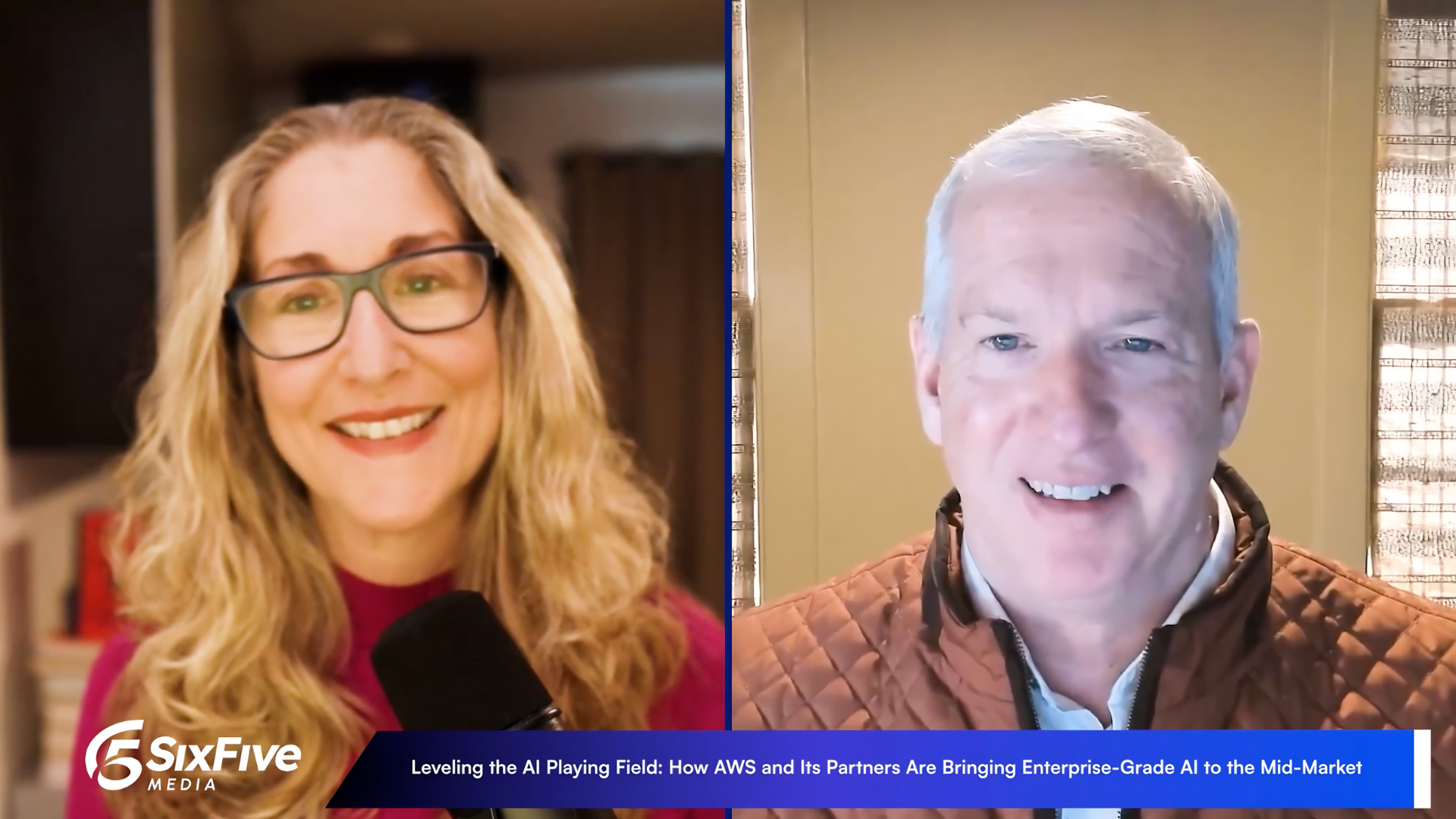
How the Mid-Market Gets Enterprise AI Without a 300-Person IT Org
On this Six Five Virtual Webcast, AWS’s Chris Sullivan explains how partners and AWS Marketplace are helping mid-market companies move agentic AI from proof of concept to production without enterprise-sized IT teams. Starting with a real business problem and the right partner gives these organizations a faster path to measurable results.


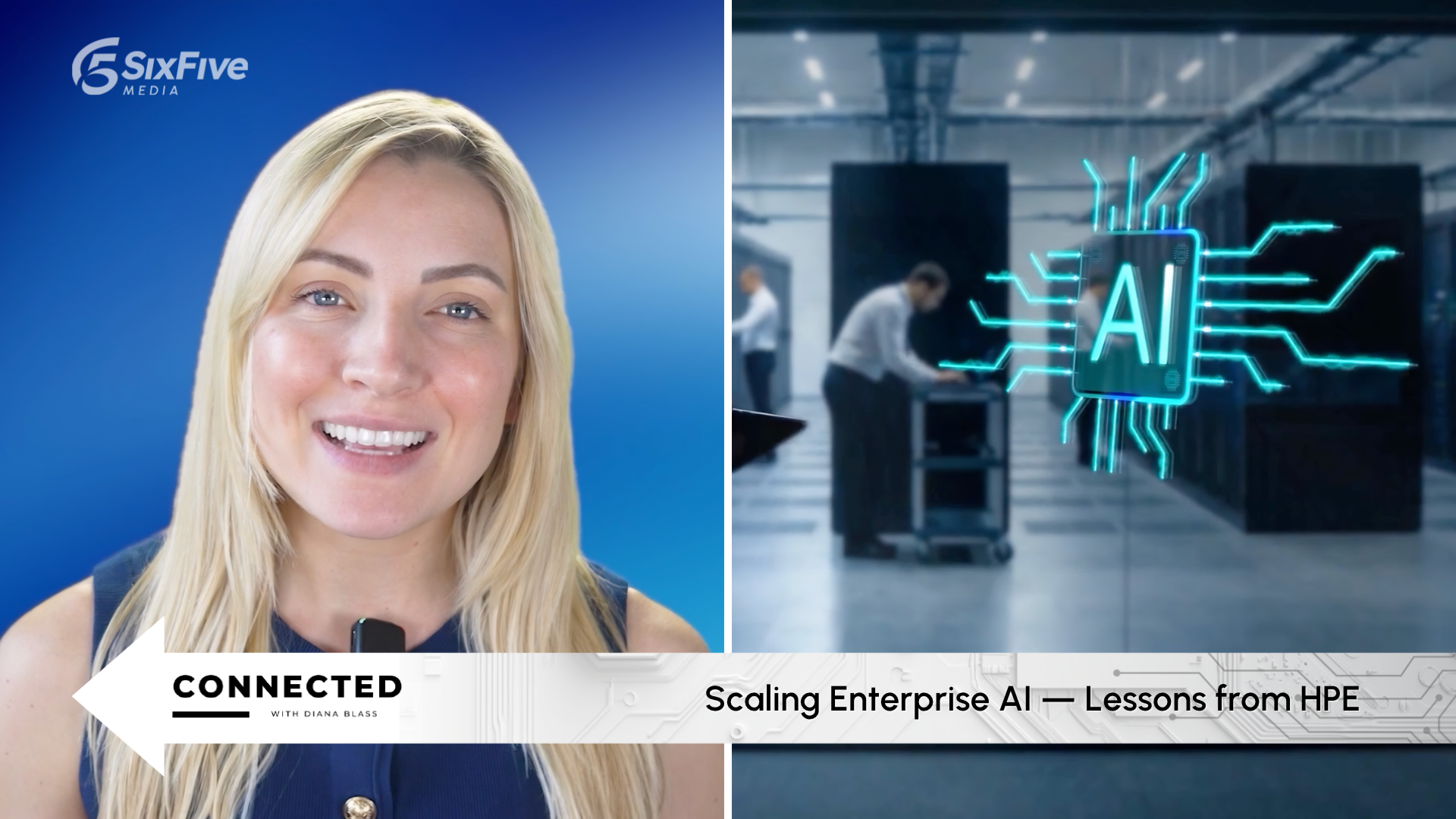
Scaling Enterprise AI, Lessons from HPE - Six Five Connected with Diana Blass
On Six Five Connected, Diana Blass explores how HPE is scaling AI across its own business and what agentic AI demands from compute, memory, edge, and networking infrastructure. Enterprises that design infrastructure around their most valuable use cases can turn AI adoption into measurable savings.
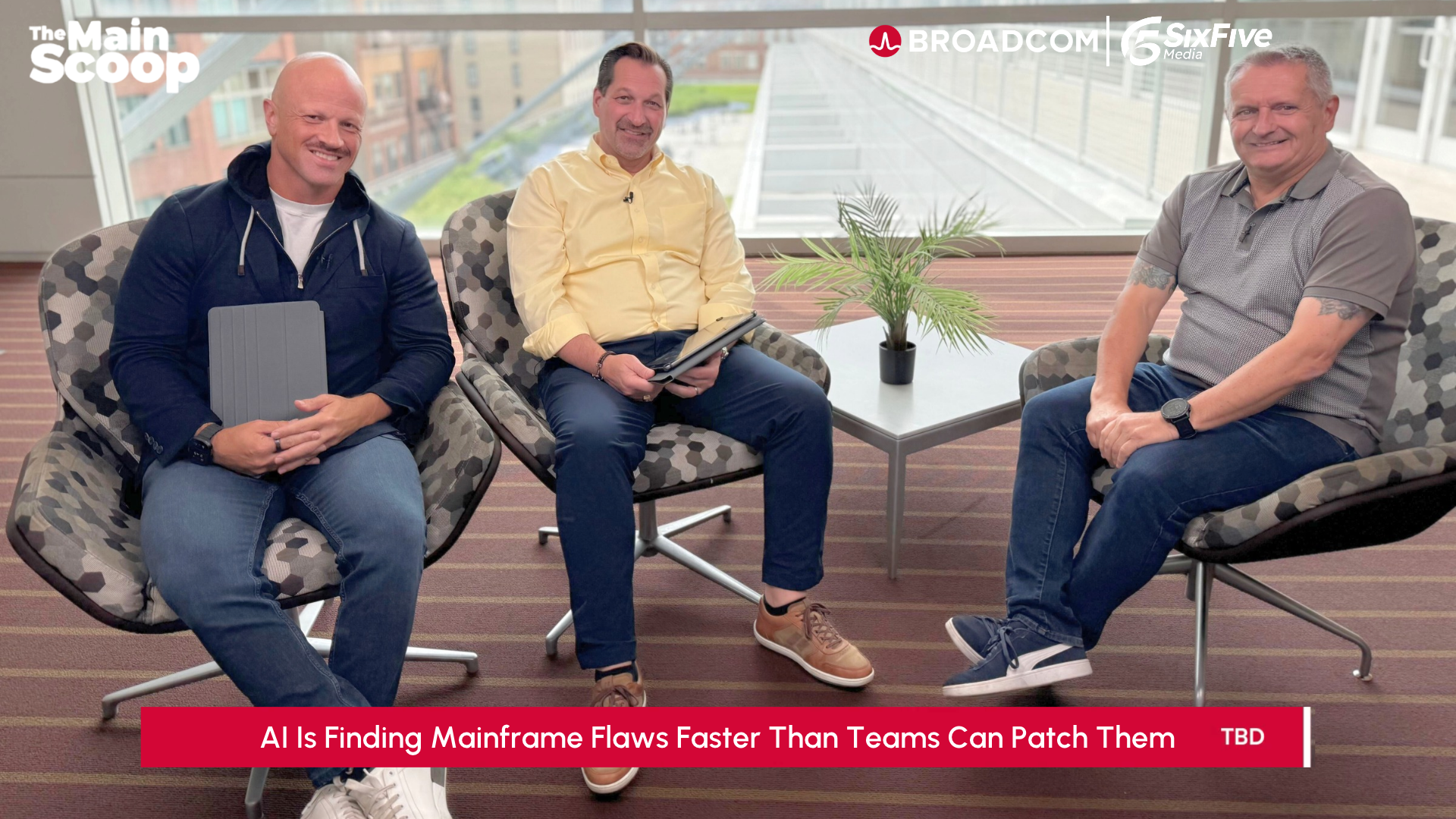
Outpacing Threat Actors: Mainframe Security in the Age of AI and Quantum
On The Main Scoop, Vertali's Mark Wilson explains why AI-driven vulnerability discovery and looming post-quantum deadlines are forcing mainframe teams to rebuild their maintenance cycles. Teams that combine AI-assisted vigilance with security fundamentals and early cryptographic inventories will stay ahead of threat actors.
Other Categories
CYBERSECURITY
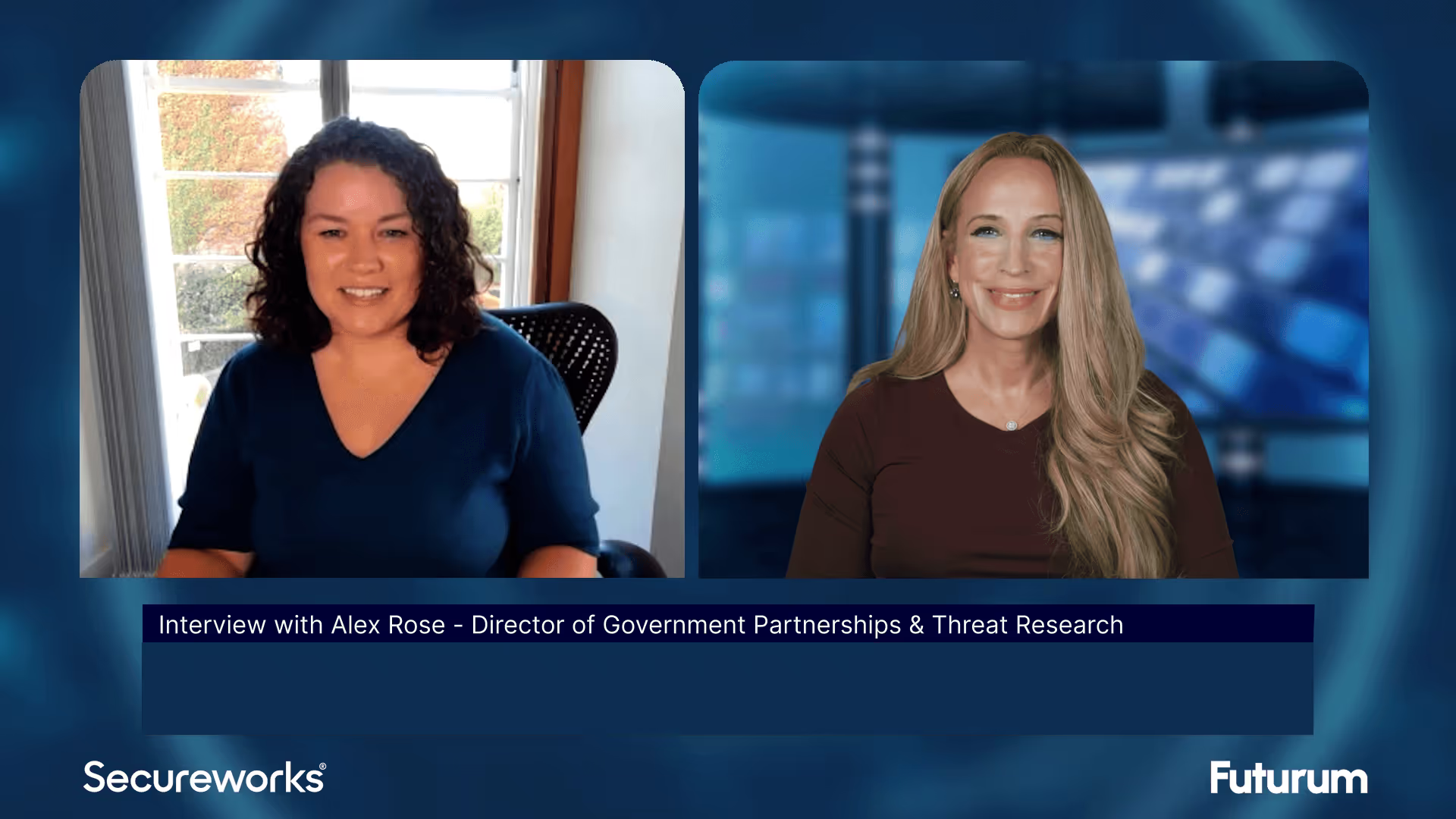
Threat Intelligence: Insights on Cybersecurity from Secureworks
Alex Rose from Secureworks joins Shira Rubinoff on the Cybersphere to share his insights on the critical role of threat intelligence in modern cybersecurity efforts, underscoring the importance of proactive, intelligence-driven defense mechanisms.

HP Launches World’s First Business PCs to Protect Against Quantum Hacks - The Six Five On the Road
On this episode of the Six Five - On the Road, hosts Patrick Moorhead and Daniel Newman are joined by HP's Ian Pratt, Global Head of Security for Personal Systems.
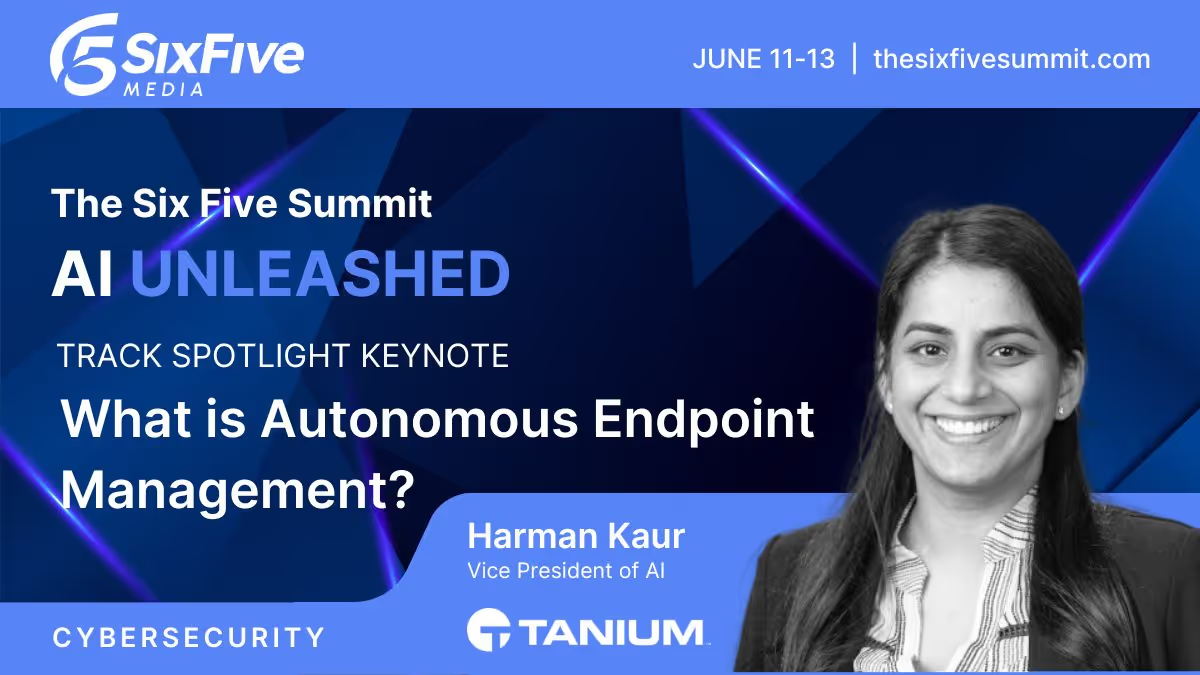
What is Autonomous Endpoint Management?
Autonomous Endpoint Management is a framework designed to unify IT operations and security teams on a single platform through real-time control and visibility.
QUANTUM
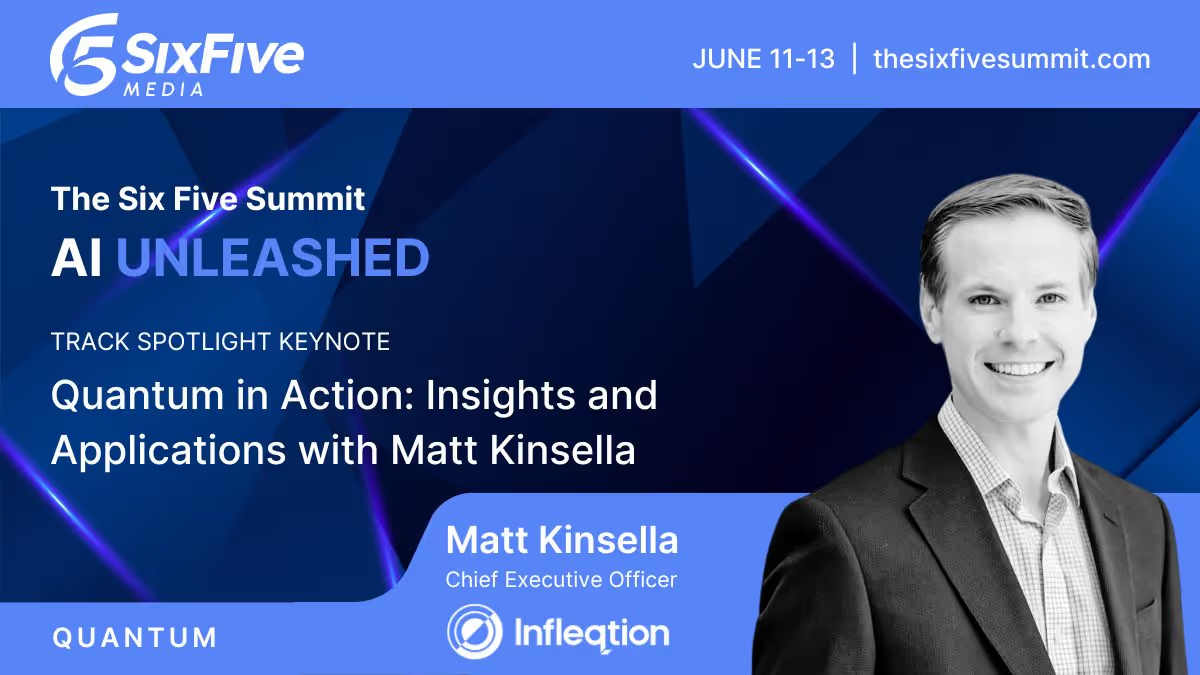
Quantum in Action: Insights and Applications with Matt Kinsella
Quantum is no longer a technology of the future; the quantum opportunity is here now. During this keynote conversation, Infleqtion CEO, Matt Kinsella will explore the latest quantum developments and how organizations can best leverage quantum to their advantage.
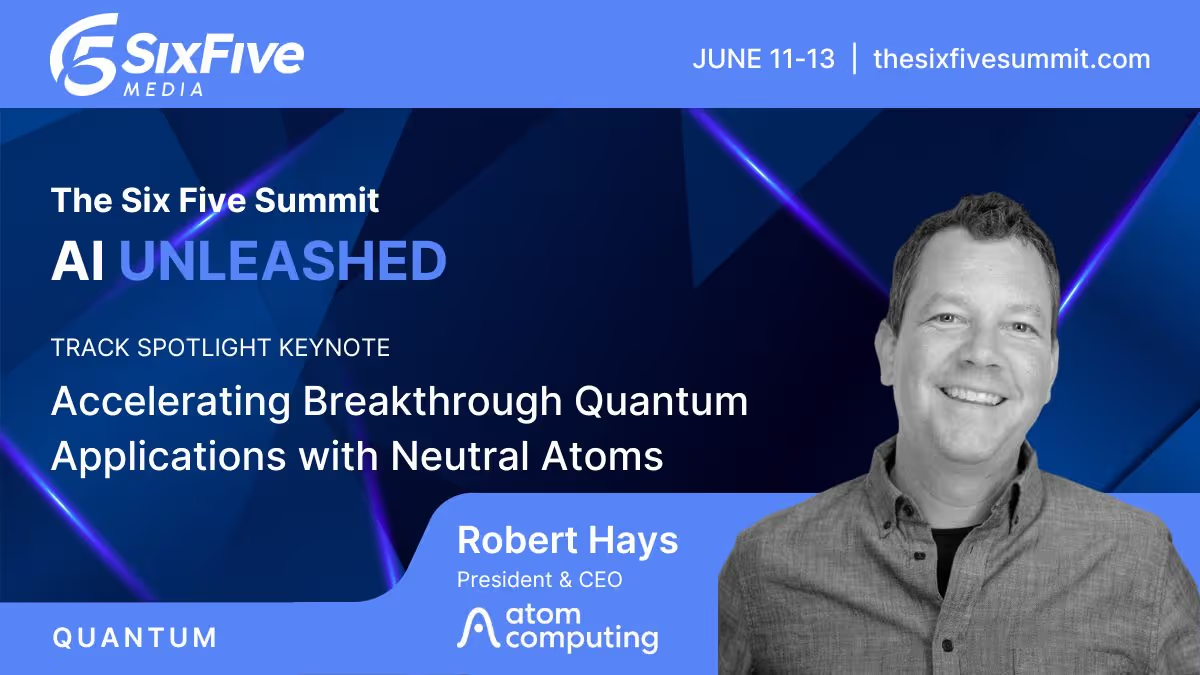
Accelerating Breakthrough Quantum Applications with Neutral Atoms
Our planet needs major breakthroughs for a more sustainable future and quantum computing promises to provide a path to new solutions in a variety of industry segments. This talk will explore what it takes for quantum computers to be able to solve these significant computational challenges, and will show that the timeline to addressing valuable applications may be sooner than previously thought.