


Antonio Neri, President and CEO of HPE, joins Patrick Moorhead and Daniel Newman from Davos to discuss why enterprise AI is moving beyond centralized clouds, how sovereignty and competitiveness can work together, and what leaders must do to build resilient, distributed AI strategies.
AI progress is real. Scaling it responsibly is the true stress test.
From Davos, Patrick Moorhead and Daniel Newman sit down with Hewlett-Packard Enterprise President and CEO Antonio Neri to examine how enterprises are navigating the next phase of AI. As momentum shifts from experimentation to deployment, the conversation centers on where AI should run, how risk is created by over-concentration, and why distributed architectures are becoming essential to resilience and competitiveness.
Rather than framing sovereignty and global scale as opposing forces, Antonio outlines how enterprises and governments can reconcile both through hybrid and edge-centric AI strategies. Latency, regulation, energy constraints, and data gravity are no longer theoretical considerations. They are shaping real infrastructure decisions today, and the leaders who focus on orchestration, not ownership, are best positioned to turn AI investment into a durable advantage.
Key Takeaways Include:
🔷 AI is inherently hybrid: Enterprise AI increasingly spans edge, regional, and hyperscale environments, driven by data sensitivity, latency requirements, and cost realities.
🔷 Concentration creates risk: Over-reliance on centralized cloud and AI capacity exposes enterprises and regions to strategic, operational, and geopolitical vulnerabilities.
🔷 Sovereignty and competitiveness can coexist: Distributed architectures allow organizations to protect local data and control while still leveraging global innovation.
🔷 Inference is driving the shift: Growth in inferencing signals that AI models are moving into real workloads, making placement and orchestration critical.
🔷 Platforms matter more than stacks: Leaders succeeding with AI focus on unified platforms that manage complexity, not on owning every layer themselves.
Learn more about HPE’s collaboration with NVIDIA and how distributed AI architectures are taking shape.
Listen to the audio:
Disclaimer: Six Five Media's The View from Davos is for information and entertainment purposes only. Over the course of this webcast, we may talk about companies that are publicly traded, and we may even reference that fact and their equity share price, but please do not take anything that we say as a recommendation about what you should do with your investment dollars. We are not investment advisors, and we ask that you do not treat us as such.
Patrick Moorhead:
The Six Five is on the road here with a view from Davos. We're at the World Economic Forum, and as you would expect, a lot of discussions around policy, about technology, AI in particular, and we're going to have a lot of discussions about tariffs as well.
Daniel Newman:
Yeah, well, you know, it wouldn't be a great World Economic Forum if there wasn't some escalation unexpected right into it before President Trump comes here and speaks. But, you know, this event has become really one of the prime moments for having conversations about what's going on in these inflections in technology, Pat. And AI is on the rise. And we know that this is not only the year for, we're kind of beyond the chat GPTs and the LLMs moment. Now we're really thinking about sovereign AI. We're thinking about enterprise AI. It's a really big year.
Patrick Moorhead:
That's right. We had a great discussion with CEO and president of HPE, Antonio Neri, on that last year. And I think this is a great time to get a follow-up. Great to see you.
Antonio Neri:
Well, thank you for having me.
Patrick Moorhead: Excellent. How is this World Economic Forum different this year than last year?
Antonio Neri:
Well, first, it's clear that there is way more people than last year. The attendance is up quite significantly, as you both said. It's an important moment in time because a lot is happening around the world, not just on the technology front, from a geopolitical perspective. So I think there is a tremendous amount of you know, expectations of, you know, what we're going to say when the governments show up between today and tomorrow and Thursday. So it's the right place to be to hear directly from the leaders how they think about the future, not just from the technology perspective, from the geopolitical standpoint, for sure.
Daniel Newman:
Well, all that influences the business, the decisions, how you think about supply chains, manufacturing, how you think about making investments in different parts of the world, because, of course, HP is a global company with great scale. Speaking of great scale, though, in terms of the AI and cloud space, we're seeing hyperscalers increasingly become kind of the kings of compute. All of the compute seems to be really moving that way, but we're increasing. I know Pat and I are both increasingly hearing from enterprises that They want to possibly think about how they distribute risk, how they mitigate potential risk. I know you're having conversations because you're one of those suppliers that helps enterprises put AI on-prem or in more hybrid environments. Talk a little bit about how those conversations are going, a little bit about what the risks are of maybe over-concentration. What are enterprises doing to solve for that?
Antonio Neri:
Well, I think many enterprises have moved from exploration to deployment. And as they went through that phase, we see the growth in inferencing and growing very rapidly, which tells you that the models are being put to work. Whether it's large language models or, I believe, agentic AI is going to be the future of the enterprise. Second is where they do the training really matters. And obviously, the concept of sovereignty and protecting the data is a core tenet of that discussion. But as we always said, AI is the true definition of a hybrid workload. And we believe, in the end, they're going to use all aspects of infrastructure, some in the public cloud, some on-prem. And then I think there will be industries that are going to come together, particularly here in Europe, where they're going to use sovereign AI clouds, because the investment to build this large AI infrastructure is quite high. And energy demands are so high as well. So I think there needs to be some sort of collaboration, perhaps at the vertical level.
Patrick Moorhead:
So I've heard some talk about having a sovereign data strategy as being too introverted and potentially could lead to lack of access to a global market. I was thinking that you can actually have your cake and eat it too. You can do both. Can you talk a little bit about that? your clients are looking at, maybe about also how HP is enabling that.
Antonio Neri:
Well, I think, you know, with the technologies we have been working on for a number of years now, you can provide secure access to the data. At the same time, you know, I don't think it's all about just about the data. It's about shared learnings. And with some of the latest technologies like MCP and so forth, you can actually extract the learning of that data much faster. You can share just the learning, not the actual data. So, I think it's a combination of different techniques, I will say. But I think Europe right now is taking a very aggressive approach of regulation and protecting that data in the context of the geopolitical situation we live in. And we see a tremendous growth in demand from the concept of thinking about it to now let's go plan and eventually runs the traditional RFP process to build these AI clouds. And we see it in Europe and we see it in the Middle East.
Patrick Moorhead:
And so net-net for these customers who are doing that, it's not holding them back to go global.
Antonio Neri: Absolutely not, because they're going to have a lot of access and choice where to do work. I think, you know, depending on the industries, you're going to do it closer to home. And then when you go to that distributed learning, you're going to do it
where the action is, depending on where your footprint is.
Patrick Moorhead:
Yeah, it makes sense. And sometimes I ask questions that I think I know the answer to, but the audience doesn't. So thanks.
Daniel Newman: That's always a generous host here, wants to make sure everybody gets a little extra education. But speaking of sovereign, right, one of the things that's going to drive data centers to be built in different locations, another thing that's going to drive data centers is something that HP's long been very focused on, and that's edge. You know, there was kind of the first IoT and edge era. You were certainly one of the leaders in that space. I think AI has actually brought that back to the top. It's actually more in focus, physical AI, edge AI, You know, how are you sort of thinking and talking, not just to customers here, but really all of your enterprise customers about the placement of those workloads? What's driving enterprises to say, okay, we're going to do this in the cloud, but we're going to build these edge data centers. How is that scaling and how are you seeing that being adopted?
Antonio Neri:
I think it's a combination of driven by demand and by physics. In 2018, I stated that the enterprise of the future will be edge-centric, cloud-enabling, and data-driven. That edge started with the on-ramp to digital, and the first step was to lay the right connectivity, and it needed to be secure. We definitely focus on that. We built a world-class portfolio, which now we extended through the acquisition of Juniper Networks from the edge to the cloud. And when I think about the edge, think about the use cases, manufacturing floors, hospitals, stadiums, venues. And that starts with connectivity, but now you can bring the right AI model, and mostly it's going to be agentic AI, to that edge to do the right inferencing. Because latency matters, costs matter, and ultimately delivering real-time decisions is going to be very essential. So that's why we see the growth in inferencing, and that does not require a huge amount of infrastructure. In fact, it could be just one server. with GPUs with the right agentic models built around it. And then you're going to decide whether you do raggle or fine-tuning of a model or actually build a model yourself, which may be necessary for some of the use cases of specific industries. And then you decide what to do. You can do it in one of these locations that you have access to GPU per hour basis on a demand basis, or you do it on-prem because you bring that model you wanted to train it with your own data and trying to protect that. Either way is a hybrid approach, and for enterprises, we deliver a unique value proposition to our GreenLake Cloud, which ultimately allows you to do both in a very unified and AI-driven way because we also use AI inside the platform. to lower the cost and give you a faster return to that investment.
Daniel Newman:
Are you seeing, really quickly here, are you seeing this demand for Edge and bringing these workloads on-prem? Is it growing?
Antonio Neri:
Yeah, it's growing. We see that through a number of offerings that we introduced in the market. You are familiar with our Private Cloud AI, which is a tightly coupled stack that we developed with NVIDIA. and our GreenLake Cloud, and ultimately our infrastructure. And we see that growth in number of adoption by number of logos and number of systems being deployed. But then also you see it in a single unit type of deployments with just our servers. But then also we see that growth also on the data side with our storage array platforms, because ultimately you need a lot of unstructured data.
Patrick Moorhead:
So distributed computing has been a thing since, I mean, mainframes to minis, minis to client server, social, local, mobile, distributing, the industrial edge. But nobody is able to own that stack, and they probably shouldn't. But it seems like some people are trying to own the entire AI stack. From a customer point of view, what are you seeing? Why are some of those customers successful managing all the layers in there? the local AI stack, the regional AI stack, and the global stack from those who are really having a hard time doing it? Is it architecture? Is it leadership?
Antonio Neri:
Well, it's multiple. It starts with a vision, right? Or where you want to work on, but I think they take a platform-centric approach. I think once they align on a platform with the flexibility to deploy the right stack for the right use cases, as long as they can manage that data and manage that experience to a platform approach, ultimately, you know you will have to deploy multiple stack for multiple reasons. And we, with our GreenLake platform and the amount of software we built in, we actually built not only a unified cloud experience, where we build a lot of AI and we give the flexibility and open approach, including our own stack. But if a customer has the choice to use a different stack, we support it as well. And so that's a big benefit. Over time, there will be a rationalization, obviously, that you expect, but no single vendor can do it all. And so the question is how you create an environment that's simple to manage and ultimately reduces the cost.
Patrick Moorhead:
I mean, that is what customers want. I mean, some customers want the easy button, and some people want this mix and match approach. And some of them want same customer, a variation for a different environment, or maybe a different country. So that just makes sense.
Antonio Neri:
Yeah. And I think that approach will continue to grow. I think, you know, when I think about even models, right? So think about language models. There is now a number of models you can pick. The reality is not every model can deliver the same outcome. So they may pick multiple models there. Then when you go to agentic models, that's a different story on itself. So the combination of the two will create some complexity. But the core of that is, do you have a platform you can deploy and manage this in a unified way?
Daniel Newman:
And we know that so much of the enterprise and agentic AI success is going to be taking a lot of these open models and adding and getting very narrow and vertical, right? Because these models have some capabilities that are very good with, for instance, language. But what makes enterprises and all that rich data, isn't there something like I think 95% of the world's data is behind the firewall? So the opportunity, like we look at these LLMs, and we're like, oh, that's the market is the LLM. The LLM's like the starting point. And so I think this is where, like you said, having some compute local where you can do fine tuning, where you can do run RAG, and you can tweak these models for a manufacturing facility or for a health care outcome. I think that's going to be really powerful. I always love these conversations, Antonio, because you get actionable. You'll answer an actionable question. So our audience, a lot of CIOs, CTOs, enterprise technology leaders, buyers, We've been talking for years now, it's been three or four years, really, that this AI conversation, but we need to get more practical, we need to get more resilient, they need to get greater outcomes. What are like maybe three, you know, recommendations for these leaders to succeed in bringing AI to the enterprise and getting the ROI that makes these investments worthwhile?
Antonio Neri:
Well, first of all, you have to embrace it. I think there's still too many CIOs or too many enterprises in wait-and-see mode. Wow. And that to me tells The story that you're waiting for what? Waiting for their competitors to put them out of business. Yeah, well, yeah, I mean, look, they will be left behind. We see it in our own company. We have now more than 70 use cases deployed with AI. We see the benefits in simplicity, productivity, and obviously the ROI. So you have to embrace it, right? Now, you have to be smart about how you approach it. A lot of proof of concepts are necessary. And the concept of fail fast and improve really is incredibly valuable here because you will fail many of them, but as long as you keep going and keep evolving, you're eventually going to be successful. So that philosophy is super important. And then, you know, you have to pick multiple partners. You can't just pick one. You have to make sure that you work with few that, you know, eventually one of them will give, you know, more value one versus the other one. But we as a company are uniquely positioned because we can bring the right infrastructure with the right platform and the right expertise around it. And many customers want some help in that journey, but we can define the right journey for the right use case and obviously for what objectives we're trying to accomplish. I think it is important that you step on it and I think 2026 is the perfect year because now the technology is mature, the models are mature. There is a lot of best practices that you can leverage out in the market.
Daniel Newman:
Well, you heard it here, everyone. I mean, get after it. Sometimes, Pat, when someone's like, oh, you need to buy in, it's like, what? They're not buying in. But I guess sometimes enterprises, we always joke about the fact that they move so slow at times. And I think the point is that's sometimes about risk, that's sometimes compliance, that's sometimes budget. But in the end, like you just said, if you don't, you're going to get left behind. I think that's subtly what you said, too.
Antonio Neri:
Well, and look, you have to put the right governance around it. And so, you know, having the right governance inside the company is key. Also, the right policies, right, is very important. We inside our company have unique policies that, you know, respect bias, right, making sure that everything we do is ethical in the context of the AI. And then, you know, how you manage that data. But if you create the right governance around it, I tell you, the demand for this is so big. In fact, the number of requests we get inside the company to try a use case is enormous. So we have more than 300 requests as of today to deploy AI.
Daniel Newman:
We'll be back to talk to you about your customer zero story at some point soon, Antonio. We'll let you get going. I'm sure you've got a big docket of meetings here in Davos. He's always busy. Thanks so much for making some time. Thank you. Thank you. And thanks everybody for joining The Six Five. We are on the road with a view from Davos. Great conversation there with HPE CEO Antonio Neri. Subscribe, be part of all of our coverage here in Davos and of course all of the great coverage on The Six Five. Appreciate you being part of our community. We'll see you all later.
MORE VIDEOS
.png)
AI Safety Alarms, China's Distillation Reckoning, and Qualcomm's AWS Breakthrough: A Pivotal Week for Enterprise AI
A viral AI extinction claim, a federal advisory naming six Chinese AI labs for industrial-scale distillation, and a $60 billion Qualcomm-AWS silicon pact define a week when enterprise AI risk and opportunity collided head-on. Patrick Moorhead and Daniel Newman weigh in on what's signal and what's noise across AI safety, chip supply deals, and a market rally still betting big on compute.


The 15-Cent AI Query: Broadcom's Paul Turner on Rebuilding Enterprise AI Economics
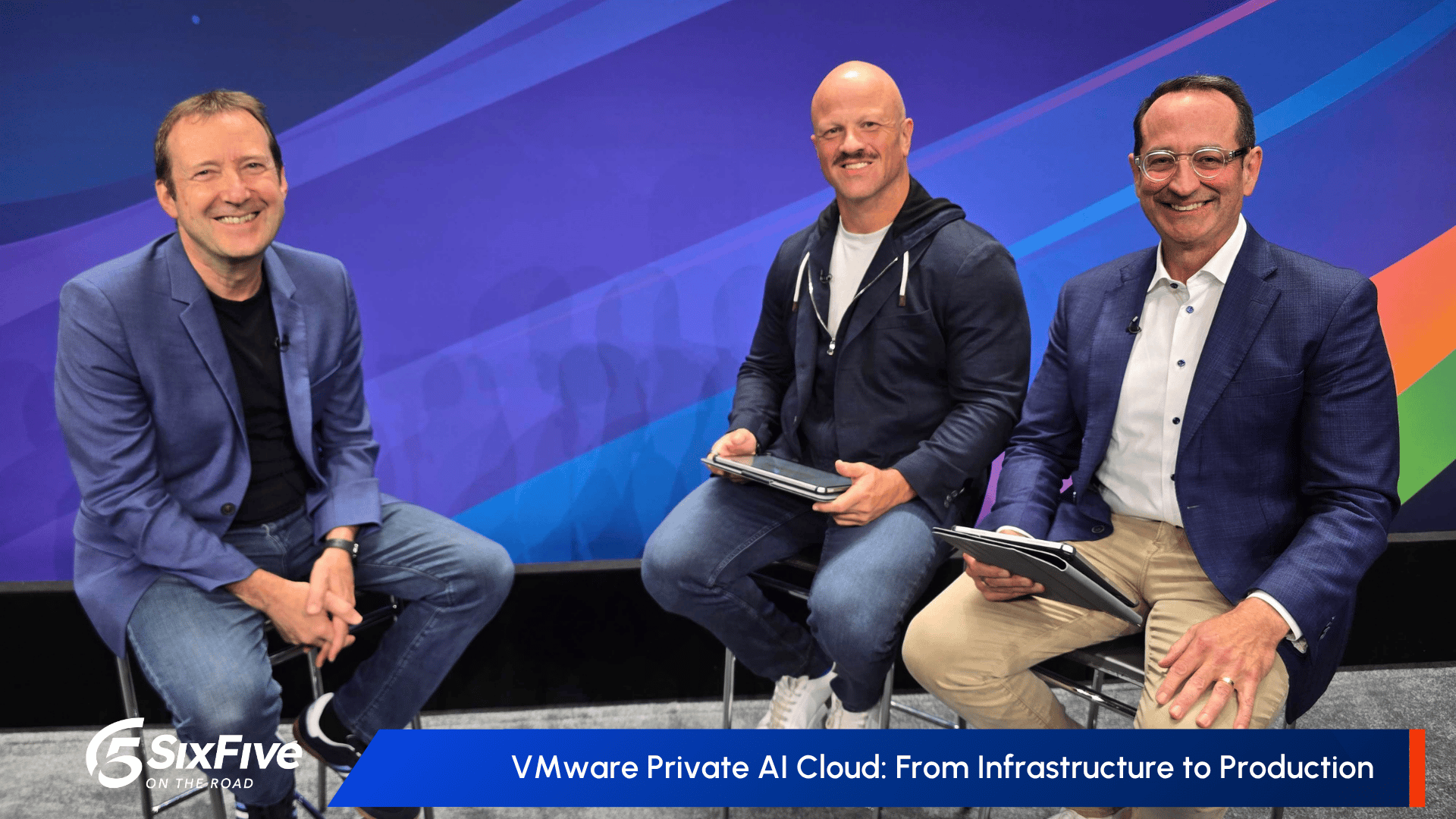
A Six Five study found an eight-to-one cost gap between running an AI agent through a leading frontier model and running it on modest on-prem hardware. Paul Turner, Chief Product Officer of the VMware Cloud Foundation Division at Broadcom, joins Daniel Newman and Patrick Moorhead at VMware Explore 2026 to explain how VMware's AI Factory turns GPU provisioning, model management, and security into a repeatable path from infrastructure to production AI.
VMware Explore 2026 Wrap-Up: What’s Next for Private Cloud and Enterprise AI
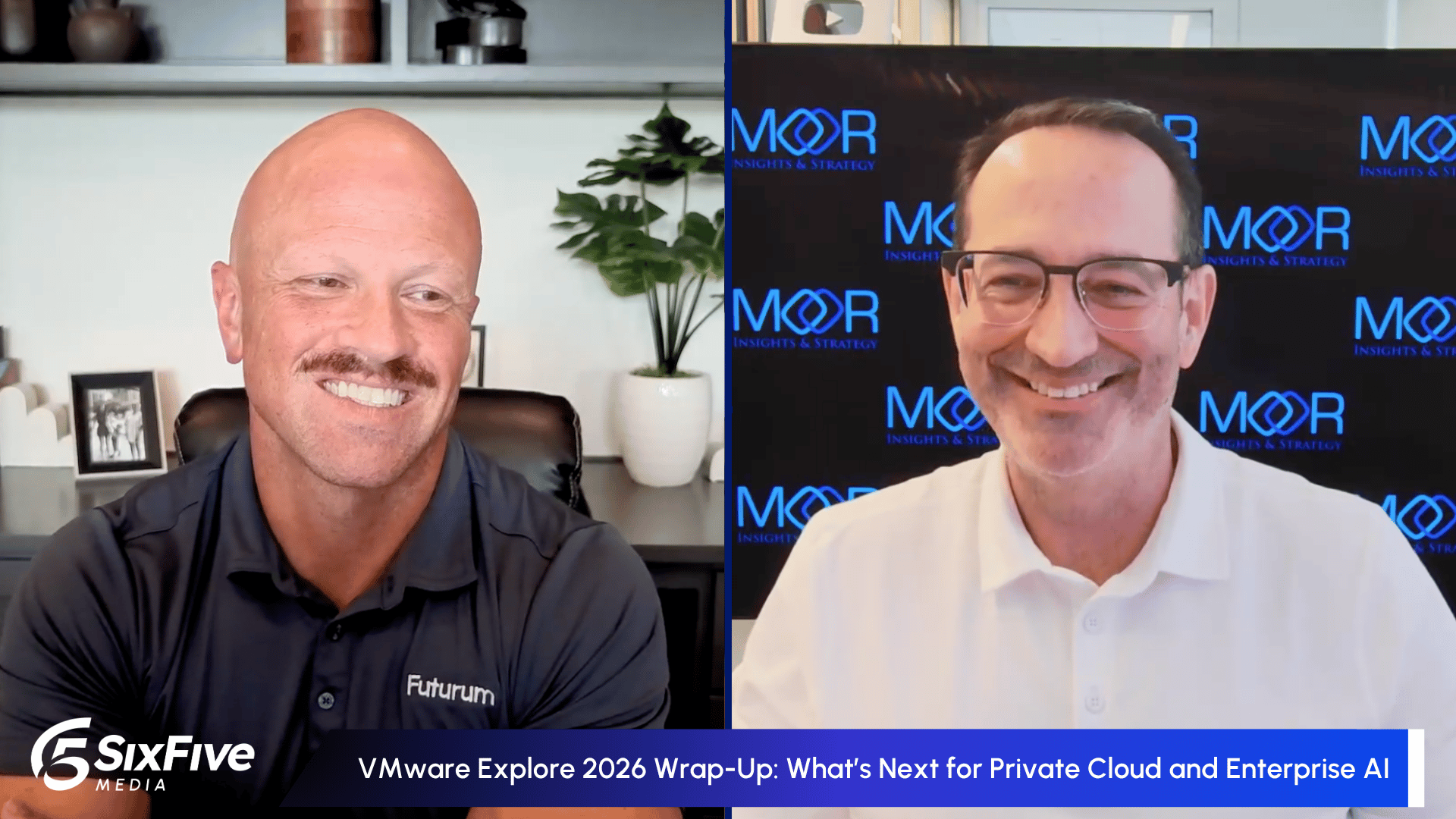
What infrastructure model makes the most sense when AI workloads move from experimentation into production?
In this analyst recap of VMware Explore 2026, Patrick Moorhead and Daniel Newman examine this central question facing enterprise technology leaders and how Broadcom and VMware are positioning private cloud as a critical foundation for bringing enterprise AI into production.
Other Categories
CYBERSECURITY
Threat Intelligence: Insights on Cybersecurity from Secureworks
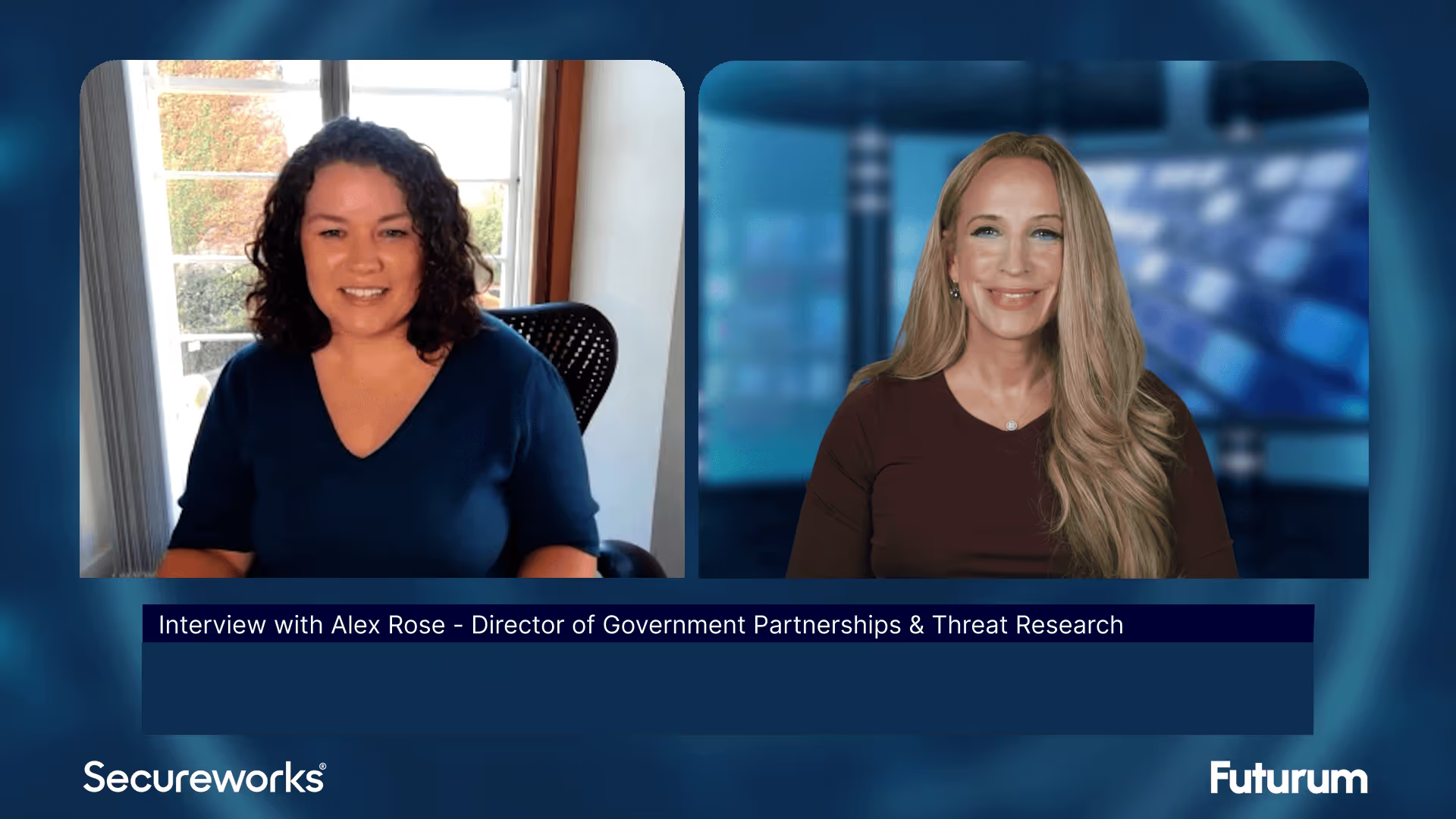
Alex Rose from Secureworks joins Shira Rubinoff on the Cybersphere to share his insights on the critical role of threat intelligence in modern cybersecurity efforts, underscoring the importance of proactive, intelligence-driven defense mechanisms.

HP Launches World’s First Business PCs to Protect Against Quantum Hacks - The Six Five On the Road
On this episode of the Six Five - On the Road, hosts Patrick Moorhead and Daniel Newman are joined by HP's Ian Pratt, Global Head of Security for Personal Systems.
What is Autonomous Endpoint Management?
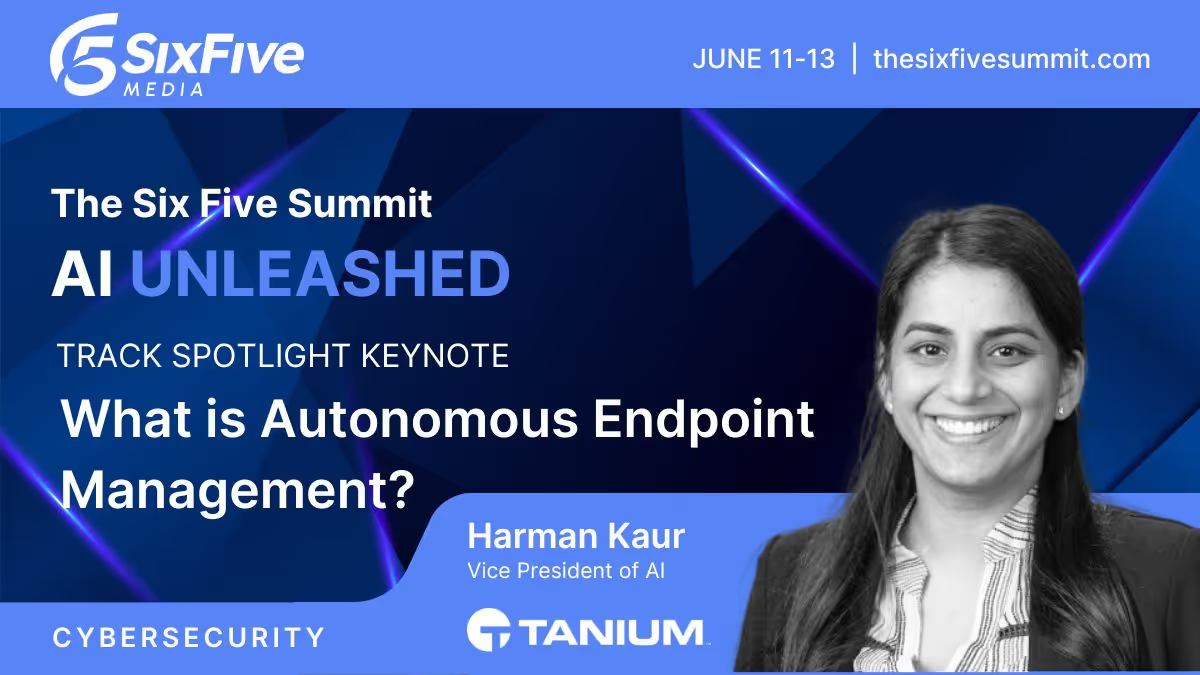
Autonomous Endpoint Management is a framework designed to unify IT operations and security teams on a single platform through real-time control and visibility.
QUANTUM
Quantum in Action: Insights and Applications with Matt Kinsella
Quantum is no longer a technology of the future; the quantum opportunity is here now. During this keynote conversation, Infleqtion CEO, Matt Kinsella will explore the latest quantum developments and how organizations can best leverage quantum to their advantage.
Accelerating Breakthrough Quantum Applications with Neutral Atoms
Our planet needs major breakthroughs for a more sustainable future and quantum computing promises to provide a path to new solutions in a variety of industry segments. This talk will explore what it takes for quantum computers to be able to solve these significant computational challenges, and will show that the timeline to addressing valuable applications may be sooner than previously thought.