
Watson Code Assistant at IBM TechXchange Conference
SHARE


Keri Olson, Vice President at IBM, shares insights on the evolving landscape of AI in coding through Watson Code Assistant and its transformative impact on development processes.
“Code smarter, not harder” is the holy grail for scaling enterprises. Host Steven Dickens is joined by IBM's Keri Olson, Vice President, Product Management, for Six Five Media In the Booth atIBM TechXchange to discuss the latest developments with Watsonx Code Assistant and its impact on developer productivity and efficiency.Their discussion covers:
- The latest developments with Watson Code Assistants since the Think conference
- The role of IBM's Granite models in driving forward applications and use cases of generative AI
- Real-world client success stories showcasing the impact of Watson Code Assistant on developer workflows
Learn more at IBM.Watch the video below at Six Five Media, and be sure to subscribe to our YouTube channel, so you never miss an episode.
Steven Dickens:
Hello, welcome. I’m Steven Dickens. You’re coming to us live from IBM TechXchange. I’m joined by Keri Olson. Hey Keri, welcome to the show.
Keri Olson:
Thank you so much. It’s great to be here, Steven.
Steven Dickens:
So it’s 2024, it’s all about AI. Everywhere around the show is AI. We’re on the code with IBM Booth.
Keri Olson:
Yeah.
Steven Dickens:
You guys came out big with Code Assistant and watsonx at Think to ridiculously fast-moving pace. As an analyst, there’s something coming every week. What’s happened since Think earlier this year with you guys?
Keri Olson:
So, if you don’t mind, Steven, I’ll actually rewind us just a little bit to 2023. There’s so much going on, and it is moving so fast, but I’ll remind you that we first introduced watsonx in 2023, and with that, we introduced watsonx Code Assistant. So last year in October, we launched two products, watsonx Code Assistant for Red Hat Ansible Lightspeed, which is all about accelerating IT automation with Ansible playbooks and generative AI, and watsonx Code Assistant for Z, which is all about application modernization and application lifecycle on the mainframe.
Now, we’re very excited to share with you that we are launching a new product called watsonx Code Assistant, this is our general purpose coding assistant that we anticipate being available later this quarter. It is going to focus on AI for code, helping developers with programming and the overall software development lifecycle across many different programming languages, including Java. You might remember at Think we talked about watsonx Code Assistant for enterprise Java applications, we pre-announced it there. We’ve now decided to expand that beyond Java to several other programming languages as well, so we’re really excited about that coming up.
Steven Dickens:
So I think the code assistance space has been huge. We’re seeing a lot of movement there. There’s been a big focus this week on developers. Are you starting to get that traction?
Keri Olson:
Absolutely. We’re seeing a lot of traction, there’s a ton of interest coming from our clients. We’ve got clients across the globe that are using watsonx Code Assistant for Red Hat Ansible Lightspeed, as well as watsonx Code Assistant for Z. Now, we have watsonx Code Assistant in private preview, and we have a number of clients that we’ve started working with on this product. And here’s something really great, that we’re using it internally at IBM with thousands of IBM developers, and we’re seeing great success internally as well.
Steven Dickens:
The other big thing that’s come out of the show this week is the Granite 3.0, the new models. Tell me a little bit more. I don’t think IBM is getting the traction it deserves what your guys are doing with Granite, so maybe share what you’re doing with the listeners and viewers so that it can get a better perspective.
Keri Olson:
Absolutely. There is a ton of focus on purpose-built models at IBM. Now, think about a lot of the models out there that are trained on trillions of parameters. We’re really focused on smaller purpose-built models, and those purpose-built models are for very specific purposes. Now, some of those models are specifically for code. So we have the IBM Granite for code models, and that is what is actually powering our watsonx Code Assistant. Of course, beyond that, we have a full set of models that are used across the enterprise for many different assistance, as well as available for use on our watsonx platform.
Steven Dickens:
I think, for me, from IBM, that’s how I look at you guys in the landscape of models. It’s really that specificity and that tied to use case. So you talked about it a little bit earlier. You talked about some of the use cases. You talked about the IBM developer community. Can you give me a bit of perspective on what you’re seeing for some of that early user adoption?
Keri Olson:
Absolutely. So at IBM we like to drink our own champagne. That’s what we call it, right?
Steven Dickens:
Better than dog eating your own dog food.
Keri Olson:
100%, yes. We love to drink our own champagne and we are doing that. As I mentioned, we have thousands of developers using watsonx Code Assistant internally, and we have many successful use cases. But one that I’ll tell you about is there is a new team that formed and they acquired a lot of JavaScript files, and those JavaScript files were about 750 of them, and some of them were poorly documented and some of them weren’t documented at all. Can you imagine?
Steven Dickens:
That’s always the challenge, right?
Keri Olson:
That’s right.
Steven Dickens:
Documentation.
Keri Olson:
So they take over this JavaScript project and all of these files, and I said, “We really need to first start by understanding what all of this code does. What is this for? What is it doing? What is the purpose of each function in here?” So when they tried manually to understand, explain, and document the code, it was taking them about three minutes per file, which you think, oh, three minutes per file, that’s not too bad.
Steven Dickens:
Times 750.
Keri Olson:
Times 750. Now, you’ve got an issue on your hands. So they said, “Well, let’s try watsonx Code Assistant and see what it can do for us.” Watsonx Code Assistant actually took those 750 files one by one was able to explain and document them in about 12 seconds a piece, so we went from three minutes to 12 seconds, that’s a 90% time savings. Now, that’s just one use case. Of course, that team was like, “Whoa,” blown away by watsonx Code Assistant, so they want to do more. They’re looking for their next use case. In the meantime, we’ve got hundreds of other teams and thousands of other developers that are taking advantage of watsonx Code Assistant every single day for code generation, code explanation, test case generation. Can you imagine that developers might want somebody else to do that for them?
Steven Dickens:
Well, I think that’s a fantastic way for us to wrap up here. I think if you can take that type of use case, and take it across an enterprise and get that 90% productivity gain, that’s going to be huge. You’ve been watching us here, coming to you live from IBM TechXchange. Please check out the other content. We’ve got a bunch more videos for you to check out, and we’ll see you next time. Thank you very much for watching.
MORE VIDEOS
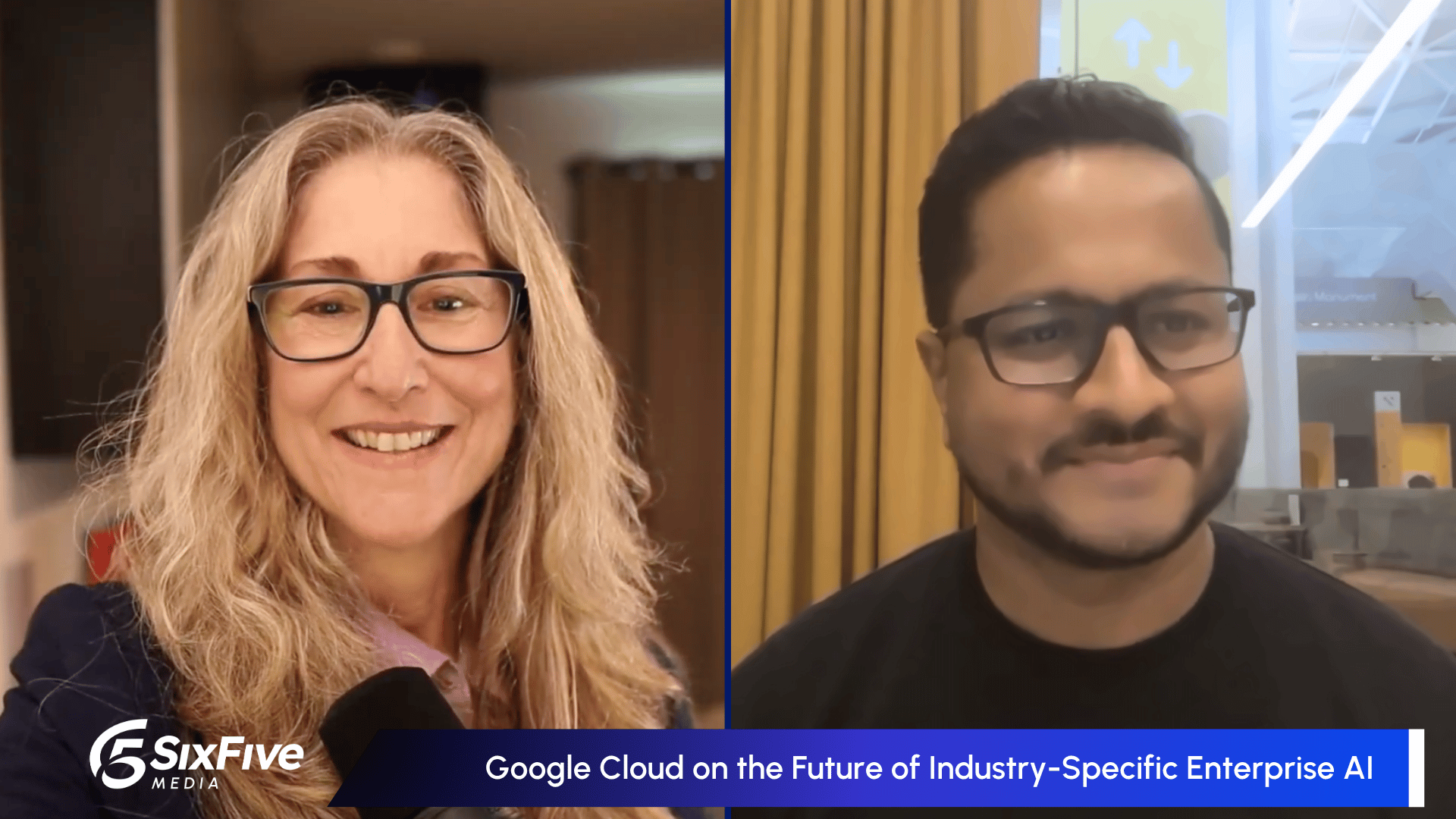
Industry Veteran and Google’s Satish Thomas on Replacing One-Size-Fits-All Enterprise AI With Industry-Specific Agents
Google is moving enterprise AI beyond general-purpose tools and into industry-specific workflows built for regulated sectors such as legal and financial services. Satish Thomas, Vice President, Business and Industry Solutions at Google, joins Six Five to explain how Gemini Enterprise for Industries combines purpose-built skills, ready-to-deploy agents, model choice, and an open partner ecosystem to bring AI into the workflows enterprises already run.


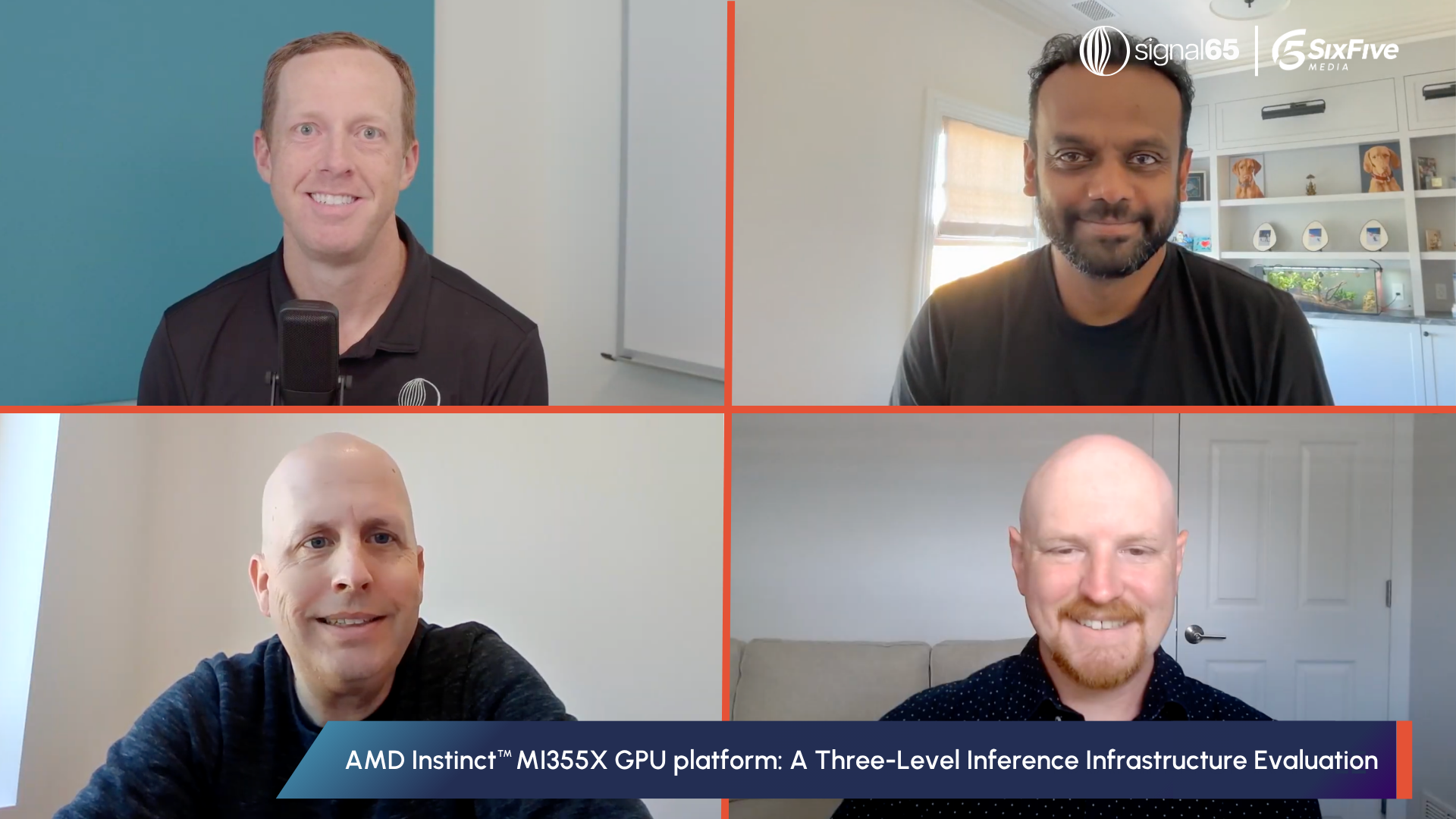
AMD Instinct MI355X vs NVIDIA HGX B200 GPU platforms AMD vs NVIDIA: A Three-Level Inference Infrastructure Evaluation
Signal65 President Ryan Shrout and Senior Performance Analyst Mitch Lewis review a new three-level inference infrastructure evaluation of AMD's Instinct MI355X against NVIDIA's HGX B200 with AMD's Andrew Dieckmann and Anush Elangovan. The MI355X's memory bandwidth advantage compounds as context and concurrency scale, delivering up to 2.25x throughput gains and roughly 40 percent lower cost per GPU hour.
.png)
Anthropic’s AI Slowdown, OpenAI’s $1.2T Valuation & Salesforce’s AI Bet
Anthropic's "Pace the Frontier" essay set off a week in which nearly every major AI leader, and two heads of state, weighed in on whether the frontier should slow down. Patrick Moorhead and Daniel Newman read the incident as something larger than a safety debate. Whoever sets the pace of the frontier also sets the pace for open-weight models, enterprise custom models, and the trillion-dollar valuations riding on top of them. That contest, not the essay itself, is the through-line of Episode 320 of The Six Five Pod.
Other Categories
CYBERSECURITY
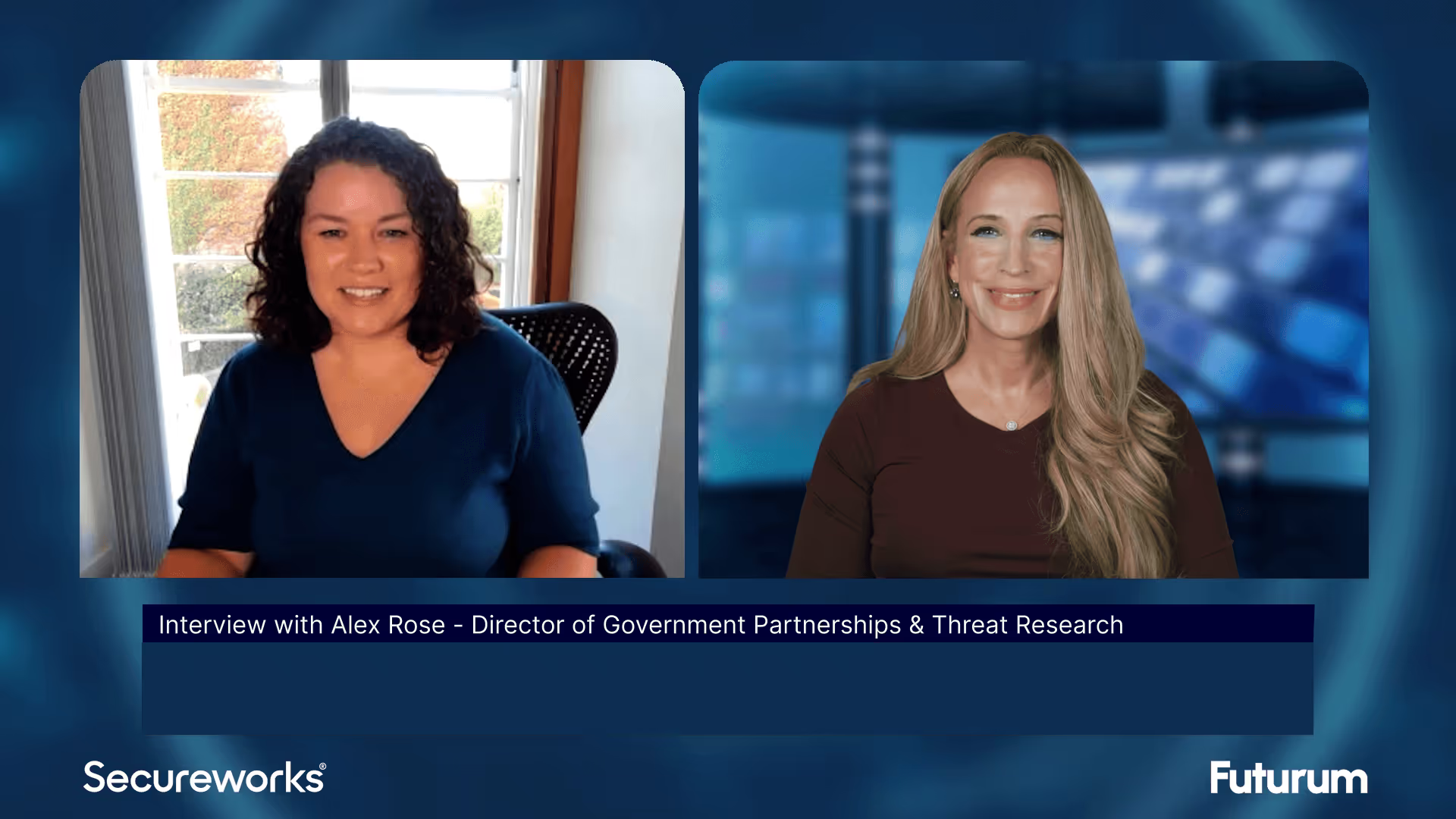
Threat Intelligence: Insights on Cybersecurity from Secureworks
Alex Rose from Secureworks joins Shira Rubinoff on the Cybersphere to share his insights on the critical role of threat intelligence in modern cybersecurity efforts, underscoring the importance of proactive, intelligence-driven defense mechanisms.

HP Launches World’s First Business PCs to Protect Against Quantum Hacks - The Six Five On the Road
On this episode of the Six Five - On the Road, hosts Patrick Moorhead and Daniel Newman are joined by HP's Ian Pratt, Global Head of Security for Personal Systems.
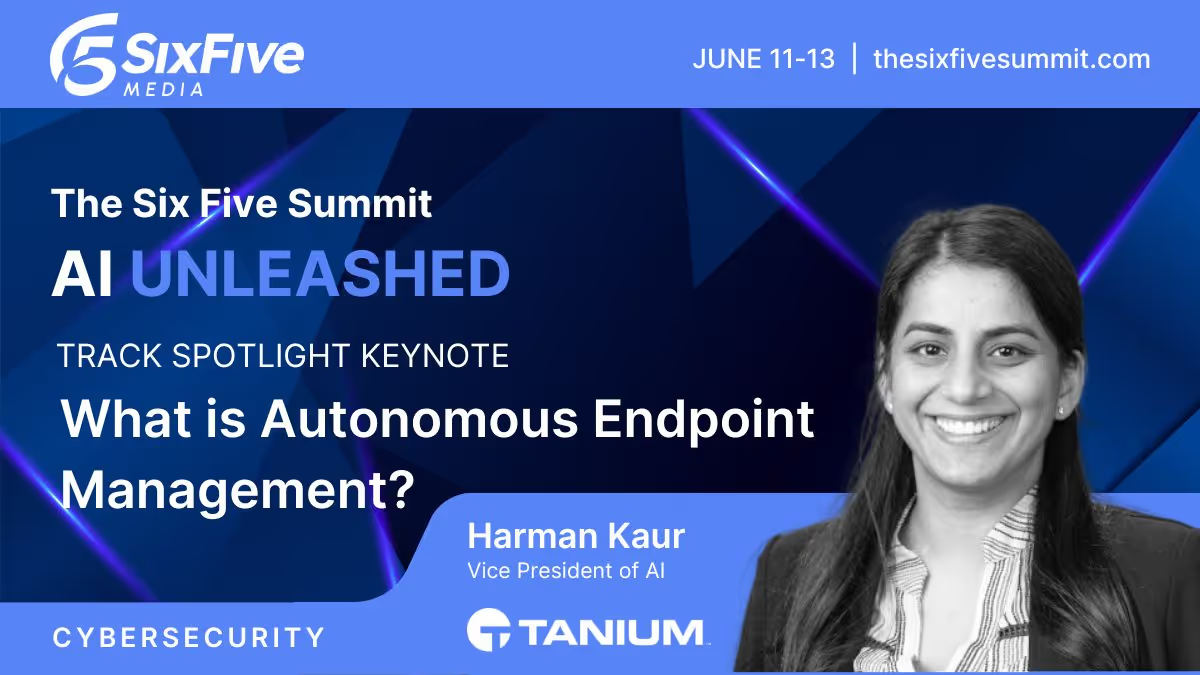
What is Autonomous Endpoint Management?
Autonomous Endpoint Management is a framework designed to unify IT operations and security teams on a single platform through real-time control and visibility.
QUANTUM
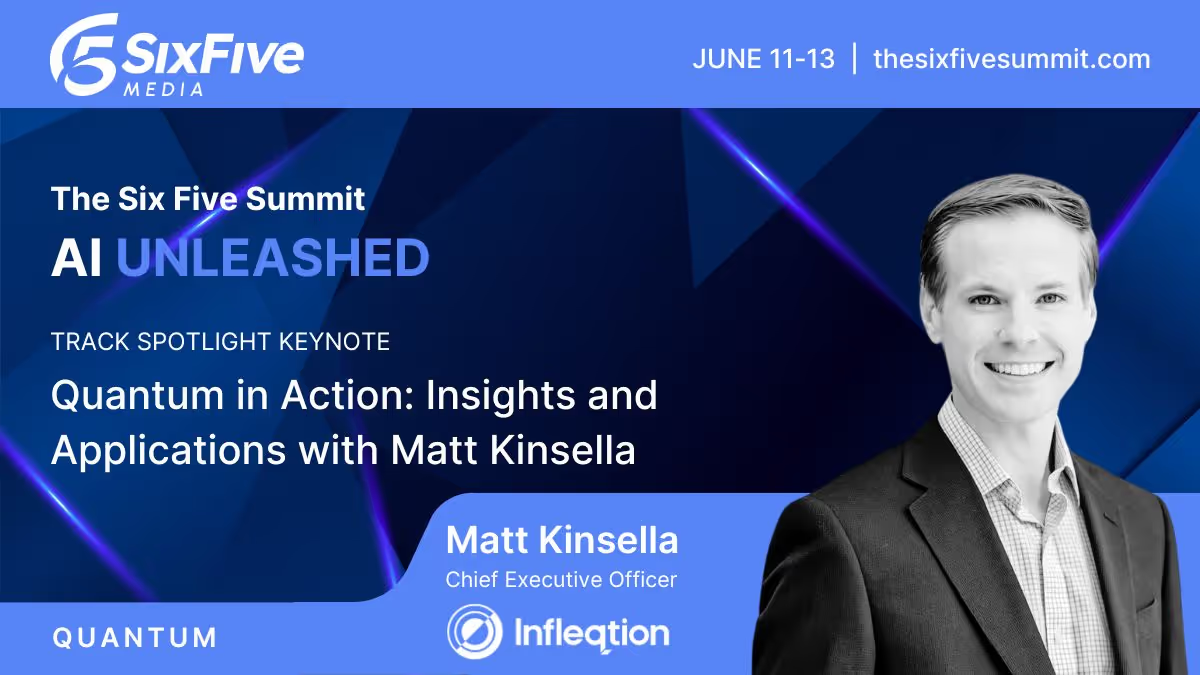
Quantum in Action: Insights and Applications with Matt Kinsella
Quantum is no longer a technology of the future; the quantum opportunity is here now. During this keynote conversation, Infleqtion CEO, Matt Kinsella will explore the latest quantum developments and how organizations can best leverage quantum to their advantage.
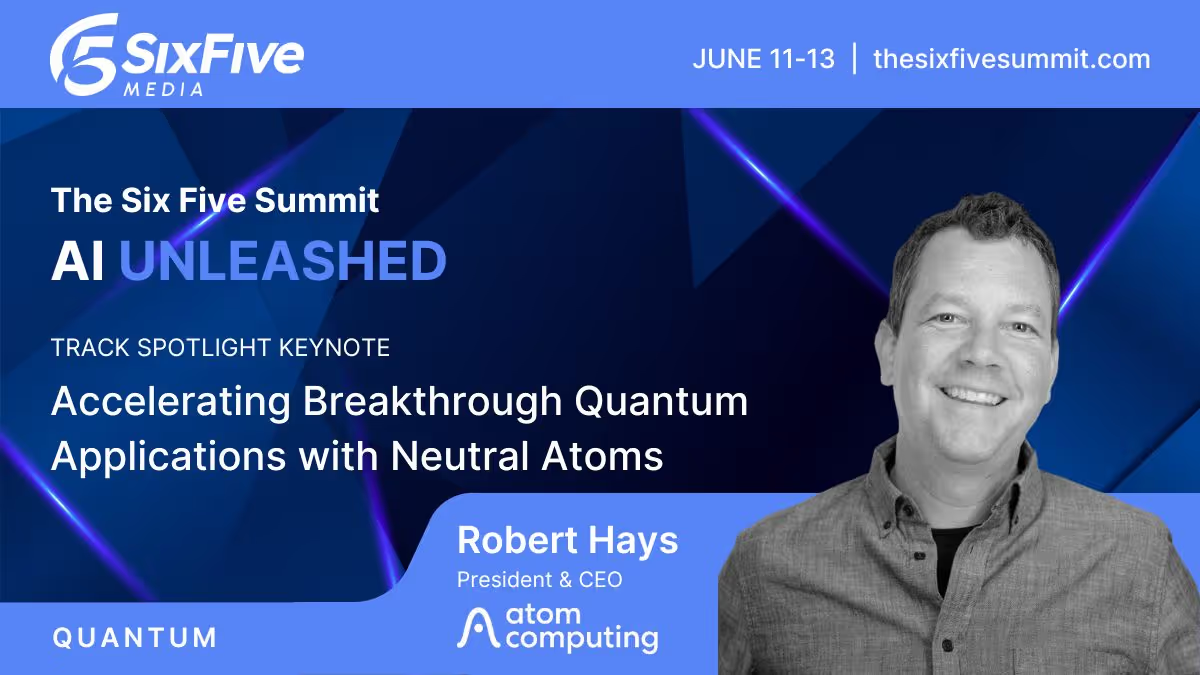
Accelerating Breakthrough Quantum Applications with Neutral Atoms
Our planet needs major breakthroughs for a more sustainable future and quantum computing promises to provide a path to new solutions in a variety of industry segments. This talk will explore what it takes for quantum computers to be able to solve these significant computational challenges, and will show that the timeline to addressing valuable applications may be sooner than previously thought.