
AI Infra Summit 2026: Five Takeaways Beyond the GPU
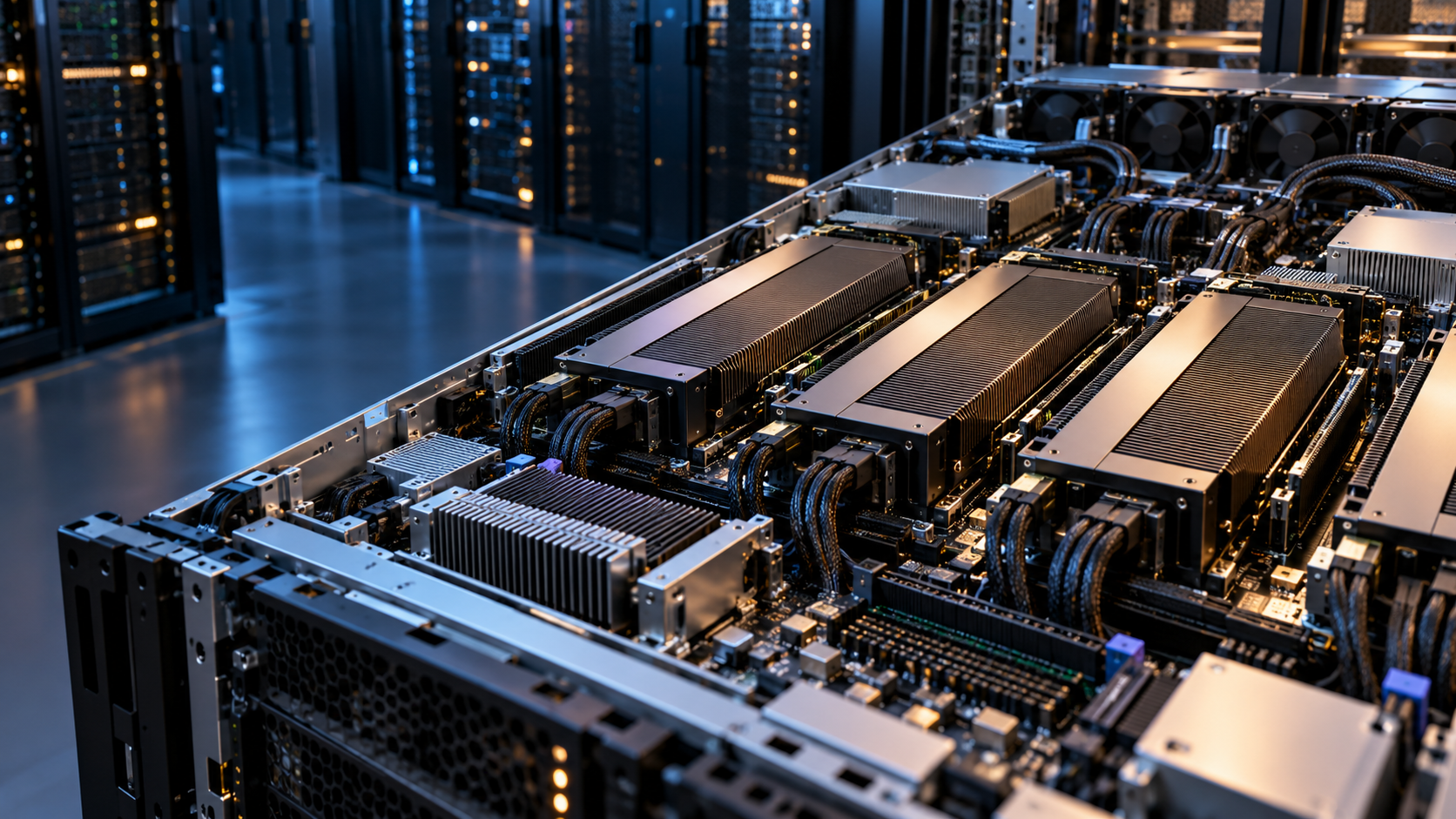
AI Infra Summit 2026 offered a practical reminder: scaling AI requires more than adding compute, as Six Five Media’s conversations explored accumulating data, engineering automation, and the demands of real-world deployment. Our takeaway is that AI infrastructure should be evaluated as a complete system supporting business outcomes, not simply a collection of faster chips.
At the September 15–17 event in Santa Clara, Six Five Media brought Matt Kimball and Brendan Burke together with leaders from Western Digital, Synopsys, and Ambarella to examine infrastructure readiness, cost, and performance. Across these conversations, a useful question emerged for technology leaders: what must work around an AI model before it can deliver reliable value at scale?
What were the key AI Infra Summit 2026 takeaways?
The clearest lessons from these three interviews concern data, economics, engineering workflows, physical deployment, and operational readiness. Together, they provide a framework for evaluating the distance between a successful demonstration and a sustainable production system.
- Storage must scale alongside compute: WD’s Tim Rausch explained why data continues accumulating as GPU resources are reused, creating infrastructure requirements that outlast individual AI workloads.
- Pilot economics need a production-scale test: Rausch’s total cost of ownership example showed how a small per-gigabyte error becomes consequential at much larger scale.
- Chip-design agents need domain knowledge: Synopsys’s Thomas Andersen described a progression from AI assistance to agents that execute engineering tasks, informed by tool, customer, and foundry expertise.
- Physical AI needs deployment evidence: Ambarella’s Muneyb Minhazuddin argued that buyers should assess reliability, upgrades, power efficiency, and repeatable performance across fleets, not just individual prototypes.
- Operations and integration matter as much as the model: Ambarella’s developer and ecosystem discussion emphasized getting applications onto hardware and making their business value clear.
Why is storage an AI infrastructure bottleneck?
Storage can become a constraint when retained data grows faster than the capacity supporting AI workloads, according to Tim Rausch, Senior Vice President of Product Engineering at WD. His explanation separates two things that infrastructure planning can mistakenly treat as one: compute that serves successive users and data that remains after those interactions end.
Rausch described a customer with idle GPUs because it could not bring hard drives online quickly enough, illustrating the risk of expanding one part of the system without the infrastructure to support it. For buyers, the useful question is not only how much compute to acquire, but whether data capacity and availability will keep that investment productive.
The conversation also challenged the assumption that older data is no longer useful: Rausch cited WD-sponsored research in which 55% of respondents were applying AI to older datasets, and described organizations moving some archived data back into active hard-drive storage. The planning implication is to reassess which historical data merits accessible storage, rather than assuming either that everything should be retained or that age alone determines value.
How do AI infrastructure costs change at scale?
A cost model that looks acceptable in a pilot can hide inefficiencies that become material in production, as Rausch illustrated through a hypothetical storage-tiering example. He compared an error of one cent per gigabyte across one terabyte, approximately $10, with the same error across 100 exabytes, approximately $1 billion.
That was an illustration of scale, not a reported customer loss or a forecast for enterprise AI spending. Its value is the discipline it suggests: test total cost of ownership, or TCO, against the intended production environment before treating a successful pilot as an approved architecture.
For infrastructure teams, we recommend revisiting storage placement, utilization, power requirements, and operating costs as deployment grows. The goal should be a repeatable cost per useful outcome, not simply the lowest purchase price for an individual component.
How is agentic AI changing chip design?
Agentic AI changes the workflow from suggesting an action to executing defined tasks, coordinating tools, and resolving problems, according to Thomas Andersen, Vice President of AI and Machine Learning at Synopsys. In his discussion with Kimball and Burke, Andersen distinguished AI-assisted tools from multi-agent workflows that could take on increasingly complex engineering work.
His starting point was practical: automate tedious, repetitive work such as cleaning up data and reconciling timing constraints, then expand responsibility as systems become more capable. The opportunity is to give engineers more room for architecture and design decisions, rather than frame automation solely as a replacement for engineering headcount.
Domain knowledge is central to that progression: Andersen said useful automation must bring together electronic design automation (EDA) expertise, customer-specific design knowledge, and foundry process information, while respecting customers’ proprietary technology. That makes this a workflow and knowledge-integration challenge, not merely a choice of language model.
Andersen also placed a clear limit on the near-term outlook, saying the highly automated specification-to-final-product vision would not arrive in the next six to twelve months. Our recommendation is to evaluate agents against bounded engineering tasks and measurable quality requirements before extending their authority across a design flow.
What separates physical AI prototypes from production?
Physical AI readiness should be measured by reliable operation across deployed devices, not by the quality of a single demonstration, argued Muneyb Minhazuddin, Customer Growth Officer at Ambarella. He described the challenge as moving from concentrated cloud infrastructure to large numbers of devices that must operate, receive updates, and remain useful over years.
His architectural point was equally important: physical systems require attention to sensors, local processing, memory, power, and response timing, rather than simply fitting a smaller version of a cloud model onto a device. Buyers should therefore begin with the physical task and its operating constraints, then evaluate the hardware and models needed to support it.
Minhazuddin offered a hospital-monitoring example in which running AI in cameras removed the need for a separate server processing every 50 camera streams, describing a potential change in both cost and deployment architecture. That is a vendor-reported example, not a universal savings benchmark; its broader value is showing why the location of inference deserves as much scrutiny as the model itself.
Why do developer tools and fleet management matter?
Deployment readiness extends beyond whether a model runs: the Ambarella discussion also focused on how developers evaluate silicon, port applications, and connect technology to enterprise use cases. Minhazuddin described early-access partners porting applications in three days using an agentic development layer, compared with eight-to-twelve-month timelines he had encountered previously.
Those are reported partner experiences, not a guaranteed implementation timeline. For technology leaders, they suggest a useful evaluation criterion: test the path from an existing application to working hardware, not just the hardware’s performance in isolation.
In a related LinkedIn post about the Ambarella partnership, ZEDEDA’s Said Ouissal emphasized securely operating AI across cameras, robots, and machines, with centralized deployment and updates. The companies’ announcement distinguished local inference from cloud-based fleet orchestration and specified early-access support for the N1-655, with additional solution blueprints and development kits expected in Q4 2026.
That distinction matters when assessing production readiness. Running AI locally need not mean managing every device locally, and an announced path to fleet scale should not be mistaken for a completed fleet deployment.
The Six Five takeaway: evaluate the system, not just the chip
Our reading of these conversations is that the next useful AI infrastructure discussion should start with what must remain dependable as deployment grows. The right questions concern the entire system: data availability, production economics, engineering quality, device reliability, and ongoing operations.
Before expanding a deployment, ask:
- Data readiness: Can the storage architecture support both new data and the historical information the workload needs?
- Economics: Does the cost model still work at the intended production scale?
- Automation: Which tasks can agents perform reliably, and where should human review remain?
- Physical operation: Can devices meet their power, response-time, and reliability requirements outside a controlled demo?
- Lifecycle management: How will the organization deploy, update, secure, and maintain the system over time?
Use those questions to pressure-test the next pilot or infrastructure proposal. Explore Six Five Media’s AI Infra Summit 2026 coverage for the conversations behind these takeaways.
Frequently asked questions
Is AI infrastructure only about GPUs?
No. Six Five’s AI Infra Summit interviews highlighted storage capacity, total cost of ownership, chip-design workflows, and edge deployment as important considerations when scaling AI.
What is the difference between AI-assisted and agentic chip design?
In Andersen’s explanation, AI-assisted tools offer suggestions that engineers act on, while agentic workflows execute delegated tasks and can coordinate multiple agents and tools. He described broader autonomy as a progression, not an already-complete replacement for human-led chip design.
Does physical AI eliminate the cloud?
Not necessarily. The Ambarella–ZEDEDA announcement combines inference on local devices with centralized cloud orchestration for deploying, updating, and operating AI workloads.
AUTHOR

SHARE


Related Content
Further Reading
Get insider access to Six Five Media's analyst coverage, major tech events, and executive interviews
