
AI Rationing in 2026: Why Enterprise Budgets Are Concentrating, Not Contracting

The Macro Signal
Enterprise AI is entering a new phase, one defined less by experimentation and more by execution.
Whether it's discussions on The Six Five Pod, conversations with CEOs and technology executives, or interviews with organizations deploying AI at scale, the message is remarkably consistent. Success is no longer measured by the number of pilots launched. It's measured by the ability to move the right workloads into production and generate business impact.
Call it disciplined investment, AI consolidation, or the ROI era. Whatever the label, enterprise buyers are making the same shift: fewer initiatives, larger strategic investments, and a renewed focus on the infrastructure, governance, and operational maturity required to scale AI successfully.
The Rationing Question
On Episode 309 of The Six Five Pod, Patrick Moorhead and Daniel Newman tackled a question that's increasingly surfacing in enterprise boardrooms: Are AI budgets actually shrinking?
Patrick Moorhead argued that the latest data points point toward greater efficiency and selectivity, not unchecked expansion. He cited Accenture's recent guidance cut—new bookings down 2%, its 2026 revenue outlook trimmed 3–4%, and the stock falling 13%—alongside a growing list of consumption signals, from Uber exhausting its Claude licenses to Microsoft restricting developer access to Claude Code. As he put it:
"AI cost management is now a venture category, which only happens when bills hit the wall."
His point was clear: as token efficiency becomes a priority and AI costs come under greater scrutiny, enterprises are becoming much more intentional about where they invest.
Daniel Newman offered a different interpretation. What looks like budget rationing, he argued, is actually budget concentration. AI spending isn't disappearing. It's moving from hundreds of proofs of concept into a much smaller number of production deployments capable of delivering commercial outcomes. Meanwhile, hyperscaler capital expenditures continue to rise, reinforcing the view that long-term investment in AI infrastructure remains strong.
Despite approaching the question from different angles, both arrived at essentially the same conclusion:
"A CIO cutting a bunch of pilots that are failing and going with two high-quality production systems that are driving revenue or driving efficiency into the business—that's where the spend is going to go. The agent wave hasn't even hit the budget yet."
The takeaway isn't that enterprises are spending less on AI. They're becoming far more disciplined about where they spend it. The era of broad experimentation is giving way to focused execution, with fewer initiatives receiving larger investments and success increasingly measured by production impact rather than pilot volume.
Model Risk Becomes Business Risk
As enterprises become more disciplined about AI spending, another consideration is rapidly moving up the priority list: resilience.
Episode 309 of The Six Five Pod also examined the implications of the U.S. government's June 12, 2026 action requiring Anthropic to suspend access to Claude Fable 5 and Mythos 5 within a 90-minute compliance window. The incident highlighted a reality many enterprise AI strategies have yet to fully account for: access to frontier AI models is no longer purely a technical or commercial consideration—it is increasingly shaped by geopolitics and regulation.
For enterprise leaders, the lesson extends well beyond a single provider or government action. Organizations that depend on a single model, cloud platform, or AI service introduce a new category of operational risk. The assumption that model access will always be available can no longer be taken for granted.
That has significant implications for enterprise architecture. Model portability, multi-model strategies, and deployment flexibility are becoming strategic capabilities rather than technical nice-to-haves. At the same time, export controls are evolving beyond semiconductors and infrastructure to include AI models and the capabilities they enable, creating a new layer of governance and compliance for global organizations.
The business question is equally important. If access to a critical AI model can be disrupted with little notice, how does that affect customer commitments, product roadmaps, revenue forecasts, and operational continuity?
For CIOs, CTOs, and product leaders, AI resilience is becoming as important as AI performance. As enterprises mature their AI strategies, planning for model availability, portability, and regulatory uncertainty will increasingly become part of the core architecture—not an afterthought.
The Multi-Modal Mandate
If portability is no longer optional, then neither is multi-model architecture. Snowflake CEO Sridhar Ramaswamy made the case directly in his interview with Six Five Media,"Regulators will say we don't want you to be all in on one, because in case there is downtime, we need you to still be up."
Snowflake's approach reflects a broader architectural shift. Rather than optimizing around a single frontier model, enterprises are increasingly designing AI platforms that can route workloads across multiple proprietary and open-source models based on performance, availability, and cost.
For buyers, the implication is concrete. The two production bets that survive the concentration era have to be architected for model substitution from day one — across providers, across deployment locations, and across price/performance tiers. The CIO who picked one model and built three years of workflow around it is now the CIO with a portability project on the 2026 H2 roadmap.
Measuring What Matters
HPE offers a practical example of what this kind of discipline looks like in practice.
At HPE Discover 2026, Dan Waibel, Global Chief Data and AI Officer at HPE, joined David Nicholson and Fernando Montenegro to discuss how HPE manages AI across more than 250 production applications. Rather than treating AI as a collection of isolated pilots, the company has built an operating model that continuously measures usage, cost, governance, and business outcomes together.
The first lesson is a shift in measurement. As AI spending grows, optimizing for the lowest cost per token becomes less meaningful than understanding the business value each workload creates. HPE tracks AI consumption at the user level, ties it back to specific business use cases, and works with finance to evaluate ROI as part of an ongoing feedback loop. The result isn't simply lower AI costs—it's better investment decisions. According to Waibel, that discipline has contributed to approximately $350 million in annual operating expense savings.
The second lesson is that governance should enable speed, not slow it down.
Rather than forcing every project through the same approval process, HPE separates experimentation from production. Teams can move quickly while testing new ideas, but once an application is ready for enterprise deployment, it passes through structured reviews covering cybersecurity, legal, compliance, and privacy. Governance becomes part of the delivery process instead of a barrier to it.
Taken together, these practices illustrate what the next phase of enterprise AI requires. Organizations that consistently generate returns from AI won't necessarily have the largest budgets or the most pilots. They'll have the operating discipline to measure outcomes, allocate capital intelligently, and scale the initiatives that prove their value.
Infrastructure Becomes the Differentiator
One of the clearest takeaways from the analyst discussions at HPE Discover 2026 wasn't a single product announcement—it was a broader shift in enterprise priorities. Across the event, the conversation centered less on AI's future potential and more on the operational capabilities required to deploy it successfully at scale.
That distinction matters because it mirrors the way enterprise AI budgets are evolving. As organizations concentrate investment on fewer production deployments, the supporting infrastructure becomes just as important as the models themselves.
Three priorities stood out.
Networking is becoming AI infrastructure
For years, networking was treated as a supporting layer beneath compute and storage. AI is changing that equation. As inference workloads become more distributed and agentic systems communicate across clouds, data centers, and edge environments, network architecture increasingly determines how well AI applications perform in production. Throughout HPE Discover, networking emerged as a strategic design consideration rather than an implementation detail.
The implication for enterprise IT is straightforward: organizations that postpone network modernization may find that infrastructure—not models—becomes the limiting factor in AI adoption.
AI is expanding the security conversation
AI introduces new security challenges while simultaneously becoming a security tool itself.
During the analyst roundtable, Fernando Montenegro described the enterprise challenge as three distinct disciplines: securing AI systems, using AI to improve cybersecurity, and protecting organizations from AI-enabled threats. Each requires different technologies, governance models, and investment priorities. As AI budgets become more targeted, organizations will increasingly need to evaluate these security investments independently rather than treating "AI security" as a single line item.
Hybrid cloud is becoming an operational discipline
The conversation around hybrid cloud has also shifted.
Rather than debating where workloads should run, enterprise leaders are increasingly focused on how they can manage AI consistently across diverse environments over time. Operational platforms that provide common management, observability, governance, and recovery across on-premises infrastructure and multiple clouds reduce both operational complexity and migration risk. In an environment where every AI investment must demonstrate measurable value, those capabilities become strategic enablers rather than infrastructure conveniences.
Taken together, these themes reinforce the same conclusion taking shape across the industry. The competitive advantage in enterprise AI is becoming less about acquiring access to the latest model and more about building the operational foundation that allows AI to scale reliably, securely, and economically. Execution—not vision—is becoming the differentiator.
Closing the Pilot-to-Production Gap
If enterprise AI is entering an execution-driven era, then the highest-leverage investment organizations can make isn't launching more pilots—it's moving the right ones into production.
That was the central takeaway from Wipro's Lakshmanan A V, VP and Global Practice Head of Cloud Infrastructure and Security Services, in his conversation with Matt Kimball and David Nicholson at HPE Discover 2026. After nearly two years of experimentation, the market is shifting from asking "What can AI do?" to "Which use cases are ready to scale?"
That changes the investment equation. Success is no longer determined by the model alone, but by the ability to align infrastructure, data, governance, security, and operations into a production-ready platform. As Lakshmanan noted, AI has made infrastructure a strategic business decision again.
Wipro's "Run AI, Build AI, Reimagine AI" framework reflects that shift. Organizations that consistently move AI into production treat infrastructure, hybrid cloud, governance, and operating models as one connected strategy—not a series of independent projects.
In today's AI market, the pilot isn't the destination. It's the qualification round.
What This Means for the Rest of 2026
Taken together, these conversations point to a clear shift in how enterprise AI is being funded, deployed, and measured.
The organizations pulling ahead aren't abandoning AI, they're becoming far more disciplined about where they invest. The emerging playbook is consistent:
- Prioritize a smaller number of production deployments tied to measurable returns.
- Design for flexibility with multi-model strategies and model portability from the outset.
- Measure AI by business impact, not infrastructure metrics alone.
- Build governance into the delivery process so it accelerates adoption instead of slowing it down.
- Treat networking, hybrid cloud, security, and operations as strategic AI capabilities rather than supporting infrastructure.
- Invest in deployment strategies that make AI repeatable, scalable, and economically sustainable.
This is why the debate Patrick Moorhead and Daniel Newman framed around "AI budget rationing" ultimately points to a different conclusion. The question isn't whether enterprises are spending less on AI. It's what they're choosing to fund.
Budgets are shifting away from broad experimentation and toward production systems that can demonstrate measurable returns. As AI becomes more deeply embedded in enterprise operations—and the next wave of agentic applications begins to scale—that discipline will only become more important.
The winners in the second half of 2026 won't necessarily be the organizations with the largest AI budgets. They'll be the ones that repeatedly turn AI investment into production systems, production systems into measurable business results, and business results into the confidence to scale further.
Watch the full Six Five Media conversations:
AI Budgets Are Growing. AI Projects Aren't. Here's Why. — Ep. 309 of The Six Five Pod
AI Budgets: Rationing or Just Getting Real? — Ep. 309 of The Six Five Pod
Why Enterprises Can't Go All-In on One AI Model — with Sridhar Ramaswamy, Snowflake
The Hidden Cost of Agentic AI Nobody Budgeted For — with Dan Waibel, HPE
Your AI Proof of Concept Worked. Now What? — Wipro x HPE
What Most People Missed at HPE Discover 2026 — Analyst Recap
What "Self-Driving Networking" Actually Means — with Kevin Hutchins, HPE
AUTHOR

SHARE


Related Content
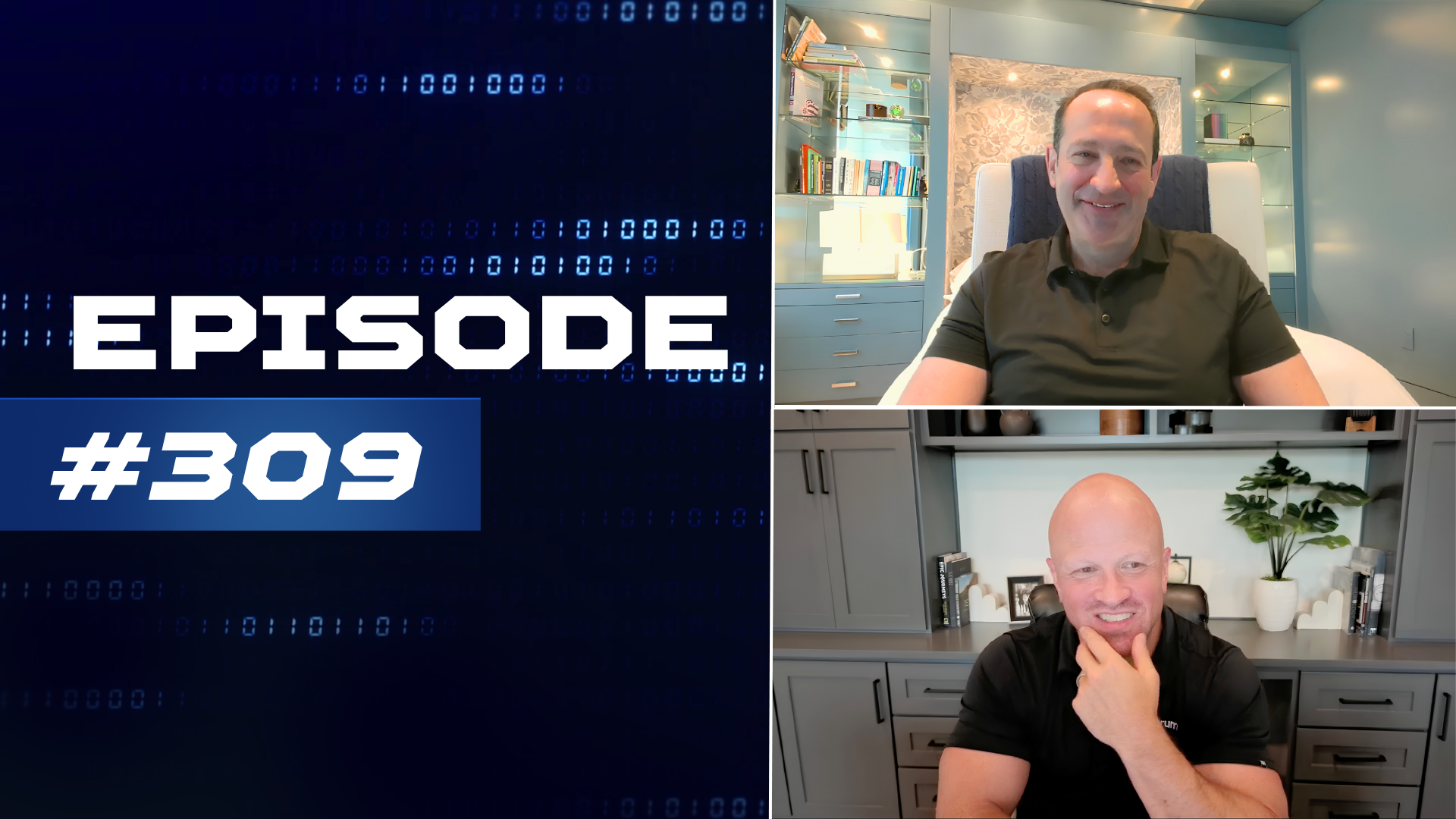
Model Access, Market Signals, and the Enterprise Spending Reality: Episode 309
Patrick Moorhead and Daniel Newman return from a packed week of travel, covering HPE Discover 2026 and Pure Accelerate hosted by Everpure. They break down the government-forced shutdown of Anthropic's Mythos 5, the Apple-Intel foundry signal, the xAI-Cursor acquisition, and whether enterprise AI spending is actually contracting or simply concentrating. Episode 309 of The Six Five Pod covers the week’s events, market moves, and the structural questions that follow.


Further Reading

Get insider access to Six Five Media's analyst coverage, major tech events, and executive interviews
