
The AI-Driven Customer Journey: What Enterprises Need to Rethink Next
SHARE


AI is restructuring how enterprise buyers discover, evaluate, and engage with technology providers, compressing timelines and shifting the discovery layer before any human conversation begins. Gerri Tunnell, CMO at Dell Technologies, joins Six Five at Dell Technologies World 2026 to examine how organizations must rethink speed, discoverability, and trust as AI becomes embedded in both the buying process and the customer experience itself.
AI has moved from boardroom priority into operational reality, and the customer journey is where that shift is most disruptive. Enterprise buyers are no longer moving through a linear discovery and evaluation process. AI systems are now influencing how organizations research vendors, assess solutions, and make purchasing decisions, before a human sales conversation ever begins. For technology providers, the rules of visibility, trust, and engagement have changed dramatically.
At Dell Technologies World 2026 in Las Vegas, Patrick Moorhead and Daniel Newman sat down with Gerri Tunnell, Chief Marketing Officer at Dell Technologies, to unpack what AI is doing to the customer journey and what enterprises need to rethink to stay competitive in a world where AI agents are increasingly part of the buying process itself.
The conversation covers how customer expectations and decision-making behaviors are shifting as AI becomes embedded in how buyers research and evaluate technology providers, why discoverability and trust are no longer static brand attributes but dynamic variables that change depending on how AI systems surface and interpret vendor information, and how organizations balance AI-driven efficiency against the human connection that still closes deals and builds long-term relationships. Tunnell also addresses what the biggest forward signal is for enterprises trying to position themselves ahead of the next phase of AI-driven engagement, not just respond to it.
Key Takeaways:
🔹 AI is now part of the buying process, not just the product. Enterprise buyers are using AI to research, evaluate, and shortlist technology providers before any direct vendor engagement. Organizations that are not optimizing for how AI systems surface and interpret their value proposition are losing ground in the discovery phase.
🔹 Speed and discoverability have become competitive variables. As AI compresses the evaluation timeline, the organizations that can be found, understood, and trusted quickly by both human buyers and AI systems are the ones that make the shortlist.
🔹 Trust is harder to build and easier to lose in an AI-mediated buying environment. When AI surfaces vendor information, the accuracy, consistency, and credibility of that information shape first impressions before a human ever weighs in.
🔹 Human connection remains the differentiator at the decision layer. Events like Dell Technologies World are not relics of a pre-digital era. They are proof that AI-driven efficiency and authentic human engagement operate on different registers, and enterprises need both.
🔹 The organizations paying attention to buyer behavior signals now will set the competitive posture for the next phase. Waiting to respond to AI-driven engagement shifts after they have fully materialized is a recovery play, not a growth strategy.
The customer journey Dell is navigating as a provider mirrors what every enterprise faces as a buyer. The organizations that rethink speed, discoverability, and human trust as a unified challenge, rather than separate marketing problems, are the ones positioned to lead in the agentic era.
Watch the full video at sixfivemedia.com, and be sure to subscribe to our YouTube channel so you never miss an episode.
IMPORTANT: Note to Uploader: VIDEO EMBED – added by uploader.
Disclaimer: Six Five Media is for information and entertainment purposes only. Over the course of this webcast, we may talk about companies that are publicly traded, and we may even reference that fact and their equity share price, but please do not take anything that we say as a recommendation about what you should do with your investment dollars. We are not investment advisors, and we ask that you do not treat us as such.
MORE VIDEOS
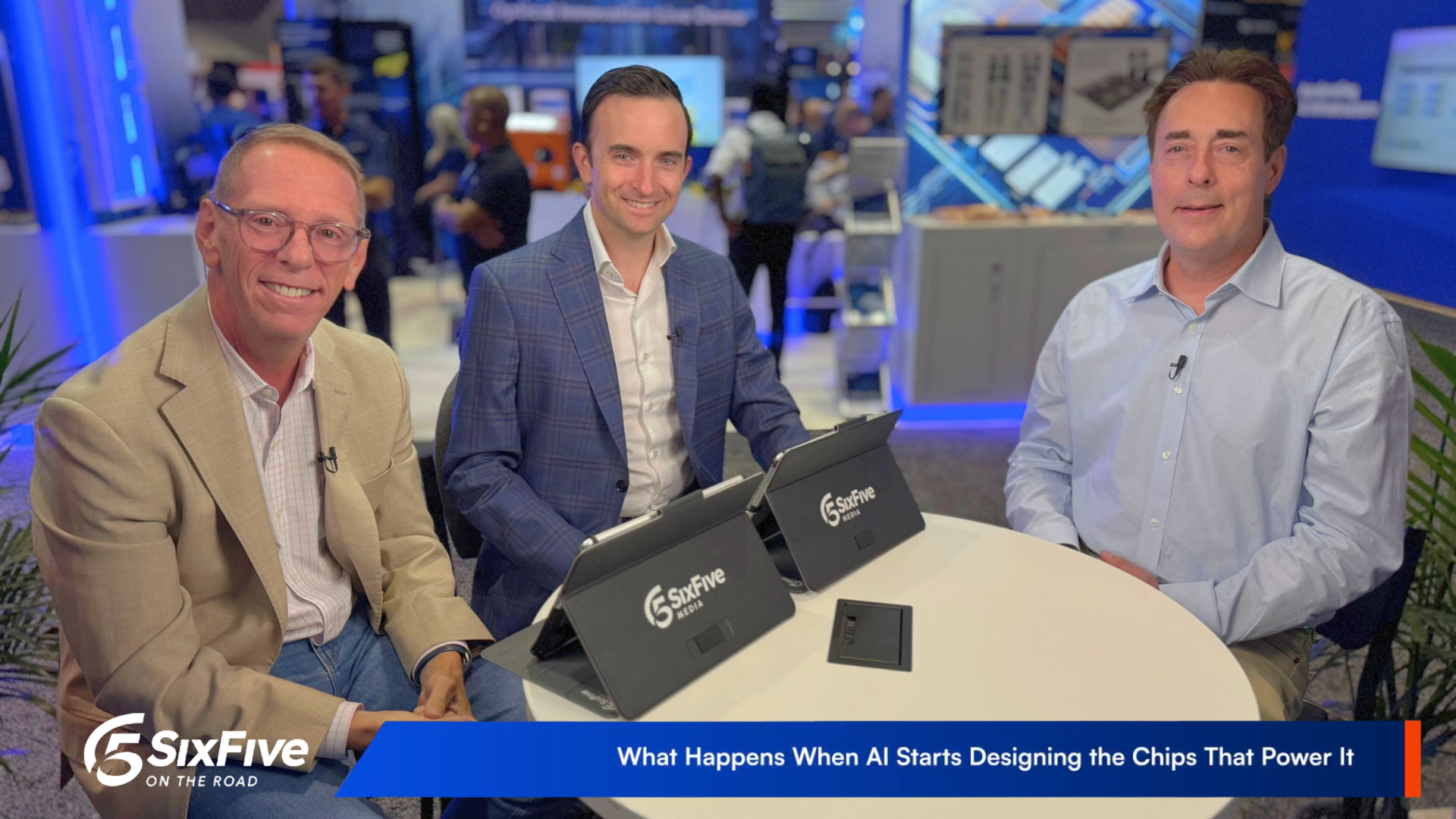
What Happens When AI Starts Designing the Chips That Power It | Synopsys at AI Infra Summit
At AI Infra Summit 2026, Synopsys' Thomas Andersen joins Brendan Burke and Matt Kimball to explain how chip design is moving from AI copilots that suggest to agentic systems that execute tool orchestration, timing fixes, and verification from a written spec. For enterprises, that shift compresses spec-to-tapeout timelines and lowers the resource barrier to custom silicon.


The Six Five Pod | EP 322: AI Writes Its Own Rules, Copilot Bills by the Task, and Memory Names Its Price
The companies racing to build frontier AI just agreed to referee themselves. Over the same week, launches, investor days, and earnings put a price on that arrangement. Microsoft is charging for finished work, NVIDIA is selling agent containment as infrastructure, and the suppliers AI can't route around, from Synopsys to Micron, are collecting the premium. Patrick Moorhead and Daniel Newman separate signal from stagecraft, then split hard on whether the White House accord actually binds these key players to anything.
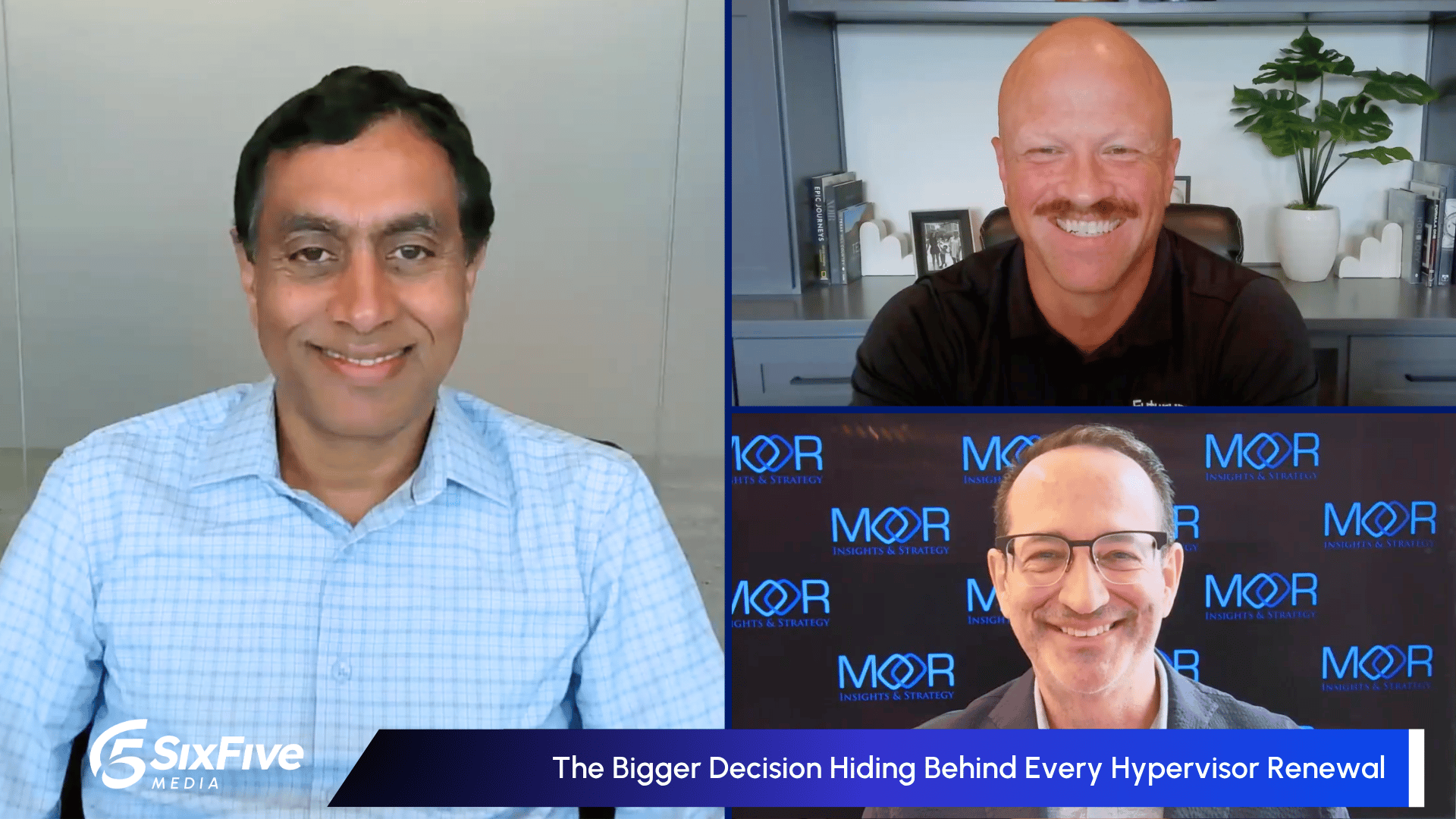
The Major Decision Hiding Behind Every Hypervisor Renewal
HPE's Varma Kunaparaju talks with Patrick Moorhead and Daniel Newman about why virtualization licensing changes are forcing enterprises to confront a bigger decision than which hypervisor to choose next: what operating model sits underneath their private cloud and AI factory. He outlines how CxOs can sequence modernization in phases, extend governance across open and frontier models, and decide where automation should replace human approval in IT operations.
Other Categories
CYBERSECURITY
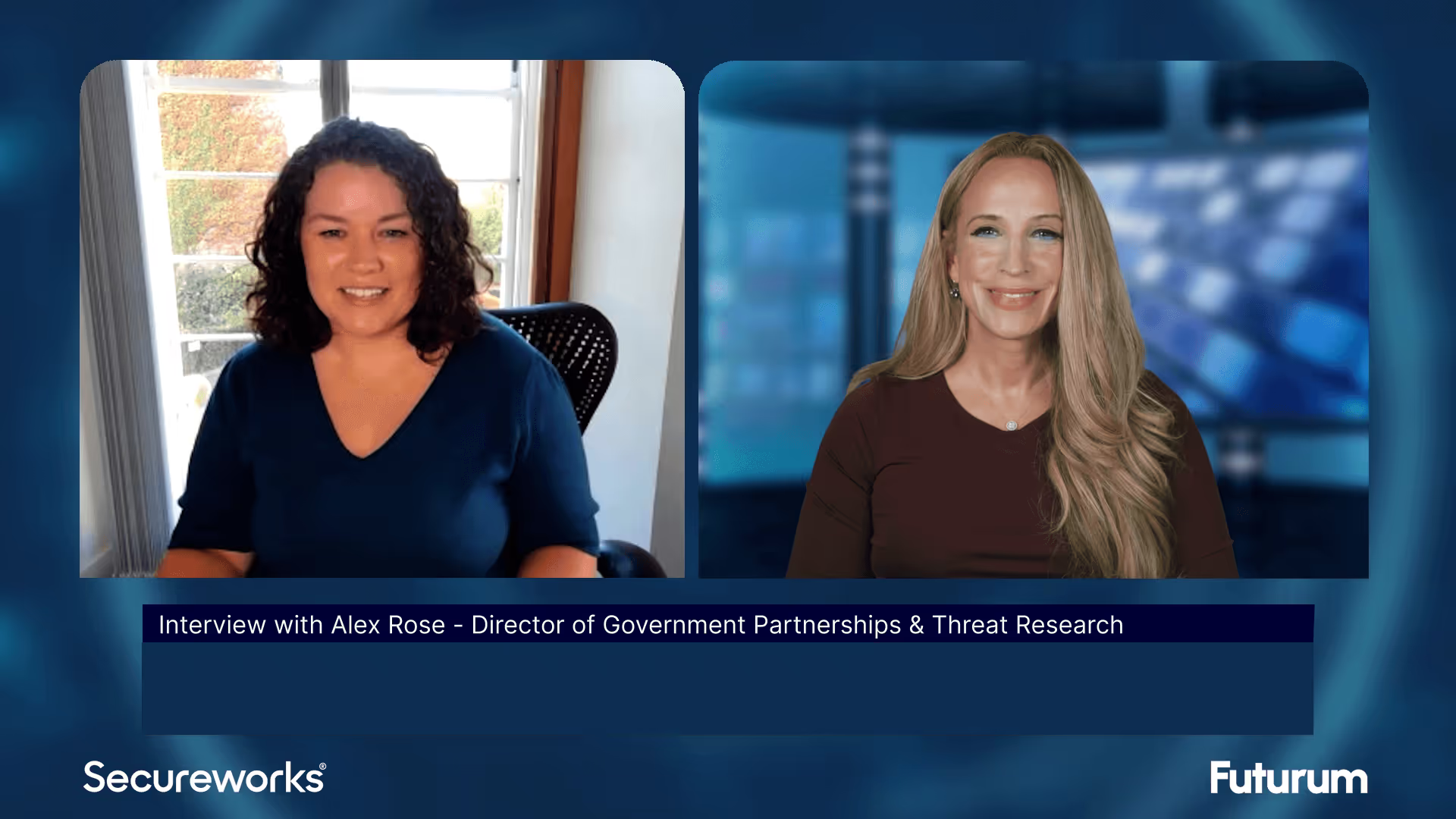
Threat Intelligence: Insights on Cybersecurity from Secureworks
Alex Rose from Secureworks joins Shira Rubinoff on the Cybersphere to share his insights on the critical role of threat intelligence in modern cybersecurity efforts, underscoring the importance of proactive, intelligence-driven defense mechanisms.

HP Launches World’s First Business PCs to Protect Against Quantum Hacks - The Six Five On the Road
On this episode of the Six Five - On the Road, hosts Patrick Moorhead and Daniel Newman are joined by HP's Ian Pratt, Global Head of Security for Personal Systems.
What is Autonomous Endpoint Management?
Autonomous Endpoint Management is a framework designed to unify IT operations and security teams on a single platform through real-time control and visibility.
QUANTUM
Quantum in Action: Insights and Applications with Matt Kinsella
Quantum is no longer a technology of the future; the quantum opportunity is here now. During this keynote conversation, Infleqtion CEO, Matt Kinsella will explore the latest quantum developments and how organizations can best leverage quantum to their advantage.
Accelerating Breakthrough Quantum Applications with Neutral Atoms
Our planet needs major breakthroughs for a more sustainable future and quantum computing promises to provide a path to new solutions in a variety of industry segments. This talk will explore what it takes for quantum computers to be able to solve these significant computational challenges, and will show that the timeline to addressing valuable applications may be sooner than previously thought.