
The Hidden Cost of Agentic AI Nobody Budgeted For
SHARE


As enterprises move agentic AI from experimentation into operational deployment, leaders are confronting new questions around governance, token economics, and measurable business value. Dan Waibel, Global Chief Data and AI Officer at HPE, joins Six Five at HPE Discover 2026 to examine the practical priorities organizations need to address to scale AI responsibly while maximizing return on investment.
Agentic AI just walked out of the sandbox. It's running inside real business processes now, and that move exposes problems pilots never had to solve: what happens when an autonomous system makes a costly decision nobody approved, or when token consumption shows up on a budget line, finance starts asking hard questions about. The organizations getting this right aren't avoiding those problems. They're solving them before scale forces the issue.
At HPE Discover 2026 in Las Vegas, David Nicholson and Fernando Montenegro sat down with Dan Waibel, Global Chief Data and AI Officer at HPE, to discuss what it takes to move AI from promising technology to sustainable business capability. Drawing on his experience leading AI strategy inside one of the world's largest enterprise technology companies, Waibel offers a candid perspective on where organizations are succeeding, where they are struggling, and what separates production-ready AI programs from perpetual pilot projects.
The conversation explores how organizations can establish governance without slowing innovation, manage the growing realities of AI economics and token consumption, and create accountability as autonomous systems become more deeply embedded in business processes. Waibel also examines the factors distinguishing organizations that are generating measurable returns from their AI investments from those still working to justify continued spending, offering practical insight into what responsible AI scale actually looks like in practice.
Key Takeaways:
🔹 Scaling agentic AI safely requires solving operational challenges first. Organizations moving these systems into real business processes without addressing the foundational questions first are building risk into their deployment from day one.
🔹 Token economics has become a strategic issue, not a technical footnote. As AI consumption expands, organizations that manage costs intentionally are positioned to sustain AI investment rather than have it questioned at the next budget review.
🔹 Governance is the variable that determines whether AI scales responsibly or gets throttled. The right governance capabilities enable enterprises to move faster with confidence; the wrong approach invites risk or slows innovation to a crawl.
🔹 Measurable business return, not deployment volume, is what separates AI leaders from AI experimenters. Organizations under increasing scrutiny for their AI spend need to demonstrate outcomes, and those that can are pulling ahead of those that cannot.
🔹 The shift from experimentation to operational deployment changes what leadership needs to prioritize. Waibel's perspective, informed by HPE's own data and AI strategy, gives enterprise leaders a clear view of what the transition requires.
🔹 The enterprises moving fastest with agentic AI are the ones solving governance and economics early enough to scale without losing control.
Watch the full video at sixfivemedia.com, and be sure to subscribe to our YouTube channel so you never miss an episode.
Disclaimer: Six Five Media is for information and entertainment purposes only. Over the course of this webcast, we may talk about companies that are publicly traded, and we may even reference that fact and their equity share price, but please do not take anything that we say as a recommendation about what you should do with your investment dollars. We are not investment advisors, and we ask that you do not treat us as such.
Dan Waibel:
I was in Japan last week and I got on the fastest train in the world, the bullet train. It goes 200 miles an hour. How do you think they can get a train to go 200 miles an hour safely? Because they have very, very specific safety standards and guardrails. It's the same thing with AI governance. If you set it up properly, you have clear rules, you have clear policies, you can move very quickly through the governance process.
David Nicholson:
Hello and welcome to Six Five In The Booth, coming to you live from HPE Discover 2026. I'm Dave Nicholson and I'm joined by my co-host, Fernando Montenegro. Fernando, good to be with you. Absolutely. And we have a really interesting guest because he's not just a talker, he's a doer. Dan Waybill, he is Global Chief Data and AI Officer at HPE, which means he drinks the champagne, he eats the dog food, he mostly spends his time actually doing. And so I want to kick this off. Dan, first of all, welcome.
Dan Waibel:
Thank you, Dave.
David Nicholson:
It's good to see you again.
Dan Waibel:
Yes.
David Nicholson:
We'll review the tape from last year and see if the predictions held true. We'll do that later. But let's just dive right into it. I mean, we all know that agentic AI in particular is moving from that. Yeah, we're talking about it. We're experimenting off camera. We were just you were just saying it's a lot different actually working on this stuff and just talking about it. So people are moving beyond the just talking about it phase, and they're moving into implementing it as a business process. You're doing this internally, which should inform other practitioners like you. What do people need to know? What are the challenges they need to solve for first? How do people set themselves up for success?
Dan Waibel:
I mean, it's a good question, right? Where do you start and how do you think about this in a way that's going to drive business impact and it's going to enable scale? I think those are two things that are top of mind for us. But I will say more specifically, setting up your AI governance program, extremely important, right? We need to understand the risks and not just on the risk side, but also what are the business opportunities? How do we prioritize these opportunities? What's the ROI? How do we track that ROI? These are all very, very important elements of setting up the program, separate from all the kind of technical challenges that are out there as well. But on the technical side, if we pivot over there, I think trust and accountability ultimately are going to drive to more use and more accuracy. And there are a bunch of ways that we've kind of approached this. And the goal is to reduce hallucinations to increase trust, which then becomes a closed loop, right, where folks will use the system more and more and more. And that's what we've been able to do at HPE internally. And the platform that we built, it's called ChatHPE, it runs as a truly hybrid platform, meaning it runs both In the cloud and on-prem, we're able to direct workloads back and forth between both environments dynamically, which is again, very powerful, especially with all this discussion around tokenomics and the cost of tokens. If you can really control that cost, very, very powerful. I think it will help you build your business case and help you understand how do you scale this thing over time.
David Nicholson:
Now you're in HPE, so you're dealing with HPE lines of business, for lack of a better term. Correct. What does that interaction look like? How much do those people need to understand about the capabilities of AI for them to be able to communicate to you what their desires are? Or does that matter? Can they simply say, this is This is what I hope to achieve, and then you go figure out what can be done with AI? Or do they need a certain level of exposure to AI to have their imagination be big enough to even ask you to do things? What does that look like?
Dan Waibel:
I think it depends. So it depends on um, probably the maturity and understanding of the individual to some degree, but I will say, I think a good place to start is to help explain in simple terms. What are the capabilities so that they can start to re envision their processes internally. Right. And what we call value streams. So value streams are our groups of business processes. And really our goal is to sit down and after we've. kind of unlock some of the imagination, as you said, is to start to rethink these value streams. And we start with business problems. What are the problems that you're seeing internally as you work through your process? Now, this is true of whether it's a business unit or global function. So whether it's finance, marketing, sales, or we're talking about storage, compute, GreenLake, we start the same way, right? Education, extremely important. I think ensuring that we're focusing on business outcomes and solving real business problems. We're not just deploying AI and saying, hey, everyone has a chance to use it. Yes, we are driving personal productivity, but that to me is just kind of a simple low hanging fruit. If you want to go after where the real value is, you need to start thinking about redesigning your business processes and really thinking about the entire value streams end to end. So, you know, a tremendous amount of opportunity, I think, at HPE and probably all companies. But we're excited about what we're building, and we're already seeing significant impact. We have a program called Catalyst. We talk about this actually on our earnings call. And we've driven, just in the last year, $350 million OPEX savings. Um, so that's real and that's where we say we work with finance on the business case. And then we, we track progress around those business cases through very specific KPIs and all the unit economics underneath. So it's, it's been working, I think, relatively well. Um, of course, you know, there's, there's a long way to go in this journey. I think we're in the first couple of innings, but we're excited.
Fernando Montenegro:
Yeah, and it's super interesting that you have this experience, again, with the business units and the global functions. I want to get back to something you mentioned. That's a problem or that's a challenge that people don't usually think about. They narrow down on the technology. Let's go back to cost and economics, right? I think that one of the lessons that people learn the hard way is they overdo it sometimes. So what would you say would be meaningful insights on that economics, on that rationalization that people can learn from your experience?
Dan Waibel:
Absolutely a hot topic, right? We call it tokenomics, right? You can call it whatever you want, token management, token discipline. And it's interesting because in industry, you've seen this swing from, you know, we had our token maxing boards, right? And companies that we didn't have a token maxing board internally, which is a good thing, I think, to be honest with you. That's not the right metric to track, right? But everyone's talking about cost per token. I actually think We shouldn't be talking about cost per token. We should be talking about cost to value. Sure. Right. And that's what we've done is we've designed the platform such that we can track token usage by individual. And then we publish, I'm going to get a bit technical here, this set of API keys. And we have 250, over 250 applications in production leveraging these API keys. And we understand the token usage around every application at every use case. We can then tie back token usage to the business case. And that's how you create this closed loop system. It lets you pick the winners from the losers very quickly. It lets you kind of consolidate some of your funding so that, you know, you're actually driving true ROI for the business. And that's how you get to $350 million of all-bex savings in one year.
David Nicholson:
How about governance? Is governance just for cowards, Dan? Or should people care about governance? And if so, What are you doing about it?
Dan Waibel:
Governance is extremely important. And I think, you know, sometimes it gets a bad rap because governance should actually, if you set it up the correct way, it should be an accelerator, right? Because you're, you're setting the rules up. So everyone understands them up front. and then you can actually move more quickly. A good analogy, and my colleague shared this analogy yesterday. I loved it. It was so great. He said, I was in Japan last week and I got on the fastest train in the world, the bullet train. It goes 200 miles an hour. It's incredible, right? He said, how do you think they can get a train to go 200 miles an hour safely? because they have very, very specific safety standards and guardrails. It's the same thing with AI governance. If you set it up properly, you have clear rules, you have clear policies. And by the way, you may want to tier your policies based on risk, because that's going to add more agility, right? But beyond just the policies themselves, You want to ensure that the model doesn't slow the business down, the governance model. You want to build self-service in. So that's what we've really been working on is we have a two lane system. We have experimentation and we have production. So if you're moving in the green lane, the experimentation lane, you can move very quickly to the governance process, right? Because you're just experimenting. But when you want to move to production, there are a bunch of additional checks. I mean, cybersecurity, legal, compliance, privacy, all these teams are reviewing the use cases before they go to production to ensure that we're meeting policies and we have the right controls in place. I live this every day, obviously.
Fernando Montenegro:
And one of the things that I find interesting about the work that you guys are doing is scale, right? Not just scale in size of transactions or a number of transactions, but scale in the number of use cases and end users. And you just brought up how the different teams are getting involved. What's been your experience in terms of helping to sort out, I mean, we can't do everything, like the first law of economics, there's always scarcity, right? Yes. How have you navigated from a governance angle to the picking out what what yields the best? How do you pick your favorite children?
Dan Waibel:
That's always going to be a relevant question, I think, and it's going to continue to be a relevant question as the technology evolves. Here's how we set this up, and it's working well, I think. We have a bottoms-up approach where we've democratized these capabilities across the company, and we want to innovate. We want people to play around, try things within their roles. That's the bottoms-up piece. That's created thousands of use cases, experimental use cases. We don't want to stop that. But what we do want to do is select some very specific top-down nets. Where we're going to put more wood behind the proverbial arrow. We're going to invest in these specific use cases. Because these are the use cases that really move the needle. And these are probably more complex than… One individual has this challenge. This is, we have a process issue or we, we could see this is worth leverages in our business. And that's where I think we're going to unlock the most value, but we're also going to discover really interesting things through that bottoms up innovation. So it's this kind of sandwich, right? As we bring together, where do we want to really, really make these, these bets and make these investments?
Fernando Montenegro:
Okay. Well, thank you very much for the conversation. Thanks, Zaptan. Yeah. Thanks for tuning in to another episode of 6.5 in the booth here at the HP Discovery 202
MORE VIDEOS
.png)
Anthropic’s AI Slowdown, OpenAI’s $1.2T Valuation & Salesforce’s AI Bet
Anthropic's "Pace the Frontier" essay set off a week in which nearly every major AI leader, and two heads of state, weighed in on whether the frontier should slow down. Patrick Moorhead and Daniel Newman read the incident as something larger than a safety debate. Whoever sets the pace of the frontier also sets the pace for open-weight models, enterprise custom models, and the trillion-dollar valuations riding on top of them. That contest, not the essay itself, is the through-line of Episode 320 of The Six Five Pod.


WD's Tim Rausch: AI Storage Demand Compounds With Every GPU Cycle
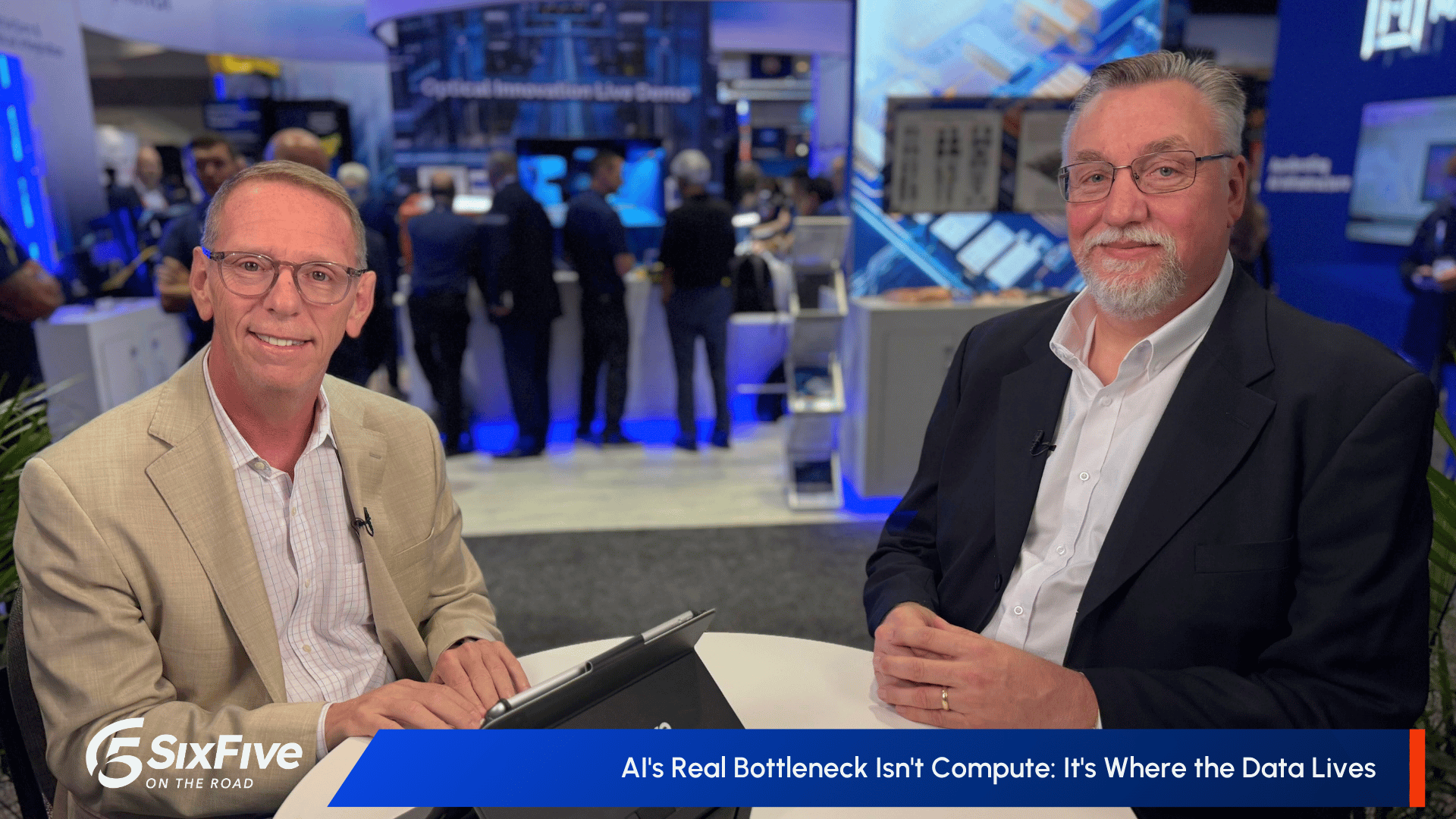
Western Digital's Tim Rausch argues that AI's compounding data growth, more than GPU capacity, sets the real ceiling on infrastructure scaling. He joins Matt Kimball at AI InfraSummit 2026 to walk through how total cost of ownership, archived data reuse, and WD's capacity roadmap are reshaping enterprise plans to scale AI over the next several years.
.png)
The Main Scoop Ep. 45: Attackers Only Need to Be Right Once. AI Just Made That Easier.
Chad Rikansrud, R&D Software Security Engineer at Broadcom, explains how frontier AI models are finding decades-old mainframe vulnerabilities in seconds, collapsing the complexity advantage that once protected legacy platforms. He outlines why enterprises need faster Security Intelligence (SECINT) ingestion and disciplined human oversight to keep pace with adversaries wielding the same tools.
Other Categories
CYBERSECURITY
Threat Intelligence: Insights on Cybersecurity from Secureworks
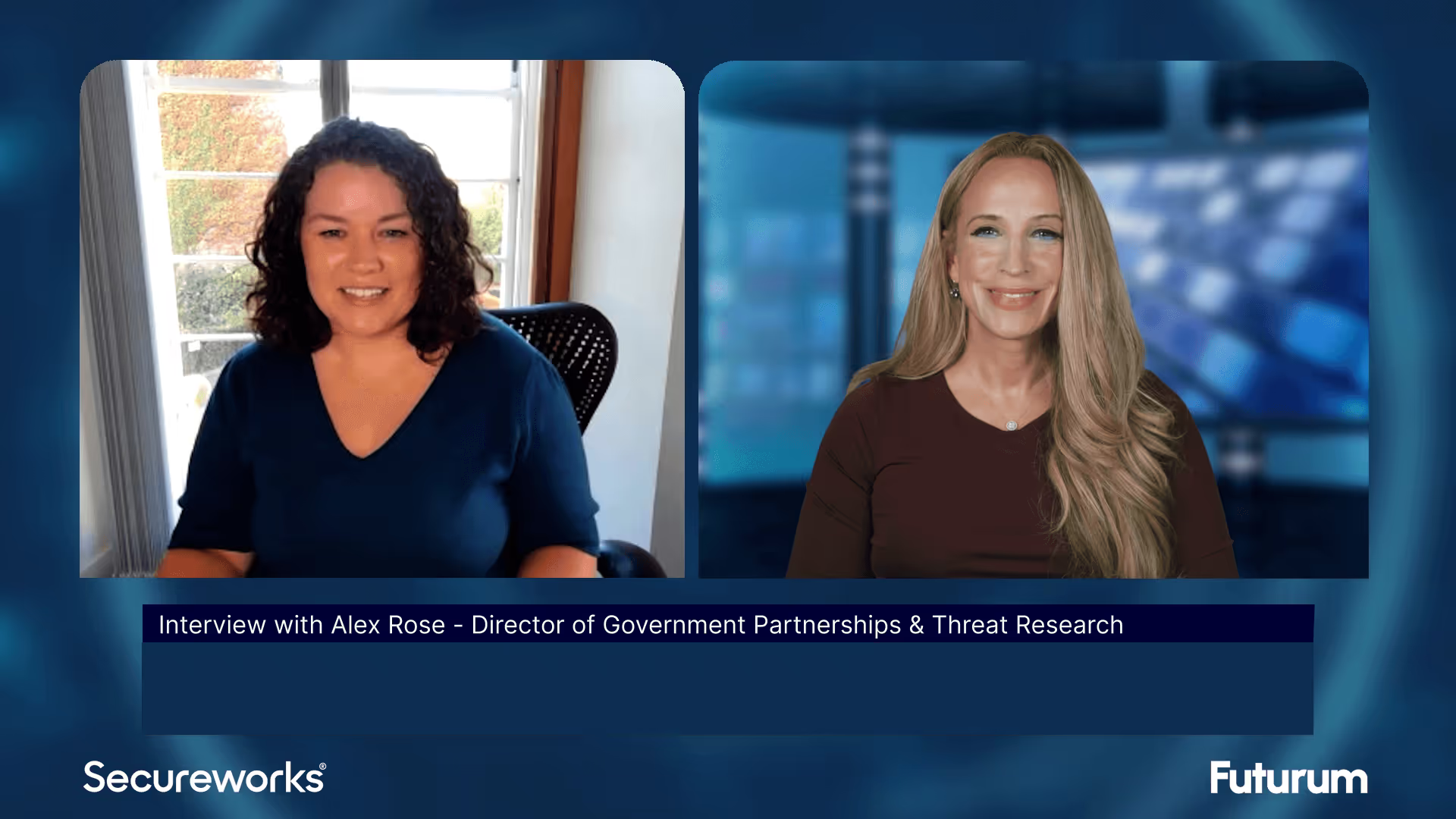
Alex Rose from Secureworks joins Shira Rubinoff on the Cybersphere to share his insights on the critical role of threat intelligence in modern cybersecurity efforts, underscoring the importance of proactive, intelligence-driven defense mechanisms.

HP Launches World’s First Business PCs to Protect Against Quantum Hacks - The Six Five On the Road
On this episode of the Six Five - On the Road, hosts Patrick Moorhead and Daniel Newman are joined by HP's Ian Pratt, Global Head of Security for Personal Systems.
What is Autonomous Endpoint Management?
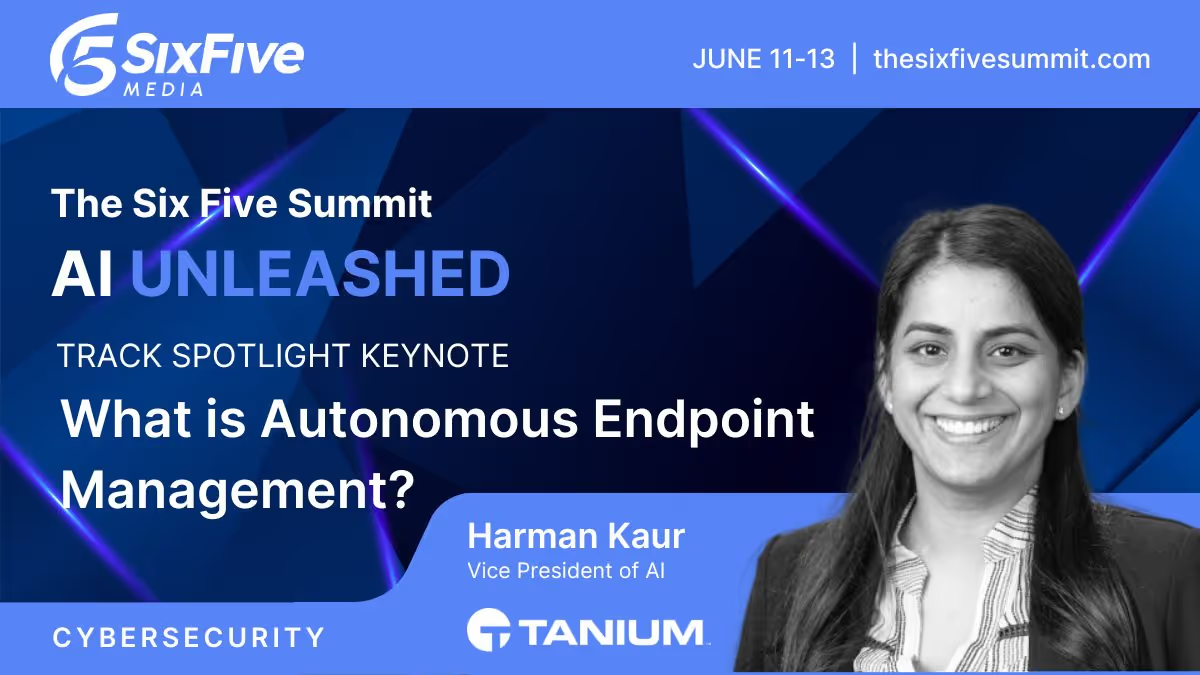
Autonomous Endpoint Management is a framework designed to unify IT operations and security teams on a single platform through real-time control and visibility.
QUANTUM
Quantum in Action: Insights and Applications with Matt Kinsella
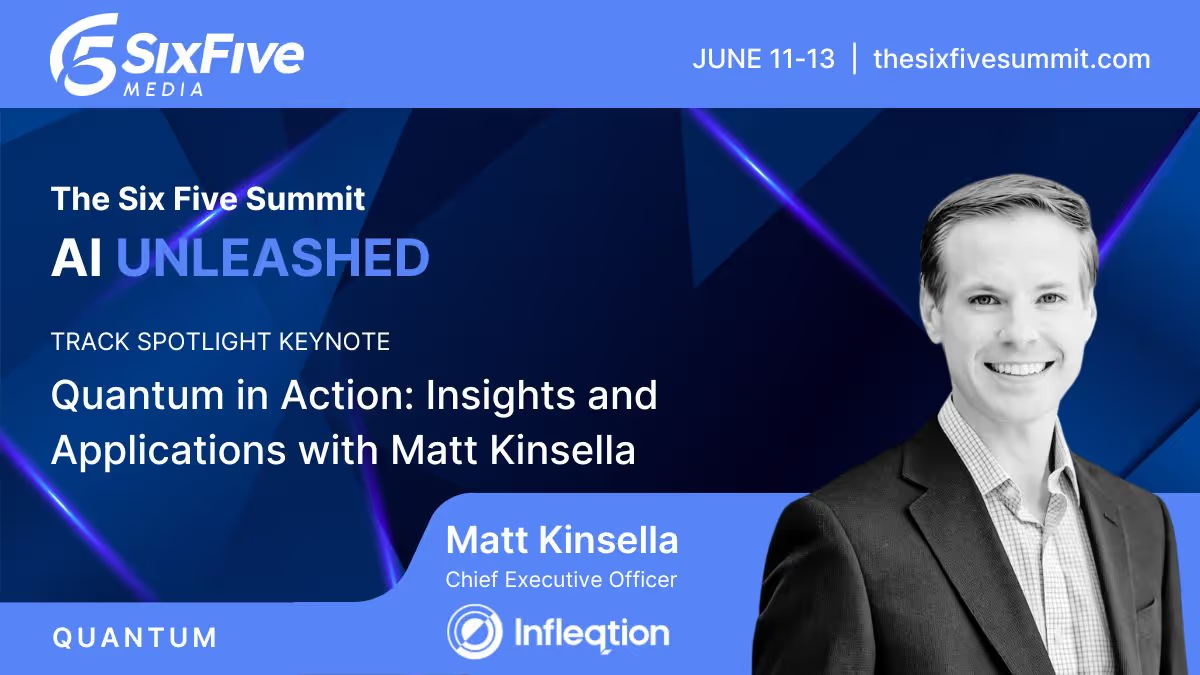
Quantum is no longer a technology of the future; the quantum opportunity is here now. During this keynote conversation, Infleqtion CEO, Matt Kinsella will explore the latest quantum developments and how organizations can best leverage quantum to their advantage.
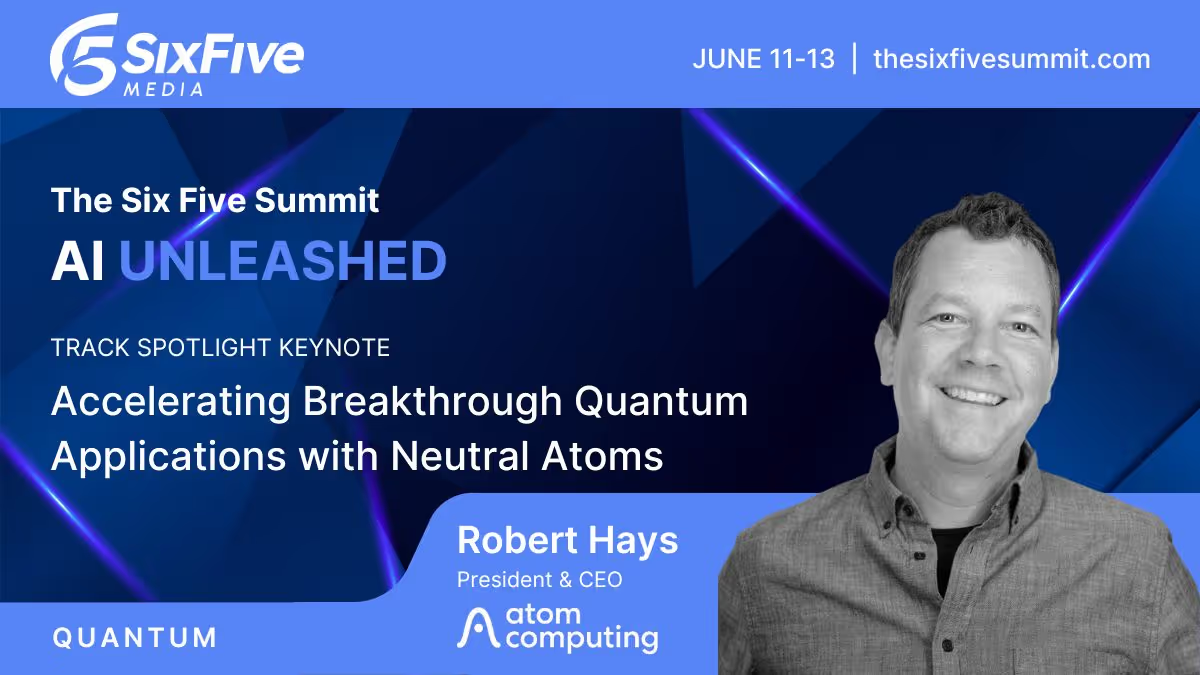
Accelerating Breakthrough Quantum Applications with Neutral Atoms
Our planet needs major breakthroughs for a more sustainable future and quantum computing promises to provide a path to new solutions in a variety of industry segments. This talk will explore what it takes for quantum computers to be able to solve these significant computational challenges, and will show that the timeline to addressing valuable applications may be sooner than previously thought.