
The Orchestrators Ep. 1: Why Enterprise AI Needs a Conductor
SHARE


Mohamad Ali, SVP and Head of IBM Consulting, joins Daniel Newman to discuss how AI is transforming enterprise workflows, why consulting is becoming software, and what it takes to operationalize agentic AI at scale.
Enterprise AI doesn't fail because the technology isn't capable. It fails when thousands of disconnected workflows, agents, and decisions never become a coordinated system.
In the premiere episode of The Orchestrators, Daniel Newman joins Mohamad Ali, SVP and Head of IBM Consulting, to explore how IBM transformed hundreds of business workflows into an AI-powered operating model that's now serving as a blueprint for enterprises around the world.
This Six Five Media Techumentary goes inside what it actually takes to operationalize agentic AI across a 150,000-person organization. Mohamad walks through how IBM split its own operations into 490 distinct workflows, targeted 70 as the highest-value starting point, and rebuilt them with digital workers running alongside human consultants. The program started with roughly 220 digital workers and has scaled to about 3,000, driving $4.5 billion in savings in 2025 that IBM reinvested into growth, alongside an eight-point increase in company growth, and equity value that has more than doubled. From there, IBM moved the same model into IBM Consulting itself through a multi-AI-stack environment called IBM Consulting Advantage, then out to roughly 200 clients, and now into a standalone offering, Enterprise Advantage, that lets clients run the approach on their own.
Governance runs underneath all of it. In regulated industries like financial services and healthcare, IBM pairs Watsonx. Governance with guardrails and PII protections, then strategically blends in external technology, including Red Hat's hybrid cloud engineering and tools like Terraform, to give clients access to the best available stack rather than an IBM-only one.
Key Takeaways Include:
🔷 Consulting is becoming a hybrid workforce model: IBM Consulting is restructuring around a combination of 150,000 human consultants and 1.5 million digital workers, treating software-based labor as a core part of how consulting work gets delivered.
🔷 Client zero proved the model before clients saw it: Breaking IBM down into 490 workflows and rebuilding 70 of them with digital workers produced $4.5 billion in 2025 savings and became the blueprint IBM now sells externally.
🔷 Employee-led reengineering made adoption stick: Training the workforce to build its own digital workers turned employees into the drivers of transformation rather than subjects of it.
🔷 Governance is built in, not bolted on: Watsonx.Governance, guardrails, and PII protections give IBM a framework for deploying multiple AI stacks together in regulated environments.
🔷 Acquired talent and technology compound the advantage: Access to Red Hat engineering and infrastructure tools like Terraform lets IBM Consulting offer capabilities that competitors without that talent base can't easily match.
Watch the full conversation and subscribe to Six Five Media on YouTube so you never miss an episode.
Listen to the audio here:
Disclaimer: Six Five Media is for information and entertainment purposes only. Over the course of this video, we may discuss companies that are publicly traded, and we may reference their equity share prices. Nothing discussed during this webcast should be considered investment advice or a recommendation to buy or sell any security. We are not investment advisors, and you should not rely on this content as financial advice. Six Five Media collaborates with technology companies and industry leaders to produce research-driven interviews and multimedia programming for enterprise technology audiences.
Mohamad Ali:
So we've gone from doing it for IBM, to doing it for IBM Consulting, to doing it for clients, to actually enabling clients with the tools to do it themselves.
Daniel Newman:
Hey everyone, welcome to this Six Five Special Orchestrator Edition. Very excited to be here sitting with Muhammad Ali, IBM's consulting leader, one of the visionaries in this space right now in AI. One of the things you like to say is that consulting must become like software. Tell us a little bit about what that means and why is it so important that this happens?
Mohamad Ali:
Yeah. I mean, if you think about the transformation for all companies, it's going to be a combination of human labor plus digital labor. So at IBM Consulting, we are transforming into a company of 150,000 human consultants and one point five million digital workers. What are digital workers. They're pieces of software. Right. So that combination of extraordinary skills in our human talent combined with bits of software that encapsulates knowledge is how companies are going to work going forward.
Daniel Newman:
What was it like taking the consulting role of one of the world's largest companies and actually trying to make yourselves the best at AI?
Mohamad Ali:
A lot of people have gone out there and bought a lot of AI and sort of thrown it at the employees and said, hey, go be productive. We took a very different approach to IBM. We looked at IBM and we decomposed it into 490 workflows. And then we took 70 of those workflows as sort of low-hanging fruit. And then we started re-engineering those workflows. And as we re-engineered the workflows, we built these digital workers to complement the human workers in those workflows. Initially, we built about 220 digital workers. Now we're up to about 3,000. And that is how we started reengineering IBM. And the result of that was $4.5 billion of savings in 2025 that we've reinvested in growth. And the company has grown eight points from where it was before. And the equity value has more than doubled. So that was the benefit to us.
Daniel Newman:
So as you started to put these digital workers into the workflow, how did you build the culture around that?
Mohamad Ali:
That is such an important part of this, right? So there are really three success factors in this. One is leadership from the top, and that came from Arvind and Rob and myself and Joanne and others. Second is re-engineering the workflows, the 70 workflows. But the third is to engage. the employee base and make the employee base catalyst for this change. So we actually went out and we trained everybody how to build digital workers to help themselves, agents to help themselves, assistants to help themselves. And as they become experts in doing this, they themselves started reengineering their workflows and they became proud of it.
Daniel Newman:
So what does your sort of client zero experience teach you that you can then take on to your customers? I mean, broadly and then specifically about the digital labor force.
Mohamad Ali:
Yeah. So as we did this for, you know, kind of IBM core, and then we started applying it to IBM consulting. And there we started harvesting a lot of these digital workers, but also building whole new sets of digital workers, like digital workers to do SAP deployment and so forth. And we put them all into this environment called IBM Consulting Advantage. And it became a multi-AI stack environment. So we could be able to build these digital workers with any AI stack and mix and match as we deploy them in our consulting process. And as we did this, now we're up to about 200 clients where we are applying this approach to projects we're doing for them. They're now started coming to us and saying, hey, can you bring that same sort of hybrid AI approach to our environment? And so as a result, we've launched a new service called Enterprise Advantage. So we've gone from doing it for IBM, to doing it for IBM Consulting, to doing it for clients, to actually enabling clients with the tools to do it themselves.
Daniel Newman:
A lot of your clients, you guys have great provenance in financial services. You guys are deeply entrenched in healthcare. You're in all these industries where the rules are much harder, meaning like, these companies can't make mistakes.
Mohamad Ali: You can't make mistakes, exactly. Yeah, yeah. So, I mean, one of the things that we do at IBM Consulting is we bring the best technologies to our clients, right? And in governance, one of the best products out there is WatsonX.Governance. And we use that internally for our own approach. And so when we go out to clients, we utilize that product in particular, but we build a whole governance framework around it. You need to have guardrails. You need to protect PII. And that's what this WatsonX family allows us to do. And so we are able to mix WatsonX with other AI technologies and get the best out of those AI technologies, but in a governed manner.
Daniel Newman:
This is such a fast changing environment though, but it is orchestration. Your team, you've bought companies. I've watched your acquisitions. You've bought companies that have expertise in different enterprise applications, different SaaS companies. How important is that and how does that create a competitive advantage and how sustainable is that?
Mohamad Ali:
Yeah, I mean, it creates a significant competitive advantage, right? Because if you look at other consulting companies, they just don't have access to that kind of technology or also that kind of talent. Simple things, like if I'm deploying a hybrid cloud environment, I have access to the best engineers in Red Hat to be able to do that. Things like Hashi and Terraform. And so when we go out to clients, we try to bring the best technology and the best skills. And sometimes the best technology is outside of IBM, but a lot of times it's inside of IBM. Some of these products are extraordinarily good, and it also gives us access to deep talent with which to go out and put forth the best solutions for these clients.
Daniel Newman: So from the standpoint of companies that want to orchestrate and drive business and start to bring ROI, there's immediate opportunities. And of course, it sounds like you guys are tackling those problems for your enterprise customers every single day.
Mohamad Ali: Yeah.
And I mean, it's an extraordinarily exciting time, right? I mean, this is one of the first major change in the computing paradigm in decades.
Daniel Newman:
It's been a great opportunity to have this conversation with you, Mohammed. Let's keep chatting, but thank you everybody for joining. This is the Six Five Special Orchestrator Edition. We are talking about the complexities, the opportunities, and the growth in AI, and how IBM is bringing together the solutions to solve them. Subscribe, be part of our Six Five community. Signing off for now. I'll see you all later.
MORE VIDEOS
.png)
The Main Scoop Ep. 45: Attackers Only Need to Be Right Once. AI Just Made That Easier.
Chad Rikansrud, R&D Software Security Engineer at Broadcom, explains how frontier AI models are finding decades-old mainframe vulnerabilities in seconds, collapsing the complexity advantage that once protected legacy platforms. He outlines why enterprises need faster Security Intelligence (SECINT) ingestion and disciplined human oversight to keep pace with adversaries wielding the same tools.


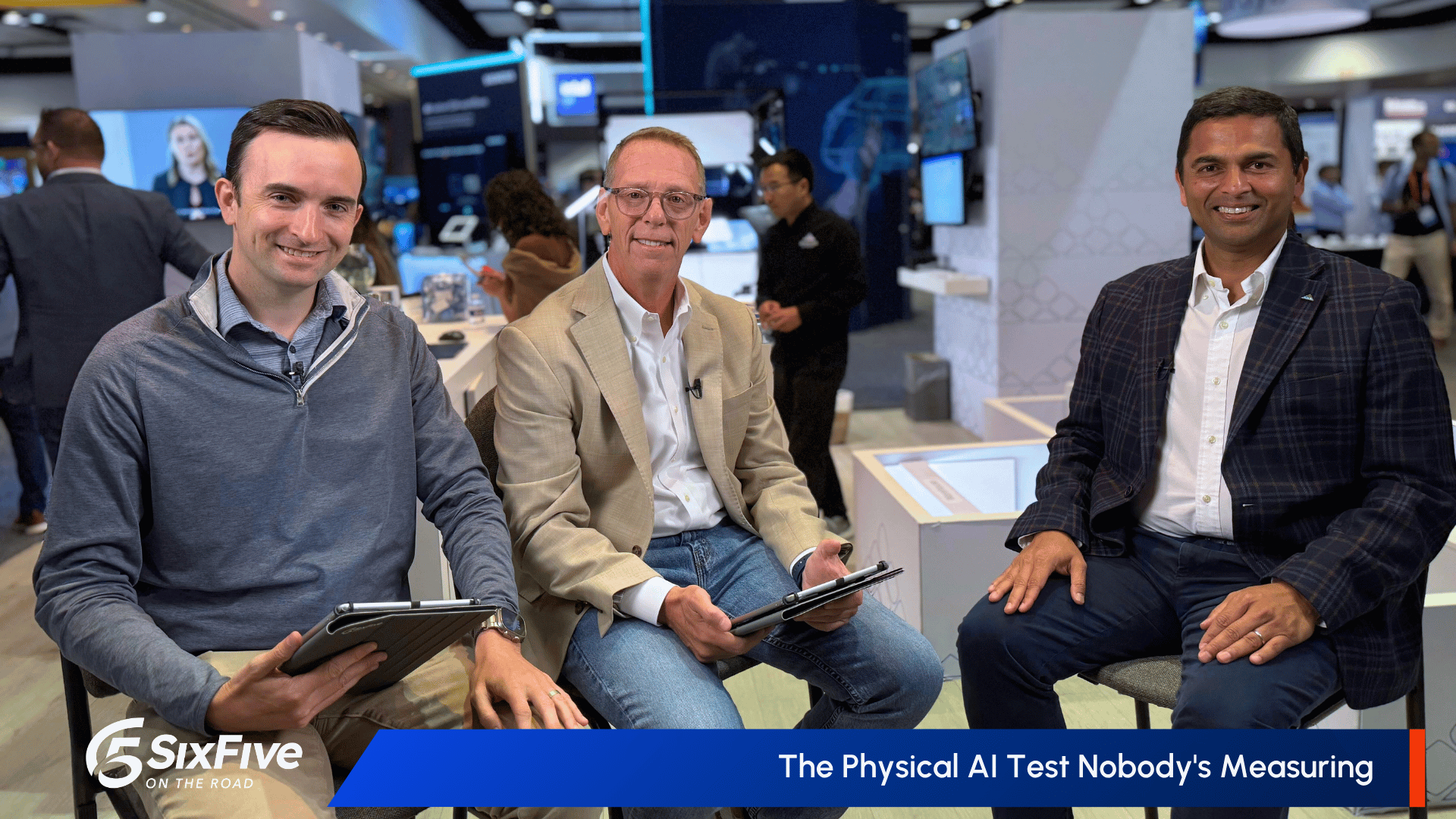
Fleet-Scale Deployment Is the Physical AI Benchmark
Physical AI is shifting from lab prototypes to fleets of machines operating reliably in the real world, and Ambarella's Muneyb Minhazuddin joins Six Five On The Road at AI Infra 2026 to explain what that shift demands of silicon, memory and developer workflows. Minhazuddin traces the case back to a 22-year-old chip architecture and forward to a developer cloud built to compress model porting time from months to days, and he identifies enterprise ROI proof points as the biggest hurdle left before physical AI scales into millions of deployed units.
.png)
AI Safety Alarms, China's Distillation Reckoning, and Qualcomm's AWS Breakthrough: A Pivotal Week for Enterprise AI
A viral AI extinction claim, a federal advisory naming six Chinese AI labs for industrial-scale distillation, and a $60 billion Qualcomm-AWS silicon pact define a week when enterprise AI risk and opportunity collided head-on. Patrick Moorhead and Daniel Newman weigh in on what's signal and what's noise across AI safety, chip supply deals, and a market rally still betting big on compute.
Other Categories
CYBERSECURITY
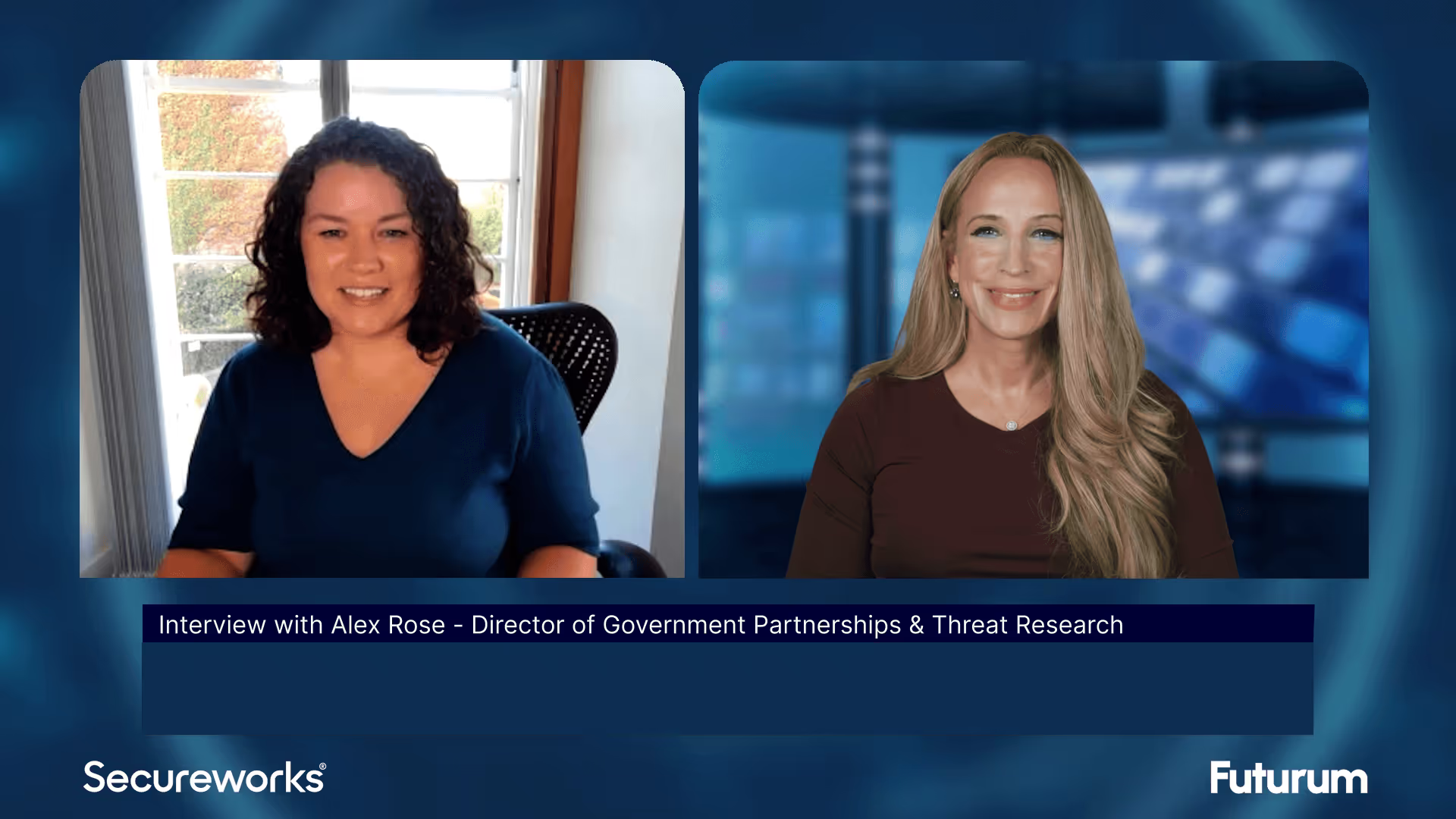
Threat Intelligence: Insights on Cybersecurity from Secureworks
Alex Rose from Secureworks joins Shira Rubinoff on the Cybersphere to share his insights on the critical role of threat intelligence in modern cybersecurity efforts, underscoring the importance of proactive, intelligence-driven defense mechanisms.

HP Launches World’s First Business PCs to Protect Against Quantum Hacks - The Six Five On the Road
On this episode of the Six Five - On the Road, hosts Patrick Moorhead and Daniel Newman are joined by HP's Ian Pratt, Global Head of Security for Personal Systems.
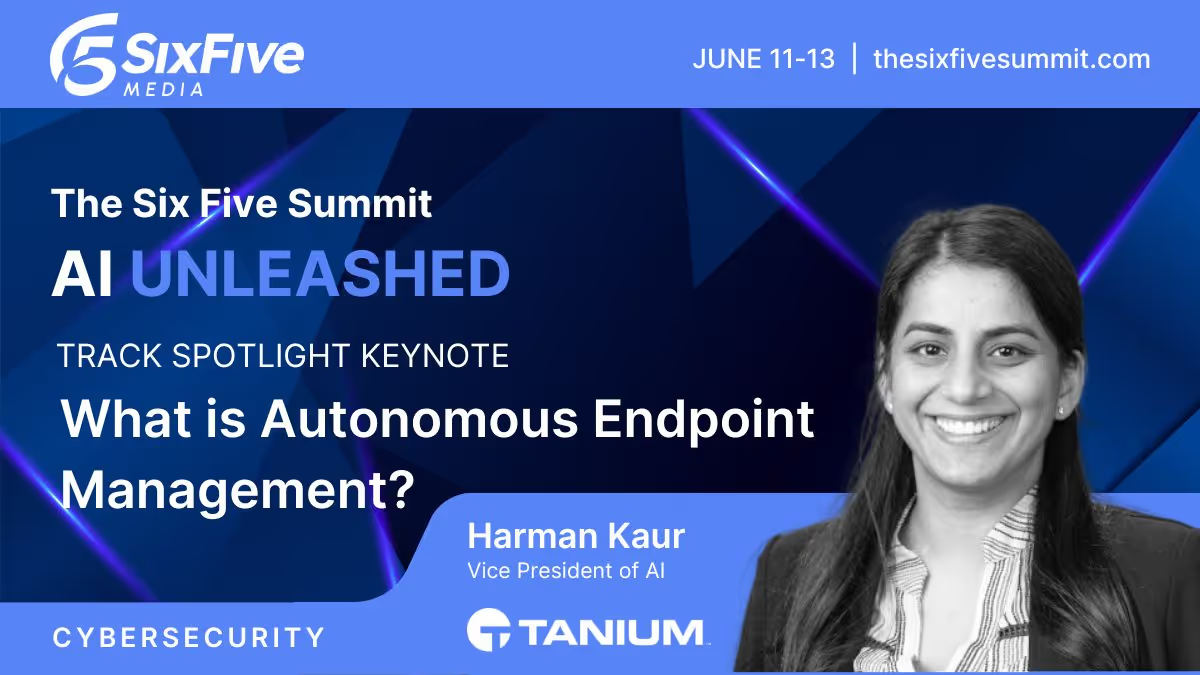
What is Autonomous Endpoint Management?
Autonomous Endpoint Management is a framework designed to unify IT operations and security teams on a single platform through real-time control and visibility.
QUANTUM
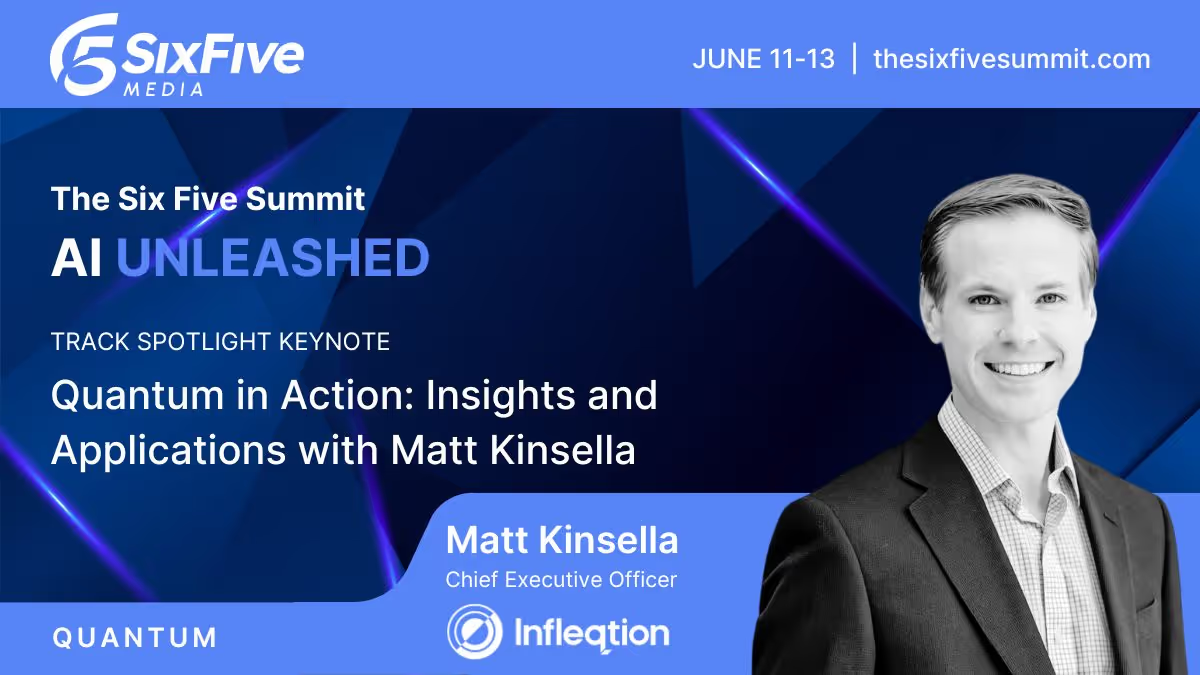
Quantum in Action: Insights and Applications with Matt Kinsella
Quantum is no longer a technology of the future; the quantum opportunity is here now. During this keynote conversation, Infleqtion CEO, Matt Kinsella will explore the latest quantum developments and how organizations can best leverage quantum to their advantage.
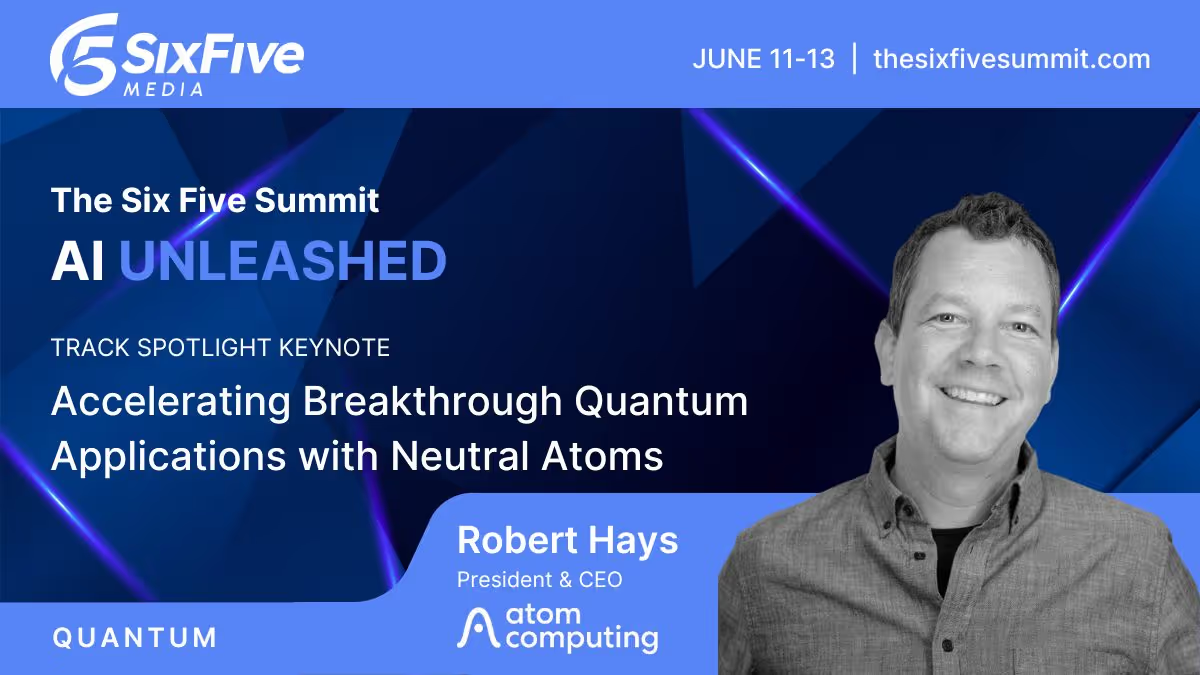
Accelerating Breakthrough Quantum Applications with Neutral Atoms
Our planet needs major breakthroughs for a more sustainable future and quantum computing promises to provide a path to new solutions in a variety of industry segments. This talk will explore what it takes for quantum computers to be able to solve these significant computational challenges, and will show that the timeline to addressing valuable applications may be sooner than previously thought.