
The Orchestrators Ep. 2: Why AI Winners Start with Trusted Data
SHARE


As enterprises move from AI experimentation to execution, data is emerging as the primary constraint on scale. Fragmented systems, unclear ownership, and weak governance are limiting outcomes.
This conversation explores why AI success depends on data discipline, orchestration, and treating data as a core enterprise asset.
Most companies are optimizing model selection while overlooking the real competitive advantage. As Caroline Roche puts it, "Data is the moat," and the AI race will be won or lost at the data layer, where most enterprises are still unprepared to compete.
At IBM's offices in New York City, Daniel Newman meets with Caroline Roche, Vice President and Senior Partner at IBM Consulting, for part two of The Orchestrators, a Six Five Media Techumentary series, to get into why so many AI programs stall and what separates the companies that break through.
Roche's core argument cuts against how most organizations frame their AI problem. She views data as being a cultural issue above a technical one. When two teams are working from different versions of the same data and have no shared incentive to reconcile them, the problem isn't the technology. It's governance. That is why simply layering AI onto existing processes rarely works. Without clear ownership, aligned incentives, and a shared data foundation, organizations end up with what Roche has seen repeatedly across clients: expensive AI pilots that never make it into production.
She and Newman also dig into what she calls the "data chase," the old habit of reconciling whose spreadsheet was right in a meeting instead of acting on shared, real-time numbers, and why data lakes built for quarterly reporting can't support the lineage, context, and real-time access AI actually needs.
Key Takeaways Include:
🔹 Data problems are culture problems wearing a technical disguise. Roche traces most fragmented data environments back to teams holding different versions of the same information with no shared incentive to unify it, a governance and alignment failure long before it's an engineering one.
🔹 The "data chase" still eats enterprise time. Teams spend meetings debating whose numbers are current instead of acting on them. Real-time, single-source data shifts that energy from reconciliation to decision-making.
🔹 Reporting-built data lakes weren't designed for what AI needs now. Years of investment went into architectures meant for static dashboards. Ontology, lineage, and real-time access, the things AI decisions actually depend on, were never part of that design brief.
🔹 The AI technology explosion punishes companies without orchestration. Every product now ships with AI built in, across multiple models and clouds. Without shared governance between business and IT, that becomes what Roche calls "random acts of AI" instead of a coordinated system.
🔹 Proof of concept speed hides the harder problems. Getting a pilot up and running fast has gotten easier. But sustaining accuracy and performance over time, what Roche calls reliability, is the part that actually separates winners from companies stuck relaunching pilots.
🔹 The best-run organizations manage data like a business asset. Roche describes companies tracking data quality, accuracy, and timeliness with the same discipline they apply to financial metrics, making data health an ongoing operational priority rather than a one-time technology initiative.
Watch the full conversation and subscribe to Six Five Media on YouTube so you never miss an episode. Watch the entire series at sixfivemedia.com, and be sure to subscribe to our YouTube channel so you never miss an episode.
Disclaimer: Six Five Media is for information and entertainment purposes only. Over the course of this video, we may discuss companies that are publicly traded, and we may reference their equity share prices. Nothing discussed during this webcast should be considered investment advice or a recommendation to buy or sell any security. We are not investment advisors, and you should not rely on this content as financial advice. Six Five Media collaborates with technology companies and industry leaders to produce research-driven interviews and multimedia programming for enterprise technology audiences.
Caroline Roche:
And the truth is the winners will focus on not only AI accuracy, but AI reliability over time. And again, that requires governance and orchestration, both from a process perspective, as well as from a technology perspective.
Daniel Newman:
Hello, everyone. The Six Five is on the road here at IBM headquarters in New York City as part of our Orchestrator Techumentary series. Excited to have a great conversation today with one of IBM's consulting leaders, Caroline Roche. Caroline, welcome to The Six Five. Welcome to our series.
Caroline Roche:
Thank you. Always excited to talk about how our clients can get more value out of AI.
Daniel Newman:
More value. So let's start. More value. Companies are often talking about doing AI, right? That's really interesting, right? Because there's people elements, there's technological elements. Give me a little bit of a background through your lens of being a leader across data analytics and so many parts of the consulting business. What do they mean when they say that?
Caroline Roche:
Sure. I think people are really trying to do AI, or can't you just AI that, when they're trying to drive either productivity, risk reduction, or revenue growth. But many people throw AI into an existing process without having a clear vision, having culture and alignment around that decision, and then really looking at the underpinning data. that supports that. I think fundamentally data is a culture problem because data issues start with you and me having different pieces of data, but we're not aligned to unify them. So data really comes back to culture. And so I think a lot of our clients are struggling to get value out of their AI because they put the cart before the horse. They're trying to throw AI into a process without really doing kind of those critical pieces to get that value out.
Daniel Newman:
You mean just throwing all the data into some vector and just saying, good luck, AI, go find that and fix that. That's how you get a lot of slop, right?
Caroline Roche: Well, and I think much like kind of with Agile 10 years ago, people sometimes feel like AI is a magic wand. But AI isn't a magic wand, and there needs to be kind of structure, rigor, and discipline. And we were talking about before this, many clients are struggling with the technology explosion, with AI as they look at multiple AI models, multiple clouds, every technology product they have having AI within it. And I think if you don't start with the right strategy, culture, incentives, vision, workflows, the technology becomes a problem. And so you can only make the technology work when you get those pieces right.
Daniel Newman:
I know the people process technology of digital transformation just got magnified. It's an exponential rate of change. People, I always say, are good at changing over longer periods of time, but struggle in shorter periods of time. Unfortunately, the technology is changing at such a clip that we are really kind of, it's a bit of a forcing function, so finding that right balance. Because in the end, companies, I mean, for now, really since I'd say the chat GPT inflection. But even before that, you mentioned kind of the big data, the agile inflections, like all these things have been going on, and companies have been trying to change really quickly. Big data never got fully realized, mostly because to your point, the data was never fully accessible and organized and architecturally brought to be available. AI magnified the problem. So, like, you know, in your mind, companies are stuck in pilot mode. Some have been stuck since 20 years ago in pilot modes. AI is just magnifying this. So, like, how do you actually get the companies out of pilot mode and how do you get them into full-scale production?
Caroline Roche:
So I was mentioning vision and I think having clarity on what problem are we trying to solve. And in AI, I think AI has really unlocked the door to solve much more complex workflow based problems versus process based problems. And so those problems require two people to collaborate. And I think a really important thing that our clients need to be thinking about is at the end of the day, there's a human problem of do we have the right incentives? Do we have the right mission that we're tackling together? Are we climbing the same hill? So really understanding that problem. But I think more and more clients are finding themselves in a situation where they're in this multi-AI, multi-cloud environment, and they really need orchestration across that. And that's true from a business process perspective, and it's also true from a technology perspective. business process perspective, I really encourage my clients to tackle their AI problems in the world of not just changing recruiting, but changing the hire-to-retire process and really looking at the full scope of the process, as well as really thinking about how will someone actually do their job differently with this versus giving them a tool and seeing if they become more productive magically. I think underneath that, you need the orchestration and the governance, and that's where tools like Watson Orchestrate are wonderful in terms of helping to monitor and provide guidance and framework for the technology supporting that process transformation.
Daniel Newman:
Yeah, especially because so many companies operate on global scales. Yes. There's so much data across border. Yes. Challenges for compliance, for governance. I think when the problems scale as more projects get out there, problems get larger, they get harder to solve for. If you get this up front, if you get to these problems up front in your design, it creates a lot more ability to take those pilots into production. Talk about these messy data environments though. Because to your point, a messy data environment before AI, is only a bigger data problem with AI, right?
Caroline Roche: Totally. And I think we see it as soon as we come in, but the reality is everyone has data platforms. People have been investing in data lakes, data lake houses, data warehouses for many years. But the reality is these data lakes were built for reporting. And so as you try to take a reporting-based database into the world of AI where you need real-time data, data accuracy, data transparency, and data lineage, as well as ontology has become the hot word of the moment, but why does ontology really matter? It's really adding business context into the data. What does this data mean and how does it map into the business? And what we're finding as we go into these client environments and are really looking at their data lakes, we're finding that the data footprints that have been built for reporting environments aren't ready for that real-time data, aren't ready for the data lineage conversation of where did the data come from, aren't ready for that data business context. And so I think that that's where clients really need to be investing more in terms of tying the data back to the business context and really understanding where the data came from.
Daniel Newman:
Yeah, we find now that the amount of time that an asset or a report or information has market value has become incredibly short.
Caroline Roche:
Yes.
Daniel Newman:
And the ability to really understand as you read something. Like, because oftentimes you read a report and it has a date on it.
Caroline Roche:
Right.
Daniel Newman:
But when did the underlying information in that report become relevant? Because now, basically, in the future, I think everything's got to become living. Yes. That's our, like, in our work in the industry research space, we basically think intelligence has to become live. has to be, you know, a report has to actually be able to be updated as new information becomes available. And that means with AI, you have to take things like tabular data, and you have to contextualize it, which is going to be great. Yes, but really, really complicated.
Caroline Roche:
Well, and we started talking about this as the data chase. So in the old world of data, we would have all these reporting, but also Excel spreadsheets on the side, and you would show up to a meeting with your counterpart, and it'd be like, well, whose data was right? And, oh, well, when did you get that data? My data's from noon. When's your data from? Versus having a pane of glass where you can just pull up the real-time data and instead shift your energy from analyzing which data is right to making decisions with that data, changing behavior with that data, doing something different to move the business forward with that data, and I think that that's kind of the pivot point we're in.
Daniel Newman:
Decision intelligence.
Caroline Roche:
Yeah, decision intelligence, exactly.
Daniel Newman:
So, going into that, so as AI starts to really influence business decisions, you know, what's going to separate the organizations that are going to be making better decisions with AI from those that think perhaps they are doing it right, but really aren't?
Caroline Roche:
I think the winners in the AI race will be companies that approach their AI ecosystem as an orchestrated and governed ecosystem. The losers will be doing random acts of AI everywhere. What does that look like? I think that there's, as I was saying earlier, the vision, the framework, the problem we're solving, there's the executive leadership. AI and data are not an IT problem, and so there needs to be business ownership of the data. But IT is a critical enabler of the technology decisions, the governance, and the framework. And so you need that orchestration from a business perspective as well as from an IT perspective. And then really treating data as a critical asset. I think one of the things that I'm really seeing leading organizations do is treating data almost as a P&L with metrics you're measuring around data accuracy, data cleanliness. data timeliness and really working to improve those over time because data will be the critical asset. And so the losers have data everywhere. Each department has different sources of data, maybe different technologies underneath it. And so it becomes the spaghetti diagram of AI, the random acts of AI, and they won't have that rigorous and disciplined governance on top of the AI.
Daniel Newman:
Isn't it almost every technological revolution just with orders of magnitude of pace? Yes. Because I think about like, you know, there was a decade or at least half a decade using that digital transformation. Totally. And like everything that really was required to do that now has just been magnified and accelerated.
Caroline Roche: And it's not just for AI projects. It's every other project that's out there. I was with a client last week and they were saying, why can't you do this SAP transformation faster? Why are we doing it the old way? And so I think AI has given us a huge opportunity because it's really shifted people's mindsets around what can be accomplished with technology. But to do that, it still requires rigor and discipline as you approach it.
Daniel Newman:
Yeah, the POC goes really fast, but the actual execution implementation is really hard still. And a lot of people don't know that, because they're like, oh, I built this with Cloud Code. It's like, yeah, you built a flat file, non-production toy that looks like an app. Now you've got to actually put that at scale, and you need to make sure that it handles transaction, it handles sovereignty, it handles compliance, it handles identity, cybersecurity, all those things at scale. And if you're like a one-person company, you might get pretty far, but when you're actually a big enterprise, It definitely shows the possible, and it makes builders and creators out of so many people, but it doesn't actually finish the work. That last mile is still really hard.
Caroline Roche:
And the truth is the winners will focus on not only AI accuracy, but AI reliability over time. And again, that requires governance and orchestration, both from a process perspective, as well as from a technology perspective.
Daniel Newman:
So an executive watching this that's saying, hey, I want to go, I'm going all in, we've got to get this right. What's one piece of advice that you would give to that? Maybe not even technically focused, but like, what's one piece of advice to turn their organization into like a, you know, an AI powerhouse of success?
Caroline Roche:
Business and technology leaders need to be laser focused on having clear definitions around their most critical data, whether that's customer data, whether that's asset data, whether that's financial data. They need to be treating it as a critical asset to their business, and that requires more than just a data platform project. that requires ongoing governance and orchestration. So I would say first, start with your North Star around what is that data that is mission critical to your business. Second, treat it like a living, breathing organism, not something you dump somewhere and hope it works for you in the future. And then third, really realizing that data needs to be across everywhere and that AI won't work without data. And so that focus and investment in data early on will pay dividends as you scale your AI programs.
Daniel Newman:
Data is the moat.
Caroline Roche:
Data is the moat.
Daniel Newman:
Caroline, thank you so much.
Caroline Roche:
Thank you.
Daniel Newman:
Thank you everybody so much for being part of this Six Five On The Road here at One Madison in New York City. Subscribe to be part of all of our Orchestrate documentary series. We appreciate you tuning in. We'll see you all later.
MORE VIDEOS
.png)
The Main Scoop Ep. 45: Attackers Only Need to Be Right Once. AI Just Made That Easier.
Chad Rikansrud, R&D Software Security Engineer at Broadcom, explains how frontier AI models are finding decades-old mainframe vulnerabilities in seconds, collapsing the complexity advantage that once protected legacy platforms. He outlines why enterprises need faster Security Intelligence (SECINT) ingestion and disciplined human oversight to keep pace with adversaries wielding the same tools.


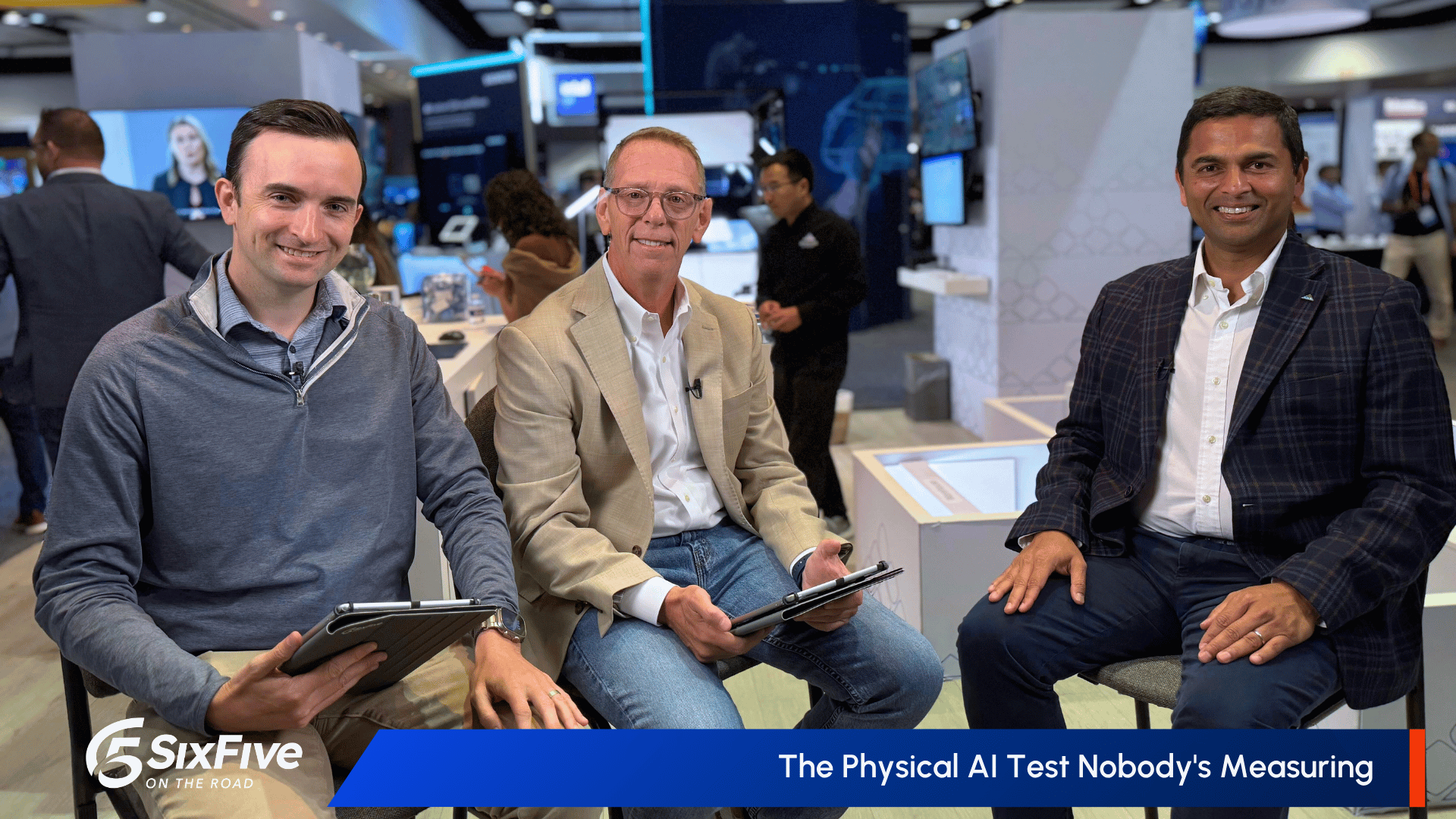
Fleet-Scale Deployment Is the Physical AI Benchmark
Physical AI is shifting from lab prototypes to fleets of machines operating reliably in the real world, and Ambarella's Muneyb Minhazuddin joins Six Five On The Road at AI Infra 2026 to explain what that shift demands of silicon, memory and developer workflows. Minhazuddin traces the case back to a 22-year-old chip architecture and forward to a developer cloud built to compress model porting time from months to days, and he identifies enterprise ROI proof points as the biggest hurdle left before physical AI scales into millions of deployed units.
.png)
AI Safety Alarms, China's Distillation Reckoning, and Qualcomm's AWS Breakthrough: A Pivotal Week for Enterprise AI
A viral AI extinction claim, a federal advisory naming six Chinese AI labs for industrial-scale distillation, and a $60 billion Qualcomm-AWS silicon pact define a week when enterprise AI risk and opportunity collided head-on. Patrick Moorhead and Daniel Newman weigh in on what's signal and what's noise across AI safety, chip supply deals, and a market rally still betting big on compute.
Other Categories
CYBERSECURITY
Threat Intelligence: Insights on Cybersecurity from Secureworks
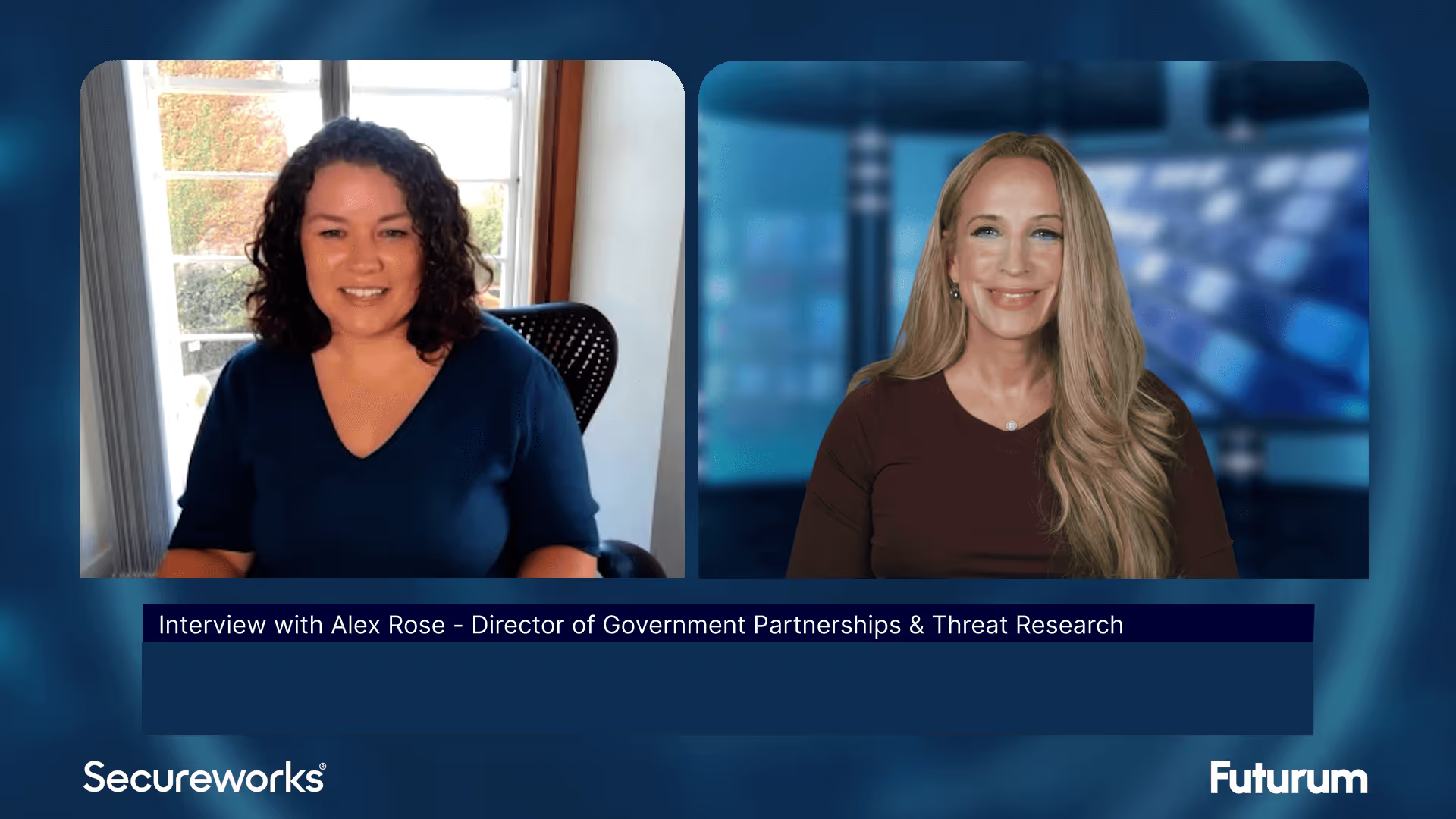
Alex Rose from Secureworks joins Shira Rubinoff on the Cybersphere to share his insights on the critical role of threat intelligence in modern cybersecurity efforts, underscoring the importance of proactive, intelligence-driven defense mechanisms.

HP Launches World’s First Business PCs to Protect Against Quantum Hacks - The Six Five On the Road
On this episode of the Six Five - On the Road, hosts Patrick Moorhead and Daniel Newman are joined by HP's Ian Pratt, Global Head of Security for Personal Systems.
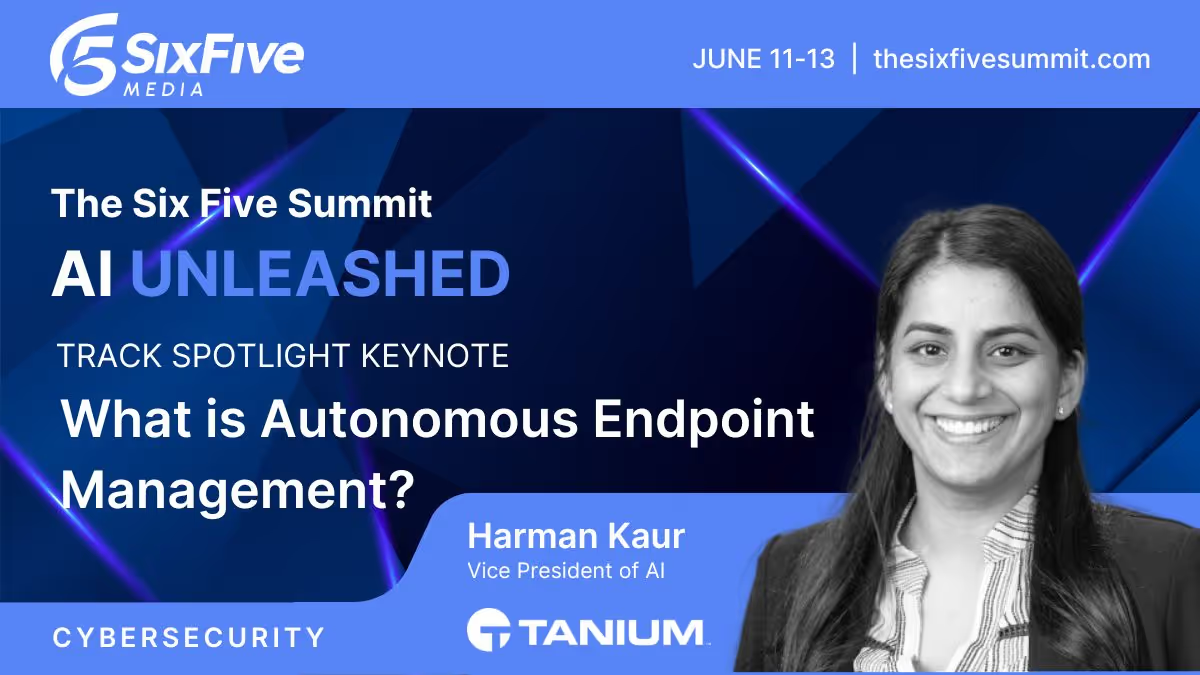
What is Autonomous Endpoint Management?
Autonomous Endpoint Management is a framework designed to unify IT operations and security teams on a single platform through real-time control and visibility.
QUANTUM
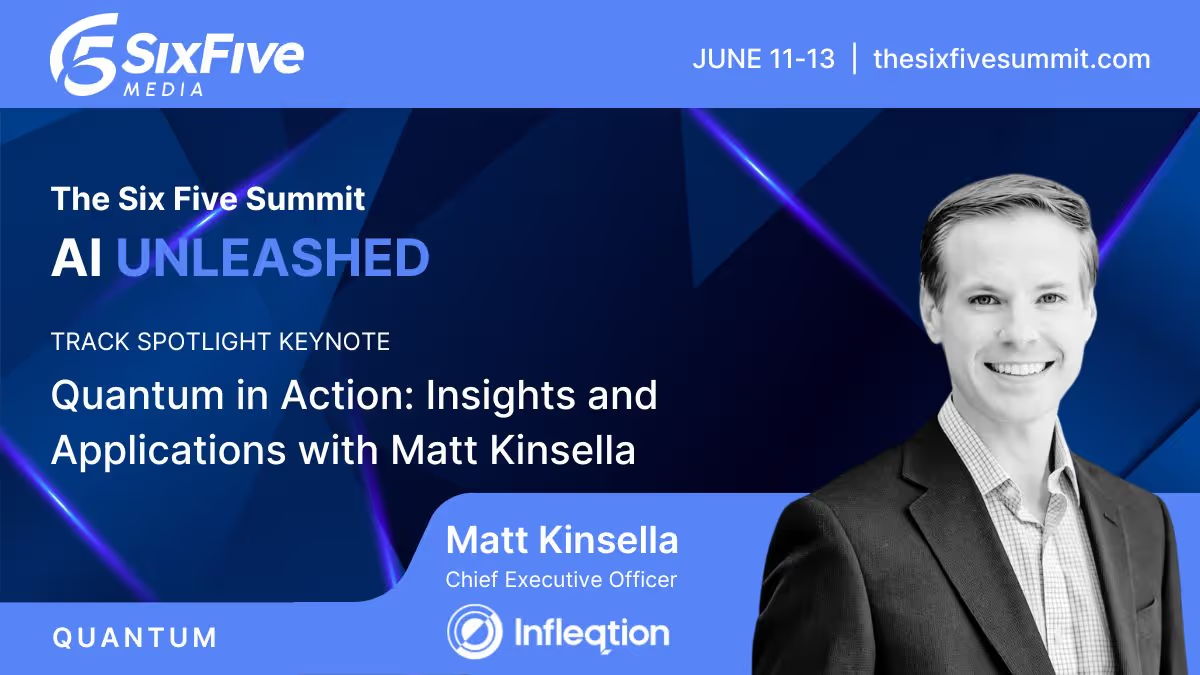
Quantum in Action: Insights and Applications with Matt Kinsella
Quantum is no longer a technology of the future; the quantum opportunity is here now. During this keynote conversation, Infleqtion CEO, Matt Kinsella will explore the latest quantum developments and how organizations can best leverage quantum to their advantage.
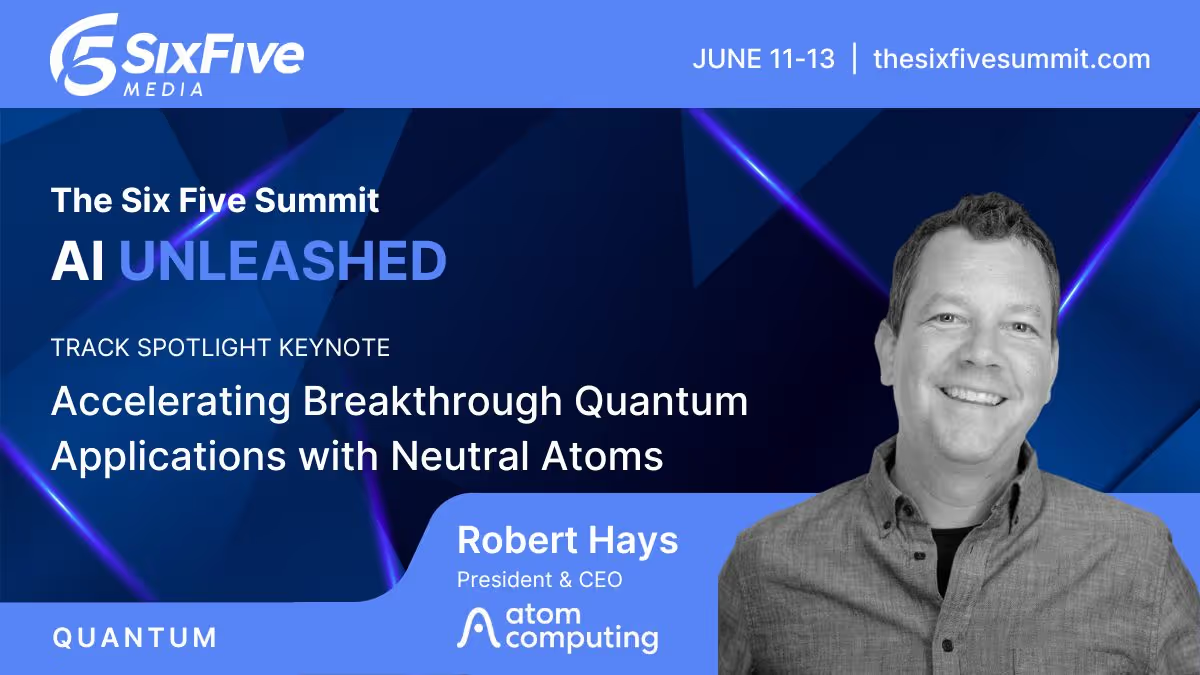
Accelerating Breakthrough Quantum Applications with Neutral Atoms
Our planet needs major breakthroughs for a more sustainable future and quantum computing promises to provide a path to new solutions in a variety of industry segments. This talk will explore what it takes for quantum computers to be able to solve these significant computational challenges, and will show that the timeline to addressing valuable applications may be sooner than previously thought.