
When Sovereign AI Becomes an Enterprise Problem, Not Just a Policy One
SHARE


NetApp’s Adam Gale explains why sovereign AI now depends on moving complete services quickly while preserving control and security. For enterprises facing regulatory and geopolitical shifts, portability has to be built into the data platform before a crisis forces the move.
Sovereign AI started as a government mandate, but enterprises now face the same questions of control, resilience, and jurisdiction inside their own infrastructure. Regulations such as the EU Data Act already require organizations to be able to switch providers and move workloads. Geopolitical shifts can also force that move overnight.
In the second episode of the NetApp Sovereignty series, Nick Patience, VP and Practice Lead for AI Platforms at Futurum, is joined by Adam Gale, Field CTO for Cybersecurity and AI at NetApp, to discuss how governments and enterprises are putting sovereign AI into practice.
Gale walks through a real data move out of the UAE and contrasts Denmark’s and France’s national approaches. He also explains what banks weigh when they build sovereign AI around their most sensitive data and defines sovereignty as the ability to change location quickly while preserving control and security, rather than a fixed place on a map. For enterprise architects, that makes portability a requirement built into the storage and control plane, rather than a migration project started in a crisis.
Key Takeaways:
🔷 Portability means moving the complete service. Gale says regulations like the EU Data Act are turning workload portability into a regulatory requirement as well as a business one. Using the UK’s NATS air traffic control service as an example of critical infrastructure, he argues that real portability means moving a full service and its data without disruption. Anything less, in his view, is simply a backup.
🔷 Mobility has to be built into the platform. Data movement should be software-driven within the operating system and control plane, so that a crisis move takes a few clicks instead of a scramble for separate tools. Gale describes a Dubai-based customer that moved a sovereign, AI-linked workload into the EU as regional tensions rose, then repatriated it once the risk subsided.
🔷 Sovereignty can require proof. That customer wanted evidence that its data was not tampered with, modified, or accessed while abroad. It also wanted proof of complete, secure deletion once the data returned home. Gale’s lesson is that control has to be demonstrable, not assumed.
🔷 National strategies trade different kinds of control. Denmark’s Gefion supercomputer, which hosts the Corti Models sovereign AI layer, keeps infrastructure, inference, and data in Europe while still depending on NVIDIA hardware. France’s Albert API, built on the open-source OpenGateLLM gateway, gives the state control of hosting, model selection, and the data path without building its own model. Gale compares it to owning the car factory versus controlling which cars can drive on your roads.
🔷 Banks build sovereign AI around their most sensitive data. Gale points to Bank Zimmerberg’s Policy Bot on Swisscom’s Swiss AI Platform, which interprets internal policies and regulatory material on NVIDIA SuperPOD infrastructure without data leaving Switzerland. The value comes from putting proprietary knowledge to work in AI while preserving residency and IP. Much of the progress, he notes, comes from smaller models applied to routine work.
🔷 Start with what to control, why, and how. Gale’s framework asks which layers to control (data, infrastructure, or models), why to control them (cybersecurity or IP protection), and how (public or private, cost versus complexity, or full isolation). His bottom line is that without control and security, there is no sovereignty.
Enterprises that build portability and provable control into their data platforms now will be able to respond to regulatory and geopolitical shifts without rebuilding their AI stack.
Watch Episode 1 of the series at sixfivemedia.com, and subscribe to our YouTube channel so you never miss an episode.
Learn more about NetApp at netapp.com.
Disclaimer: Six Five Media is for information and entertainment purposes only. Over the course of this video, we may discuss companies that are publicly traded, and we may reference their equity share prices. Nothing discussed during this webcast should be considered investment advice or a recommendation to buy or sell any security. We are not investment advisors, and you should not rely on this content as financial advice. Six Five Media collaborates with technology companies and industry leaders to produce research-driven interviews and multimedia programming for enterprise technology audiences.
Adam Gale:
If you do not have control, you do not have sovereignty. If you don't have security, you don't have sovereignty. Those two key facets make up sovereignty for me.
Nick Patience:
Hello and welcome to the Six Five Virtual Webcast, the second in our NetApp Sovereignty Series. I'm Nick Patience, the AI Platforms Practice Lead at Futurum. In our first episode, we looked at what sovereign AI is and why it's accelerating. And today we're moving from strategy to execution, looking at the real use cases and customers putting sovereign AI into practice. Today, I'm joined by Adam Gale, Field CTO for Cybersecurity and AI at NetApp. Welcome to the Six Five, Adam.
Adam Gale:
Thank you. Thank you for having me.
Nick Patience:
Great, so in our last episode, Adam, we talked through why sovereignty has become a strategic priority. But talk is obviously different from actually being able to move a workload the moment a government or a provider relationship changes overnight. So Adam, what does that kind of portability actually look like in practice? And how close are enterprises to being able to do it today?
Adam Gale:
Well, I think that's a really good question. And I'd first start with, Portability, it's not just a business requirement. It's fast becoming a regulatory requirement too. And you have things like the EU Data Act, which requires organizations be able to switch providers and move workloads around, you know, back on premise. Flexibility and portability are key here. Now that requirement is being framed through sovereignty and AI, not only because AI generates and stores just like an absolutely enormous amount of data, but because it's increasingly becoming part of critical services and a practical example of this. is NATS, National Air Traffic Service, which you may have seen in the news recently that had some outages. Well, they have a project called Project Bluebird, which helps manage complex air traffic scenarios. Now, this is the critical of critical infrastructure. So when it goes down, the impact can ripple across the economy. So with that in mind, to answer your question, what does portability actually look like? It means being able to move the complete service. That's the whole service. That includes the underlying data. Move all seamlessly without disruption. Now the service here, I can't stress that enough, is the key point. And if you cannot continue to provide that service seamlessly, you're simply backing up your data. Which kind of to summarize this, if I will, resilience itself. which is what we're going to, I assume, talk about here. Resilience assumes disruption, whether it be cyber attacks, supply chains, issues in operational failures. The question is whether your sovereignty model gives you control to keep operating. Enterprises need to choose the right platform for this. So I guess that's a long, long, long, long run for me. But if I was to answer your question fully directly, what does it look like in practice? It's the ability to be resilient and move a service, maintain two critical aspects of sovereignty, control and security.
Nick Patience:
So we obviously hear a lot about AI models in the news, but not every sovereignty story is really about models at all. So some of the clearest proof points we see show up in where an enterprise data physically lives, independent of the model running on top of it. So Adam, what's an example that's really shown you how much flexibility enterprises need at the storage layer?
Adam Gale:
Firstly, this comes back to, as you mentioned, the practicality of moving workloads. Mobility needs to be embedded in the operating system and the control plane of the platform. So the process is entirely software driven. And if you're ready to go when a crisis happens, then it should just be clicks of a button. No one should be scrambling around for separate tools to move data and move services around and to check its integrity. So an absolute great example of this is in the UAE, which is where I'm based. I'm based in Dubai. We have a customer base here that has incredibly strict sovereign requirements for its data and its workload. This is also AI linked too, because they're feeding that data into an AI, a practical, actual live model. And them moving outside of this region carries significant financial penalties. Now, the UAE has done a fantastic job of championing sovereignty, not just with data and security, but also skills. Now, you may also be aware that recently that risk picture changed in the region. Some regional tensions increased, and data centers became strategic targets. Now the customer approached us and they needed to rapidly remove that workload or move it somewhere else and I believe they chose the European Union because of a similar regulatory structure. Now, because this capability is baked into a platform, we could support that move. You move them to a different place. But what's really interesting here is their version of sovereignty was they wanted proof that the data had not been tampered with, modified or accessed in the new location. So they wanted a tamper proof. and they wanted to prove that it had been securely deleted completely gotten rid of no trace of it once they decided to bring it back in region now the takeaway here for me is sovereignty is not a fixed location it's the ability to change location quickly while preserving control and security and in this case providing proof. Obviously once the risk had subsided they now repatriated their data and we did obviously scrub everything from the European place and everything is good to go. But that I always find is a really good practical example, one that we don't necessarily always think of, of actually doing it in practice.
Nick Patience:
Interesting. So here's a scenario. So you've got two governments, and they can both say they're building sovereign AI, and they can mean quite different things by that. So one builds its own national compute and its own model, let's say, and another builds a single control gateway that sits in front of a commercial generative AI instead. So Adam, what do you say is the real difference in what each approach actually buys a country or an enterprise? Well, I think you make a really good point there.
Adam Gale:
You've actually touched on two very valid models. And I think I'd like to dig into those actually. Because then we can compare and contrast and say why these nations have chosen those models. And firstly, we have the framework to the European sovereignty framework. which actually shows sovereignty as a spectrum, but it's entirely measurable. And it comes and looks at your support, your hardware, your logistics, your raw materials, because the reality of the situation is to be truly sovereign in any shape is actually quite difficult. To source all those components and all those parts, all those skill sets, I said, and have them all within country is actually quite hard. But let's build on what you just said there and look at Denmark. Denmark have the GIFON infrastructure, which is on the quality model. And they are built on, I believe, 1,500 NVIDIA H100 GPUs. And all prompts, completions, everything is stored in EU. No customer code or anything like that. Now, that sounds highly sovereign, doesn't it? And in many respects, it absolutely is. Because you're seeing the infrastructure, the inference paths, data, the controls, the operation, everything is aligned within Europe. And for once, customers can actually pick their own models, whether it be a proprietary one. But it still depends on NVIDIA hardware. And if we're going to rely on NVIDIA hardware, is it truly sovereign? It goes back to that question, how sovereign do we need to be? So that's one. Now the second one, which again I think you alluded to, there's gateways. You have the one in France, the Albert, and that's a government controlled gateway. And I think it has roughly about 200 public sector projects running through it at the moment. Completely state operated and maintained. Now the core issue here is control of the data path. Now they provide government teams with a common interface for models and RAG and documents classification all those useful things you'd expect and it's built on OpenGate LLM which is open source and European in nature. But the French government completely controls the gateway. Hosting environment, model selection and data path and usage. That means That separates the model nationality from data sovereignty and operational sovereignty. That's a lot of words. So let me just try and summarize it. If we use a car analogy, and I absolutely did not use Co-Pilot to write this analogy, by the way. You have one example. You have a country which owns the factory, the garage, and the operating rules, and builds and runs the car itself. Even if the engine and some of its critical components come from overseas, and we do do that today, car manufacturers do do that. It still gives you deep control of how the car is assembled, maintained, and driven, but it still means you depend on some foreign suppliers. Second model, the country does not build the car. Instead, it operates a secure government gateway through which approved cars can be purchased. And then the state decides which vehicles are allowed in, who drives them, how they're driven, and what information is left in that vehicle. Hopefully I've kind of like summarized that in a way that's easily timed. Yes, because there is a lot of techno mumbo jumbo in there. But you have two different models and they both cover the sovereignty aspect in very different ways.
Nick Patience:
Yeah, that's a good, that's a good analogy. I think looking at different verticals, financial services. is also one of the few sectors where sovereignty isn't the kind of compliance nice to have is actually, it can be existential. Some banks are building and running their own sovereign AI environment entirely in house while storage vendors are also starting to bring new as a service offerings to enterprise enterprises aimed at AI workloads with assurances that go beyond where the data sits to who can access it and where that support comes from. So Adam, from your point of view, when a bank weighs building its own sovereign AI environment against consuming one as a service, what are some of the things you should be asking about operational control and not just data residency?
Adam Gale:
So it's a really good point that I love talking about the financial industry because they will often argue that they are some of the first adopters of AI. They've been using AI in many, many areas, whether it be fraud detection or market prediction or those sort of things. So you even have Visa's VAAR, which is their account attack intelligence, which scans through online transactions that you're making with your card and gives them a score. They developed that years ago, way before generative AI became this big boom. So the financial industry is a good one to pick here. And I think it consists of two parts. One is the regulatory. Again, they're probably one of the most regulated industries on the planet next to things like power generation and healthcare. So that plays a factor in this. And second is skillset and resources, which they have a lot of because of the aforementioned, having built these things before. Also, they hold a huge amount of valuable data, a lot. Now data is so valuable it's been written on balance sheets. It's so valuable to us that we're actually going to put it on balance sheets and have to come up with rules and regulations to govern how we put it there. So a good example of a bank doing this, building their own artificial intelligence, is Bank Zibberberg with their policy bot on a Swiss AI platform. Now, what's cool about this is the bank uses AI to interpret internal policies and regulatory material. And this is a Swiss bank, so there's lots of regulatory material they have to consider. And the workload runs in a Swiss data center, again on an NVIDIA SuperPOD, and everything remains in Switzerland in the bank. And it gives them fast access to regulatory knowledge without compromising any data, any security or any data. Now for me, the real proof point and value here is the specific data being used. And I find to summarize it, like the key takeaway is that business value is not merely compliance. It is the ability to use all this sensitive proprietary knowledge in an AI while preserving residency and intellectual property. So we see that same pattern, by the way, in healthcare, government and legal services and engineering, where the organization holds extremely high value data and it's tightly controlled. So they're making similar decisions to the banks here. One thing I also see in the regulatory industry, or sorry, in the banking industry, should I say, is small usage, small model usage. It's not exciting to talk about, but when you're balancing a spreadsheet or when you're looking at a P&L, AI is very, very useful and it's getting used in these areas tremendously. So we all assume this is big bang AI, but naturality, some of the biggest strides have been made at some of the lowest, more mundane levels.
Nick Patience:
Yeah, it's not all about frontier models, is it? It's much more practicality involved in some smaller language models being used. As we kind of close out this series, Adam, so what's the one thing you want enterprise leaders to walk away with as they build their own sovereign AI strategy?
Adam Gale:
As you probably imagine, I do talk about this quite a bit. So, uh, I've actually written a little bit of a framework, um, that I can discuss with people and give to the, give to them. And it helps facilitate these discussions when we're talking about building our own or using one off the shelf. And it starts with really four simple questions. And I would ask myself this, I would ask myself these questions when I'm going on this journey is what do we want to control? How much control do we want to apply? And finally, how do we apply it? And then underneath all of those, we have things like, if we're going to control, do we look at data infrastructure and models? If it's why, is it cybersecurity, IP protection, which we've already discovered? And if it's how are we using public or private? Are we going to go for a cost versus complexity model? Are we going to have it come truly isolated? So all these things really play into your decision matrix. Again, if I had to summarize it, I would say that Ultimately, if you do not have control, you do not have sovereignty. If you don't have security, you don't have sovereignty. Those two key facets make up sovereignty for me. That would be the key piece that I'd leave behind.
Nick Patience:
So Adam, thank you so much for being here with me on this episode today. Thank you very much for having me. It's an absolute pleasure. And thanks for tuning into the final episode of our NetApp Sovereign AI series. Don't forget to hit subscribe, follow us on the socials, and check out more of our Sovereign AI coverage at sixfivemedia.com.
MORE VIDEOS
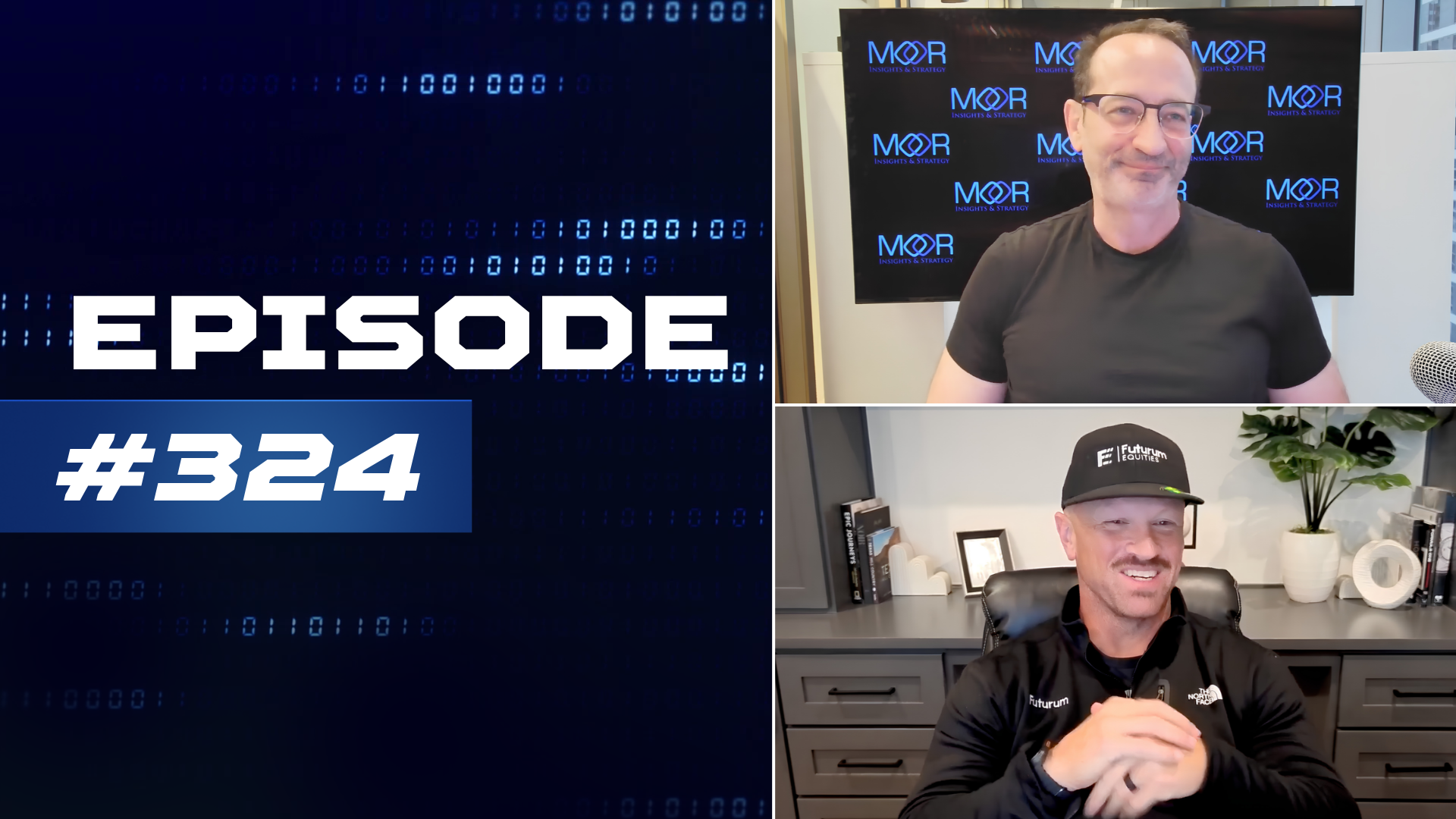
Meta and Google Rejoin the Frontier, Microsoft’s Maia 300, and the AI Credit Scare | The Six Five Pod Ep. 324
On Episode 324 of The Six Five Pod, Patrick Moorhead and Daniel Newman unpack the biggest stories from the week, including new agent models from Meta, Google, and NVIDIA, Microsoft's Maia 300, Applied Materials' EPIC Center, AMD, NVIDIA, and Cisco at OCP Global Summit 2026, and the Apple-Meta Muse Spark Open partnership, plus a Flip debate on whether AI leaderboards serve vendors more than enterprise buyers. Plus, Bulls & Bears covers the CPI and PPI shock that rattled the AI trade, Anthropic's investor event, ASML's record quarter, and TSMC's earnings results.


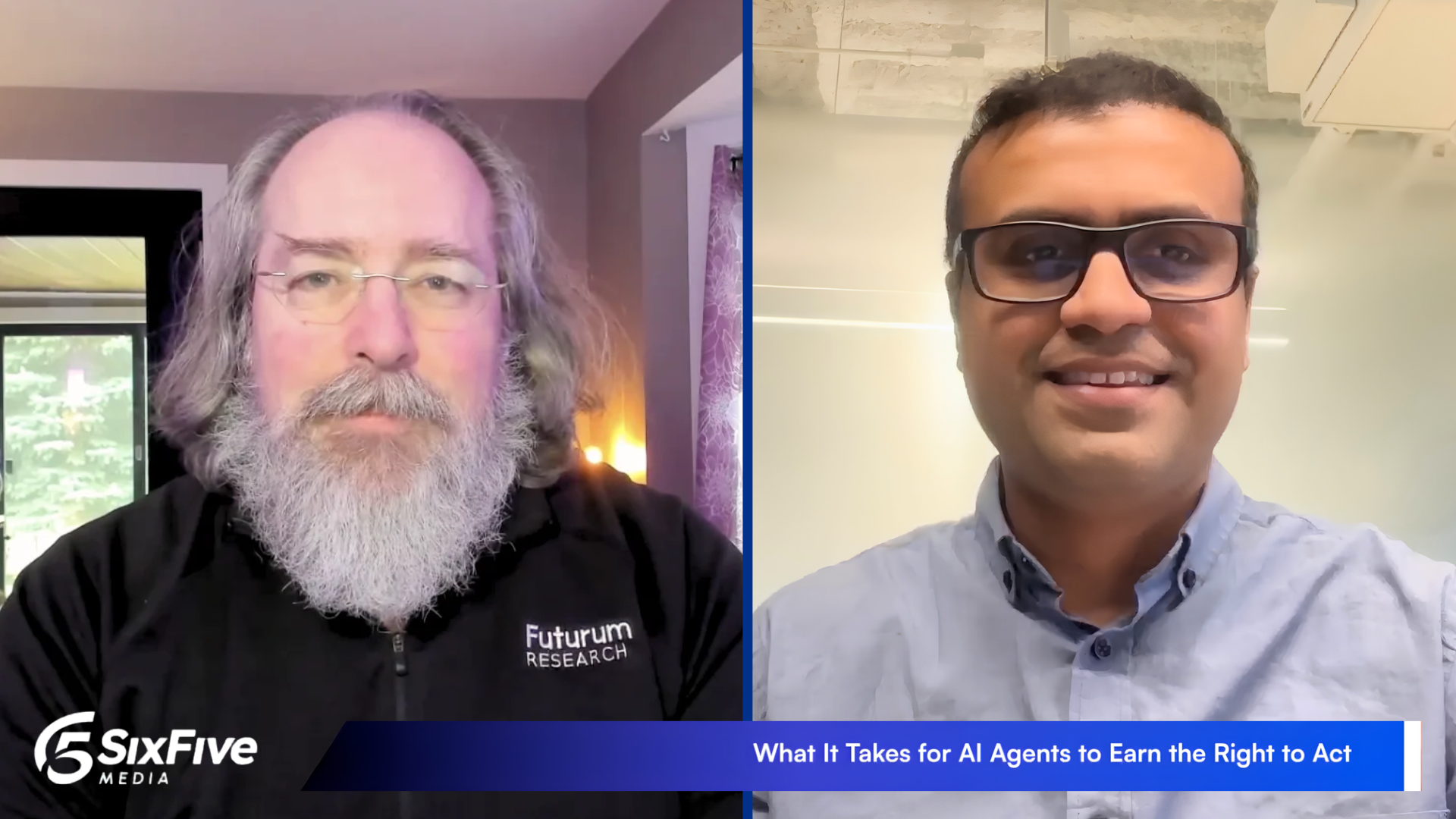
What It Takes for AI Agents to Earn the Right to Act
Snowflake’s Pavan Pothukuchi explains why enterprise AI agents still struggle to act on systems of record, and how governed data platforms, semantic layers, and scoped agent identity close the gap. For enterprise leaders, agent autonomy has become a data architecture decision.
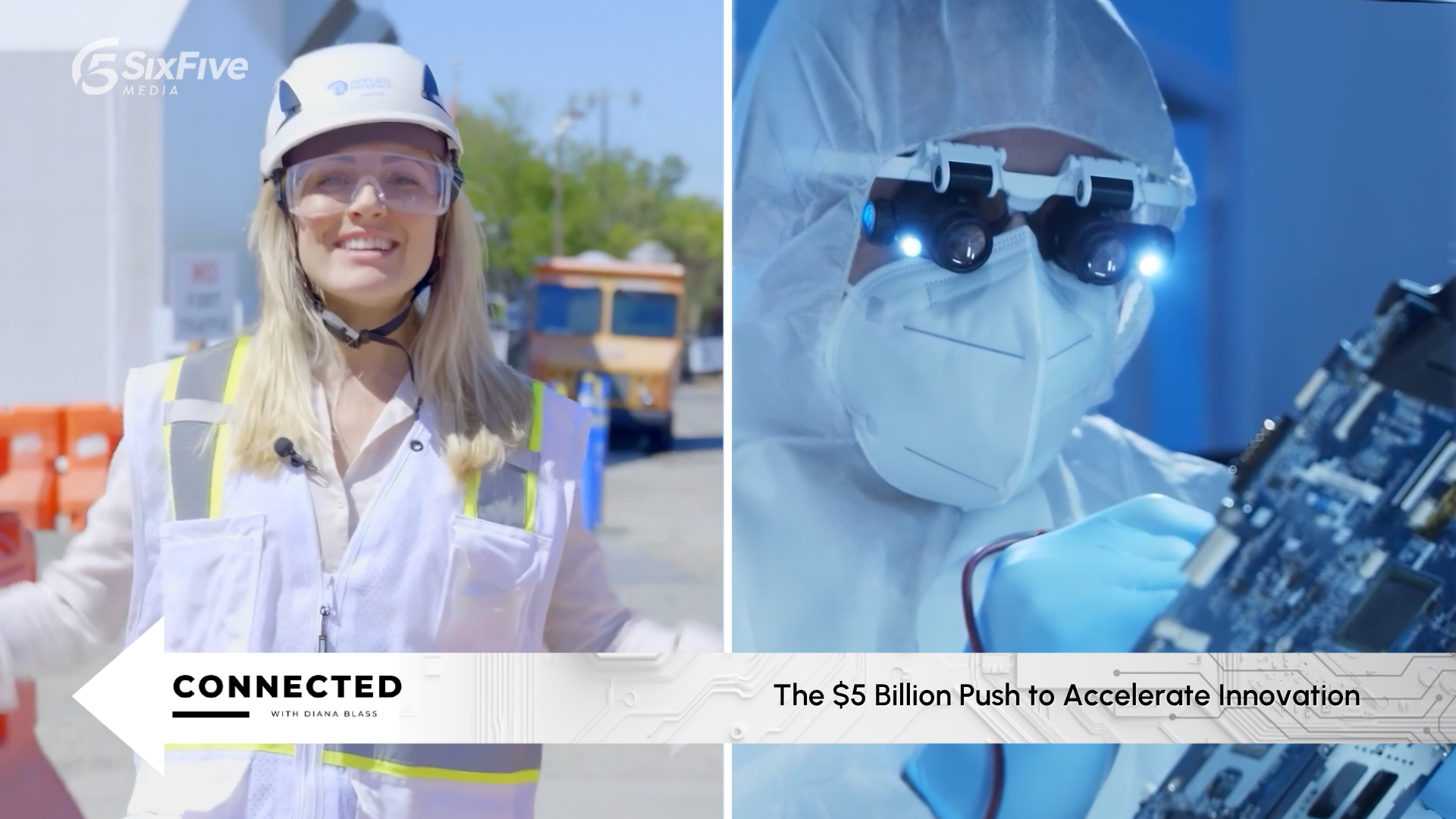
The $5 Billion Push to Accelerate Innovation - Six Five Connected with Diana Blass
On Connected, Diana Blass tours Applied Materials' $5 billion EPIC Center, where chipmakers, equipment developers, and researchers will work in parallel to move AI chip breakthroughs from lab to market faster. Earlier collaboration could cut years from development cycles as AI demand outpaces manufacturing capacity.
Other Categories
CYBERSECURITY
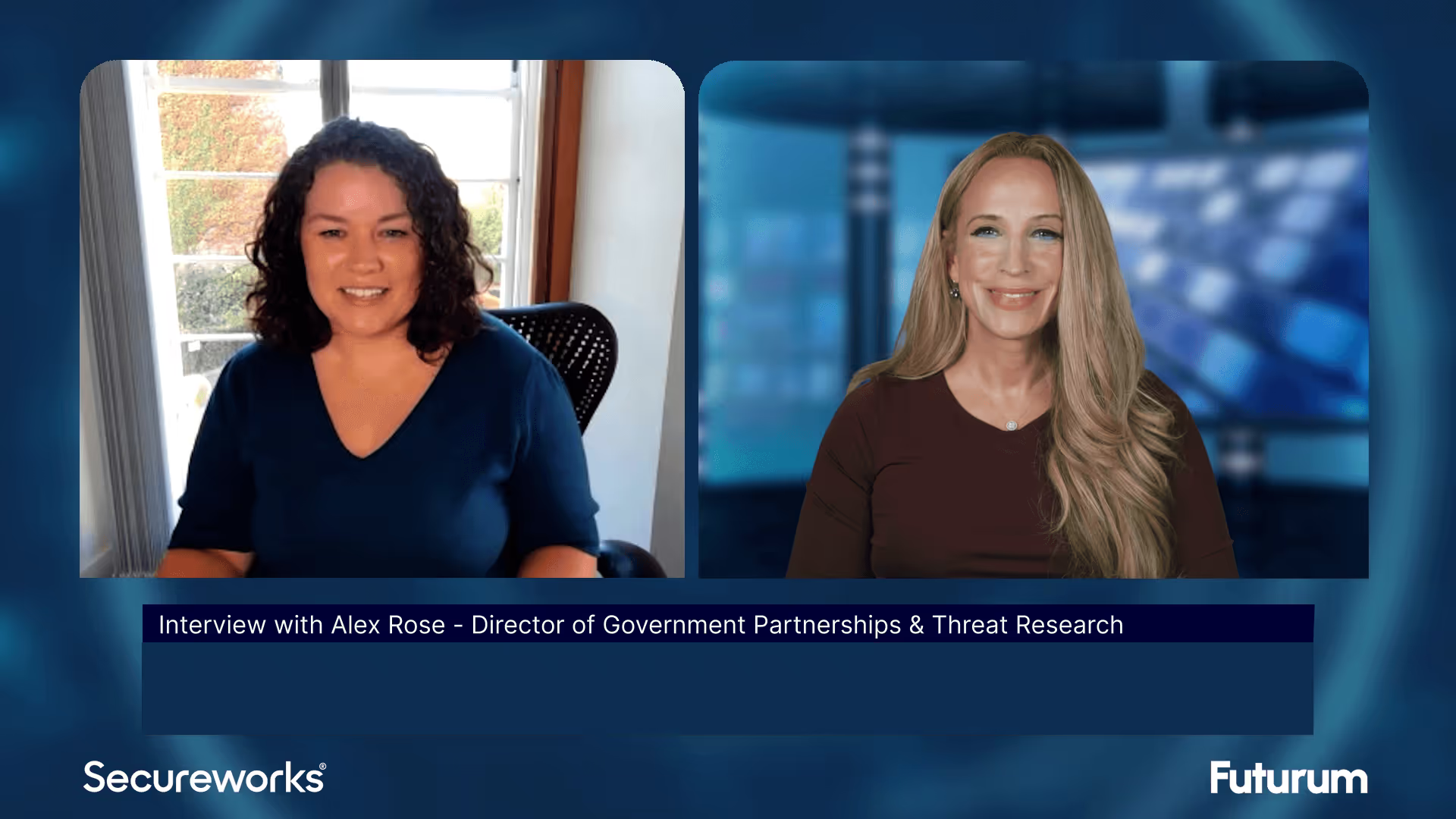
Threat Intelligence: Insights on Cybersecurity from Secureworks
Alex Rose from Secureworks joins Shira Rubinoff on the Cybersphere to share his insights on the critical role of threat intelligence in modern cybersecurity efforts, underscoring the importance of proactive, intelligence-driven defense mechanisms.

HP Launches World’s First Business PCs to Protect Against Quantum Hacks - The Six Five On the Road
On this episode of the Six Five - On the Road, hosts Patrick Moorhead and Daniel Newman are joined by HP's Ian Pratt, Global Head of Security for Personal Systems.
What is Autonomous Endpoint Management?
Autonomous Endpoint Management is a framework designed to unify IT operations and security teams on a single platform through real-time control and visibility.
QUANTUM
Quantum in Action: Insights and Applications with Matt Kinsella
Quantum is no longer a technology of the future; the quantum opportunity is here now. During this keynote conversation, Infleqtion CEO, Matt Kinsella will explore the latest quantum developments and how organizations can best leverage quantum to their advantage.
Accelerating Breakthrough Quantum Applications with Neutral Atoms
Our planet needs major breakthroughs for a more sustainable future and quantum computing promises to provide a path to new solutions in a variety of industry segments. This talk will explore what it takes for quantum computers to be able to solve these significant computational challenges, and will show that the timeline to addressing valuable applications may be sooner than previously thought.