
Six Five Media was on the ground at ServiceNow Knowledge 2026, with analyst Melody Brue covering how enterprises are actually using AI—not piloting it, not planning for it, but running it in production.
Knowledge 2026 reflected where the market has landed: the conversation has moved past whether to adopt AI and into the harder questions of how to deploy it well, govern it, and get something back from it. The event brought together practitioners and leaders working through those questions with ServiceNow's platform at the center.
Watch the coverage on how unified platforms are shortening the distance between data and decisions, and where AI is genuinely changing how work gets done, where the friction still lives, and what separates organizations seeing returns from those still waiting on them.
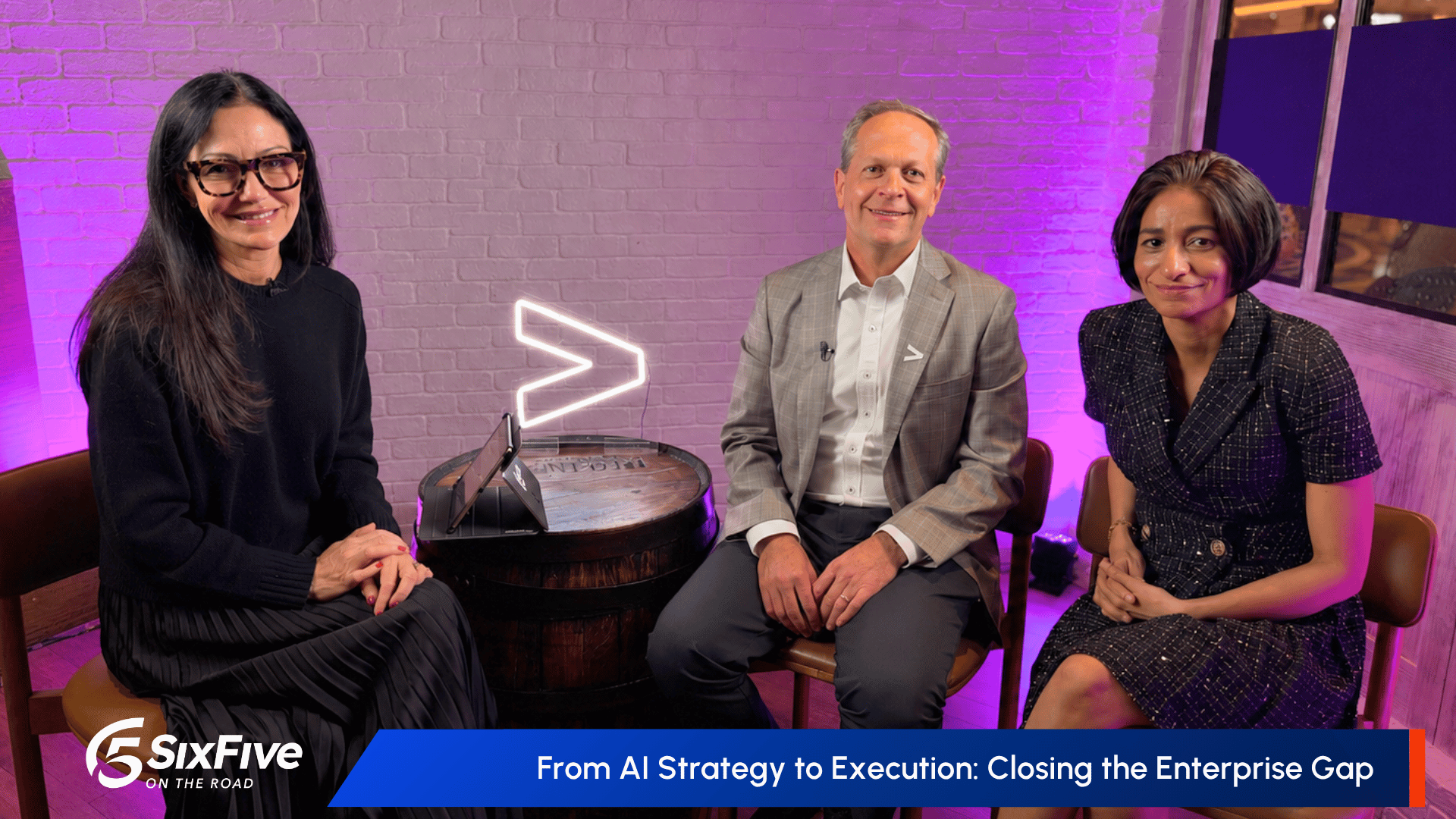
From AI Strategy to Execution: How Forward Deployed Engineering Is Closing the Enterprise Gap
Accenture and ServiceNow launched the Forward Deployed Engineering program at Knowledge 2026 to address the delivery gap that keeps 88% of enterprise AI initiatives from reaching scale production. David Kanter, Senior Managing Director and Global Head of the ServiceNow Business Alliance at Accenture, and Miku Jha, GVP of Applied AI and Forward Deployed Engineering at ServiceNow, outline how embedding co-engineering teams inside customer environments from day one, backed by 300+ agentic AI workflows and a governance-first architecture, changes what enterprise AI deployment actually produces.
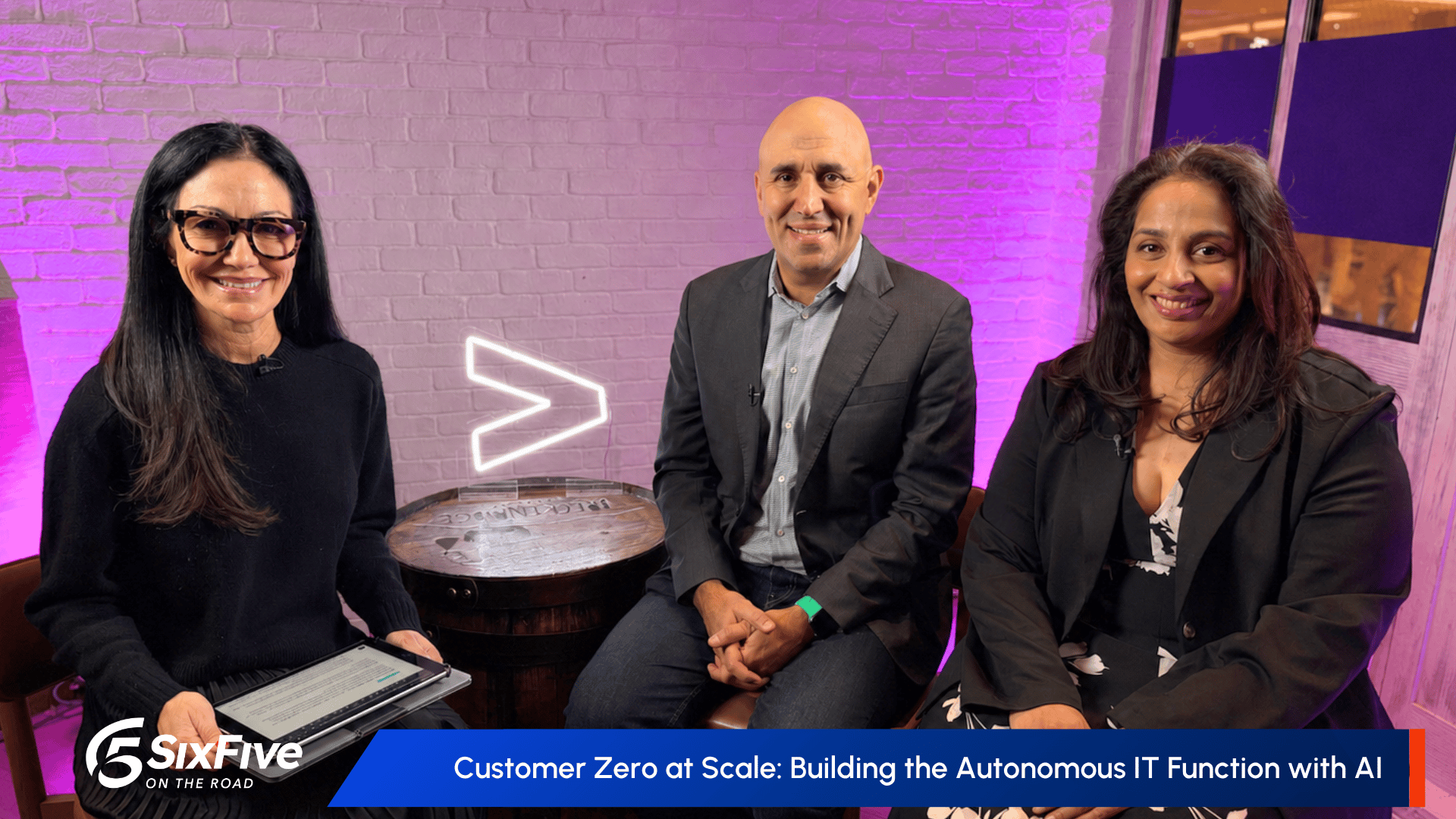
Customer Zero at Scale: How Accenture Is Building the Autonomous IT Function on ServiceNow
Accenture operates ServiceNow across 1,900 business services and 800,000 employees as Customer Zero, running AI capabilities in production before advising clients to do the same. CIO Tony Leraris and Global IT Delivery and Capability Director Monika Patel-Mistry break down the live Autonomous Specialist pilot, the AI Control Tower governance architecture, and why secure-by-design is an architectural commitment that has to be made before the first agent goes live, not after the first problem surfaces.

Rethinking Cyber Resilience in the Age of AI Agents: Accenture and ServiceNow at Knowledge 2026
AI-led cyberattacks have outpaced the fragmented security tooling and siloed team structures that most enterprises still rely on. Trevor Houck, Managing Director of OT Security Operations at Accenture, outlines how agent identity governance, OT security architecture, entitlement drift monitoring, and ServiceNow's Armis acquisition combine to build the cyber resilience foundation that enterprises need before AI agents scale across their operations.

From Reactive IT to Autonomous Operations: How Accenture, Dynatrace, and ServiceNow Close the Gap Between Detection and Resolution
Accenture, Dynatrace, and ServiceNow have built a closed-loop IT operations architecture that detects, diagnoses, remediates, and closes incidents before the business is impacted, eliminating the reactive firefighting model that has defined enterprise IT for decades. Tom Bruss, Managing Director at Accenture, and Jay Snyder, SVP of Partners and Alliances at Dynatrace, break down how Davis AI, SmartScape, and ServiceNow workflows combine to shift IT from a cost center to a proactive operational foundation, and why process reinvention has to come before automation for any of it to produce lasting results.
From AI Strategy to Execution: How Forward Deployed Engineering Is Closing the Enterprise Gap
Accenture and ServiceNow launched the Forward Deployed Engineering program at Knowledge 2026 to address the delivery gap that keeps 88% of enterprise AI initiatives from reaching scale production. David Kanter, Senior Managing Director and Global Head of the ServiceNow Business Alliance at Accenture, and Miku Jha, GVP of Applied AI and Forward Deployed Engineering at ServiceNow, outline how embedding co-engineering teams inside customer environments from day one, backed by 300+ agentic AI workflows and a governance-first architecture, changes what enterprise AI deployment actually produces.
Customer Zero at Scale: How Accenture Is Building the Autonomous IT Function on ServiceNow
Accenture operates ServiceNow across 1,900 business services and 800,000 employees as Customer Zero, running AI capabilities in production before advising clients to do the same. CIO Tony Leraris and Global IT Delivery and Capability Director Monika Patel-Mistry break down the live Autonomous Specialist pilot, the AI Control Tower governance architecture, and why secure-by-design is an architectural commitment that has to be made before the first agent goes live, not after the first problem surfaces.
Rethinking Cyber Resilience in the Age of AI Agents: Accenture and ServiceNow at Knowledge 2026
AI-led cyberattacks have outpaced the fragmented security tooling and siloed team structures that most enterprises still rely on. Trevor Houck, Managing Director of OT Security Operations at Accenture, outlines how agent identity governance, OT security architecture, entitlement drift monitoring, and ServiceNow's Armis acquisition combine to build the cyber resilience foundation that enterprises need before AI agents scale across their operations.
From Reactive IT to Autonomous Operations: How Accenture, Dynatrace, and ServiceNow Close the Gap Between Detection and Resolution
Accenture, Dynatrace, and ServiceNow have built a closed-loop IT operations architecture that detects, diagnoses, remediates, and closes incidents before the business is impacted, eliminating the reactive firefighting model that has defined enterprise IT for decades. Tom Bruss, Managing Director at Accenture, and Jay Snyder, SVP of Partners and Alliances at Dynatrace, break down how Davis AI, SmartScape, and ServiceNow workflows combine to shift IT from a cost center to a proactive operational foundation, and why process reinvention has to come before automation for any of it to produce lasting results.