
IBM's Channel Chief on AI Maturity, Ecosystem Strategy, and Building Kareem.ai
SHARE


Kareem Yusuf Ph.D, SVP, Ecosystem, Strategic Partners & Initiatives at IBM, joins Tiffani Bova at IBM Think in Boston to discuss how AI maturity is reshaping partner ecosystems, how IBM is deploying AI inside its own channel operations, and what it actually took to build Kareem.ai, an internal channel health analytics tool now in active pilot.
The adoption of enterprise AI isn’t slowing down, it’s evolving. This distinction is important, and Kareem Yusuf Ph.D, SVP, Ecosystem, Strategic Partners & Initiatives at IBM, emphasizes this point clearly. The focus has shifted from simply demonstrating that AI is effective to proving its financial benefits. As a result, partners involved in enterprise deployments are experiencing this pressure more acutely.
Tiffani Bova sat down with Kareem at IBM Think in Boston to unpack how IBM's partner ecosystem is evolving, how AI is changing the way IBM manages its own channel, and what it actually took to build an internal AI tool around channel health analytics.
The conversation goes beyond strategy as Kareem walks through the decision framework behind Kareem.ai, IBM's internal channel performance tool, explaining why identifying the right data proved harder than finding enough of it, and why business partner-originated opportunity and business partner-owned opportunity became the two metrics everything else distilled down to.
Key Takeaways:
🔹 AI maturity across the ecosystem has accelerated significantly in the past 12 months. Partners are moving from landing technology value propositions to delivering measurable business outcomes, and IBM is orienting its programs and incentives to support that shift.
🔹 IBM's partner ecosystem is deliberately diverse. With seven award categories across five geographies and 35 winners recognized at Think, the structure reflects a core belief that a single global winner designation is almost meaningless when partners operate in their own markets.
🔹 IBM is using AI to manage its own channel before asking partners to do the same. Kareem.ai, now live in pilot, focuses on channel health analytics and partner performance management, built around business partner-originated and owned opportunity as the two foundational metrics.
🔹 The biggest lesson from building Kareem.ai was not a lack of data. It was deciding which data actually drove decisions. Kareem's litmus test: if the answer would not change what he does next, the data does not belong in the model.
🔹 IBM is confronting the enterprise tech industry’s “shoemaker’s children” problem by deploying AI visibly inside its own operations first. Rather than treating AI as an external selling point alone, the company is embedding it into partner engagement, sales enablement, and internal workflow execution to model adoption behavior for the ecosystem.
IBM's approach to the channel is disciplined and data-grounded. The next phase of that work, Kareem says, is using AI not just to report on partner performance but to actively drive it.
Disclaimer: Six Five On The Road is for information and entertainment purposes only. Over the course of this webcast, we may talk about companies that are publicly traded and reference share prices, but nothing discussed should be taken as investment advice. We are not investment advisors.
KAREEM YUSUF:
I really do think that we've been maturing, all of us as a collective, as technologists, in our understanding of the technology, in our thinking of it as a tool, thinking about where it applies value. And I would say that's as true within the ecosystem as within IBM itself, as within the client.
TIFFANI BOVA:
Hello and welcome to Six Five on the Road. I'm Tiffany Bova. We are here in Boston and I'm thrilled to talk about ecosystem strategy with Kareem Youssef, Channel Chief at IBM.
KAREEM YUSUF:
I love that title, Channel Chief. And I love having a conversation with Kareem.
TIFFANI BOVA:
Like if we could do this all the time, we would do it all the time.
KAREEM YUSUF:
We would indeed. Thank you for having me.
TIFFANI BOVA:
But listen, this is the second think that you've had in this role. So I've been practicing this all week. What do you think? Two thinks under your belt.
KAREEM YUSUF:
Two things, what do I think? Look, I think the State of the Union is good. I've been very pleased with the engagement from the ecosystem as a whole. I think the way we fixated on strategy, trying to align against common goals, understanding that each of the elements of the ecosystem are diverse in their own right, by that I mean the partner types, and really trying to tune all that we do in that regards has definitely landed, getting lots of feedback, good, positive, whatever, that has allowed us to evolve. And I think we're making good strides in the direction that we need to go.
TIFFANI BOVA:
Yeah, because one of the things I loved last year when we got a chance to sit down together and have this conversation was your keen understanding and focus on the ecosystem in totality and how partners are not all created equal. And I use partners in our quotes when I say this, right? Whether it's distribution, you had a few awards this morning, whether it's distribution, the most new partners that you have, your managed partners.
KAREEM YUSUF:
Influential partners.
TIFFANI BOVA:
You know, sort of seven or eight categories and lots of really great names, you know, on screen that made it. And what that tells me is the diversification is working and the focus in each of those categories is working. Maybe there's something you could share there.
KAREEM YUSUF:
Well, just think about what you saw there, right? As you said, there are about seven categories, 35 winners, which if you think about that geographically, that's technically five geographies. I think we broke Americas into Latin America and North America. I think one of the subtleties in what you saw there was this recognition that Just defining a global winner, so seven, is almost meaningless, because partners exist and operate in their markets. And yes, some operate cross-market, but they exist in their markets. And the team was very vocal on the fact that we needed to also recognize that. And that's why we kind of settled on what we did. But to your point, it's underpinned by this idea that it's a diverse network of participants with different needs, and we need to recognize that in everything we do, even things as simple as awards.
TIFFANI BOVA: Yeah, and last year through this kind of understanding what the different partners needed, not that it was a first-time lean-in, because it was not, but it really pivoted to AI. Like the conversation, it's hard now to be in an event anywhere or listen to anything.
KAREEM YUSUF:
Good luck. Yeah, without hearing those two letters.
TIFFANI BOVA:
You know, again, good, bad, indifferent, like you're going to hear it. And over the same sort of 12-month period, what has surprised you? for partners and AI? And then what were you sort of surprised on the other way? Like surprised you in a good way and then surprised in a, wow, I was expecting that to happen and it didn't. Anything come to mind?
KAREEM YUSUF:
Well, I don't know whether I would call it so much the negative, but let's be very honest. AI maturity in its own right, even a year ago, was still oodles behind where we are now. I really do think that we've been maturing, all of us as a collective, as technologists, in our understanding of the technology and our thinking of it as a tool, thinking about where it applies value. And I would say that's as true within the ecosystem as within IBM itself, as within the client. And so what I would say very positively is I think What I've enjoyed seeing is the leaning, first and foremost, on trying to really land the technology value propositions correctly. And I think partners have been doing a good job there. We've been doing a good job of that and trying to figure it out. I think the understated bit, which I tried to hit on quite a bit in our discussions earlier today, is the use of AI, though, within our work. And this was an important thread you and I had fooled on when last we spoke as well. And so you're seeing it manifest in what we're now doing for partners around the sales enablement platform, right, that we've been piloting within. You're seeing it manifest in products like Bob, you know, IBM Bob, and how that can help the software development lifecycle. You're seeing it manifest in what I would call deep process type things internally, how we identify the ideal partner profile, right? How we drive, you know, thinking and logic around things like auto deal sharing to move progress along. I think you'll begin to see AI manifest in those ways too, which will also further evolve how partners work with us and we work with them.
TIFFANI BOVA:
I think it's an important thing to point out, especially in the partner ecosystem. They sell the promise of AI, they stand and build up. We spent a ton of time training AI, building. Now customers, clients, regardless of industry and even sector and region, is saying, now I want the outcome, I want the value. Which I think is an opportunity for partners to actually, as you have, use it internally themselves to improve their own business and workflows and processes. But yet, I don't see a whole lot of that, and I wonder if there's
something there that IBM and others can really help them down this journey.
KAREEM YUSUF:
Look, I think it's actually truly just the natural evolution of technology adoption, if you really think about it, right? And often sometimes those who provide the technology can be in quotes, the worst offenders when it comes to directly adopting, right? Because your mentality is so far out there and you're trying to get your people in front of that client solving their problem. Taking a moment to think about it yourself sometimes can be a heavy lift, right? It's the classic shoemaker's children, right? And so I think how we can help is by exemplifying, right? Almost being a good example of how we're bridging it into how we manage and interact with partners. Obviously, how we use it internally. We talk about client zero a lot. That's how we've been. and then pushing all that out. But I think it's just about everybody taking a breather and finding the right places to begin to introduce it into your everyday.
TIFFANI BOVA:
Is there anything that stands out for you where you worked with or heard from a partner and they've given you this, you know, this is my ambition from an AI perspective, but then really seeing them land it and seeing them have huge impact in a customer environment?
KAREEM YUSUF:
Look, no surprises. I would say those most at the forefront of that are the build partners. You know, we had a great example today with Nexa because, you know, they're thinking about building a product. They know the product needs to be AI first. They're delivering it against a targeted value, you know, to be the intelligent platform for their area of focus. And so I think you see a lot of that. And they've really been leaning into the build partners, the notion of how Bob can accelerate them in their work. I think service partners, GSIs, RSIs, become another place where you see that kind of bubbling up. And the truth of that is, I suspect there are very few just resellers anymore because the value add often leads into solutioning. So I think they're coming up as well in very much the same realm. But I wouldn't say anything particularly standing out, except I think we can all agree that everyone now thinks about AI and enterprise within the enterprise in the context of business processes that you're addressing. Whether it's software development lifecycle, whether it's your HR, whether it's your procurement or other enterprise operations or customer service, that has seemed to really solidify and I think that's guiding us all.
TIFFANI BOVA:
I agree. I mean, I think there's certain use cases where you see customers feeling like, I understand, I see the value, I can clearly thread the ROI in some way. When it gets a little, my technical term, a little more squishy, and not being able to see that ROI clearly, that's where customers kind of begin to push back. In my mind, rightly so.
KAREEM YUSUF:
Rightly so. There's no need to be focused on the squishy. There's plenty of non-squishy to get started with.
TIFFANI BOVA:
That's right. Absolutely. Well, I would be remiss. You and I had a conversation a little more than a year ago, and I said that I wanted a Kareem.ai. And I said, you know, imagine a day.
KAREEM YUSUF:
Me too.
TIFFANI BOVA:
Where?
KAREEM YUSUF:
Can I sit on the beach while Kareem.ai does this?
TIFFANI BOVA:
But it was more about running the business, right? And being able to say, you know, on your weekly calls, instead of asking your regional leaders, you know, to really be able to tap into all this data you have. And I know you've been teasing me, waiting for us to get here for Think, so give me an update.
KAREEM YUSUF:
Well, you know, it's really interesting. And the funniest thing about that journey, if you like, to what is, how does AI help us manage our business, was actually deciding two things. What was the right area of focus? So where did we actually want the help? And then, and I will expand on this, data. and what data made a difference. And so I got very hung up, as you well know, on channel health analytics and partner performance management. I felt at the core, anything I was going to focus on and kind of leverage AI in that regards was targeted against that goal. And it's very logical if you think about my overall goal to leverage the ecosystem to scale, extend our reach and scale our revenue, right? So I need to know who's doing what, how are they doing what, what are the right vectors. The biggest fun once we had landed on that was actually deciding what data and what metrics were we going to actually fixate on. And I was like, you know, a mole, and I was like data mining, you know, pretty much blind, you know. Yeah, oh, that smells like a good piece of data. But the litmus test I placed everything against was what decision would I make based upon the answer. That's right. And we took our time. I made sure we spent some time like just wallowing in it because it's so easy to jump to an answer and create a dashboard or say, let's have AI do this. And it's quite instructive that if I was to boil that down to a very simple set of things, I'm maniacally focused on business partner OI and business partner OO. That's what it's actually has distilled its downs to and what we're beginning to build our AI around and all that data. And why that? Because when I look at OI, driven by the business partner, I look at it as independence of the channel, that they're able to take us out there and drive business without us. And when I look at OO, that means I'm taking what they are doing plus what I'm passing to them and how efficiently and effectively are they moving that through the pipe. That's a very self-focused notion, but in my mind, it's a good one to double-click on because that's where we drive the bulk, if you like, of revenue when you think about lending and the client.
TIFFANI BOVA:
Well, so version one of Careem AI is out amongst the peeps.
KAREEM YUSUF:
It's out amongst the peeps very quietly. It's held together by duct tape and bailing wire, as all usual AIs begin, but it's beginning to take form and it's now guiding us towards what we need, how we evolve. But the thing that surprised me the most there wasn't a lack of data. It was which data. I was expecting to find we didn't have the data we wanted. You know, one of those classic, if only I could get this, I could do this. That wasn't the issue. There was more data than I could shake a stick at. Which data and then how to marshal it against the context we needed, that really was where the work was. So lesson in there for everyone, I suspect.
TIFFANI BOVA: Yeah, I would have been surprised had you said there was not enough data.
KAREEM YUSUF:
I told you what I know. Brand new channel chief.
TIFFANI BOVA:
IBM's been in the channel forever, right? And through all the work and all the transitions, you've got a lot of history of some of these partners have been with you for a really long time and I think taking it with you. Well, anything else you'd like to leave everybody with today that they can look forward to over the next coming quarters from you and IBM?
KAREEM YUSUF:
Look, I think in terms of the channel, I mean, I think I'm very clear on my focus. I'll repeat it again. Let's be very fixated on the outcome. Our goal is collectively together to expand the value proposition to as many clients as we can reach, right, working through that. And as I said, I'm just very committed to achieving that end goal by aligning the levers around programs, incentives, strategies with our business strategy, with the way in which our partners maximize value, and in the way in which we both then collectively serve our clients the best. Because I think it's always important to remember in the technology business, it begins and ends with your client.
TIFFANI BOVA:
Absolutely. Well said. Well, thank you, Kareem, as always. I so enjoy our
conversations. Thank you, everybody, for joining us on Six Five On The Road here in Boston at Think. Don't forget to subscribe. Follow us on SixFiveMedia.com, and we'll look forward to having you join us again next time.
MORE VIDEOS
.png)
Anthropic’s AI Slowdown, OpenAI’s $1.2T Valuation & Salesforce’s AI Bet
Anthropic's "Pace the Frontier" essay set off a week in which nearly every major AI leader, and two heads of state, weighed in on whether the frontier should slow down. Patrick Moorhead and Daniel Newman read the incident as something larger than a safety debate. Whoever sets the pace of the frontier also sets the pace for open-weight models, enterprise custom models, and the trillion-dollar valuations riding on top of them. That contest, not the essay itself, is the through-line of Episode 320 of The Six Five Pod.


WD's Tim Rausch: AI Storage Demand Compounds With Every GPU Cycle
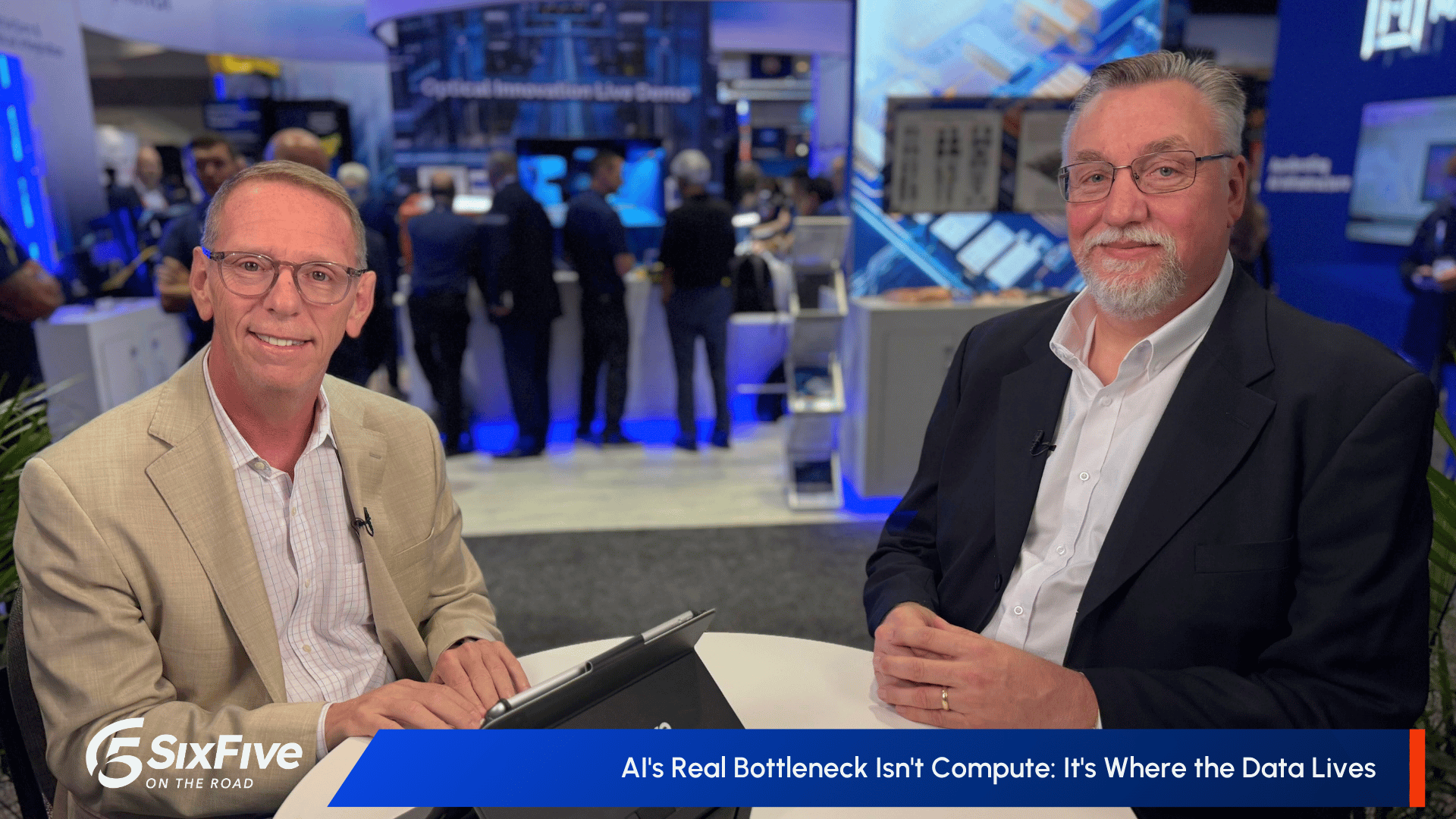
Western Digital's Tim Rausch argues that AI's compounding data growth, more than GPU capacity, sets the real ceiling on infrastructure scaling. He joins Matt Kimball at AI InfraSummit 2026 to walk through how total cost of ownership, archived data reuse, and WD's capacity roadmap are reshaping enterprise plans to scale AI over the next several years.
.png)
The Main Scoop Ep. 45: Attackers Only Need to Be Right Once. AI Just Made That Easier.
Chad Rikansrud, R&D Software Security Engineer at Broadcom, explains how frontier AI models are finding decades-old mainframe vulnerabilities in seconds, collapsing the complexity advantage that once protected legacy platforms. He outlines why enterprises need faster Security Intelligence (SECINT) ingestion and disciplined human oversight to keep pace with adversaries wielding the same tools.
Other Categories
CYBERSECURITY
Threat Intelligence: Insights on Cybersecurity from Secureworks
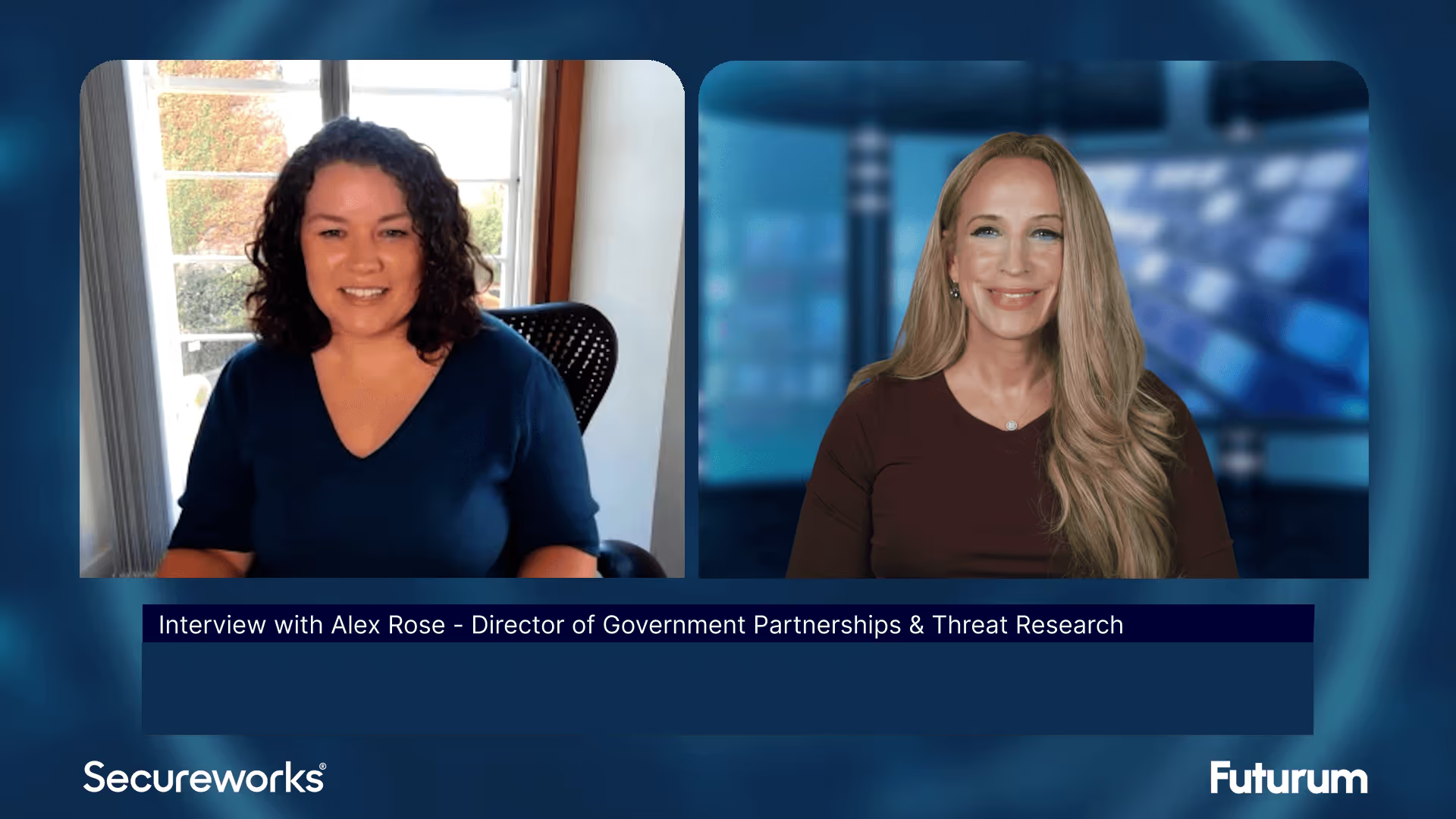
Alex Rose from Secureworks joins Shira Rubinoff on the Cybersphere to share his insights on the critical role of threat intelligence in modern cybersecurity efforts, underscoring the importance of proactive, intelligence-driven defense mechanisms.

HP Launches World’s First Business PCs to Protect Against Quantum Hacks - The Six Five On the Road
On this episode of the Six Five - On the Road, hosts Patrick Moorhead and Daniel Newman are joined by HP's Ian Pratt, Global Head of Security for Personal Systems.
What is Autonomous Endpoint Management?
Autonomous Endpoint Management is a framework designed to unify IT operations and security teams on a single platform through real-time control and visibility.
QUANTUM
Quantum in Action: Insights and Applications with Matt Kinsella
Quantum is no longer a technology of the future; the quantum opportunity is here now. During this keynote conversation, Infleqtion CEO, Matt Kinsella will explore the latest quantum developments and how organizations can best leverage quantum to their advantage.
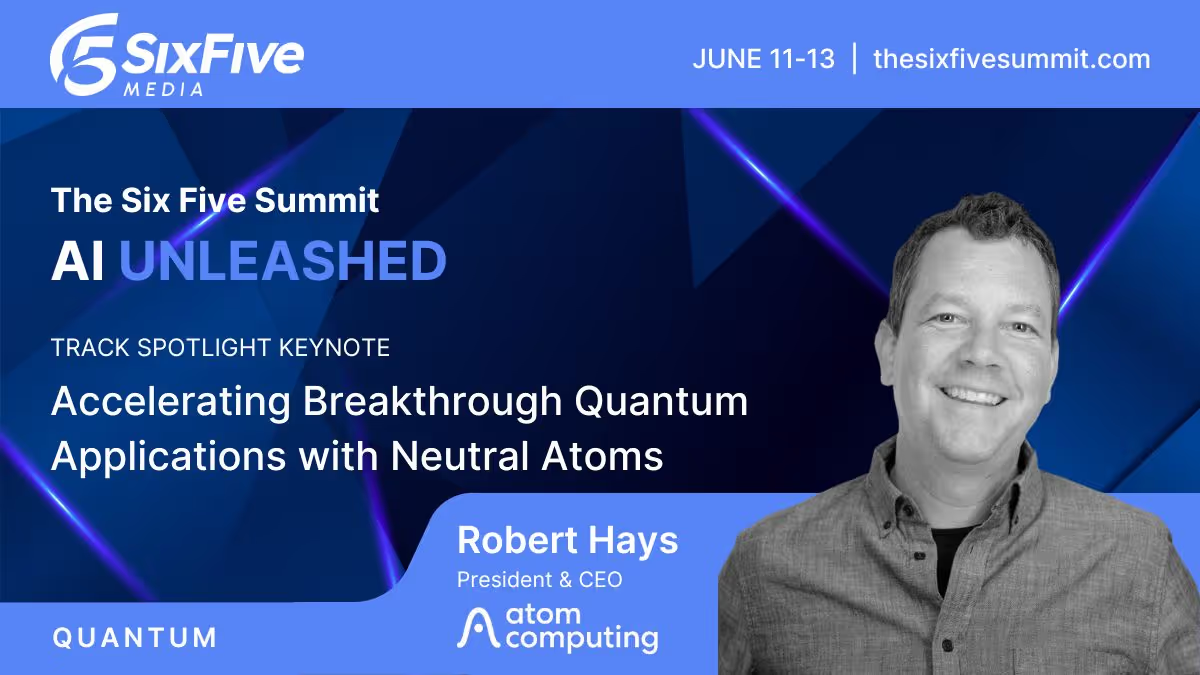
Accelerating Breakthrough Quantum Applications with Neutral Atoms
Our planet needs major breakthroughs for a more sustainable future and quantum computing promises to provide a path to new solutions in a variety of industry segments. This talk will explore what it takes for quantum computers to be able to solve these significant computational challenges, and will show that the timeline to addressing valuable applications may be sooner than previously thought.