
Transforming Retail SMBs with Practical AI, Security, and Scale
SHARE


Retail SMBs are under pressure to deliver seamless customer experiences while managing tighter margins and limited resources. AI offers a path forward, but only when applied to specific operational challenges.
This conversation explores how targeted AI use cases, integrated security, and ecosystem partnerships are reshaping how SMB retailers compete and scale.
Retail SMBs are being pushed to deliver enterprise-grade experiences without enterprise resources. AI is often positioned as the answer, but adoption remains uneven and, in many cases, unclear.
Analyst Tiffani Bova is joined by Cindy Carlson to examine how AI is actually being applied across retail SMB environments and where it’s delivering measurable impact today.
The conversation focuses on practical execution. Rather than chasing broad transformation, SMB retailers are prioritizing targeted use cases such as inventory visibility, workforce enablement, and customer experience optimization. Because Dell operates as both a retailer and a tech provider, its approach is more practical: start small, simplify operations, and scale without making things more complicated.
Key Takeaways Include:
🔹 AI adoption must be use-case driven.
Retail SMBs see the most value when AI is applied to specific operational challenges like stock visibility and forecasting rather than broad transformation initiatives.
🔹 Inventory accuracy is a foundational priority.
Ensuring the right product is available, placed correctly, and in stock remains a core operational lever that AI can directly improve.
🔹 Cybersecurity is now a baseline requirement.
With increasing attack frequency and limited internal IT resources, SMBs must adopt integrated security approaches rather than fragmented tools.
🔹 Ecosystem partnerships reduce adoption friction.
Collaborations across Dell, Intel, and Microsoft enable SMBs to access enterprise-grade capabilities without the burden of complex integration.
🔹 AI-enabled workforce augmentation is emerging.
Digital assistants and AI-guided workflows help smaller teams operate more effectively without increasing headcount.
🔹 Agentic and physical AI represent the next phase.
Autonomous systems and AI-driven physical environments will reshape how retail operations are executed at scale.
Retail SMBs that focus on execution over experimentation will be better positioned to navigate margin pressure, staffing constraints, and rising customer expectations.
Disclaimer: Six Five Media is for information and entertainment purposes only. Over the course of this webcast, we may talk about companies that are publicly traded, and we may even reference that fact and their equity share price, but please do not take anything that we say as a recommendation about what you should do with your investment dollars. We are not investment advisors, and we ask that you do not treat us as such.
CINDY CARLSON:
Whether you're an SMB or an enterprise retailer, you have to have the right product. You have to have the right placement on your shelf. You have to be in stock. Knowing if a product is out of stock using AI is one that I would look at first, is making sure that you have that right product allocated to the store.
TIFFANI BOVA:
Hello, and welcome to 6.5 Virtual Webcast. I'm Tiffany Bova, Chief Strategy and Research Officer at the Futurum Group. Today, we're exploring how AI is transforming retail, SMBs, and enabling them to stay competitive in a rapidly evolving landscape. I'm joined by Cindy Carlson, Retail Field Director of Global Industries at Dell Technologies. Welcome to the 6.5, Cindy. Hi, great to be here. Good to see you. Yes. And listen, I just love talking about SMBs. I am a true believer they are the heartbeat of communities around the globe and really sort of fuel everything that we do as an industry all up. And so they're facing growing pressure to deliver seamless customer experiences. It's been a conversation I've had, I think for the last 20 years, but now so doing it with tighter margins and operational complexity. What fundamentally is changing and how these businesses need to think about modernizing today while keeping the customer at the center of some of those decisions that they make?
CINDY CARLSON:
A lot to unpack. So, you know, really SMBs are, as you indicated, they are the heartbeat of their communities. But right now they are being pulled in a lot of different directions. If you think about it, costs are up, staffing is very tough right now, and customers expect convenience and personalization, like they're shopping with a big name brand. That's where Dell comes in and we have a unique perspective. What's interesting is that Dell isn't just a technology company, but we're also a retailer ourselves. So we feel this firsthand. If you think about it, we deal with the same things our retail customers do. We're managing inventory. We're keeping our system secure and figuring out how to work smarter with smaller teams. The experience really shapes how we help others. And what makes this work is that Dell delivers it end to end. So if you think about everything from devices to dealing with large teams, infrastructure, security, and services, We work with small and medium businesses so they don't need a huge IT team to make it real. We help them start small, get value fast, and scale with whatever the retailer needs.
TIFFANI BOVA:
Well, there's just no getting away from the AI conversation with anybody, whether it's talking about AI PCs or notebooks all the way to AI changing entire industries. And it's absolutely become a major focus across retail, but many smaller businesses are still trying to figure out where it fits, what it means, what it means to them, what it means to their business. And where should these SMBs, retail SMBs prioritize AI to drive meaningful impact without overcomplicating their operations. And I think Cindy, as you mentioned, right, you're a retailer yourself, you're dealing with it as well, and you've been servicing SMBs for decades. And so I'm sure that your insights will be greatly appreciated for others listening.
CINDY CARLSON:
Yeah, a lot of SMBs hear AI and think it's complicated or only applies to massive retailers. We help change that mindset. AI doesn't have to always be flashy or overwhelming. It can be very targeted and practical. AI is absolutely transforming retail. But for small and medium retailers, the question isn't, what's the coolest AI tool? It's what can I actually use right now to grow sales, protect my margins, and take friction out of the operation. From my time in retail to achieve growth, the winners were never the ones with the most technology for technology's sake. They were the ones who took that technology and applied it to very specific challenges. Better decisions, better execution, and better experiences for the customers and employees. That's exactly how AI can and should work for SMBs today and that's where Dell really leans in.
TIFFANI BOVA:
as part of what you just said, and as these growing retailers, especially those that are hyper growing because of their ability to take advantage of a lot of these technologies. But ecosystem support can play a huge and critical role in reducing this complexity. And most of those partnerships happen with vendors like Dell, right? Especially the one between you and Intel and Microsoft. can absolutely help these SMBs adopt new capabilities, but more importantly, drive growth. And I'd love for you to just kind of share why those ecosystem partnerships can really give SMB retailers a leg up.
CINDY CARLSON:
There's never one area that does everything. So if you think about Dell collaborates very closely with Intel and Microsoft to deliver innovative solutions. If you think about Intel processors, they power fast, reliable performance for retail tasks. like running AI application and processing that data seamlessly. If you think about Windows 11 Pro, it offers that advanced security integration and AI-driven tools to help SMBs innovate and stay competitive. These partnerships truly matter. 88% of SMBs say maturing AI initiatives require private on-premise or edge infrastructure. Our partnerships ensure that SMBs have access to the right technology to meet those needs. So together, to answer your question, Dell, Intel, and Microsoft delivered those enterprise-grade capabilities at an SMB scale, empowering the businesses to innovate and grow with confidence.
TIFFANI BOVA:
Well, within there, you made a, it was a fast comment, but a super important one around cybersecurity and security itself. And I think even with AI, it introduces all kinds of complexities to this topic altogether, right? People using tools and having it, you know, ping into systems that maybe they don't want those things to happen in. I mean, so how does Dell balance the security and innovation to help these businesses, especially, you know, when they're trying to navigate all these changes coming at them at one time?
CINDY CARLSON:
So cyber attacks are happening more often and hitting more businesses of every size. And attackers frequently see SMBs or an organization as a tarp. So cybersecurity is therefore essential, not optional. Many SMBs lack dedicated security teams and tools and research show that 35% of SMB or small organizations believe their cyber resilience is inadequate. That figure has risen sharply in the recent years. So if you think about it, all it takes is one gap, a PC without current security updates. or unsecured sensitive information. Dell helps SMBs strengthen their cybersecurity by combining secure devices, security software. data protection, and services into one practical approach. We then layer in our partner solutions, such as advanced antivirus device and data protection, and tools to find, lock, or wipe those lost systems so smaller IT teams get enterprise-grade defenses without having to integrate everything themselves.
TIFFANI BOVA:
And I think that without having to integrate everything themselves was going to be my next question, right? Because retail SMBs absolutely struggle adopting new technologies. A lot of that, in my opinion anyway, has to do with they may not have internal IT talent. They probably don't have someone focused on security. They probably don't have someone focused on AI. Like they just don't have a whole lot of that depth and breadth in IT. And I think that slows down their willingness to adopt because they just kind of go, I'll get to it one day. But based on everything you just said, I mean, we have to find ways to make this technology adoption easier and definitely more accessible. And so what are some things that you think can help these SMB retailers get over that concern or hesitation in adopting some of these technologies, especially when they have those limited resources in which they can leverage.
CINDY CARLSON:
Data security is something that is at every board's top of mind. So if you think about protecting those critical retail systems and data without having to integrate everything themselves, Dell's data protection offerings back up those workloads. We can support faster recovery after an incident. while security and resilience services and broad security services help customers move from reactive fixes to proactive protection. And we will allow the retailers to innovate and grow on a more secured foundation. And that foundation is critical for security success.
TIFFANI BOVA:
And I agree. I think, you know, all of those things brought together, right? Trying to figure out how do we stay close to the customer and provide amazing experiences. adopting all these new technologies, sometimes simultaneously, with limited resources and thinning margins and just getting pulled in multiple directions. And then cyber being this top of mind topic, as you said, Cindy, I think there's probably things that you see that the market yet doesn't see as trends that are going to shape the future of retail SMBs, where they should be thinking about and what they should be focused on. I'd love to hear your opinion on that. And then on the backside of that, with those things, I'm going to guess that there are things that Dell can absolutely do to help them accomplish what is coming next.
CINDY CARLSON:
We hear a lot about AI use cases, but I think if you think about AI use cases, I look at how am I looking at forecasting and replenishing my products? How can AI make it easier for us to do this? and quicker actually for our customers. Do we have the right product in the stores? AI can help with understanding traffic patterns or reducing shrink. AI enabled tools can take friction out of the everyday work. by answering questions, simplifying processes, and guiding the next steps so your associates can spend more time with their customers. Think about a digital assistant as having your best employee on demand, always available to walk team members through tasks, explain policies, or coach them in a moment, helping them raise that overall level of team without pulling your top performers off the sales floor. So I think utilizing and prioritizing AI use cases is what the future will be. I also see looking ahead, agentic AI and physical AI as major frontiers. Agentic will enable autonomous systems for reasoning and plan, can help collaborate a processes, while physical AI will fuse robotics, digital twins, and generative AI so machines can better understand, simulate, and interact with the physical world.
TIFFANI BOVA:
So I'm going to put you a little on the spot here because that was a great forward-looking, like something to be really excited about, especially from SMBs in the retail industry. Are there any examples of where you've been really inspired by what you've seen an SMB client of Dell's, you can give the name or not give the name, but being inspired by what you've seen them accomplish or overcome or really embrace that might be just what one of our listeners might want to hear?
CINDY CARLSON:
Yes, so Vision AI is a good example. What they're doing is looking at how many people are coming in and out of the store, how long did it take to get an associate to assist that customer, how they are increasing their net promoter scores, by having the right associate at the right place in the store. In the past, what used to happen is you'd have a number of stores, you'd have a district manager evaluating those stores, and now you can use computer vision or vision AI to do that for you. You could also see how a customer is interacting with your product and was that product in the right place Did they have the right category? Did they have the right forecast? If an item is out of stock, they can then alert the associates. So those are some of the use cases that we see in SMBs that are improving the overall customer experience.
TIFFANI BOVA:
Yeah, I love that because I feel like the promise of what you've just described has been around for a long time. I mean, I feel like AI is really helping us achieve some of those loftier goals we had maybe a decade ago in retail specifically, right, of really paying attention to what the clients are looking for, anticipating what they might want next, you know, and really bringing the experience to a level that feels very seamless between digital and human, right? I mean, that's the goal. Like, what is this seamless connection between those two at the moment that matters when a customer is standing in a store and wants to do something or even retail online, right? Because it isn't always just storefront. Do you think that there are things you know, when you unpack beyond AI that is having sort of that is equal of an impact, I should say, you know, not to put it sort of which one is more, but beyond that capability, because I think it's a great example, but there are still many SMBs specifically in retail that don't have a big digital presence, right? Or aren't using technology in any real way. So how do you get those ones that are looking for that growth and are just beginning this journey onto this path with you?
CINDY CARLSON:
Yes, I think it's really start small. So start by taking a couple of use cases. And take those use cases that are going to increase your revenue, improve your net promoter scores, improve your overall customer and employee experience. And every retailer, whether you're at SMB or an enterprise retail large scale, Retailer. You have to have the right product. You have to have the right placement on your shelf. You have to be in stock. Knowing if a product is out of stock using AI is one that I would look at first. is making sure that you have that right product allocated to the store. If an item is out of stock, notifying the associate immediately and then fulfilling that shelf with a substitute product or understanding when that product is going to come as critical. So I think looking at those use cases and looking at what are the use cases that are going to improve the areas that I just called out, I think are the best method to success.
TIFFANI BOVA:
Well, Cindy, thank you so much for sharing all your amazing insights for SMBs in the retail industry and for those examples. I think bringing it to real life and bringing it home just ties everything together we've talked about. So thank you everybody for tuning in to another Six Five virtual webcast. Don't forget to hit subscribe, follow us on socials and check out all our coverage at sixfivemedia.com. See you next time.
MORE VIDEOS
.png)
Anthropic’s AI Slowdown, OpenAI’s $1.2T Valuation & Salesforce’s AI Bet
Anthropic's "Pace the Frontier" essay set off a week in which nearly every major AI leader, and two heads of state, weighed in on whether the frontier should slow down. Patrick Moorhead and Daniel Newman read the incident as something larger than a safety debate. Whoever sets the pace of the frontier also sets the pace for open-weight models, enterprise custom models, and the trillion-dollar valuations riding on top of them. That contest, not the essay itself, is the through-line of Episode 320 of The Six Five Pod.


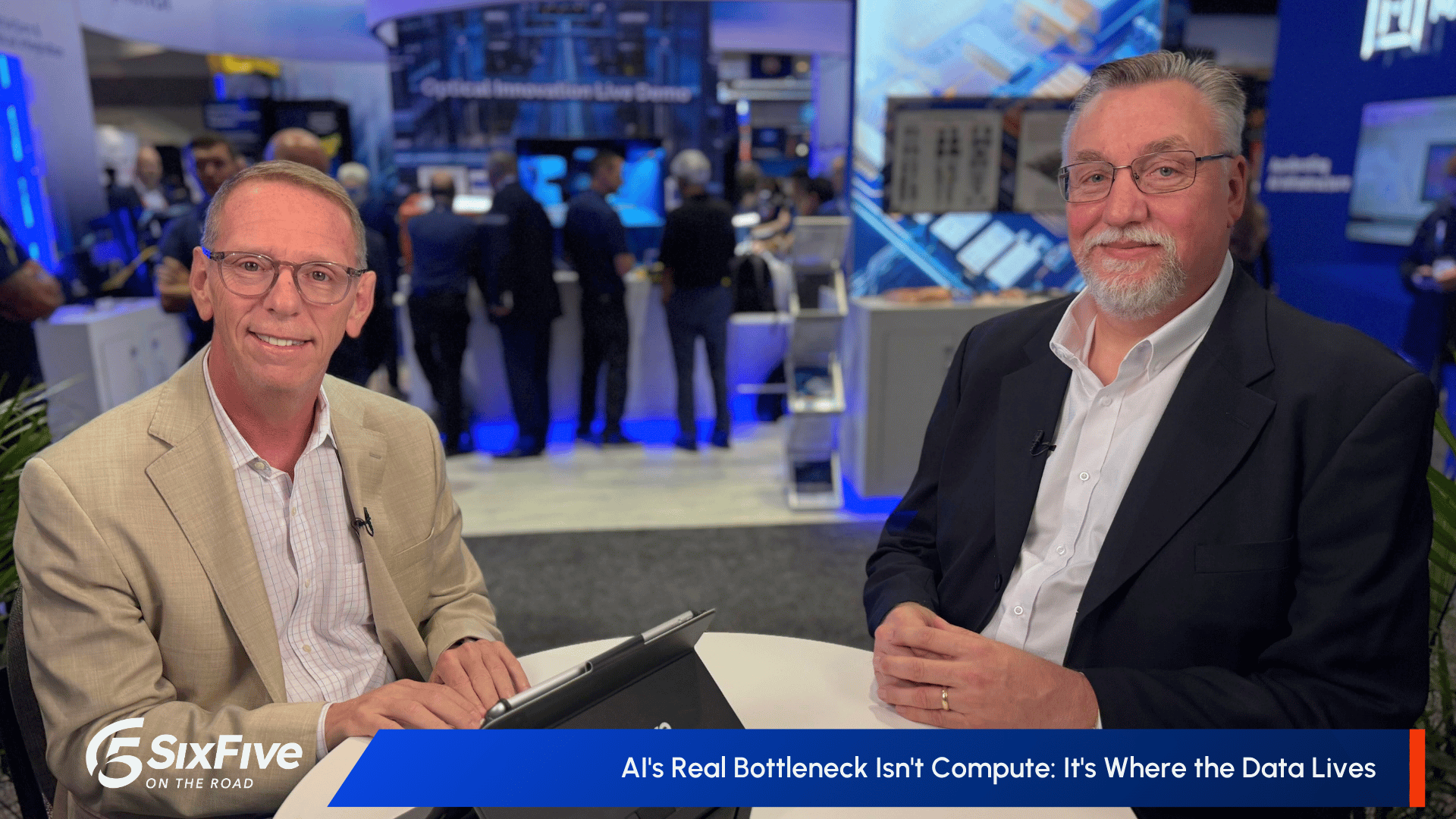
WD's Tim Rausch: AI Storage Demand Compounds With Every GPU Cycle
Western Digital's Tim Rausch argues that AI's compounding data growth, more than GPU capacity, sets the real ceiling on infrastructure scaling. He joins Matt Kimball at AI InfraSummit 2026 to walk through how total cost of ownership, archived data reuse, and WD's capacity roadmap are reshaping enterprise plans to scale AI over the next several years.
.png)
The Main Scoop Ep. 45: Attackers Only Need to Be Right Once. AI Just Made That Easier.
Chad Rikansrud, R&D Software Security Engineer at Broadcom, explains how frontier AI models are finding decades-old mainframe vulnerabilities in seconds, collapsing the complexity advantage that once protected legacy platforms. He outlines why enterprises need faster Security Intelligence (SECINT) ingestion and disciplined human oversight to keep pace with adversaries wielding the same tools.
Other Categories
CYBERSECURITY
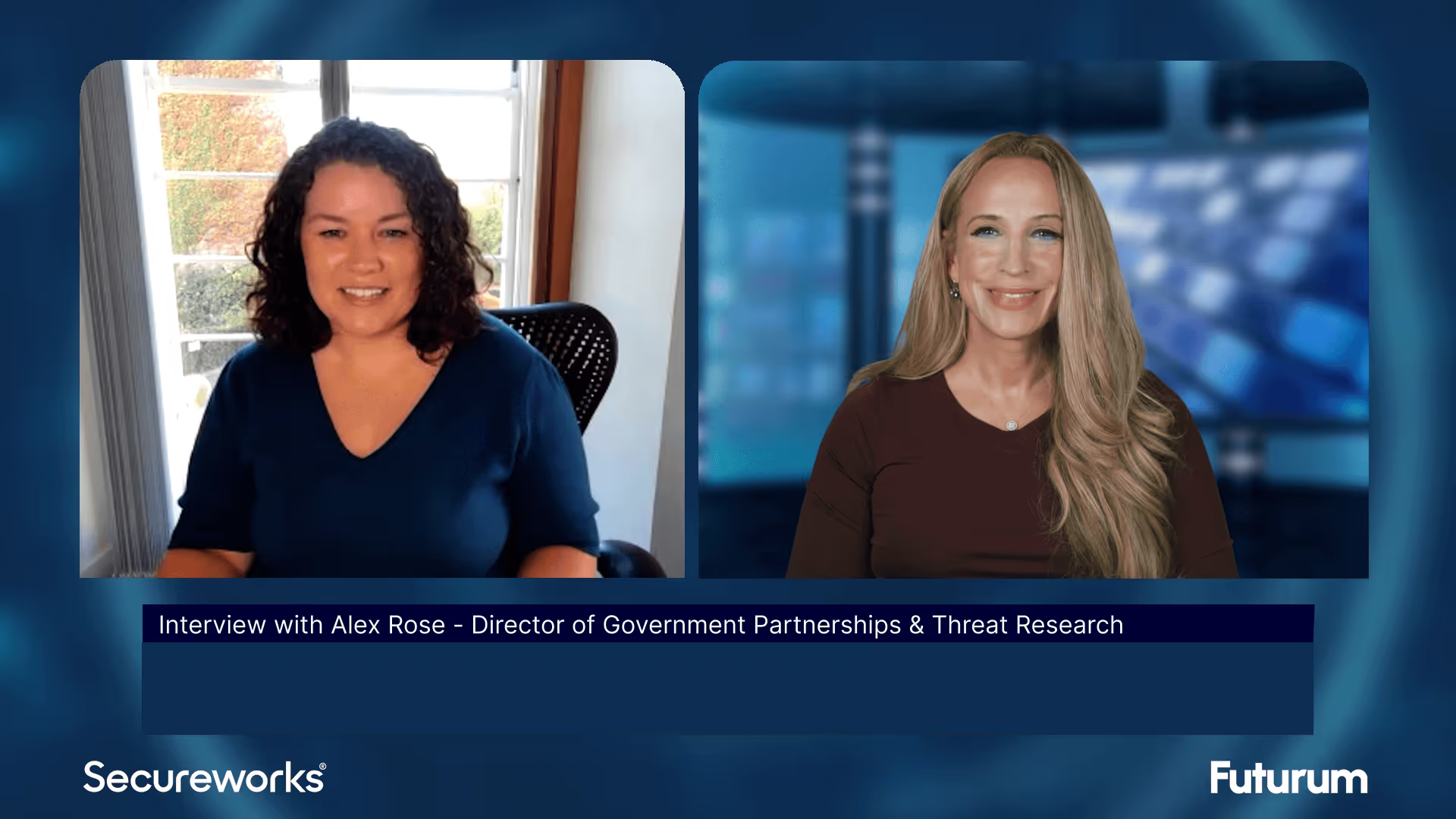
Threat Intelligence: Insights on Cybersecurity from Secureworks
Alex Rose from Secureworks joins Shira Rubinoff on the Cybersphere to share his insights on the critical role of threat intelligence in modern cybersecurity efforts, underscoring the importance of proactive, intelligence-driven defense mechanisms.

HP Launches World’s First Business PCs to Protect Against Quantum Hacks - The Six Five On the Road
On this episode of the Six Five - On the Road, hosts Patrick Moorhead and Daniel Newman are joined by HP's Ian Pratt, Global Head of Security for Personal Systems.
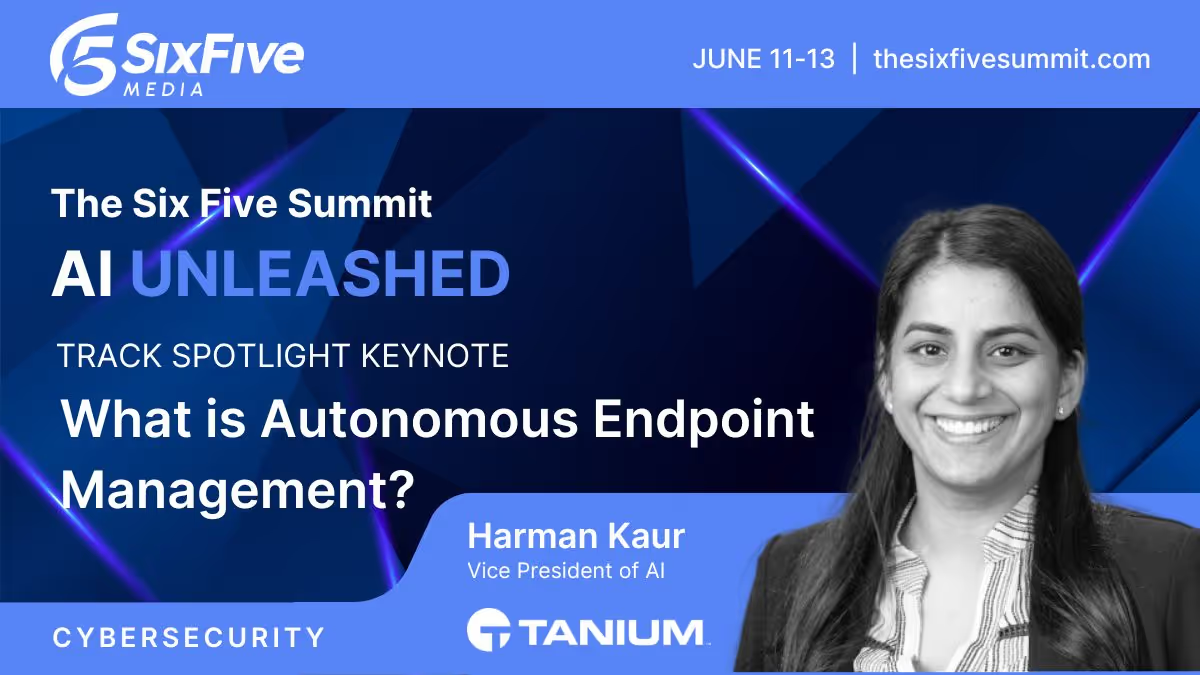
What is Autonomous Endpoint Management?
Autonomous Endpoint Management is a framework designed to unify IT operations and security teams on a single platform through real-time control and visibility.
QUANTUM
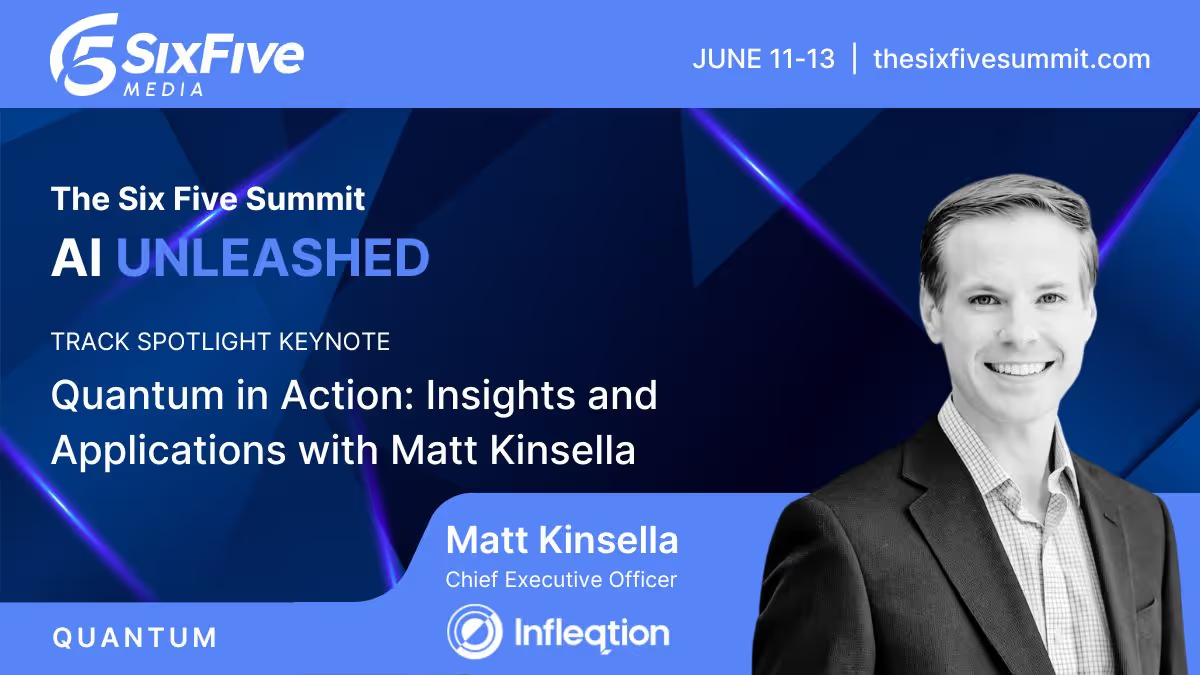
Quantum in Action: Insights and Applications with Matt Kinsella
Quantum is no longer a technology of the future; the quantum opportunity is here now. During this keynote conversation, Infleqtion CEO, Matt Kinsella will explore the latest quantum developments and how organizations can best leverage quantum to their advantage.
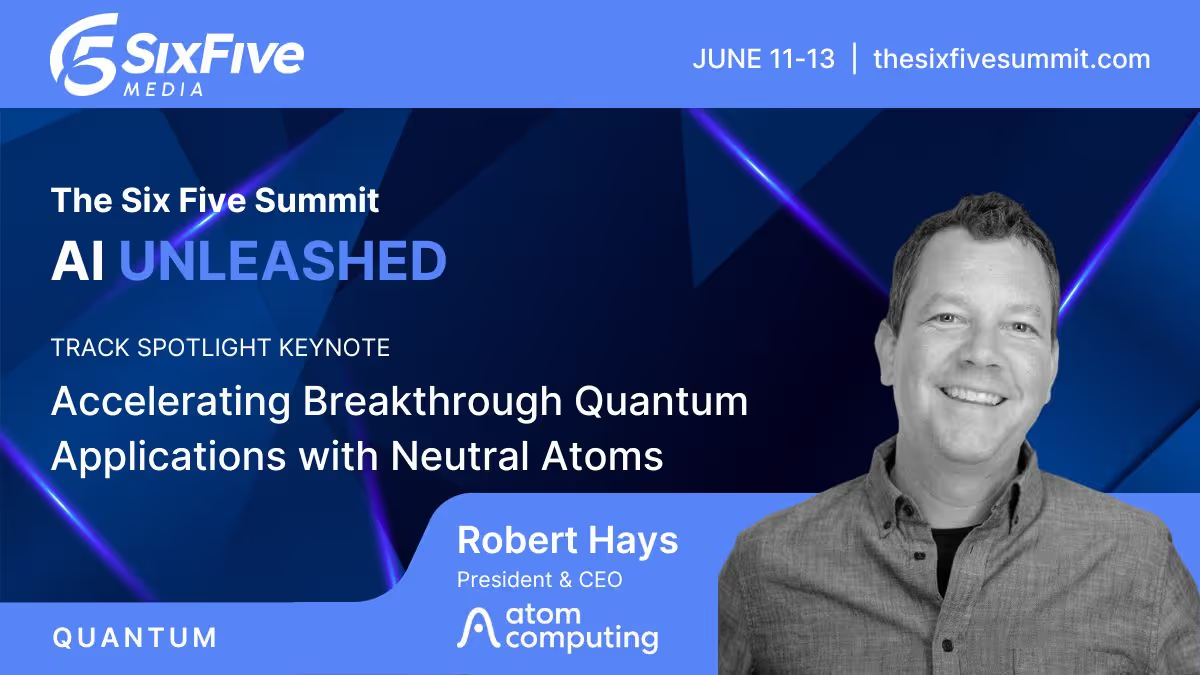
Accelerating Breakthrough Quantum Applications with Neutral Atoms
Our planet needs major breakthroughs for a more sustainable future and quantum computing promises to provide a path to new solutions in a variety of industry segments. This talk will explore what it takes for quantum computers to be able to solve these significant computational challenges, and will show that the timeline to addressing valuable applications may be sooner than previously thought.