Home

Jensen Huang Returns: What NVIDIA’s Reinstatement Means for Washington, AI Chips, and the Market
Jensen Huang Returns: What NVIDIA’s Reinstatement Means for Washington, AI Chips, and the Market
SHARE


Eleven days after resigning, Jensen Huang is back as NVIDIA's CEO. NVIDIA's board said it heard from senior U.S. government officials before bringing him back. Patrick Moorhead and Daniel Newman break down what the reinstatement means for governance and Washington's role in tech, then cover AMD's Taalas deal and the Hunterbrook short report, the latest frontier model pricing moves, Microsoft Ignite, and Intel's foundry wins. They close with a Flip on whether U.S. businesses should disclose Chinese AI model use, and Bulls and Bears looks at Anthropic's IPO and earnings from NVIDIA, Lenovo, Dell, HPE, and HP Inc.
The handpicked topics for this week are:
🔹 Jensen Returns to NVIDIA as Washington Moves Into the Boardroom: NVIDIA’s board unanimously reinstated Jensen Huang as president, CEO, and director after receiving input from senior levels of the U.S. government. Patrick Moorhead argued that Washington now sits inside the boardroom for technology and expects NVIDIA and the administration to face scrutiny for a long time. Daniel Newman framed the decision as risk-reward after nearly $2 trillion in value was wiped out in a week, and said the board itself needs to go. (The Decode)
🔹 Remote Access Separates Policy From Wrongdoing: Newman estimated that less than $10 million of physical compute reached China, while Chinese firms legally reached advanced chips through nearby cloud data centers. Moorhead stressed that remote access was legal and said the board would not have moved this fast without assurances that Huang did not knowingly do anything wrong. (The Decode)
🔹 AMD Closes Taalas to Add Model-Specific Inference Silicon: AMD completed its acquisition of Taalas, whose chips hardwire a model’s weights into the silicon. Daniel sees purpose-built inference silicon growing alongside AMD’s Helios rack-scale systems, and Pat called it the far end of the flexibility curve for customers chasing efficiency on a specific model. (The Decode)
🔹 Hunterbrook’s Short Report Shows How Fast Sentiment Moves Chip Stocks: Hunterbrook Media alleged that AMD firmware kept reaching a blacklisted Chinese server maker while its affiliated fund was short the stock, and AMD fell as much as 11%. AMD says the report misrepresents its business. Dan said the issue involved legacy CPU server software, not GPUs or AI compute, and called for rules on how short-seller research can be used. Patrick said the market is looking for reasons to sell. (The Decode)
🔹 Frontier Model Pricing Turns Into a Cost War: OpenAI released GPT-6.2 Astra and Sol, cutting its frontier price while holding its everyday price, and Google launched Gemini 4 Neon at $3 per million input tokens and $15 per million output tokens. Moorhead said OpenAI is losing momentum and taking the cost route, while Google is selling on cost per task. (The Decode)
🔹 Microsoft Uses Ignite to Claim the Enterprise Context Layer: Microsoft positioned Copilot as an orchestrator for work and introduced Microsoft IQ, combining Work IQ, Fabric IQ, Foundry IQ, and Web IQ with more than 350 connectors. Newman reads it as a message to Anthropic, arguing that models are commoditizing while context becomes the moat. Moorhead highlighted Satya Nadella’s claim that Copilot costs 84% less than Claude and 63% less than ChatGPT for everyday users. (The Decode)
🔹 Intel Foundry Lands Microsoft for EMIB and an External 18A-P Customer: Microsoft became the first announced customer for Intel’s EMIB packaging for Azure first-party silicon and locked in multi-year Xeon supply, including Diamond Rapids. Intel also confirmed an unnamed external customer on 18A-P. Newman called the wins good news but noted volumes and timelines remain undisclosed, while Moorhead believes the 18A-P customer is NVIDIA or Apple. (The Decode)
🔹 The Flip: Should U.S. companies should publicly disclose their use of Chinese AI models? Daniel Newman argued FOR, citing the administration’s reported disclosure proposal, the Bipartisan U.S.-China Commission’s recommendation, and an Andreessen Horowitz estimate that about 80% of U.S. startups build on Chinese-based models. He said disclosure keeps the market open while making the dependency visible. Patrick Moorhead argued AGAINST: country of origin is a bad proxy for risk, open-weight models can run on a company’s own infrastructure, and a public list is one step from a ban. (The Flip)
🔹 Anthropic’s IPO Meets Valuation Discipline: Anthropic priced its IPO at $83 a share, valuing it at about $1.5 trillion. Moorhead got an allocation at $83 and sold at $83, citing the valuation, the missing greenshoe, and founder share sales. Newman criticized a structure that let insiders exit on day one while penalizing retail investors for selling quickly. (Bulls and Bears)
🔹 NVIDIA ($NVDA) Posts $115.8 Billion Under an Interim CEO: With Colette Kress as interim CEO, NVIDIA grew revenue 103%, posted $107.6 billion in data center revenue, and guided to $130 billion. Newman credited Kress with steady execution, and Moorhead pointed to the Rubin ramp staying on schedule with 18 months of supply locked in. The stock still fell as Jensen’s resignation rocked investors. (Bulls and Bears)
🔹 Lenovo ($LNVGY) Becomes a Data Center Player: Revenue rose 48% to a record $30.2 billion as the Infrastructure Solutions Group grew 178%. Moorhead noted AI now accounts for more than a third of revenue, with an $80 billion pipeline, while PCs will drag on the next two or three quarters. (Bulls and Bears)
🔹 Dell ($DELL) Beats on Nearly Every Line: Moorhead highlighted a triple beat, with PCs the only miss and a strong boost from storage. Newman said the stock trades around 10 times earnings, roughly half its peak, despite the results. (Bulls and Bears)
🔹 HPE ($HPE) Rides Servers and Networking: HPE’s revenue rose 50% to a record $14.5 billion as server revenue nearly doubled. Newman credited the Juniper acquisition with making networking and security a differentiator, and Moorhead said networking demand is outpacing supply. (Bulls and Bears)
🔹 HP Inc. ($HPQ) Grows Revenue on Fewer Units: Personal Systems revenue rose 14% to $11.8 billion with a 3% operating margin, even as shipments fell. Moorhead noted that HP Inc. named Emma Walmsley CEO on November 4. (Bulls and Bears)
Note: The Flip randomly assigns Patrick Moorhead and Daniel Newman opposing sides of a debate. The positions argued are not necessarily their own views.
Watch the full episode at sixfivemedia.com and subscribe to our YouTube channel so you never miss an episode.
Disclaimer: Six Five Media is for information and entertainment purposes only. Over the course of this video, we may discuss companies that are publicly traded, and we may reference their equity share prices. Nothing discussed during this webcast should be considered investment advice or a recommendation to buy or sell any security. We are not investment advisors, and you should not rely on this content as financial advice. Six Five Media collaborates with technology companies and industry leaders to produce research-driven interviews and multimedia programming for enterprise technology audiences.
Daniel Newman:
That reminds me on that last thing you said that I got an idea for you. Anyway, we are back.
Six Five, it's off day. We're off schedule. So Pat and I are both a little dazed and confused. But as far as your concerns, you're getting this when it's most important and when it's needed most. So we got episode 328; it is two days before Turkey Day. And while many of you are sailing into the proverbial work sunset, probably taking short days and definitely not working weekends, Pat and I are putting in extra time. Pat's been on his deathbed. And if you don't know how sick he's been, just follow his X. He'll show you exact telemetry of how ill he is and how much better he's gotten today. But what a week, man. What a three weeks, what a year, but like, three weeks. I don't know about you, dude. I am spent. I am tired right now.
Patrick Moorhead:
Yeah, it's been been a crazy, I mean, year. Right. Every time we we we have this show, it's like, you know, what new can happen next week? And this this week paid for it. And we're going to do 10 days in this show. And yes, I am sick, and I'm a little jet-laggy too. Spent a week over in Germany looking at a dirt floor in a barn with no heat. I don't know. But first time I'm sick in three years, Daniel.
Daniel Newman:
Yeah, I'm going to pull out the peptide concoction, and we're going to we're going to inject you on air with baby's blood.
Patrick Moorhead:
If you can, if you can send me over a vial from your company, that would be great. Optimize, right?
Daniel Newman:
Optimize, optimize. We are we are on fire over and optimize. It's gonna be so good. I may not need to do this crap anymore. I know, dude, just pop, pop, blow the bolts, you know, blow the bolts. I've got a succession plan, which, by the way, is not necessarily popular in founder-led companies these days. We were having today, by the way, the, the next meeting, 1 of the topics in the all-hands today, supposedly, was a succession planning for NVIDIA, and the comment was, we don't need that more or less an apathetic approach in the wake of of chaos. Funny how we've gone full circle. He used to take a year or 2 for things to go full circle. Now it takes 11 days. So we've got a hell of a show. That's why Pat and I, even though both of us have been sick, we've both been working crazy schedules. We basically love all of you and appreciate the community we've built here. And we just understand there's too much going on last week and this week to actually not do it for two weeks in a row. So hopefully you're, you know, you're cooking the turkey right now. You're listening to this show. You're getting up to speed, but there's a lot to cover off on this week. We're going to talk about, surprisingly, what happened at NVIDIA. But we're also going to, you know, we're going to slowly start to move beyond. The last few weeks, it feels like our show has been consumed by one massive headline. And we want to talk about other things. You know, there's some AMD news. There's some news on out of the Middle East and Z.ai. Ignite was last week, which is a big event. We could say it was underwater and have a meaning to that one. Intel had some news. So there's some smaller stories, important though. And then Pat, and I are going to do a flip, and Pat's going to tell us why they shouldn't have brought Jensen back. I'm kidding. We're not debating that. We're not going to even try to do that debate. We know because we enjoy our lives too much to have that kind of hate. And people forget, for whatever reason, that these debates are simulated. And then we'll go through earnings. I mean, there's an IPO, a small, insignificant IPO that Pat both bought and sold in the same week. There's a couple of big earnings reports that took place. A bunch, actually. We've got a lot. And we're going to get this all done in the next 52 minutes. So we're going to have to be more concise than I'm being in this opening. All right. I'm going to stop talking. I'm going to take us into the decode. All right. This is the one. This is the topic du jour. It was 7:59 a.m. Yesterday. I was driving back from the gym, and I don't know, and my phone just starts exploding. And anyone that knows, like, I don't actually take calls, so I have my phone always on DND, and it was just ringing and ringing and ringing, because people kept calling over and over, texting, calling, writing. The news was out. Jensen, back as CEO, president, board director, rising from the phoenix, man. What is your read on this one?
Patrick Moorhead:
I mean, Jensen the White, Jensen the Gray, whatever Lord of the Rings character that you want. Yeah, he came back, and he came back a lot earlier than I had even expected. About an hour before it was announced, I did say, hey, I can see him coming back in an advisory role. And if the he passes all these investigations internally and externally on Capitol Hill, then, yeah, he gets he gets reinstated. But boom, everything happens at the same time. So. There's so many ways we can cut this, but what's clear is that Washington is now inside of the boardroom for technology. There was some discussion, by the way; the other thing I had said is that it would take, like Bessent would likely get involved with the board after his flip-flop over the weekend. But actually. It may have been Trump who did a one-hour interview on CNBC, kind of going through multiple types of questions, even talking about how sex sells, how that came in. I've got no idea, but it was discussed. And I think it did bring up- I'm sure you got hit with the press like I did. What does this mean for, what does this mean for governance? Is it right that Jensen returned? And hey, is this DC just manipulating the chessboard here to fill the pockets of the administration? And listen, all questions are good. Sorry, all questions, I wanna hear them, but not all questions are good. I don't think this is over yet. I think that different factions will use this regardless of where they sit to keep pressing Jensen, to keep pressing NVIDIA. But in the end, you know, I had called this 10 days ago. I said, hey, just this looks like an essentially an op to make the Trump administration look bad. Information was out there since 2024. The blue wave came in, and there were people saying, that you better lawyer up, right? Something's coming. Well, two years later, this was uncovered. So I think Jensen certainly was a part of it, but he was just a cog in the machine to make the administration look bad and weaken them for the next two years and make them less effective, like Trump's final two years in his first term, where he was impeached. He was taken a billion different ways.
Daniel Newman:
So your read is all clear, and on the other side of this thing, it's gonna be an unscathed NVIDIA full steam ahead.
Patrick Moorhead:
Absolutely not. What I tried to say is that with all the investigations going on that are gonna come out, and new stuff will come out as well, him, NVIDIA, and the administration will be scrutinized for a very long time. There you go.
Daniel Newman:
But then they'll be cleared, and everything will be gravy.
Patrick Moorhead:
No, we'll be talking about this. Right. Right. Forget the fact that, you know, there were senators who who had who had spies, there were known spies, and everybody forgot about that. Somehow, I don't think anybody's going to forget about this one.
Daniel Newman:
Look, I mean, there's like five different fronts that this is being fought on. Probably the thing that bothered me most was just the lack of nuance in most people's thinking. You know, there is a best-for-the-shareholder argument to be made, undoubtedly, Jensen as CEO. There is an argument about the future of corporate governance and reasonable behavior from a leader inside of a company and how a board should hold a leader potentially accountable. Again, not sure they got it right, not sure they got it wrong. You know, president of the United States didn't seem to have an issue with any of this behavior. So why should the board? You know, I said in the end, this whole decision was risk-reward. It was very simple. Almost two trillion valuation wiped out in a week, probably five trillion from the AI complex. Yeah. It came out from underneath it. And that wasn't the final drawdown. This was the first drawdown. This thing was going to get absolutely drawn to the bottom. And then, of course, the argument about the most competitive ecosystem. And we can still debate this. I don't think arming China with leading-edge chips is the strategy. We can talk more about that, maybe even on the flip. I also don't think that a completely rigid, no-access-to-the-market approach is the right thing. It's nuanced. The question about API and cloud access versus compute that got into China. I think the actual physical compute that got into China is probably less than $10 million, which in the grand scheme of a quarter of NVIDIA is not that much. Now, what China was doing more intelligently was building data centers in proximity, powerful, low-latency, or as low-latency as they could, and getting tons and tons of access to the most advanced chips through the cloud. Totally legal. There was no rule against them doing that. And so that was enabling a Chinese competitive open ecosystem. NVIDIA, in its own self-interest, wants a very competitive ecosystem. Why? Because you need more training for that. You need more compute for that. You need more distribution for that. You need more NVIDIA for that. Let's be very clear. Everybody's talking their book. There's nothing wrong with anything they got done. But in the end, it was about stabilizing the trade. It's not going to completely reverse the anti-sentiment. We see that as we speak right now. Dell had absolutely mind-blowingly good numbers. No one gives a shit. There's no care in the world right now about good performance and earnings because the sentiment is driving the market right now. And the sentiment is there's another shoe to drop. Whether that's interest rate-related, credit-related, inflation-related, whether that's driven by policy change in the new Congress, people basically believe that there's going to be some sort of catastrophic event, that this demand is not going to be sustainable or real, that earnings are going to fall off a cliff, and that right now everything we have is just a fugazi. Bottom line is the end of the world's coming anyway. I saw and heard about it on X. These outages are all coordinated, and tomorrow the lights go out. So they may as well let Jensen have one last party.
Patrick Moorhead:
Yeah. Hey, one final thing I just want to put in there is that there's no way the board would have brought him back that quickly without assurances that Jensen A was not a spy, didn't knowingly do anything wrong. And and that's the only reason that he not the only reason- I know the stock market and the stock price had something to do with it. But I think the primary thing is that that he didn't knowingly divert. Even if she ends up being a spy, which I don't think she was, he didn't know about it. And I'm glad you brought this up. Remoting in is not illegal. It's very legal.
Daniel Newman:
They're trying to make it illegal, but it wasn't historically legal. And that was a great way to give access, build out the data center ecosystem on its technology, and then let the region deal with how they want to sell their compute contracts. That's absolutely fair. I will make just a note in vain before we move on to the next topic. I mean, a clandestine organization's job is to be clandestine. So like, all of us tards that are out here talking about whether we have a clue, we don't. It's not normal that China's gonna be like, yes, they were a spy; let's go ahead and put that on the front page. And I'm sure America doesn't do that with our intelligence assets out there either. You would like to think that people that are spies are very hard to actually confirm. So I'm not saying she is. I'm just saying you'd think. I've watched enough Bourne movies and enough Bond movies to know that, like, you know, some of this, the goal would be to not be obvious. So we'll just leave that there. But I genuinely believe they got enough assurances that the board is acting in their own. Remember, they don't even have E&O insurance, from what I understand, D&O. And one thing I will leave: this board needs to go. Just needs to go. This is not the board that this company should have. That's a change that Jensen should put into place. Of course, I don't think he cares what I have to say, but that's just my recommendation. Let's talk about AMD. You know, there were a couple of news items on AMD. They closed, is it Taalas? Taalas? Taalas. Taalas.
Patrick Moorhead:
No, Taalas.
Daniel Newman:
They should go 1A2S's. I would like it more. Taalas. Yeah. Anyways, and this is a play, you know, for specialized inference silicon. You know, if you look at the heterogeneous environment of compute, AMD, of course, is building high-power Helios, you know, rack-scale systems, and they brought them out just in time for no one to give a crap anymore about next-generation AI. I'm kidding. But, you know, they are building some interesting. It's inference silicon. And of course, I think whether it was the Groq thing or whether it's Cerebras or whether it's every one of the hyperscalers' plans, I think more and more purpose-built silicon is going to be important. And I think AMD should be entering that space. So, I mean, not much more to say about this one for me. I don't know if you want to add anything on this one.
Patrick Moorhead:
I just want to just point out that the reason for this, I see this as ultimate flexibility, right? And it's the far end of the flexibility curve, which is you're actually burning the weights into one of the metal layers of the chip. And it doesn't mean you've got to everything has to be new about the chip every single time. You have to burn in a layer. So if AMD wanted to go hardcore efficiency for a specific model, this is their solution. Yeah. All right. Fun. But how about the Hunterbrook story? Just nonsense. Like, you can see one video of the guy doing it, and he's walking down a street. He hasn't shaved. He's got a ball cap on, and it's like, wait a second. They had a 11 day sell-off, 11% sell-off, makes absolutely no sense. But Daniel, to your comment about the insanity of the market, this is what we seem to be trading on, which is looking for a reason to sell as opposed to looking for a reason to buy.
Daniel Newman:
Yeah, it was debunked. But the Hunterbrook media that promoted this thing has a Hunterbrook capital that happened to have gone short at the same time. I genuinely don't understand how these things, like, I do know that there's a need for legitimate short-selling research. But there has to be some rules that can be put into place about how that research can then be used to basically manipulate the market. Because it costs like 11 or 12% sell-off, basically scaring the entire community into believing that AMD had the same issue to go up against as NVIDIA does right now. And this was really like a right software license issue related to some existing CPU servers that were not blacklisted, that maybe later I don't know if they if they are on a list today but that basically it's it was supporting legacy software, legacy hardware that have been sold into the region, so I just to me it was it was a bizarre connection, and the fact that so many people conflated this as a GPU-related or an AI compute-related issue. But it worked. It's sad. It's sad that you can destroy value with nonsense. We should solve this, people. We should solve that. All right. Pat, this is a you special. Z.ai.
Patrick Moorhead:
Yeah, listen, another week, another bunch of models. OpenAI brought out Astra 6.2 and Sol. And Google keeps on a roll with Gemini 4 Neon, and GLM 5.4 for coding came out as well. And I'll hit this really quickly. OpenAI cut its frontier price and held its everyday price, which, you know, OpenAI is losing momentum here, and they need to do whatever they can, and they took the cost route, right? I haven't tried it out yet. We haven't tested this at Signal65 with Pinnacle yet. And I think at least OpenAI's chart says that the cheaper model is pretty close on its code. We need to get Ryan to test this because All I'm seeing right now is cost per token as well. And then you've got Google, who's just rip-roaring back price neon in the middle of the pack and sells on a cost per task at three bucks input and $15 cash and 15 cent cash and $15 output. And I really think that, I mean, I know we've talked about Google kind of moving back there. But you've got, you know, Carbon model at high thinking, got a number three ranking with artificial analysis and a 46% score on frontier code. So again, every week a new model innovations come out, and there's even, I see people speculating now about the power of open source.
Daniel Newman:
Yeah, I got nothing here. So good one. All right, let's talk about Microsoft Ignite. So, you know, my read through on it is, you know, the big story. Microsoft wants Copilot to be the operating system for work. Copilot is shifting more from an assistant to an orchestrator across all the tools. So, CoWork, Autopilot, and Today. And it's working with third-party platforms. And Autopilot, which is basically now it's persistent, proactive agent for its frontier customers. Okay, so Microsoft is basically saying, Anthropic, not so fast. You're not gonna just become the agent of everything work and just replace us. I'm sure tomorrow, Dario will put out a video that shows it replacing everything Microsoft has ever built. And they will get all 4 trillion or 3 trillion of market cap in a day. So the big tell for me was Microsoft IQ. Which basically was a new sort of combination, taking WorkIQ, FoundryIQ, FabricIQ, a new thing called WebIQ, adding 350 connectors, and using that to build enterprise content. So you talk about, like an enterprise kind of next-generation agentic content management system is what you've got. And so I think what they're trying to say more and more is something you and I talk about a lot, Pat, but that models themselves are becoming more commodities. And the moat is in that context layer. What is your business's alpha? What proprietary, high-use, high-value data do you have? And how do you expose that to a tool that protects that from the model so that you, as a business, keep your special sauce while also getting the benefit of being able to use all the intelligence that comes with AI? A couple of other things that caught my attention: Copilot Force, kind of interesting, Copilot Force. I mean, that worked well. That's their Salesforce integration. They put it in preview, put a bunch of, I think, 35 or 38 or something pre-built sales skills, live Salesforce MCP access. I actually use that every day. Against my will. No, I'm just kidding. And then Microsoft Perception is in GA. This covers Microsoft, AWS, Google Cloud. And then in Silicon, Cobalt 200 VMs are now GA. And I think we've tested that: Cobalt 200 at Signal65. So you can read that up on that, but 50% better performance than 100. We got one or two more notes here. Let me see if this is important. He did acknowledge, yeah, this is probably the one thing I wanted to, is Nadella did acknowledge in his opening keynote, and I was there, the 365 outage, and he committed to better resilience. And so obviously it's a tough time for Microsoft. They were dragged through it a little bit, but, you know, these complexities are going to be there. Security is bigger than ever. I mean, look at CrowdStrike spending, you know, massive dollars in its acquisition of Zscaler. I mean, security is the rage, but it was a solid ignite.
Patrick Moorhead:
Yeah. I mean, the highlights for me, the reinforcement of context, being the differentiator. And it's crazy. We were evaluating all this with the best LLM, but having the data in the right place. And by the way, nobody has all the data, right? I can flip this around with a sales force, and if you pull stuff into their Agentforce and have context, it has the context too. So it's almost a fight to have that window, but that's not necessarily the moat for all intensive purposes. It's who has pulled that data together in the most meaningful way possible to solve the problems that these companies had. Cobalt 200, they talked about the expansion there. That was really good to see and not unexpected. Not unexpected at all. The one thing that Satya hit in the keynote was cost, right? Saying that Copilot was 84% cheaper than Claude and 63% cheaper than ChatGPT for an everyday user. And then, similar for advanced users. And they compared that $30 a month Microsoft cost versus $81 for ChatGPT and 200 bucks for Claude Enterprise. So I thought that was really interesting. I'd like to see them cost per known output, but that $30 a month is kind of an all you can eat plan. Kind of. So it is comparable.
Daniel Newman:
All right, let's take this decode home. And let's talk a little bit about Intel. So Oh, sorry. No, no, no, no, no, no, no. Um, so, Microsoft, so we've been waiting for these customer announcements, Pat, and we got one this week, right? Microsoft picks EMIB, which is basically, you know, how they're going to, you know, packaging to connect chiplets across its own Azure silicon. I talked to The Azure, Rani Borkar, he went out with Ignite, and we talked a little bit about this, but this was a great win, and also secured multi-year Xeon supply. That was, I think, great news around packaging. Intel also said that it signed external customers for manufacturing, and its CTO made a confirmation that it was of the 18AP variants. Yet, unfortunately, Intel did not name the customer in this case, and they have not disclosed the volumes or production timetables yet. A couple of things that I think we have to always note is great news that customers are signing up, great news that Intel Packaging, which has been their strength in Foundry so far, continues to win big-named customers. Unfortunately, generically, signing customers doesn't give any real idea of when doesn't really give any idea of how much and what they're ramping towards which I'm sure everybody wants to know but then again right now the market doesn't even care when they do know because everything is bad right now I joke but uh These wins are the, you know, I think you said it, Pat, you know, the doorway is getting a win, whatever win it is, and then delivering and then getting more wins. So it's good news for Intel. I think it needs this kind of momentum coming off a pretty tough quarter and a really tough guide.
Patrick Moorhead:
Yeah, the unfortunate part about it for Intel is it really didn't get a lot of market lift off the wafer side. Like I was scratching my head, um, and I, you know, it was in the middle of the tomorrow X, uh, summit where, where Lip-Bu was being interviewed there, and he dropped this, but it's something that I don't, people forgot about or, or it didn't hit their radar screen. Uh, but it was an interesting way to roll that out. And I would posit the not most effective way to bring that out, or maybe follow up Lip-Bu's comment with a, you know, Intel used to have these tiny little blogs. I think it was called a chip shot. Right. And and bring it out like that. So I still don't think the people. I mean, this is a big deal. Intel didn't announce who it was, but, you know, it's either NVIDIA or it's Apple. OK. And I haven't wavered from why each company needs Intel and what they need to be doing. But if I look at, I mean, 18AP could work for Intel, and it could work for NVIDIA. It's not the latest and greatest process, but it'd be great to see these two jump in before 14A lifts.
Daniel Newman:
Absolutely. And of course, you know, I think the overall sentiment of the market is material. I think that, uh, you know, overall, uh, just kind of running this back, but like, I just, again, the burden of proof, you know, I think what I said earlier is, um, good earnings sell, and bad earnings capitulate. So we're gonna talk about, remember, these are simulated debates, y'all. So today we're gonna simulate a debate on whether U.S. Companies should publicly disclose their use of Chinese models. Let's see who's for. All right, give me one second. All right. So. Here's a light-touch approach. Per Reuters, the administration is weighing public disclosure as a way to discourage reliance on Chinese models without imposing new restrictions that could anger industry or Beijing. This way, no one's banning China, Kimi. You're arguing that buyers get to know what they're buying, and then the market decides. That's where we're starting. Right. You know, first of all, you know, the lineage of models is material. And right now, for most enterprises and businesses, it surfaces by accident. And, you know, downstream, this matters because enterprises are buying a product; you know, they're putting their compliance around it, procurement, their board obligations, but yet they can't assess a model they don't know, and especially they don't know if they're running it. And so, the Bipartisan US-China Commission said the same thing last week in its annual report. Its recommendation says clear disclosure would help consumers. It would also help businesses, investors to assess potential risks, data security, privacy, service reliability, and of course, national security. It puts a notice on websites, in product documentation, and failure to disclose would be considered an unfair and deceptive practice enforceable by FTC and SEC; disclosure would also be material for business risks. So I think that argument, first of all, makes sense. The second thing is basically it's the arguments about dependency, too, and not just data. The real case here is we need to get protections in place before models become embedded inside of critical systems. They become costlier to replace. And adoption numbers back this up. One, you know, we heard from Andreessen Horowitz that something like 80 percent of U.S. Startups now are using Chinese-based models to build derivative applications. You know, again, you can't manage a dependency you don't see. And then finally, and just like anything else that we do in this world, whether it's what your stock positions are or what your business relationships are, disclosures are a market-friendly tool. You know, my logic is mandatory disclosure doesn't prohibit us from working with China. It actually keeps the door open. But it also prohibits no transaction and forces no confrontation with Chinese law. And so we're trying to find a way to work with China. We understand it's a big market, but at the same time, you know, we cannot necessarily allow Chinese technology to be embedded inside of every core and critical business system in America just because it's a little cheaper to serve up and to deliver. So this is the ultimate solution for all. You disclose it. You protect it. You enable the business to be done openly. It doesn't push it out or away. It just becomes a line item. And then people know what they're dealing with. And then they can decide what fits within their own governance and their own compliance in terms of picking the companies and the businesses that they want to work with. So my read is, the disclosure should be there, but that's not to necessarily stop us from using Chinese models. It's just to make sure the world knows what technology underlies and is connected to their critical data.
Patrick Moorhead:
Oh, I thought you were going to, like, talk for another 10 minutes. My God. Is that too long? Yeah, I mean, like 90 seconds. Sometimes, like, smoke and mirrors require time. I get it. So this is classic Washington DC being completely disconnected with how technology works and how it gets implemented. And country is a really bad label, a bad proxy for risk. They're confused that the origin of the model is a dated destination, like it's a service, right? But the reality is, and those who are informed know that that's not the case. Yeah, DeepSeek does have, and Kimi both have a service behind it, but these open models can run on your own infrastructure. And then when you take that to kind of open weights, the model exposes its entire reasoning space, like what it's doing as it's thinking, that we can't get from any of the closed models today. And like a black-and-white, a binary notice kind of hides the role of it, right? You've got, you know, DoorDash used Kimi as a first-pass scout, and then Claude as the reviewer. So at a minimum, like buyers would need to know the model's role, the hosting location, and data access, not some flag. If there's an enterprise, two years from now, that isn't using a Chinese model anywhere on their client computing, in their apps, anywhere, I think we would have to check their insanity. So every single company would have a notice that they're using foreign models here. And also, I don't wanna soft-shoe that the defenders are using open models for very good reasons. For instance, when Hugging Face was attacked by OpenAI, they used open models to figure out what was happening and to do remediation. You can imagine if we dissuade this from happening. Then finally, this whole name and shame invites an escalation, right? A public list is just one step away from a ban, and the AI supply chain still depends on China for basics. Do we really want to alienate China, so they go and cut us off from precious metals? I don't think so.
Daniel Newman:
Well, this wouldn't alienate them. This would leave the door open. If they're doing everything on the up and up and legitimately, then who cares if your company's using, you know, I think a good compromise is I think your argument's great on the hybrid run, open weight, open source, where it's basically, you're just porting a model on your own infrastructure with no service back to China. I think it's very simple. I think there could be something like this in cases where you're using an API that actually sends your data back and forth to China. Yeah. You know, like that seems like a reasonable compromise because otherwise you're just basically using the open weights and open source, and you're basically just downloading your tool and using it however you want to. And that to me feels totally different. But like everything, there's nuance, and we don't like nuance. The argument is ban them all. Ban them all. You're a ban them all. All bad. Everybody is bad except for Pat. Pat, go. All right, buddy, uh, we've got a lot to kind of hit on here, and we've got 17 minutes to do it. So it's not too bad, but let me see how many topics we have. We have, we have a, a lot of, uh, well, not a lot, but we like, no six earnings through this. Um, and I'm seeing one that's missing maybe here. So we might need seven, but I don't think we got HP Inc. in here, but we'll get, let's hit bulls and bears. All right, Pat, you invested in and sold out Anthropic, raised a mountain of cash, and used retail for exit liquidity. What's your take?
Patrick Moorhead:
I was pretty enthusiastic. I've tried to get in at the front end of one of these IPOs and got shut down. I got $83 for a nominal share, and then I sold it today at 83. I just didn't have confidence that based on the valuation, and I always question the $1.5 trillion valuation, and the fact that the green shoe is gone, which gives some element of stability to the price. The fact that Dario and his sister cashed out, I think about $500 million if my memory stands correct. Listen, overall, I want this to work because of the entire AI trade, but let's not forget of the valuation that we're looking at here. I think it was priced wrong in that you want momentum when you do an IPO like this, like SpaceX when it's rocketed out of the gates and, you know, came back to earth but within a couple days and yesterday was the most pronounced when Everything was up, literally in tech, all of tech, except for Anthropic. And that said, you know, everything to me. And I bailed.
Daniel Newman:
It's wild. I'm a buyer of 40, maybe 10. Um, you got to be able to do the same. I mean, look, it had a great first day rip. Um, and if you were kind of in and out, but. I mean, the problem was, is you wanted retail and the allocations they wanted retail to be penalized or whatever for selling quickly while letting every single one of their, the shareholders, the owners of, of, of it exit on day one. Yeah. I mean, at least SpaceX had the scruples to put some meaningful lockups. in the stock. These guys are unhinged. Great technology. I love their product. I just absolutely couldn't like the people less. And today, their whole meltdown about our stuff is too powerful again. You need a new play, guys. I get it. But look, Jensen's back. Open Source is probably back. There's an argument to be made for it. You're still taking the disproportionate amount of the revenue. You just need to deliver. Go build your business and grow. And honestly, shut the fuck up. Like, I wish these guys- I can't, you know, put the expletive on this show. I wish Dario and Sam would seriously not talk for like a year. Just don't talk. Just build. We missed that. Because everyone hates AI because of these guys. Like, literally, they are the reason- I mean, probably Dario even more than Sam- that the world hates AI, is because every time he opens his mouth, he's like, what was his thing about video games? Like, they could replace everybody since we're gonna have no practical purpose on Earth, so we can all become gamers or something. I don't know. Like, I don't know. That's all I got to say about this guy. Let's talk about the next thing. NVIDIA, you know, Colette Kress, as interim CEO, had the great opportunity to deliver earnings. Pat, just not talking about any of the nonsense, just good earnings, man. 103% growth, $107 billion of data center revenue and $115.8 billion overall. Guided up $130 billion, plus or minus 3%. You know, just absolutely tremendous numbers, and gross margin stayed strong, right? Almost 75%. They have margins, you know, creeping down just a little on the next guide. But, you know, look, she's not engaging the way he is. She's not a storytelling and she's not a superhero CEO style, but she's always been on these calls, and she's always been constructive. And so I thought she did a good job, and like, look, the sycophantic. Jensen could have murdered somebody and deserve to come back, people. Like, I don't really wait. I don't, I don't, I don't rate them. But, like the more nuanced viewpoint here was she did the job she needed to do. She stepped in for the moment. She delivered an earnings. She didn't give a great bad money interview. But she's a CFO, and she's doing her job. And she did her job. And I think the next couple of years were already pretty much in the bag. And so it would have not been a crazy hard job for two years. It would have just been a crazy hard job to not become Intel in two years, old Intel, the one that collapsed after its founders left.
Patrick Moorhead:
Yeah, I mean, NVIDIA crushed it. I think there was some discussion about, New capital commitments would be vigorously evaluated spooked some people which is ironic it means NVIDIA potentially spending less which. Should be good for the company, but people viewed it as there'll be less opportunity for NVIDIA. Rubin ramp looks to be on schedule. That's something that I was looking for. And that was a big positive there. And, you know, it was really tough situation for Colette to walk into. So I think all in all, and here's the deal, 18 months supply chain is already locked in. There's literally, there's very little that could change based on anything, anything going in. It was really the, you know, what happens in year two and three, and, you know, I question whether analysts really give a crap about that. Another thing is margins, like Q4 was the margin bottom. And they were very, very clear about that. So it was literally all good and no bad, yet, you know, went down.
Daniel Newman:
Yeah, it sure did. Um, all right, let's hit the next one, Pat. Palo Alto Security is all the rage right now. Palo Alto acquired Applied Compute.
Patrick Moorhead:
This one's yours. You're talking about Zscaler? No. No, I'm talking about Palo Alto. Sorry. Want to skip this one? I don't really care. I don't even know Palo Alto Networks.
Daniel Newman:
All right. Pat, let's hit the next one. Lenovo. We're going to have Lenovo, HPE, and Dell here. And guess what? They're all going to be really freaking good. So the big, you know, Lenovo's got their different businesses. They got their PC business, their infrastructure business, and their services business. Service business had a really good result. But infrastructure, of course, stole the show. Operating margin pushed up. Their revenue jumped like forty-eight percent. And I and their bookings growth grew a lot faster than that. Thirty point two billion just for infrastructure. This business is remember when that business was like Like a tiny fraction of the size. And so, you know, the overall results are good. You know, of course, the margins are always going to be tight at this volume. This is the challenge of the kind of AI factory reselling model is that it's super capital intensive. But actually, we're seeing across the board many of these companies continuing to find ways to find operational efficiencies and continue to push margins at least a little bit incrementally.
Patrick Moorhead:
Yeah, a couple of highlights for me is just ISG just absolutely crushing it. Out there up 178%. And what's happening is, is they have the roadmap that they need and the services that they need to do large-scale deployments. And it's, and it's carrying through. AI is now, is now more than a third of the revenue, right, with an $80 billion pipeline. That's super impressive. PCs that has typically been the stalwart, right, will be a drag for the next two or three quarters. This is not Lenovo-inflicted. It has everything to do with the market. But all in all, as good as showing, I mean, they're becoming a data center player. Speaking of good showing, how'd Dell do? I mean, triple beat. I mean, they beat on everything. Like everything that's tracked, they beat on except for the PC group. And, you know, the market rewarded them with, like a, what is it, up like 2% right now? And not that that's going to stop.
Daniel Newman:
But it was down 12 today.
Patrick Moorhead:
Yeah.
Daniel Newman:
It went down 40 bucks today, and it's back up 12.
Patrick Moorhead:
Yeah. So, orders returning in a revenue, the backlog still grew, right? ISG got 17% on 198% revenue jump. I really love to see the storage boost as well, and baby, they absolutely saw it. I'm going to try to peel the onion later to see exactly what that was, but it was impressive.
Daniel Newman:
It sure was, Pat, like, I mean, there's not much more I can say about it then. Great across the board, you know, where the weakness lies is, of course, going to maintain in the PC business, but the PC business is like. Guys nearing, like a single-digit percentage of the company now. Yeah, I mean, they are an infrastructure company. They will not be afraid to tell you they're an infrastructure company. So, let's, let's just call it what it is, but good results. They seem to have a good understanding of what's in their control. You know, in terms of vetting their customers and doing the right kind of deals for their business. And so I continue to feel this is another one that's being unfairly thrown out. You know, I think they're trading out like 10 times earnings. They got halved almost from their peak. And all they're doing is performing. So anyways, great result for Dell. Another great result came for HPE. You and I had a chance to talk to their CEO, Antonio Neri. I continue to appreciate their different approach and a security-network-led AI infrastructure; much more, you could say, particular in their customer selection, different margin profile, and that's allowed them to grow. They're growing size and scale different than Lenovo at this point. But they're doing so in a way that I think they can keep margins high. I think their margins jumped almost- you know, we're talking about nine and a half or something for Lenovo. They're like almost 18 and a half percent, doubled from a year ago. And so, you know, I think. And that was in the cloud AI part of the business. And then, of course, you know, that deal to acquire Juniper has been a real tailwind for them, because I think that's been kind of a differentiator, you know, networking and security driving cloud AI growth. So another good number: another company is trading it 10 times. So it's fairly underappreciated based on its growth and success.
Patrick Moorhead:
Yeah, servers doubled; the AI backlog still grew. The Outlook doubled; Helios is inside of it. A little bit of a margin hit, but that's really about mix that they're doing so well in certain areas. Networking demand running ahead of supply, so supply constrained there. And HPE is not lending to any neoclouds, and they're crushing it on enterprise and sovereign buyers.
Daniel Newman:
Absolutely. All right. We got one more to go. Pat, we make the show. Yeah, we are. HP Inc. Hey, guess what? Revenue up, shipments down. Surprise? So the supply remains pretty tight. High-end systems remain stronger than kind of high-volume systems. Companies have had to be pretty discriminant about how they apply the capacity, the compute, each wafer to which machine. And so they're making it work. New CEO joining soon. But they saw 14% growth on personal systems, even while shipping 29% further smaller units. Their commercial revenue, which is unsurprising, was where a lot of the growth is, where you're going to have more pricing power and more higher-end units. Tight operating margin; they were at like 3%. And of course, the print business, just as an FYI, had about a 19.7% gain on, still 4.3 billion, still a big business. I know we kind of talk about print as a sideshow. You know, so overall, you know, revenue, you know, rose almost 10%. You know, they basically hit on their guide; they were in range, but with the higher end above the consensus. And so that's a positive thing. And basically, I don't know how you read this, but this is a company that's working in a tough, complicated environment in a business that is sort of taking a backseat right now. And they're having to be really cautious and, you know, given the fact they don't even have a permanent CEO in the seats, I think this is a pretty good result.
Patrick Moorhead:
Yeah, I mean, they didn't have a permanent CEO, but they do now. Emma Walmsley, she was announced on November 4th. She's running into a very difficult situation here. And I look forward to getting to know her a little bit better and talking through this, but you hit all the highlights here.
Daniel Newman:
All right, well, you and I both clearly, clearly more tired and full of less words. You started strong. You know, they say you're fading. Hopefully our audience didn't fade. Y'all didn't fade, did you? Did you fade? Don't fade. Don't fade. Just take peptides; text me for more info. All right, everybody, thank you so much for joining this week. We appreciate you tuning in to the Six Five. If you listen to this as pre-Thanksgiving, happy Thanksgiving. If it's after Thanksgiving, Merry holidays: Christmas, New Year, Hanukkah, Kwanzaa, whatever you celebrate. We appreciate you being part of our community. Stay with us. See you later.
MORE VIDEOS
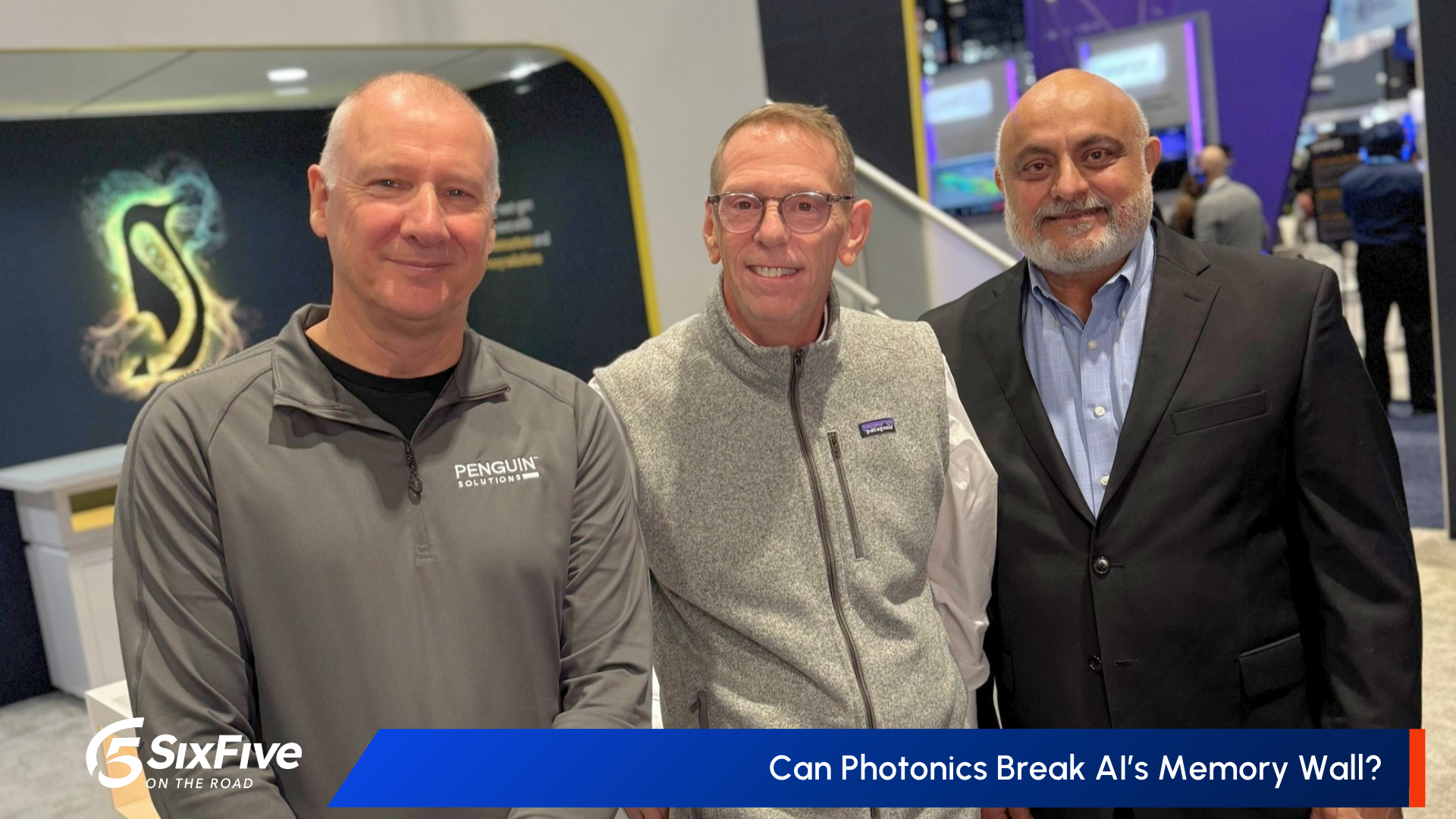
Can Photonics Break AI’s Memory Wall?
Preet Virk, SVP & General Manager, Photonic Fabric Business Unit at Marvell, and Andy Mills, VP, Advanced Product Development at Penguin Solutions, join Matt Kimball at SC26 on a photonic memory module that puts optical I/O in the middle of the die. Optically connected, HBM-class memory could let AI clusters share memory across racks as agentic AI strains KV cache.


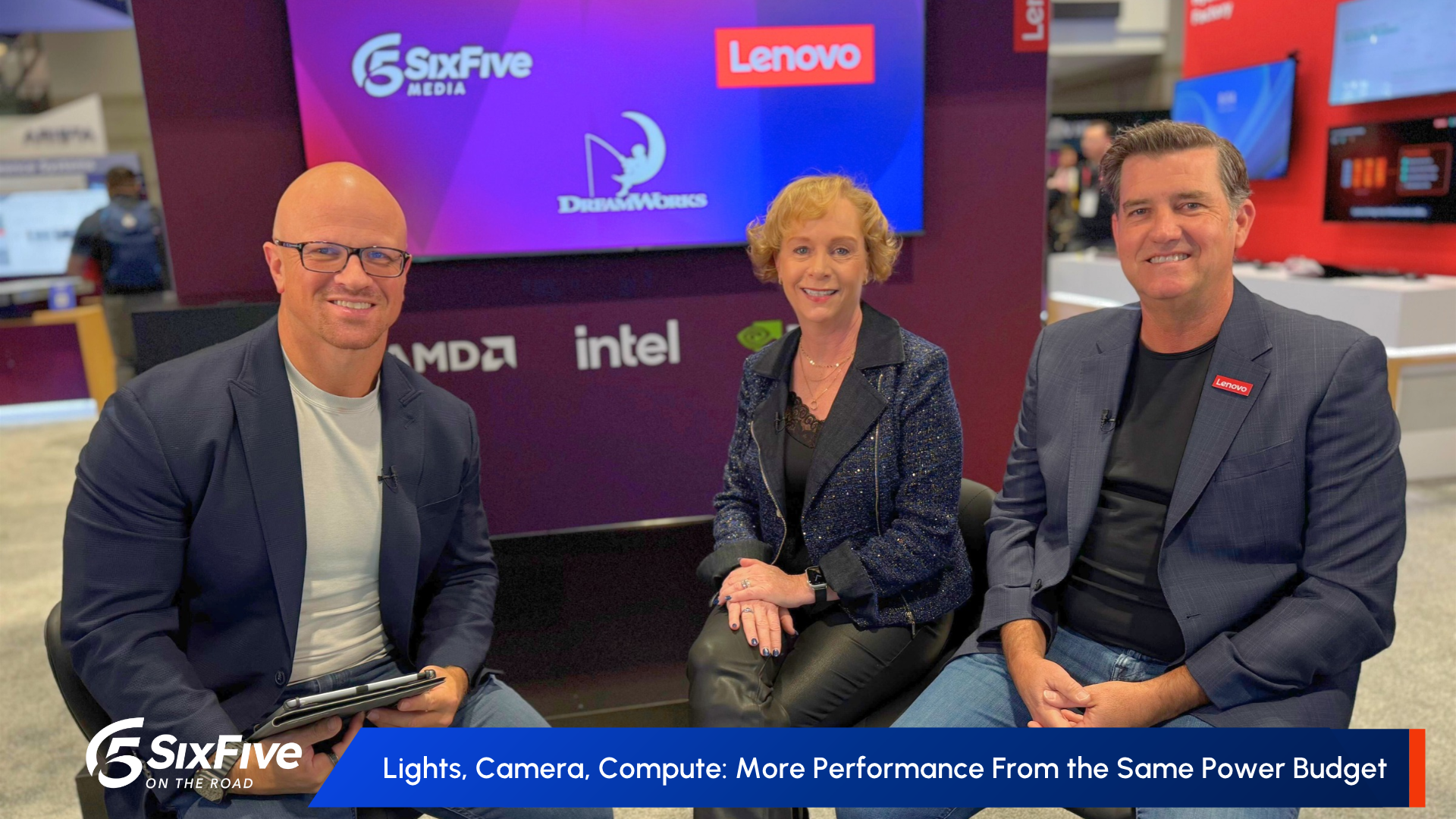
Lights, Camera, Compute: More Performance From the Same Power Budget
Kate Swanborg, SVP at DreamWorks Animation, and Flynn Maloy, CMO of Lenovo’s Infrastructure Solutions Group, join Daniel Newman at SC26 on how Lenovo Neptune warm-water cooling modernized DreamWorks’ 30-year-old data center. The studio now runs significantly more compute on less power and cooling, work recognized with HPCwire’s Top Energy-Efficient HPC/AI Achievement award.
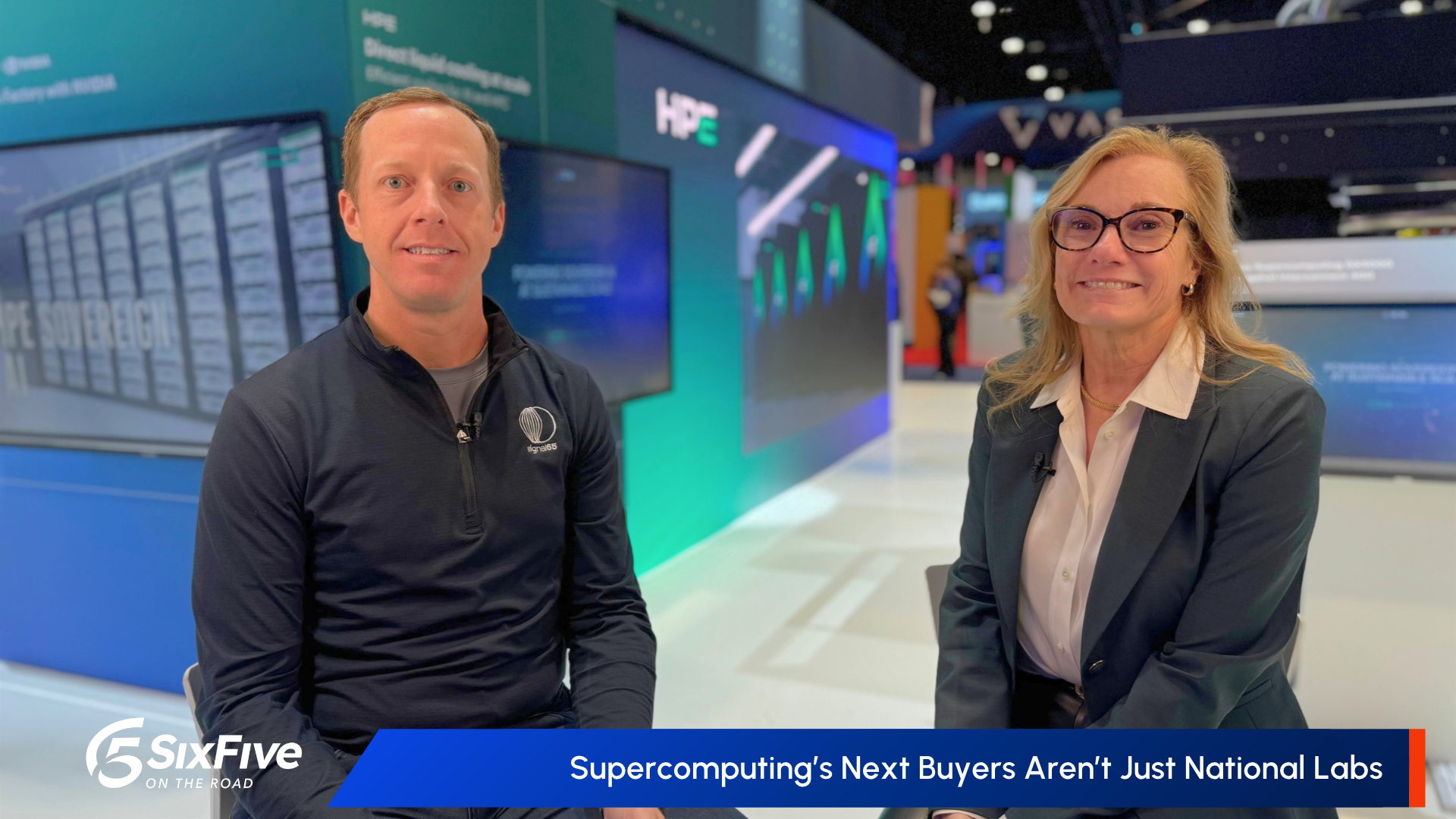
Supercomputing’s Next Buyers Aren’t Just National Labs
Trish Damkroger, SVP and GM of HPC and AI Infrastructure Solutions at HPE, joins Ryan Shrout at SC26 on how the convergence of HPC and AI is changing supercomputing. Customers now define a balanced system as FP4 to FP64, while rack-scale AI increasingly needs the density, liquid cooling and tight coupling of traditional supercomputers.
Other Categories
CYBERSECURITY
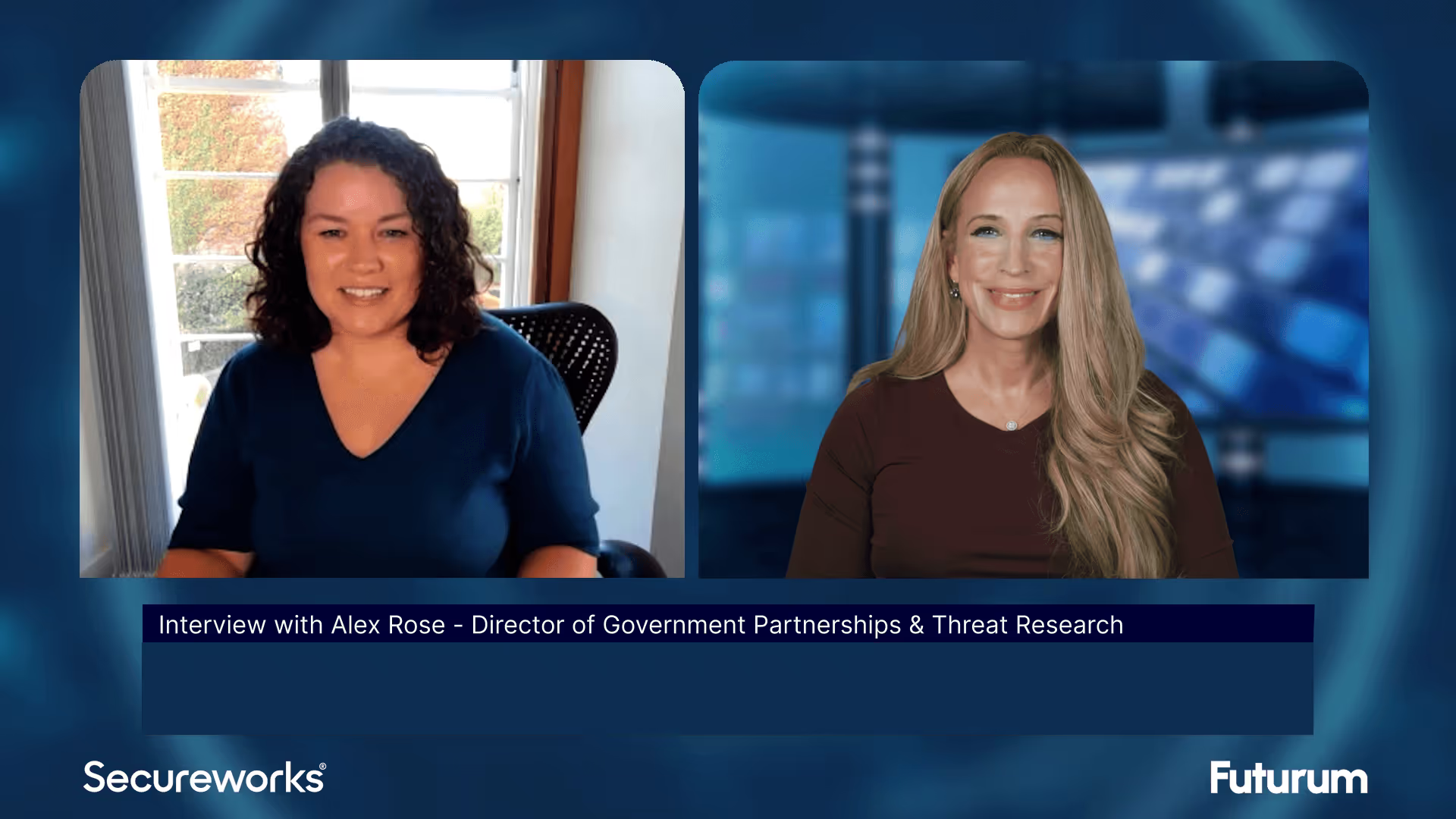
Threat Intelligence: Insights on Cybersecurity from Secureworks
Alex Rose from Secureworks joins Shira Rubinoff on the Cybersphere to share his insights on the critical role of threat intelligence in modern cybersecurity efforts, underscoring the importance of proactive, intelligence-driven defense mechanisms.

HP Launches World’s First Business PCs to Protect Against Quantum Hacks - The Six Five On the Road
On this episode of the Six Five - On the Road, hosts Patrick Moorhead and Daniel Newman are joined by HP's Ian Pratt, Global Head of Security for Personal Systems.
What is Autonomous Endpoint Management?
Autonomous Endpoint Management is a framework designed to unify IT operations and security teams on a single platform through real-time control and visibility.
QUANTUM
Quantum in Action: Insights and Applications with Matt Kinsella
Quantum is no longer a technology of the future; the quantum opportunity is here now. During this keynote conversation, Infleqtion CEO, Matt Kinsella will explore the latest quantum developments and how organizations can best leverage quantum to their advantage.
Accelerating Breakthrough Quantum Applications with Neutral Atoms
Our planet needs major breakthroughs for a more sustainable future and quantum computing promises to provide a path to new solutions in a variety of industry segments. This talk will explore what it takes for quantum computers to be able to solve these significant computational challenges, and will show that the timeline to addressing valuable applications may be sooner than previously thought.